21 Aquatics Center


Project idea
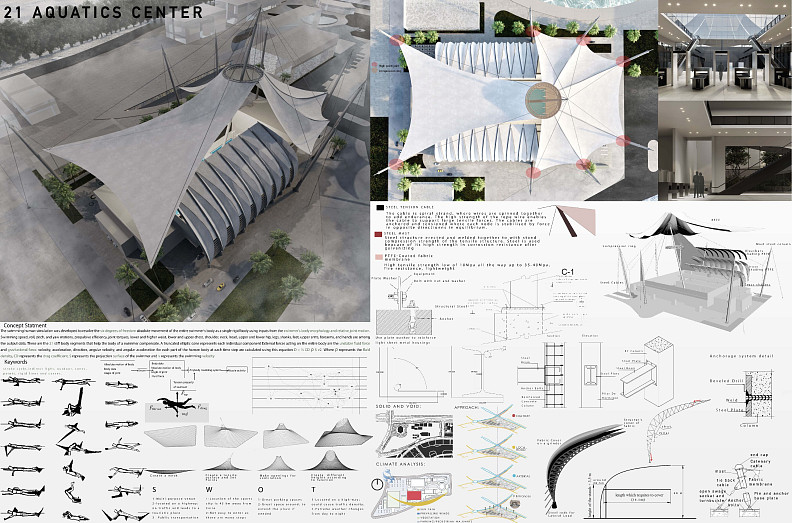
The 21 Aquatics Center is a sports facility inspired by the biomechanics of swimming and the dynamic relationship between the human body and water. The design investigates the six degrees of freedom experienced by a swimmer, including roll, pitch, yaw, and translational movements, together with fluid resistance, propulsion forces, and body morphology. The project translates these physical principles into architectural form through a process of abstraction, where the swimmer's body segments, movement trajectories, and force vectors generate a spatial and structural language.
The architectural concept transforms the motion of swimming into a series of tensile surfaces, rigid structural elements, and flowing geometries that express movement, speed, and fluidity. Rather than creating a conventional sports building, the project seeks to embody the experience of swimming itself, allowing architecture, structure, and engineering to emerge directly from the dynamics of the human body in motion.
Project description
The project functions as a multi-purpose aquatic sports complex designed to accommodate professional training, competitive swimming events, recreational activities, and public use. The facility is organized around a central Olympic swimming pool and supporting aquatic functions, complemented by spectator seating, athlete facilities, administrative spaces, changing areas, service zones, and public circulation spaces.
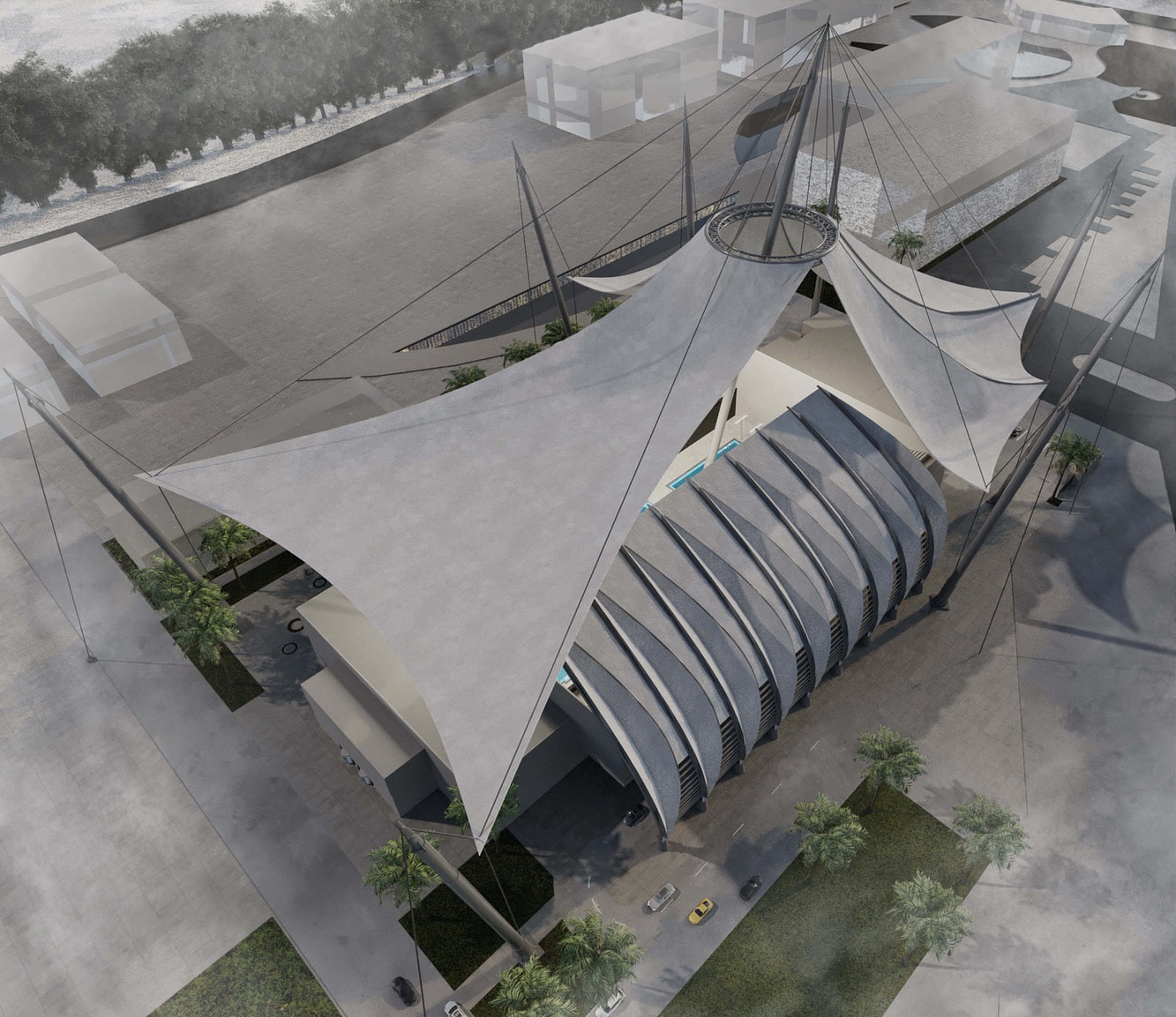
The building is enclosed beneath a large tensile roof structure that creates a column-free environment over the primary aquatic spaces while providing shade, weather protection, and visual identity. The spatial organization emphasizes clear movement paths, visual connectivity, and efficient circulation for athletes, visitors, and staff. Openings integrated within the roof structure enhance natural ventilation and daylight penetration, contributing to user comfort while reinforcing the project's connection to environmental performance and fluid movement.
Technical information
The building employs a long-span tensile structural system composed of high-strength steel masts, steel tension cables, compression rings, and a PVC-coated polyester fabric membrane. The roof operates through a balance of tension and compression forces, with tensile fabric surfaces suspended between structural masts and stabilized by a network of steel cables anchored to reinforced concrete foundations.
The tensile membrane spans large distances while minimizing structural weight, creating an efficient enclosure for the aquatic facility. Compression rings transfer loads from the membrane into the primary support system, while tension cables distribute forces throughout the structure. Reinforced concrete foundations and anchorage systems resist uplift and horizontal loads generated by the tensile roof. Openings positioned within the membrane improve natural ventilation and daylight access, while the varying roof heights respond to functional requirements and environmental conditions. The integration of structural engineering, material efficiency, and environmental performance creates a lightweight yet highly expressive architectural system that reflects the movement and dynamics of swimming.
Documentation


Copyright © 2026 INSPIRELI | All rights reserved. Use of this website signifies your agreement to the Terms of Use, Privacy Policy, and use of cookies.
