F Triple 6


Project idea
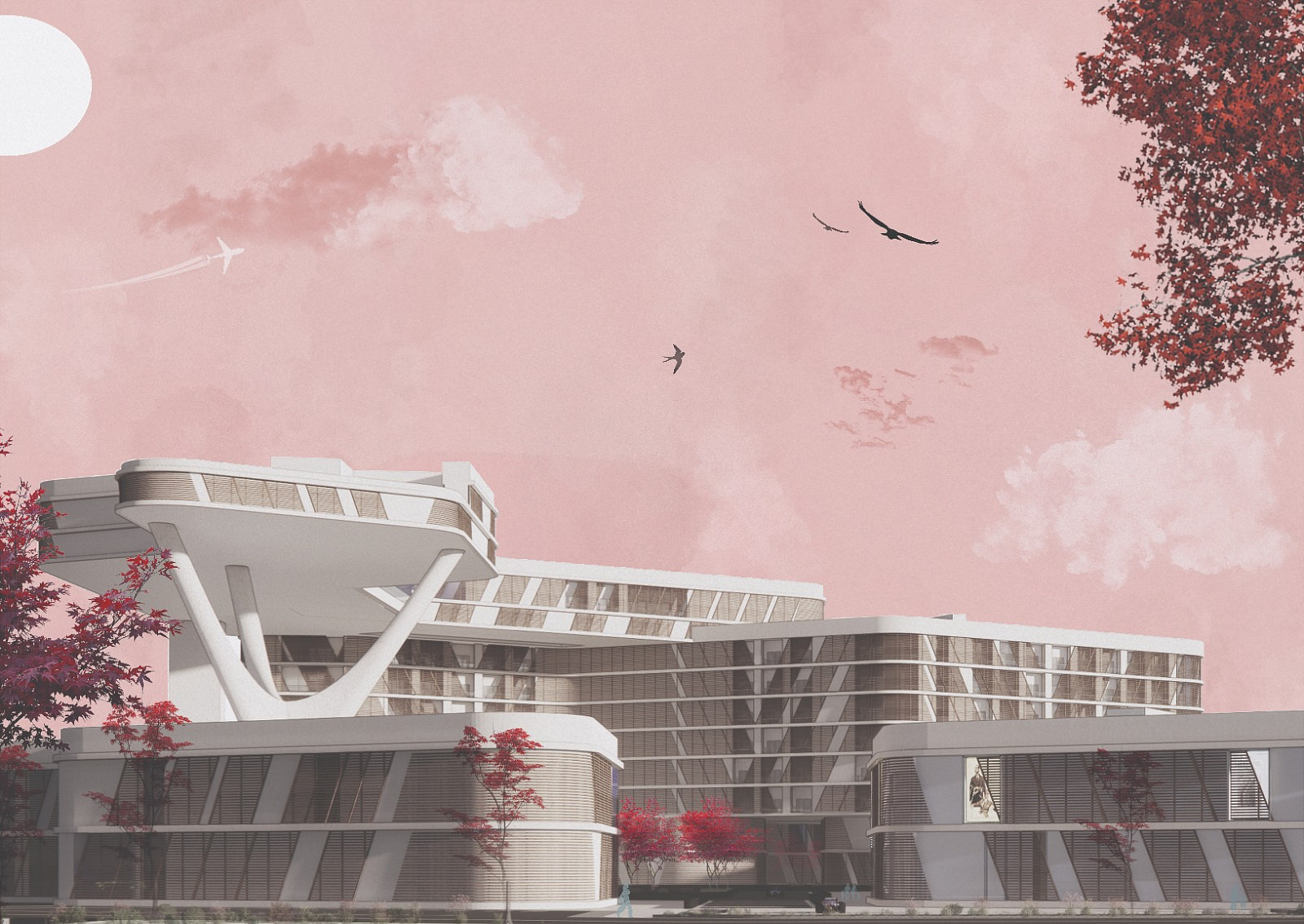
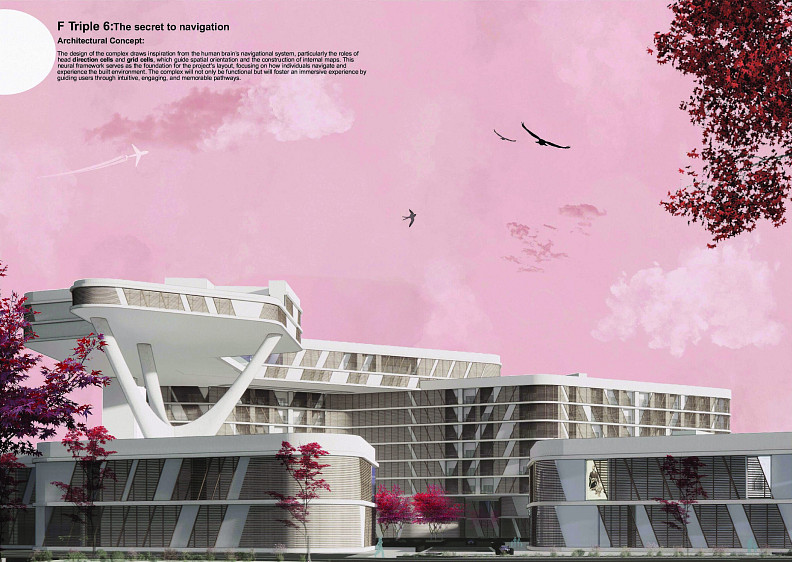
F Triple 6: The Secret to Navigation is a mixed-use complex inspired by the human brain's navigational system, specifically the functions of head direction cells and grid cells that enable spatial awareness, orientation, and the formation of internal cognitive maps. The project explores the relationship between neuroscience and architecture by translating neural navigation patterns into spatial organization and architectural form.
The design investigates how people perceive, remember, and move through space. Rather than relying solely on visual landmarks, the project creates an intuitive navigation system based on interconnected pathways, directional cues, and geometric relationships derived from hexagonal grid structures. The architecture is intended to guide users naturally through the environment while creating memorable spatial experiences that strengthen orientation, exploration, and human interaction with the built environment.
Project description
The project is a mixed-use destination that combines hospitality, commercial, office, and recreational functions within a unified architectural system. The development includes a hotel, retail spaces, offices, event and wedding facilities, restaurants, cafés, entertainment areas, recreational spaces, and public gathering zones organized around interconnected circulation routes and central communal spaces.
The spatial arrangement is generated through a hierarchy of hexagonal modules that create a network of connected volumes and open courtyards. Rather than separating functions into isolated buildings, the project promotes continuous movement and visual connectivity through elevated links, bridges, internal streets, and shared public spaces. The circulation system serves as the primary organizing element, encouraging exploration and allowing users to navigate the complex through a sequence of intuitive and engaging pathways. The resulting environment functions as both a destination and an experience, where movement through the building becomes an integral part of the architectural narrative.
Technical information
The building is constructed using a reinforced concrete structural system consisting of columns, shear walls, beams, and post-tensioned floor slabs designed to accommodate large spans and interconnected building volumes. The architectural form is generated from a modular hexagonal grid that establishes the structural, spatial, and circulation framework of the project.
The development consists of multiple interconnected building masses linked through bridges and elevated circulation elements. Large cantilevered volumes are supported by reinforced concrete transfer structures and structural cores that provide stability and lateral resistance. The façade system incorporates extensive glazing, horizontal shading devices, and high-performance envelope components that improve daylight penetration while reducing solar heat gain. Mechanical, service, parking, and back-of-house functions are integrated within dedicated basement and service levels, while vertical circulation cores efficiently connect all programmatic zones. The project combines structural efficiency, modular planning principles, and cognitive-based spatial organization to create a highly legible and adaptable mixed-use environment.
Documentation


Copyright © 2026 INSPIRELI | All rights reserved. Use of this website signifies your agreement to the Terms of Use, Privacy Policy, and use of cookies.