Where Water Meanders


Project idea
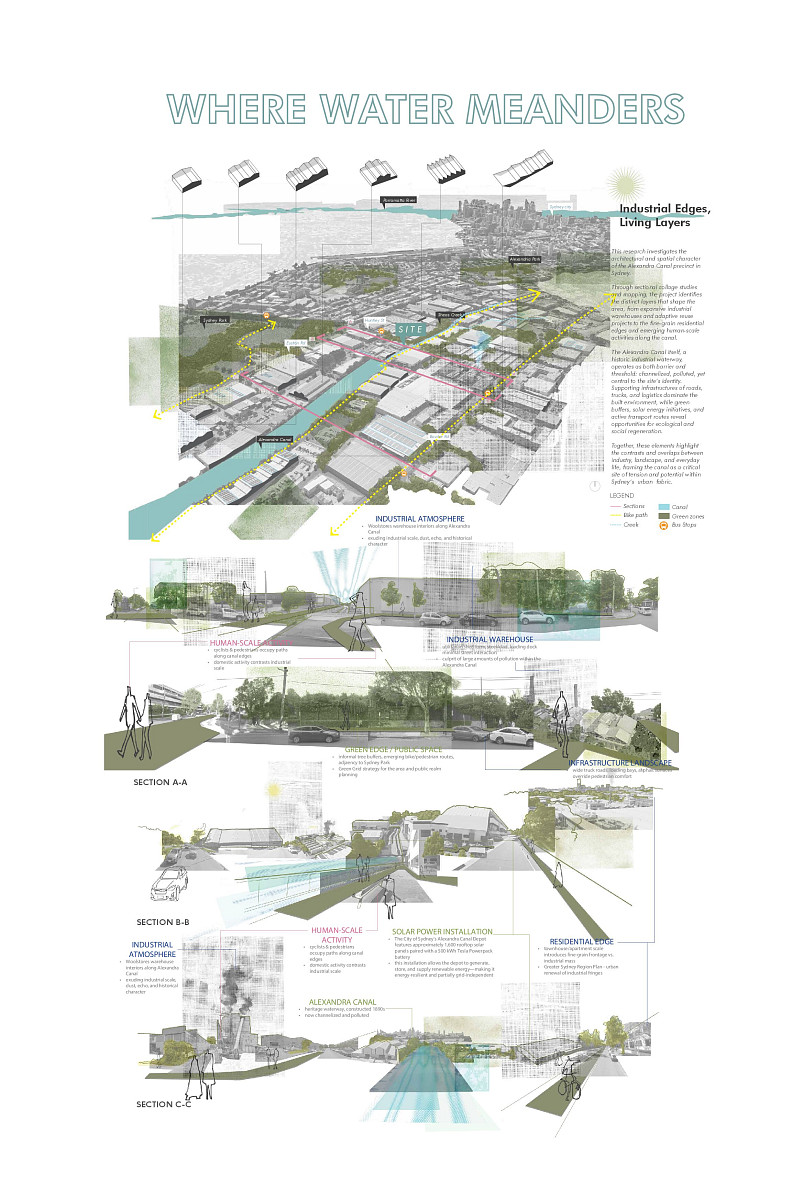
The Alexandra Canal is one of Sydney's most polluted waterways. Constructed in the 1890s as an industrial channel, it has been progressively channelized, contaminated with heavy metals, hydrocarbons, nutrients, and pathogens, and rendered invisible by the logistics infrastructure that surrounds it. Today, the canal precinct is dominated by wide truck roads, loading bays, and utilitarian warehouse sheds that override pedestrian comfort and deny the waterway any meaningful civic presence. The canal exists as both barrier and threshold: central to the site's identity, yet inaccessible, degraded, and ecologically severed from the communities that live alongside it.
Where Water Meanders begins with the conviction that this condition is not inevitable — that architecture can act as a public advocate for water, and that the act of making water visible, legible, and inhabitable is itself a political and ecological stance.
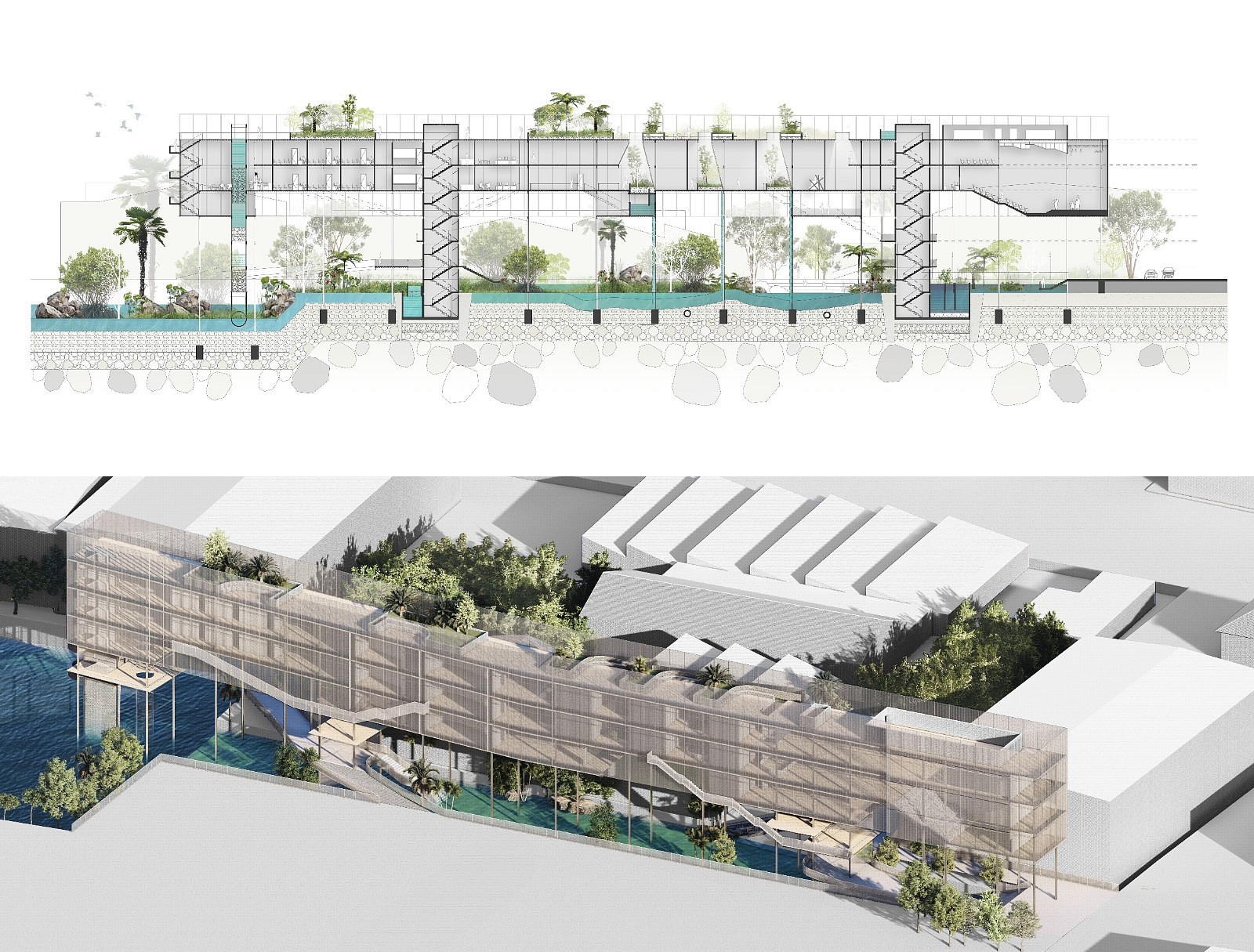
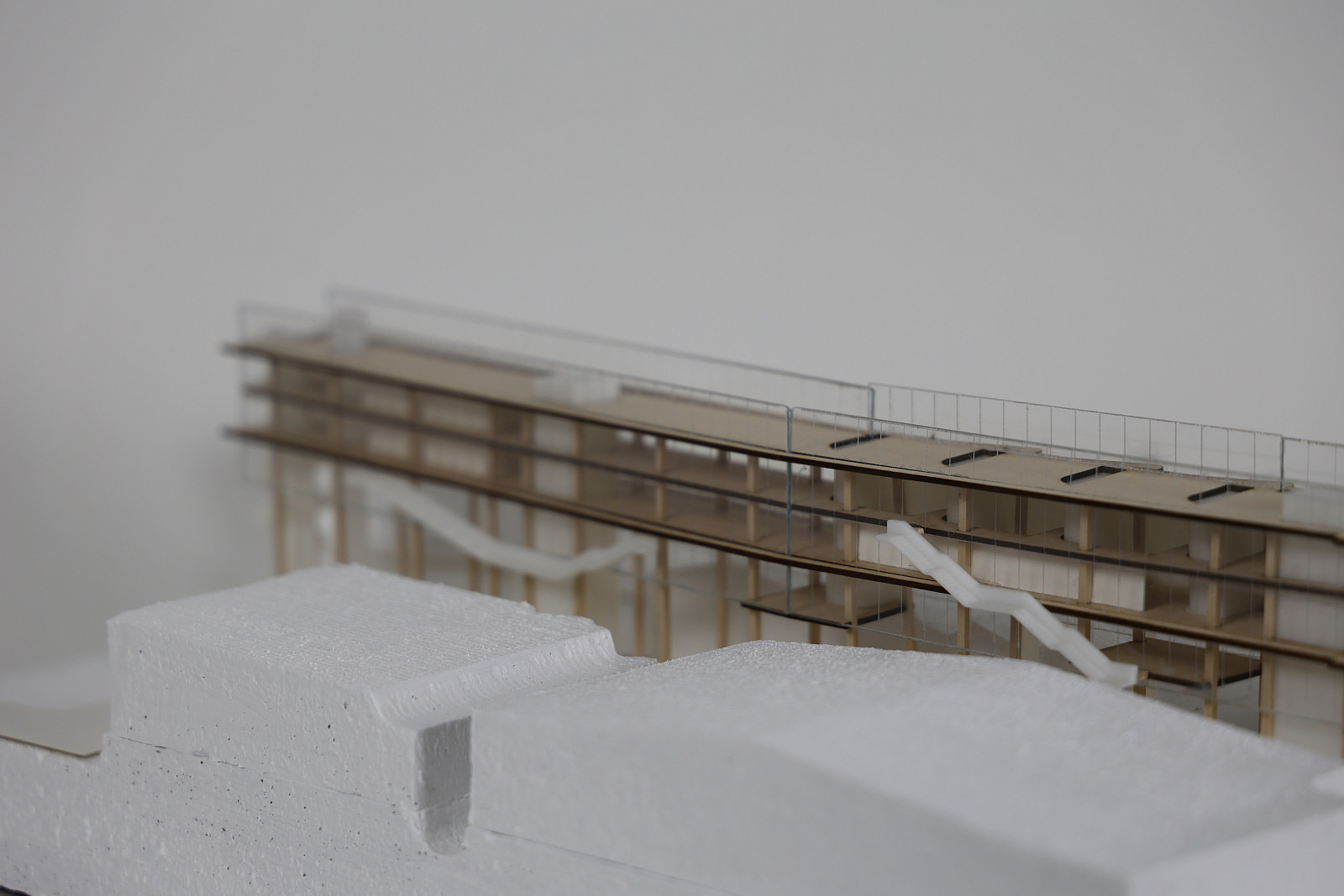
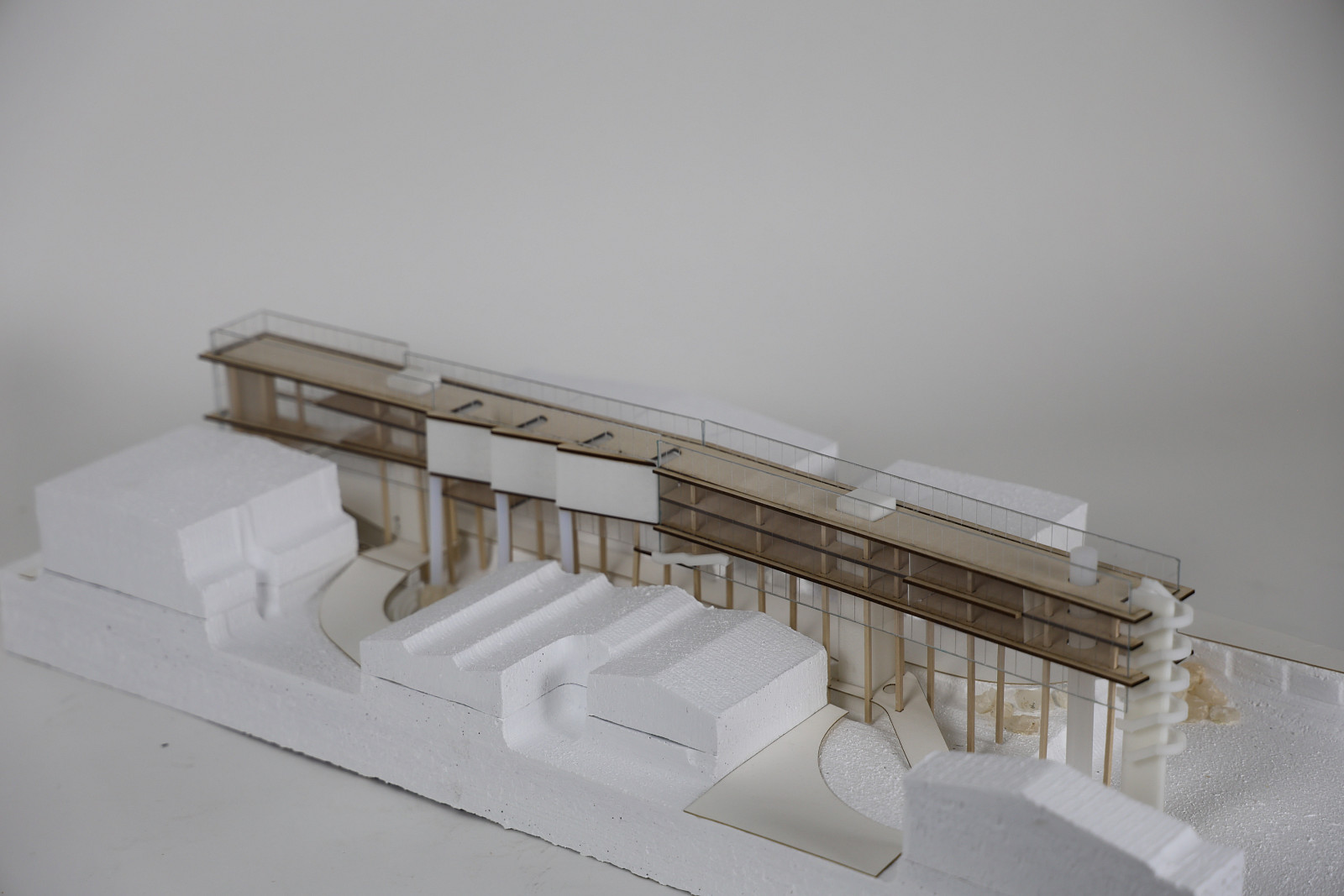
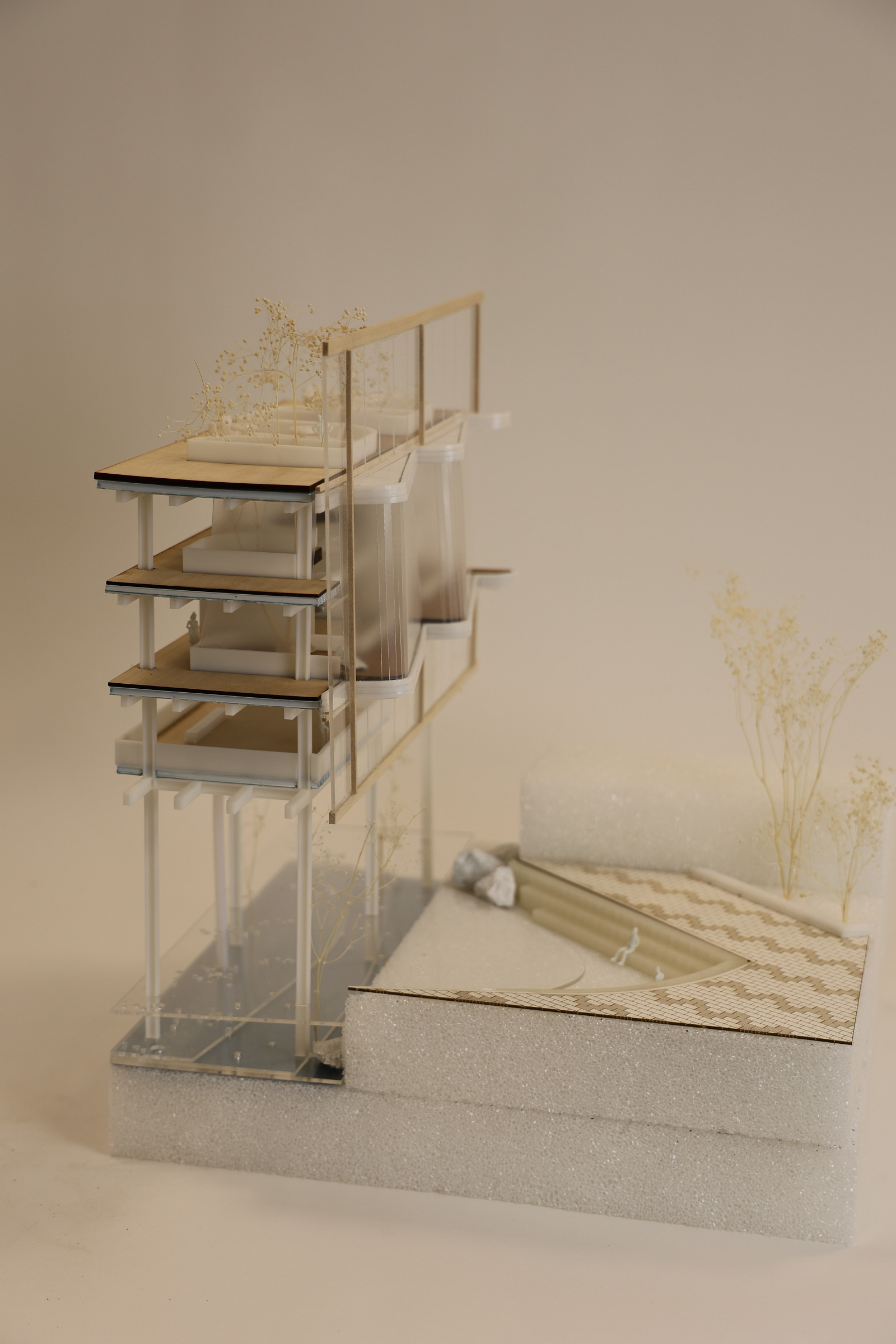
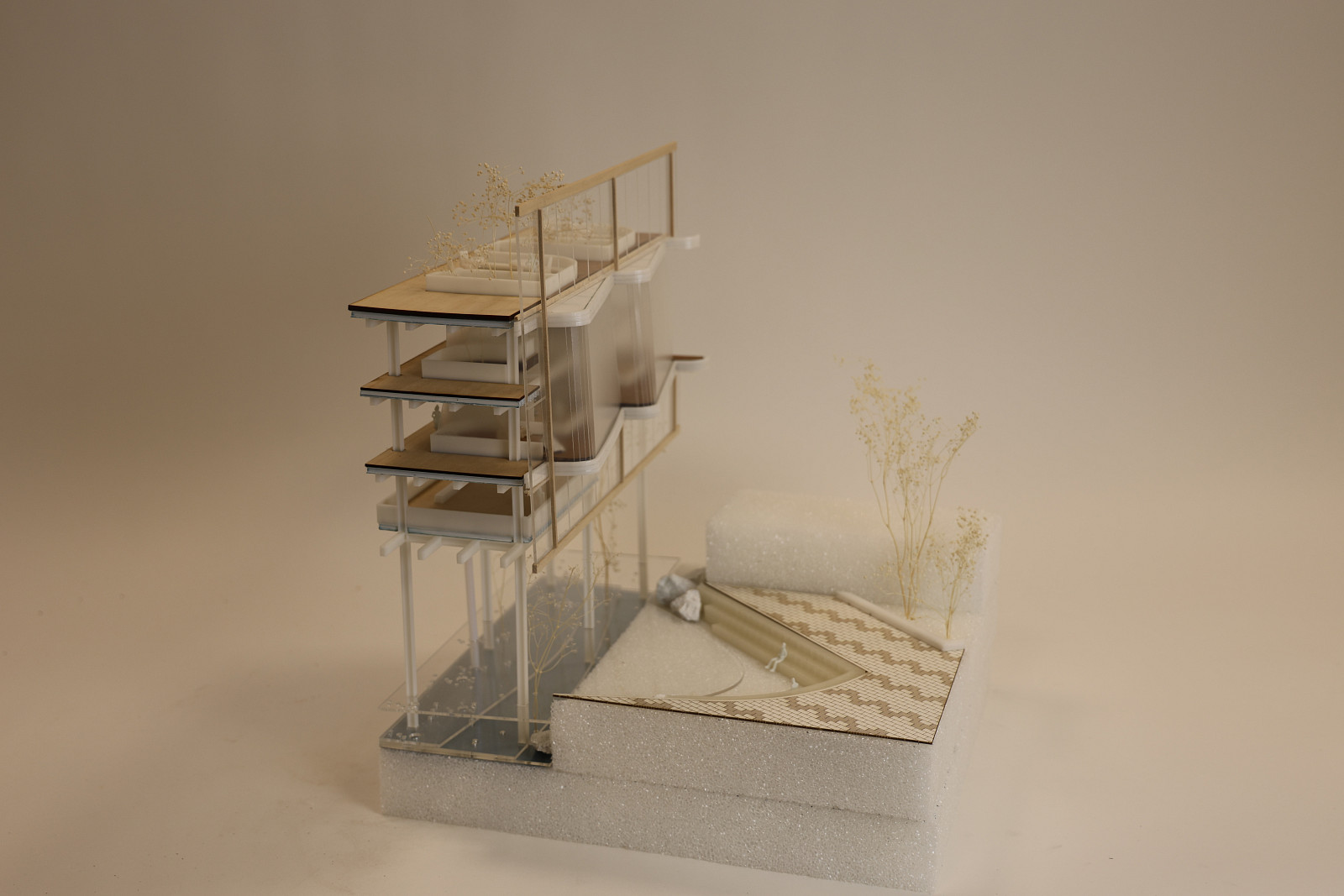
The project proposes a Water Advocacy Centre along the Alexandra Canal that repositions the waterway not as industrial infrastructure to be managed, but as a living system to be restored, learned from, and celebrated. The building does not sit beside the canal — it engages it directly, lifting its primary volume above the ground to free the terrain for a continuous civic landscape where ecological filtration, public gathering, and human movement coexist. The bioswale that flows beneath the structure transforms polluted canal water into an inhabitable and didactic landscape; the paths, bridges, and floor voids above it choreograph both human circulation and the visible journey of water through its stages of collection, filtration, and return.
The project's ambition is simultaneously environmental and social: to reduce contamination entering the canal through a 1,500m² native plant bioswale capable of filtering 30–50% of polluted water volume; to restore ecological continuity between the canal, Shea's Creek, and Botany Bay; and to reintroduce public space into a precinct that has, until now, been surrendered entirely to industry. In doing so, Where Water Meanders argues that the canal's regeneration is inseparable from the regeneration of the community it flows through — and that architecture, positioned with intention, can initiate both.
Project description
Where Water Meanders is a Water Advocacy Centre located along the Alexandra Canal in Alexandria, Sydney, occupying a site caught between the fine-grain residential edge to the north and the expansive industrial warehouses to the south. The building spans seven levels — from Level -2 at -5.50m to Level 6 at +22.20m — and is organized around a single governing gesture: lifting the built mass above the ground to release the canal edge as continuous public terrain.
The Ground and the Bioswale form the ecological and civic heart of the project. Freed by the elevated structure, the ground plane becomes a meandering civic landscape of plazas, bridges, paths, and water features that connect the canal to the surrounding neighborhood. A 1,500m² bioswale planted with native species — Waratah, Kangaroo Paw, Cyperus, Grey Mangrove, and Villarsia — runs beneath the building, organized across four ecological zones: dry border, running marsh flower, and deep water. This sequence filters contaminated canal water progressively, removing up to 40% of heavy metals, 50–60% of nutrients, and 30–40% of hydrocarbons, while simultaneously creating an inhabitable landscape where visitors can observe and learn from the filtration process. An amphitheater, fountain stairs, and contemplative terraces animate the ground alongside the bioswale, transforming remediation into civic spectacle.
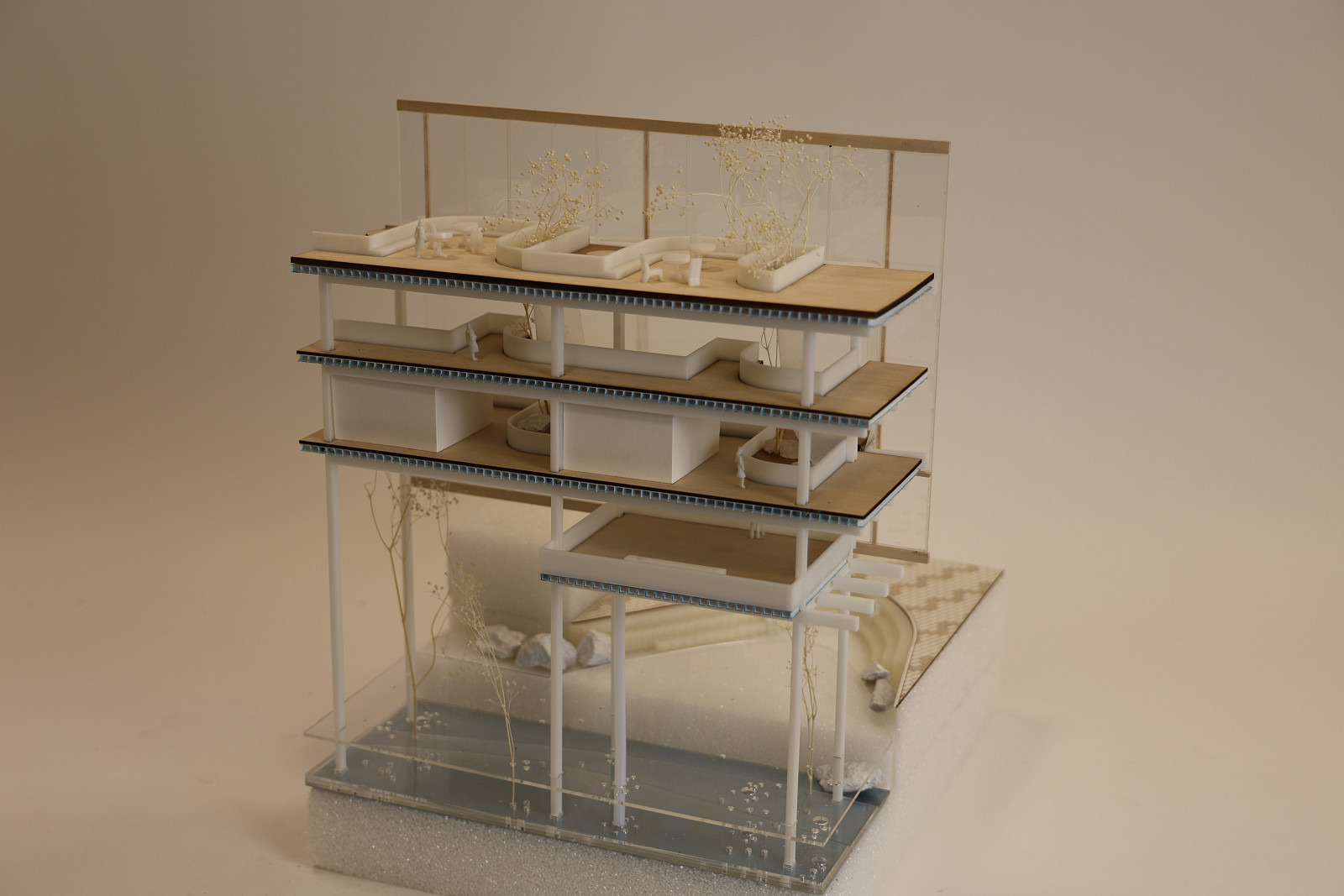
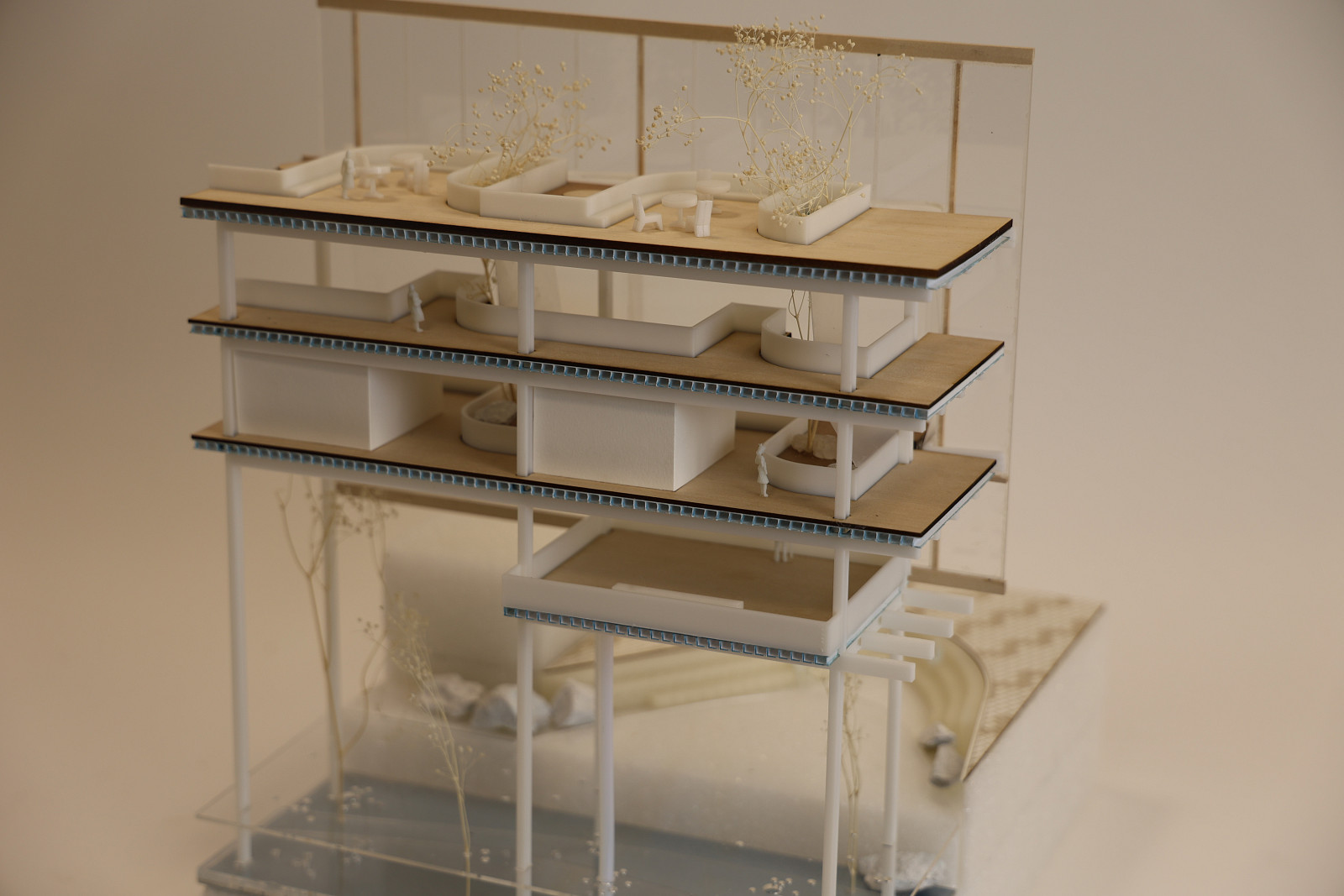
The Elevated Building houses the advocacy and education program across multiple levels, organized into distinct programmatic zones: an auditorium and lobby at entry level; classrooms, offices, and exhibition rooms on intermediate floors; rainwater interior gardens — visible through skylights and floor voids — that bring the water cycle into the interior; and a rooftop café and gardens at Level 6, where visitors arrive at an elevated park overlooking the canal and the wider urban landscape.
The Water Journey is made architecturally legible throughout. Rain is collected via rooftop systems, channeled through water collector towers visible from the exterior, filtered through interior gardens, and discharged into the bioswale below. Floor voids and skylights make this movement visible from within the building, positioning water as an embodied learning experience rather than a hidden utility.
The Living Corridor extends the project's ecological logic into the urban fabric, connecting the site to Sydney Park, the existing green buffer along the canal, and the emerging active transport network — positioning Where Water Meanders as a catalyst for a broader ecological and pedestrian continuity across the Alexandra Canal precinct.
Technical information
Where Water Meanders is a seven-level public building spanning from Level -2 (-5.50m) to Level 6 (+22.20m), with a structural strategy derived directly from its ecological agenda.
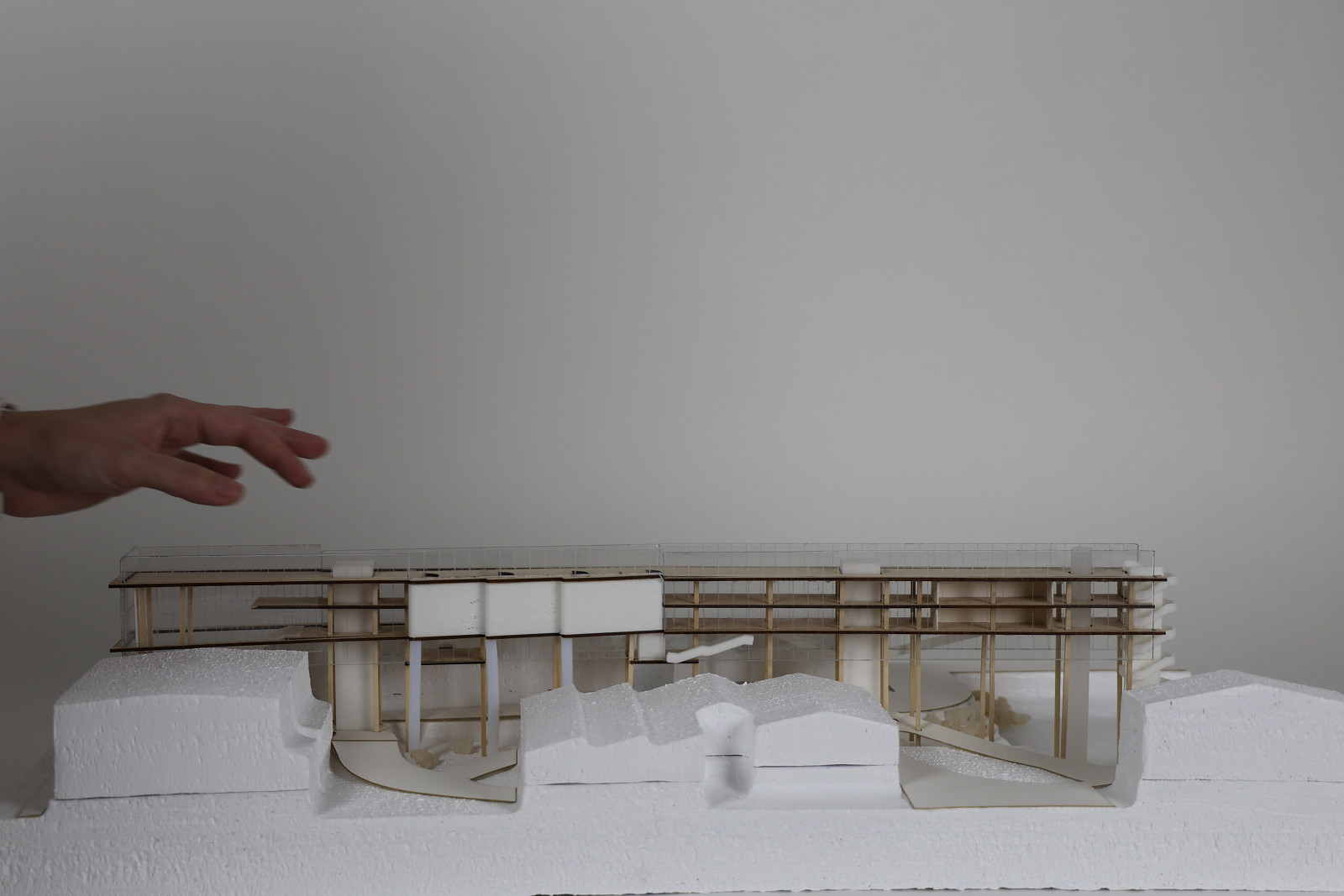
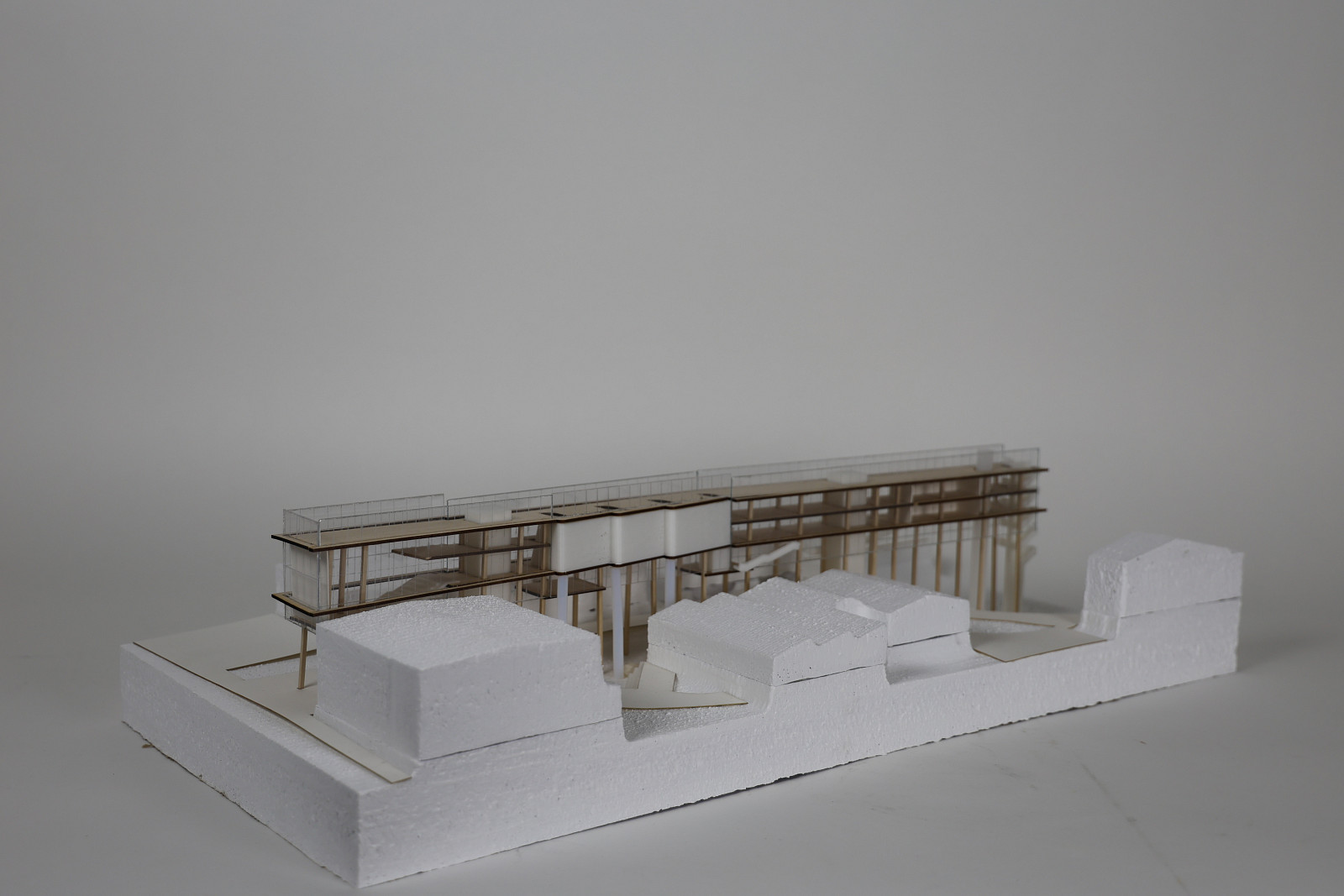
Structural System: The building is organized around a long-span elevated volume supported by large concrete cores and bridge-like structural frames that allow the ground floor to remain column-free across the canal edge. This approach, analogous in principle to an industrial shed reinterpreted through an ecological lens, frees the ground plane entirely for the bioswale, civic landscape, and public circulation. Bridges connect the elevated volumes across the bioswale and canal, operating simultaneously as circulation elements and architectural expressions of crossing — thresholds between the contaminated and the restored.
Water Infrastructure: The project operates as an integrated water cycle system. Rooftop rainwater collectors harvest precipitation and feed it through visible water collector towers into interior rainwater gardens distributed across the building's levels. These gardens are connected by filter pipes to the 1,500m² bioswale at ground level, which processes both harvested rainwater and contaminated canal water through a sequenced native planting strategy. Projected filtration efficiency: heavy metals up to 40%, nutrients 50–60%, hydrocarbons 30–40%, pathogens 20–30%, and microplastics 15–25%, depending on flow and maintenance. The treated water is returned to the canal, completing a visible, inhabitable hydrological cycle.
Bioswale Planting Strategy: The bioswale is organized across four ecological zones — dry zone, border, running marsh flower, and deep water — each planted with species native to the Sydney region. The sequence includes Waratah and Kangaroo Paw in the dry and border zones; Cyperus spp., Cyperus gymnocaulis, and Cyperus Carex in the marsh zone; and Grey Mangrove and Villarsia in the deep water zone. This gradient maximizes both filtration performance and biodiversity, while creating an ecologically legible landscape for public education.
Facade and Environmental Systems: The building envelope employs a double facade system that manages solar gain while maintaining visual transparency to the canal and landscape below. Solar panels integrated into the roof complement the City of Sydney's existing renewable energy strategy for the precinct, referencing the 1,600-panel solar installation already operating at the adjacent Alexandra Canal Depot. Natural ventilation is achieved through the open-air ground plane and the sectional organization of the building, which draws air through the bioswale and into the elevated levels above.
Program Distribution:
Level -2 to Level -1: Bioswale, canal interface, filter pipes, fountain stairs, amphitheater, and water meander landscape.
Ground level (0.00m): Civic plaza, bridges, paths, lobby, and access to vertical circulation.
Levels 1–3 (+3.70m to +11.10m): Auditorium, restrooms, classrooms, offices, and rainwater interior gardens visible through floor voids and skylights.
Levels 4–5 (+14.80m to +18.50m): Exhibition rooms, café/flex space, contemplative terraces, and water collector systems.
Level 6 (+22.20m): Rooftop café, rooftop garden, and elevated park overlooking Alexandra Canal.
Circulation: Vertical circulation cores and open-air staircases connect all levels, while bridge elements spanning the bioswale provide cross-connections between the eastern and western portions of the building. The ground plane remains entirely pedestrian, linking the canal edge to Sydney Park and the broader active transport network of the precinct.
Documentation

Copyright © 2026 INSPIRELI | All rights reserved. Use of this website signifies your agreement to the Terms of Use, Privacy Policy, and use of cookies.
