House of water


Project idea
Columbus, Indiana sits on the edge of the Flatrock River, in a landscape where water, woodland, and public life have always intersected. Yet the site adjacent to Noblitt Park — positioned between the river, the People's Trail, and the industrial and residential zones that define this stretch of the city — has long remained unactivated, disconnected from both the ecological richness of the riverbank and the cultural life of the community. The House of Water begins with this gap: between nature and culture, between sound and silence, between the individual and the collective.
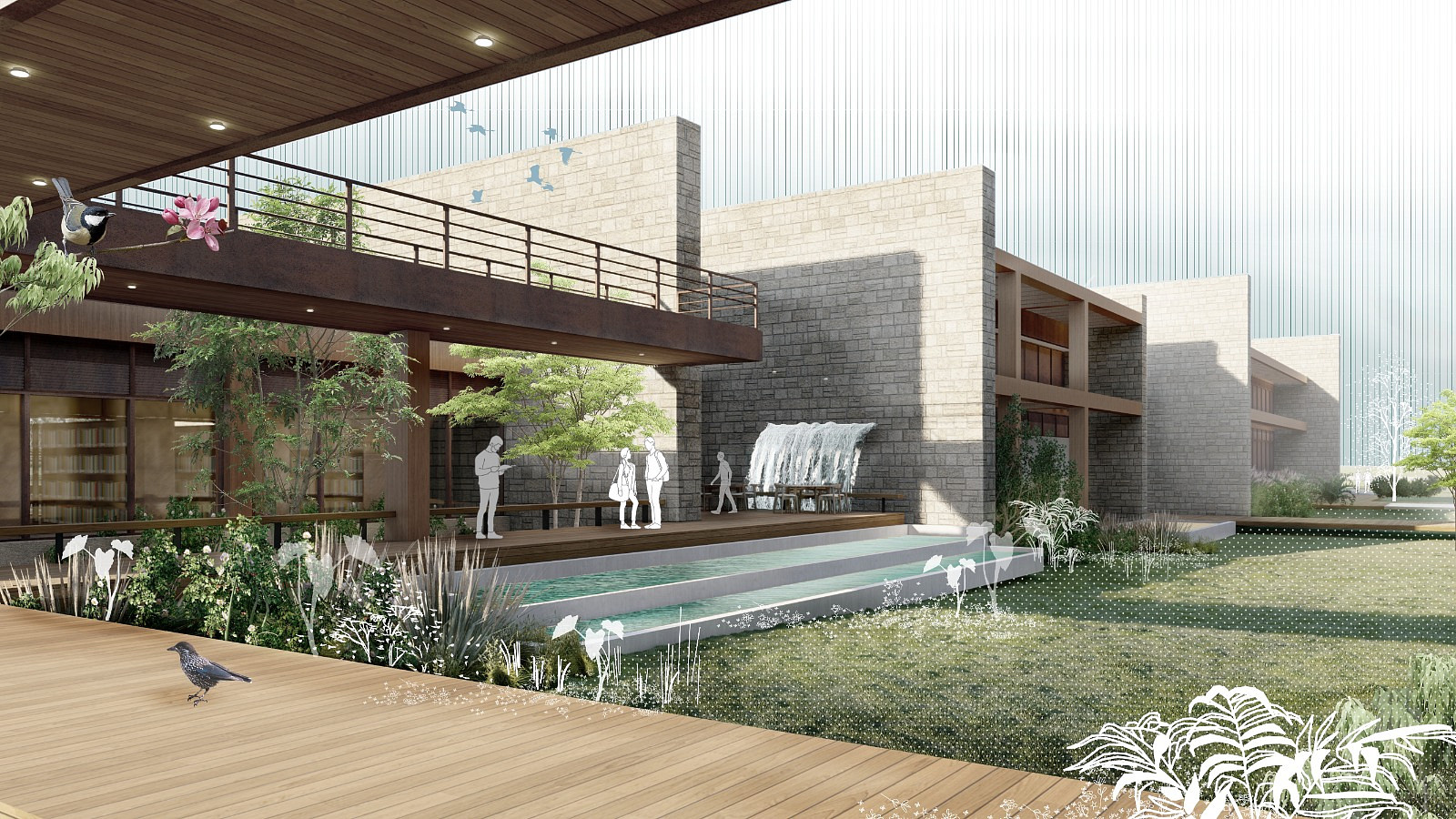
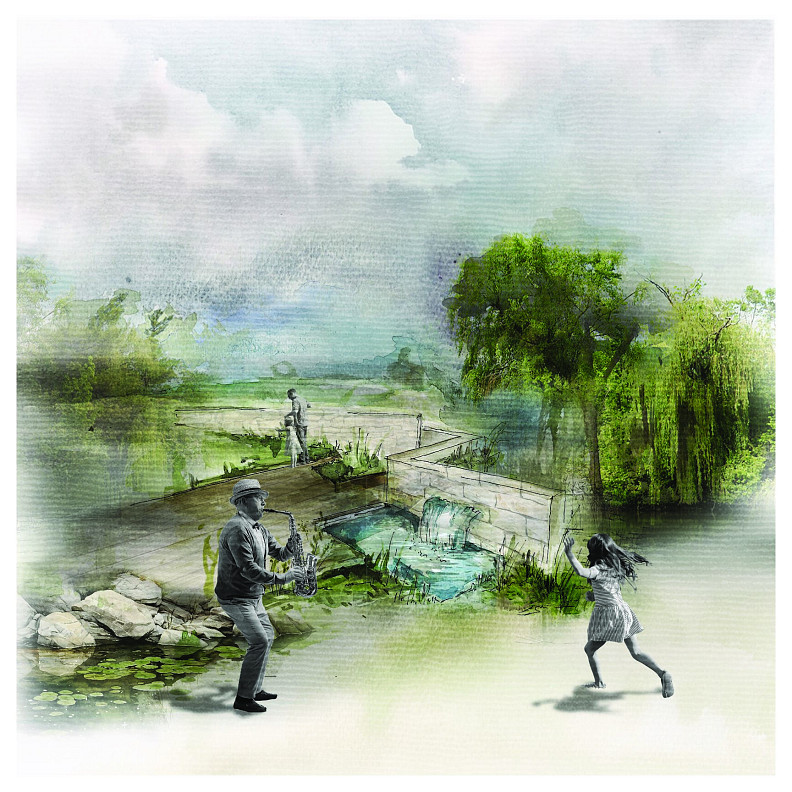
The project proposes a music and cultural campus that does not treat water as backdrop or amenity, but as the organizing principle of both the architecture and the experience it generates. Water, in its many forms — flowing, still, falling, collected, filtered, reflected — becomes the medium through which music, learning, performance, and introspection are made spatial. The Flatrock River and the natural wetlands of the site are not obstacles to be managed; they are the site's deepest resource, and the design responds to them with a landscape of wetlands, ponds, waterfall fountains, and rain-harvesting systems that weave the hydrological cycle through every level of the building and its grounds.
At the same time, the project recognizes that music, like water, is both universal and deeply personal — a medium of community and of solitude, of celebration and of self-discovery. The House of Water is therefore organized around four distinct but interconnected experiences: learning together, performing together, creating alone, and reflecting in nature. Each corresponds to a volume of the architectural composition, and each finds its character through its specific relationship with water, sound, and landscape.
The goals of the project are threefold: to create a world-class music and cultural facility that genuinely serves Columbus's diverse community; to restore and extend the ecological continuity of Noblitt Park and the Flatrock River corridor through a native plant landscape, wetland systems, and passive environmental strategies; and to demonstrate that architecture can harmonize creativity, nature, and human experience — that a building can be, at once, a concert hall, a forest, a garden, and a sanctuary.
Project description
The House of Water is a mixed-use music and cultural campus located in Columbus, Indiana, on a site bounded by Noblitt Park, the Flatrock River, Lawton Avenue, and the People's Trail. The project is organized into four interconnected volumes — each corresponding to a mode of engagement with music and nature — set within a continuous landscape of wetlands, garden systems, waterfall fountains, and garden decks that extend the ecology of the park into the built environment.
House One — Community and Learning anchors the public face of the campus. It houses classrooms, a library designed for cross-ventilation with glazed facades on both sides, a management suite, and lobby spaces that open onto the garden system and the People's Trail. This volume is conceived as the social threshold of the project: the place where music begins as shared knowledge, where learning is collective, and where the campus connects to the everyday life of the city.
House Two — Performance and Celebration is the civic heart of the project. It contains the main auditorium — designed with a clerestory sun space along the circulation perimeter — a second auditorium for more intimate performances, technical and back-of-house rooms, and an outdoor performance space overlooking the wetlands. The auditorium's circulation wraps the performance hall as a thermal buffer and daylight corridor, mediating between the interior acoustic world and the landscape outside.
House Three — Recording and Experimentation offers a sanctuary for musical creation. It contains a live room, recording room, black box room, practice rooms, and a break room, all organized around the principle of acoustic precision and spatial intimacy. Green terraces planted with aromatics and flowers crown this volume, softening the transition between the technical interior and the natural landscape above.
House Four — Reflection and Nature is the most contemplative element of the project. A pavilion set within the main wetland, it offers a space of self-reflection amid flora and fauna, where the soundscape of the landscape — water, wind, birds, and rustling vegetation — becomes the primary architecture. Balconies and decks extend over the wetlands and garden decks, dissolving the boundary between the built and the ecological.
The Landscape System connects all four houses through a continuous network of wetlands, waterfall fountains, garden decks, exterior ramps, and interior corridors. Native plants extend Noblitt Park into the site, promoting local fauna and creating ecological continuity between the river and the campus. The system of gardens and wetlands also functions as a living infrastructure — managing stormwater, filtering rainwater, cooling microclimates, and providing habitat — making the landscape inseparable from the environmental performance of the project.
Technical information
The House of Water is a multi-level campus building located in Columbus, Indiana, designed across two primary floor levels with roof terraces, exterior ramps, and a subgrade parking level, within a site subject to flood hazard zones — Zone AE Floodway and Zone AE 100-year — alongside Zone X 500-year areas. The building is designed in full compliance with applicable zoning regulations: Zone Z1 with a maximum height of 50 feet governs the lower landscape and wetland structures, and Zone Z2 with a maximum height of 125 feet governs the primary built volumes. Easements of 60 feet and 165 feet from the eastern boundary are respected throughout the design.
Structural System: The primary structure uses load-bearing limestone walls, chosen for their high thermal mass, which moderates interior temperature fluctuations and reduces the building's reliance on mechanical conditioning. Timber structural elements are used in secondary and landscape structures, referencing the material character of the adjacent woodland and Noblitt Park. The combination of limestone mass and timber lightness creates a tectonic dialogue between permanence and nature throughout the project.
Water Infrastructure: The project operates as an integrated water landscape system. Rooftop rainwater collectors harvest precipitation and feed it into a network of wetlands, ponds, and waterfall fountains that thread through the campus at ground level. The main wetland, pavilion pool, and waterfall fountain system are connected by a gravity-assisted drainage network that manages stormwater on-site, reduces runoff to the Flatrock River during flood events, and creates the inhabitable water landscape that is central to the project's identity. The wetland planting incorporates native aquatic and semi-aquatic species that support biodiversity, filter nutrients and contaminants from collected water, and extend the ecological character of the Flatrock River corridor.
Environmental and Sustainability Strategies:
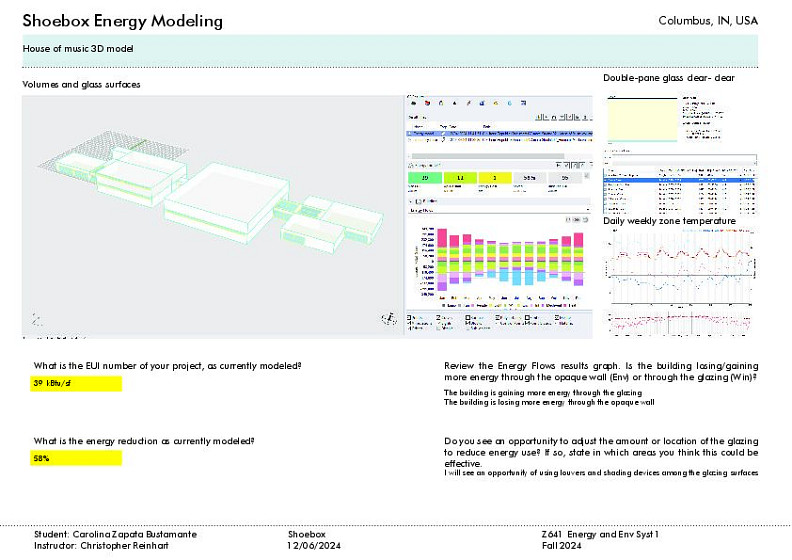
Solar Energy: Solar panels covering an area of 12,684 square feet — comprising 604 panel units — generate an estimated 316,692.48 kWh per year, significantly reducing the building's grid dependence and supporting net-zero energy aspirations.
Green Roofs: Intensive and semi-intensive green roofs are distributed across the campus, providing thermal insulation, managing stormwater, and supporting pollinators. Terraces of native flowers on the pavilion roof attract pollinating species, while shrubs and aromatics on other roof surfaces deliver thermal comfort and sensory richness.
Passive Solar Design: Shading devices including pergolas along the south and north elevations reduce solar gain during peak summer months. The auditorium circulation is designed as a sun space with a clerestory above, harvesting winter light and moderating temperature passively.
Natural Ventilation: The majority of spaces include operable windows. The library is specifically designed for cross-ventilation, with glazed facades on both sides that allow prevailing breezes to move through the space, eliminating the need for mechanical cooling during temperate seasons.
Program Distribution:
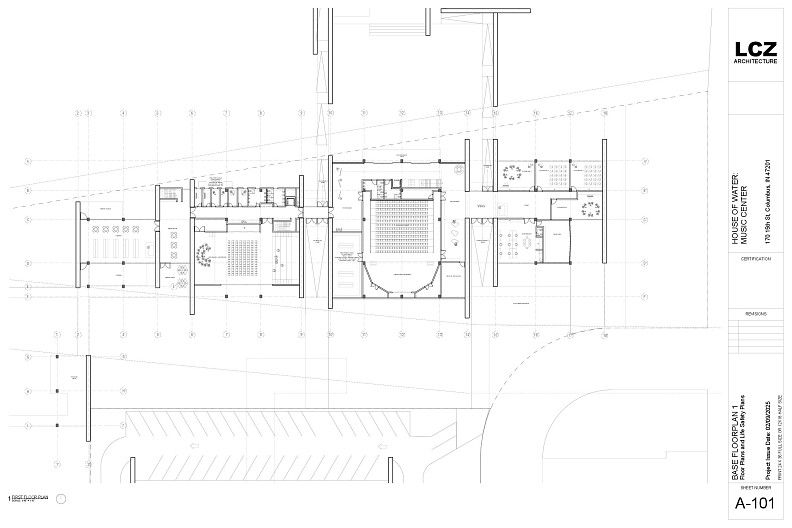
Level 1: Parking, main entrance, management, receiving, classrooms, lobby, playground, main auditorium, second auditorium, technical room, back of house, practice rooms, break room, library, pavilion, main wetland, outdoor performance space, and restrooms.
Level 2: Balconies, additional restrooms, playground, live room, recording room, black box room, green terrace with aromatics, and green terrace with flowers.
Roof Level: Intensive and semi-intensive green roofs, solar panel arrays, and pollinator terraces.
Site: Wetlands, waterfall fountains, garden decks, system of native gardens extending Noblitt Park, exterior ramps, and pedestrian connections to the People's Trail and Lawton Avenue.
Circulation: The project is organized around a system of interior corridors on both levels, exterior ramps connecting the landscape terraces and garden decks, vertical circulation via stairs and elevators, and direct pedestrian connections to the People's Trail network at two points along the site boundary. Vehicle access and parking are accommodated at the western edge of the site, maintaining the eastern and riverfront edges as pedestrian and ecological terrain.
Documentation

Copyright © 2026 INSPIRELI | All rights reserved. Use of this website signifies your agreement to the Terms of Use, Privacy Policy, and use of cookies.