EVOLVING ROOTS


Project idea
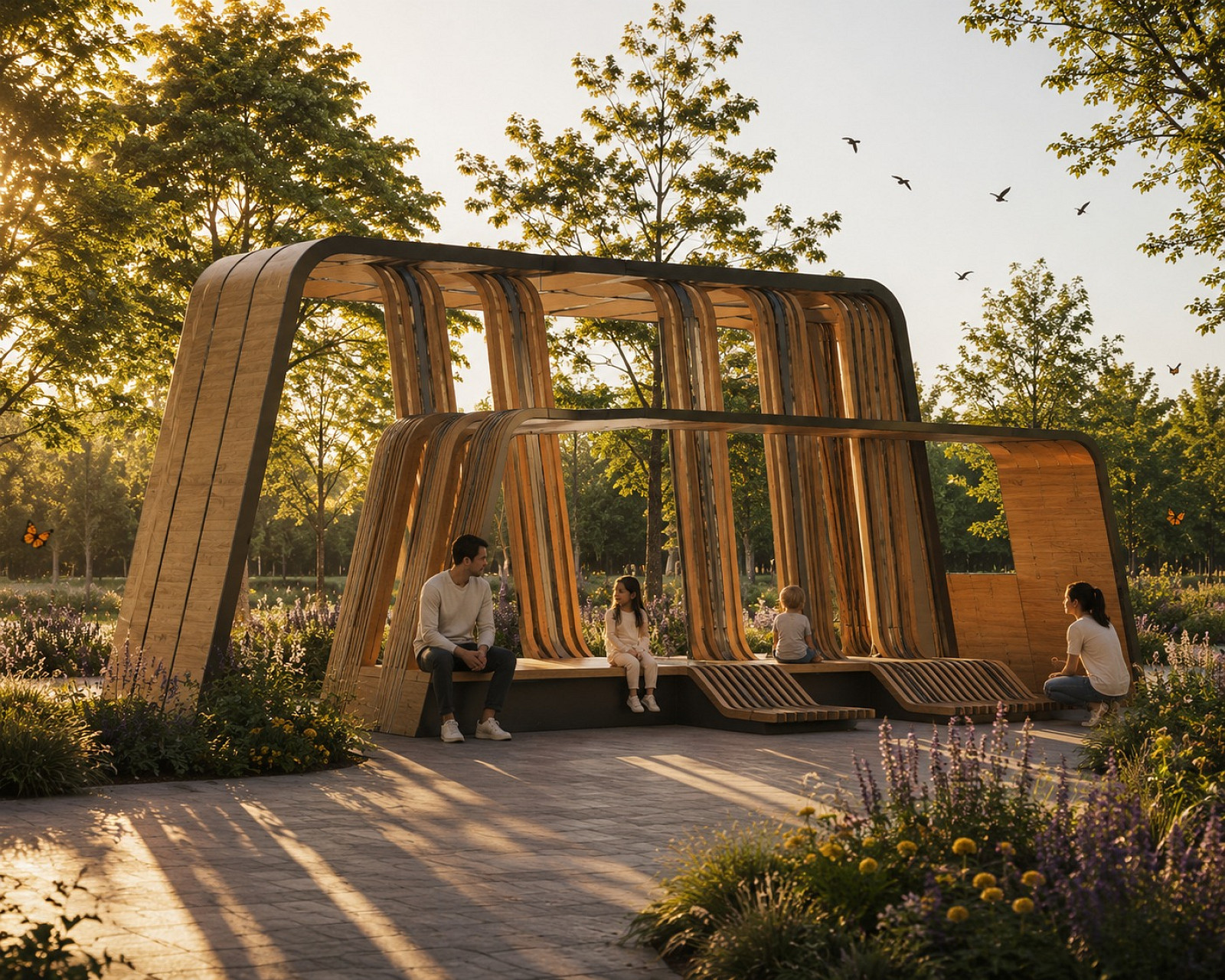
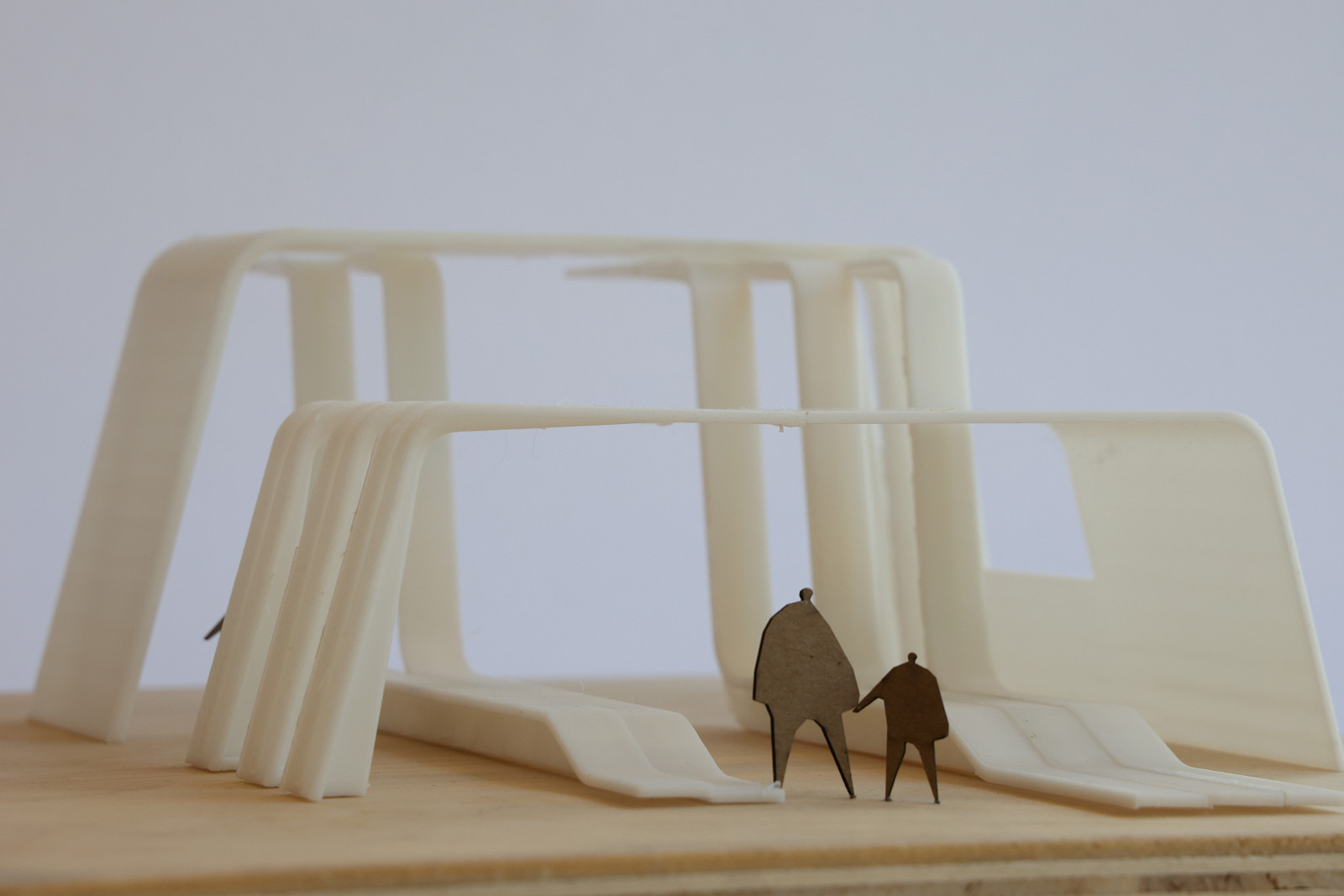
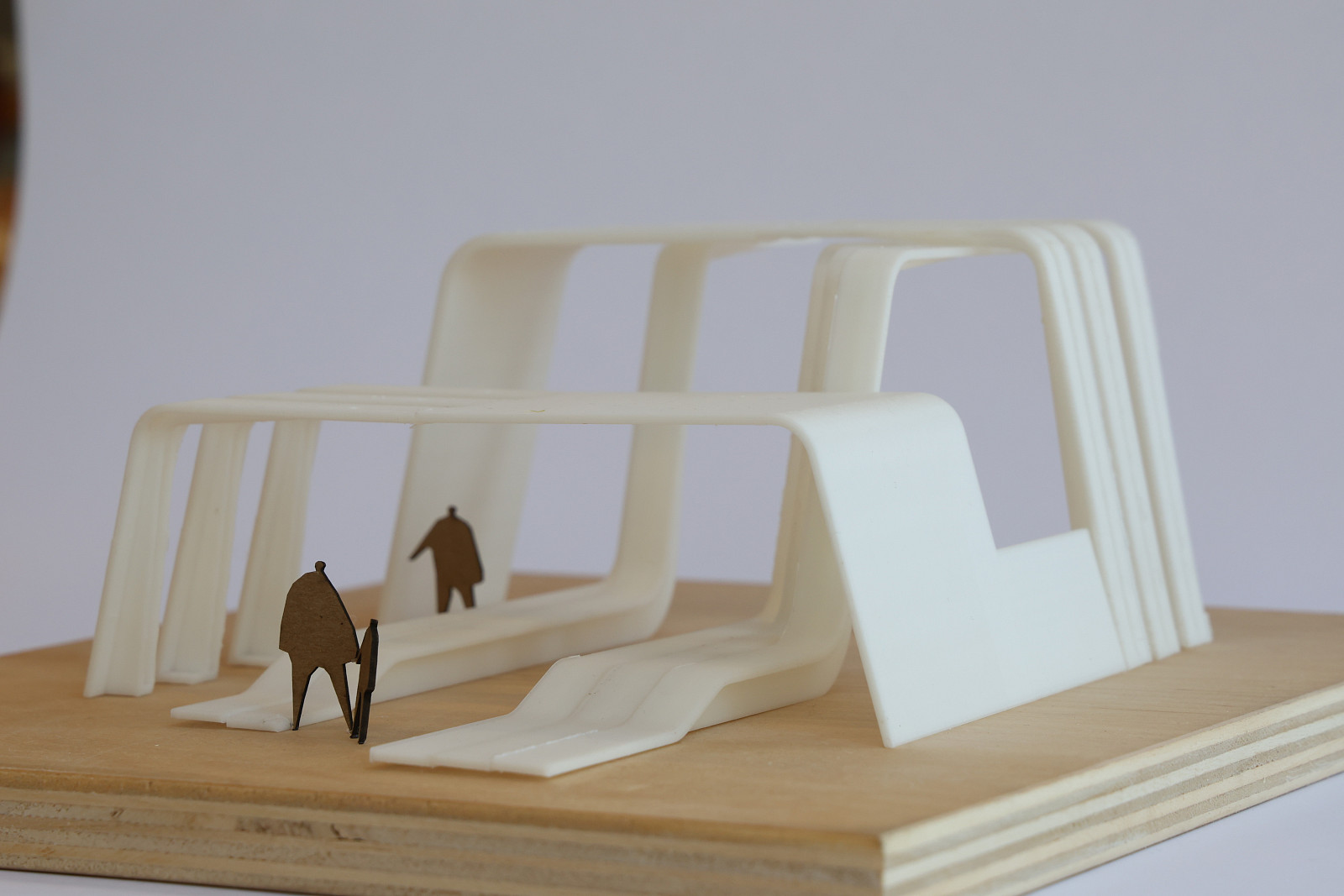
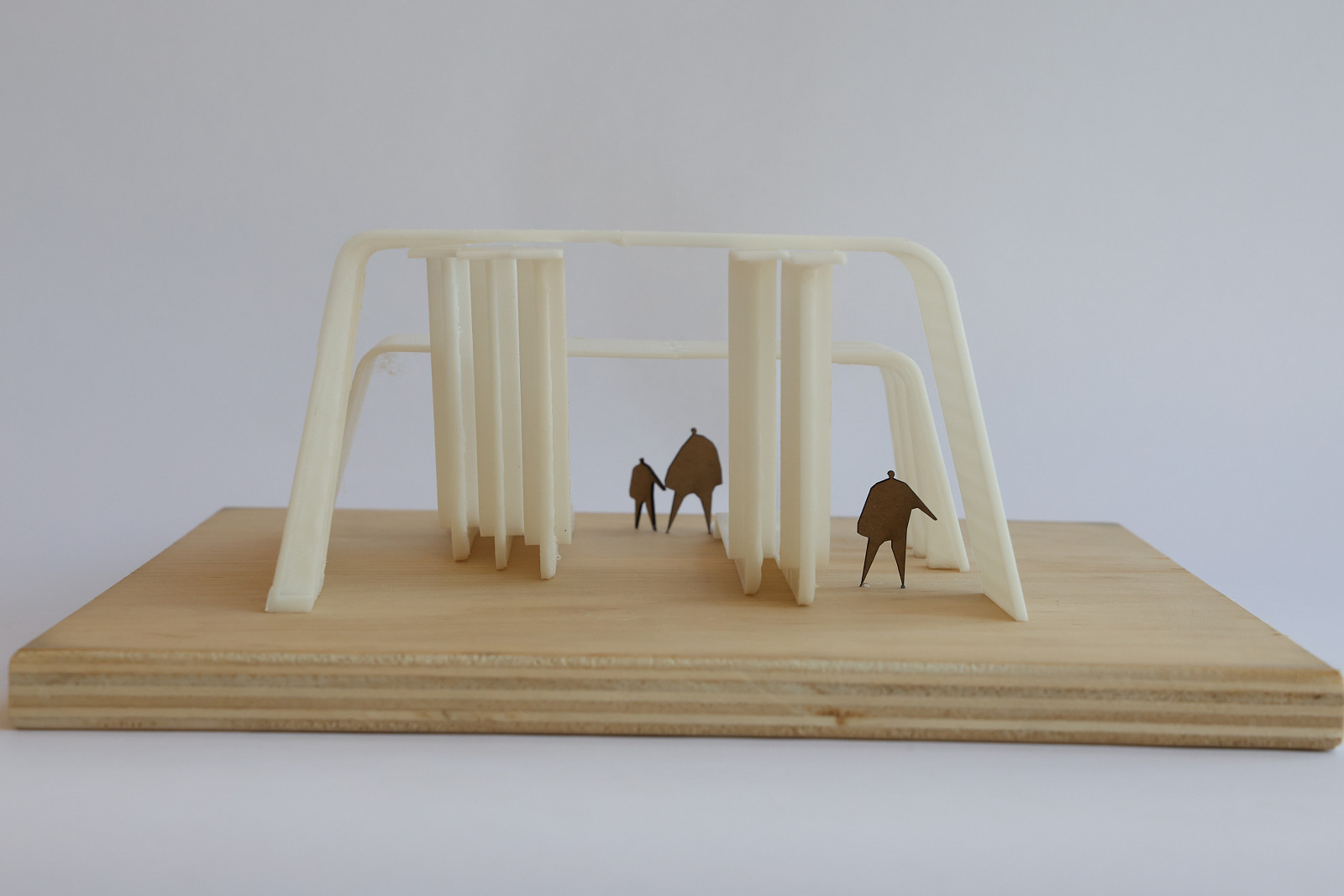
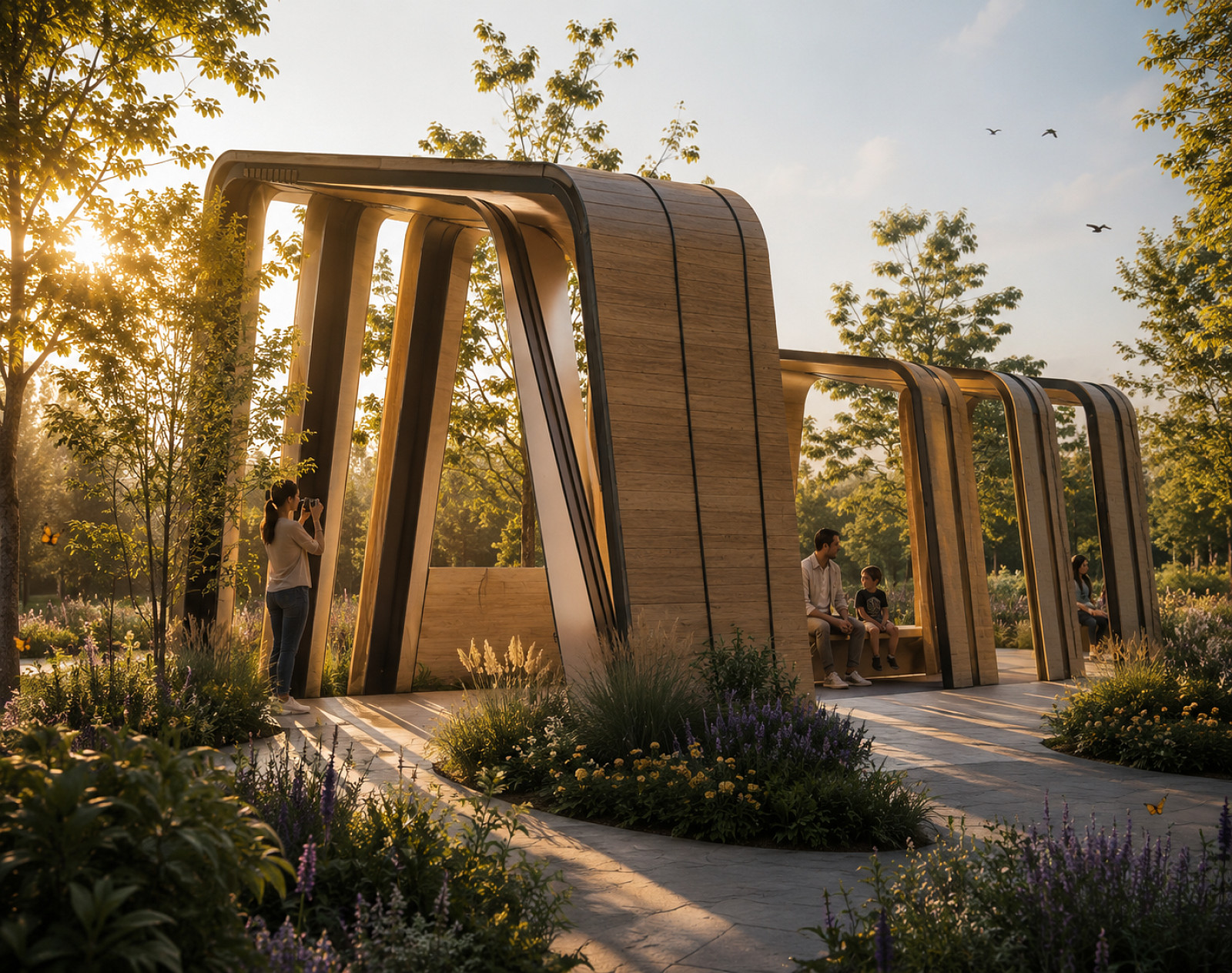
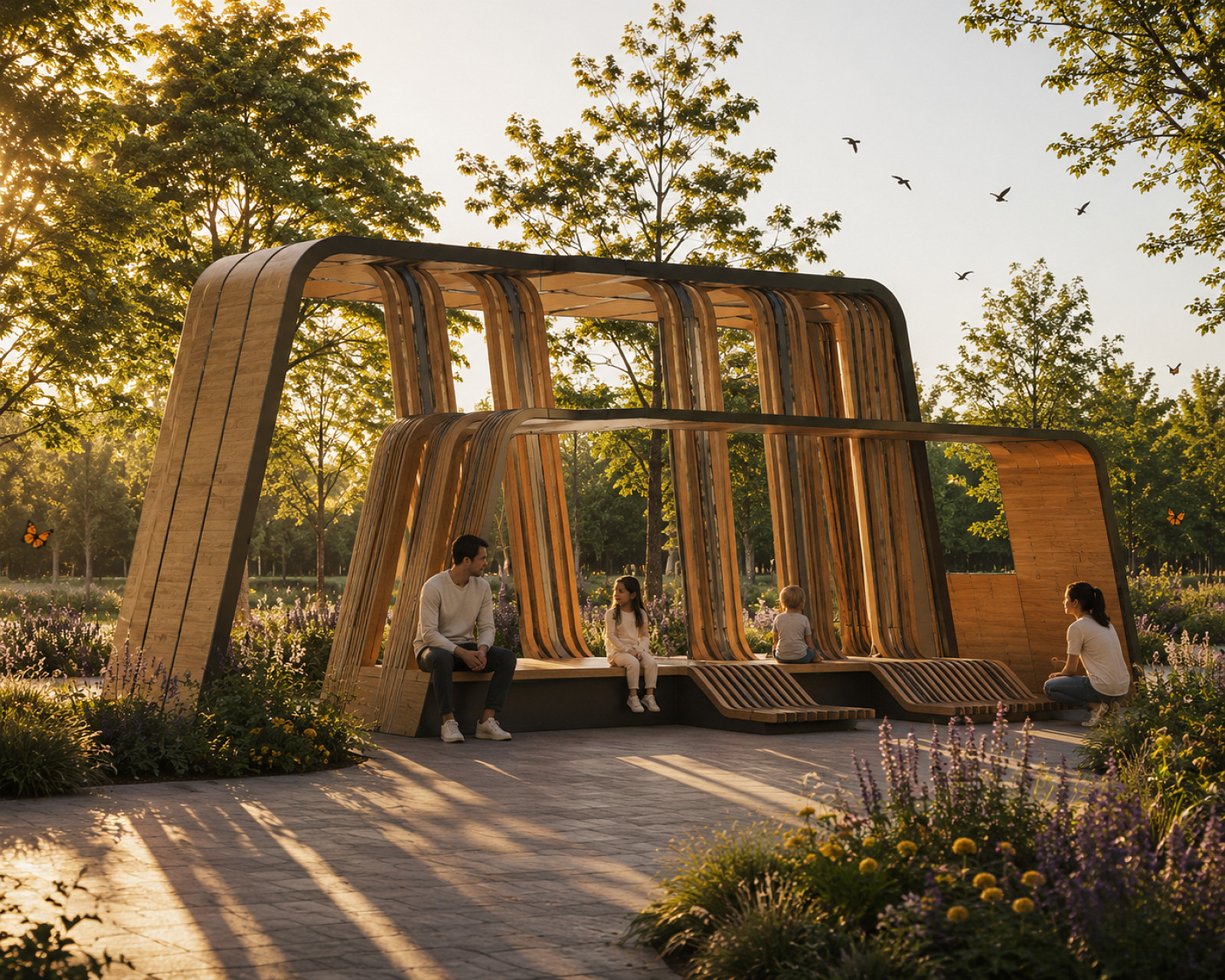
Public space in the contemporary city is increasingly defined by hard surfaces, passive seating, and the absence of the natural world. Parks exist, but their edges — the thresholds between the organic and the constructed — are rarely designed as places of genuine engagement, where people might slow down, gather, and feel themselves to be part of a living environment rather than observers of it. Evolving Roots begins with a simple but consequential question: what would it mean to build something that grows — not biologically, but spatially and experientially — the way a tree does?The project is a public wooden pavilion and installation conceived for an existing park, designed around the structural and spatial logic of a tree: roots as seating and ground anchoring, a trunk as the sheltering core, branches as the pergola structure that filters light overhead, and leaves as the wooden roof panels that modulate shade and rain. Each element of a tree's anatomy becomes an architectural element, and together they create a space that is simultaneously structure, landscape, furniture, and environment.The central ambition of Evolving Roots is not formal — it is relational. The installation invites visitors into a dynamic circuit of movement, rest, partial shade and full shelter, openness and enclosure, social encounter and individual reflection. As the sun moves across the sky, the shadows cast by the branching pergola structure evolve, transforming the ground beneath into a living drawing that shifts from morning to noon to evening — making visible the rhythms of nature that the city so routinely erases. The landscape surrounding the pavilion is designed as a fabric of gardens, paths, and seating woven together, so that the installation and the park become a single continuous experience rather than object and setting.The goals of Evolving Roots are to restore a felt connection between people and natural processes in the public realm; to create a space that accommodates multiple simultaneous uses — rest, play, social interaction, contemplation — through the intelligence of its form rather than the prescription of its program; and to demonstrate that timber, crafted with precision and care, can produce an architecture that is at once structurally expressive, environmentally generous, and deeply human.
Project description
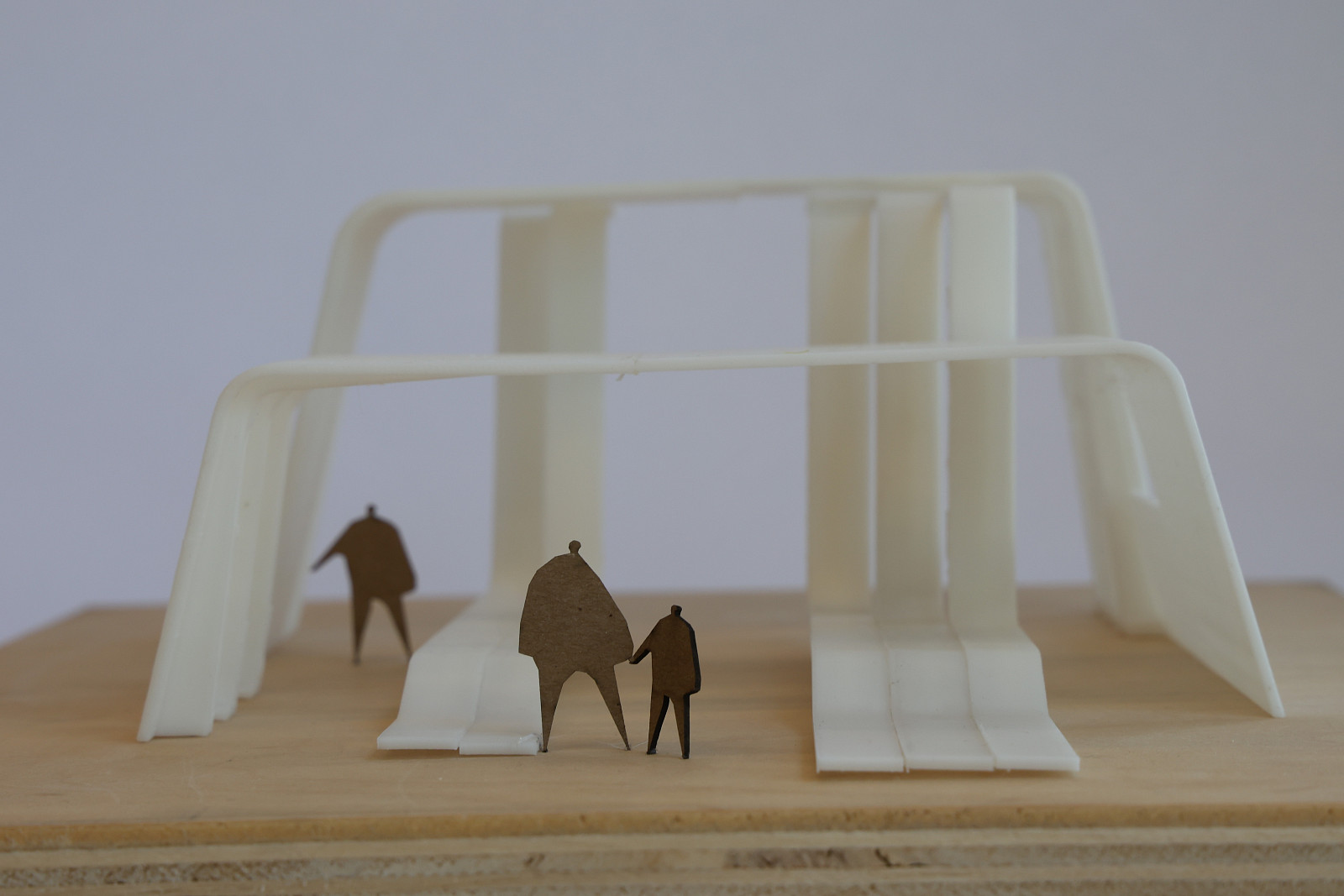
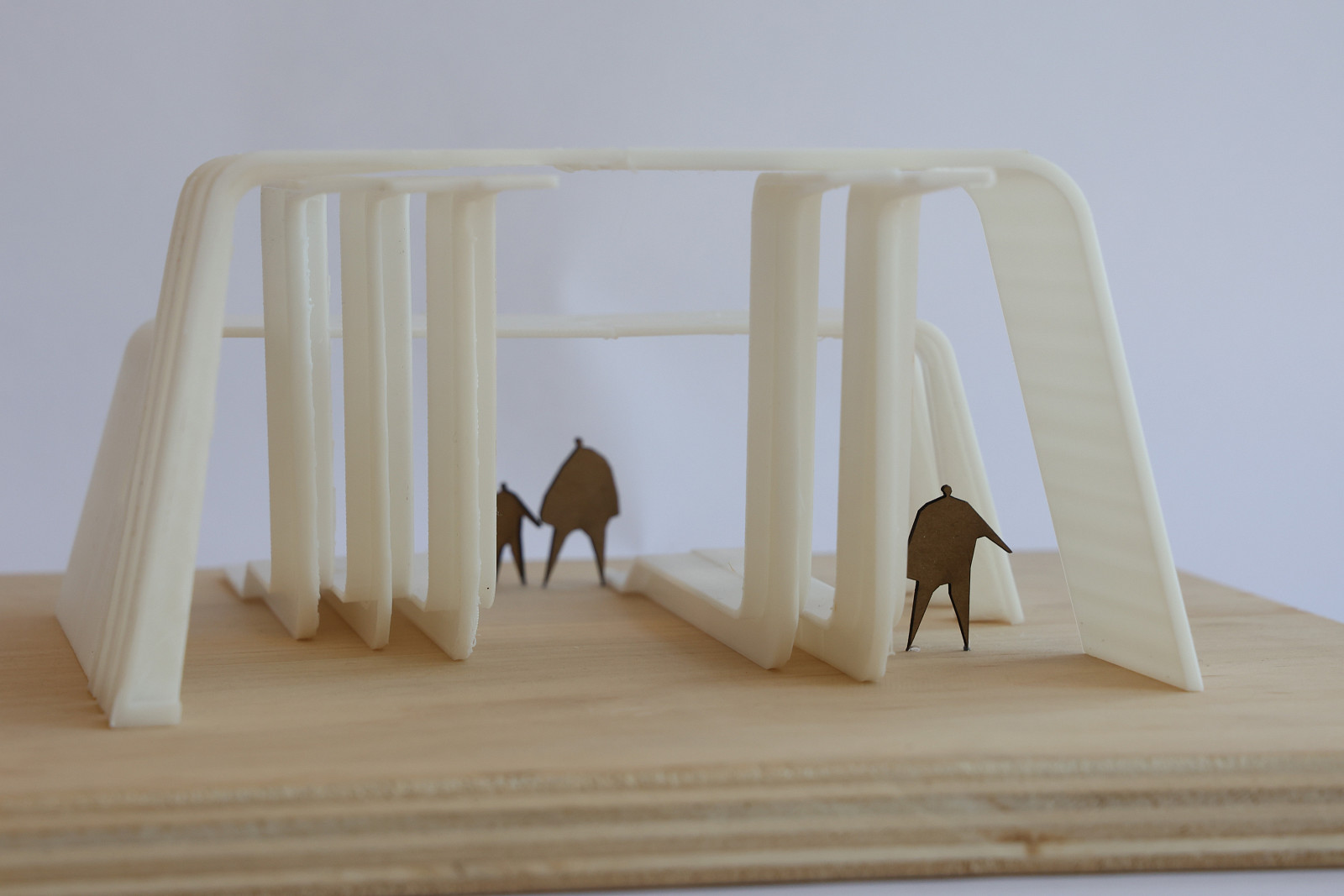
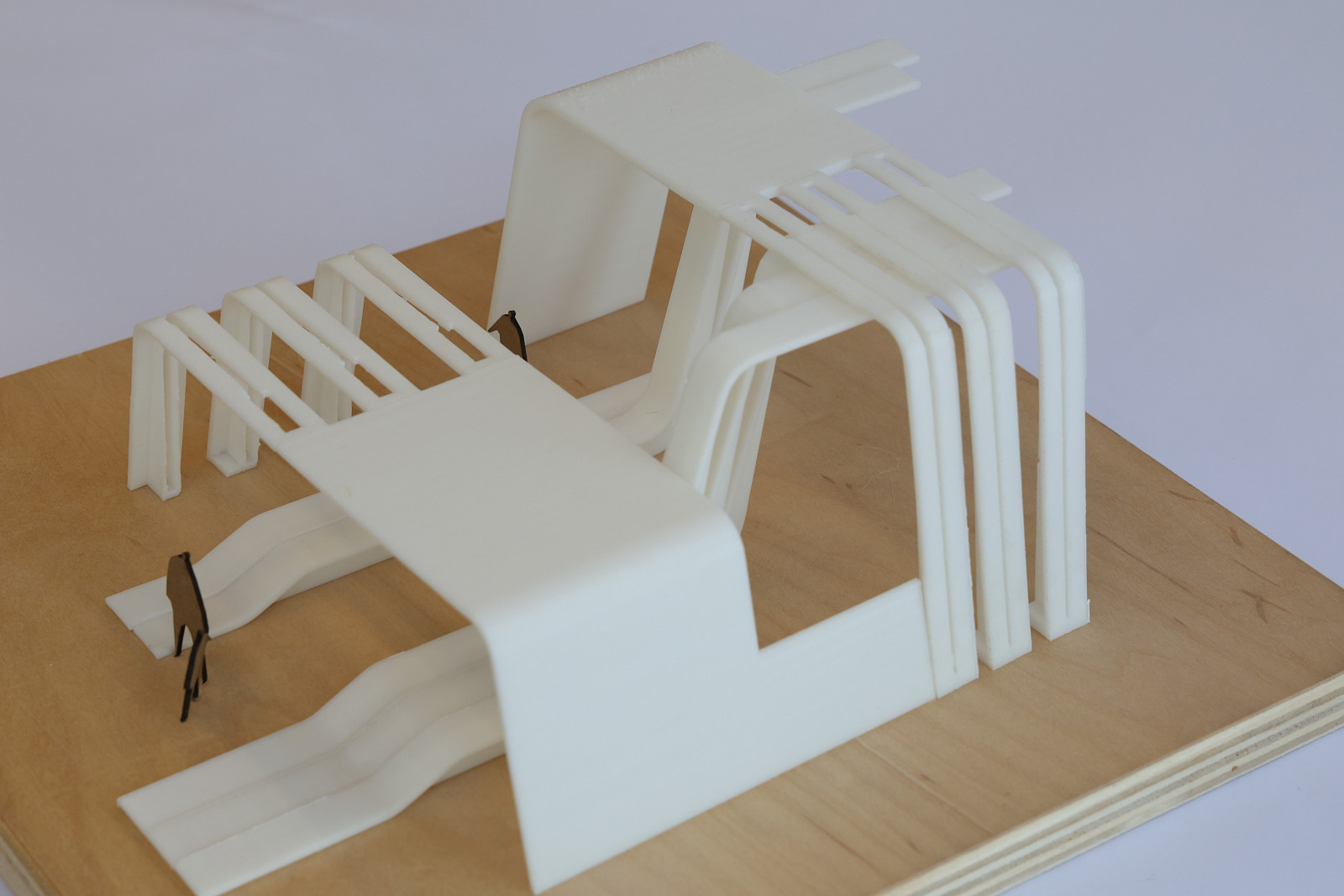
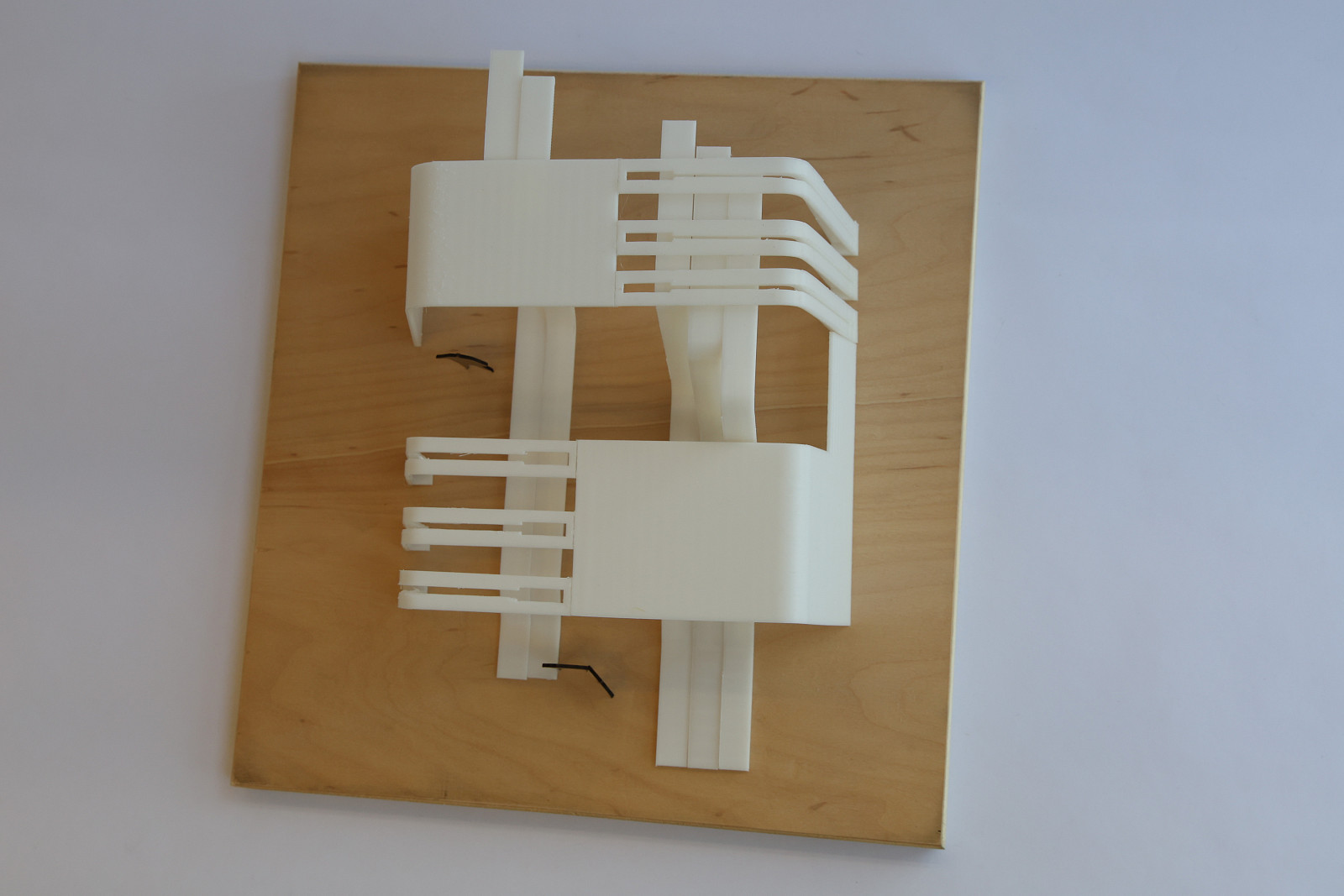
Evolving Roots is a public timber pavilion and landscape installation sited within an existing park. The project is organized around a single central core — a sheltered, enclosed volume that offers full protection from sun and rain — surrounded by a dynamic circuit of branching pergola structures, evolving root seating elements, and a fabric ground plane of interwoven gardens, concrete pavers, and hardfloor areas.The Core is the heart of the installation: a timber volume with wooden walls and a laminated wood panel roof that provides complete shade and shelter, functioning as the park's primary gathering anchor.
Conceived as the trunk of the tree, it is singular, protective, and stable — a place to feel secure within a public space, shielded from direct rain and sun. Multiple entrances open the core in several directions, ensuring it never becomes a closed or exclusive space but remains continuously porous to the surrounding landscape and the social life of the park.The Pergola Branches extend outward from the core as a steel-framed, laminated wood structure whose open weave creates zones of partial shade — dappled, shifting, and alive.
These branching elements simulate the canopy of a tree, filtering sunlight rather than blocking it, and producing the evolving shadow patterns that are central to the installation's identity. Moving through these zones, visitors experience a gradient from full exposure to partial cover to complete shelter, each threshold offering a different quality of presence and comfort.The Evolving Root Seating grounds the installation in the earth.
Steel-framed and laminated wood seating elements emerge from the paving as if growing from beneath, echoing the form of roots spreading from a trunk. The seating system is designed to accommodate approximately 60 people across a total seating area of 253.8 square feet — calculated at 4.3 square feet per person — distributed across the ground plane to support both individual rest and informal social gathering.
The Fabric Ground is designed as a landscape that crosses and weaves rather than separates. Gardens, sidewalks, hardfloor areas, and seating zones are interlaced in a pattern that encourages discovery — multiple paths through the installation, multiple ways of arriving at the core, multiple experiences of the relationship between planted ground and built structure. The landscape extends the presence of the existing park into the installation and draws the installation into the park, so that no clear boundary exists between the two.The Sun Studies reveal the installation's fourth dimension: time. Shadow drawings produced for summer at 8:00 am, 12:00 pm, and 5:00 pm show how the pergola canopy casts dramatically different patterns across the ground as the day progresses — wide and directional in the morning, concentrated and dense at noon, long and sweeping in the evening. The installation is designed to be experienced across the full arc of a day, with each hour offering a different spatial and sensory character.
Technical information
I have everything I need. Here are the three competition entries:
1. Project Idea
Public space in the contemporary city is increasingly defined by hard surfaces, passive seating, and the absence of the natural world. Parks exist, but their edges — the thresholds between the organic and the constructed — are rarely designed as places of genuine engagement, where people might slow down, gather, and feel themselves to be part of a living environment rather than observers of it. Evolving Roots begins with a simple but consequential question: what would it mean to build something that grows — not biologically, but spatially and experientially — the way a tree does?
The project is a public wooden pavilion and installation conceived for an existing park, designed around the structural and spatial logic of a tree: roots as seating and ground anchoring, a trunk as the sheltering core, branches as the pergola structure that filters light overhead, and leaves as the wooden roof panels that modulate shade and rain. Each element of a tree's anatomy becomes an architectural element, and together they create a space that is simultaneously structure, landscape, furniture, and environment.
The central ambition of Evolving Roots is not formal — it is relational. The installation invites visitors into a dynamic circuit of movement, rest, partial shade and full shelter, openness and enclosure, social encounter and individual reflection. As the sun moves across the sky, the shadows cast by the branching pergola structure evolve, transforming the ground beneath into a living drawing that shifts from morning to noon to evening — making visible the rhythms of nature that the city so routinely erases. The landscape surrounding the pavilion is designed as a fabric of gardens, paths, and seating woven together, so that the installation and the park become a single continuous experience rather than object and setting.
The goals of Evolving Roots are to restore a felt connection between people and natural processes in the public realm; to create a space that accommodates multiple simultaneous uses — rest, play, social interaction, contemplation — through the intelligence of its form rather than the prescription of its program; and to demonstrate that timber, crafted with precision and care, can produce an architecture that is at once structurally expressive, environmentally generous, and deeply human.
2. Project Description
Evolving Roots is a public timber pavilion and landscape installation sited within an existing park. The project is organized around a single central core — a sheltered, enclosed volume that offers full protection from sun and rain — surrounded by a dynamic circuit of branching pergola structures, evolving root seating elements, and a fabric ground plane of interwoven gardens, concrete pavers, and hardfloor areas.
The Core is the heart of the installation: a timber volume with wooden walls and a laminated wood panel roof that provides complete shade and shelter, functioning as the park's primary gathering anchor. Conceived as the trunk of the tree, it is singular, protective, and stable — a place to feel secure within a public space, shielded from direct rain and sun. Multiple entrances open the core in several directions, ensuring it never becomes a closed or exclusive space but remains continuously porous to the surrounding landscape and the social life of the park.
The Pergola Branches extend outward from the core as a steel-framed, laminated wood structure whose open weave creates zones of partial shade — dappled, shifting, and alive. These branching elements simulate the canopy of a tree, filtering sunlight rather than blocking it, and producing the evolving shadow patterns that are central to the installation's identity. Moving through these zones, visitors experience a gradient from full exposure to partial cover to complete shelter, each threshold offering a different quality of presence and comfort.
The Evolving Root Seating grounds the installation in the earth. Steel-framed and laminated wood seating elements emerge from the paving as if growing from beneath, echoing the form of roots spreading from a trunk. The seating system is designed to accommodate approximately 60 people across a total seating area of 253.8 square feet — calculated at 4.3 square feet per person — distributed across the ground plane to support both individual rest and informal social gathering.
The Fabric Ground is designed as a landscape that crosses and weaves rather than separates. Gardens, sidewalks, hardfloor areas, and seating zones are interlaced in a pattern that encourages discovery — multiple paths through the installation, multiple ways of arriving at the core, multiple experiences of the relationship between planted ground and built structure. The landscape extends the presence of the existing park into the installation and draws the installation into the park, so that no clear boundary exists between the two.
The Sun Studies reveal the installation's fourth dimension: time. Shadow drawings produced for summer at 8:00 am, 12:00 pm, and 5:00 pm show how the pergola canopy casts dramatically different patterns across the ground as the day progresses — wide and directional in the morning, concentrated and dense at noon, long and sweeping in the evening. The installation is designed to be experienced across the full arc of a day, with each hour offering a different spatial and sensory character.
3. Technical Information
Evolving Roots is a single-level public pavilion installation with a roof plan and ground floor plan drawn at 1/4" = 1'-0" scale, composed of three primary structural and material assemblies.
Structural System: The installation uses a hybrid structure of steel frames and laminated wood throughout. The pergola branch elements are constructed from steel frames with laminated wood members that form the branching canopy geometry, providing structural stability while achieving the organic, tapering profile that references tree branch morphology. The core walls and roof use laminated wood panels — engineered timber chosen for its dimensional stability, structural performance, and the warmth of its surface finish. The evolving root seating elements are also steel-framed with laminated wood surfaces, anchored to the concrete paver ground plane and designed to withstand public use and outdoor weathering conditions.
Material Palette:
Laminated wood panels: used for the core walls, roof surface, pergola members, and seating surfaces — providing visual consistency across all elements while allowing differentiation in form and density.
Steel frames: used as the primary structural armature for the pergola branches and seating roots, concealed within or behind the timber finish.
Concrete pavers: ground plane material for hardfloor and circulation zones, interwoven with garden beds to create the fabric ground condition.
Native and garden plantings: distributed across the garden beds woven through the ground plane, supporting biodiversity, providing seasonal color variation, and reinforcing the installation's connection to the existing park ecology.
Occupancy and Capacity: The seating system is designed for an occupancy of approximately 60 people, based on a unit area of 4.3 square feet per person across a total seating surface of 253.8 square feet. The multiple entrance configuration of the core and the distributed nature of the seating across the ground plane support simultaneous use by larger numbers of visitors moving through the space.
Environmental Performance:
Shade and solar modulation: the pergola branch structure is calibrated to provide partial shade beneath the canopy across the full day, with the degree of shading varying by season and hour. Sun studies conducted for summer at 8:00 am, 12:00 pm, and 5:00 pm confirm that the branching geometry produces dynamic and inhabitable shadow conditions throughout the day, with no period of complete over-shading that would discourage use.
Rain protection: the laminated wood panel roof of the core provides complete protection from direct rainfall across the enclosed central volume, while the pergola zones offer partial protection sufficient for brief shelter.
Ventilation: the open-sided pergola structure and the multiple-entrance core configuration ensure natural ventilation throughout all areas of the installation, preventing heat accumulation and maintaining comfort in warm conditions.
Circulation and Spatial Organization: The installation is organized around one central core with circulation distributed around it, allowing visitors to walk the full perimeter of the structure, discovering the garden fabric, the seating roots, and the shifting thresholds between zones of shade and openness. A dynamic circuit encourages multiple routes and directions of travel, ensuring that no single path exhausts the spatial experience. Section A-A' illustrates the vertical dimension of the installation — growth from ground to air, rooted seating rising to sheltering canopy; Section B-B' illustrates the protective logic of the core and its relationship to the open pergola zones beyond.

Copyright © 2026 INSPIRELI | All rights reserved. Use of this website signifies your agreement to the Terms of Use, Privacy Policy, and use of cookies.