PLACING AL HUJEIR VALLEY ON THE NATIONAL PHYSICAL MASTERPLAN OF THE LEBANESE TERRITORY: PLANNING FOR A WAR-SCARRED LANDSCAPE


Project idea
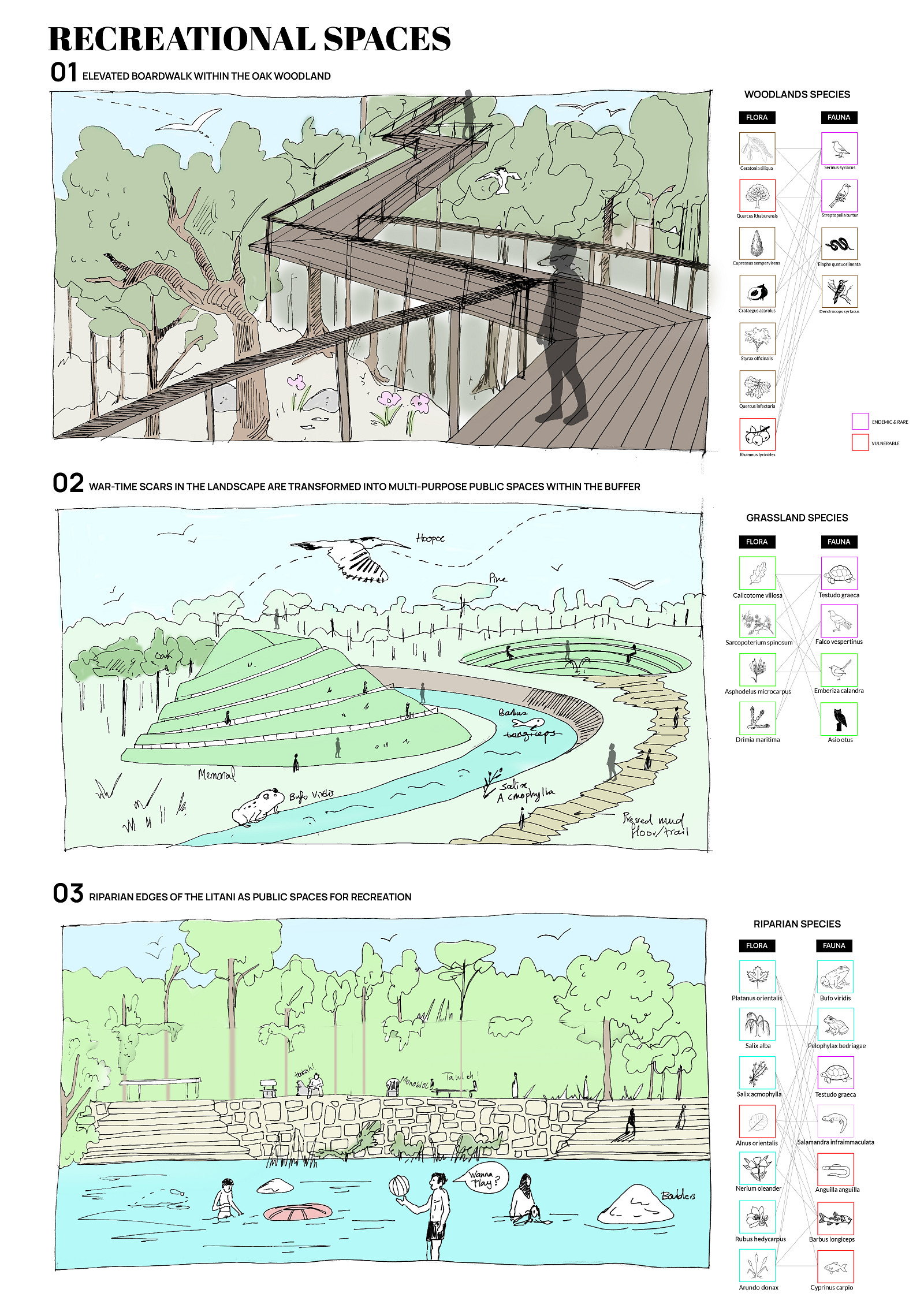
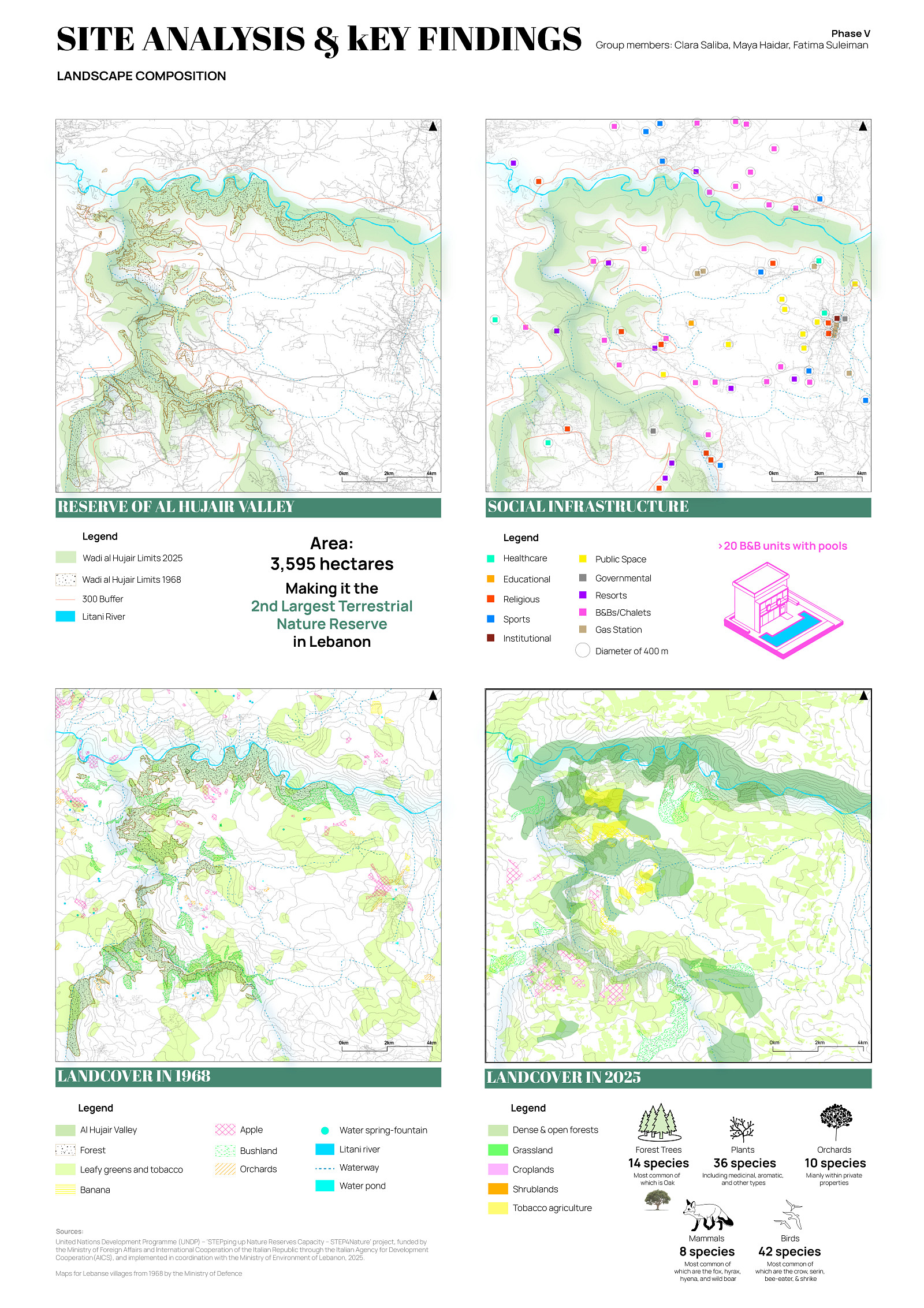
Wadi al Hujair is one of the last remaining patches of natural heritage in South Lebanon. It is known as a key biodiversity hotspot of a diverse ecosystem comprising multiple flora and fauna species, from broad oak woodlands and riparian forests along the Litani River to the north, serving as nesting and feeding grounds for wildlife species, migratory birds, among other mammals, amphibians, and insects.
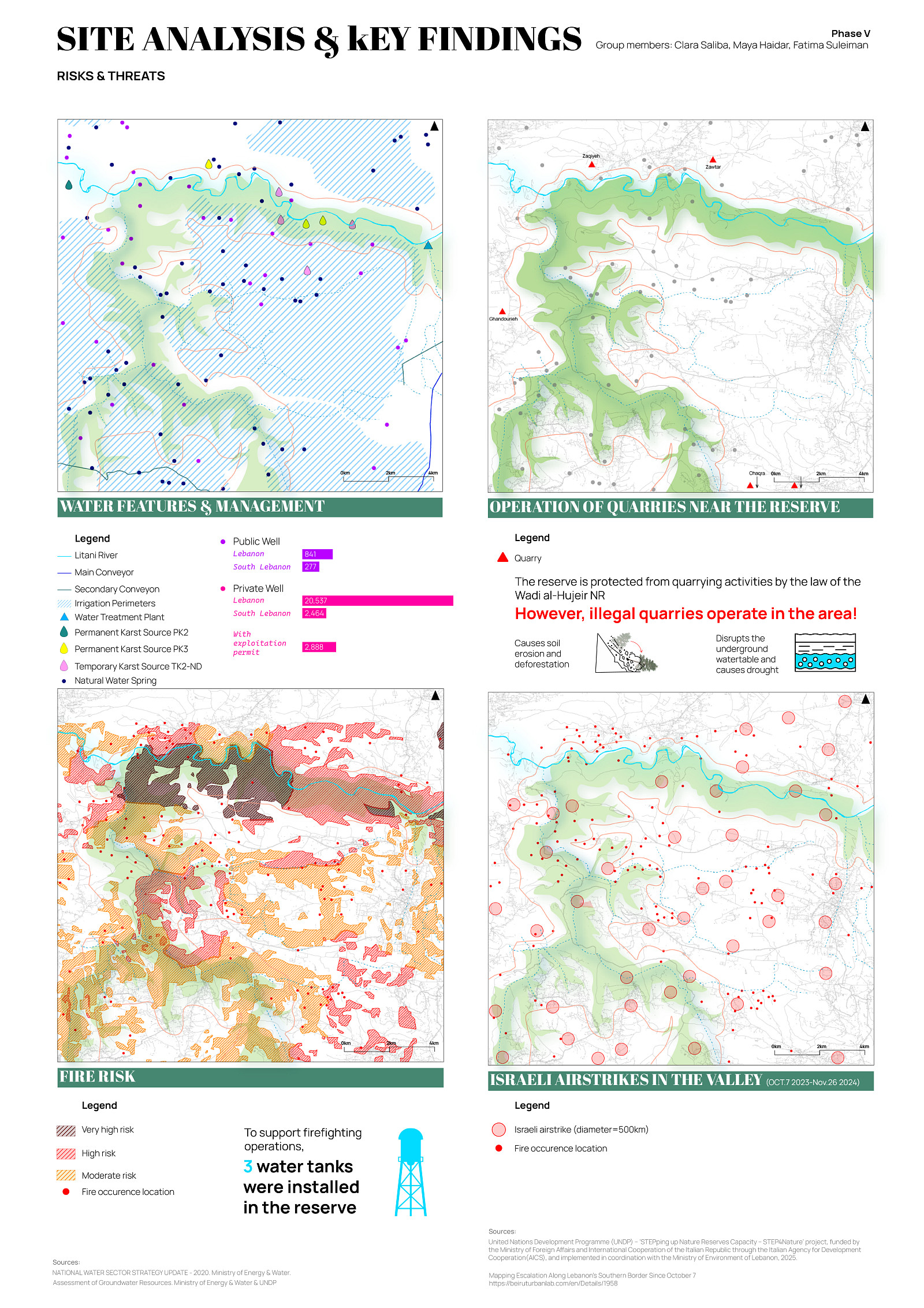
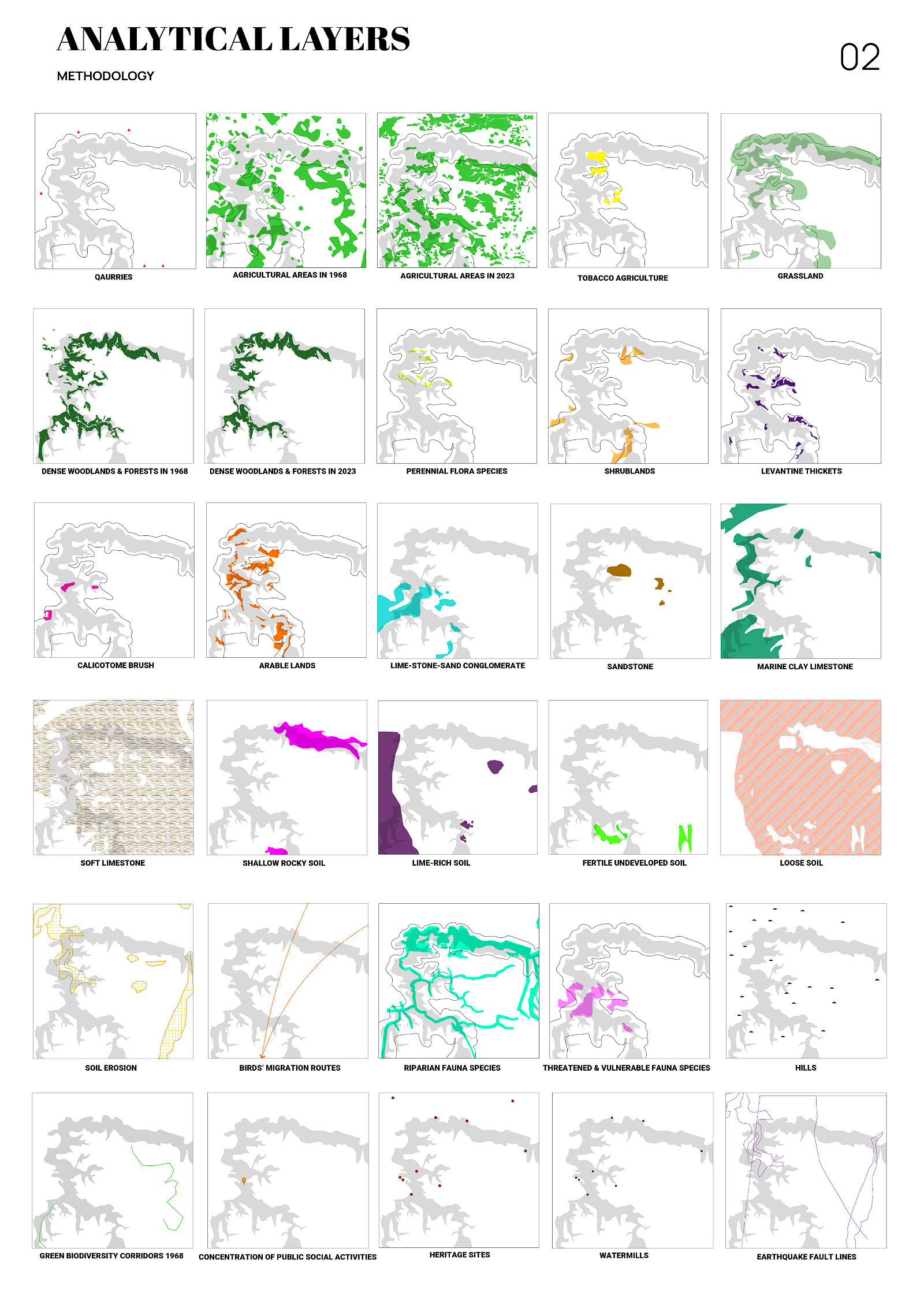
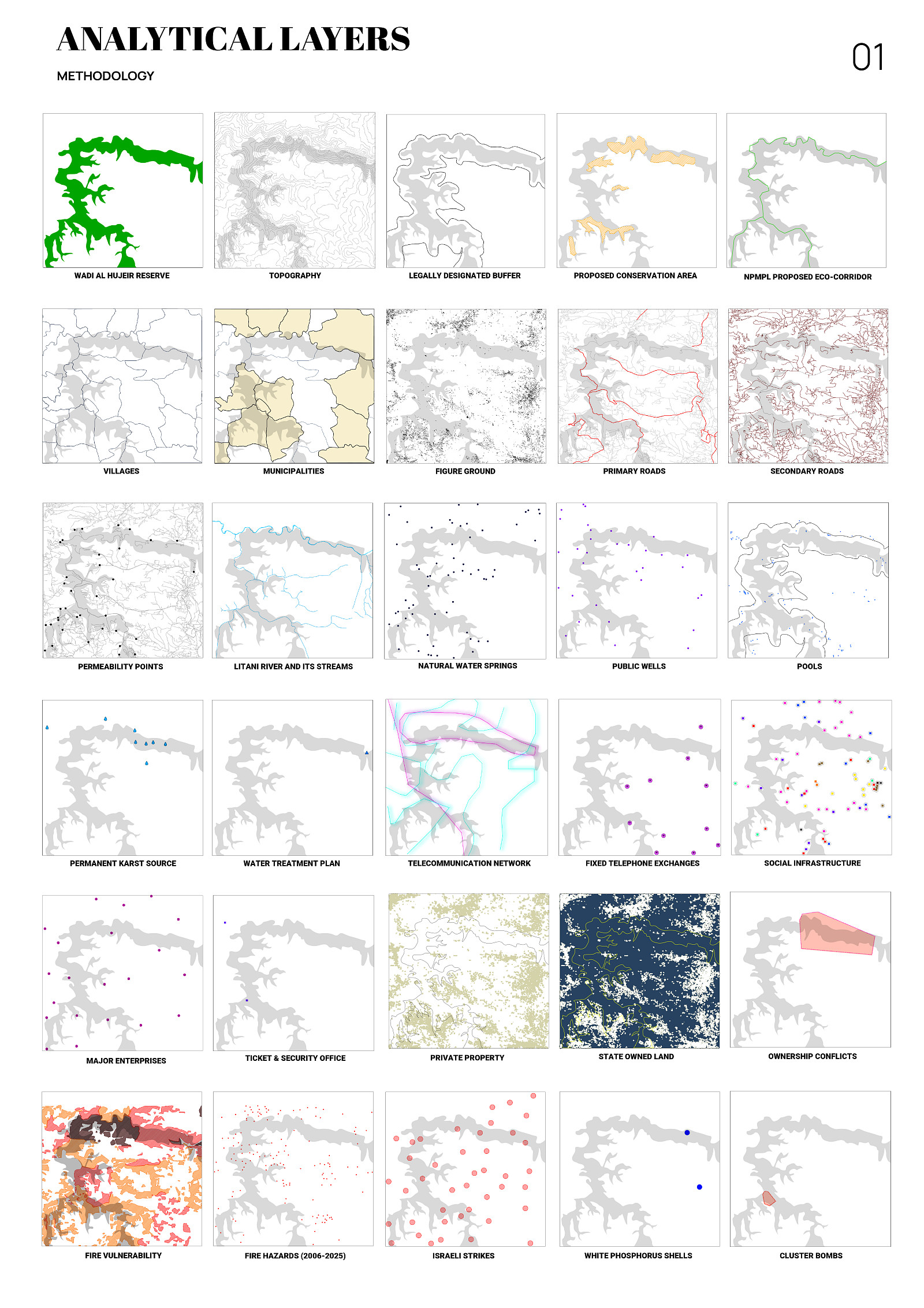
However, the valley has been subject to myriad exploitative practices such as quarrying, water extraction leading to pollution and scarcity, uncontrolled urban sprawl of villages abutting the reserve’s core within its buffer zone, and continuous Israeli attacks that have fragmented and scarred the landscape of Jabal Amel for decades.
Under ineffective management and supervision, and weak law enforcement, Wadi al Hujair is threatened.
Project description
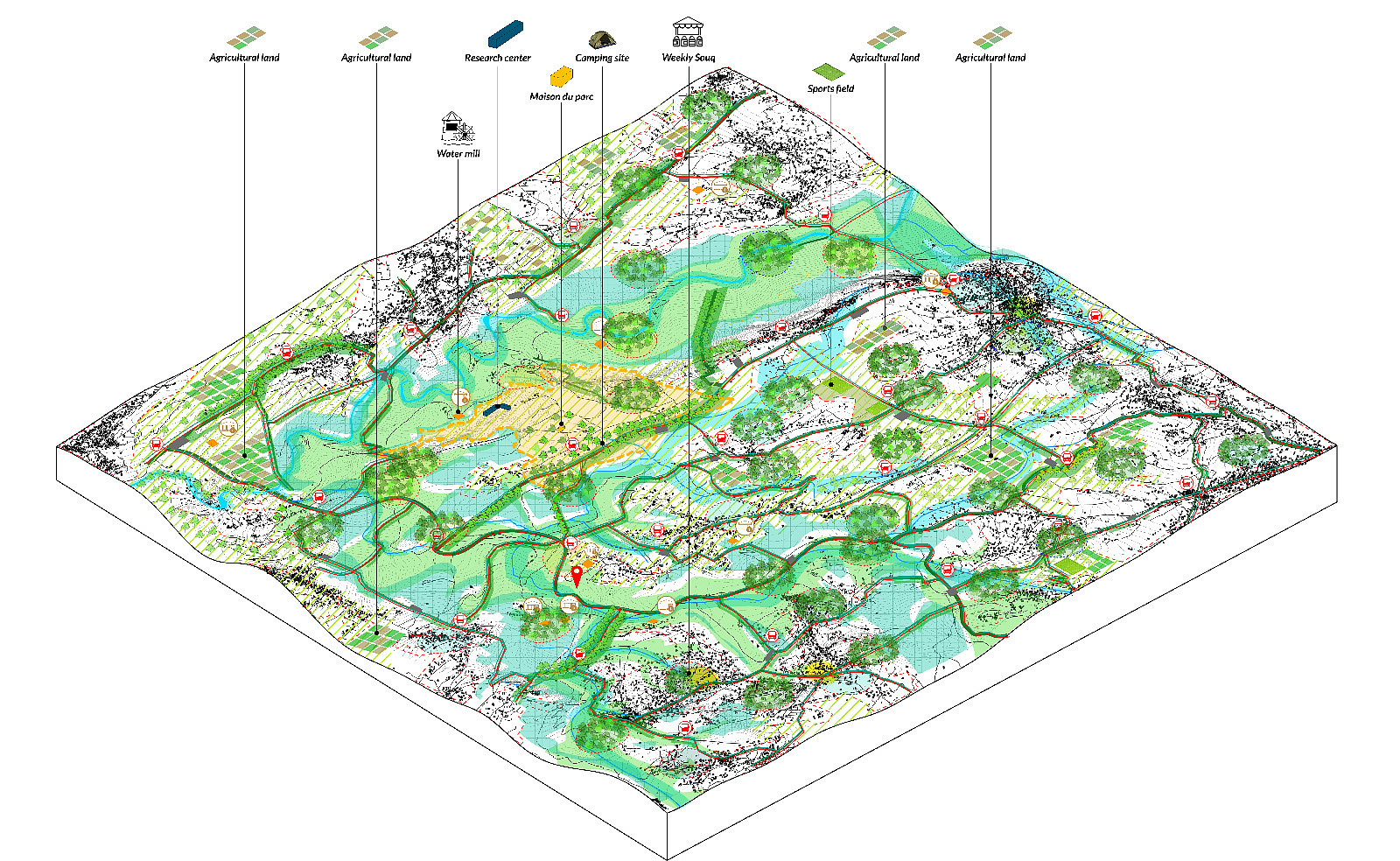
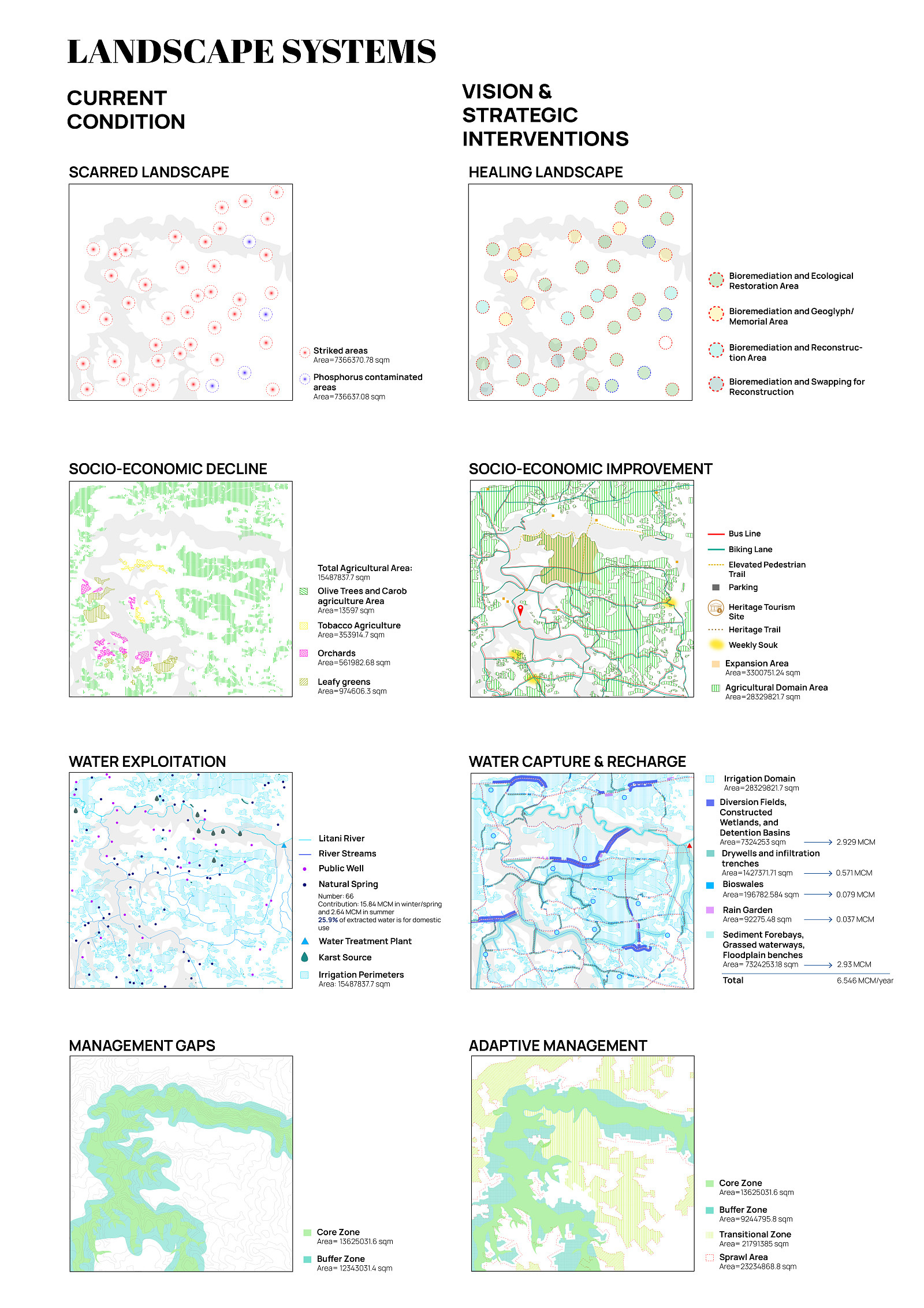
The project consists of 6 main components which are the core area of the reserve that is protected by law, a buffer zone which is the interface between the core zone and the first transitional zone, an urban sprawl belt of 100m around the buffer, a network of green-blue eco-corridors, the green eco-corridor buffer, and a strategic expansion area which is directly adjacent to the reserve's buffer zone.
Technical information
The project aims to heal the war-scarred landscape by introducing bio-remediation, green-blue infrastructure, and restoring ecological heritage and landscape systems in the valley.

Copyright © 2026 INSPIRELI | All rights reserved. Use of this website signifies your agreement to the Terms of Use, Privacy Policy, and use of cookies.