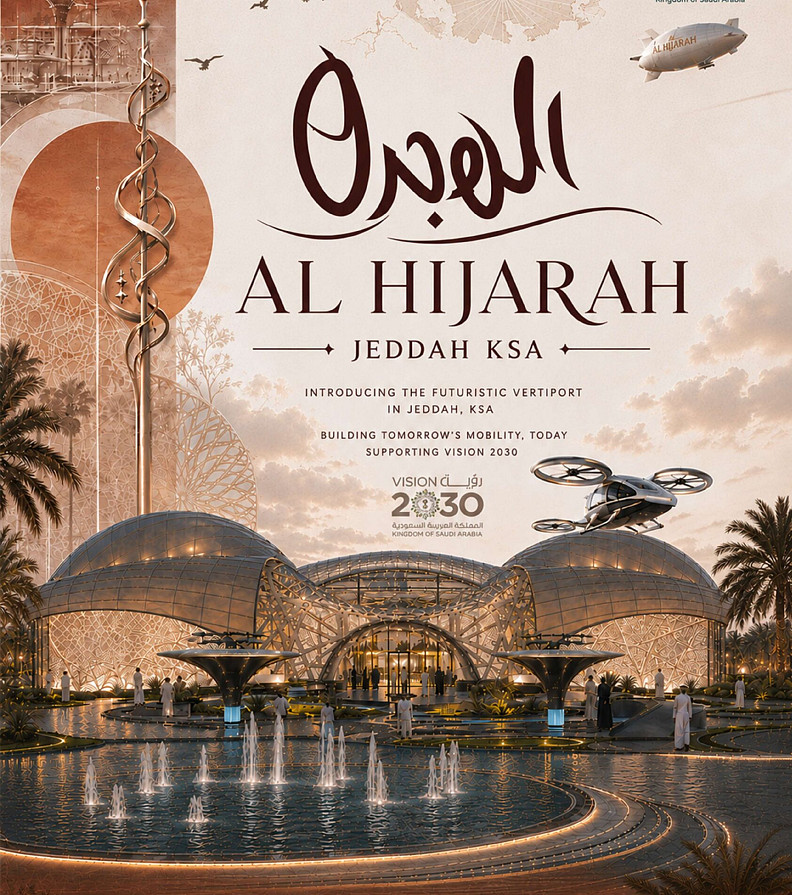
HIJRAH - Introducing Vertiport in Jeddah, KSA


Project idea
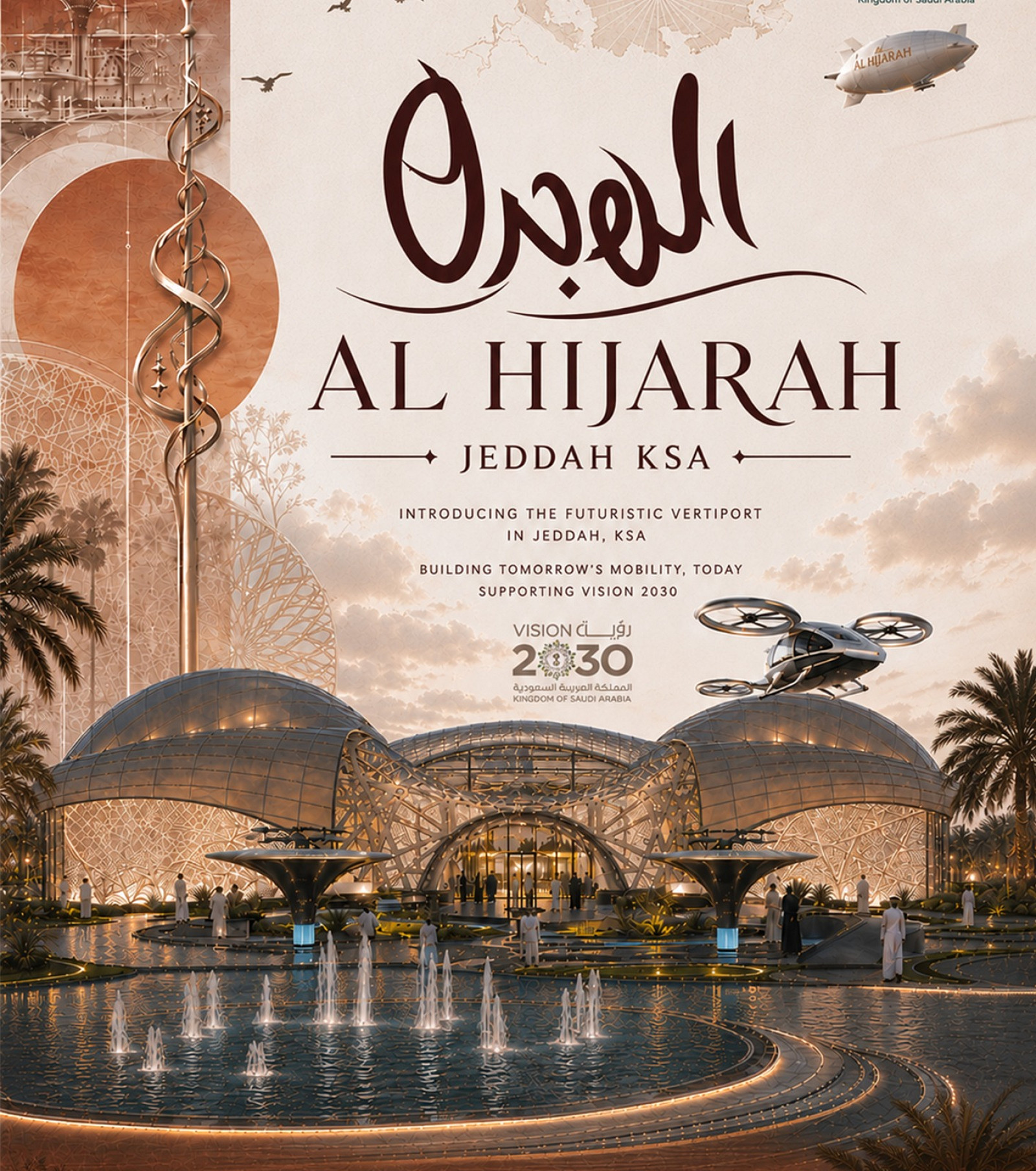
Al Hijrah: Introducing a Vertiport in Jeddah, KSA
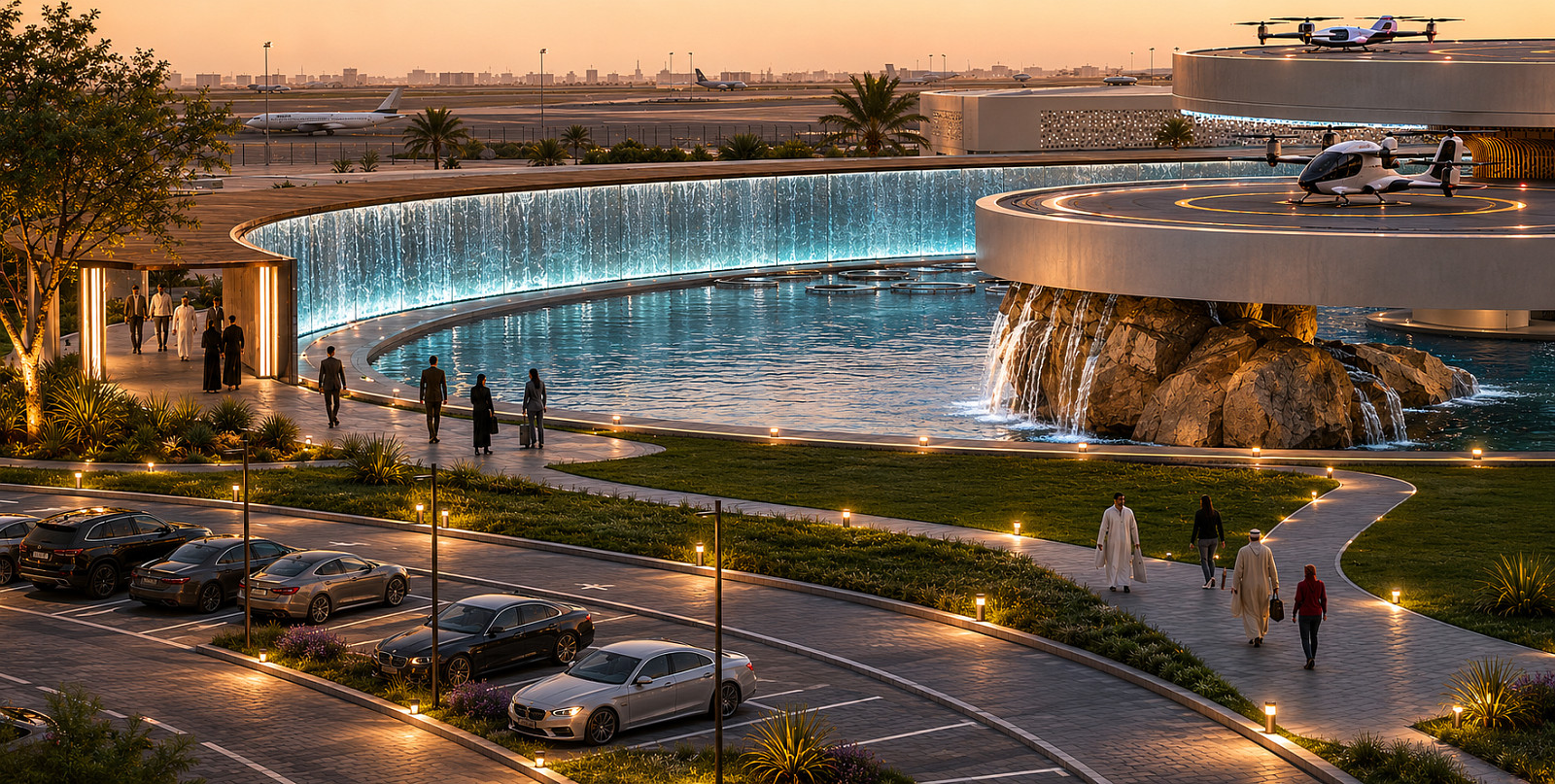
This project proposes the design of an Advanced Air Mobility (AAM) hub a vertiport in the Al Nuzha District of Jeddah, Saudi Arabia, adjacent to King Abdulaziz International Airport. As Saudi Arabia advances toward Vision 2030, this facility integrates eVTOL air taxi services with metro, bus, Haramain rail, and pedestrian networks to create a seamless urban air mobility gateway.
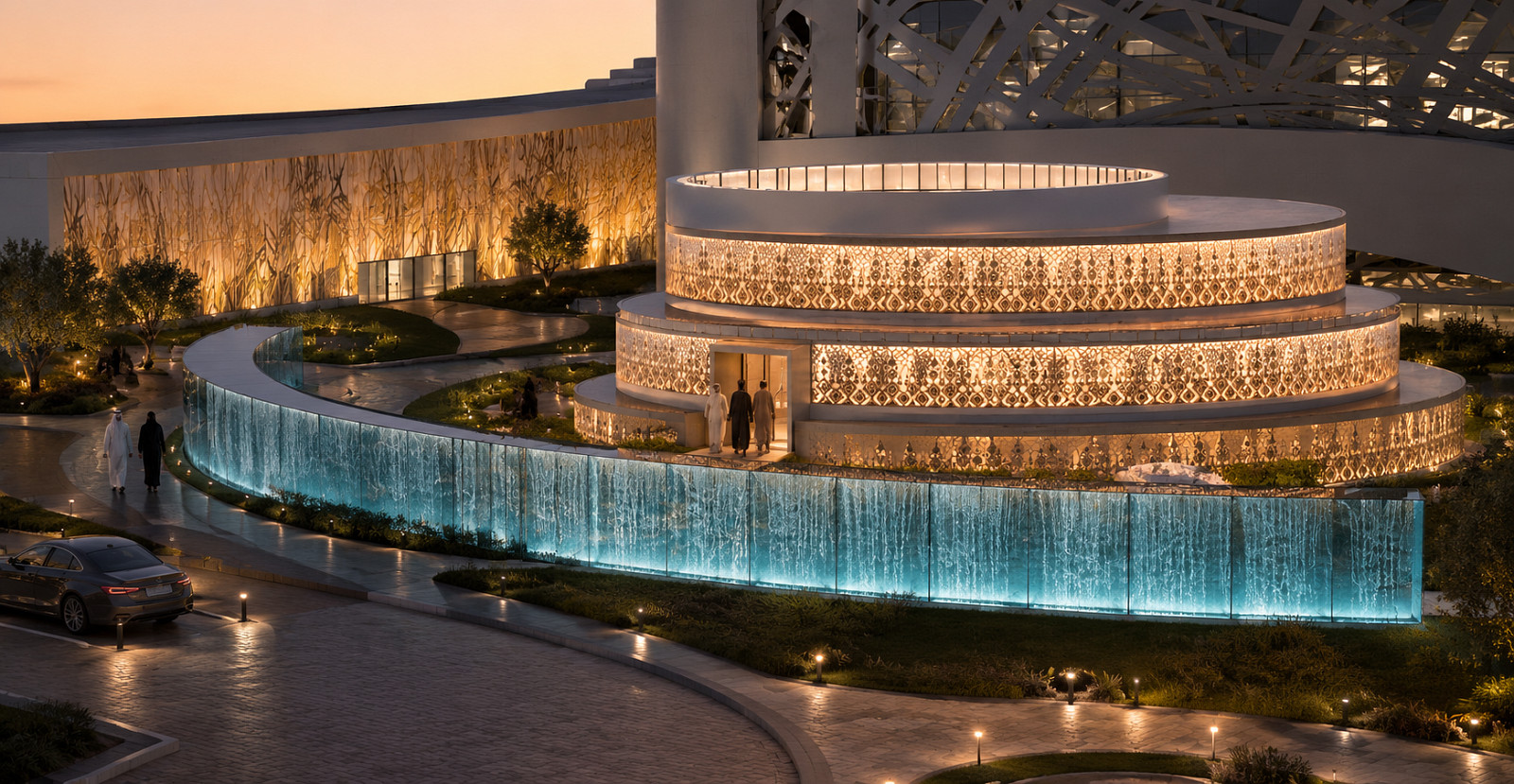
The hub is conceived as a Desert Oasis a civic and commercial landmark that not only manages aerial mobility but also creates meaningful public space for pilgrims, commuters, and residents. Designed to GACA and ICAO standards, the vertiport addresses Jeddah's unique challenges of extreme heat, flash floods, sandstorms, and Hajj-season pilgrim surges while aligning with Saudi Vision 2030's smart city and sustainability goals.
Project description
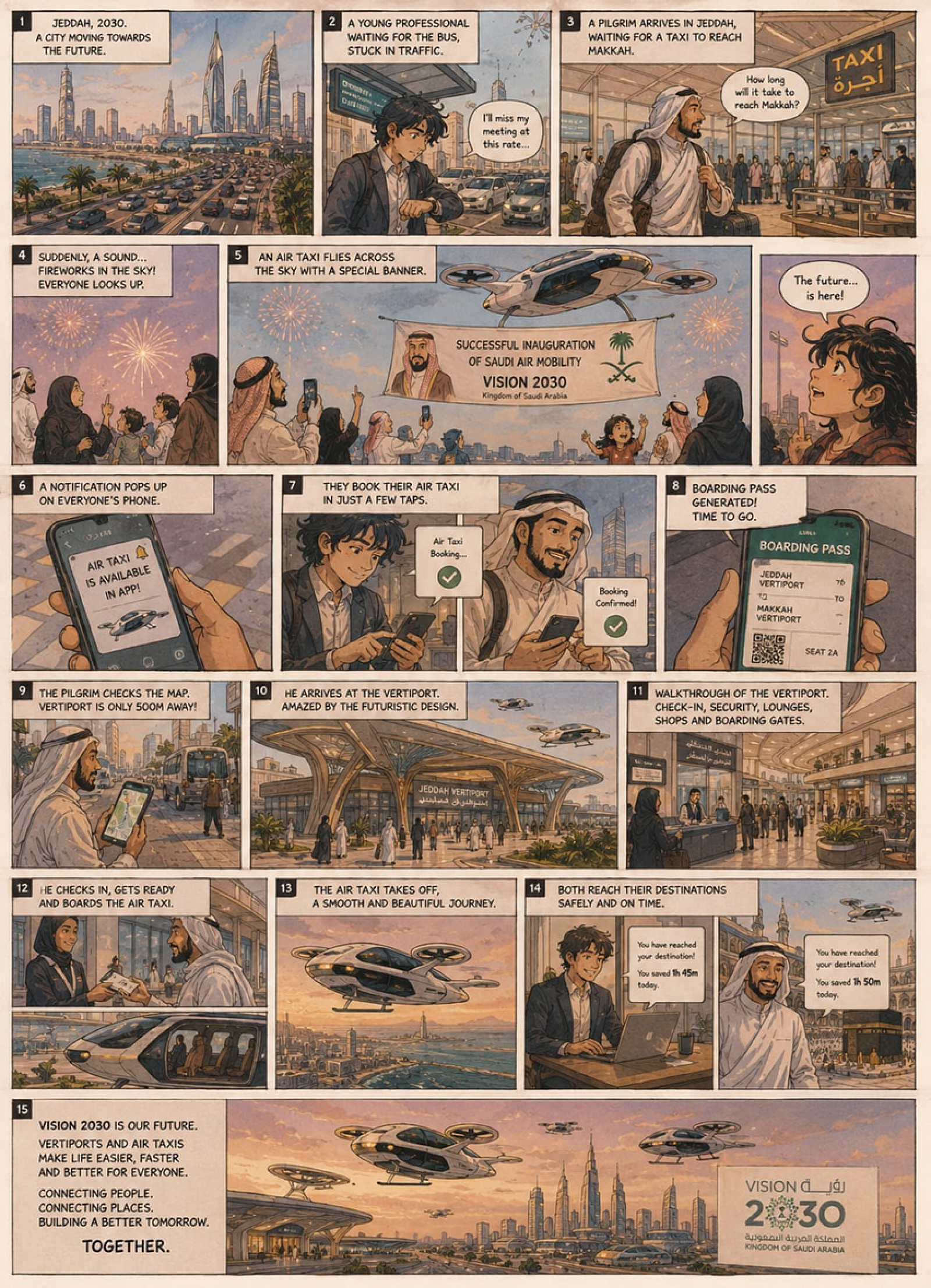
Al Hijrah envisions a next-generation air mobility hub that prioritizes accessibility, climate resilience, and user experience for Jeddah's diverse population from daily commuters and business travellers to Hajj and Umrah pilgrims. The project integrates eVTOL passenger services, emergency air response, and urban freight operations into a single, efficiently managed terminal.
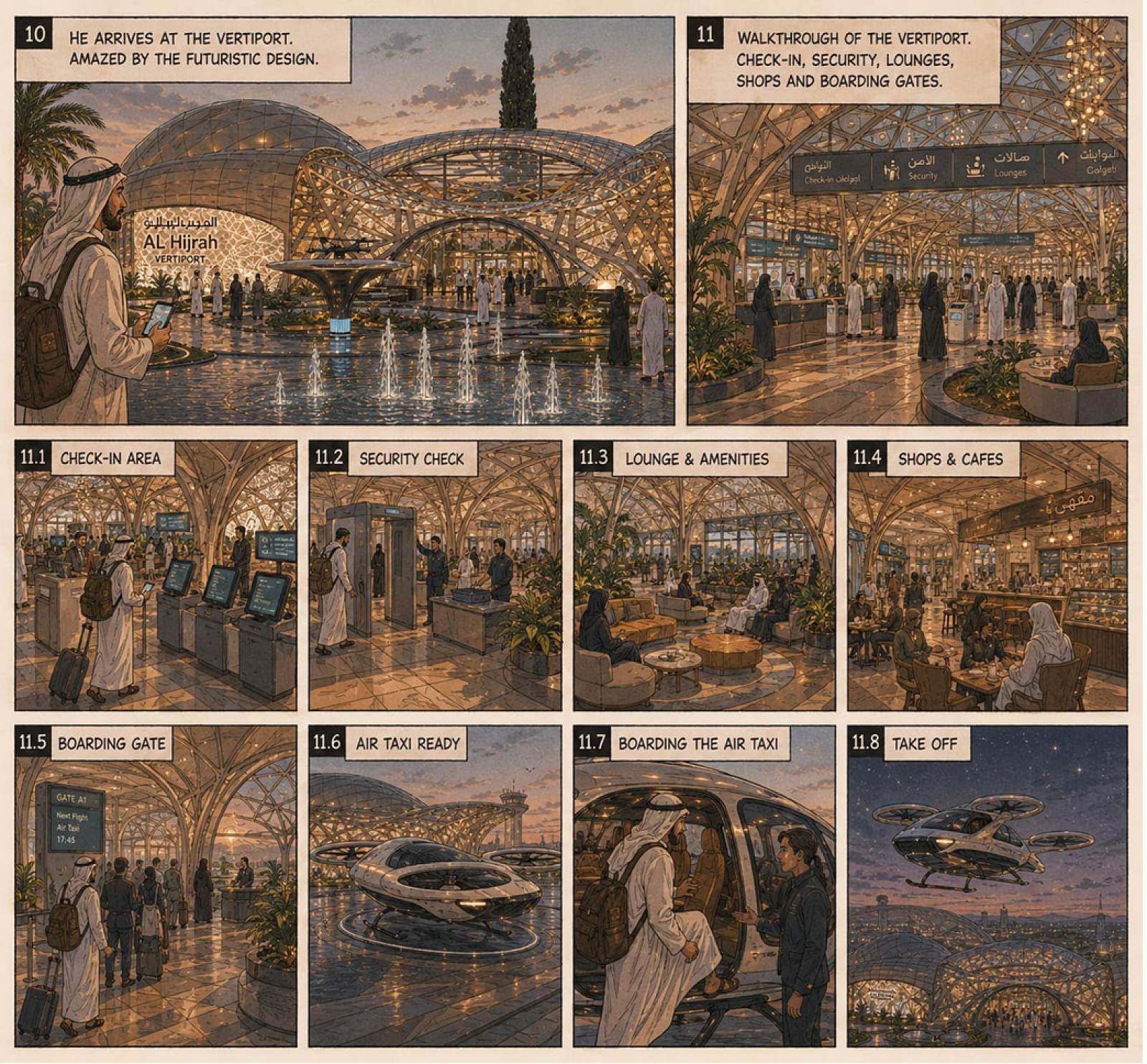
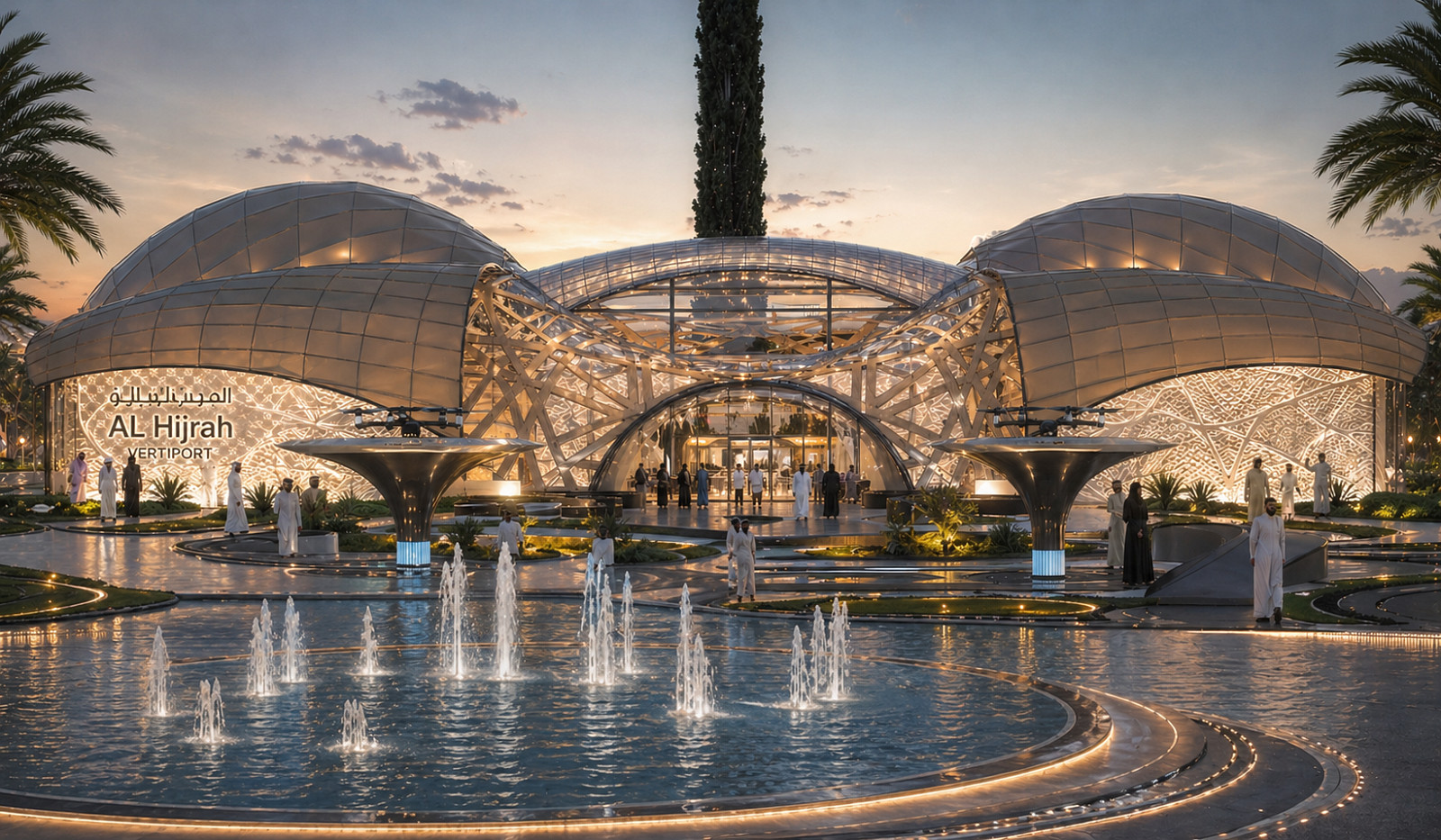
The design scope encompasses FATO pad layouts, terminal planning, intermodal ground connections, public civic zones, and embedded sustainability systems. By combining digital UAM Traffic Management (UAMTS), BIPV Mashrabiya roofing, mushroom columns with atmospheric water harvesting, piezoelectric boarding tiles, and native desert landscaping, the hub offers a model for future-ready, net-zero vertiport infrastructure in arid climates.
Technical information
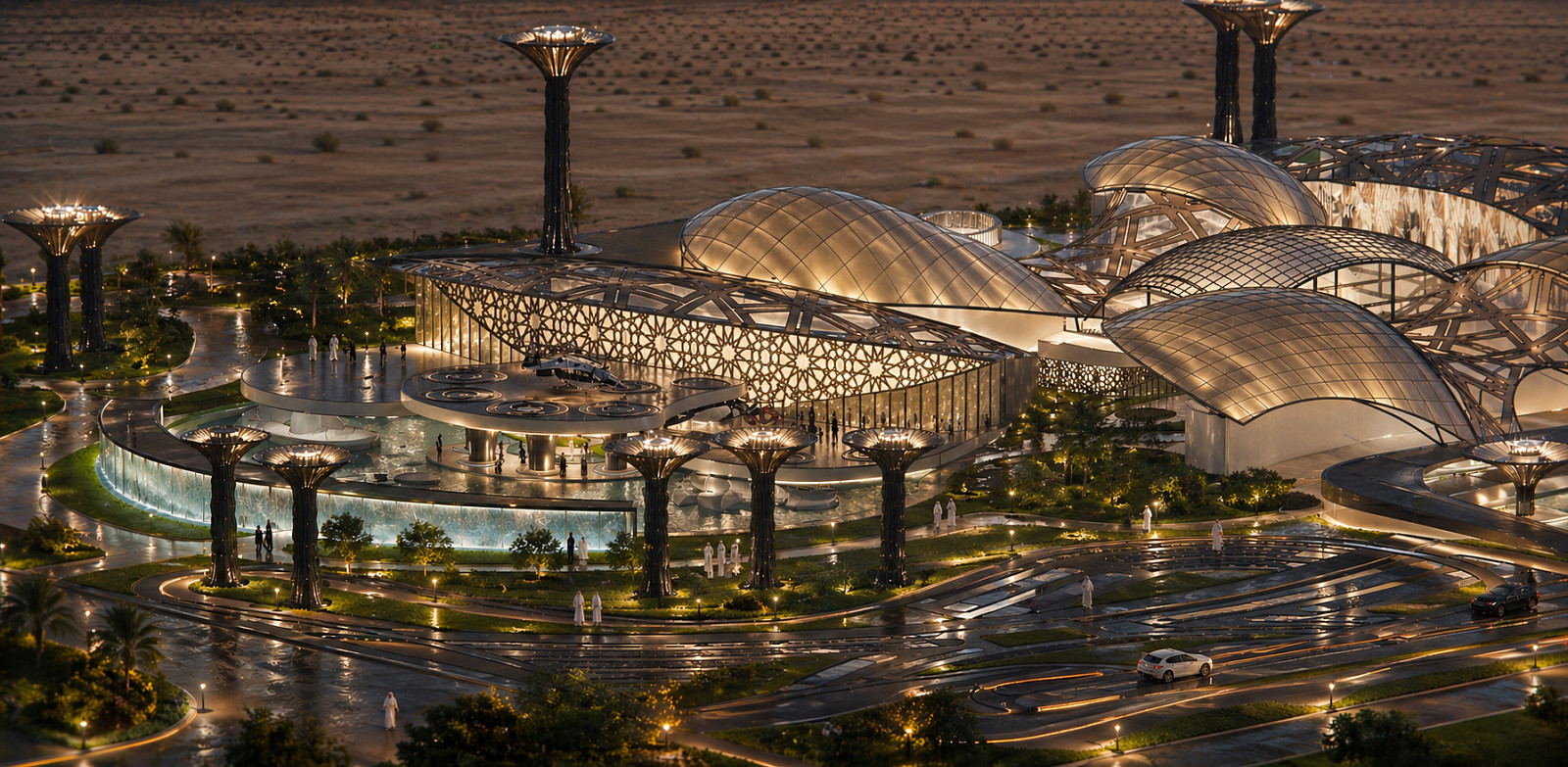
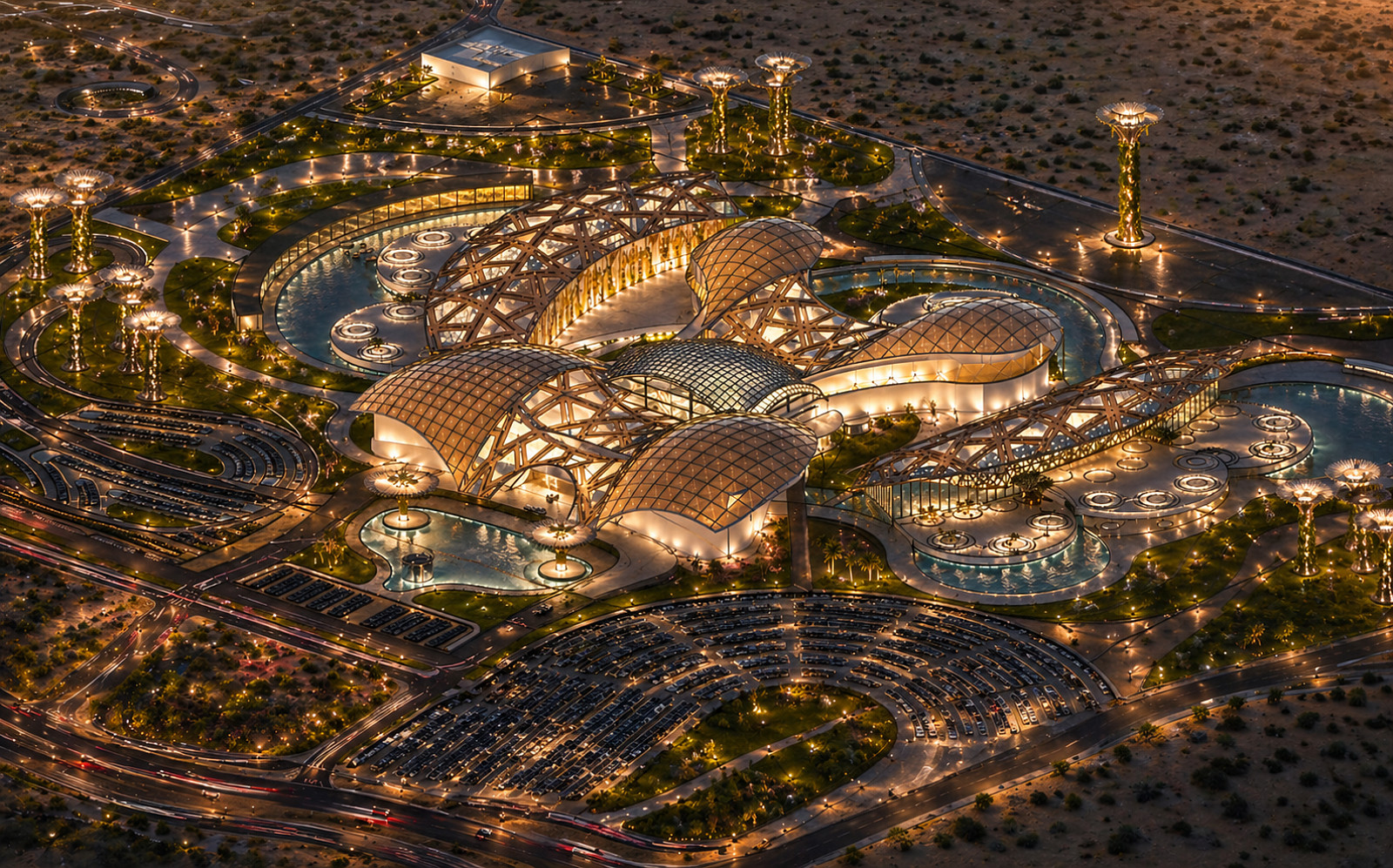
The Al Hijrah Vertiport is organized on a Paw Model layout a central terminal cluster surrounded by distributed FATO pad lobes enabling simultaneous arrivals and departures with minimal taxiway conflict. The site covers approximately 35 hectares within the Al Nuzha District, strategically positioned to connect with KAIA's existing transport corridors, metro alignments, and the Haramain High-Speed Railway.
Aviation Operations: eVTOL aircraft operate at cruise speeds of 240–320 km/h at altitudes of 300–450 m. A digital UAM ATC slot-based system manages one aircraft every 2–3 minutes per pad, achieving 10–20 flights per pad per hour. Passenger turnaround is designed for under 10 minutes. The airspace system autonomously reroutes aircraft during adverse weather or congestion events.
Structural System: The terminal is supported by mushroom columns of 12 m diameter functioning as dual-purpose structural and environmental elements each column integrates a hydrophilic mesh cap for atmospheric water condensation (AWG) and solar PV cells on top, simultaneously harvesting water and generating electricity. Secondary columns of 2 m diameter are distributed across the site. The structural framework uses RCC and steel composite construction.
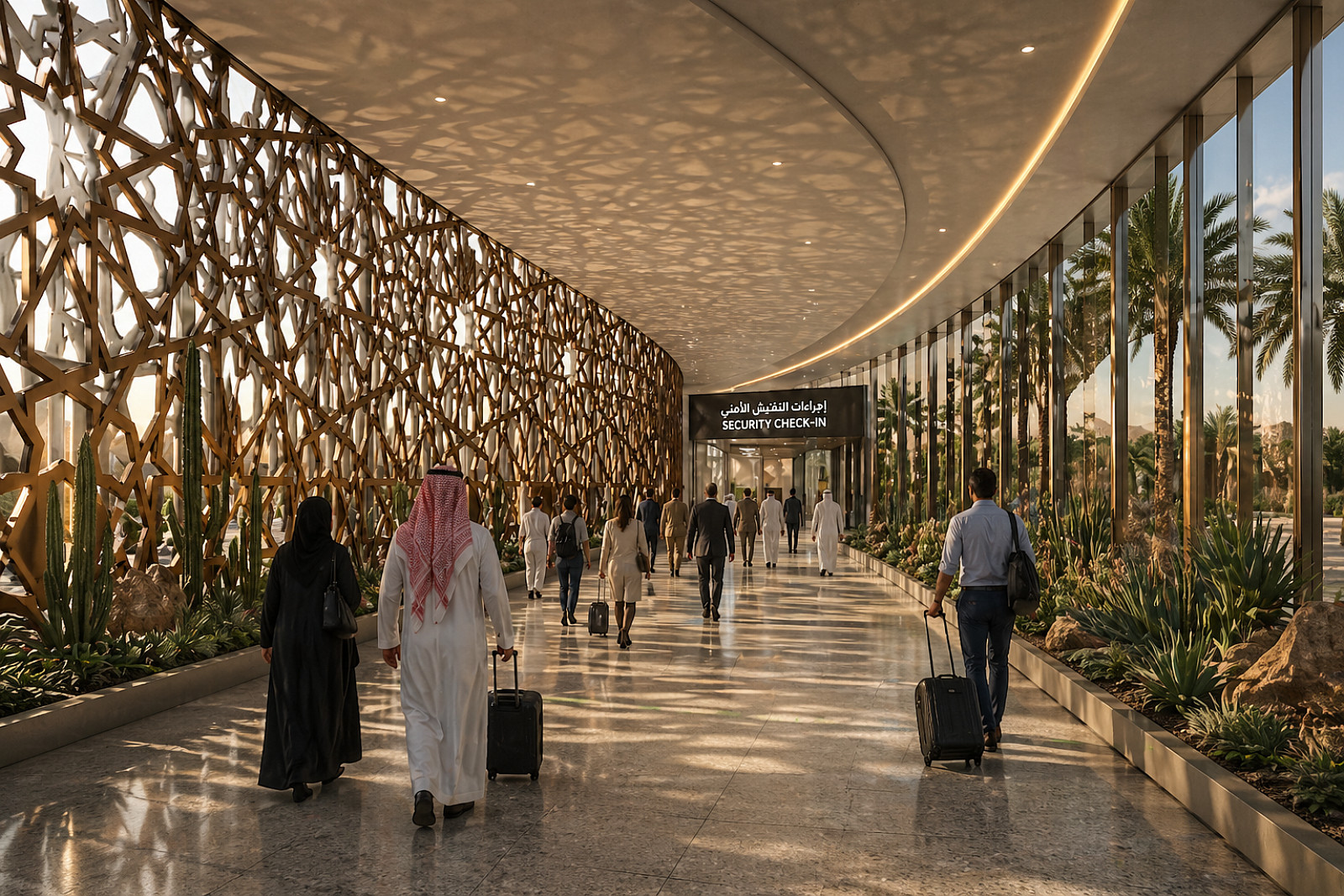
Environmental Strategy: The BIPV Mashrabiya Roof reinterprets traditional Arabic Mashrabiya geometry as a PV module grid, reducing solar glare by 40%, generating electricity, and filtering harsh desert sunlight into diffused interior light. Piezoelectric boarding tiles generate 0.1–1W per footstep, powering LED gate signage and ambient lighting. Atmospheric Water Generation via mesh condensation targets 300–700 litres/day supplemented by grey water recycling and bio pond buffer systems.
Flash Flood Defence 5-Layer System: Permeable paving reduces peak flood flow by 60%; a raised plinth protects the terminal base; retention swales slow stormwater at site edges; a 3× capacity bio pond absorbs overflow; and a controlled detention basin directs excess water to the city drainage network.
Thermal Comfort: Integration of native desert planting (Ghaf, Date Palm, Sidr, Acacia), shaded bio-pond landscape corridors, and the extended BIPV roof overhang achieves a projected total perceived temperature reduction of 15–22°C, transforming an un survivable 48°C outdoor condition into a 26–32°C comfortable passenger experience.
Zoning: Zone 1 is a fully public Civic Park landside; Zone 2 is the controlled terminal with FATO access. During Ramadan and Hajj season, Zone 1 activates as a shaded iftar rest area and pilgrim congregation space.
Documentation

Copyright © 2026 INSPIRELI | All rights reserved. Use of this website signifies your agreement to the Terms of Use, Privacy Policy, and use of cookies.