Alleyscraper- Redefining Skyline


Project idea
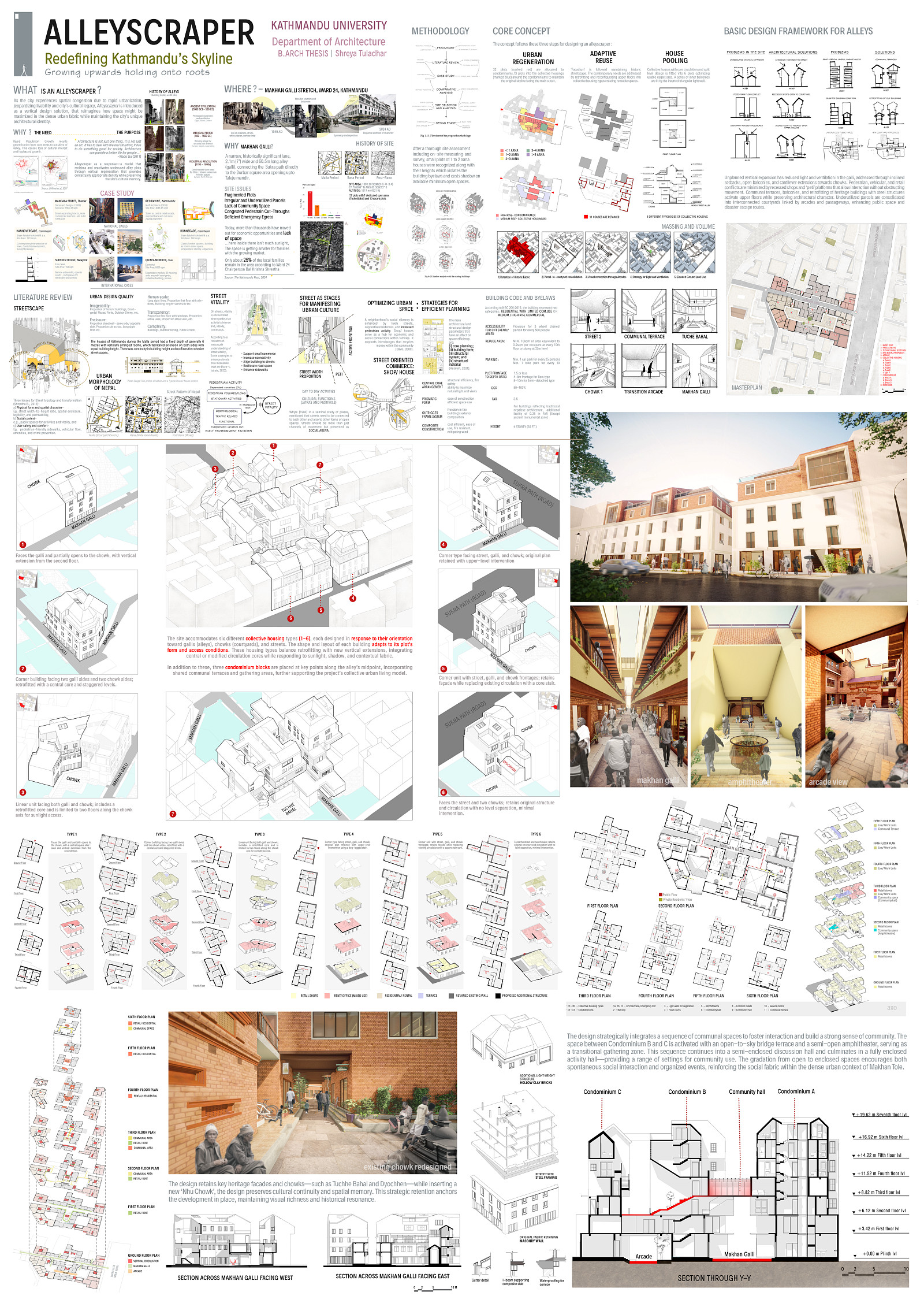
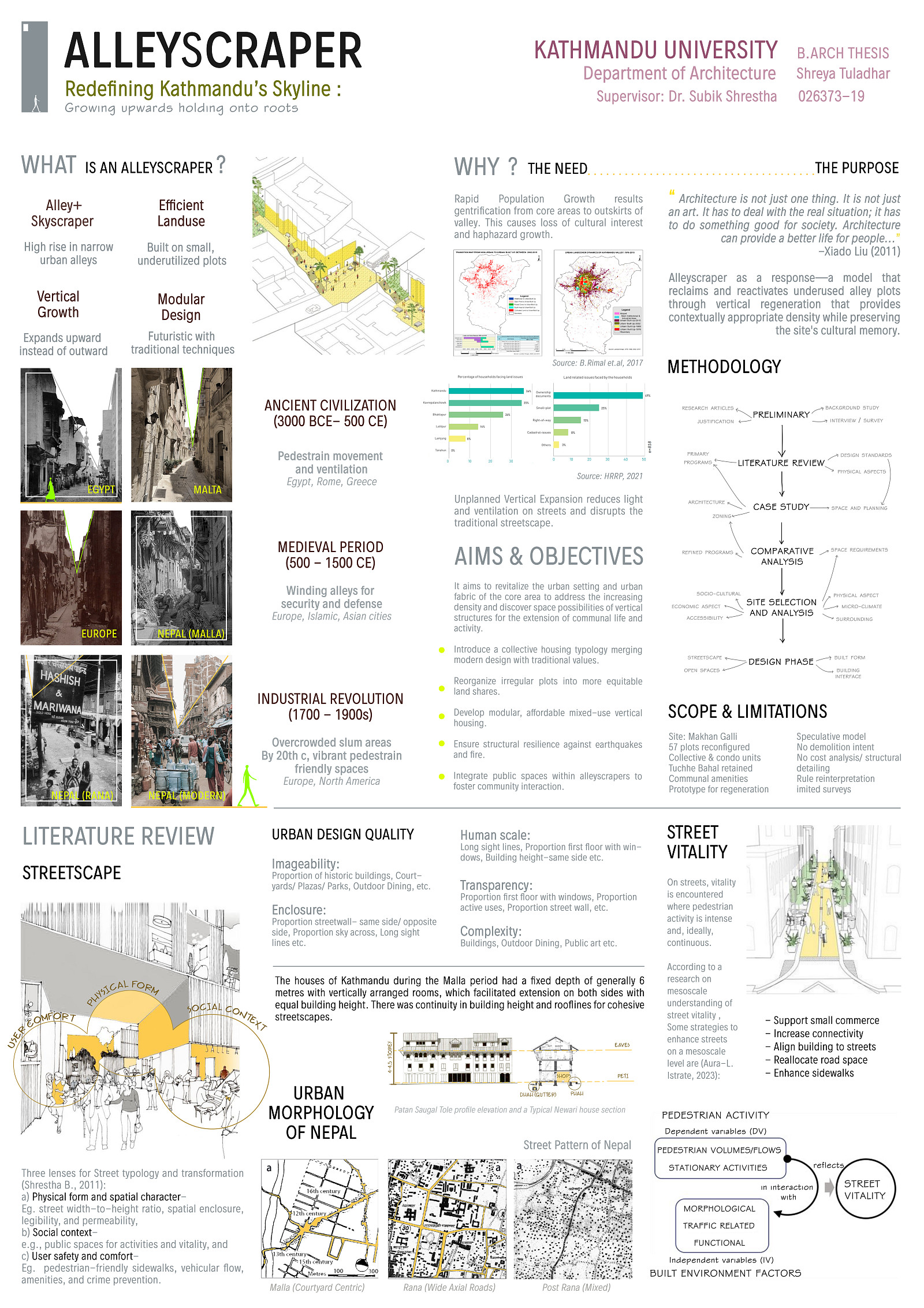
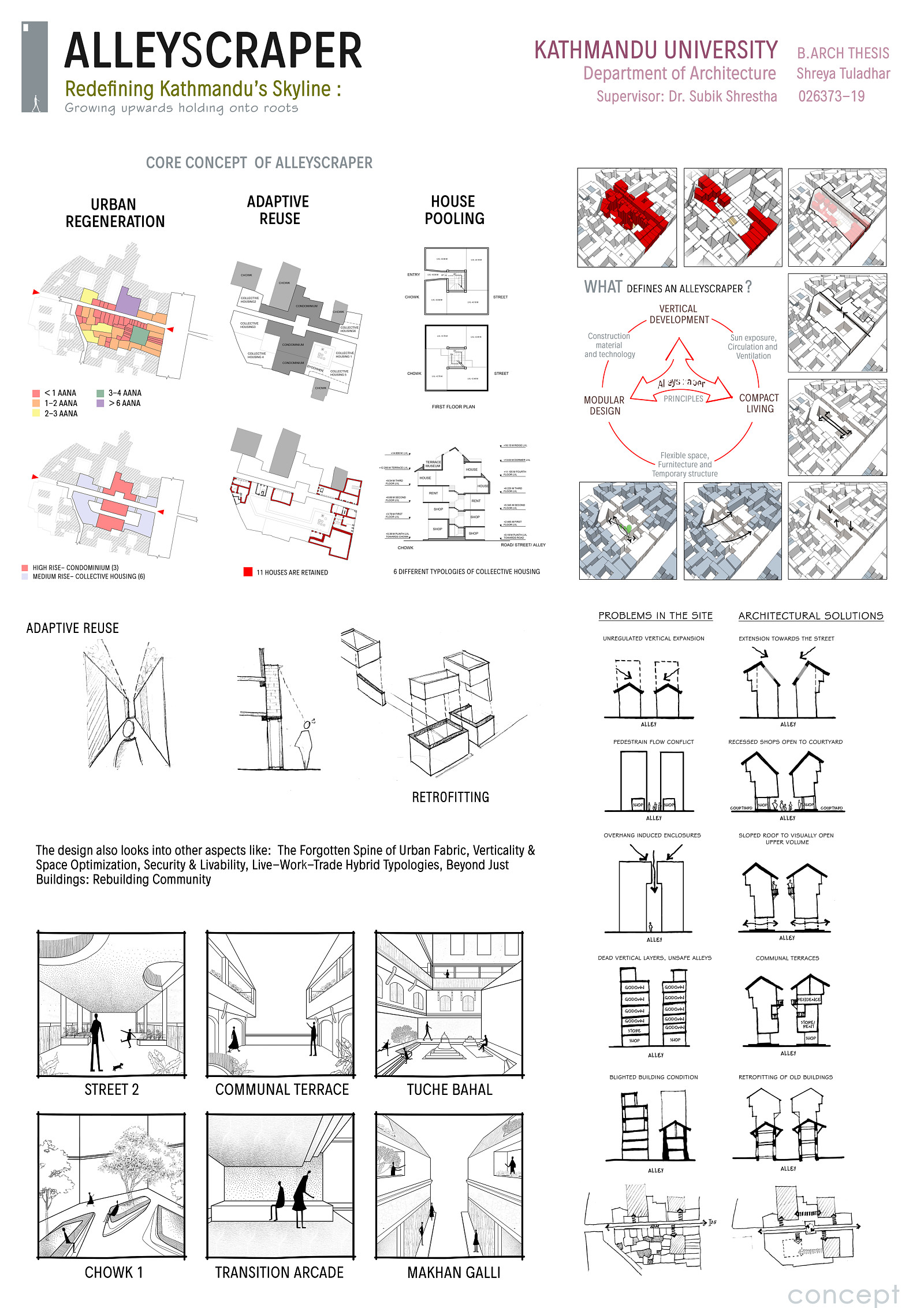
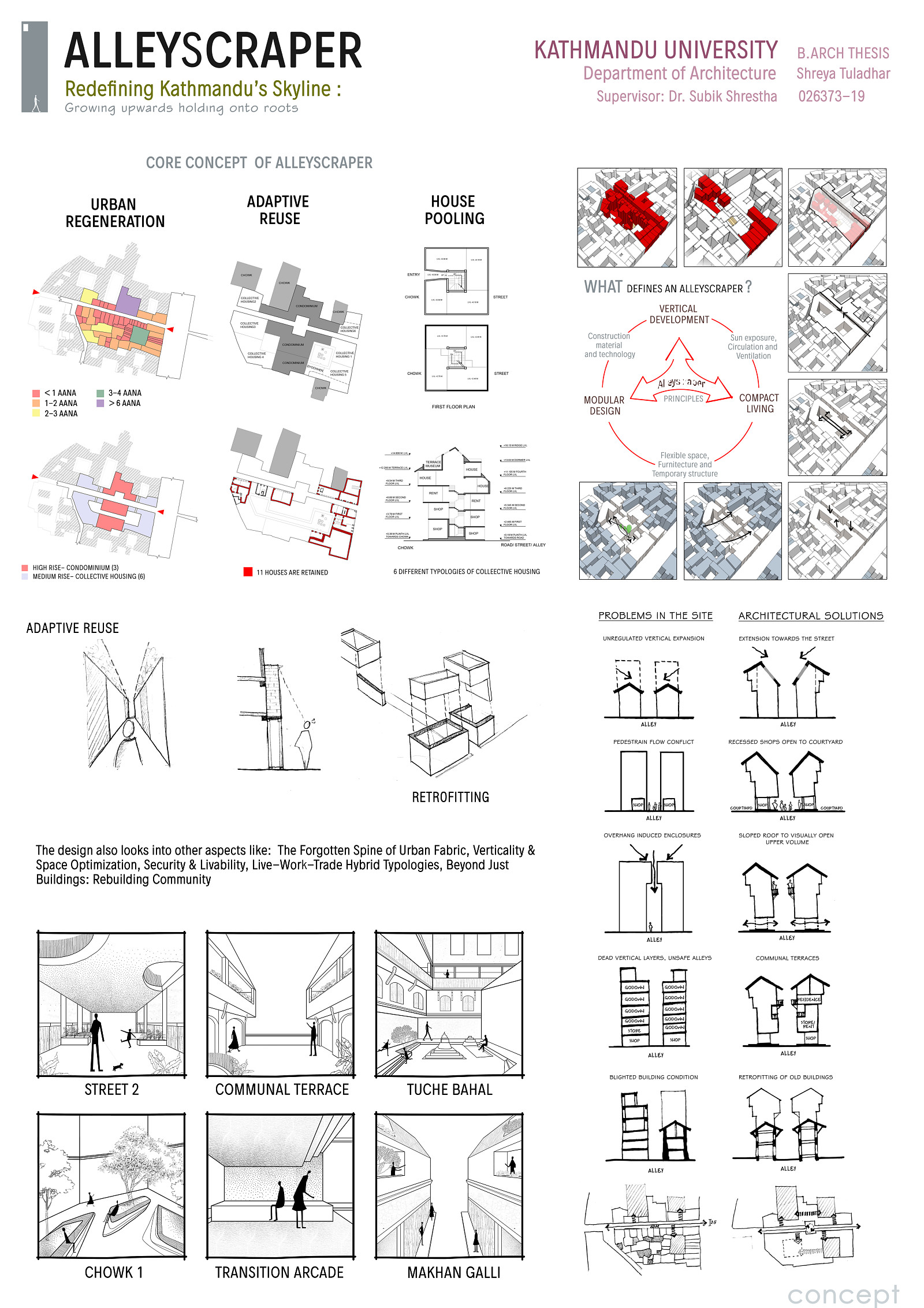
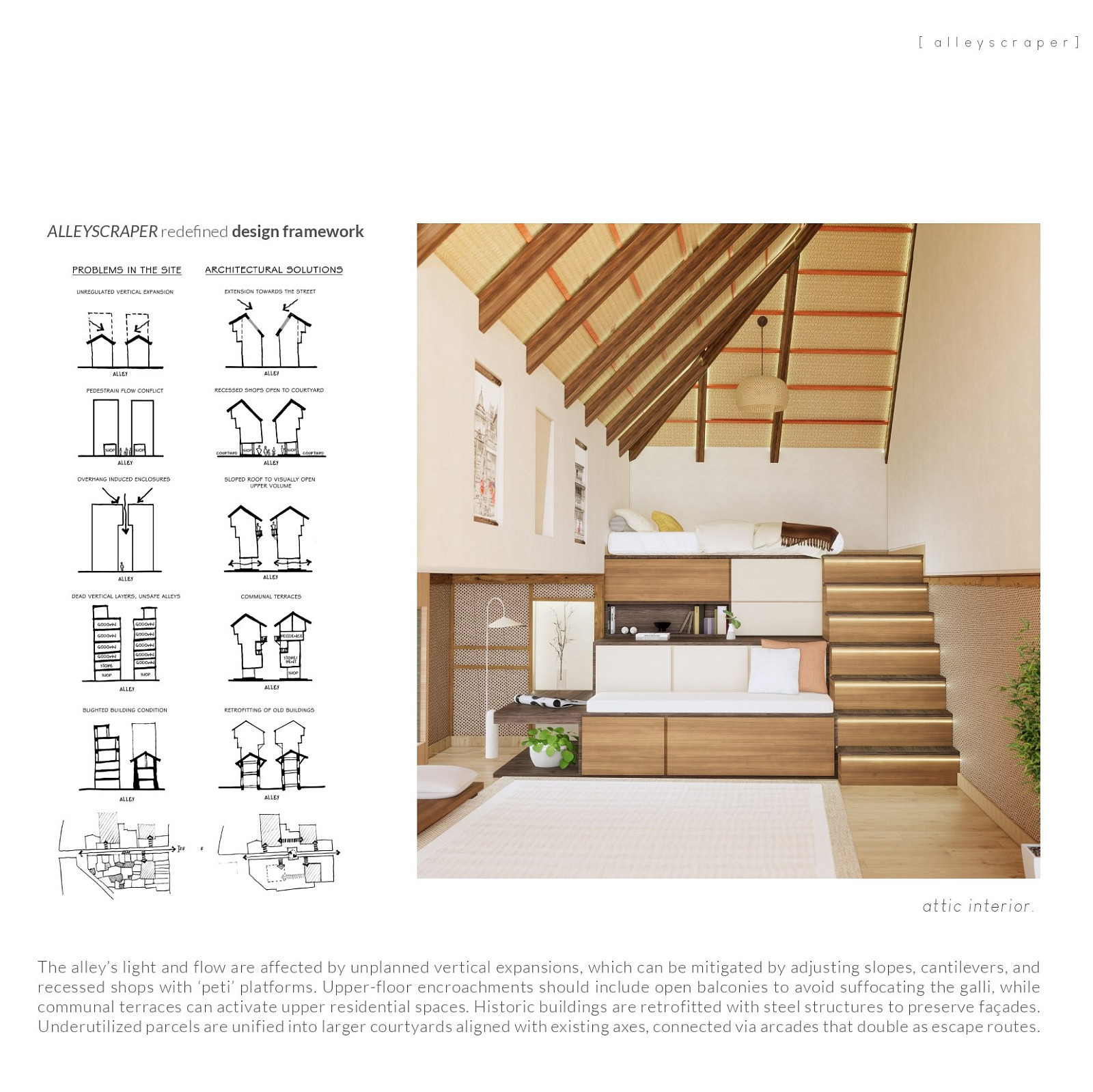
The Alleyscraper is a context-responsive architectural design proposal that addresses the challenges of spatial congestion, fragmented land parcels, inadequate housing, and the gradual loss of cultural identity within the historic urban core of Kathmandu. The project introduces a new model of vertical urban regeneration that transforms neglected alley plots into socially vibrant, spatially efficient, and culturally integrated living environments.
The design is founded on the principle that urban growth and heritage preservation need not exist in opposition. By recognizing underutilized alley spaces, selectively retaining valuable existing structures, and consolidating adjacent small plots into a unified vertical development, the proposal seeks to optimize land use while respecting the character of the surrounding urban fabric. Traditional architectural elements, communal living patterns, local materials, and the spatial qualities of Newar settlements are reinterpreted within a contemporary vertical framework.
The primary goal of the project is to create a sustainable collective housing typology that responds to the realities of dense urban living while strengthening social interaction, improving spatial quality, and preserving local identity. The design aims to provide modular and affordable housing opportunities, incorporate mixed-use functions, ensure resilience against seismic and fire hazards, and introduce shared public spaces that foster community engagement. Ultimately, the Alleyscraper demonstrates how thoughtful architectural intervention can transform overlooked urban spaces into resilient, inclusive, and culturally rooted vertical communities.
Project description
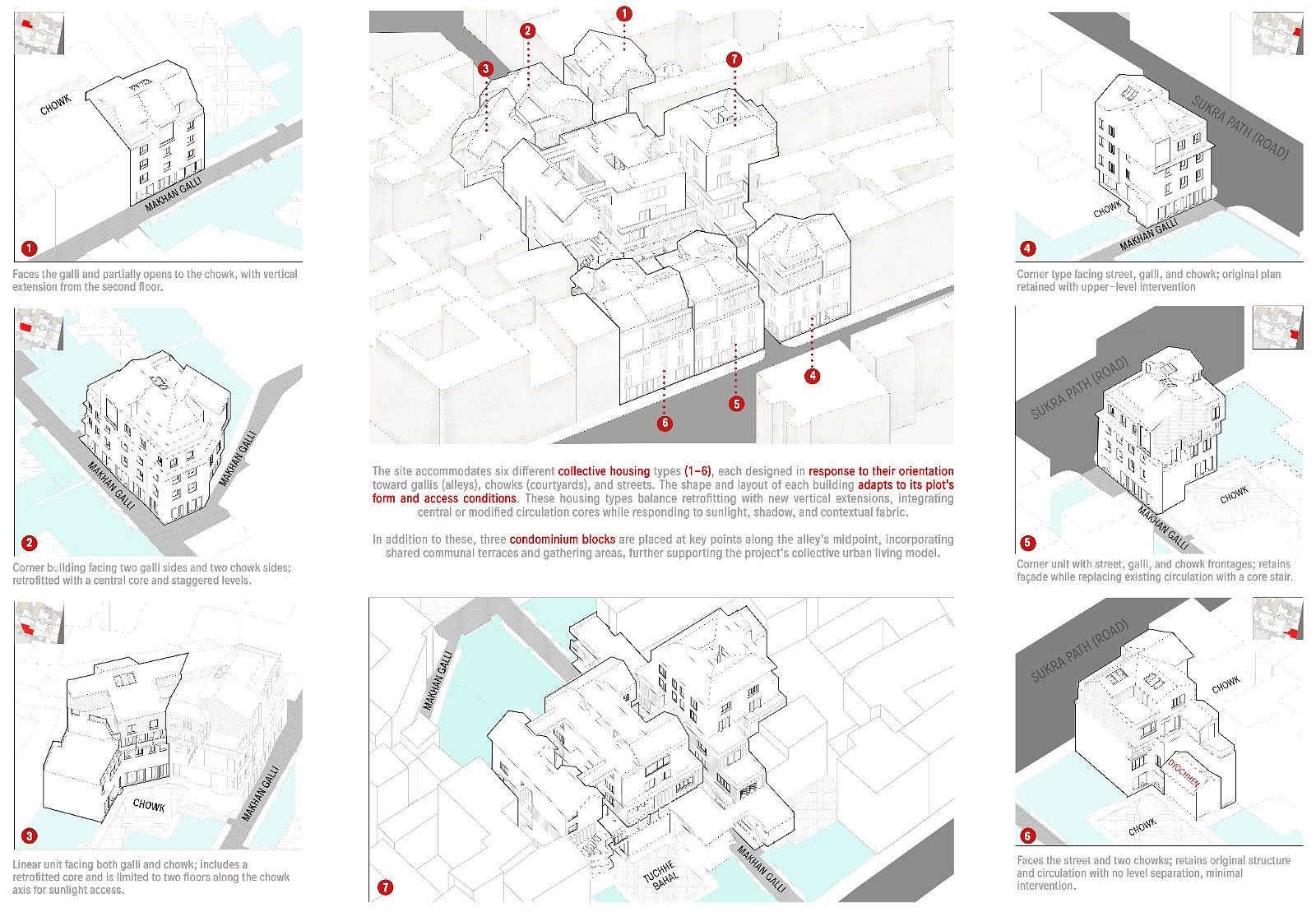
The scope of the Alleyscraper focuses on the architectural regeneration of small, irregular, and underutilized alley plots located within the dense urban fabric of Kathmandu. The project explores the consolidation and redevelopment of fragmented land parcels into a vertically organized mixed-use housing model that accommodates residential, communal, and supporting functions within a limited urban footprint.
The design scope includes:
* Identification and redevelopment of neglected alley plots and fragmented urban parcels.
* Selective retention, adaptive reuse, and integration of existing structures where culturally or spatially valuable.
* Reconfiguration of irregular land parcels into a more efficient and equitable spatial arrangement.
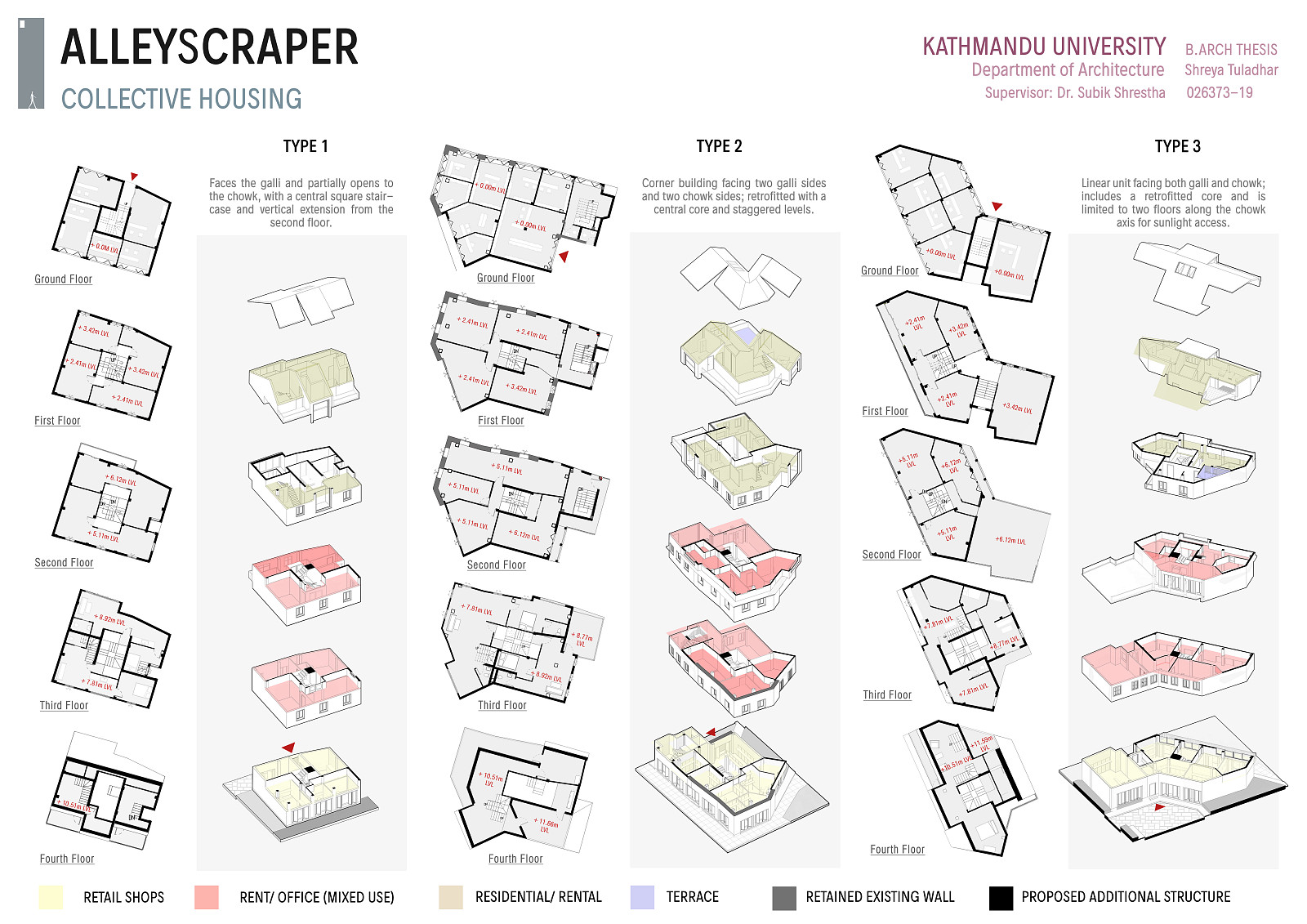
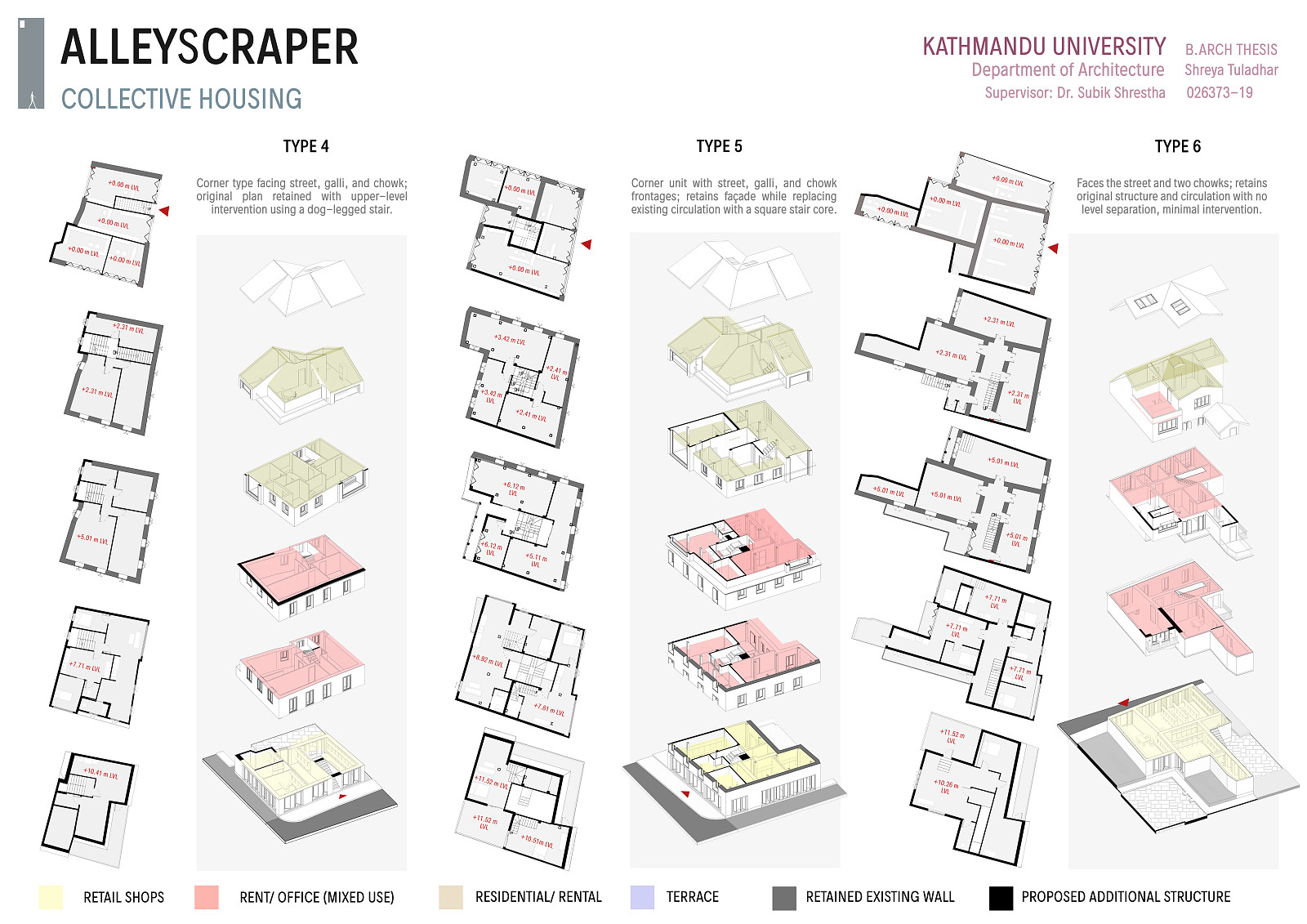
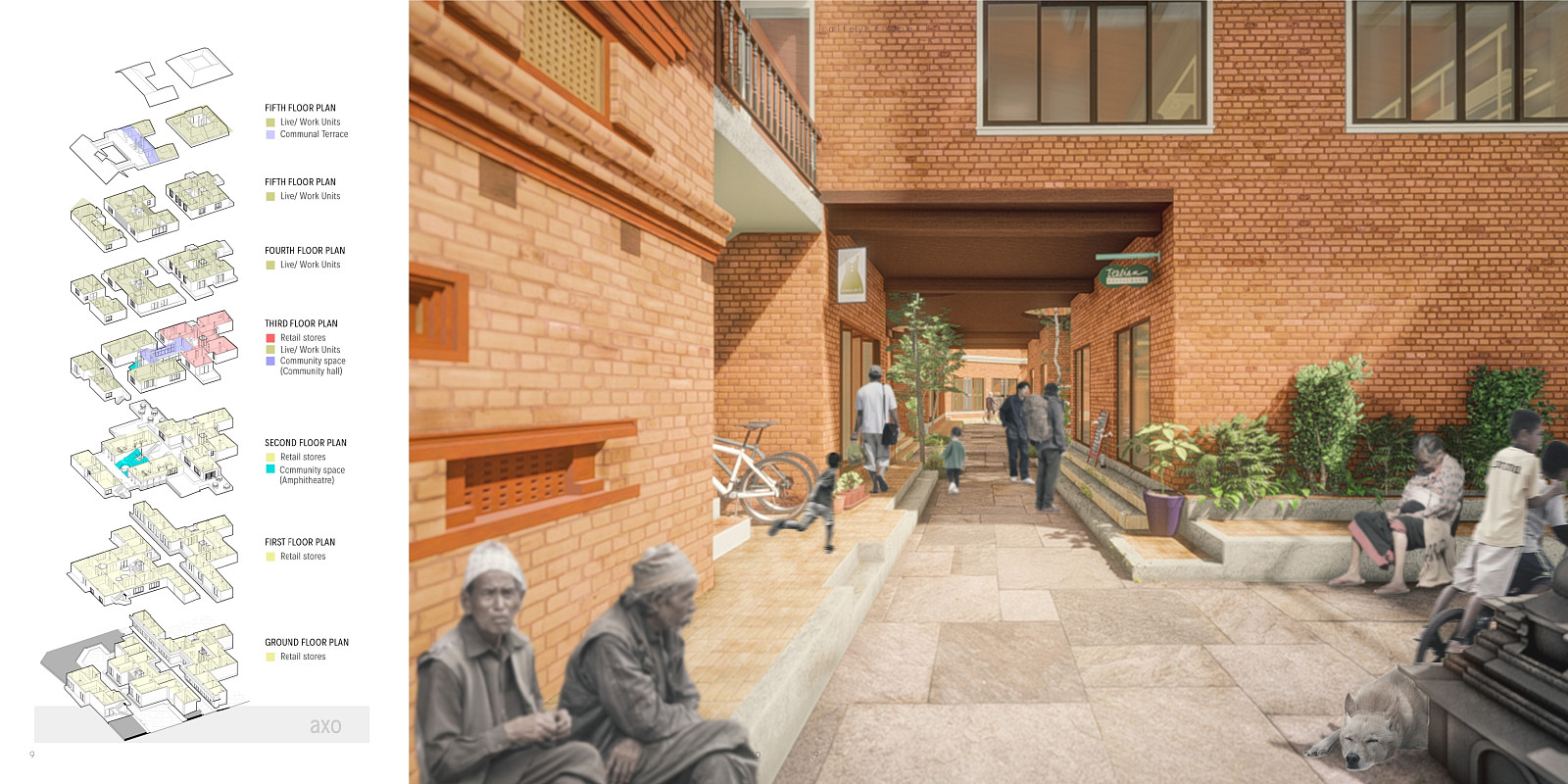
* Development of a mixed-use vertical housing typology consisting of communal flats, compact condominiums, and shared facilities.
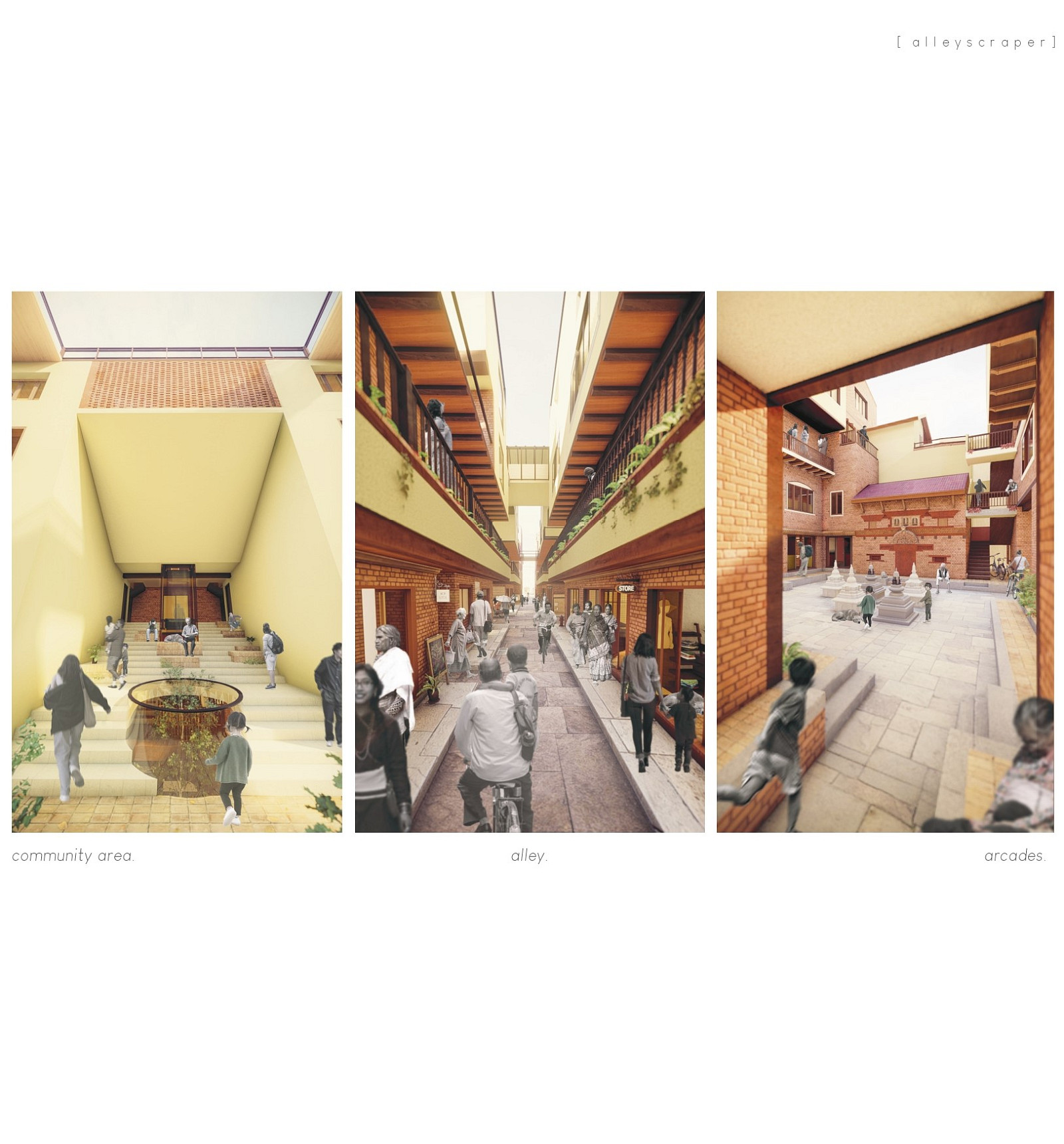
* Integration of public and semi-public spaces, including communal terraces, courtyards, circulation spaces, and social interaction zones.
* Application of modular design strategies to enhance affordability, flexibility, and future adaptability.
* Incorporation of seismic-resistant and fire-safe design principles appropriate to Kathmandu's urban context.
* Reinterpretation of traditional architectural elements and community-oriented spatial patterns within a contemporary vertical form.
The project does not aim to propose a city-wide master plan; rather, it establishes a replicable architectural model that can be adapted to similar dense urban neighborhoods facing challenges of congestion, housing demand, and heritage preservation. The Alleyscraper serves as a prototype for future context-sensitive urban regeneration initiatives that balance modernization with cultural continuity.
Technical information
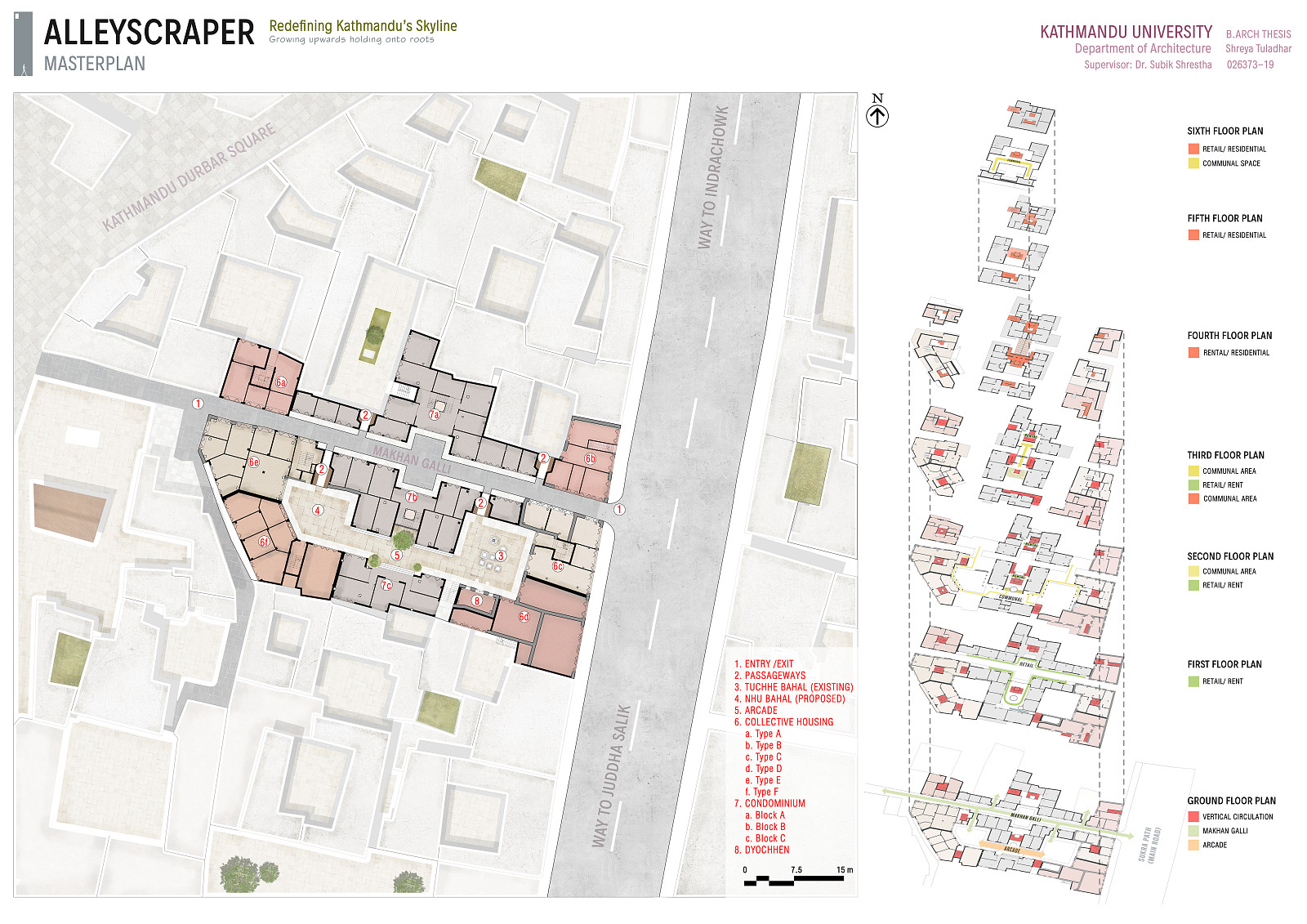
The proposed Alleyscraper development is located within the historic urban core of Kathmandu and occupies a total site area of 1,957.21 m² (3-13-2-0.9 ropani). The site incorporates a 2.1 m (7 ft) wide and 60.5 m long traditional alley (galli) that establishes a direct pedestrian connection between Sukra Path and the Durbar Square precinct, terminating near the Taleju Temple area. The site possesses a frontage of approximately 38.72 m along Sukra Path on the eastern side and extends approximately 61.4 m in length.
The project area consists of 57 individual plots, including 10 vacant plots and one dedicated public open space known as Tuche Bahal. An existing public open area of approximately 123.74 m² is retained and integrated into the design proposal. The site is physically divided into two sectors by the Makhan alley: Zone A (513.50 m²) and Zone B (1,287.43 m²).
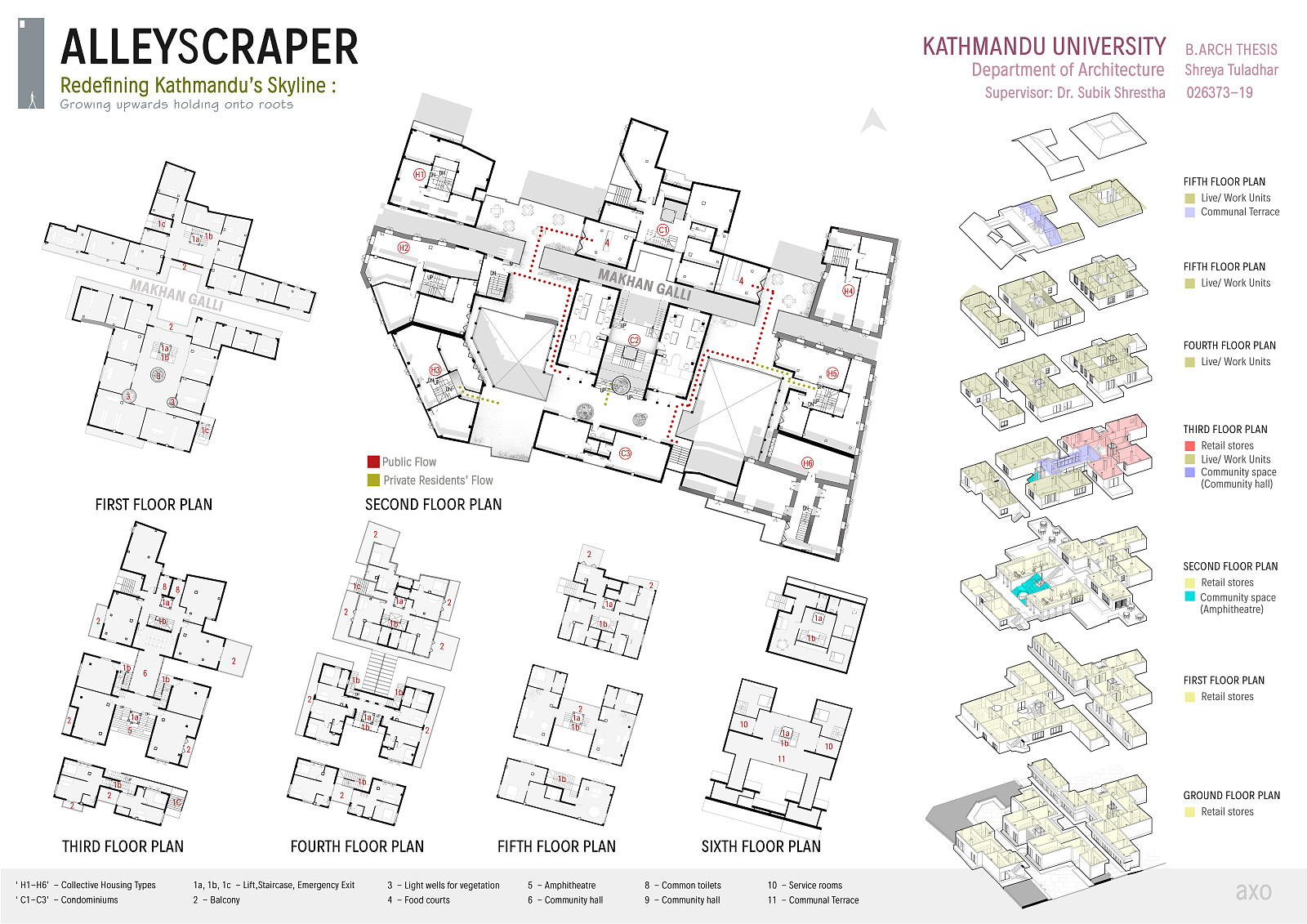
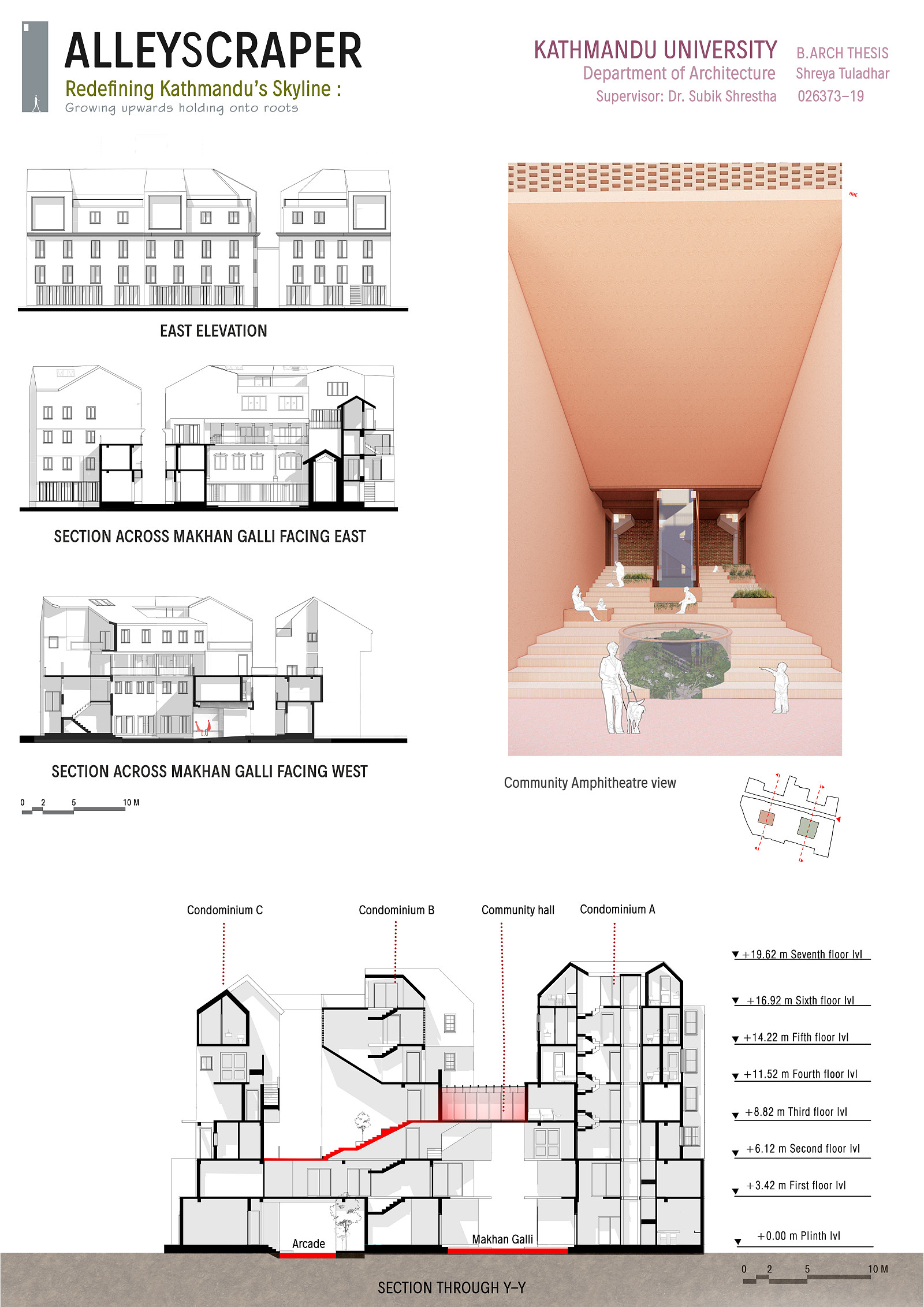
The design strategy consolidates fragmented and underutilized plots into a coordinated vertical housing development. Following land pooling and spatial reorganization, 32 plot owners are accommodated within centrally located condominium blocks, while the remaining 13 plot owners are housed within collective housing units positioned along the perimeter of the development. This arrangement preserves the traditional streetscape and existing skyline along the main street frontage while allowing greater density within the interior of the site.
The proposal introduces a mixed-use residential typology comprising collective housing units, compact condominiums, communal facilities, and shared open spaces. Existing residual and unused pockets of land are aggregated to create an additional communal courtyard, enhancing natural lighting, ventilation, visual connectivity, and social interaction within the development. The retained Tuche Bahal and newly introduced courtyard spaces function as important communal nodes inspired by traditional Newar settlement patterns.
Structurally, the project is designed to comply with seismic design requirements applicable to Kathmandu Valley and incorporates fire safety measures, emergency access provisions, and vertical circulation systems suitable for medium-rise collective housing. The design employs modular planning principles to improve construction efficiency, adaptability, and affordability. Local materials and architectural elements are integrated into the building envelope and communal spaces to maintain contextual harmony with the surrounding historic urban fabric.
The project functions as a prototype for vertical urban regeneration, demonstrating how fragmented alley-based settlements can be reorganized into resilient, culturally responsive, and spatially efficient communities while preserving important urban connections, heritage character, and social relationships.


Copyright © 2026 INSPIRELI | All rights reserved. Use of this website signifies your agreement to the Terms of Use, Privacy Policy, and use of cookies.