Clouds - forest park improvement project

Project idea
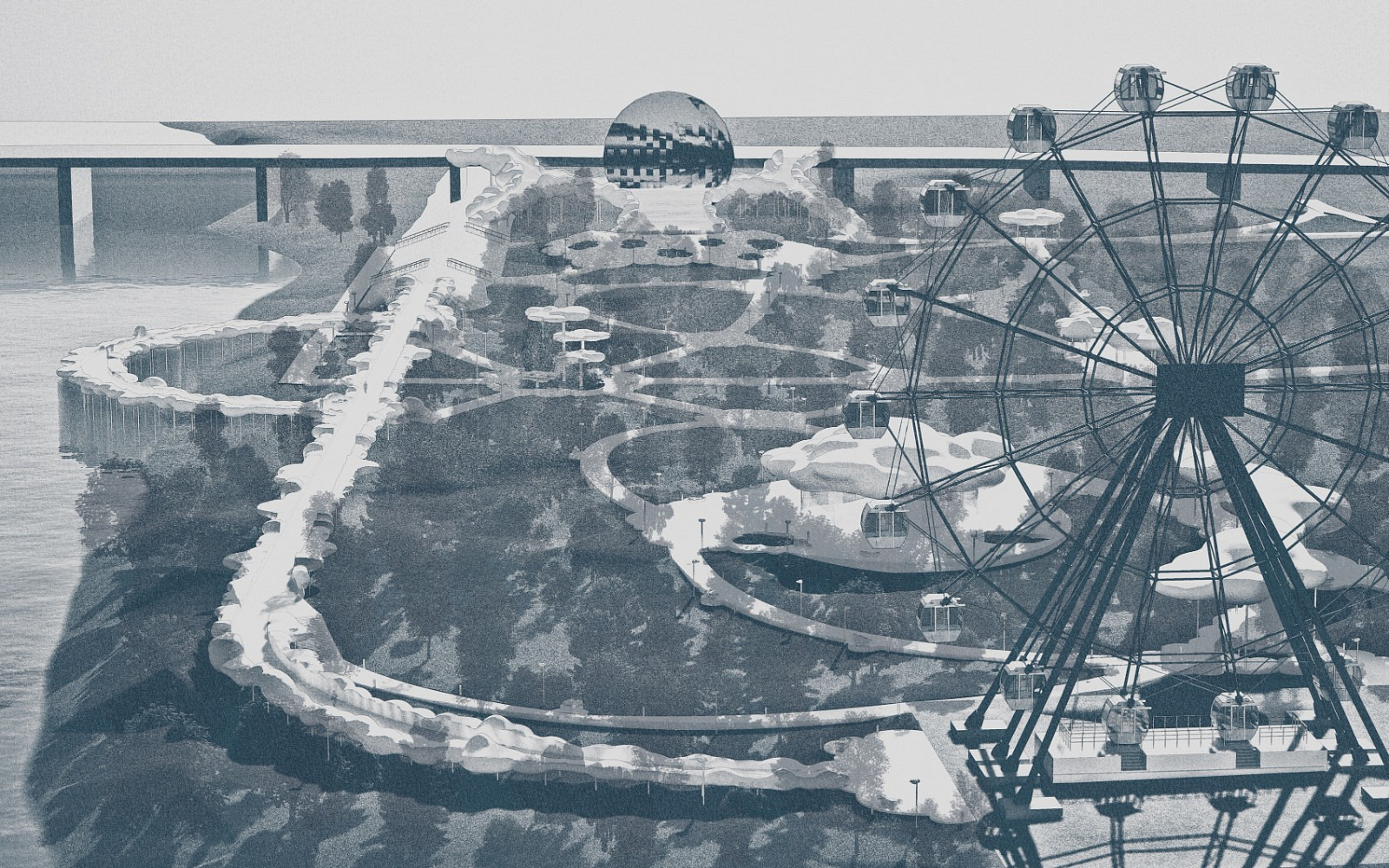
Clouds Park is a proposal for the transformation of Krokhinsky Forest Park in Yaroslavl into a contemporary public landscape where architecture, nature, and urban life coexist within a shared environment. Inspired by the ephemeral character of clouds, the project explores softness, change, and collective experience as generators of space. Rather than imposing a rigid structure on the site, the intervention creates a sequence of interconnected places that accommodate different rhythms of everyday life.
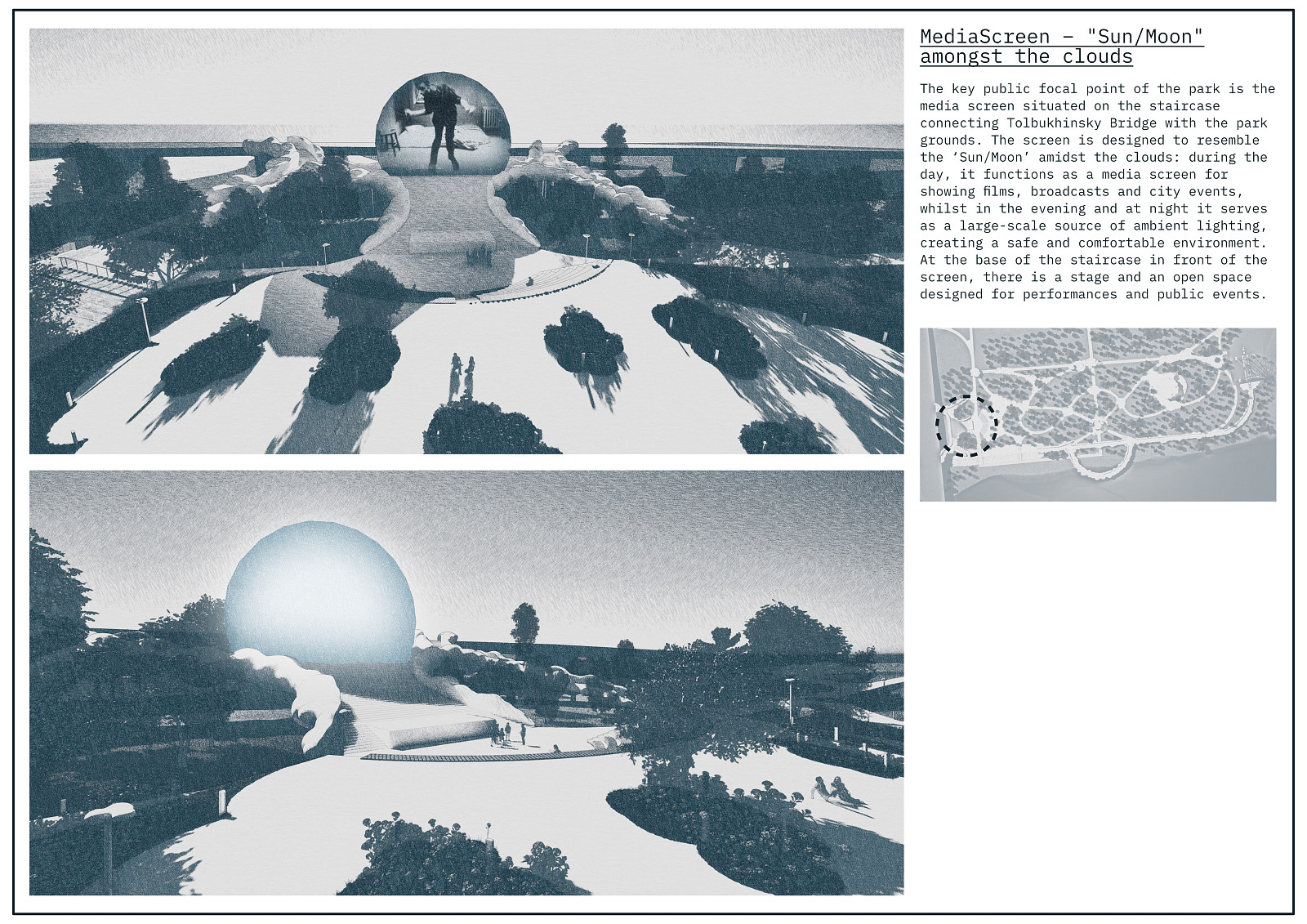
The park is conceived as an open framework for coexistence. Its central symbol, the “Sun/Moon” media screen, represents a new type of urban landmark: a place that gathers people around culture, communication, and shared experiences during the day, while becoming a source of comfort and orientation after sunset. The project seeks to transform an underutilized green area into a civic landscape capable of strengthening the relationship between the city, the river, and its inhabitants.
Project description
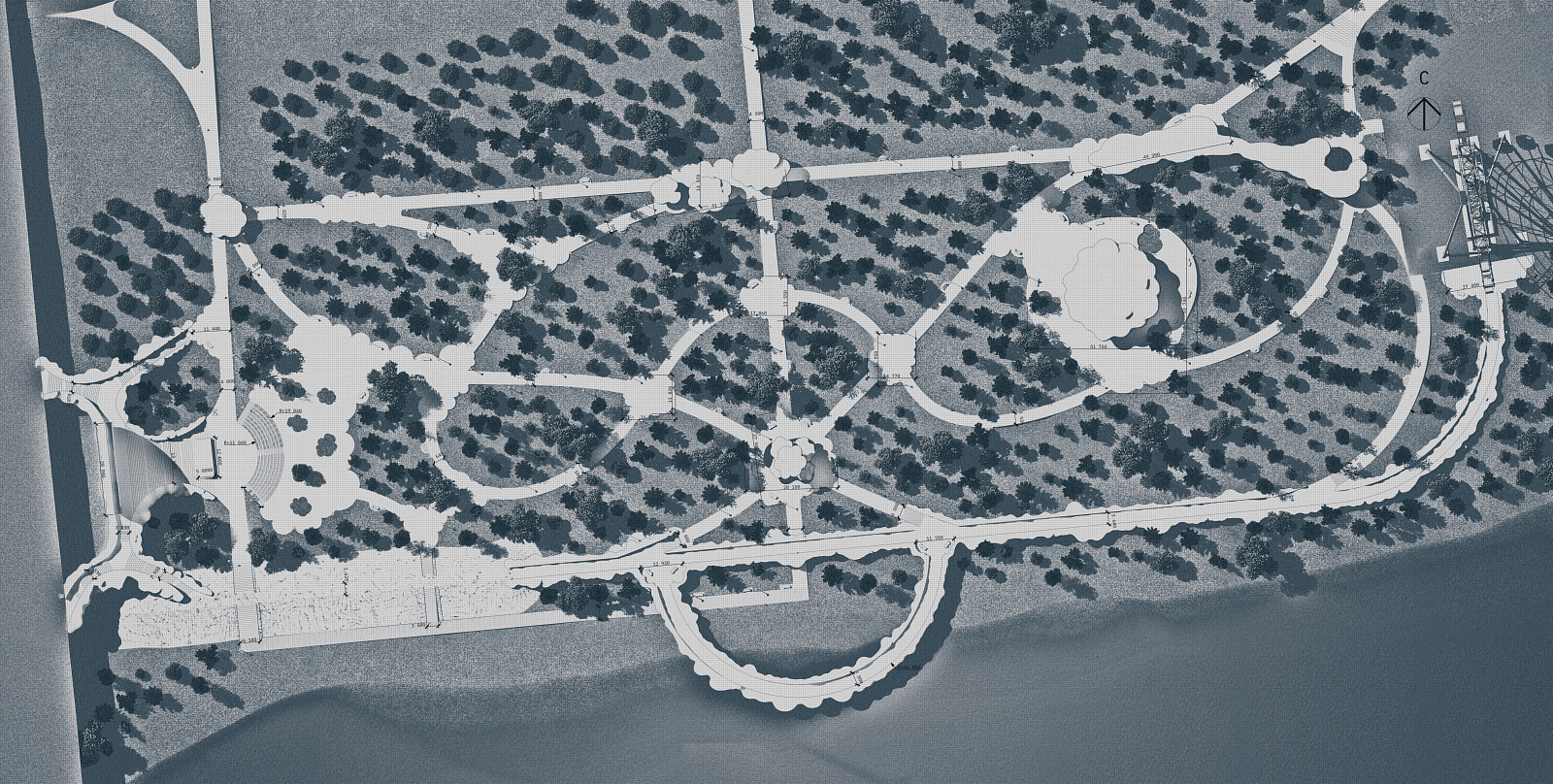
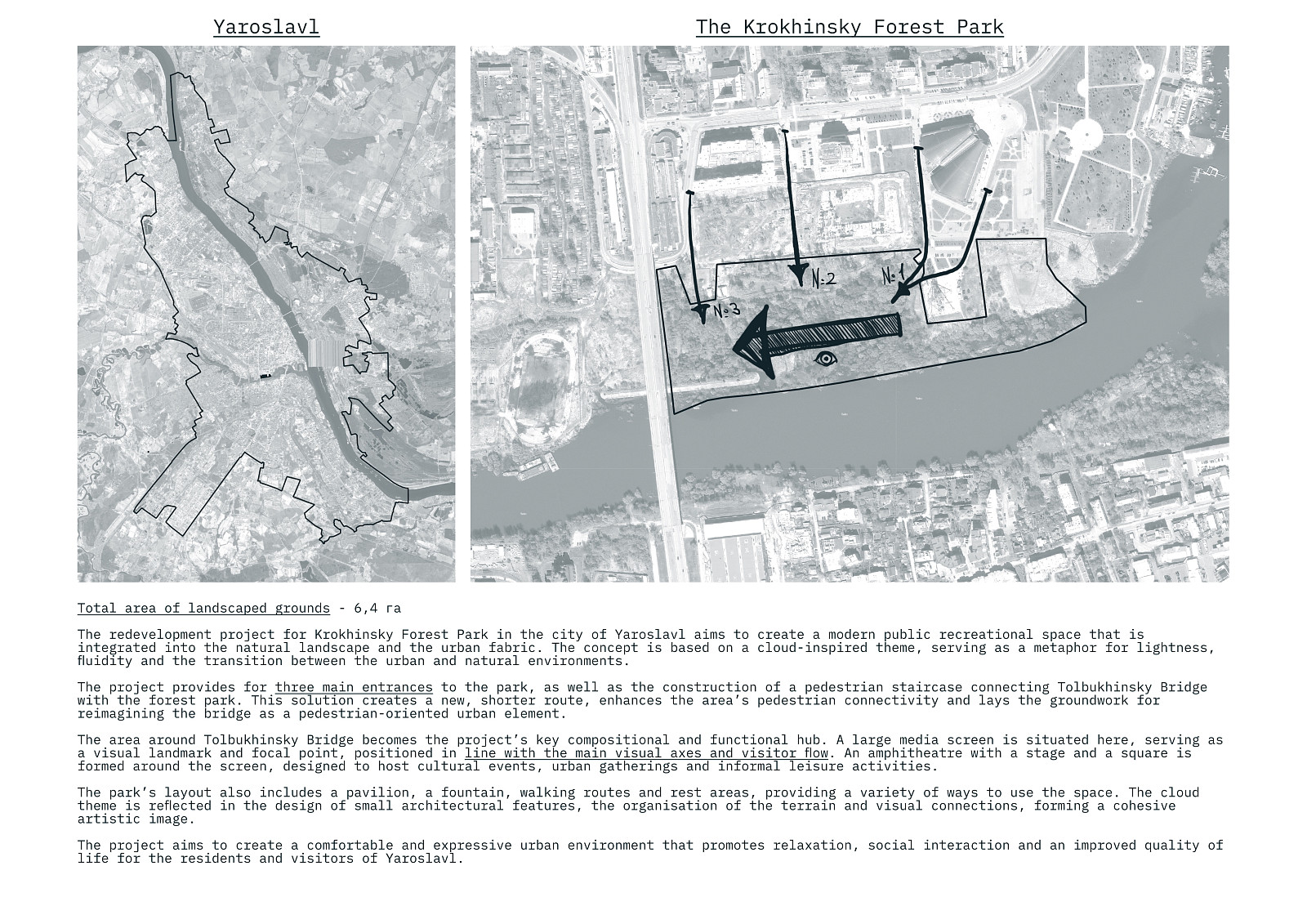
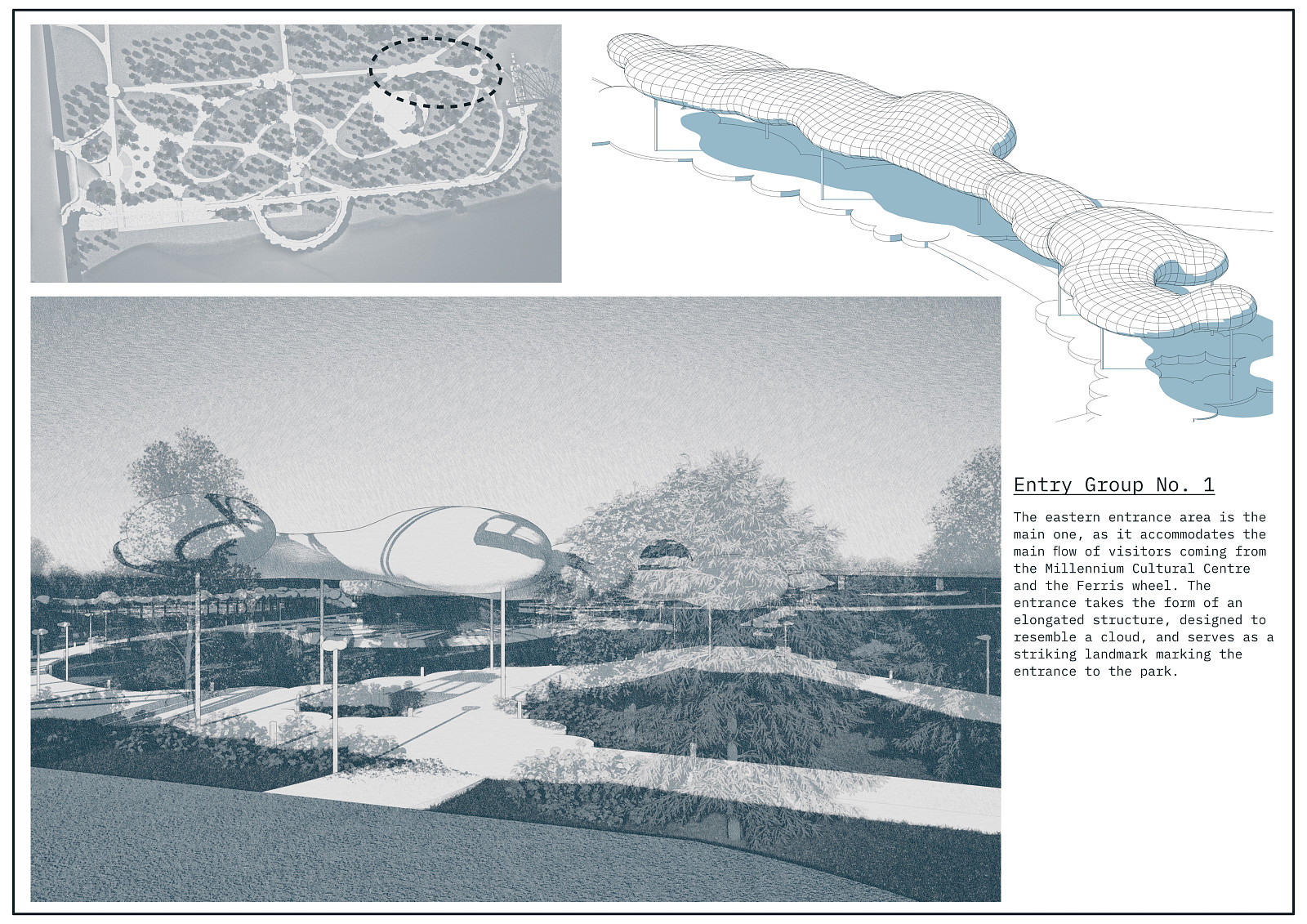
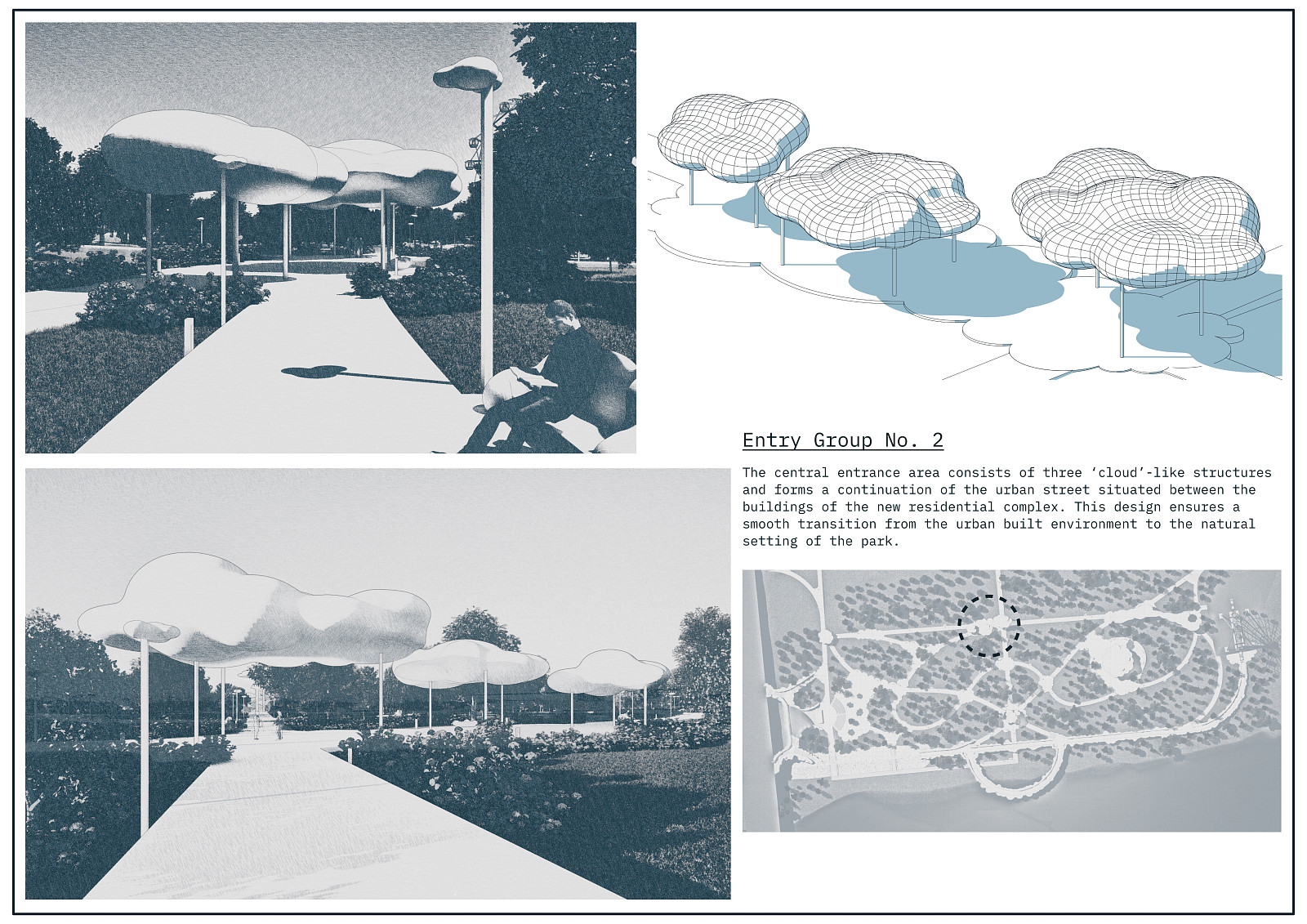
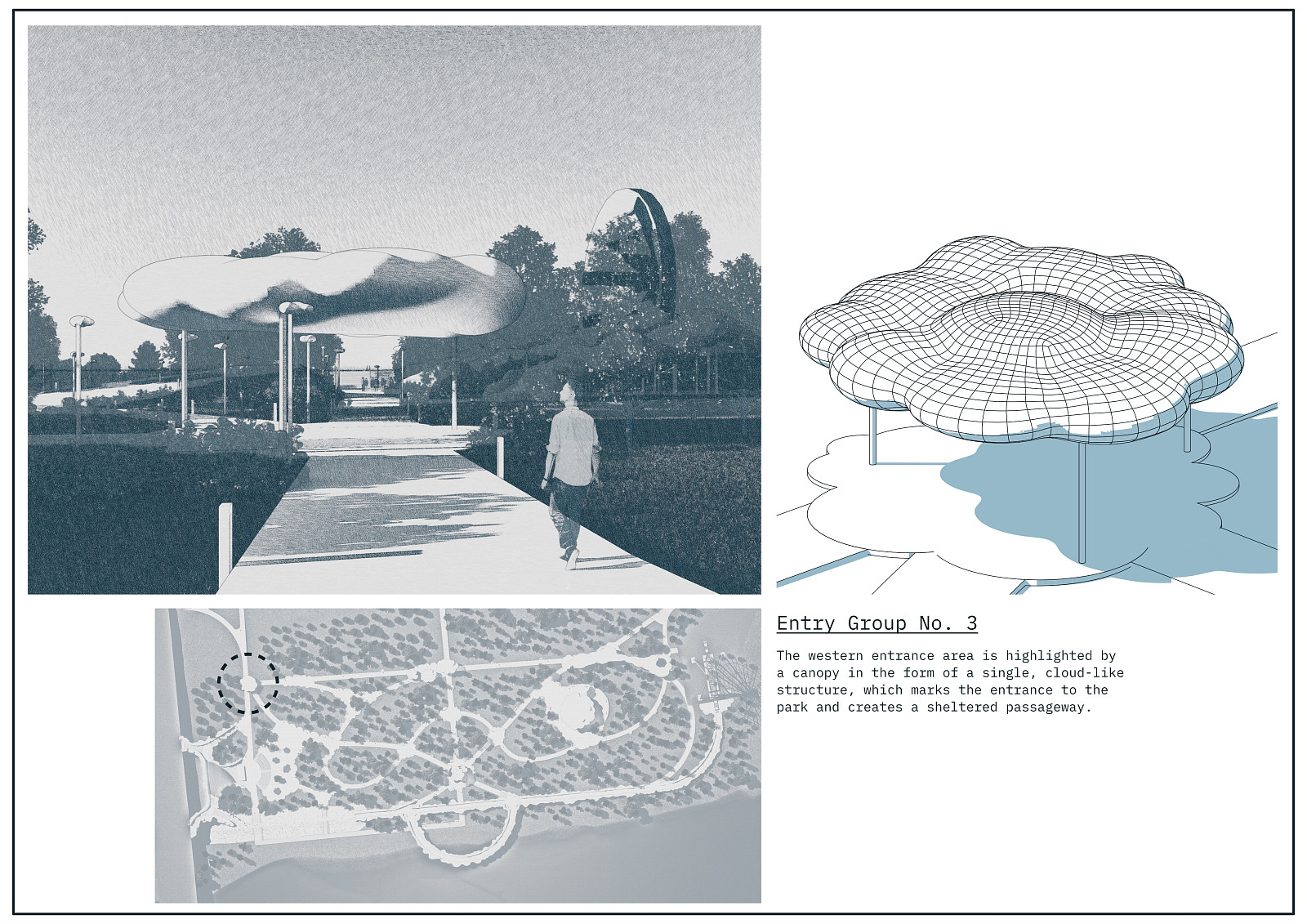
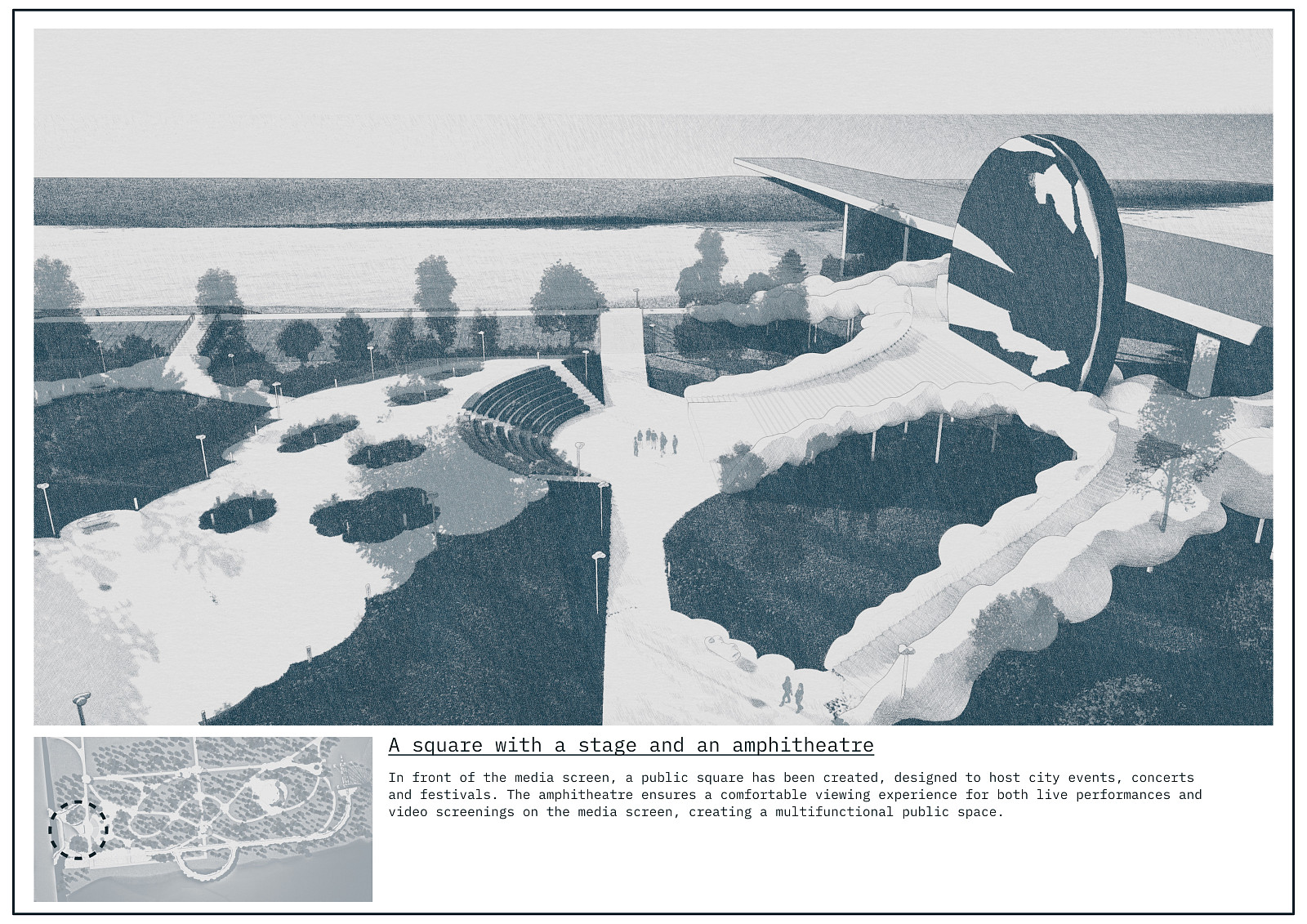
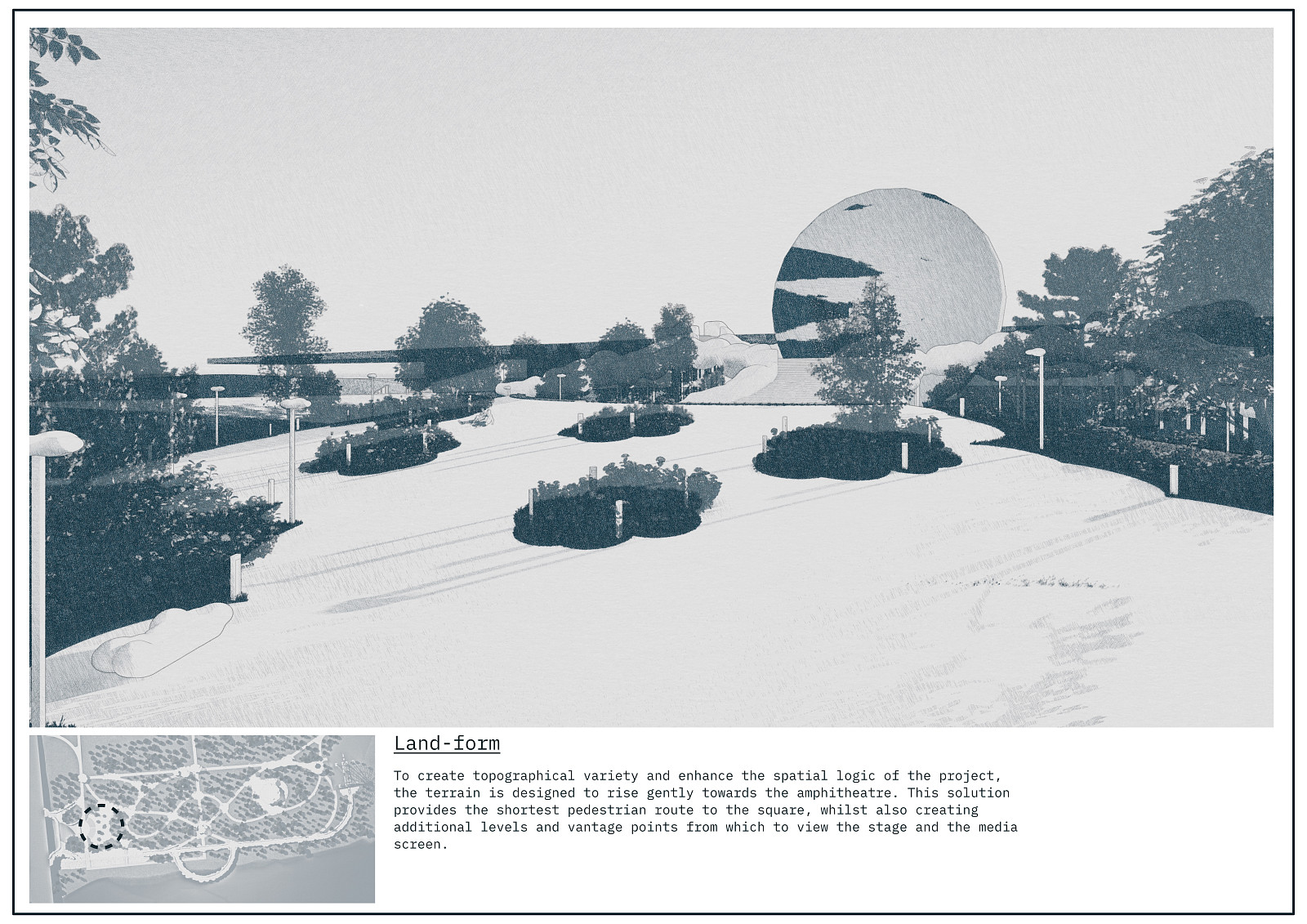
The masterplan introduces three entrance groups, each marked by cloud-shaped canopies that establish a recognizable identity and mediate the transition from the city into the park. A new staircase descending from Tolbukhin Bridge creates a direct pedestrian connection and establishes the main public node of the site. At its base, an open square with an amphitheater and stage forms a flexible venue for festivals, performances, and everyday social activities.
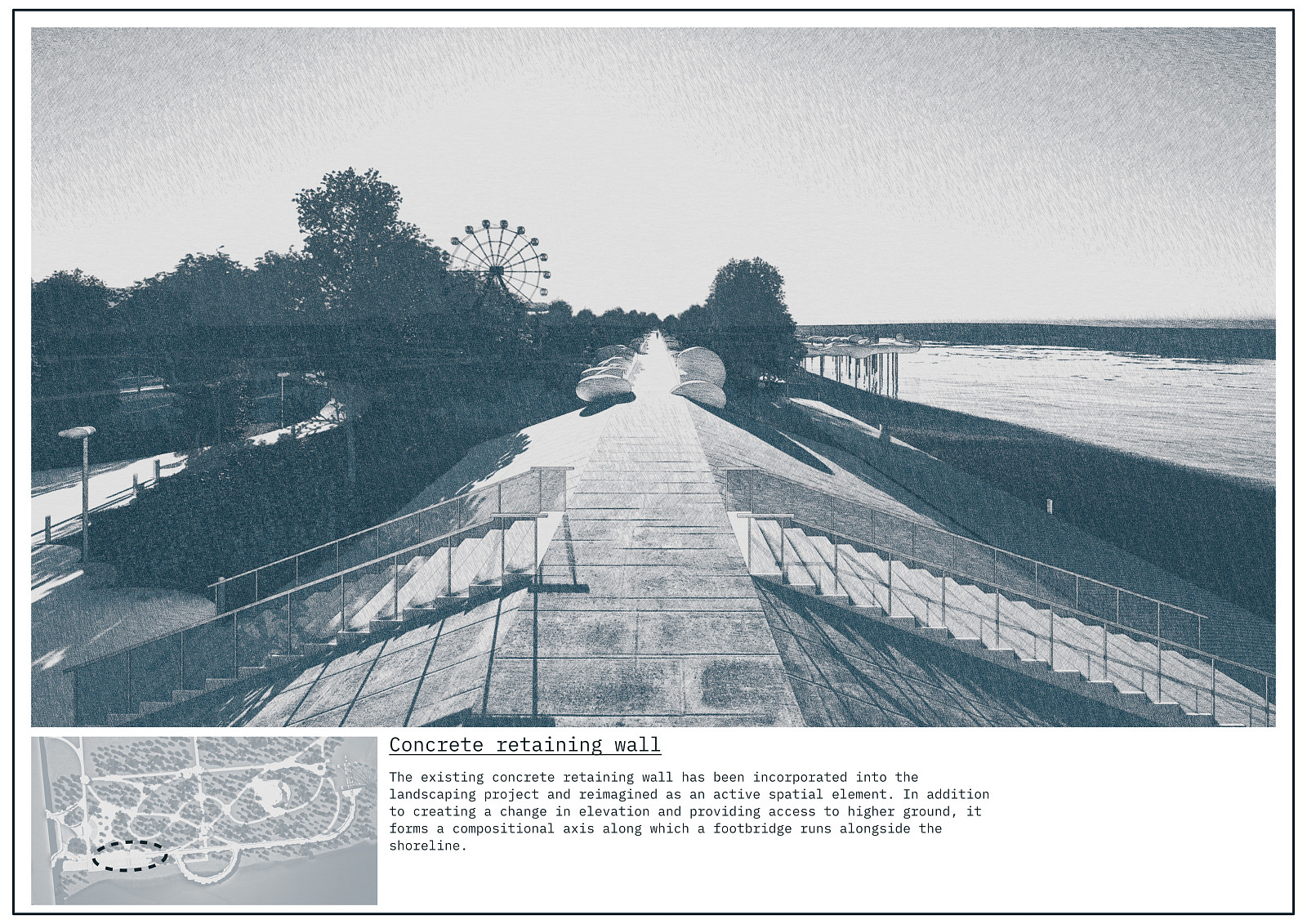
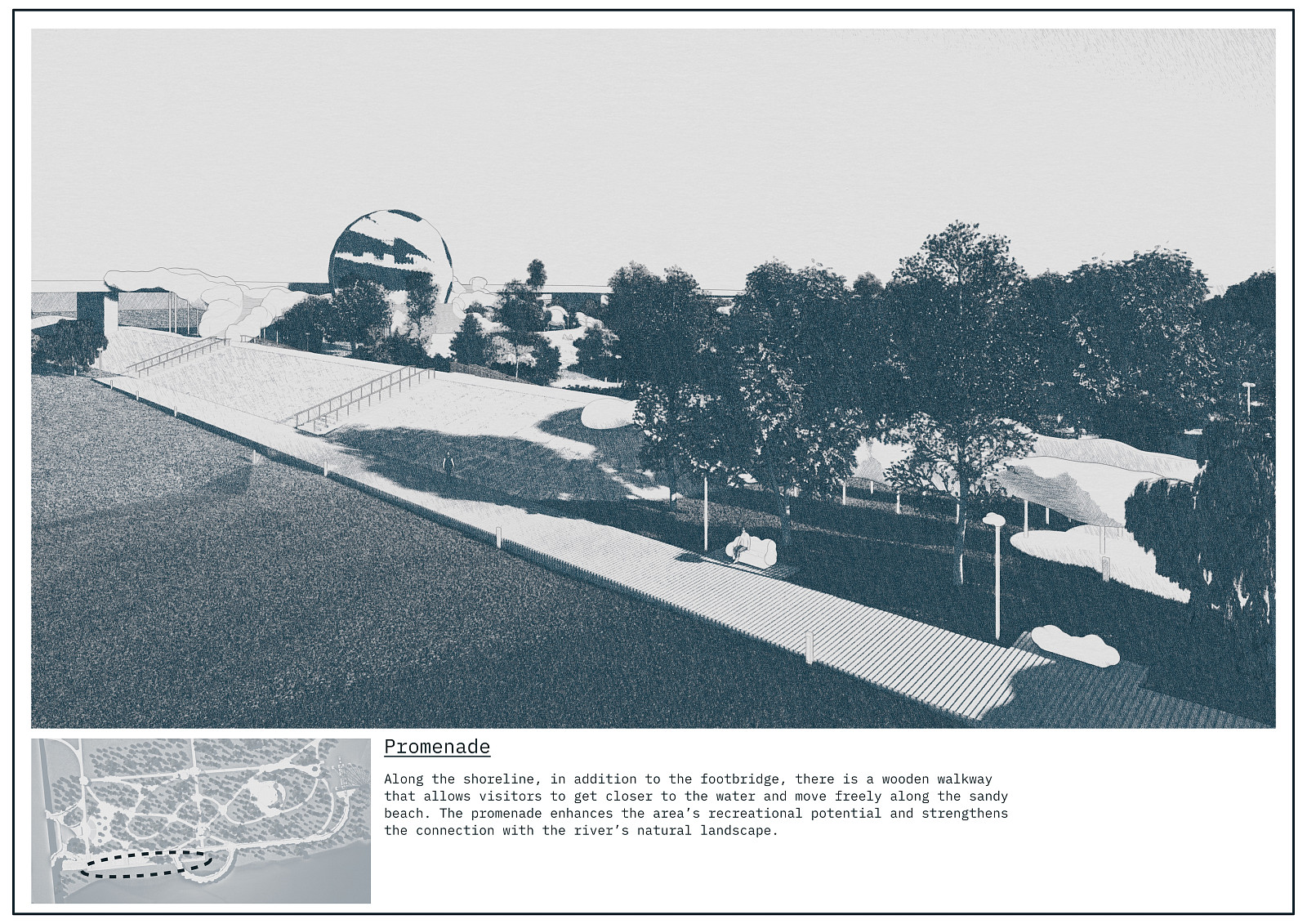
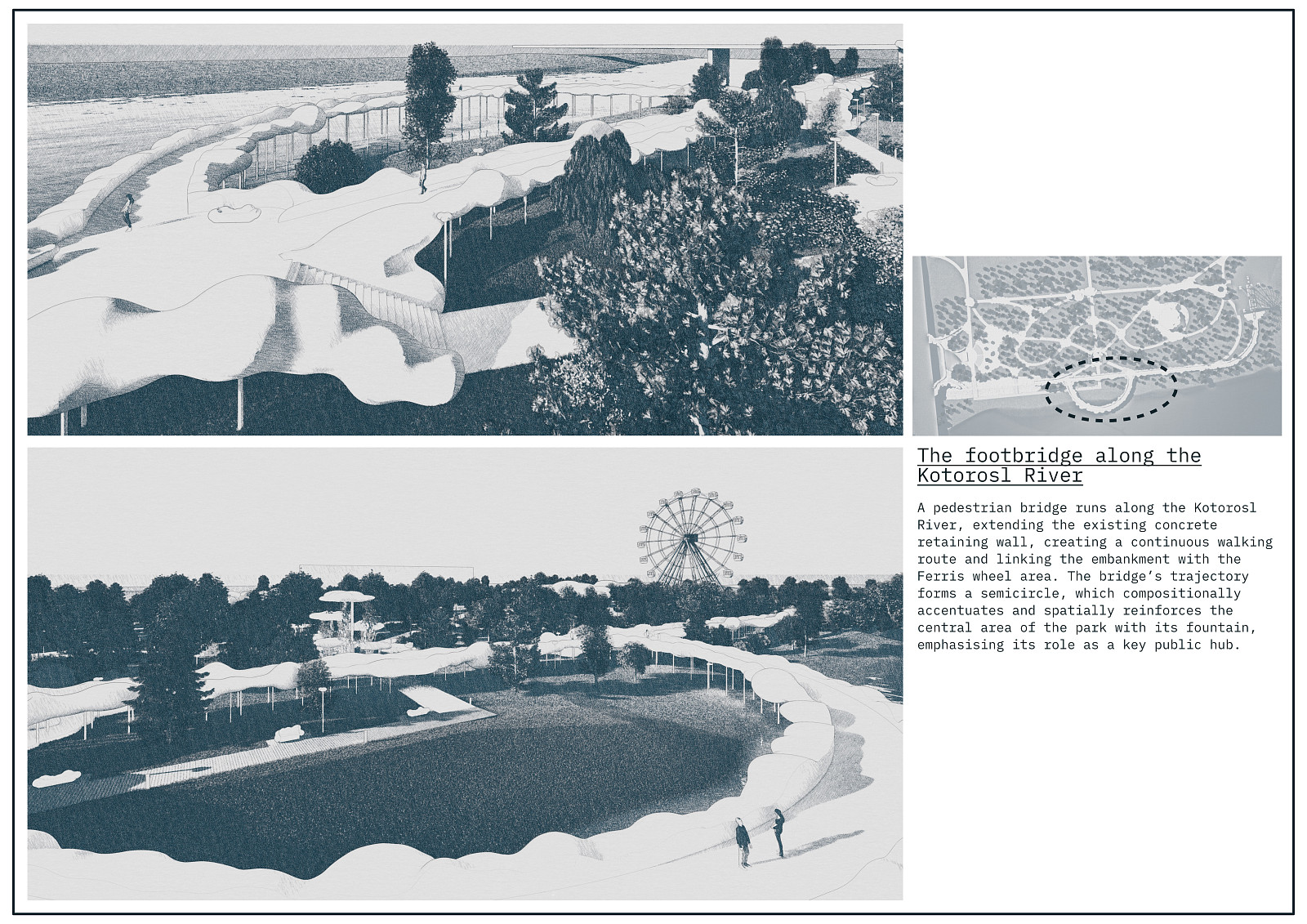
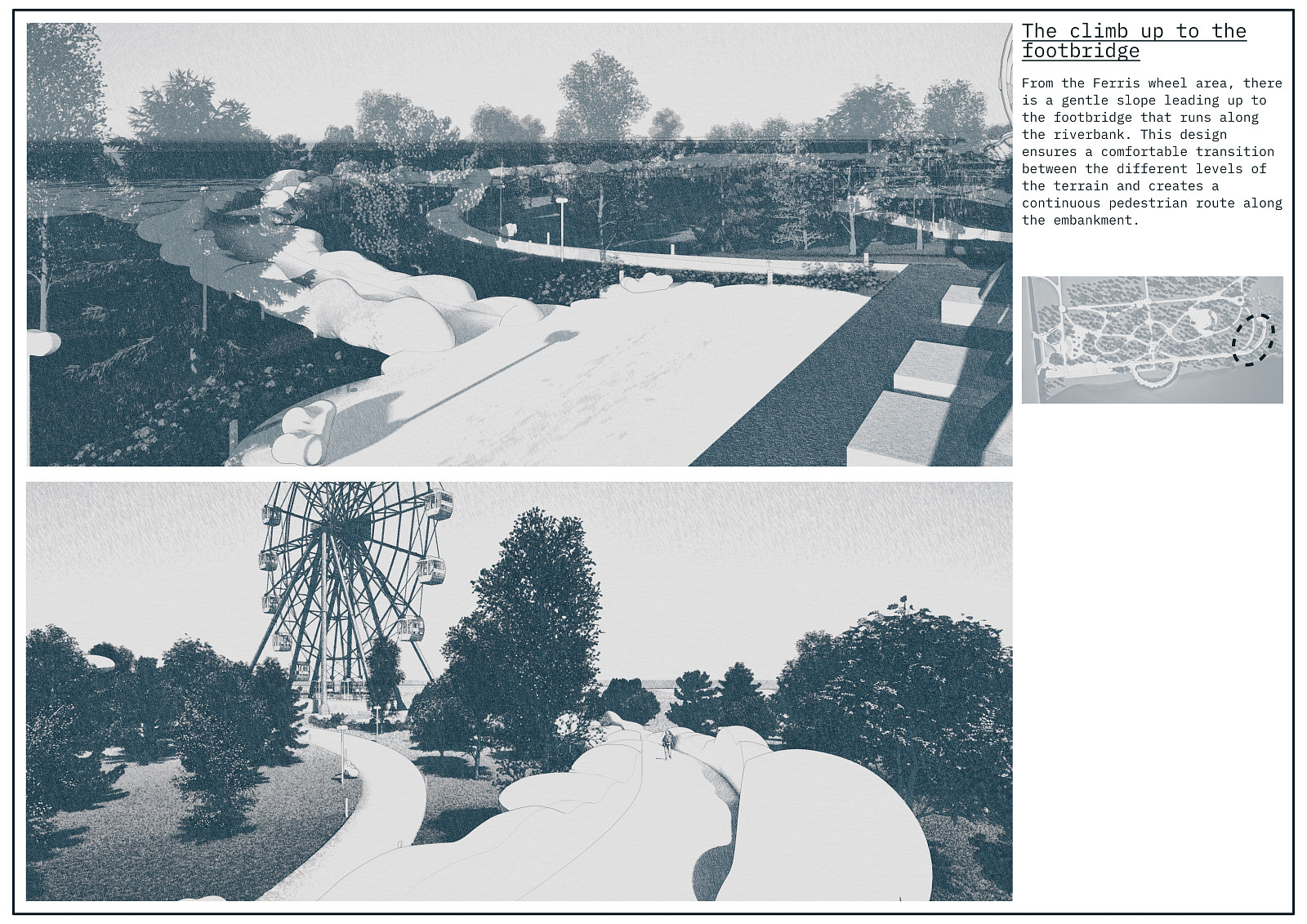
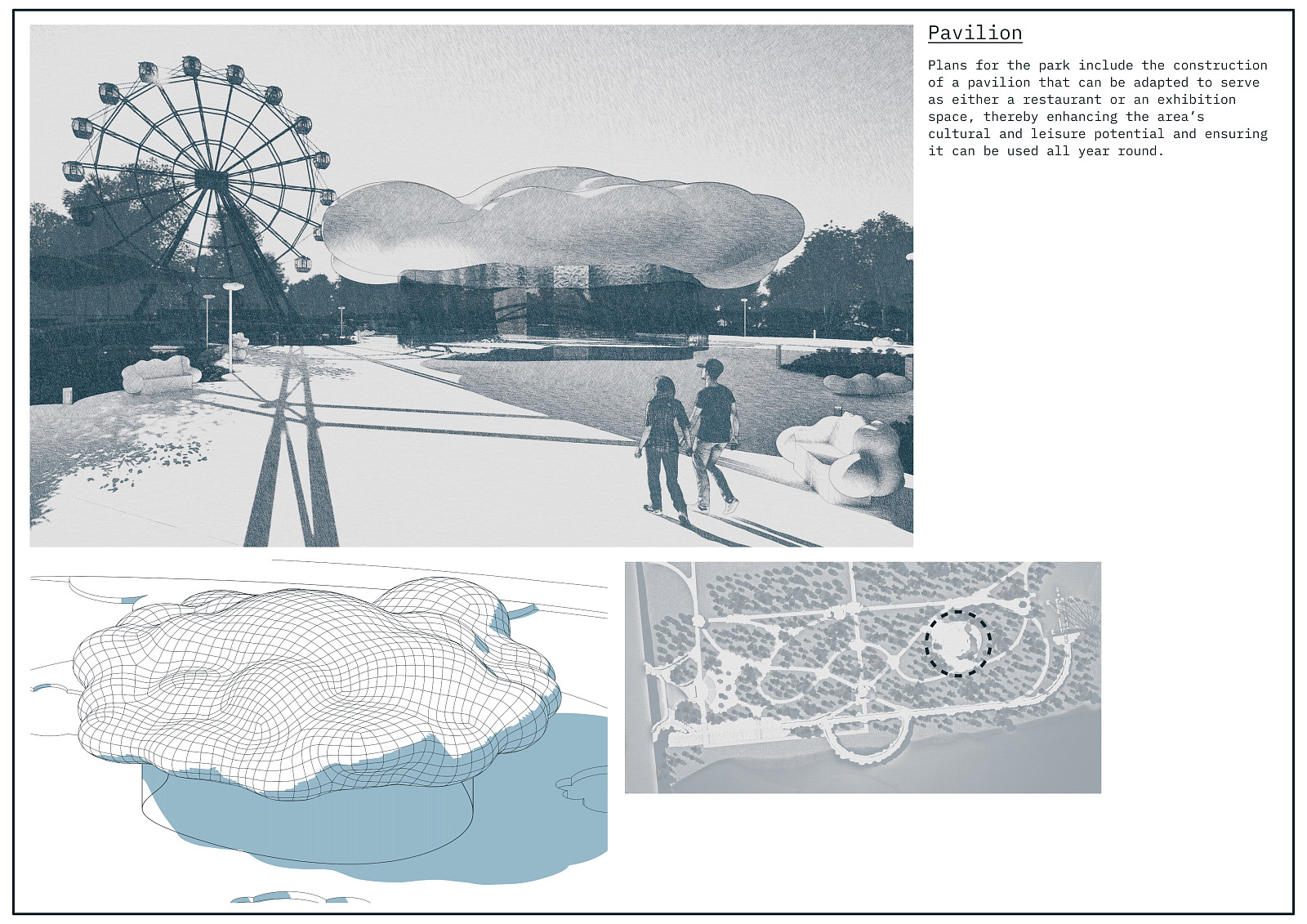
Further inside the park, a pavilion provides opportunities for a restaurant or exhibition space, expanding the cultural and recreational program. The existing retaining wall is preserved and reinterpreted as an active element of the composition, becoming the starting point for a pedestrian bridge running along the Kotorosl River. A waterfront boardwalk allows visitors to approach the water and interact with the sandy shoreline, while landforms, pathways, fountains, and recreational areas create a diverse and immersive landscape experience.
Technical information
The project is located in Yaroslavl, Russia, on the banks of the Kotorosl River. The design preserves and integrates existing site structures, minimizing intervention and reinforcing the identity of the place. Pedestrian circulation is organized through a hierarchy of routes connecting the entrances, the bridge access, the central square, and the riverside promenade.
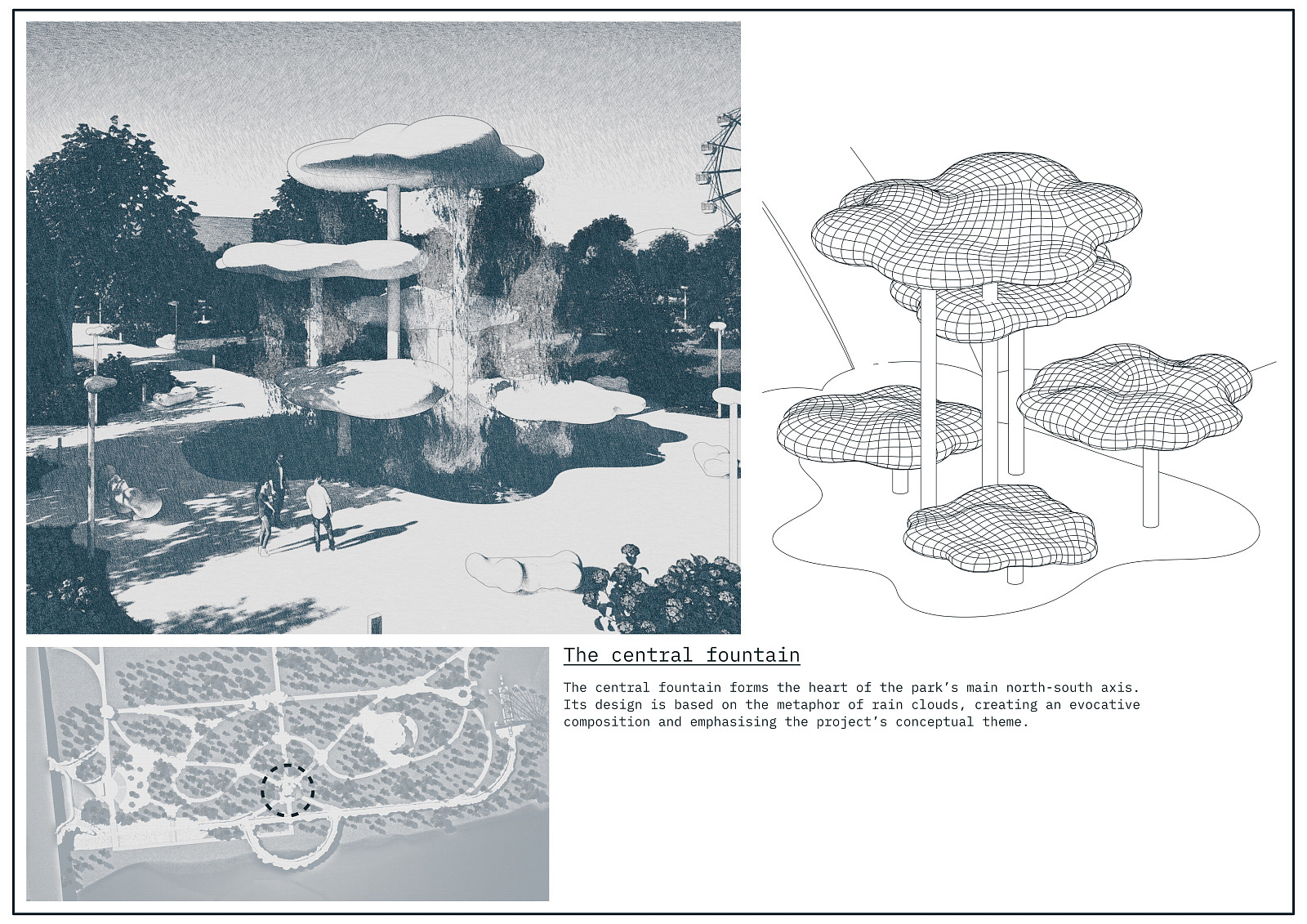
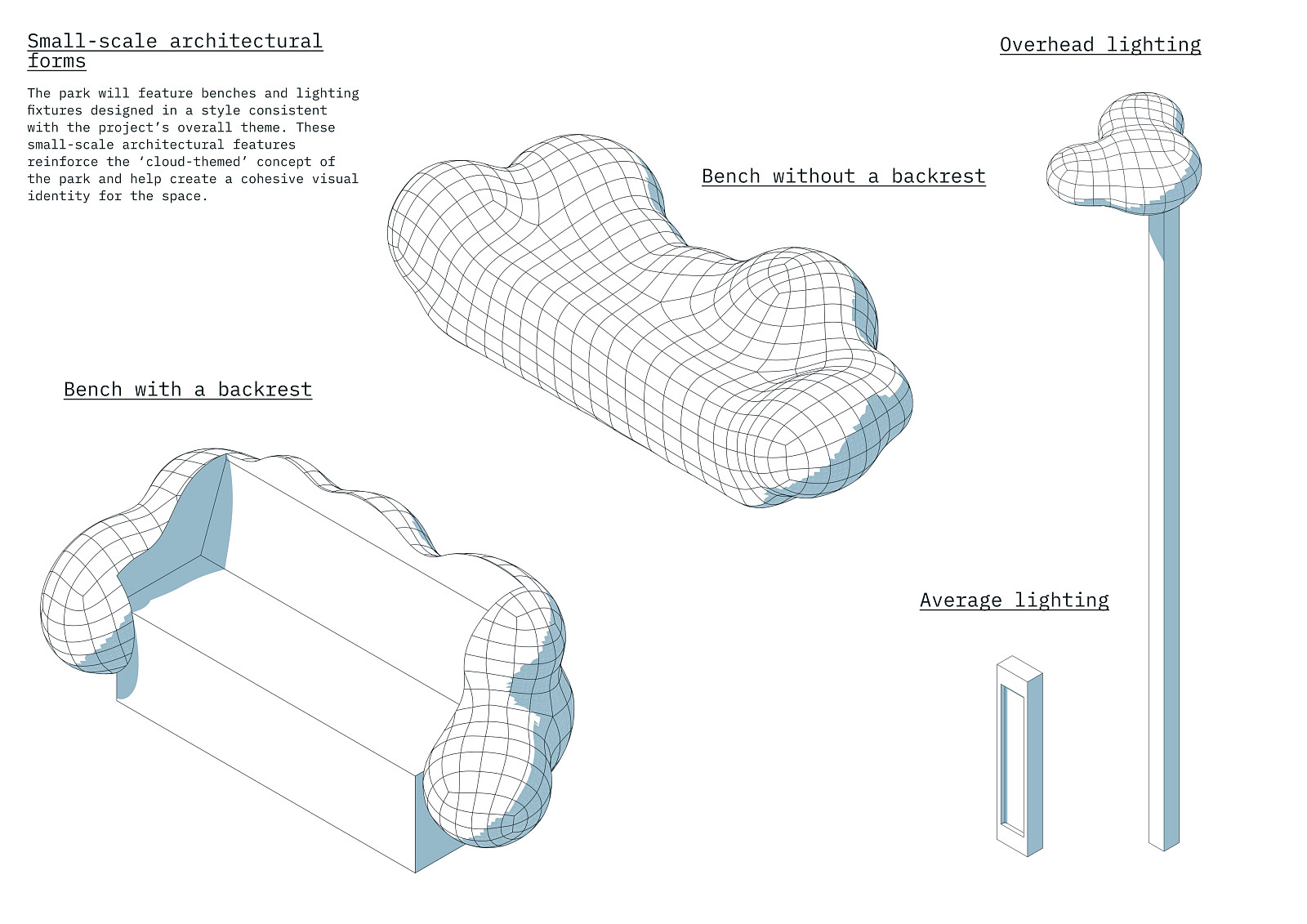
The spatial composition is structured around a north–south axis anchored by the central fountain, whose form is inspired by rain clouds and supports the overall “cloud” narrative. Small architectural elements, lighting fixtures, and furniture are designed as a unified family of objects to maintain visual coherence throughout the park. The combination of cultural infrastructure, landscape interventions, and public amenities creates a multifunctional environment intended for year-round use by residents and visitors of all ages.
Created in:


Copyright © 2026 INSPIRELI | All rights reserved. Use of this website signifies your agreement to the Terms of Use, Privacy Policy, and use of cookies.
