SVENJ ' tourism cultural food hub


Project idea
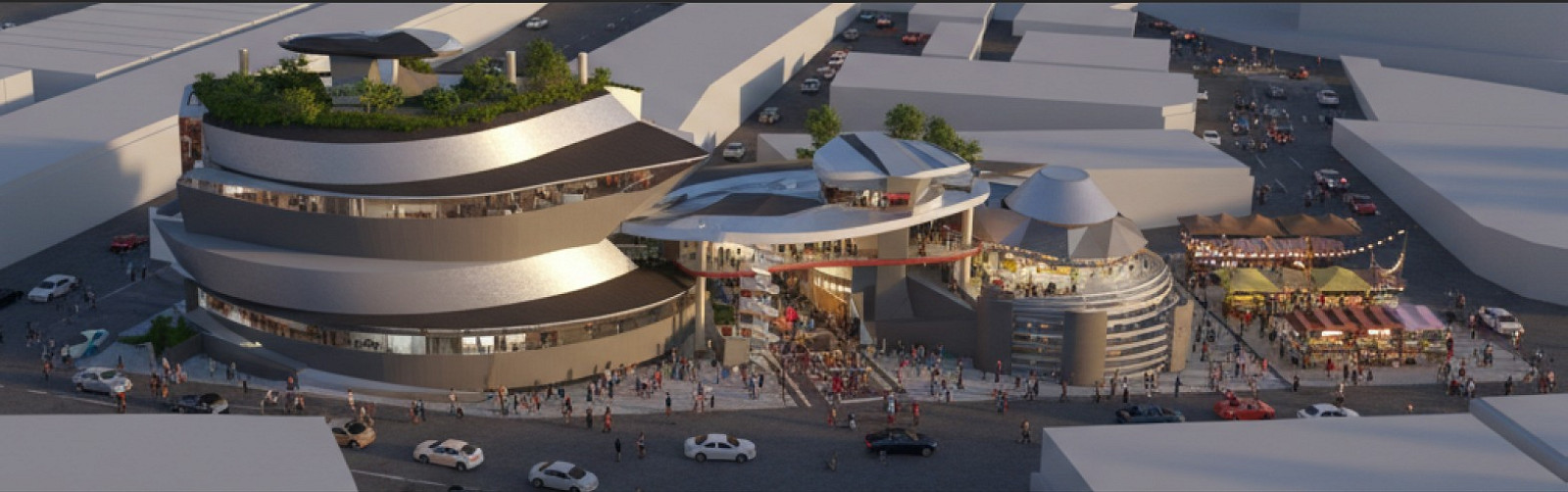
This project explores how Moroccan food culture can become a generator for architectural and urban design. Inspired by the traditional Moroccan street food Sfenj, the proposal transforms the cultural rituals, social interactions, and food preparation processes associated with Sfenj into a spatial experience. Rather than focusing on a single food kiosk, the project aims to create a vibrant Moroccan-inspired food street and tourism destination where architecture, culture, and community activities are seamlessly integrated. Traditional Moroccan elements such as the Khayma tent, Souk marketplace, Medina streets, desert landscapes, and communal dining traditions are reinterpreted to establish a unique cultural identity within the urban context of Kuala Lumpur.
Project description
The project proposes a Moroccan Cultural Food Street and Tourism Hub located at Jalan Changkat Bukit Bintang, Kuala Lumpur. The development is designed as a contemporary interpretation of a Moroccan street market, where multiple food kiosks, gathering spaces, dining areas, and cultural activity zones are connected through a pedestrian-oriented public realm. The design celebrates the social nature of Moroccan food culture by encouraging interaction, exploration, and communal dining. Visitors experience a journey through various spaces including spice bazaar corridors, communal courtyards, tea gathering areas, food kiosks, and rooftop viewing terraces. Through the visible process of food preparation, sensory engagement, and cultural storytelling, the project transforms an underutilized urban area into a lively tourism and community destination that promotes cultural exchange, economic activity, and public engagement.
Technical information
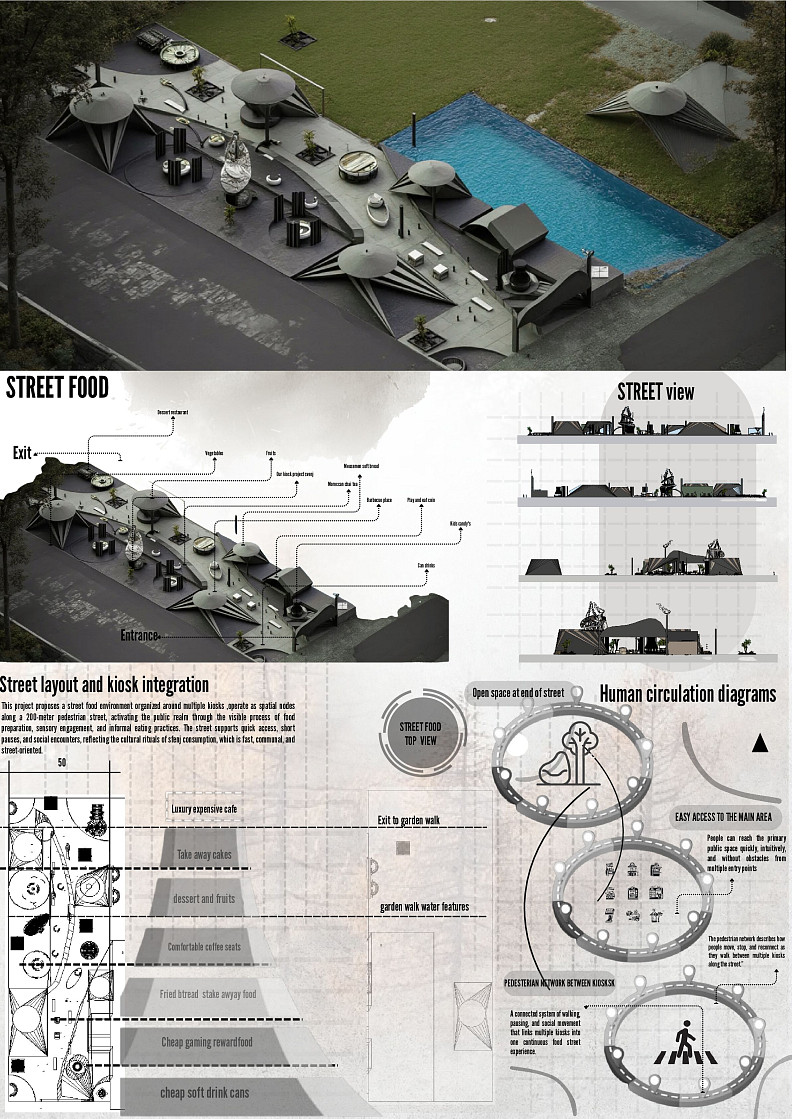
The project is organized around a 200-meter-long pedestrian food street that functions as the primary circulation spine connecting a series of Moroccan-inspired kiosks and public spaces. The kiosks are designed using a compact circular layout of approximately 12 m², incorporating transparent glass façades, timber finishes, steel structural systems, and tensile fabric roofs inspired by traditional Moroccan tents. Environmental strategies include passive cooling, natural cross ventilation, shaded outdoor spaces, courtyard cooling effects, and orientation responsive to Kuala Lumpur’s tropical climate. The masterplan incorporates a hierarchy of spaces ranging from public arrival zones and commercial corridors to communal dining areas and rooftop viewing decks. The overall architectural language is derived from Moroccan nomadic structures, desert dune formations, and traditional marketplace typologies, while modular construction techniques and lightweight structural systems ensure flexibility, functionality, and sustainability. The project ultimately combines cultural identity, urban regeneration, tourism development, and climate-responsive design into a cohesive architectural proposal.
Documentation

Copyright © 2026 INSPIRELI | All rights reserved. Use of this website signifies your agreement to the Terms of Use, Privacy Policy, and use of cookies.
