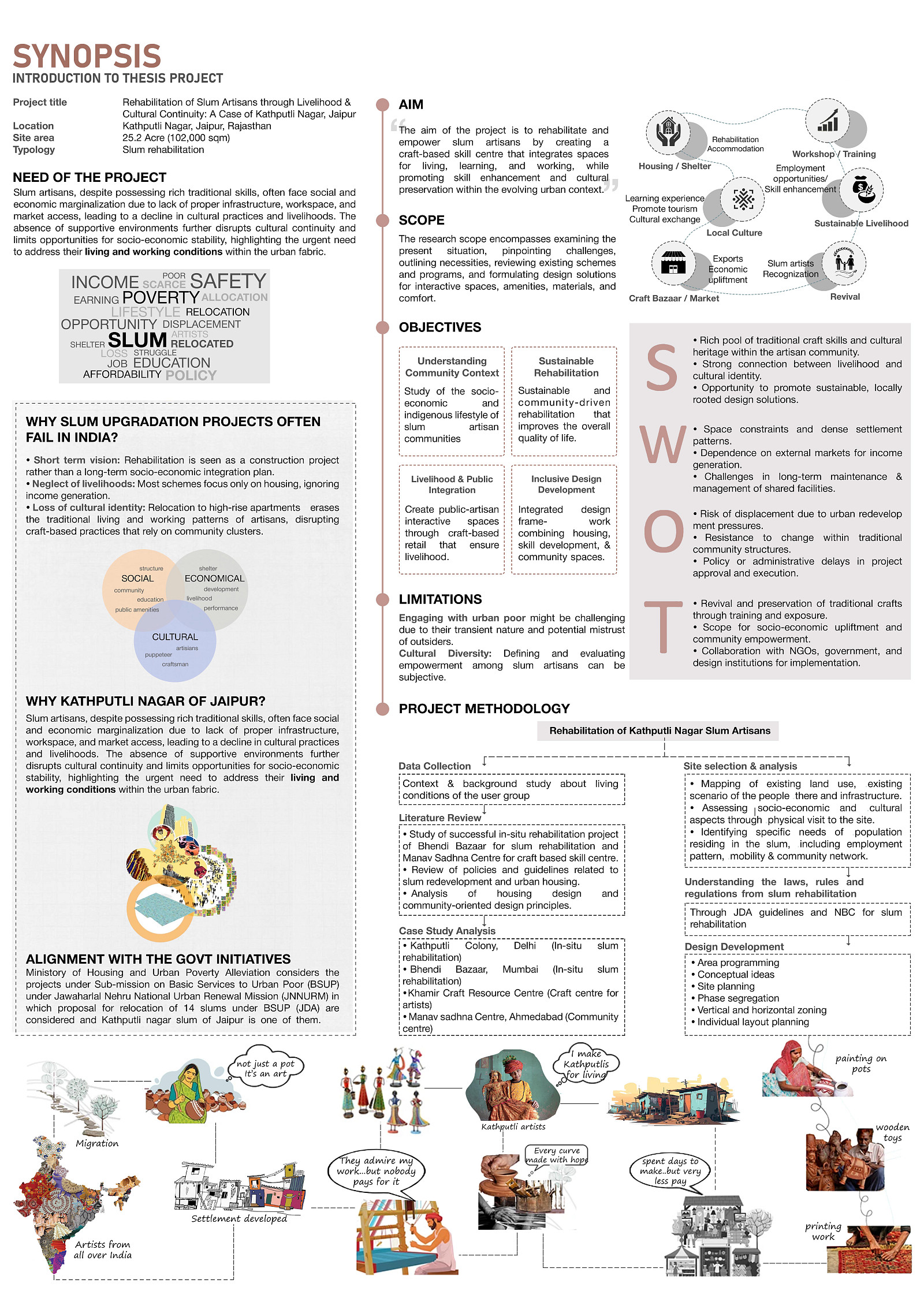
Rehabilitation of Slum Artisans through Livelihood and Cultural Continuity: A case of Kathputli Nagar, Jaipur


Project idea
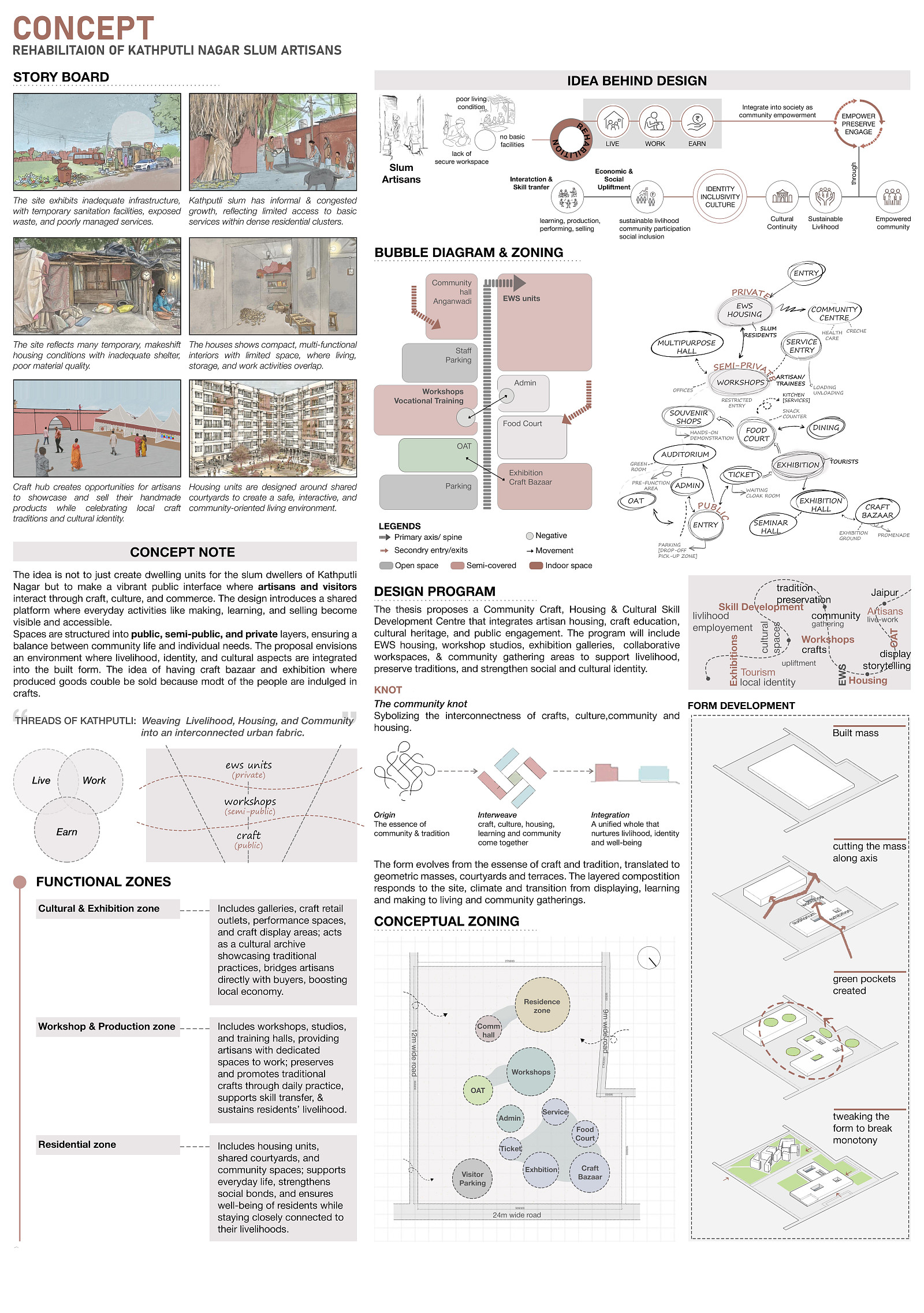
This project addresses the challenge of declining livelihoods, inadequate working environments, and social exclusion experienced by artisan communities living in informal settlements. The proposal reimagines rehabilitation as a productive and culturally rooted urban environment rather than only a housing intervention. Inspired by traditional craft practices and community-based economies, the project integrates housing, skill development, production spaces, and public interaction areas into a single ecosystem that supports both economic resilience and cultural continuity.
Project description
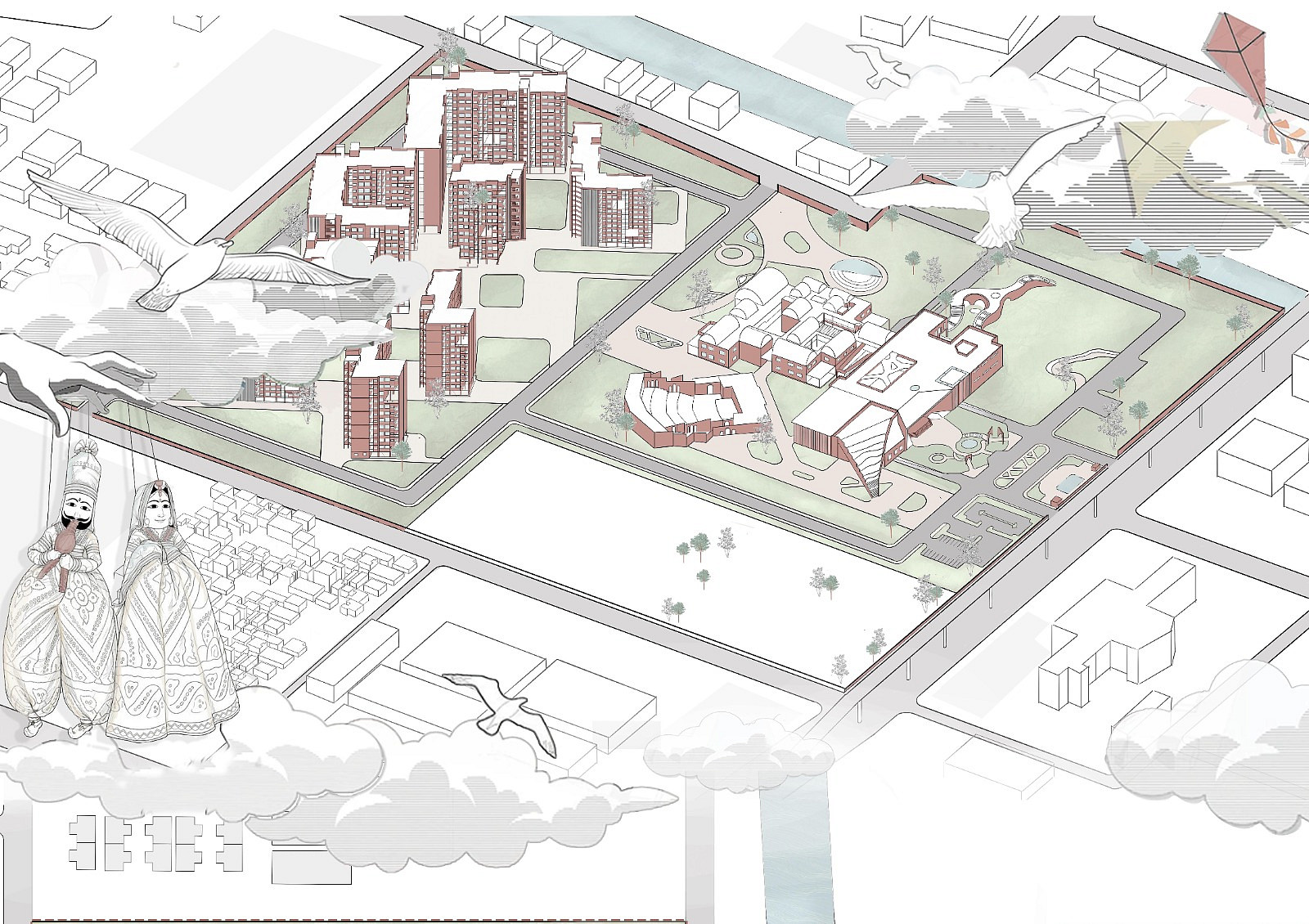
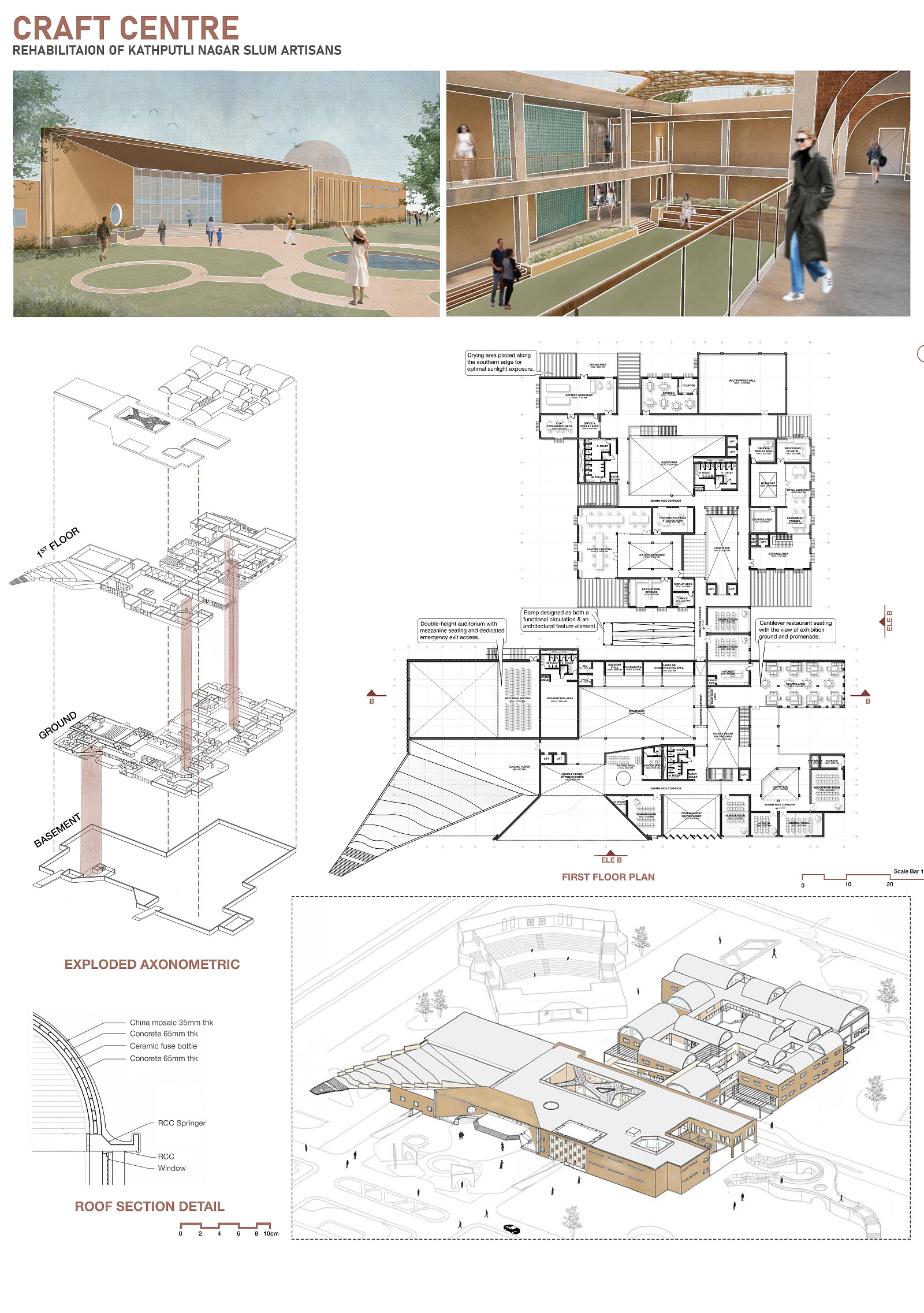
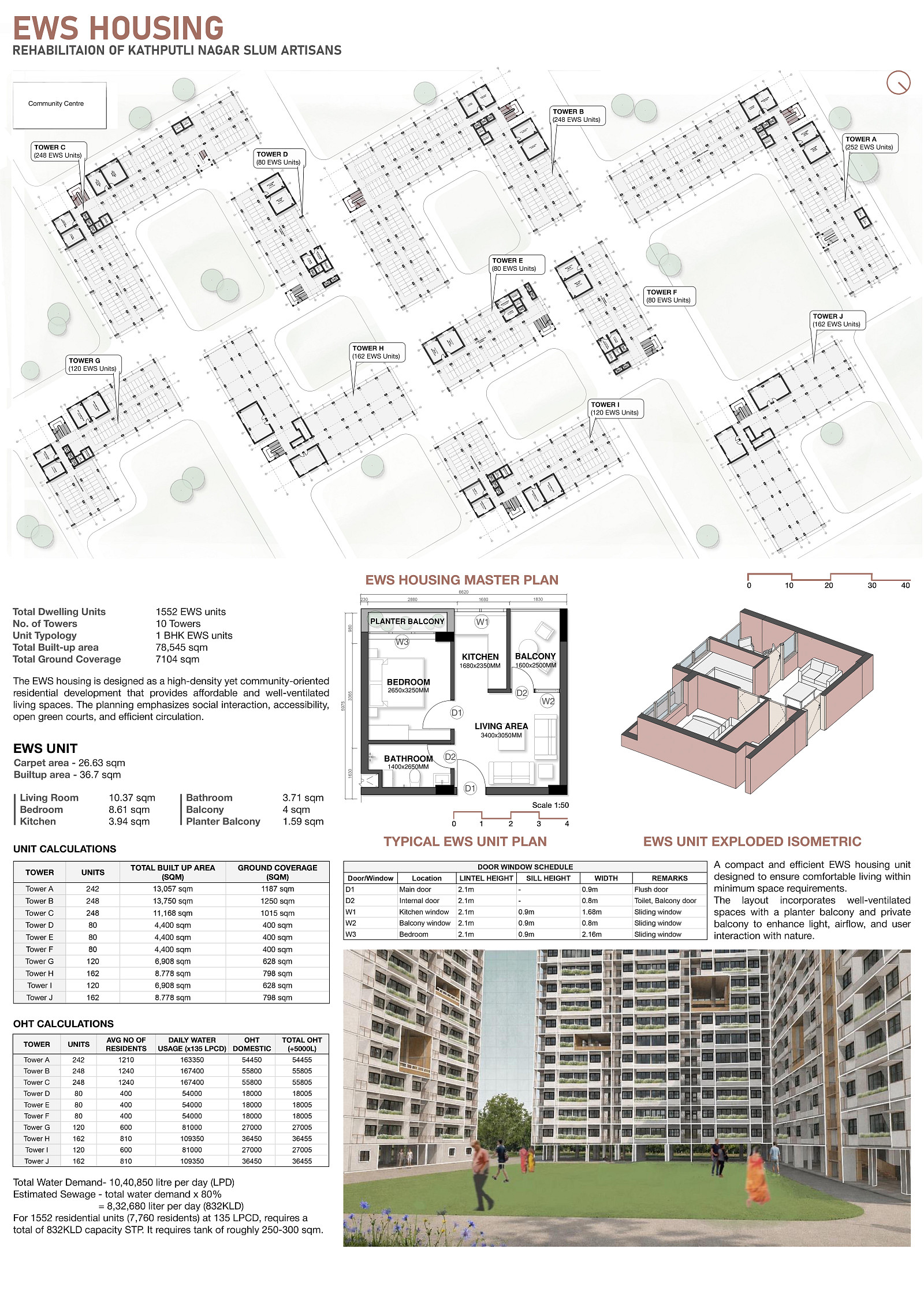
The project is conceived as a mixed-use rehabilitation and livelihood development centre for artisan communities. It combines residential units, craft workshops, vocational training facilities, exhibition and retail spaces, community courtyards, and shared public amenities. The design creates opportunities for learning, production, entrepreneurship, and cultural exchange while strengthening social networks within the community. Public spaces are designed to encourage interaction between artisans, visitors, and the wider city, transforming the settlement into an active urban destination rather than an isolated enclave.
Technical information
The proposal is organized around a modular reinforced concrete structural system with masonry infill, allowing flexibility for future adaptation and phased development. Climate-responsive design strategies include shaded courtyards, cross-ventilation, daylight optimization, and passive cooling measures suited to the regional climate. Locally sourced materials and low-maintenance construction techniques are prioritized where feasible. The spatial hierarchy separates public, semi-public, and private functions while maintaining visual connectivity and accessibility throughout the development.
Created in:


Copyright © 2026 INSPIRELI | All rights reserved. Use of this website signifies your agreement to the Terms of Use, Privacy Policy, and use of cookies.