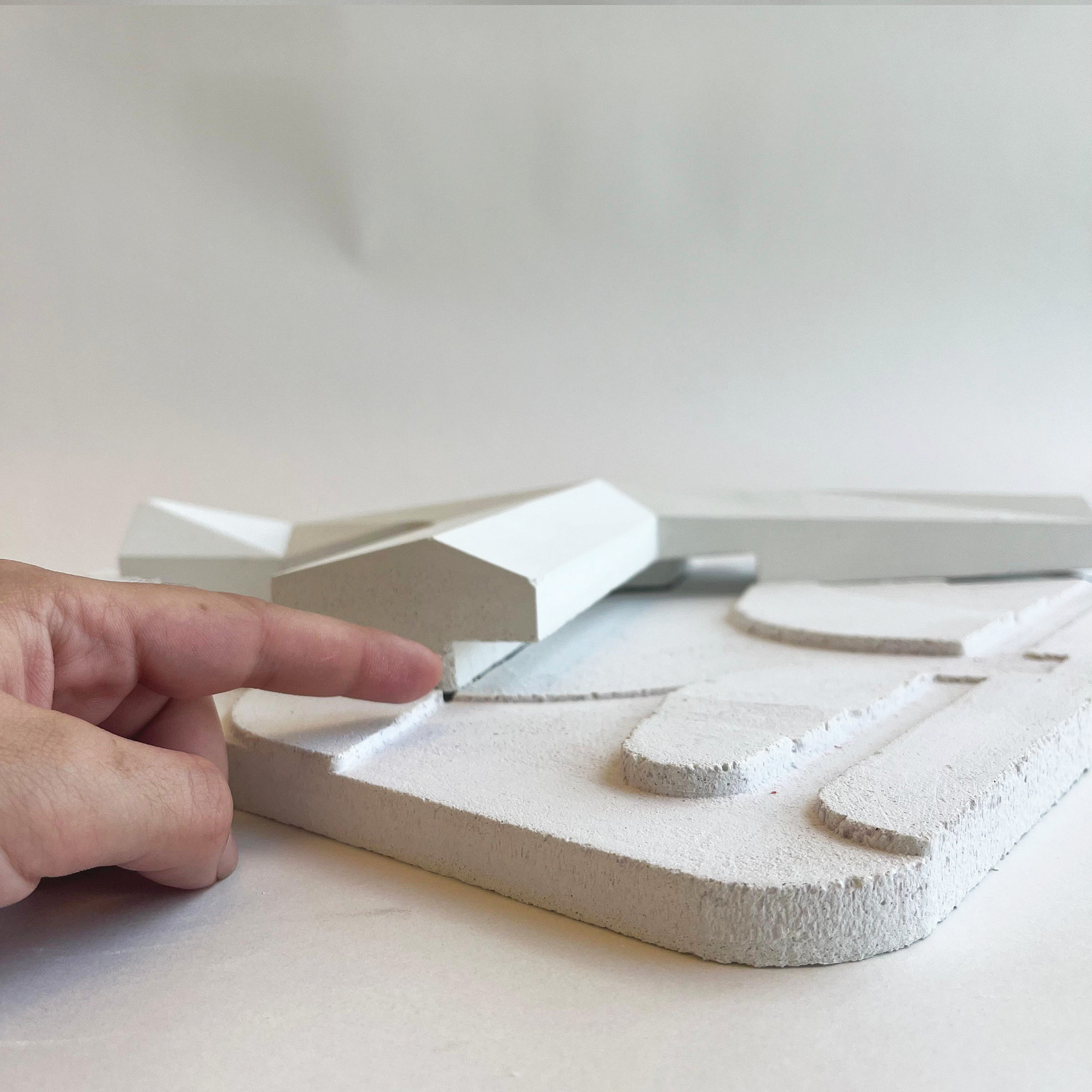
People's trail connection


Project idea
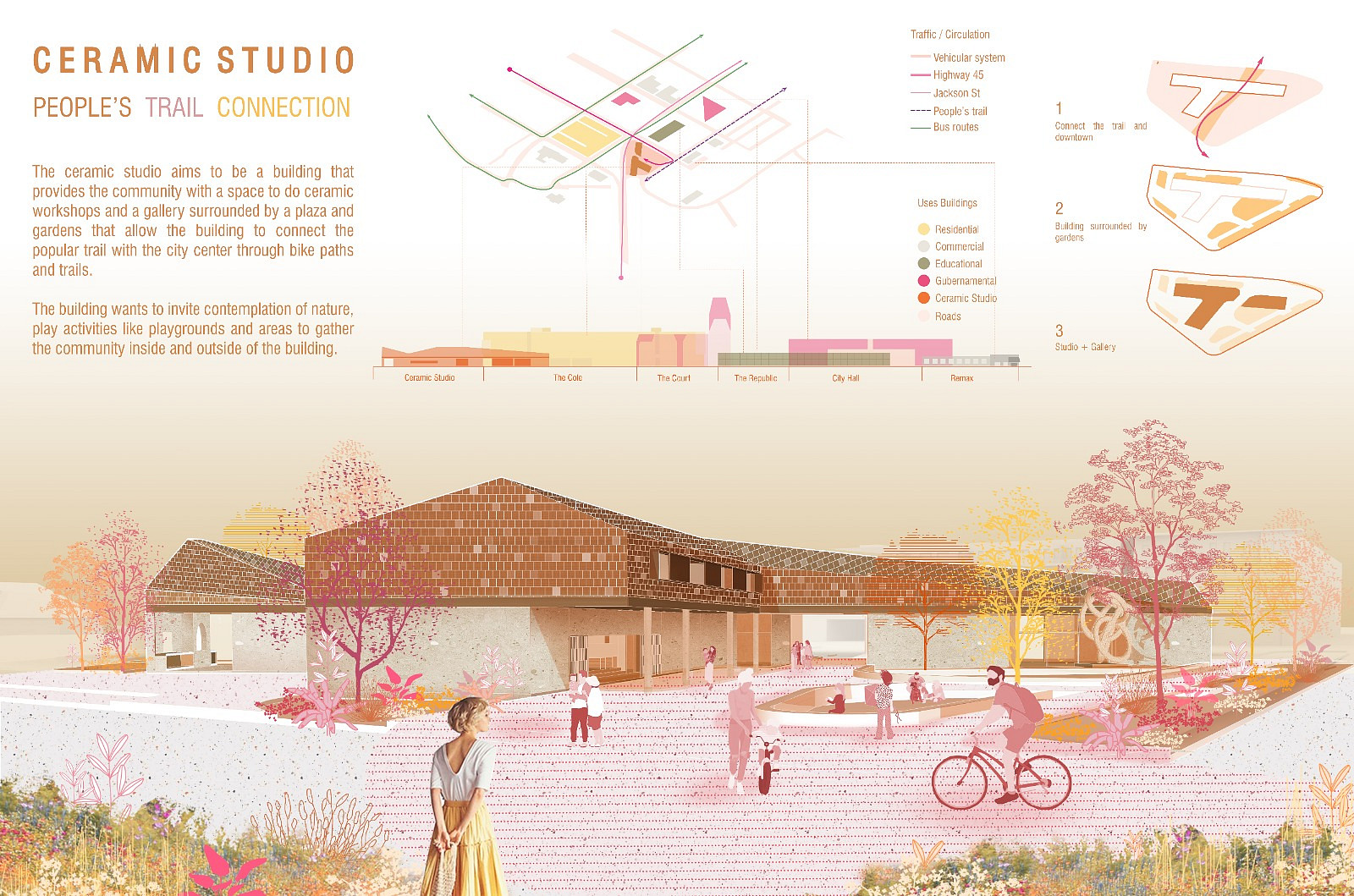
Columbus, Indiana is a city famous for its architectural legacy — a community that has long understood the capacity of buildings to shape civic identity and foster public life. Yet along the People's Trail, where the popular linear path connects Noblitt Park to the city center, a critical gap persists: a triangular site at the convergence of Highway 45, Jackson Street, and the trail itself sits underutilized, surrounded by civic institutions — City Hall, The Republic, The Court — but failing to anchor the pedestrian experience that links them. This project begins with that gap, and with a conviction that a building in this location can do more than occupy a site: it can become the hinge that reconnects the trail to downtown, and in doing so, reactivate the public life of Columbus's civic core.
The Ceramic Studio — People's Trail Connection proposes a community ceramic studio and gallery that uses the ancient craft of ceramics — one of the oldest human relationships with earth, fire, and making — as the basis for a new kind of civic building. Ceramics is not chosen arbitrarily. It is a discipline rooted in material transformation: clay shaped by hand, hardened by heat, glazed and fired into something that is simultaneously functional and beautiful, individual and collective. Like the city itself, it is made through a process of community, patience, and the application of skill. By centering this craft within a publicly accessible building surrounded by gardens, plazas, and direct connections to the People's Trail and the downtown street network, the project positions making as a civic act.
The goals of the project are threefold. First, to physically and symbolically connect the People's Trail to the downtown fabric through a building whose form, siting, and landscape are designed as an extension of the trail's logic of movement, discovery, and encounter with nature. Second, to provide the Columbus community with dedicated, accessible spaces for ceramic education, production, and exhibition — filling an institutional gap in the city's cultural infrastructure. Third, to create a building that invites contemplation, play, and gathering both inside and outside its walls, making the boundary between the studio, the gallery, and the public realm porous and inhabited at all times of day.
Project description
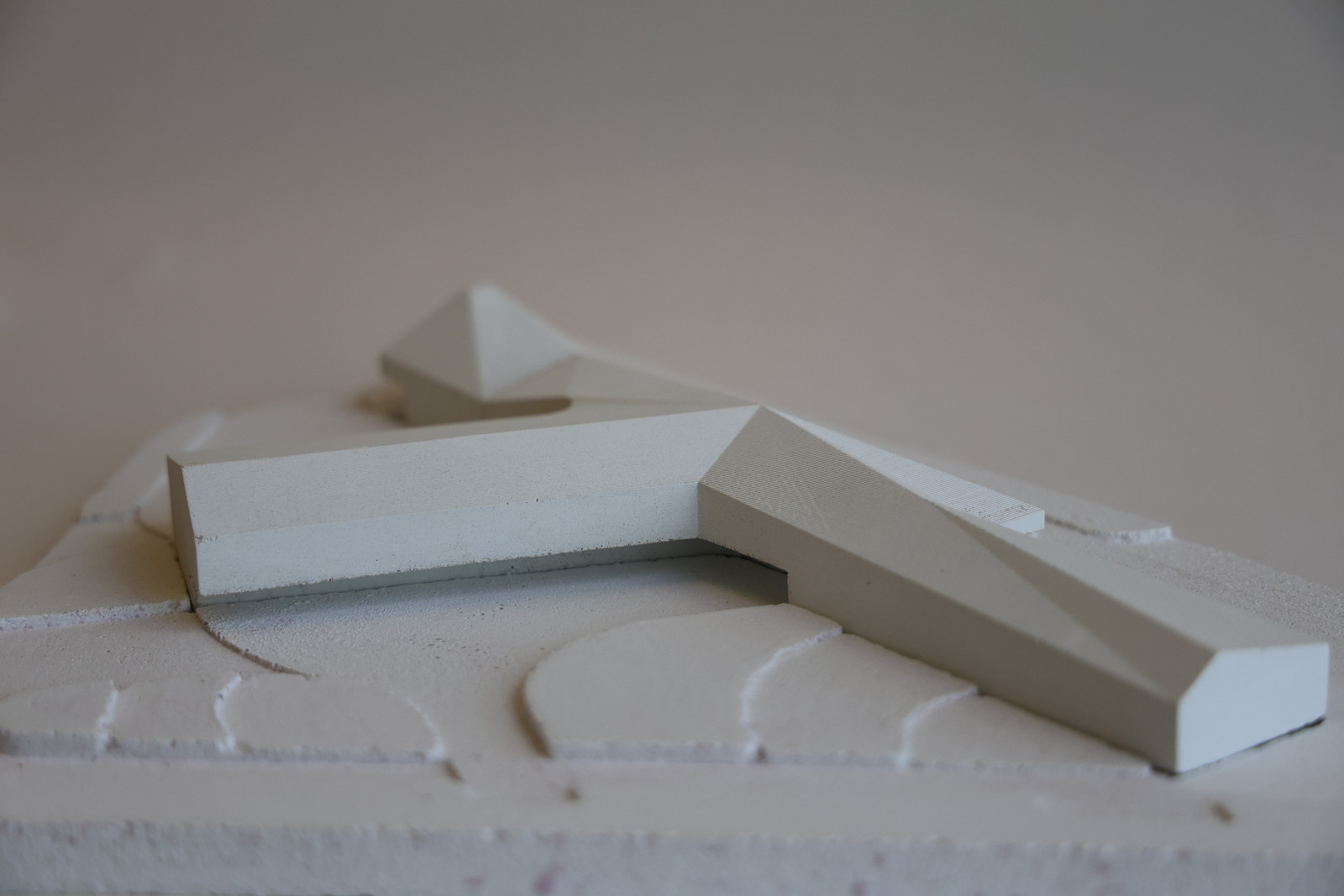
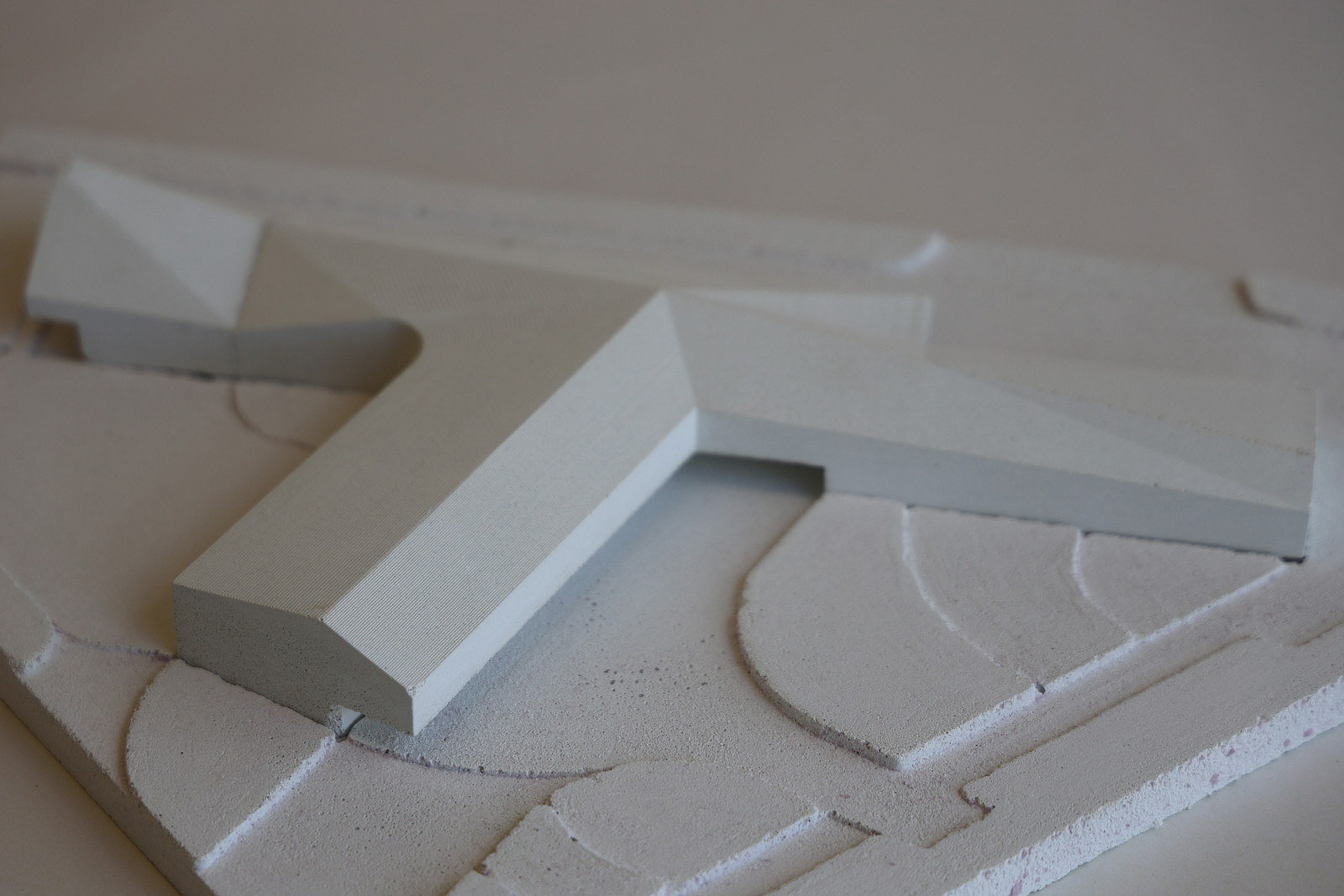
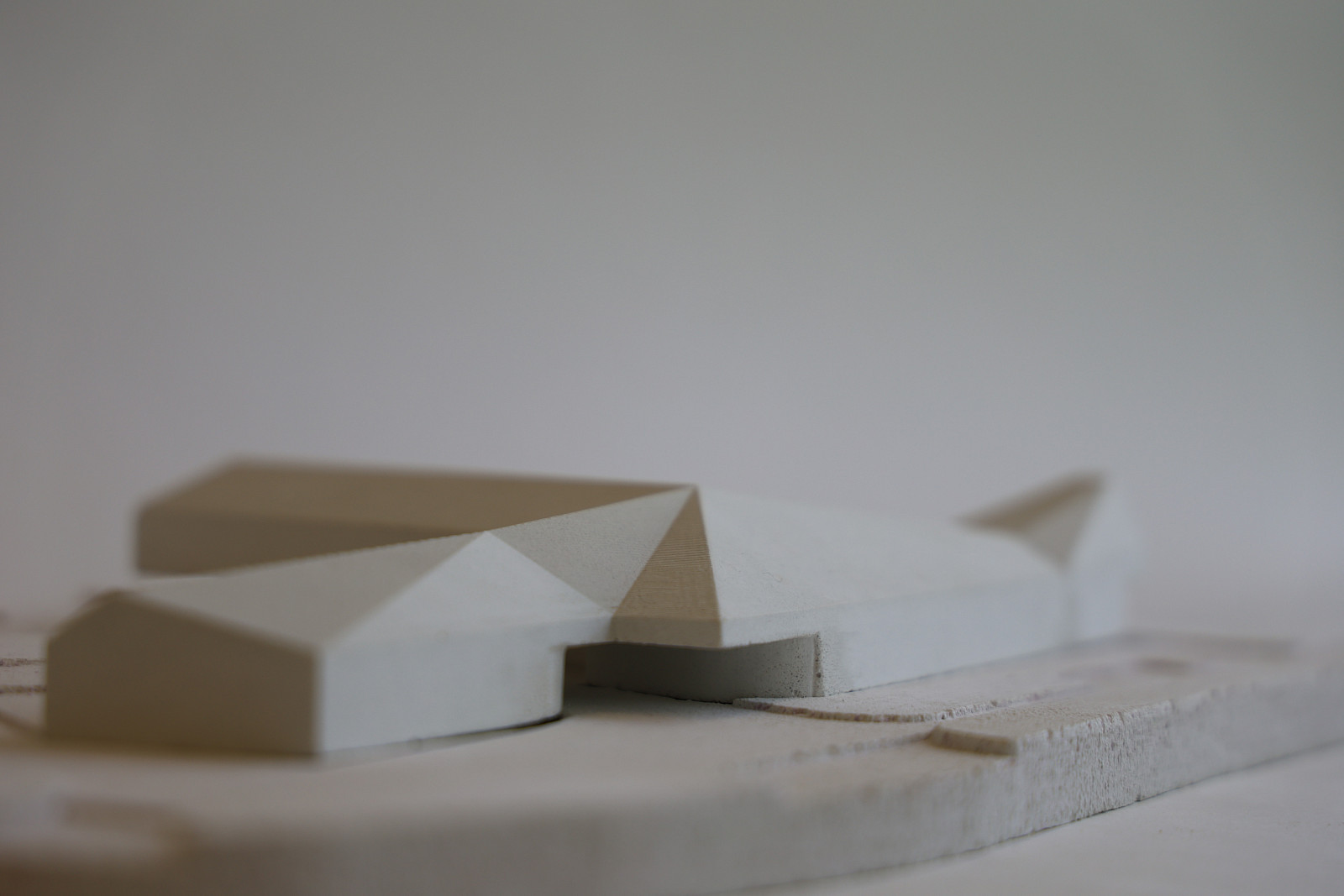
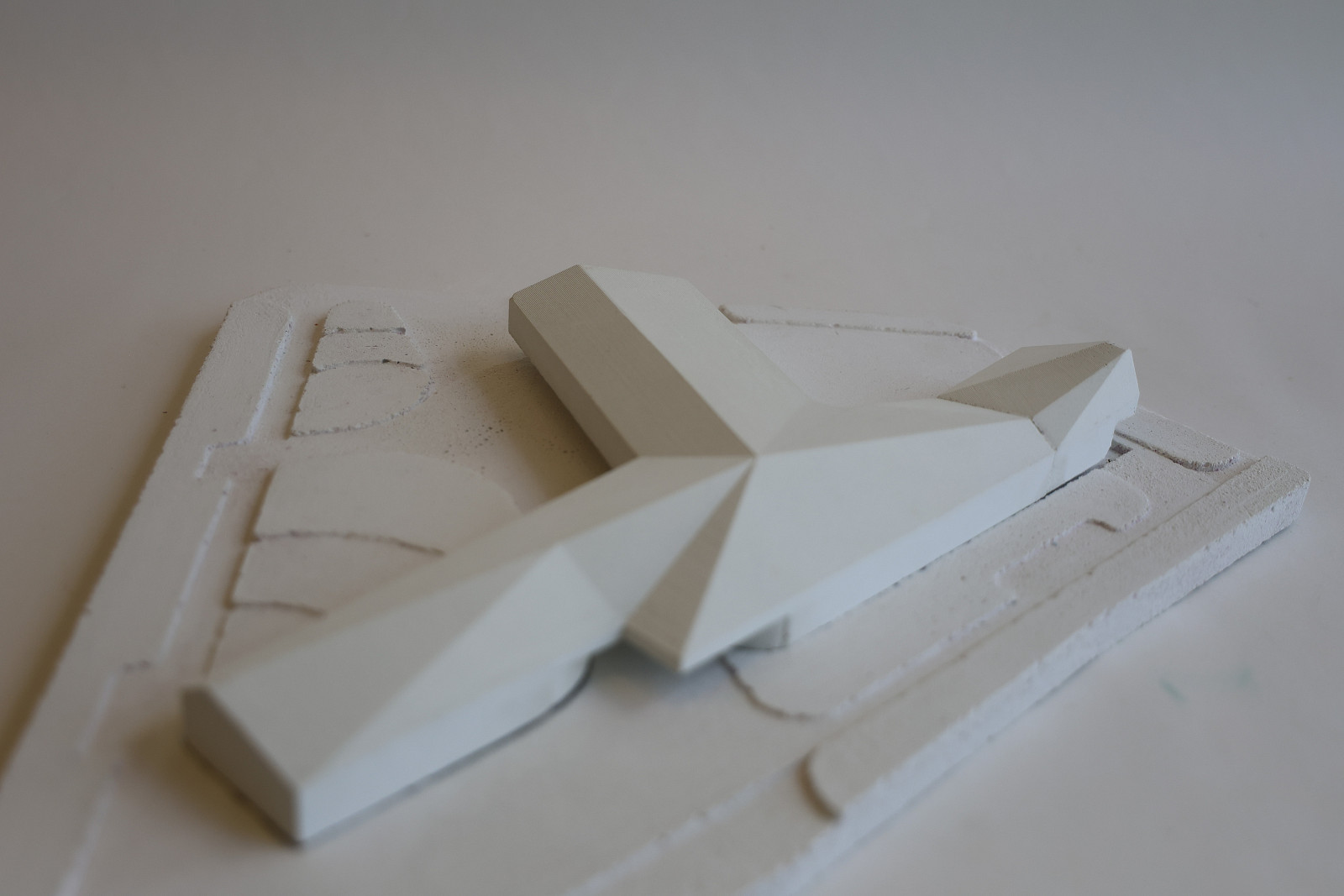
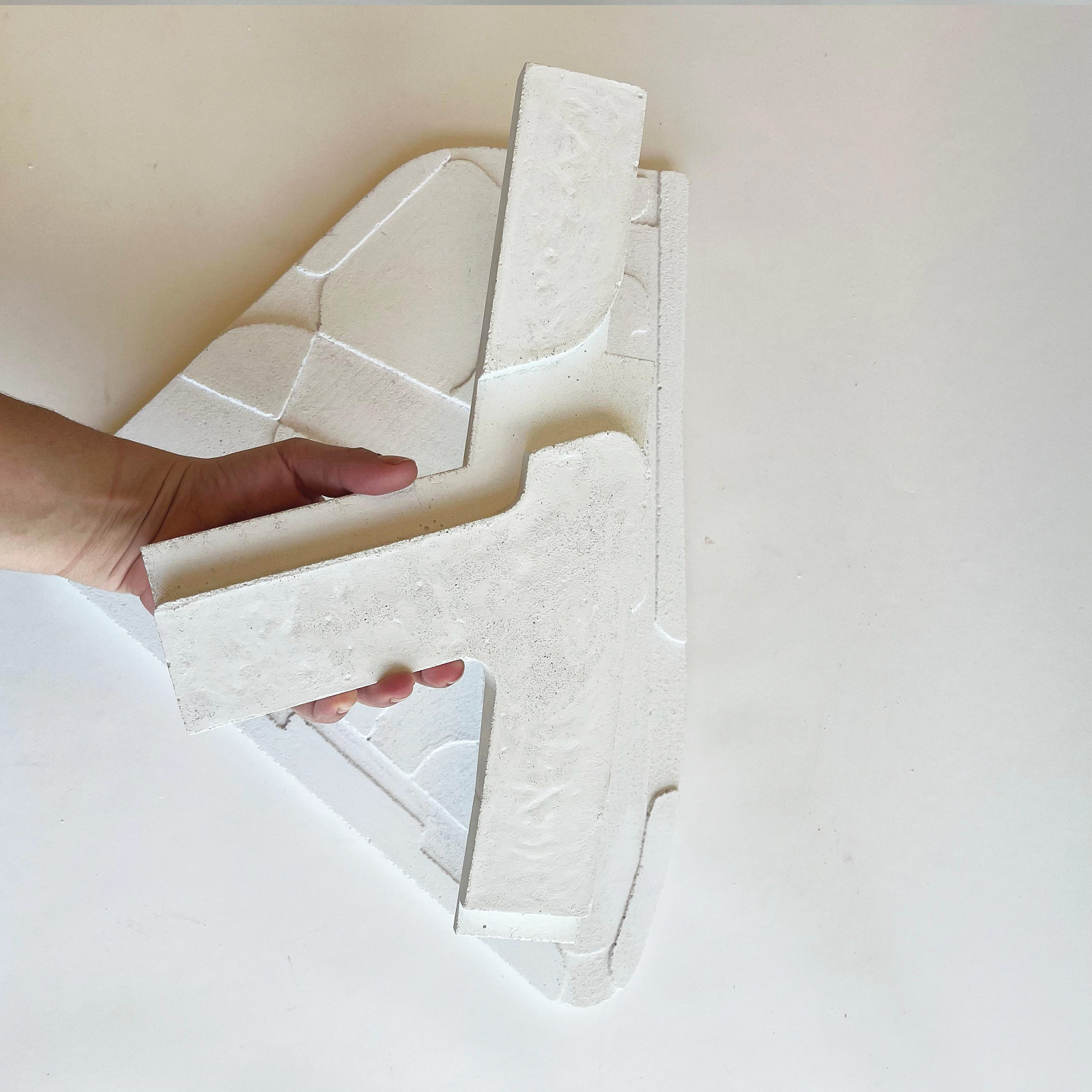
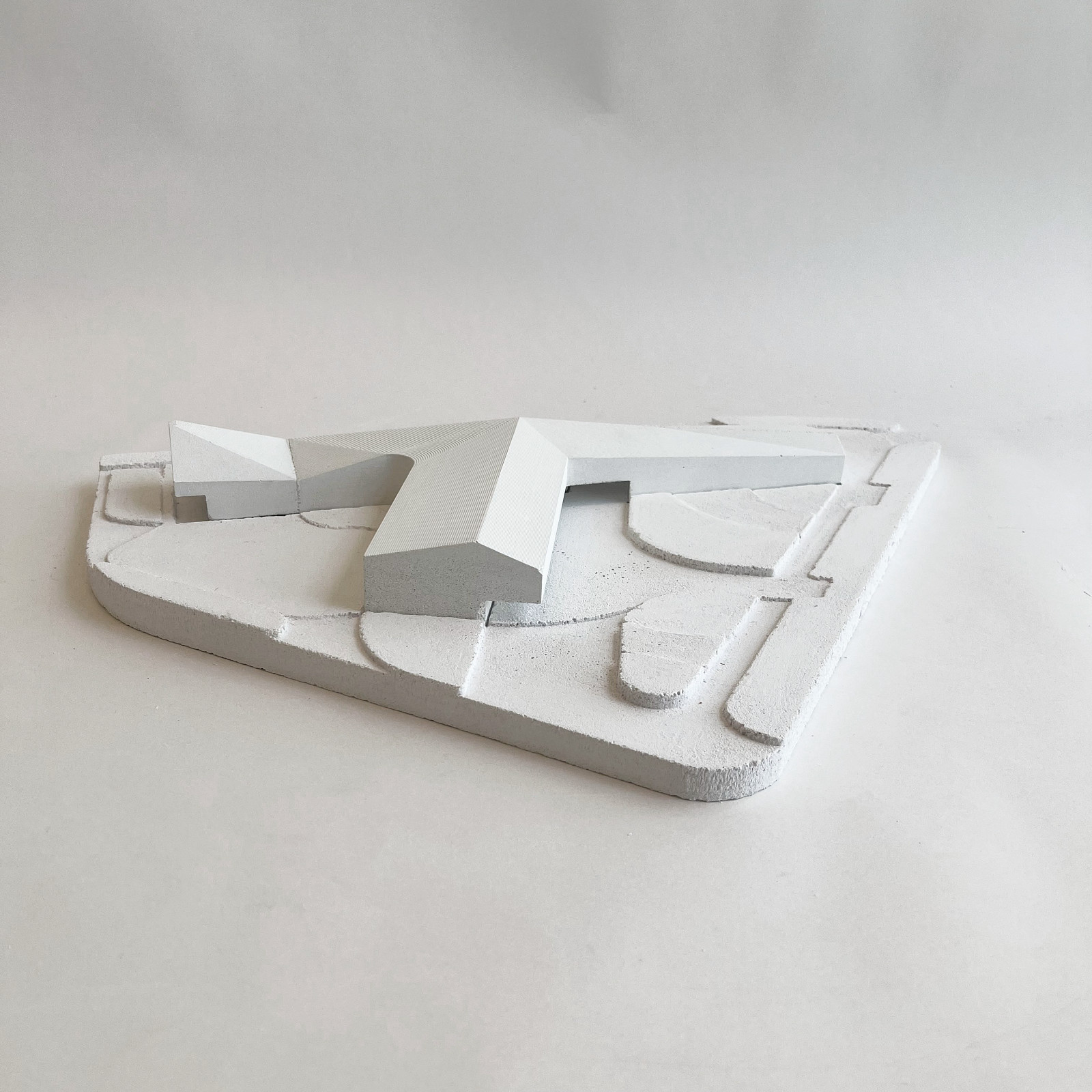
The Ceramic Studio — People's Trail Connection is a two-level cultural facility located on a triangular site at the convergence of the People's Trail, Highway 45, and Jackson Street in Columbus, Indiana. The building is organized into two wings — a studio and production wing to the west, and a gallery and public wing to the east — joined by a central lobby and circulation spine that also serves as the primary covered threshold between the trail and the surrounding gardens.
The Ground Floor accommodates the full range of public-facing and production programs. The gallery occupies the eastern tip of the triangular site, positioned to face both the People's Trail and the civic institutions along Jackson Street, offering maximum visibility and access for visitors arriving by foot or bicycle. Adjacent to the gallery, the lobby serves as the social hinge of the building — an open, generously glazed space where the trail, the plaza, and the interior converge. Moving westward through the building, the program transitions from public to productive: a mixing room, interior kiln, exterior kiln, glazing room, flex space, and storage provide a complete ceramic production chain, allowing students and community members to work through the full process of making from clay preparation to firing and finishing.
The Second Floor houses the studios — quiet, well-lit spaces for more sustained individual and group work — along with a flex mezzanine overlooking the gallery below. The upper level is accessed by an interior stair visible from the lobby, reinforcing the visual connection between the public ground floor and the productive upper level and communicating the building's dual identity as both an accessible civic space and a serious place of making.
The Landscape is as essential to the project as the building itself. The entire site is wrapped in gardens that mediate between the triangular built form and the surrounding streets, trails, and civic spaces. A plaza and parking area on the southern edge accommodates vehicle access while maintaining the pedestrian primacy of the trail frontage. The gardens absorb the irregular geometry of the site, softening the building's edges and creating spaces for contemplation, informal gathering, and play alongside the trail. The building's overhanging ceramic tile roof extends outward as a covered canopy along the trail edge, sheltering cyclists and pedestrians and marking the studio as a generous civic presence on the path.
The Ceramic Tile Envelope gives the building its most distinctive character. Two custom ceramic tile systems — one for the roof surface and one for the walls — are developed as the primary architectural expression of the project. The roof tiles, laid in a faceted, gabled geometry that rises and falls across the building's profile, are visible from a distance along the trail and from the surrounding civic buildings, creating an unmistakable identity. The wall tiles are paired with sliding door systems that allow the ground floor to open fully to the plaza and gardens, dissolving the boundary between inside and outside during temperate months and activating the building as a continuous outdoor-indoor experience.
Technical information
The Ceramic Studio — People's Trail Connection is a two-level civic building on a triangular site in Columbus, Indiana, drawn at scales 1/32" and 1/16" for site and floor plans, 1/8" for sections and elevations, and 1:2" for the wall section detail.
Structural System: The building uses a steel structural frame — clearly expressed in the sections and wall section detail — with steel columns, beams, and roof trusses forming the primary load-bearing system. The roof structure employs a series of pitched and faceted steel trusses that generate the undulating ceramic tile roofline visible across all four elevations, rising to gable peaks over the gallery and studio volumes and lowering to a canopy along the trail-facing edge. The wall section (Scale 1:2") details the connection between the steel frame, the ceramic tile wall cladding system, the sliding door tracks, and the floor-to-ceiling glazing that characterizes the public elevations.
Ceramic Tile Systems: Two distinct custom ceramic tile assemblies are developed for the building's envelope, making the project's material identity and programmatic identity inseparable. Ceramic Tile 1 is a sliding door system: large-format ceramic-framed panels on a horizontal track that open the ground floor studio and gallery spaces to the plaza and trail edge. These panels can be fully retracted to create a seamless indoor-outdoor condition, or partially closed to modulate airflow and privacy. Ceramic Tile 2 covers the walls and roof: a field-bonded tile system applied to both the pitched roof surfaces and the non-glazed wall areas. The roof tiles follow the faceted geometry of the steel truss structure below, creating a textured, light-catching surface whose warm terracotta tones reference both the material of ceramics and the brick character of Columbus's civic buildings along Jackson Street.
Envelope and Glazing: The eastern and southern elevations — facing the People's Trail and the civic corridor — are predominantly glazed with full-height timber-framed windows and the ceramic sliding door system. The northern elevation, facing Highway 45, uses a more solid ceramic tile wall with horizontal strip windows to the upper studios. The western elevation presents the ceramic tile roof in its most complete form, with the gabled profile descending to a low canopy over the exterior kiln yard.
Program Distribution:
Ground Floor: Gallery (1), Lobby (2), Mixing Room (3), Interior Kiln (4), Exterior Kiln (5), Glazing Room (6), Flex Space (7), Storage (8), restrooms, plaza, covered trail canopy, parking, and surrounding gardens.
Second Floor (Floor Plan 2): Studios (9), flex mezzanine space, and secondary circulation.
Circulation: A single interior stair and accessible vertical circulation connect the ground floor to the second floor within the central lobby volume. Externally, the People's Trail passes directly along the building's eastern and southern edges, with multiple pedestrian entry points from the trail, the plaza, and the garden perimeter. Bicycle access is accommodated along the trail frontage, with bike parking integrated into the plaza landscape. Vehicle parking is located on the south-western edge of the site, accessed from the side street.
Sections:
Section A-A' (Scale 1/8"): cuts through the central lobby and gallery, revealing the two-level section, the steel roof truss, the full-height glazing, and the relationship between interior and the trail-facing plaza.
Section B-B' (Scale 1/8"): cuts through the studio wing, showing the production spaces, the second-floor studios, and the ceramic roof profile as it rises over the kiln areas.
Section C-C' (Scale 1/8"): cuts longitudinally through the full length of the building, revealing the continuous undulating roofline, the gradient from gallery to lobby to studio, and the landscape on both sides of the structure.
Created in:


Copyright © 2026 INSPIRELI | All rights reserved. Use of this website signifies your agreement to the Terms of Use, Privacy Policy, and use of cookies.