Arsenal Memory Park Interpretation Centre


Project idea
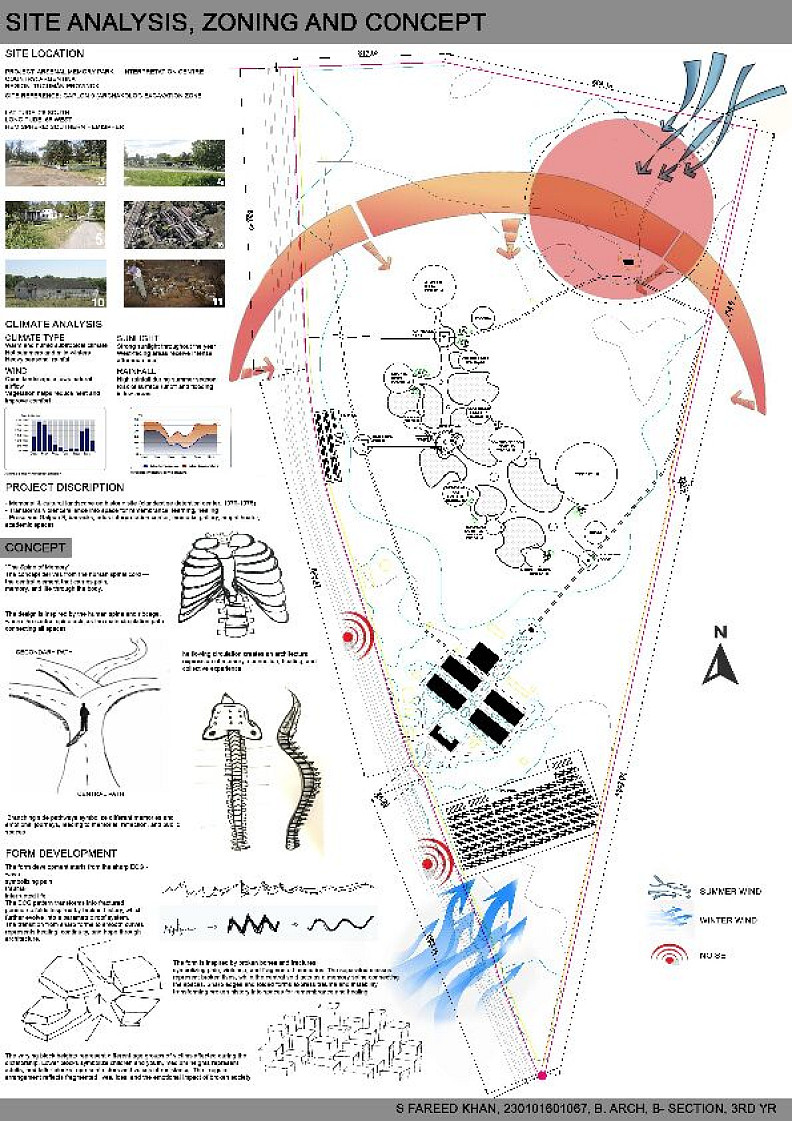
A memorial and cultural landscape on a historic site (clandestine detention center, 1976-1978) that transforms violence and silence into a space for remembrance, learning, and healing. The concept, called 'The Spine of Memory,' derives from the human spinal cord — the central element that carries pain, memory, and life through the body.
Project description
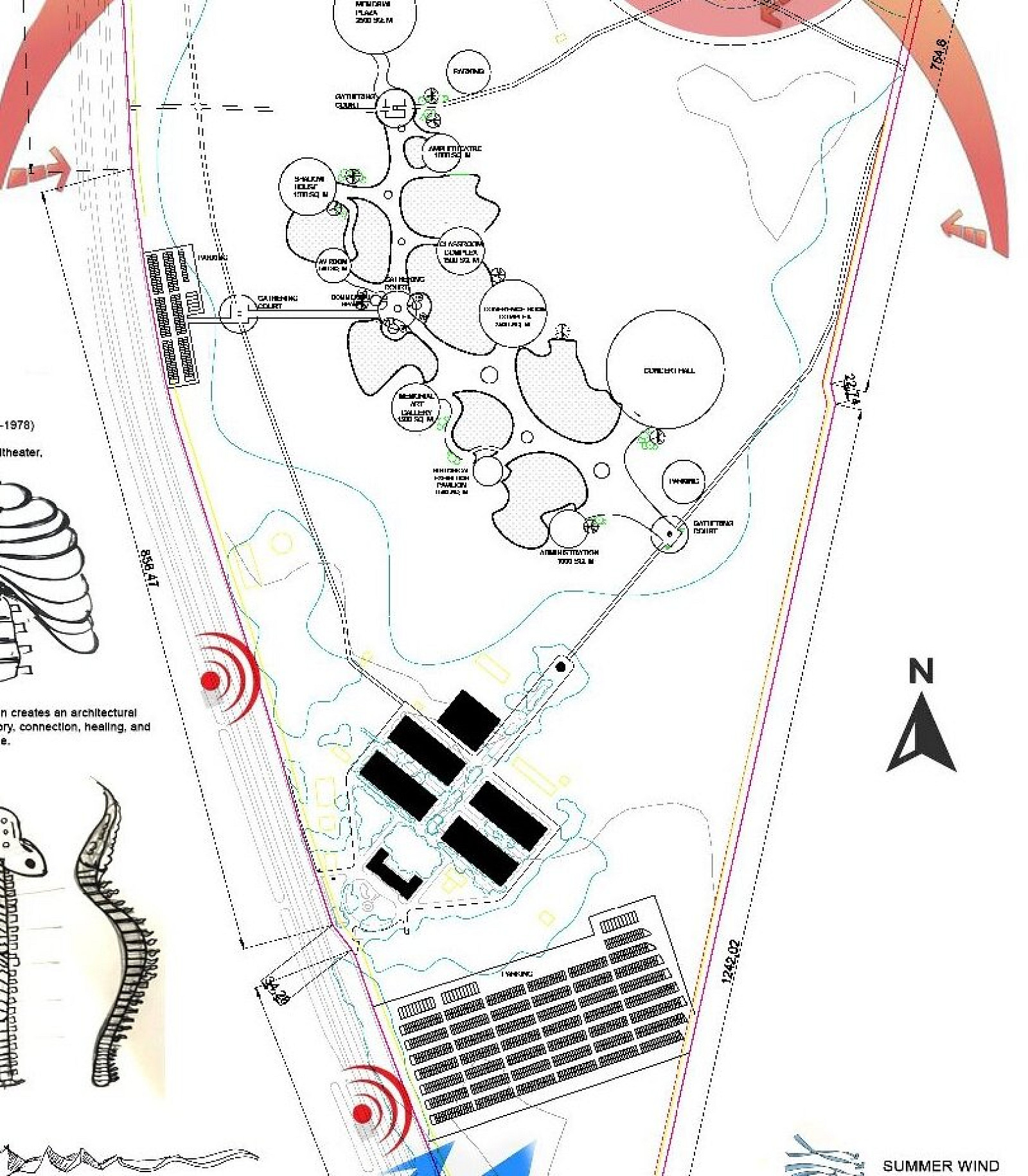
The project preserves Galpón 9 barracks and adds an interpretation center, memorial gallery, amphitheater, and academic spaces on the site in Tucumán Province, Argentina. The design is inspired by the human spine and ribcage, where the central spine acts as the main circulation path connecting all spaces. Branching side pathways symbolize different memories and emotional journeys, leading to memorial, reflection, and public spaces. The varying block heights represent different age groups of victims affected during the dictatorship — lower blocks symbolize children and youth, medium heights represent adults, and taller blocks represent elders and voices of resistance.
Technical information
The form development starts from a sharp ECG wave symbolizing pain, trauma, and interrupted life. The ECG pattern transforms into fractured geometric folds inspired by broken history, which further evolve into a parametric roof system. The transition from sharp forms to smooth curves represents healing, continuity, and hope through architecture. The form is inspired by broken bones and fractures, where separated masses represent broken lives while the central void acts as a memory spine connecting spaces. Climate analysis indicates warm and humid subtropical climate with hot summers, mild winters, and heavy seasonal rainfall. The open landscape allows natural airflow and vegetation helps reduce heat.
Documentation

Copyright © 2026 INSPIRELI | All rights reserved. Use of this website signifies your agreement to the Terms of Use, Privacy Policy, and use of cookies.