Barisal River Port Terminal as a Civic Waterfront Mobility Hub


Project idea
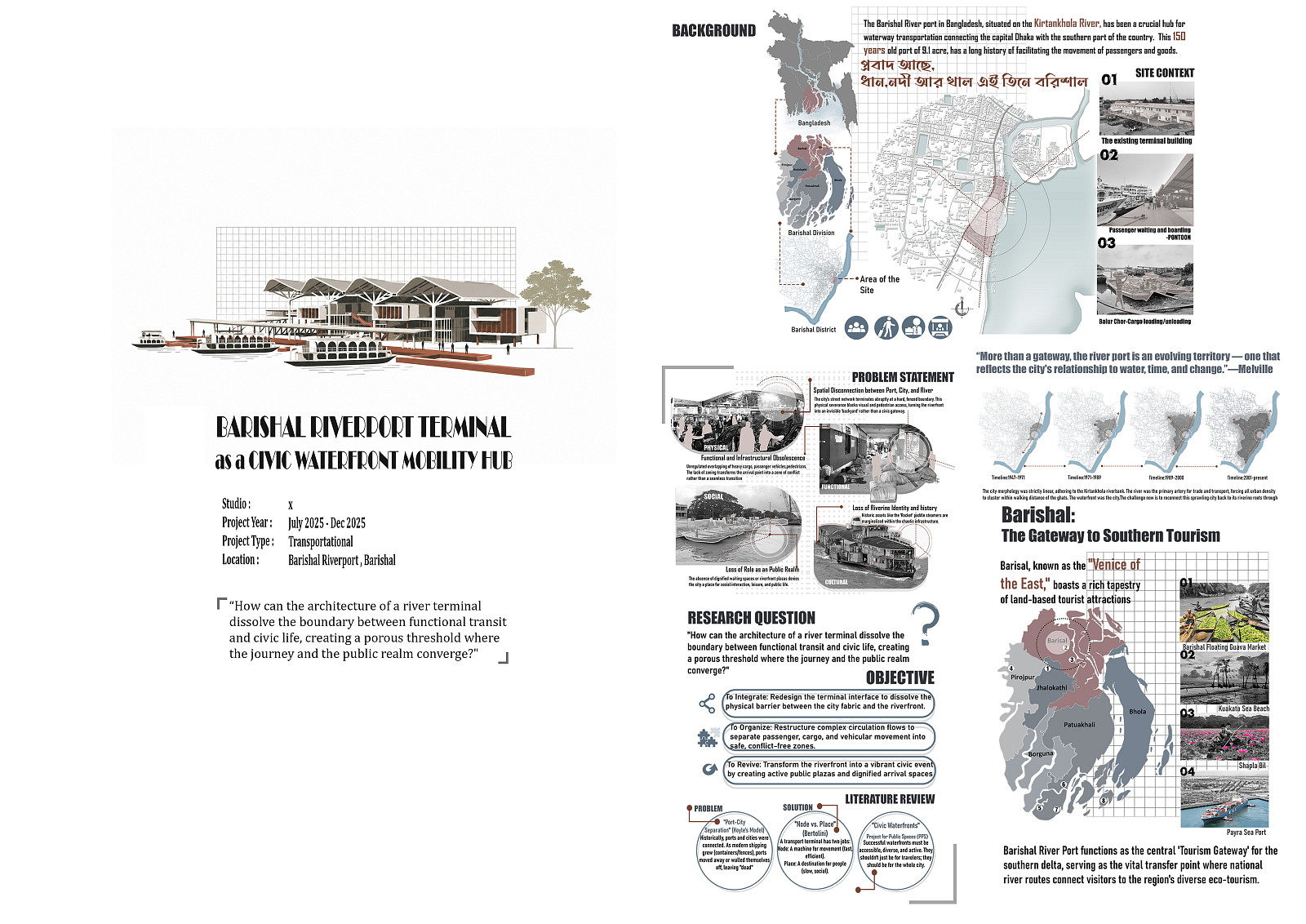
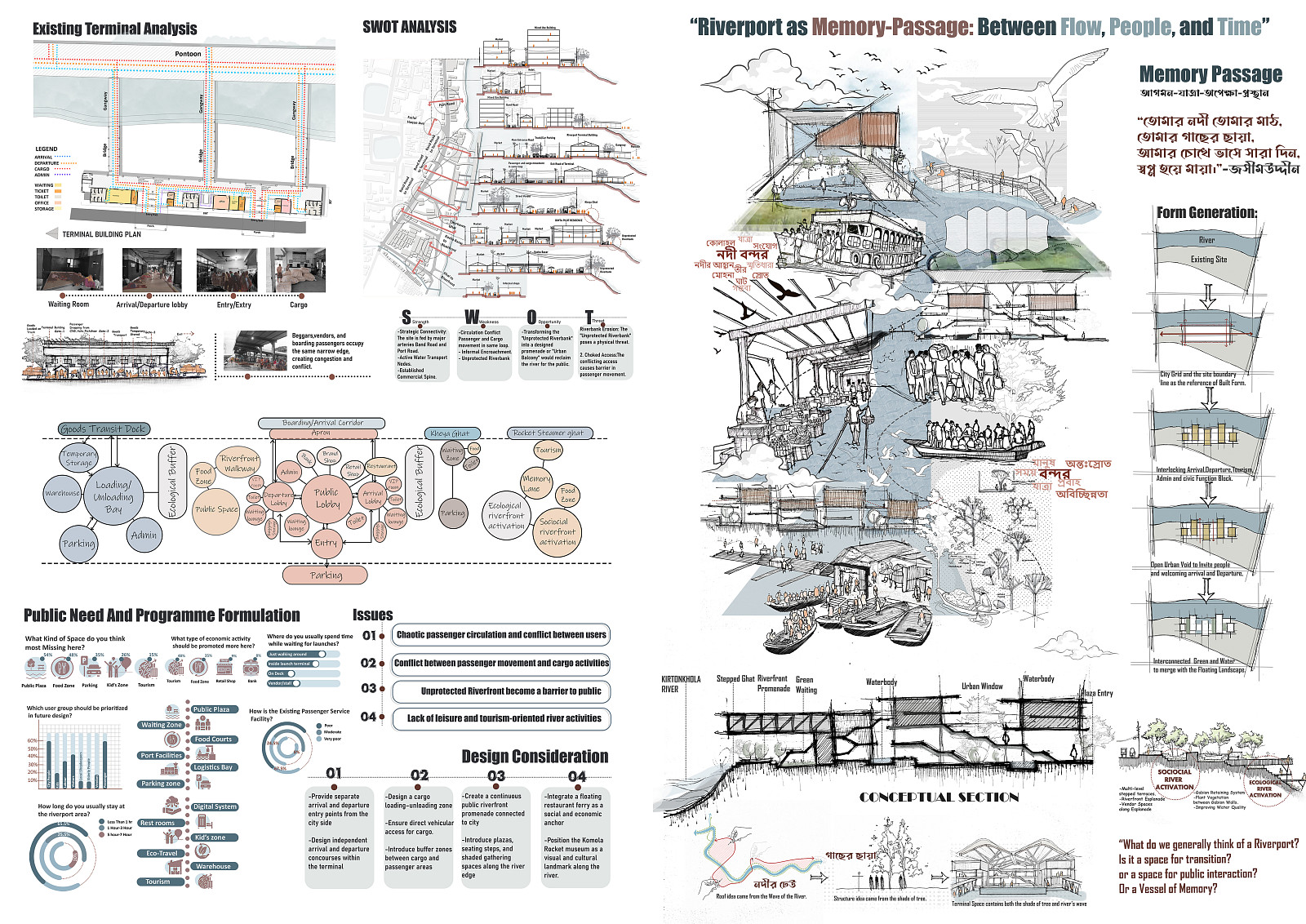
This project investigates the future role of river-port infrastructure within the rapidly transforming urban and environmental context of Bangladesh. Situated along the Kirtankhola River, Barisal River Port has historically functioned as a critical gateway for mobility, commerce, and social exchange. However, contemporary shifts in transportation networks, increasing spatial fragmentation, and the gradual disconnection of the waterfront from public life have diminished its civic significance.
The project proposes a reconceptualization of the river port as a Civic Waterfront Mobility Hub, where infrastructure is understood not merely as a system of transit but as a generator of public realm, urban identity, and collective memory. Framed through the design concept of “Memory Passage,” the proposal explores how architecture can mediate relationships between movement and place, city and river, past and future. By transforming the terminal from an isolated transport facility into an inclusive civic interface, the project seeks to re-establish the riverfront as a shared urban commons while reinforcing Barisal's historic relationship with water.
Project description
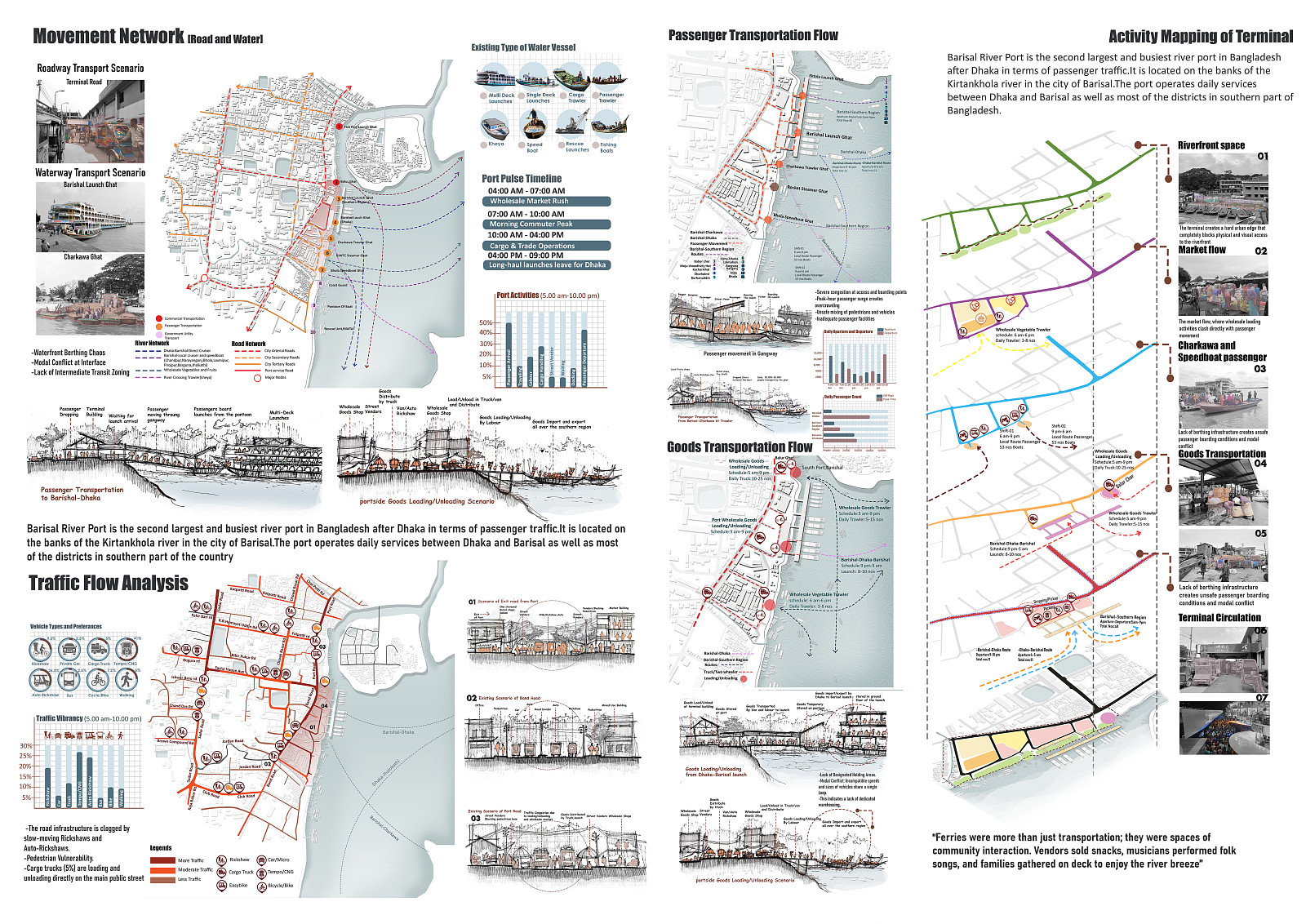
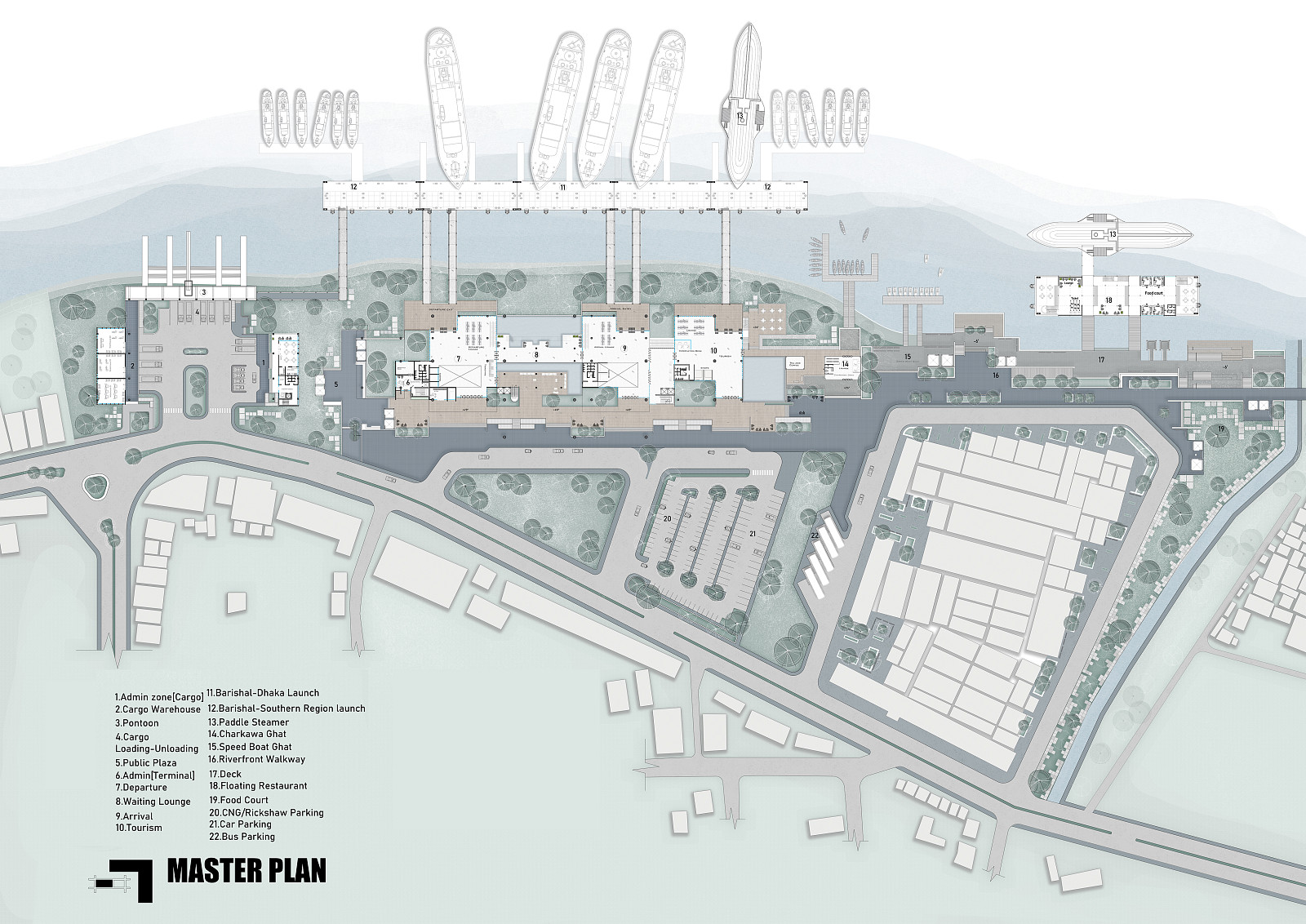
The proposal encompasses the comprehensive redevelopment of approximately 11.8 acres of riverfront land at Barisal River Port. Developed through a research-through-design methodology, the project addresses existing conflicts between passenger circulation, cargo operations, informal activities, and public access through a carefully structured spatial framework.
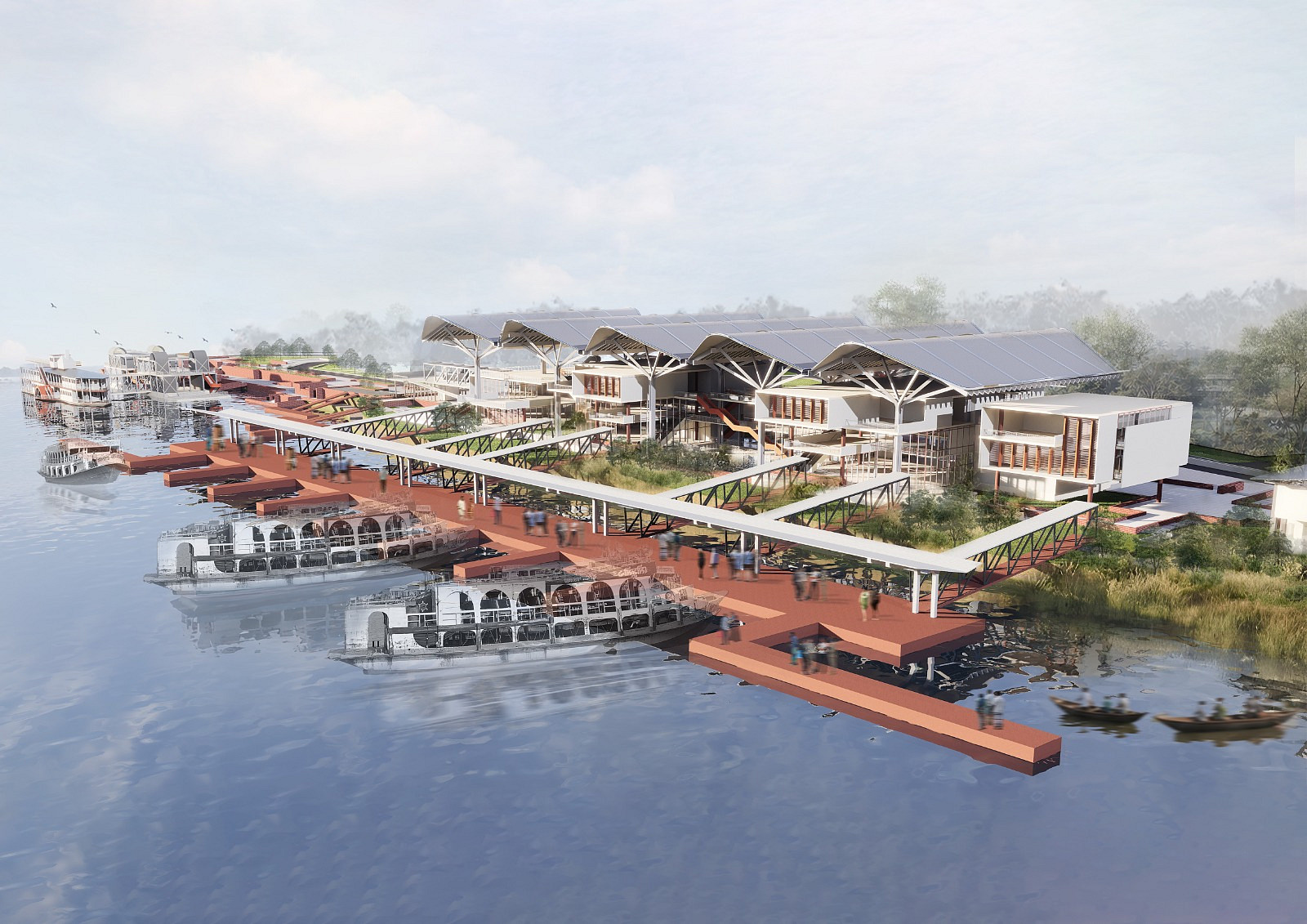
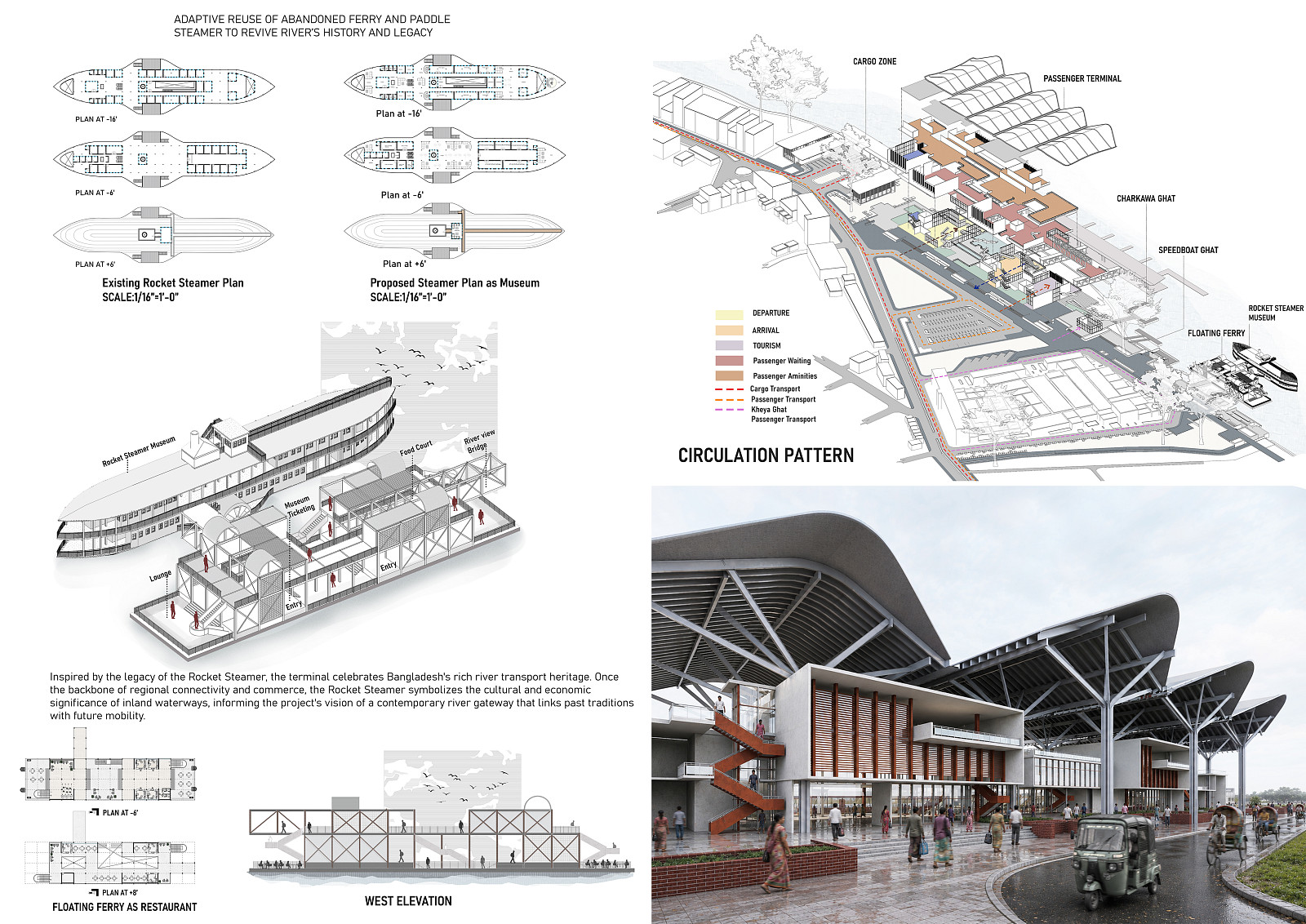
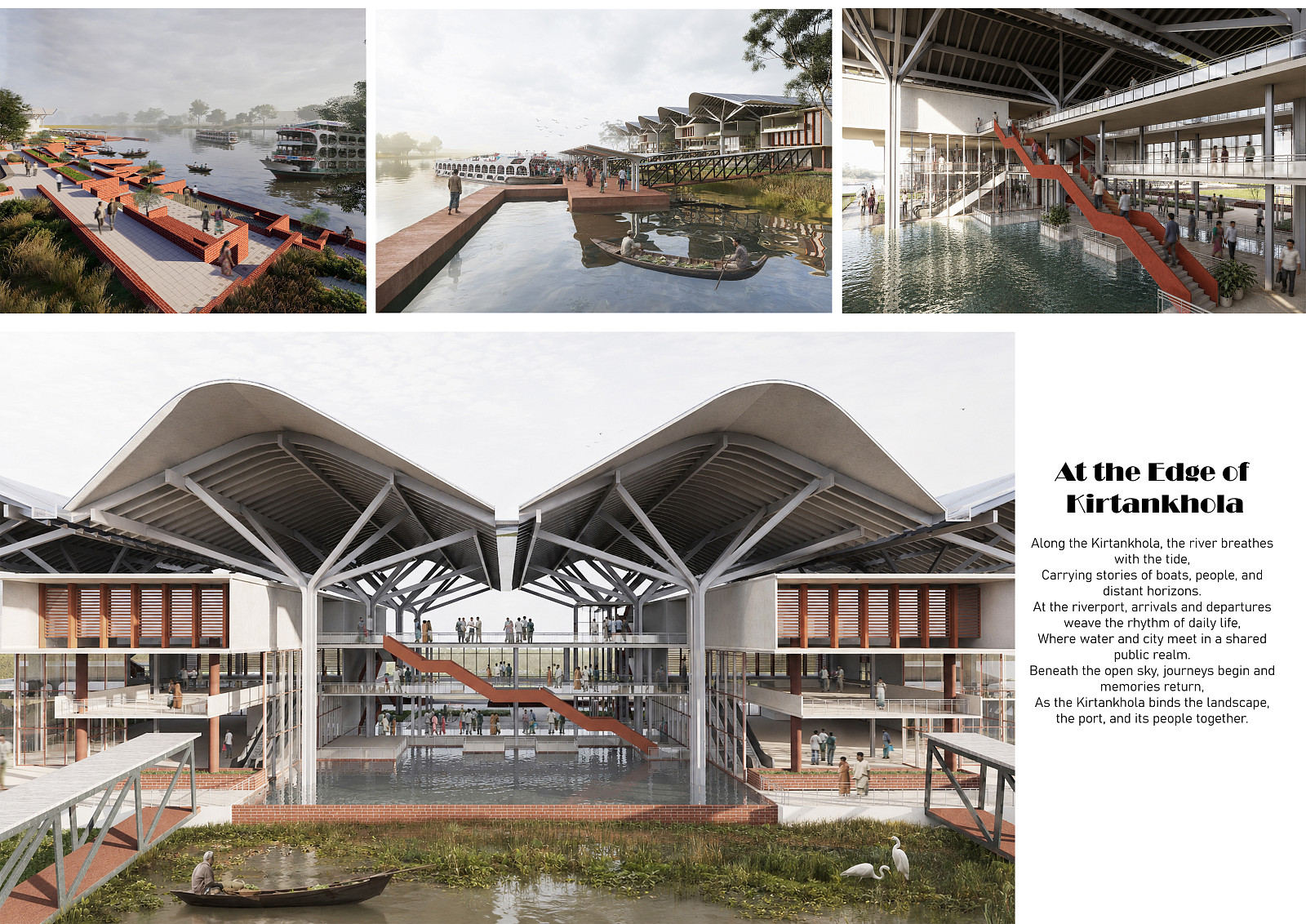
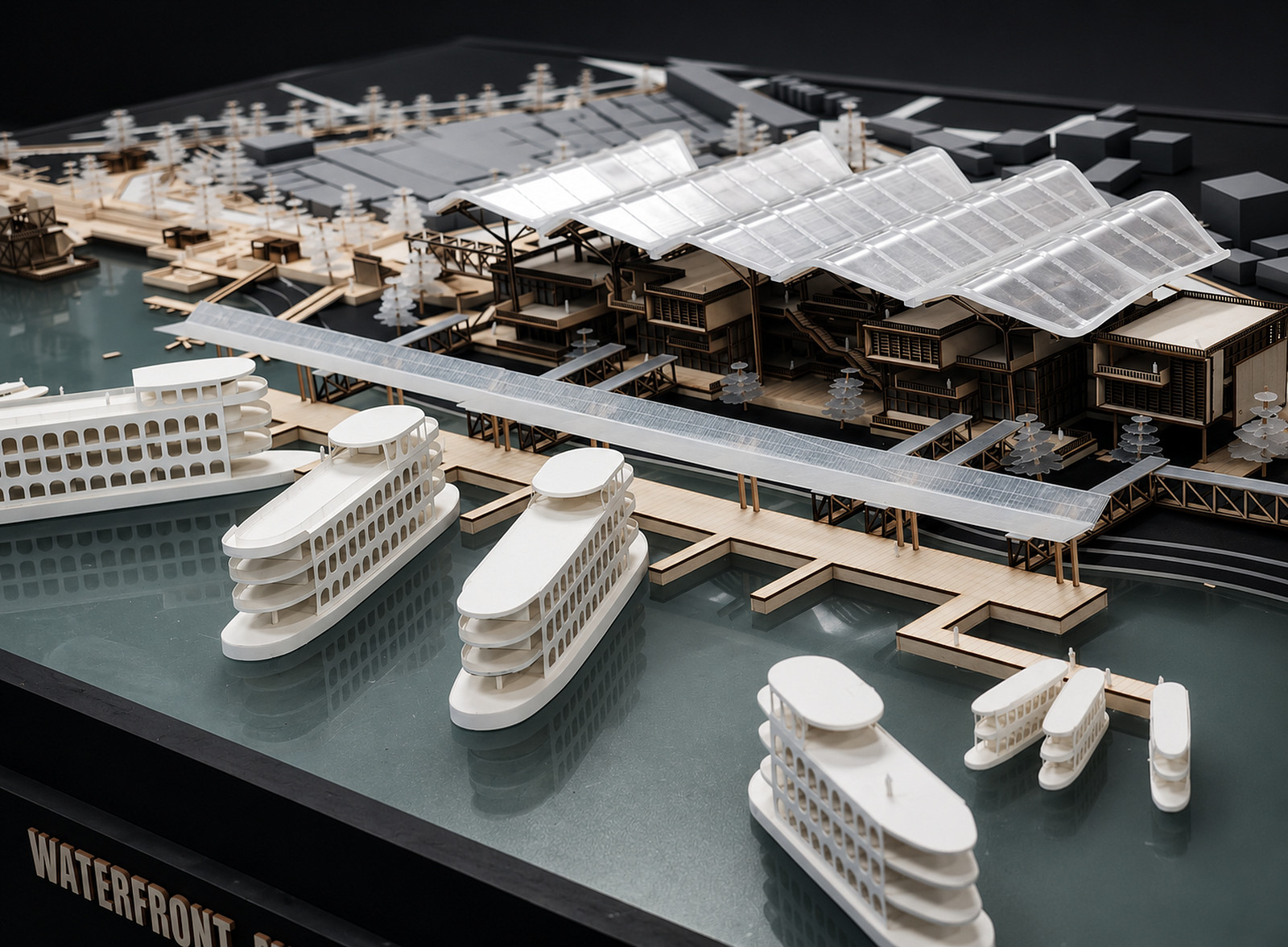
The masterplan introduces a layered system of mobility, landscape, and public infrastructure. Passenger, cargo, vehicular, and pedestrian movements are reorganized into distinct yet interconnected networks, improving operational efficiency while enhancing user experience. A new passenger terminal forms the architectural centerpiece of the proposal, supported by integrated transport facilities, public plazas, riverfront promenades, stepped ghats, ecological landscapes, viewing terraces, tourism amenities, and community-oriented public spaces.
A significant component of the project is the adaptive reuse of abandoned Rocket Steamers and ferries as cultural and recreational destinations, preserving an important chapter of Bangladesh’s river transport heritage. Through the integration of mobility infrastructure with public life, the project transforms the river edge from a functional boundary into a civic waterfront landscape that supports transportation, recreation, cultural engagement, and environmental resilience.
Technical information
Project Type: Civic Waterfront Mobility Hub / River Port Terminal / Waterfront Regeneration
Location:Barisal River Port, Kirtankhola River, Barisal, Bangladesh
Site Area: Approximately 11.8 Acres (4.78 Hectares)
- Structural System
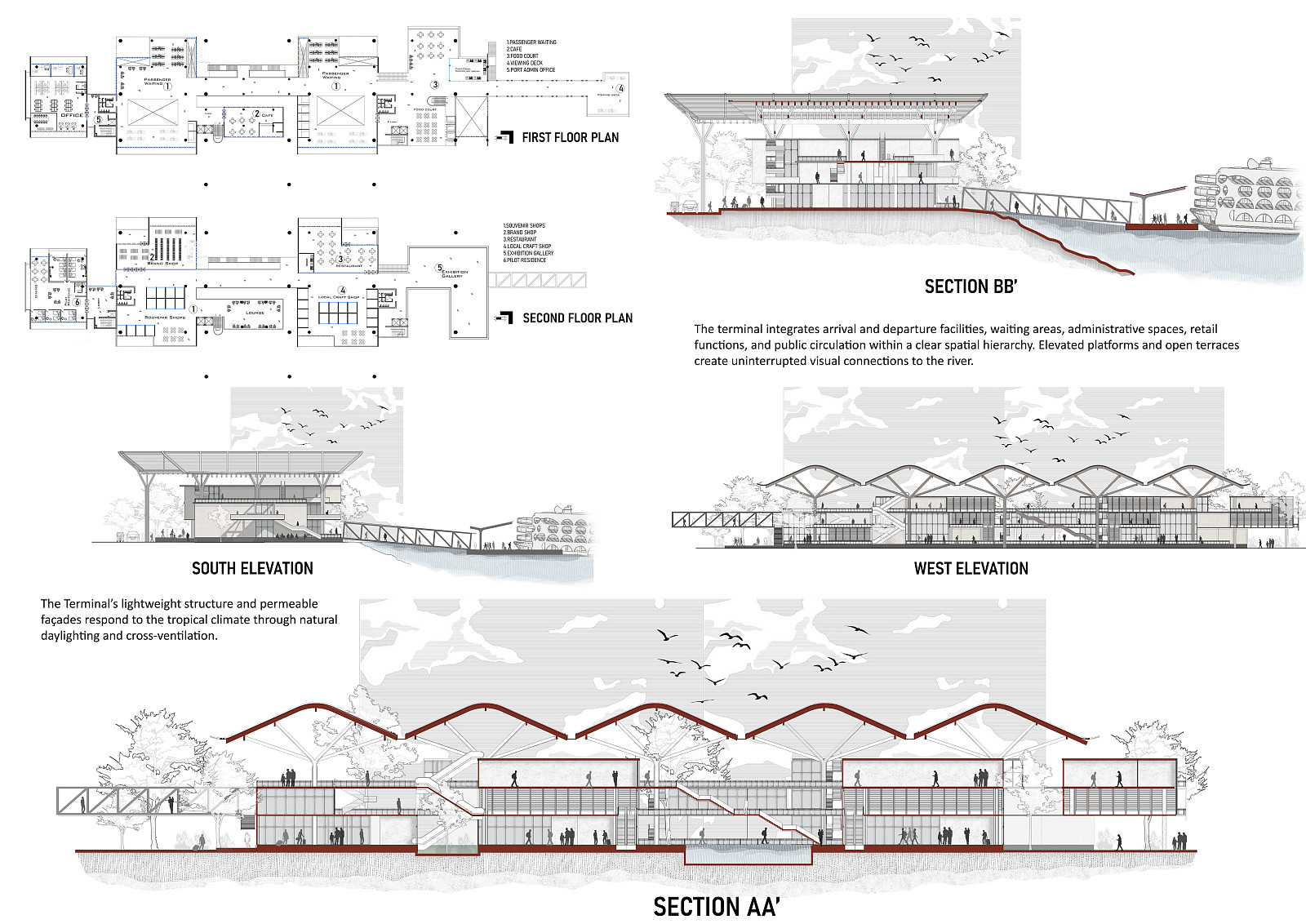
The project adopts a hybrid structural system consisting of reinforced concrete primary building cores and steel long-span roof structures. Reinforced concrete frames accommodate terminal functions, circulation spaces, and service areas, while lightweight steel trusses span large public concourses and waiting halls, creating flexible column-free spaces capable of accommodating fluctuating passenger volumes.
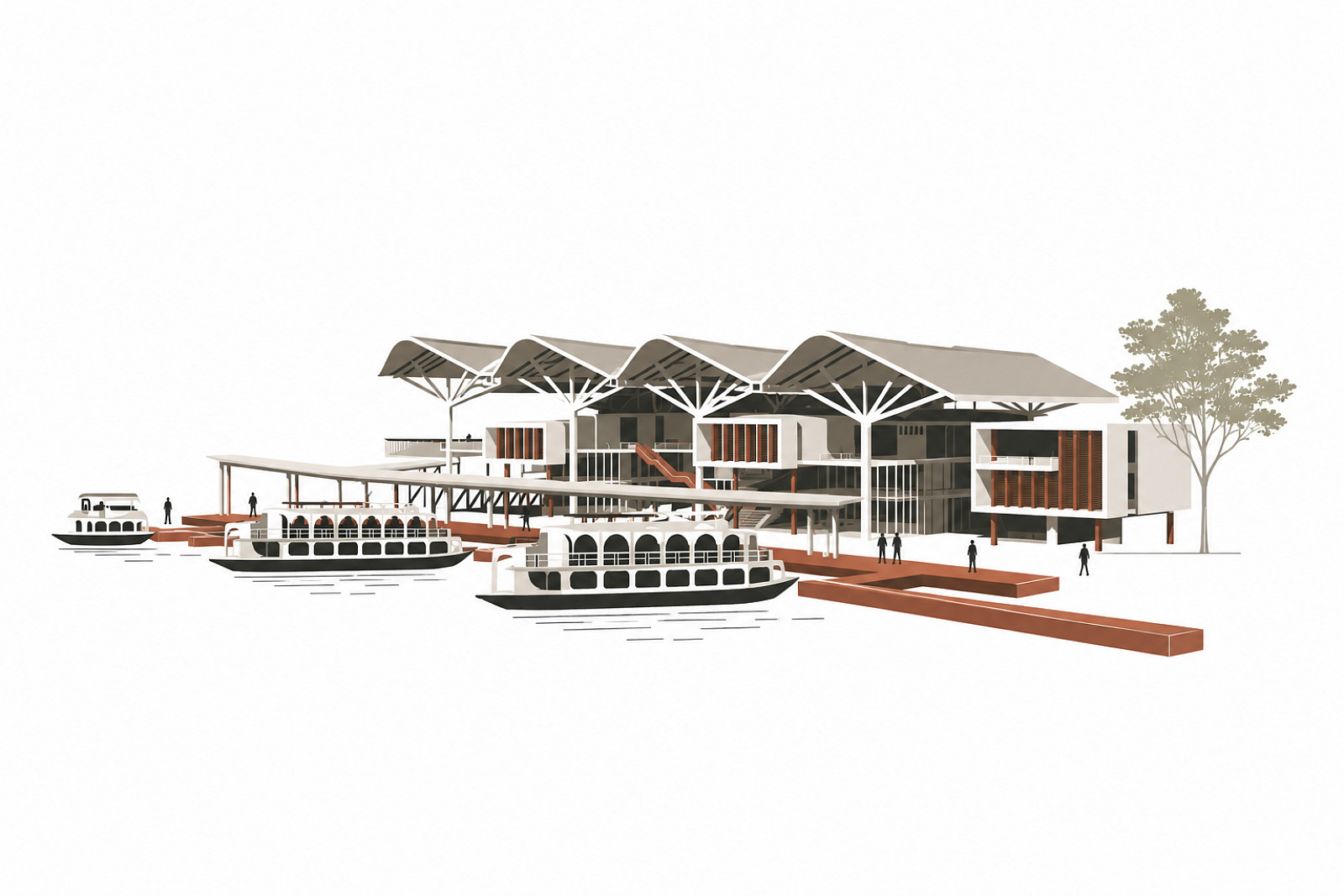
The terminal is organized as a series of interconnected pavilions linked by elevated circulation decks and waterfront boarding platforms. Structural modules establish a clear hierarchy between enclosed terminal functions and open public spaces, allowing visual and physical continuity toward the river.
- Roof System
The roof is conceived as the project's primary architectural element, inspired by the rhythm of river waves and the traditional riverine landscape of southern Bangladesh. A sequence of folded and undulating roof planes forms a continuous protective canopy over the terminal.
The roof structure is supported by steel tree-like columns and tapered steel trusses that distribute loads efficiently while minimizing visual obstruction. Deep roof overhangs provide solar protection and shelter from heavy monsoon rainfall, reducing heat gain and improving thermal comfort within semi-open circulation spaces.
Clerestory openings between roof segments introduce diffused natural daylight and facilitate stack-effect ventilation. The roof is designed to accommodate photovoltaic panels and integrated rainwater collection systems, contributing to environmental sustainability.
-Waterfront Infrastructure
The river edge is developed through a layered system of floating pontoons, fixed boarding jetties, pedestrian bridges, and stepped riverfront terraces. These elements respond to fluctuating water levels while maintaining continuous accessibility throughout seasonal changes.
Passenger boarding platforms are separated according to vessel type and passenger capacity, improving operational efficiency and reducing circulation conflicts. Elevated walkways connect the terminal directly to the boarding infrastructure while maintaining unobstructed views of the river.
- Environmental Strategy
The design employs passive environmental strategies appropriate to the hot-humid deltaic climate of Bangladesh:
- Large roof overhangs for solar shading.
- Natural cross-ventilation through open-sided circulation zones.
- Clerestory daylighting to reduce artificial lighting demand.
- Landscape-integrated stormwater management.
- Flood-adaptive waterfront terraces and river-edge treatment.
- Extensive vegetation and shaded public spaces to improve microclimate.
-Material Strategy
The architectural language combines exposed concrete, structural steel, glass, and terracotta screening elements.
- Reinforced concrete provides durability and resilience in the waterfront environment.
- Steel framing enables long-span roof structures and lightweight circulation bridges.
- Terracotta screens filter sunlight while referencing regional architectural traditions.
- Glass façades maintain visual connectivity between terminal spaces and the riverfront.
- Timber and composite decking materials are utilized within waterfront promenades and public gathering spaces.

Copyright © 2026 INSPIRELI | All rights reserved. Use of this website signifies your agreement to the Terms of Use, Privacy Policy, and use of cookies.