Kindergarden Little Cubes in areál FAST VUT


Project idea
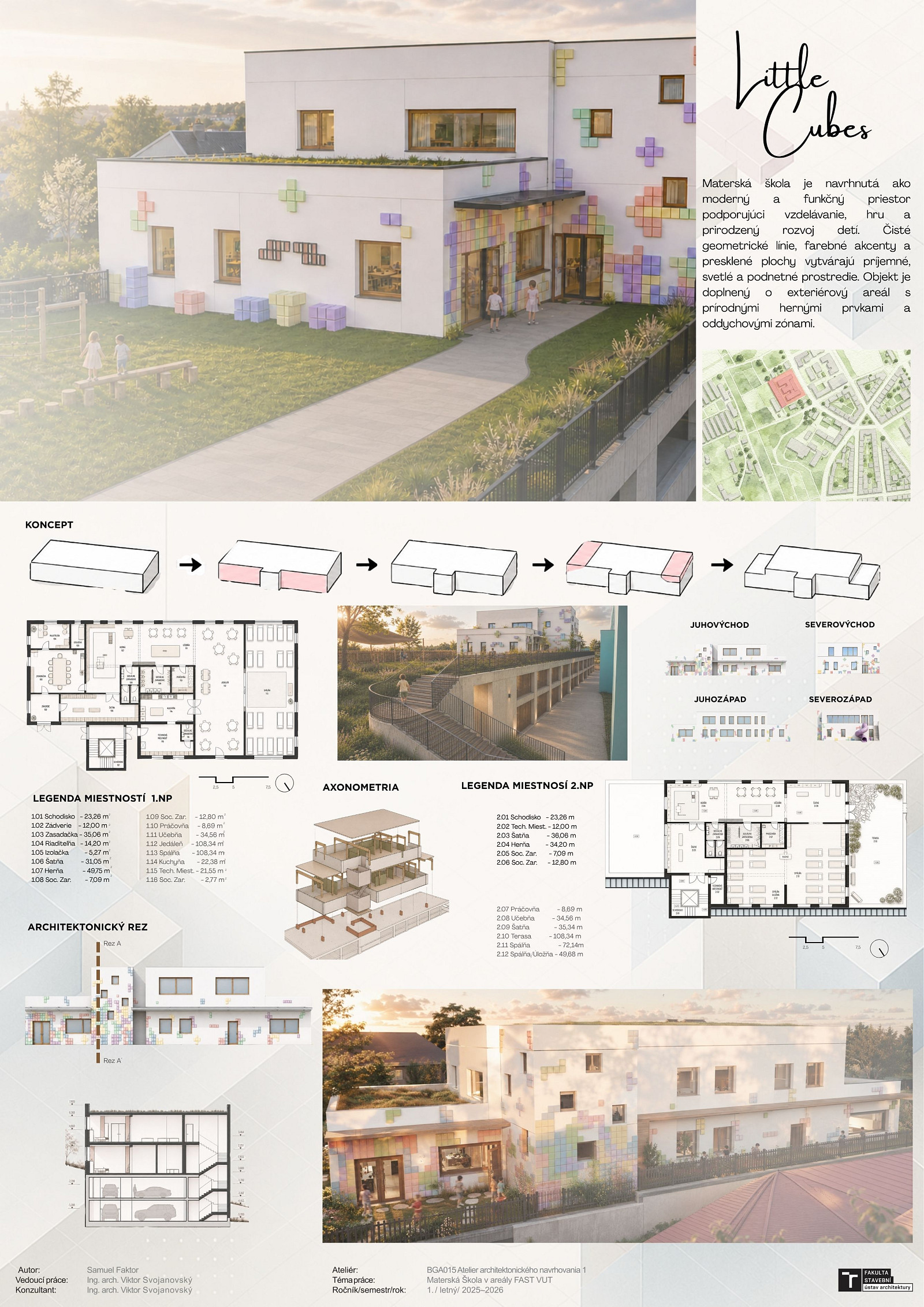
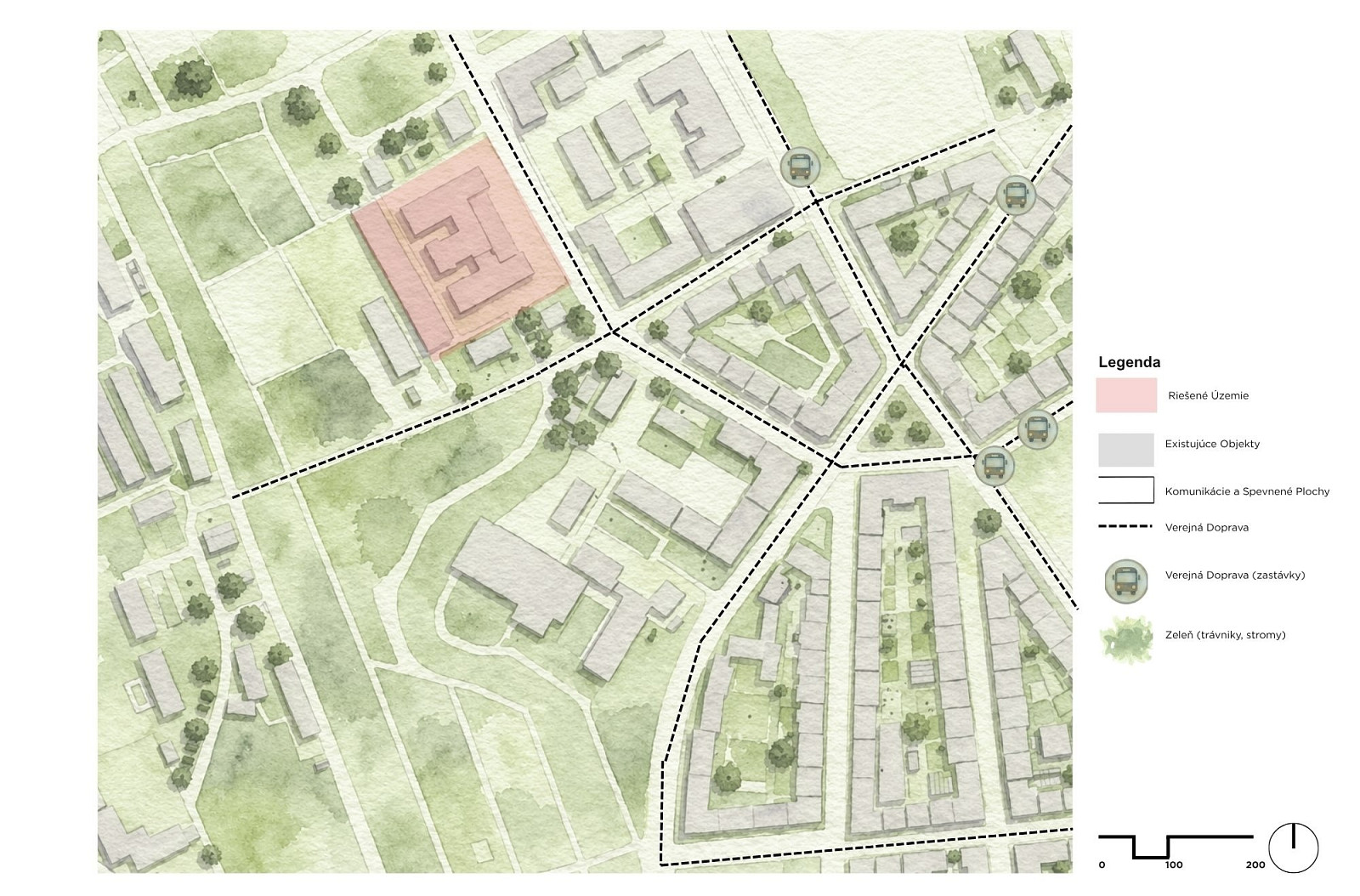
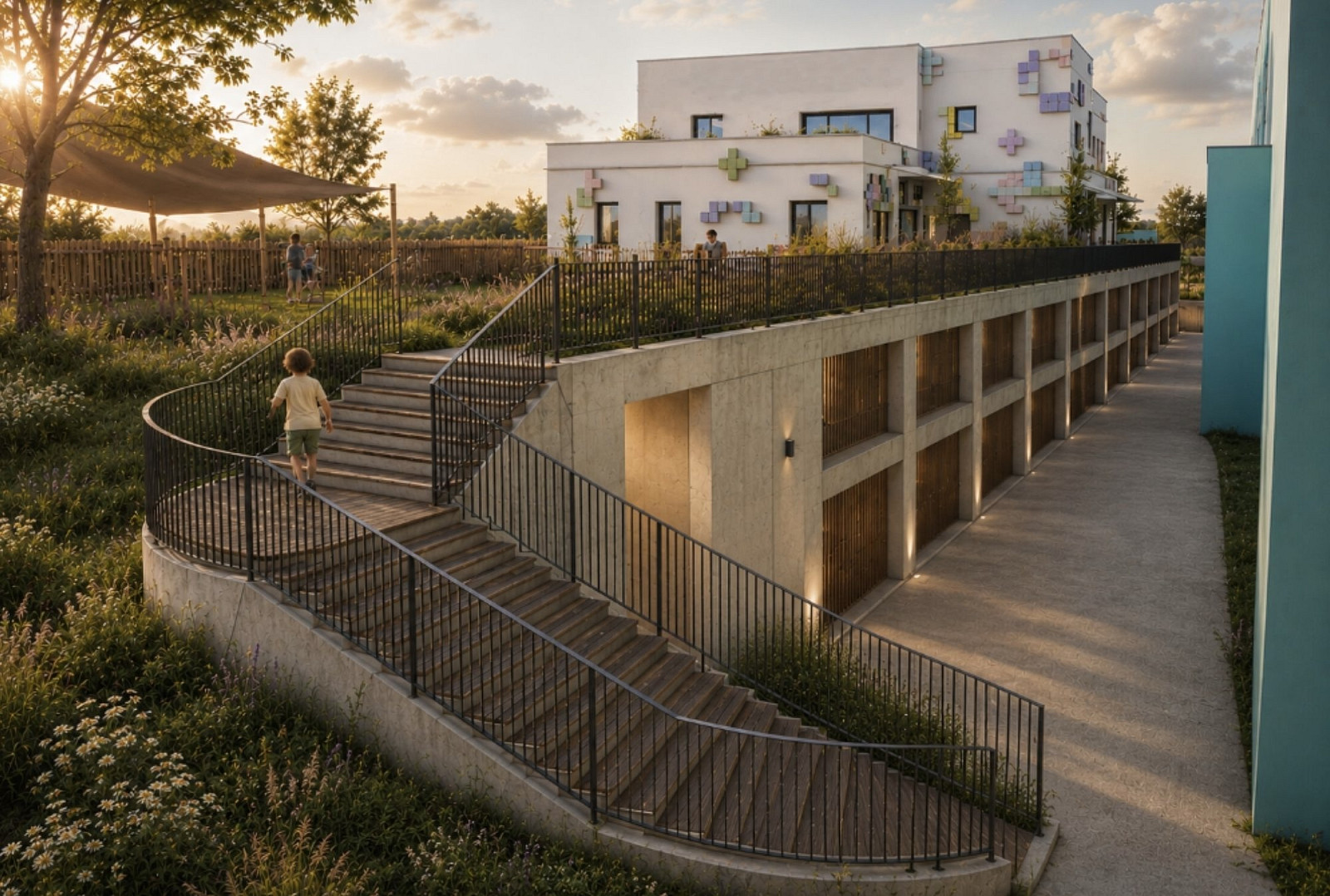
The project proposes a kindergarten designed as an extension above an existing above-ground parking structure located within the campus of the Faculty of Civil Engineering at Brno University of Technology (FAST BUT). The primary objective was to create a safe and high-quality educational environment, primarily intended for the children of the faculty's employees, while making efficient use of the existing urban infrastructure.
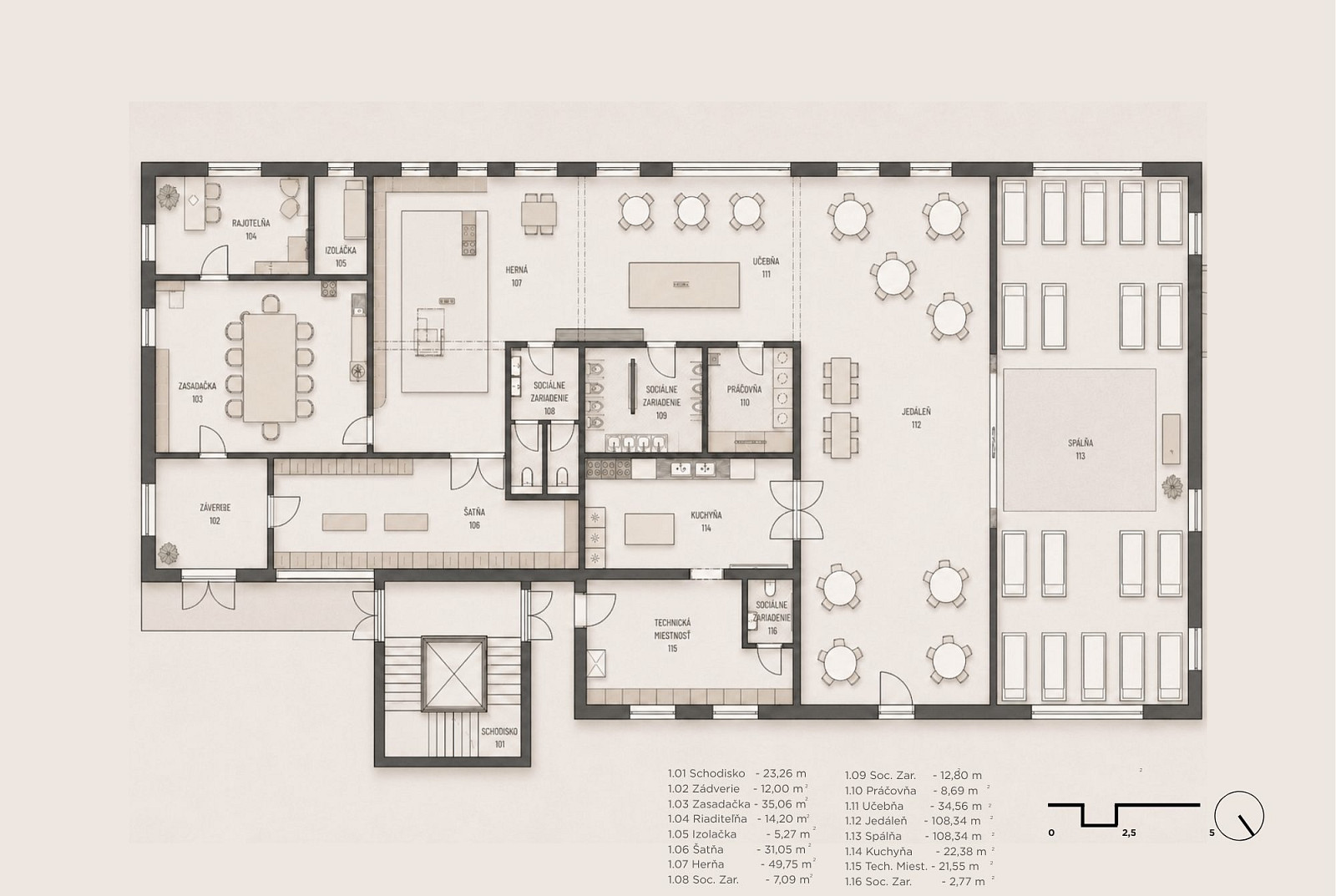
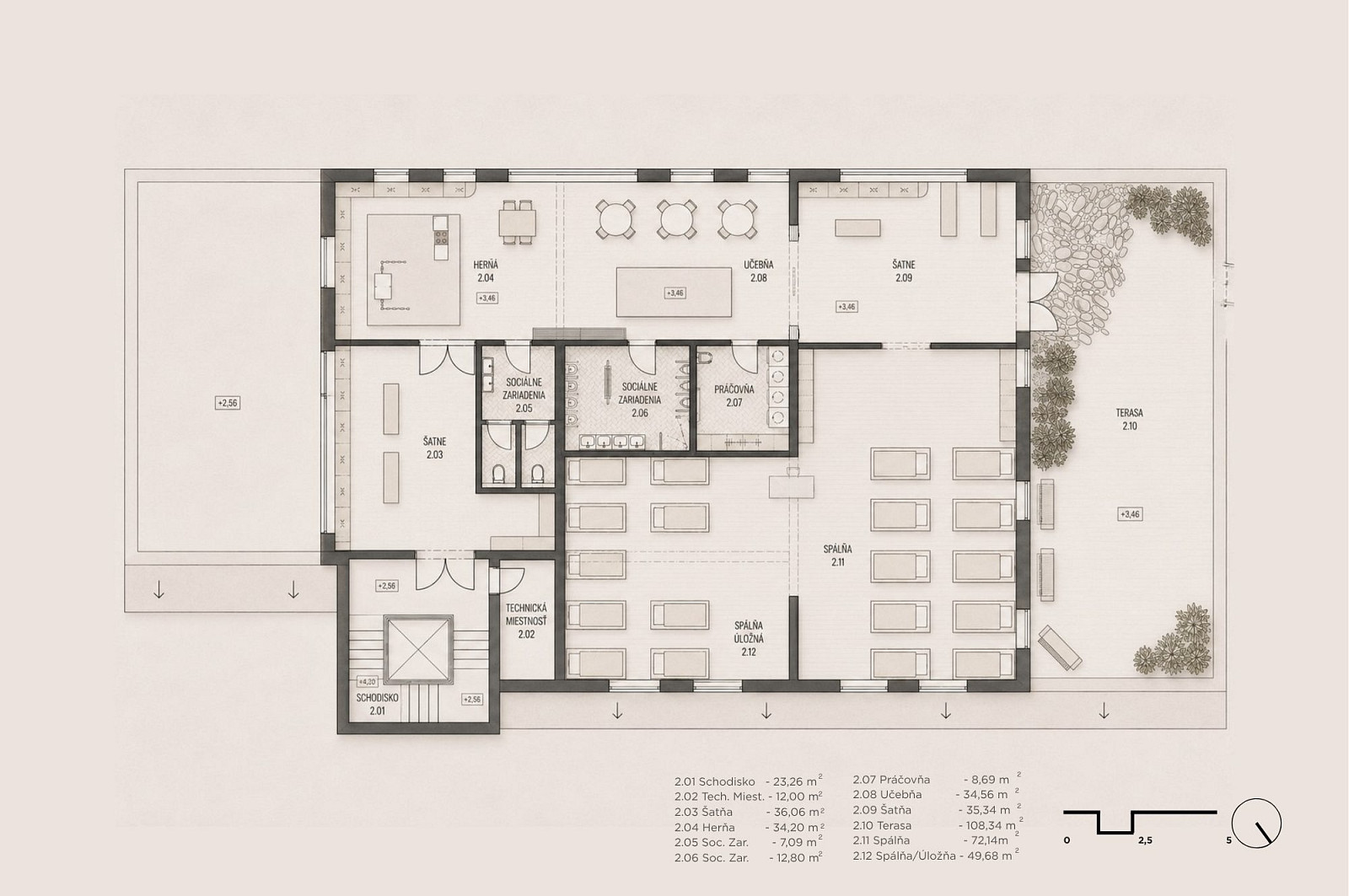
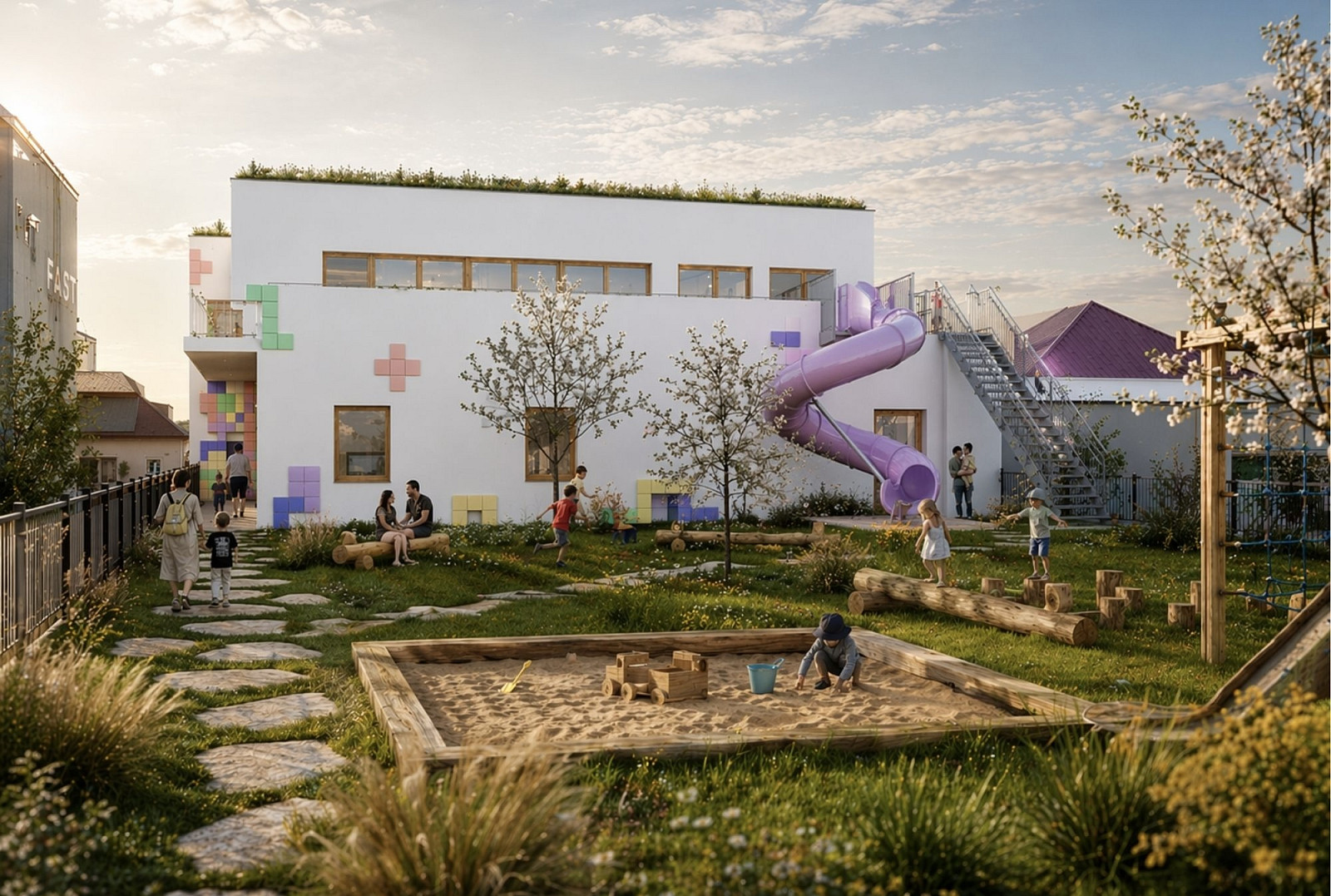
The kindergarten is designed for approximately 40 children, divided into two classrooms. The concept focuses on creating an environment where children enjoy spending time, encouraging creativity, learning, and overall personal development.
Project description
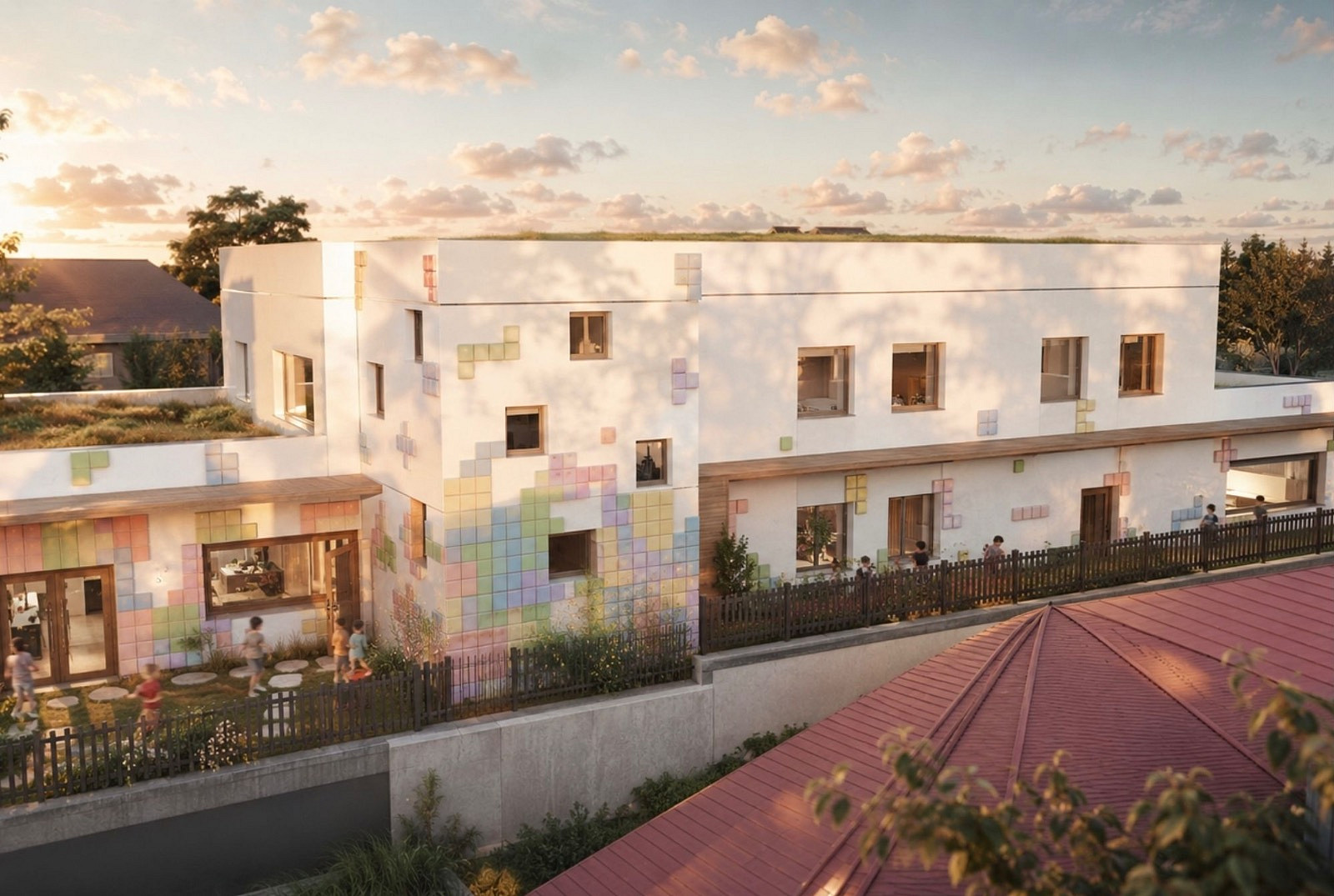
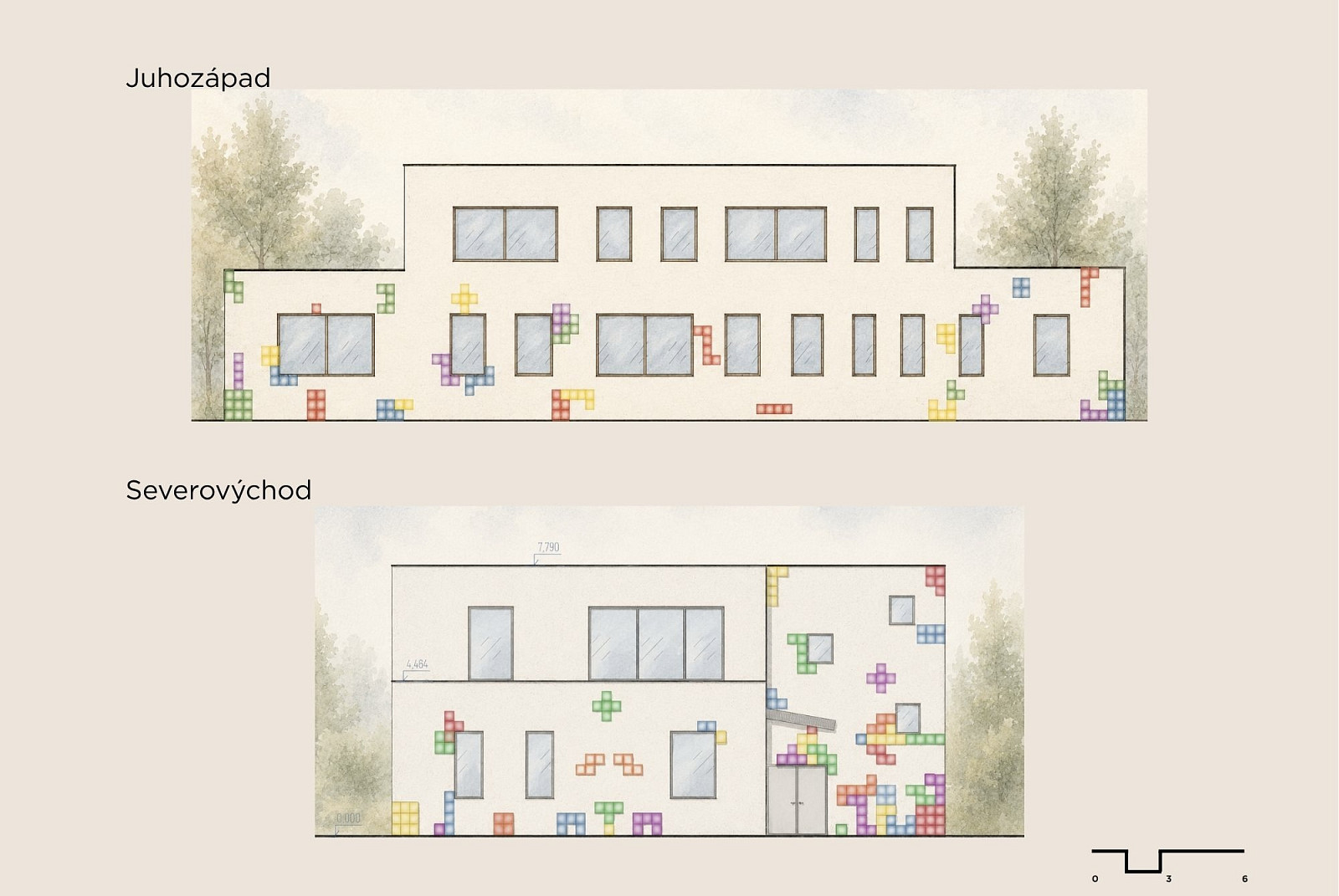
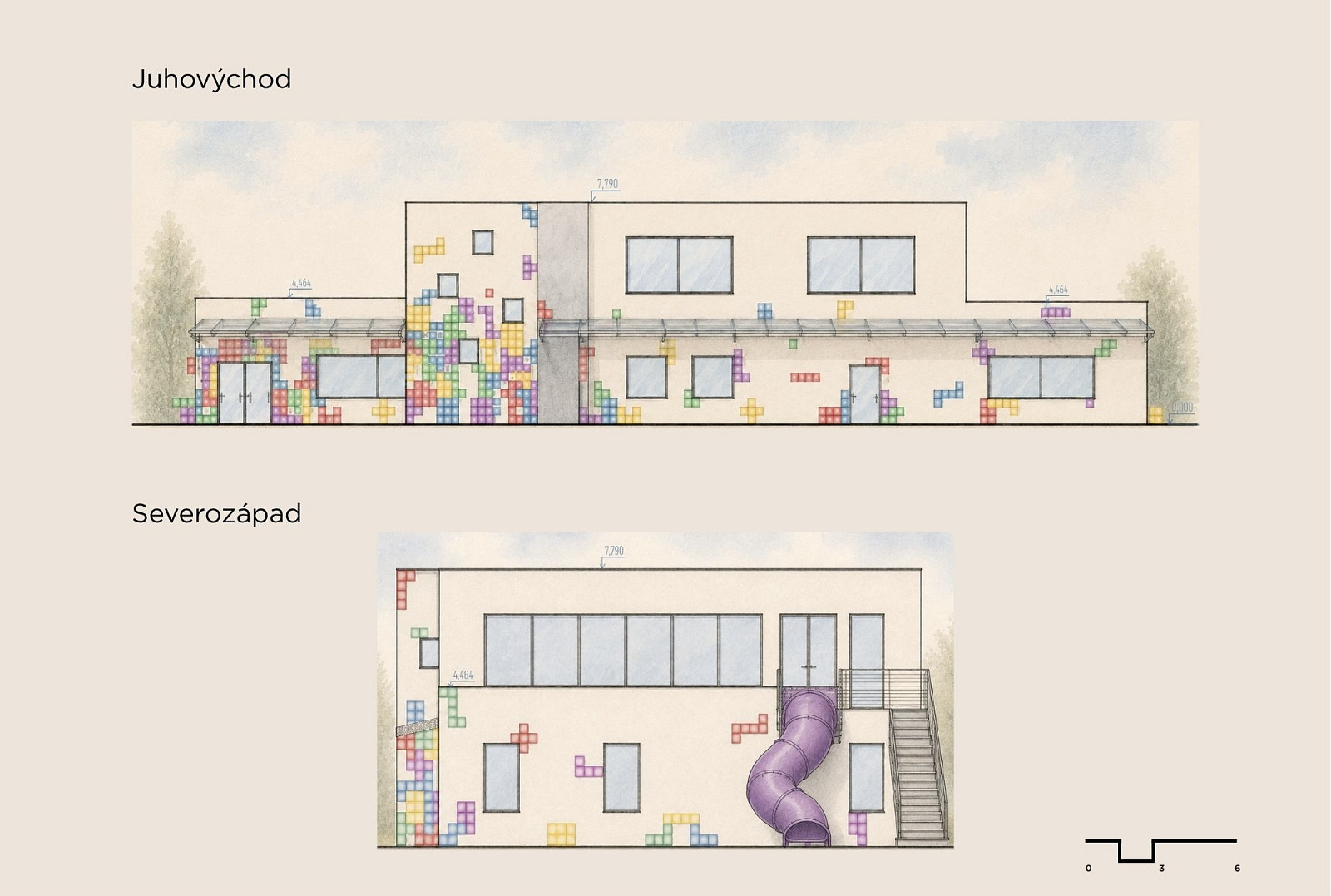
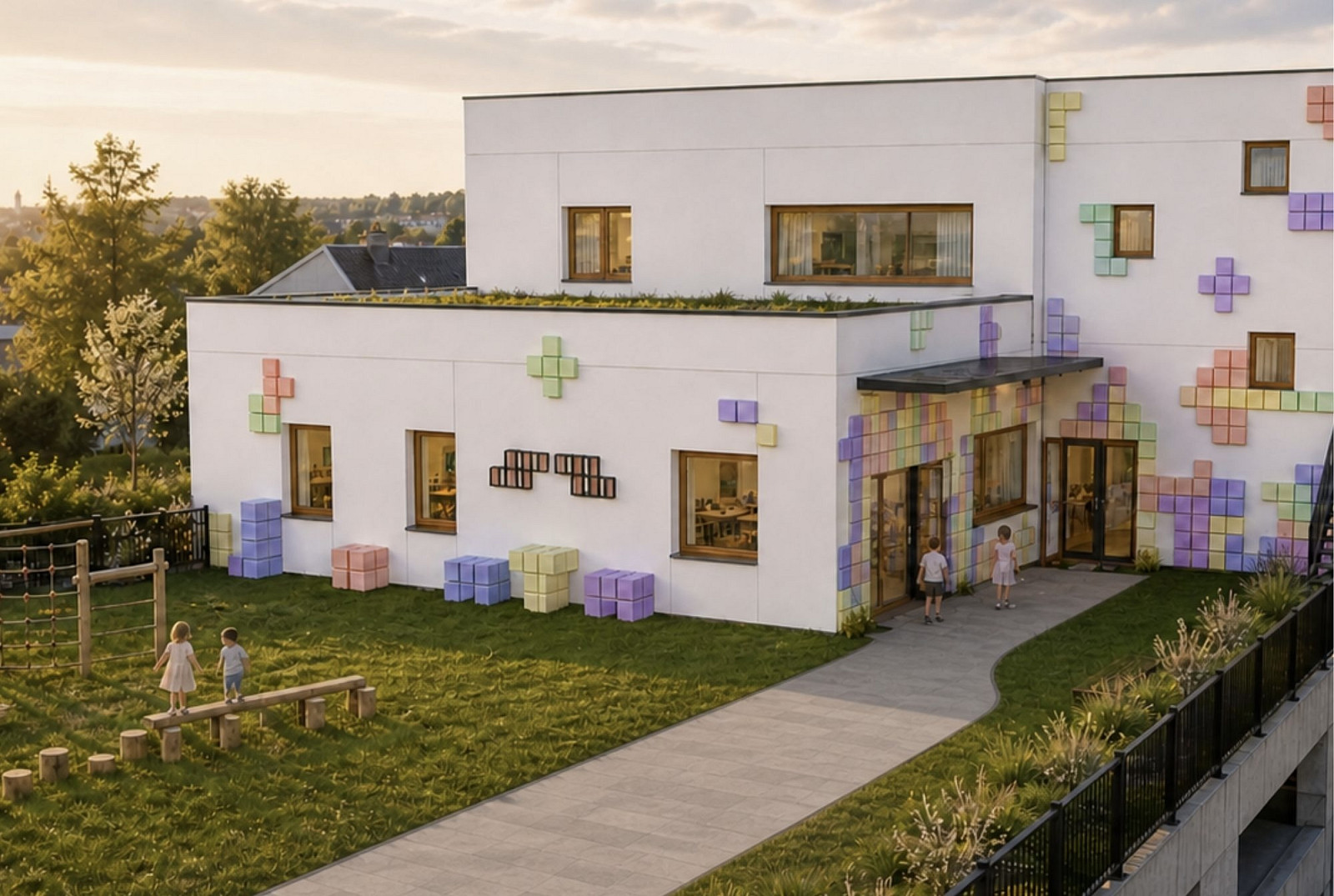
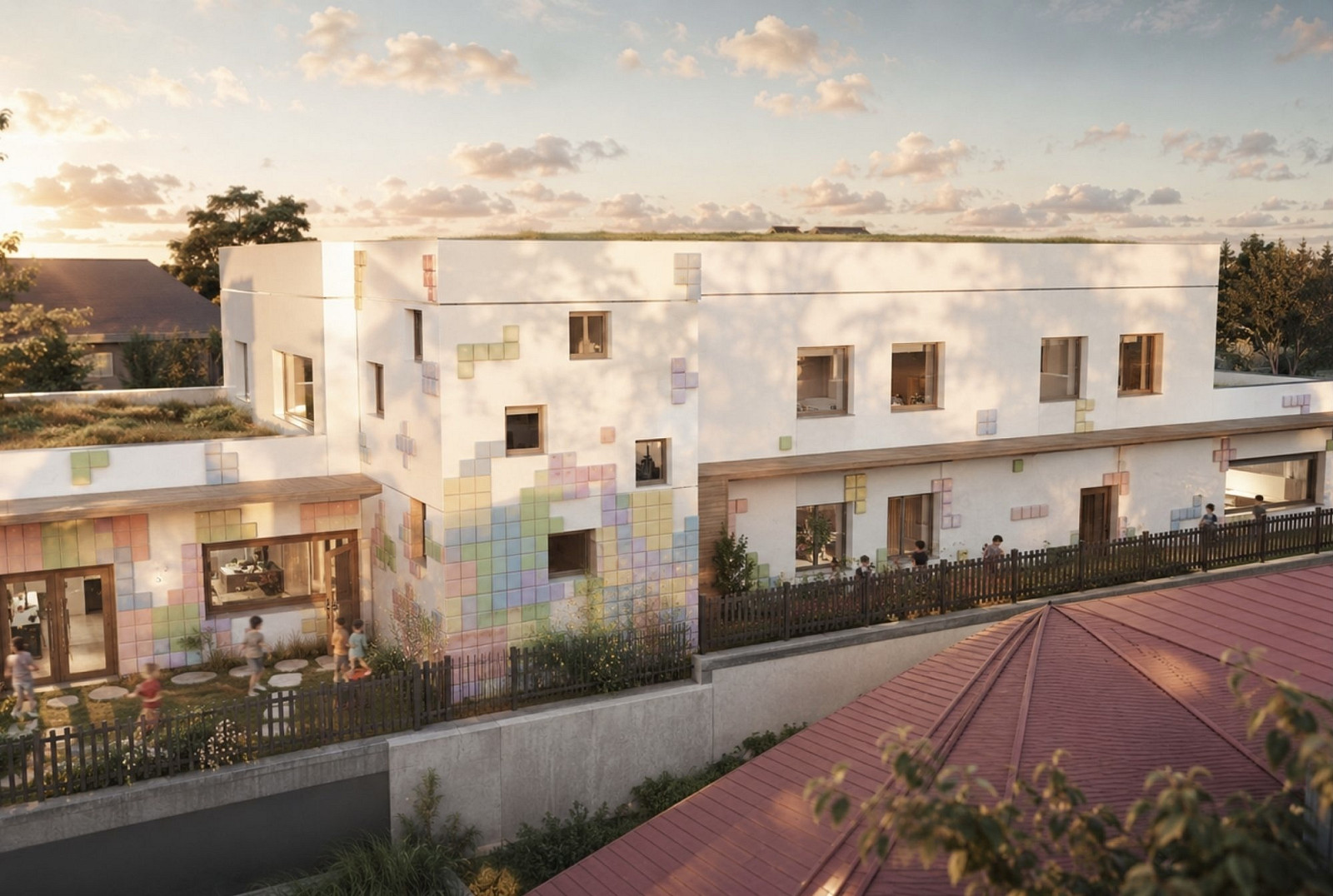
The architectural design is based on the concept of a simple, compact volume that respects the existing structure while naturally integrating with the scale and character of the surrounding university campus. The clean white façade serves as a neutral canvas, allowing the colorful modular elements inspired by the game **Tetris** to become the defining architectural feature of the building. These elements are not merely decorative; they establish the project's visual identity while symbolizing playfulness, creativity, and the process of learning through exploration and composition.
The façade composition is conceived as a dialogue between pure geometric surfaces and dynamically distributed colorful accents. This approach breaks down the perceived scale of the building, creating a more welcoming and child-friendly environment while enriching the otherwise monotonous urban context of the campus. The modular pattern reflects the principles of flexibility, imagination, and interaction, values that are fundamental to early childhood education.
Technical information
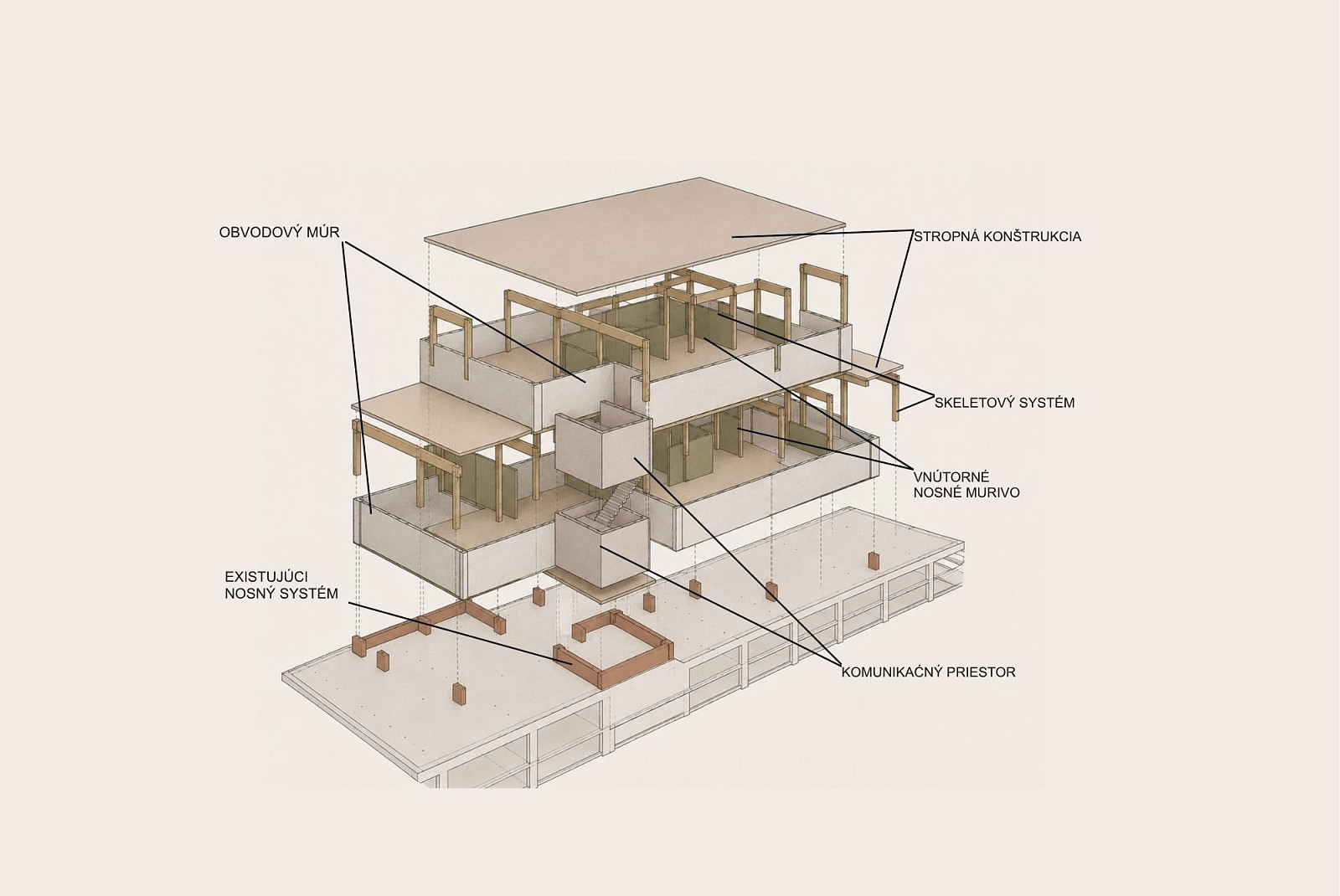
The kindergarten building is designed as an extension built on top of an existing above-ground parking garage within the FAST VUT campus. The design had to respect the original load-bearing skeletal structure of the garage and follow its structural logic. The new building therefore uses the existing frame as the foundation of its structural concept.
As part of the architectural and spatial design, new load-bearing walls were added, creating a combined structural system consisting of both a frame and wall-based construction. This solution made it possible to efficiently transfer loads into the existing structure while also creating flexible interior spaces that meet the requirements of a modern kindergarten. The design thus combines the principles of adaptive reuse of an existing structure with a new architectural layer and a sustainable approach to construction.

Copyright © 2026 INSPIRELI | All rights reserved. Use of this website signifies your agreement to the Terms of Use, Privacy Policy, and use of cookies.
