THE UNBOUNDEDPUBLIC TOPOLOGY: From Temporal Rail to Sky Gardens


Project idea
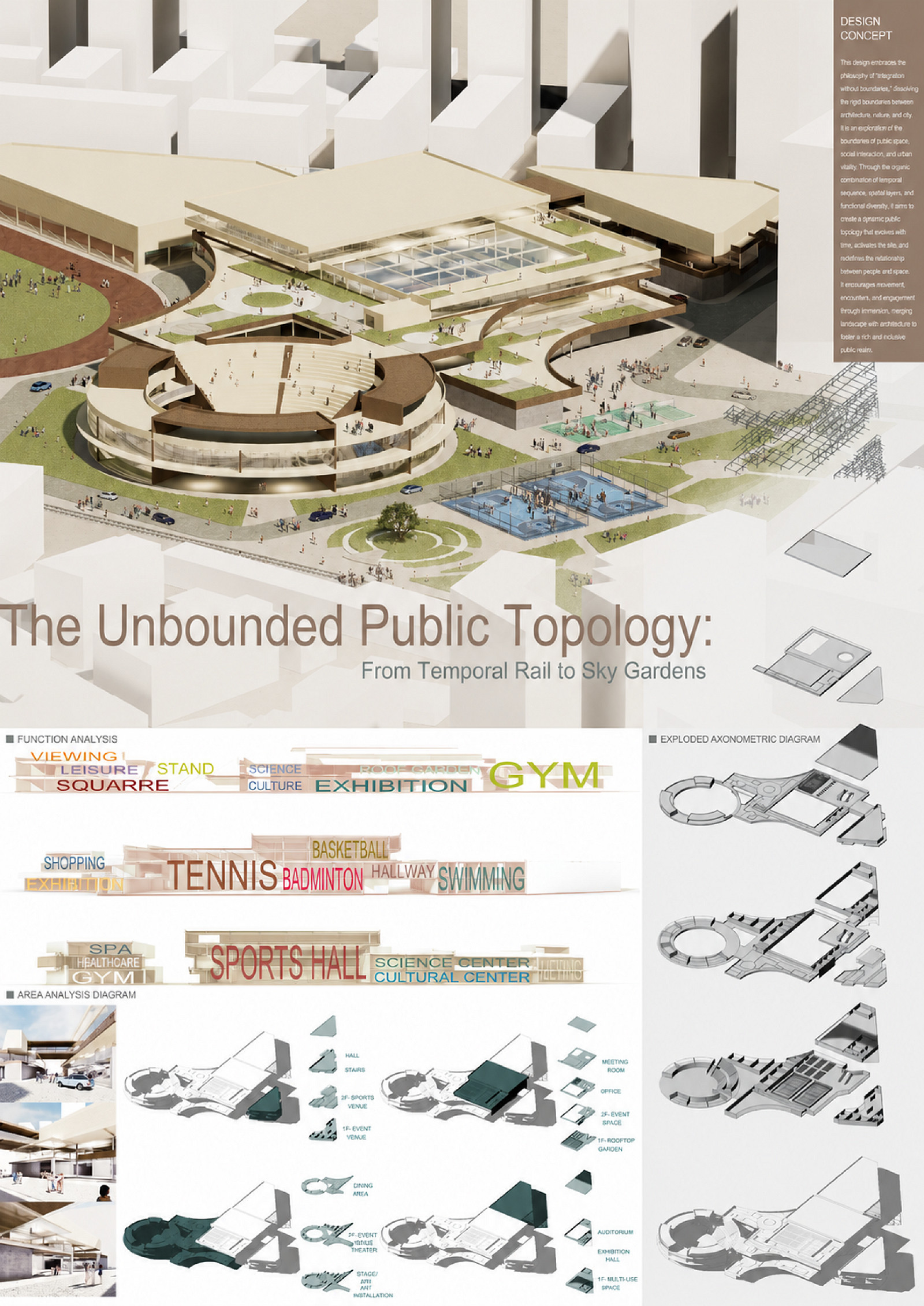
The Unbounded Public Topology: From Temporal Rail to Sky Gardens:
Located along the historic Yunnan Meter-Gauge Railway corridor in Kunming, the site was once divided by railway infrastructure that fragmented the surrounding urban fabric and limited public interaction.
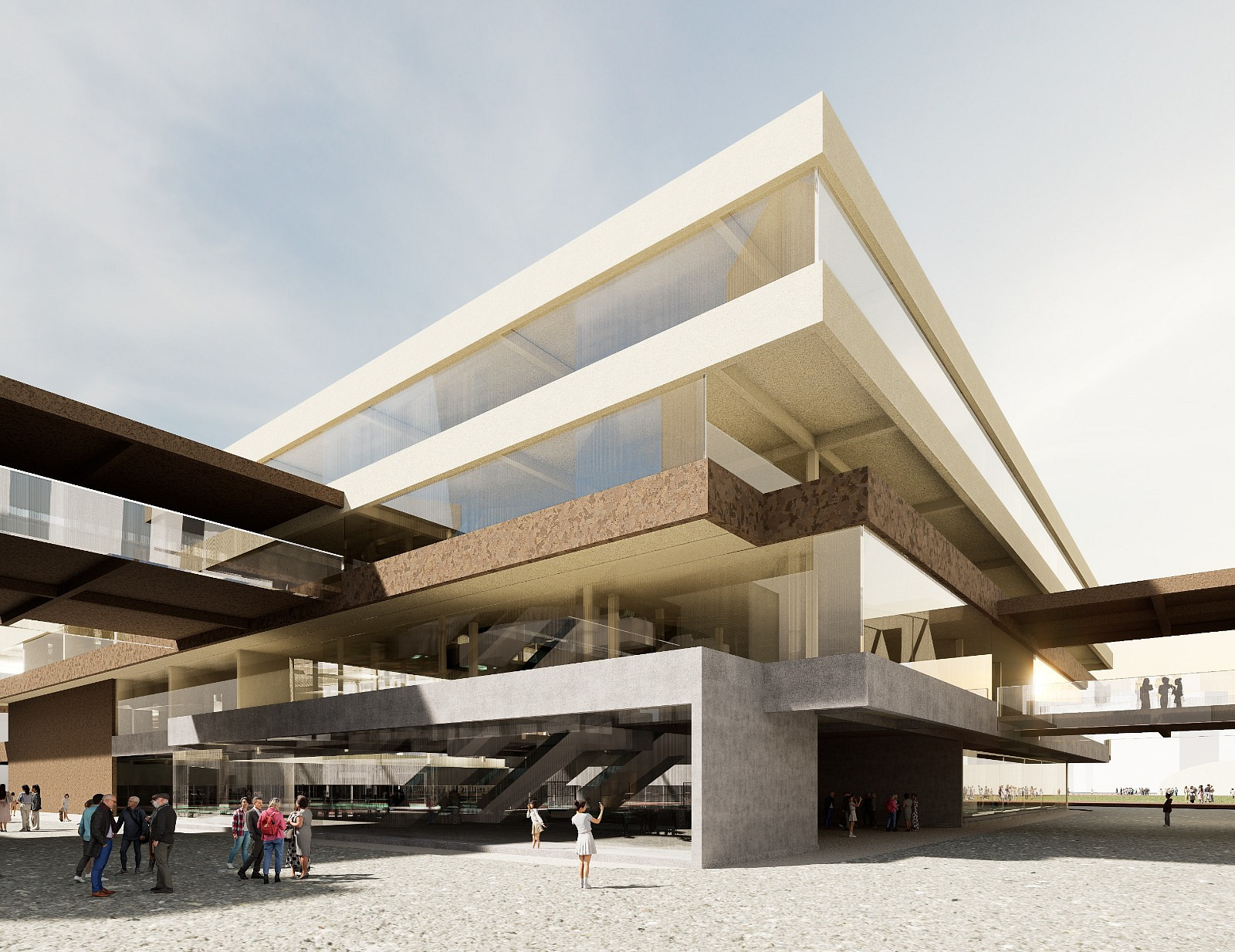
The project transforms this former boundary into an open civic landscape that reconnects the city through sports, culture, and public activities. Adjacent to a planned secondary school, the proposal creates a shared platform for students, residents, and visitors.
By integrating architecture, landscape, and circulation into a continuous public topography, the design reactivates the historical railway corridor while establishing a vibrant destination for community life and urban engagement.
Project description
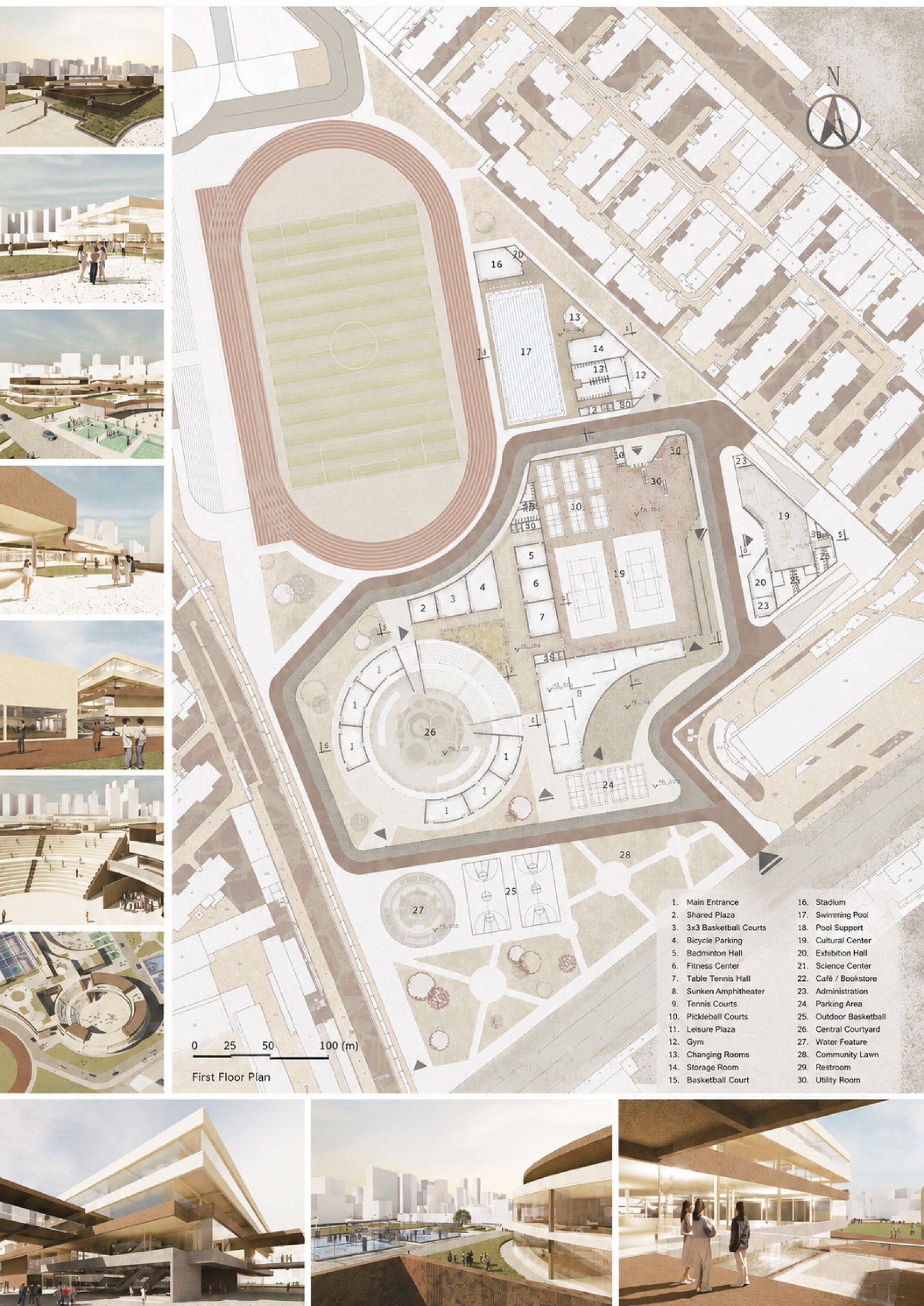
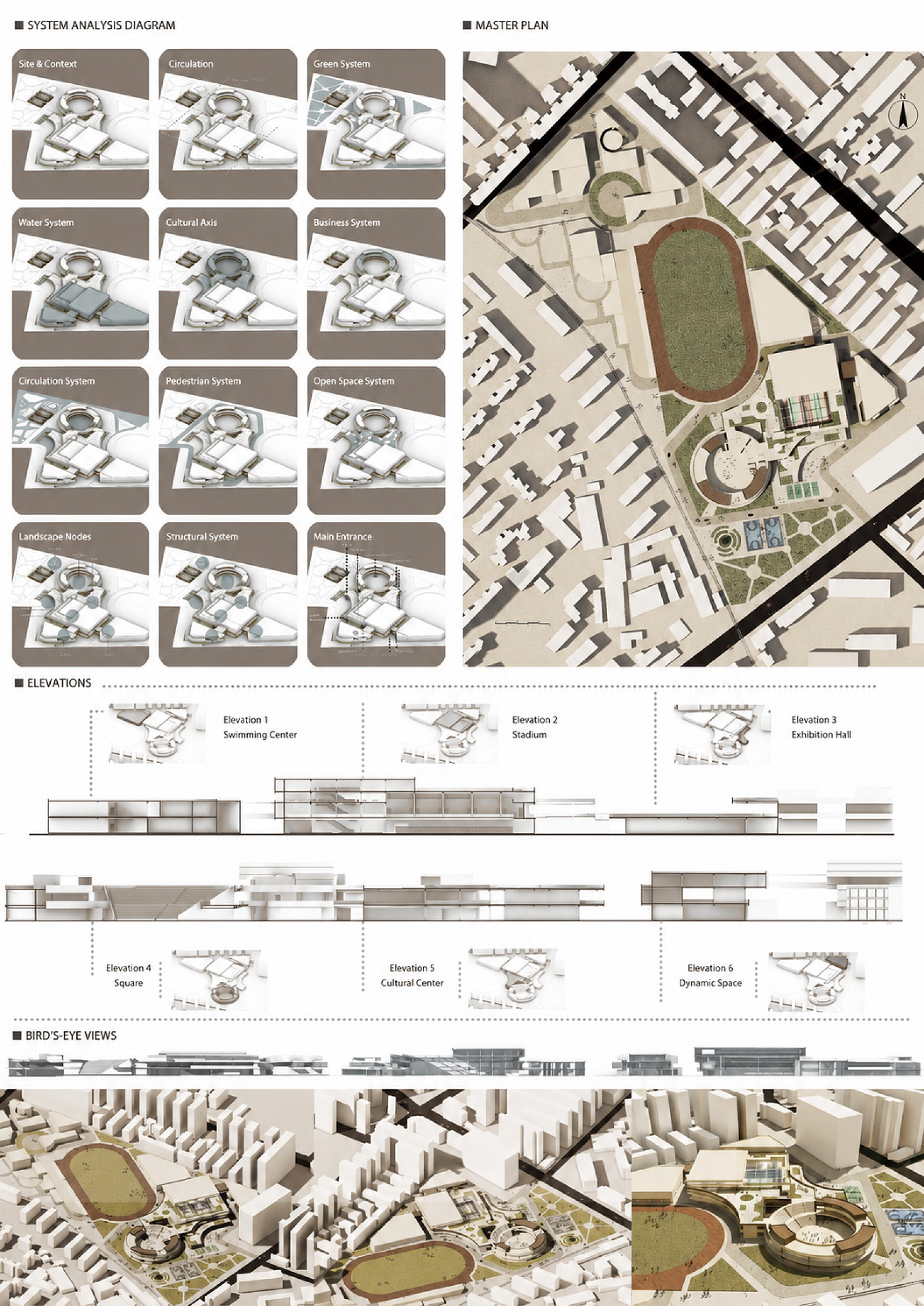
The project proposes a mixed-use sports and cultural complex on a 93,000 m² site.
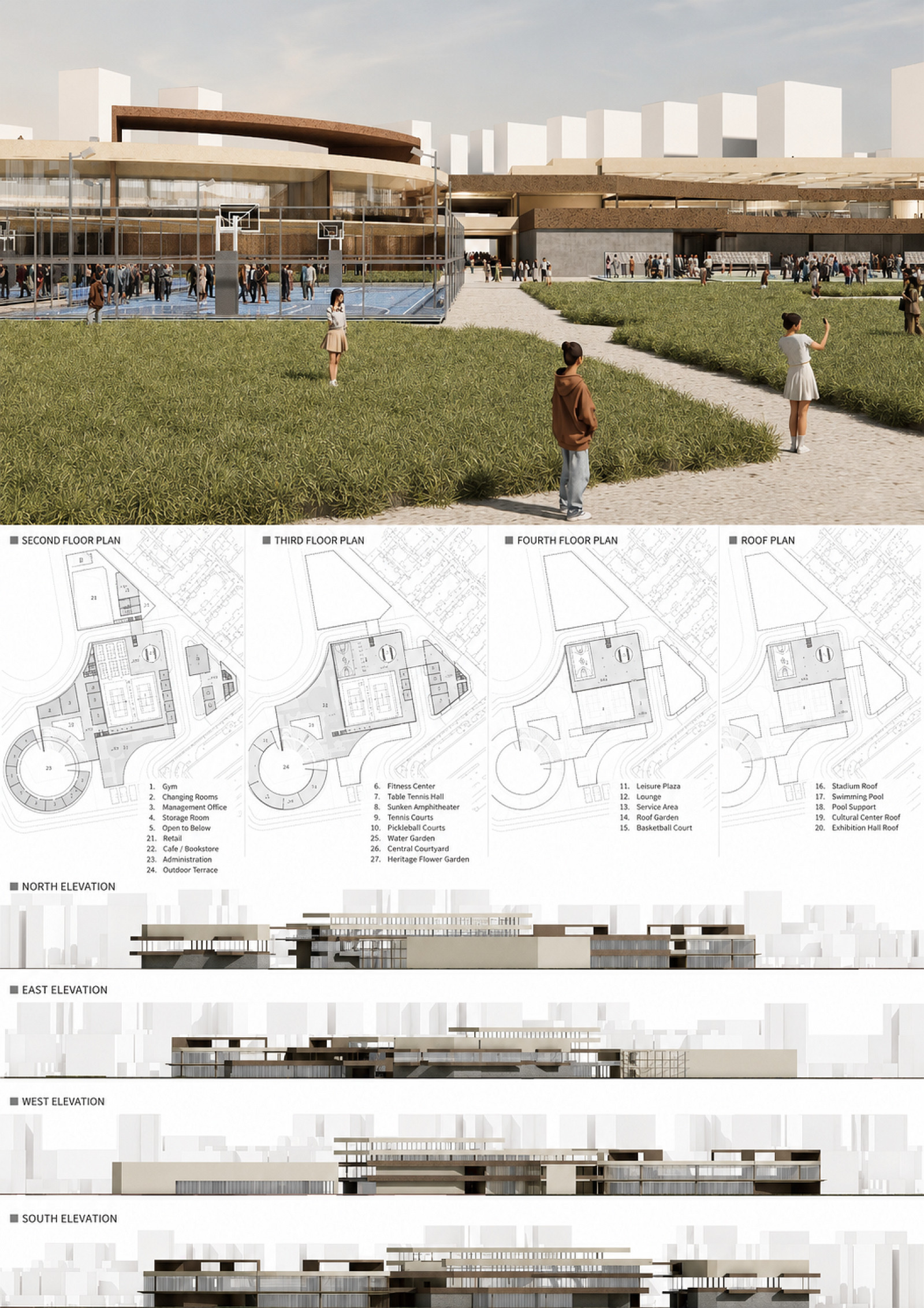
Organized around a 400-meter standard athletics track, the development combines sports facilities, exhibition spaces, cultural programs, and public landscapes within a connected spatial system.
A series of plazas, roof gardens, terraces, and pedestrian routes create continuous public accessibility and encourage interaction between different user groups. The design also strengthens connections with the planned secondary school to the north through shared recreational and educational facilities.
By transforming a former railway edge into an active civic destination, the project reconnects fragmented urban spaces and promotes a healthier and more inclusive public environment.
Technical information
Site Area: Approximately 93,000 m² (140 mu)
The project adopts a hybrid structural system combining reinforced concrete and steel framing to accommodate large-span cultural and sports facilities.
The development includes a 400-meter athletics track, indoor and outdoor sports courts, exhibition spaces, and public landscapes. Green roofs and elevated terraces extend public space while improving environmental performance through shading, stormwater retention, and thermal insulation.
Passive design strategies, including natural ventilation, daylight optimization, and landscape buffering, contribute to the sustainability and long-term adaptability of the project.

Copyright © 2026 INSPIRELI | All rights reserved. Use of this website signifies your agreement to the Terms of Use, Privacy Policy, and use of cookies.