University Dormitories for VUT


Project idea
The Missing Heart: Stitching Campus to Landscape
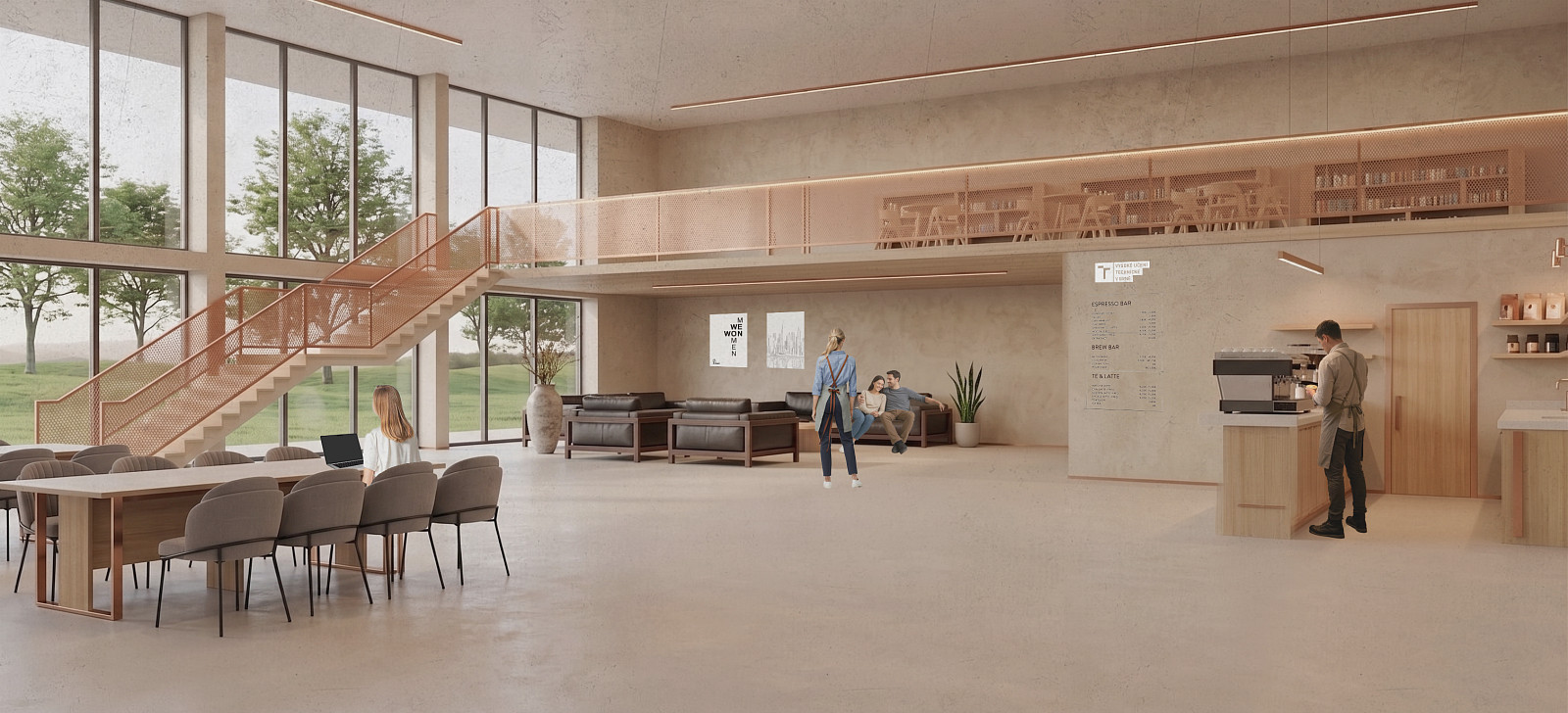
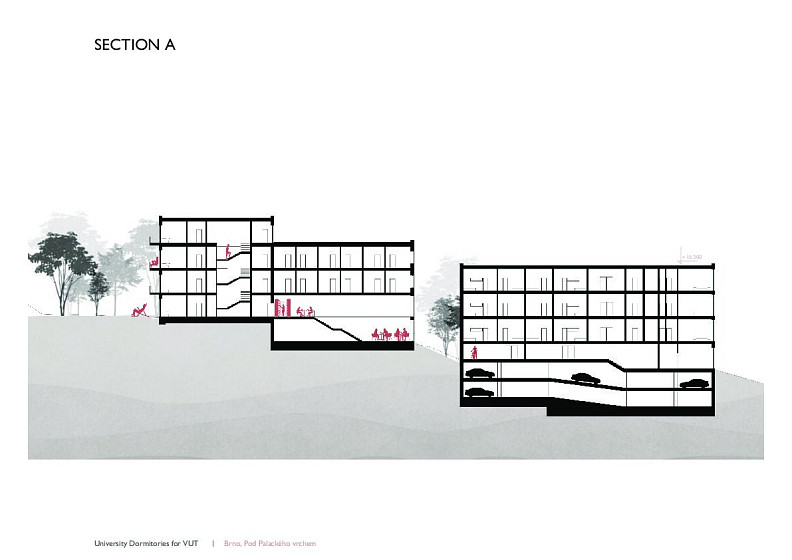
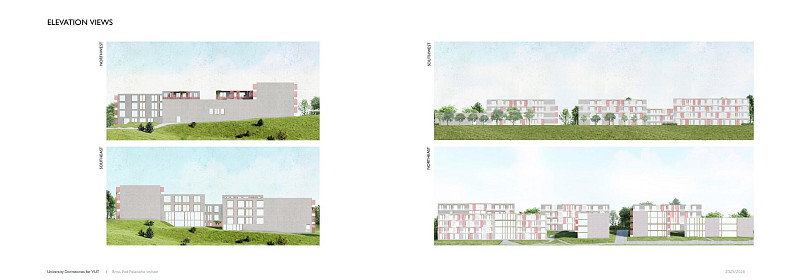
The conceptual driver for this project is the creation of an "imaginary heart" for the VUT campus at Pod Palackého vrchem-a space that bridges the rigid geometry of the existing academic buildings with the organic, sloping topography of the Medlánecký kopec nature reserve. Rather than imposing a monolithic structure, the design proposes a cascading, fragmented massing that naturally descends the terrain. It redefines the student housing typology by dissolving the institutional scale into a localized community. By integrating highly sought-after public amenities from an espresso brew bar to dedicated fitness, sauna, and wellness facilities. The architecture acts as a social magnet, transforming a transitional zone into the primary gathering point for the entire university district.
Project description
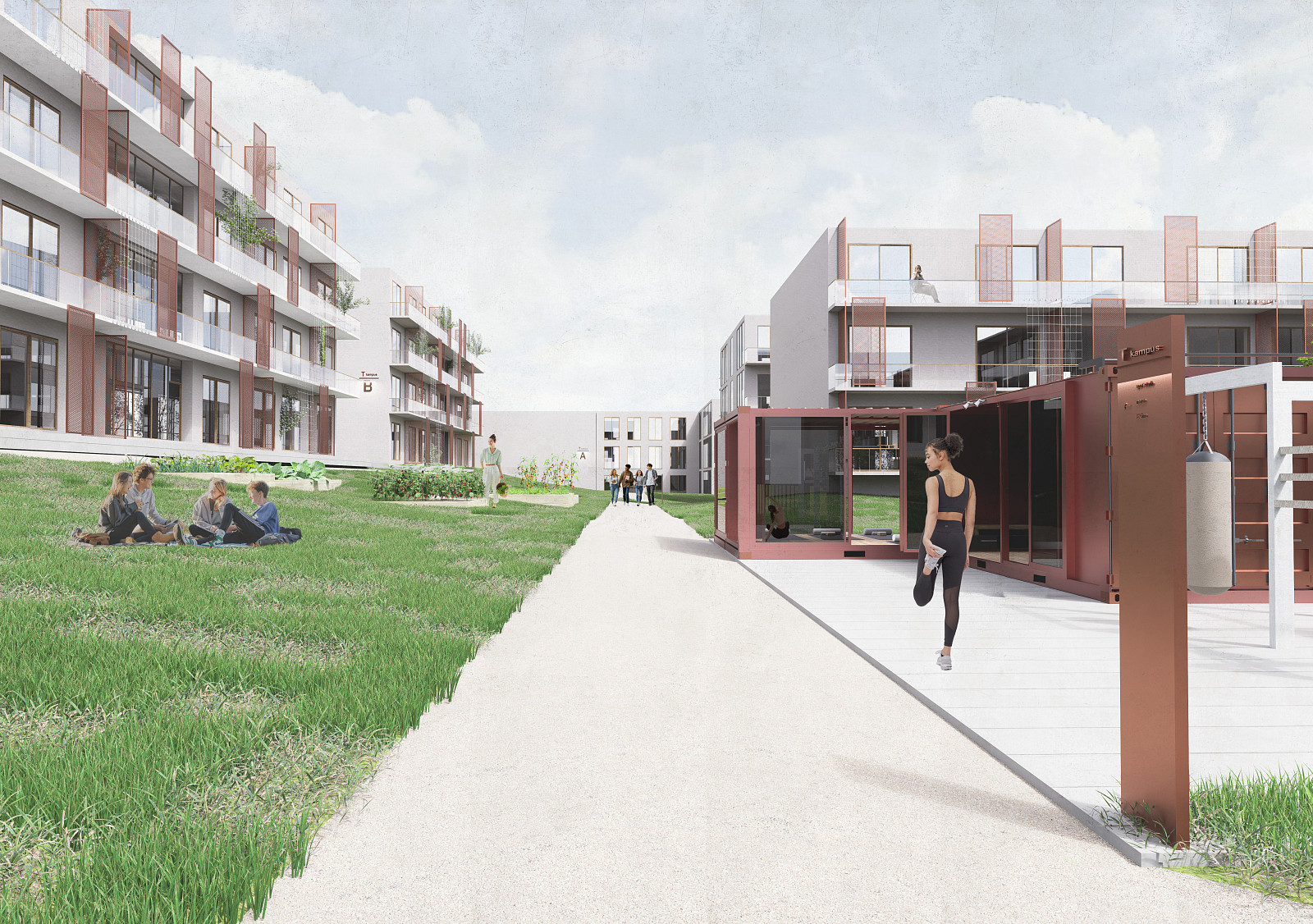
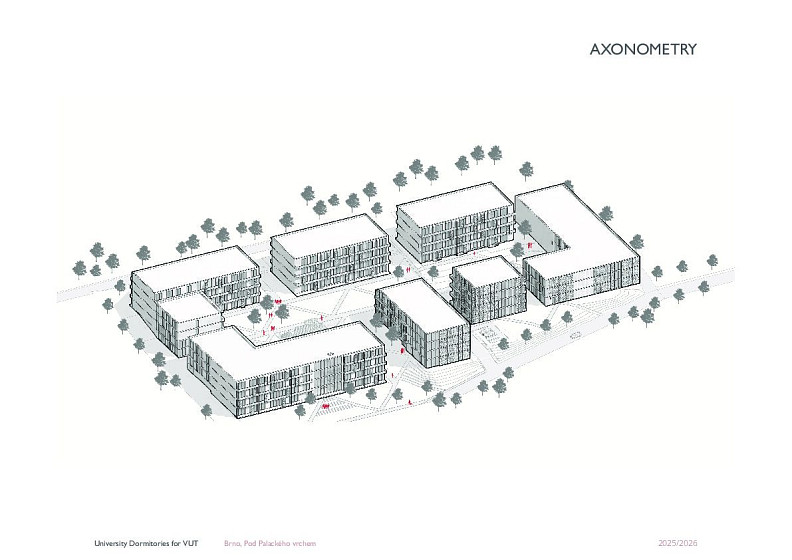
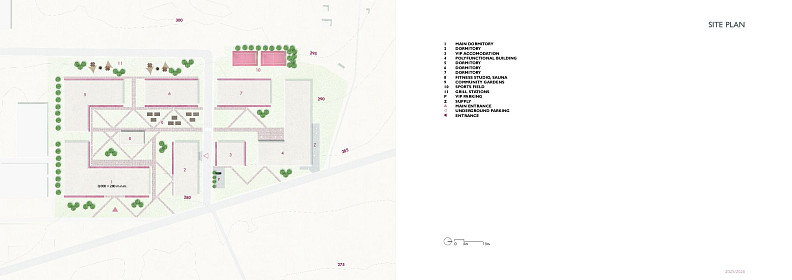
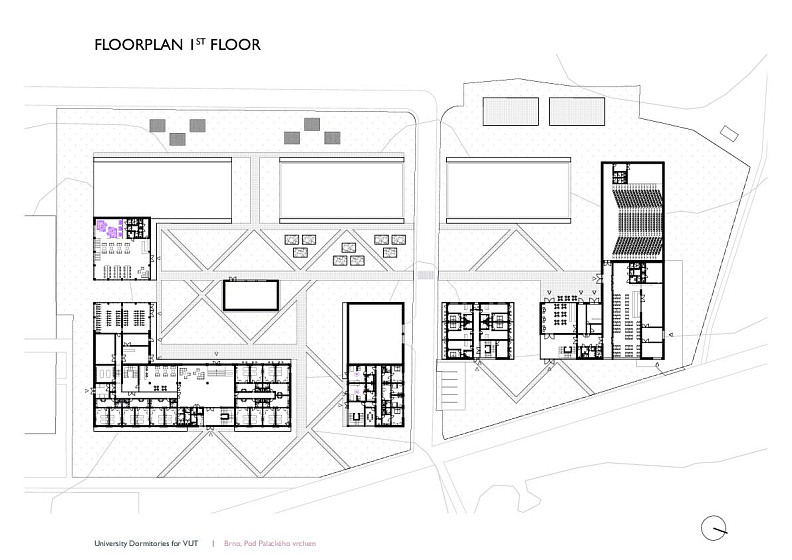
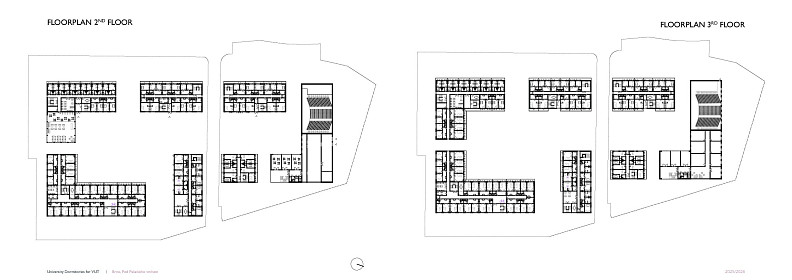
The urban layout is strategically zoned to navigate a steep slope while fostering a vibrant student life capped at an intimate 700 residents. At the perimeter closest to the existing campus, a polyfunctional building houses the primary public interfaces: an auditorium, cafeteria, pharmacy, and supermarket. This creates a lively urban edge that shields the inner residential courtyards.
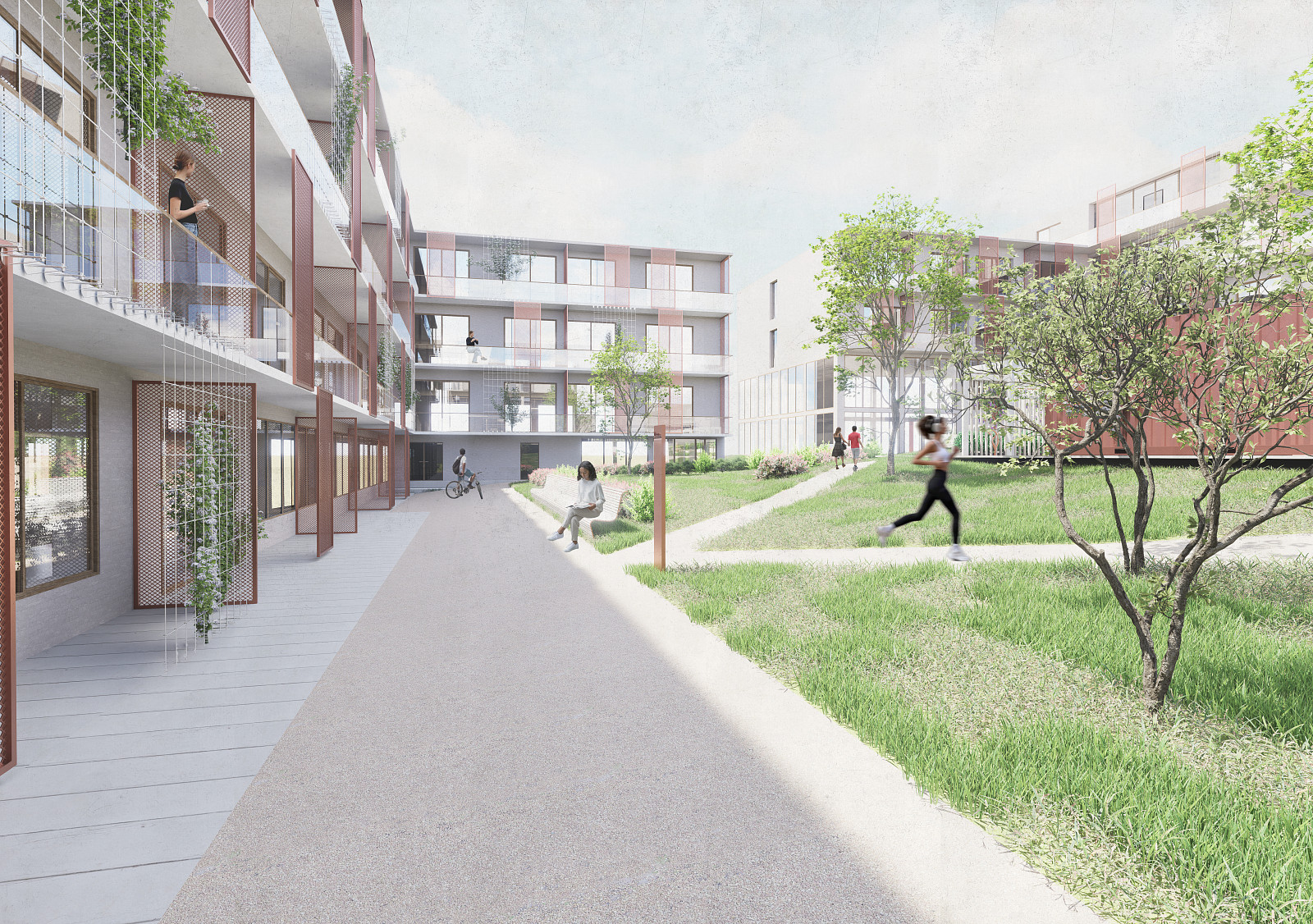
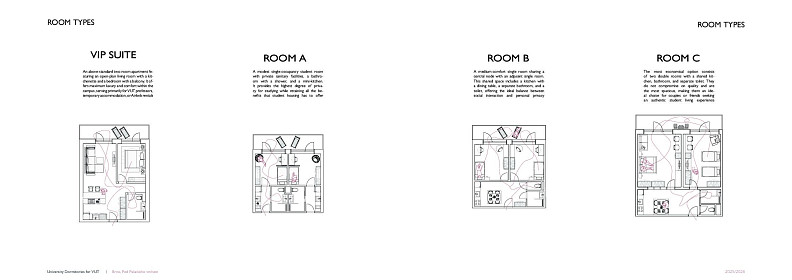
As users move deeper into the complex, the architecture breaks into distinct residential pavilions centered around community gardens, grilling areas, and sports courts. The interior social choreography is carefully managed: expansive, light-filled communal kitchens and quiet study rooms anchor each floor, while the private living quarters intentionally avoid large, impersonal dormitories. Instead, the units are scaled down to single and double rooms with shared micro-nodes, offering a refined balance of social interaction and essential acoustic privacy.
Crucially, the spatial organization champions inclusive, barrier-free living. Rather than isolating students with physical disabilities, fully adapted barrier-free apartments featuring specialized kitchens, widened entryways, and accessible bathrooms are seamlessly integrated directly into the residential fabric. This ensures that mobility-impaired residents experience the exact same vibrant social choreography, with unhindered access to all communal hubs, public ground-floor amenities, and eight dedicated accessible parking spaces. The orientation of all living spaces strictly avoids pure north, maximizing passive solar gain and framing curated views of the surrounding hills.
Technical information
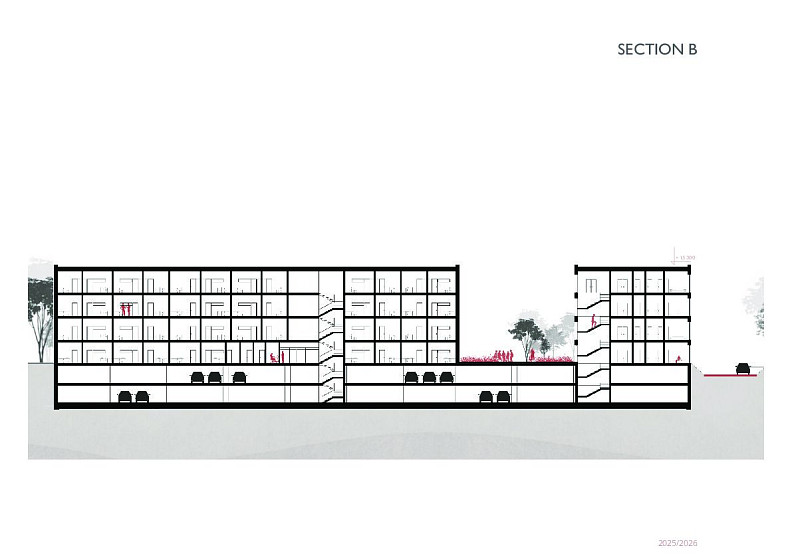
The structural logic of the complex is driven by the demands of the sloping terrain and the need for acoustic precision within a high-density student environment. The foundation and subterranean levels utilize a combined structural system: bearing walls integrating with columns to efficiently support the cascading massing above while maximizing the open floor plan for the 180-capacity parking garage. This is further optimized by the D'Humy system with half-ramps, allowing the structure to seamlessly step down the steep grade without requiring massive, disruptive excavation.
To manage the complex acoustics of a 700-bed facility, specialized acoustic paneling is integrated throughout the corridors and communal hubs, ensuring that the vibrant social spaces do not compromise the quiet required in the private living and study zones.
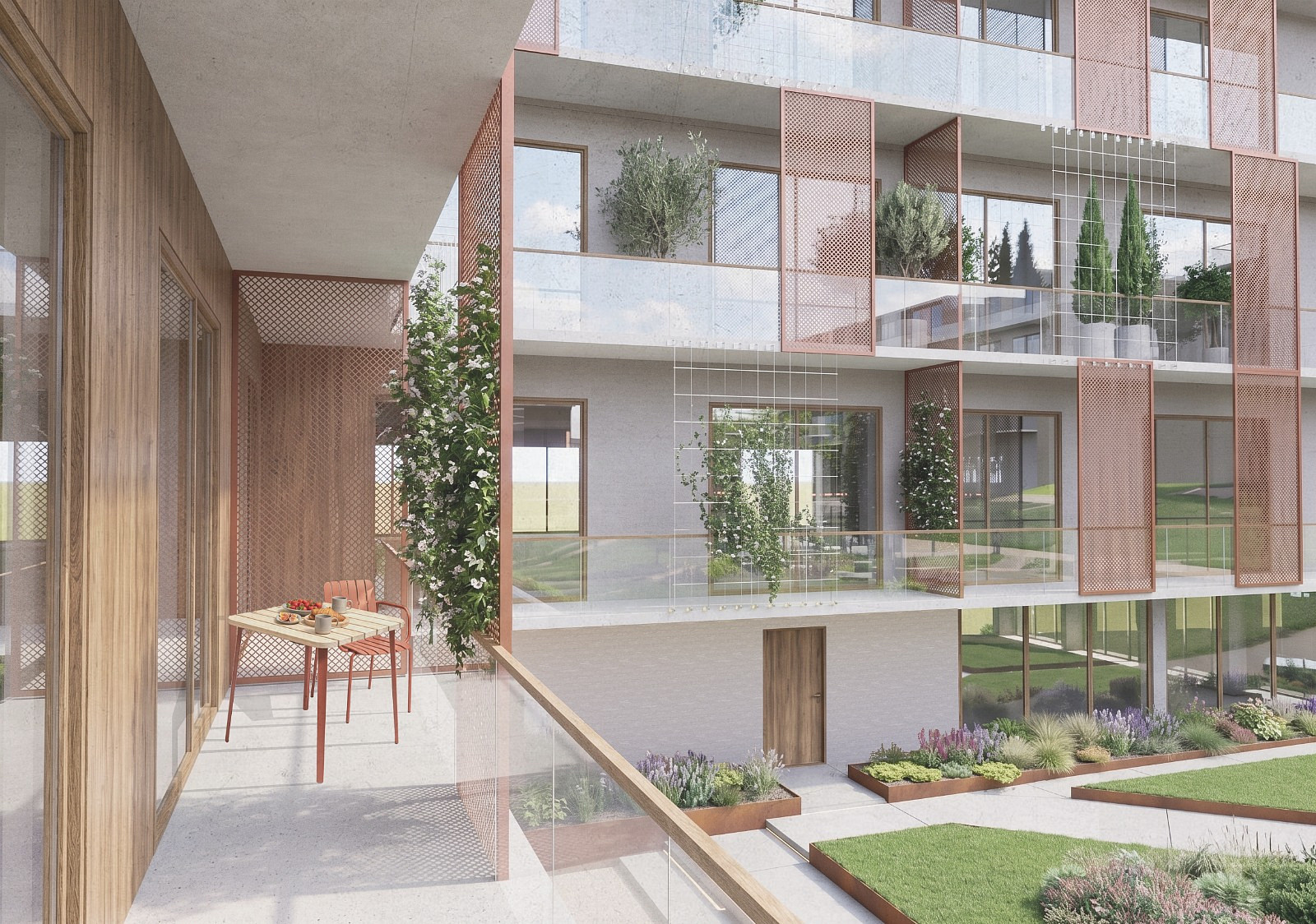
The façade expresses a clean, modern aesthetic that allows the surrounding landscape to dominate. A base of finely structured, light beige "white coffee" plaster is juxtaposed against functional shading panels made of copper-toned perforated steel - a subtle, modern homage to the university’s characteristic red branding. These metallic elements act as a unifying visual rhythm while providing essential passive solar control. To further enhance the local microclimate and soften the architectural edges, balconies are equipped with steel cable trellises designed for climbing plants , blurring the boundary between the built environment and the adjacent protected biocenter.
Documentation
Show PDF 1Show PDF 2Show PDF 3Show PDF 4Show PDF 5Show PDF 6Show PDF 7Show PDF 8

Copyright © 2026 INSPIRELI | All rights reserved. Use of this website signifies your agreement to the Terms of Use, Privacy Policy, and use of cookies.