Underground of the Holy city


Project idea
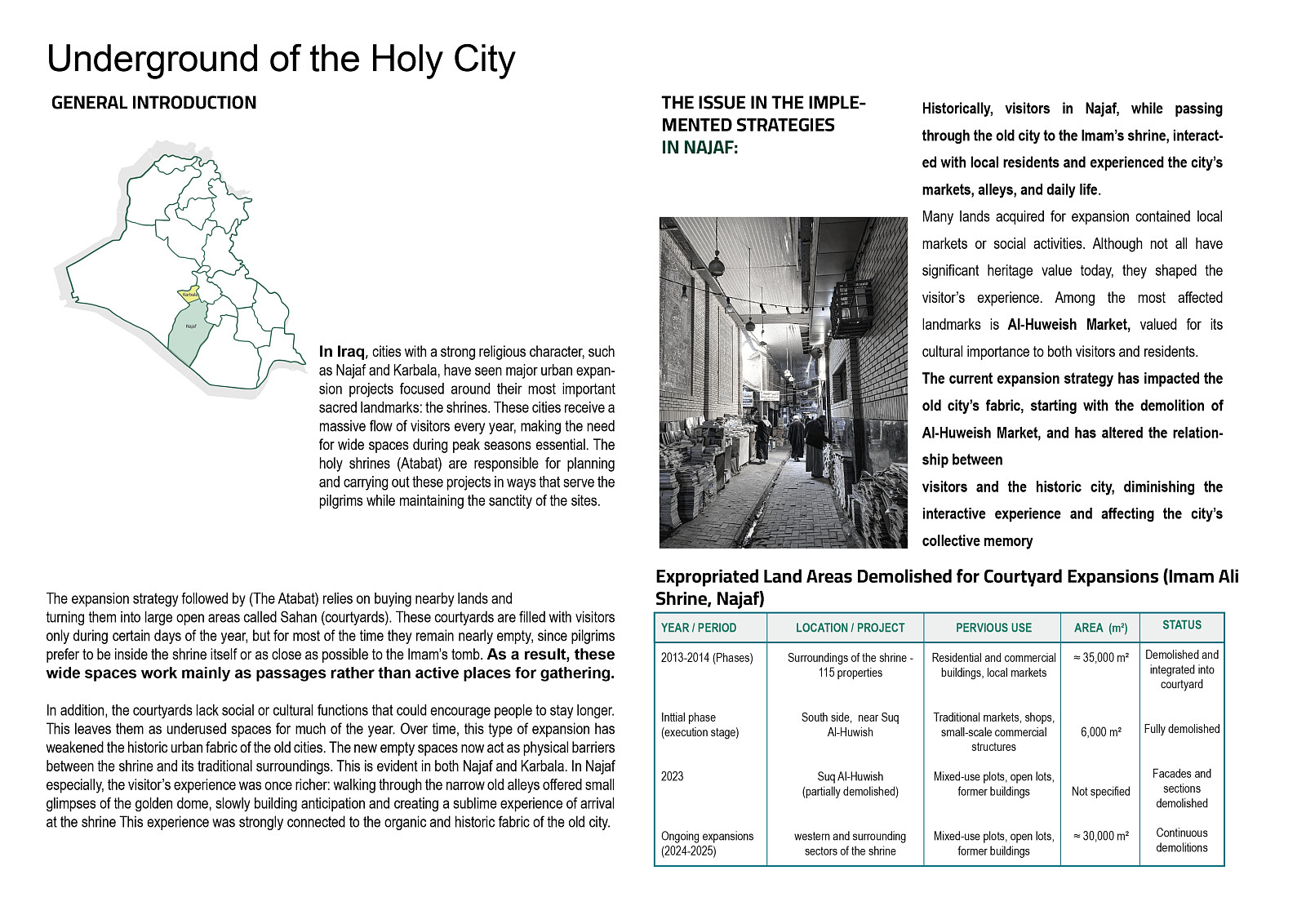
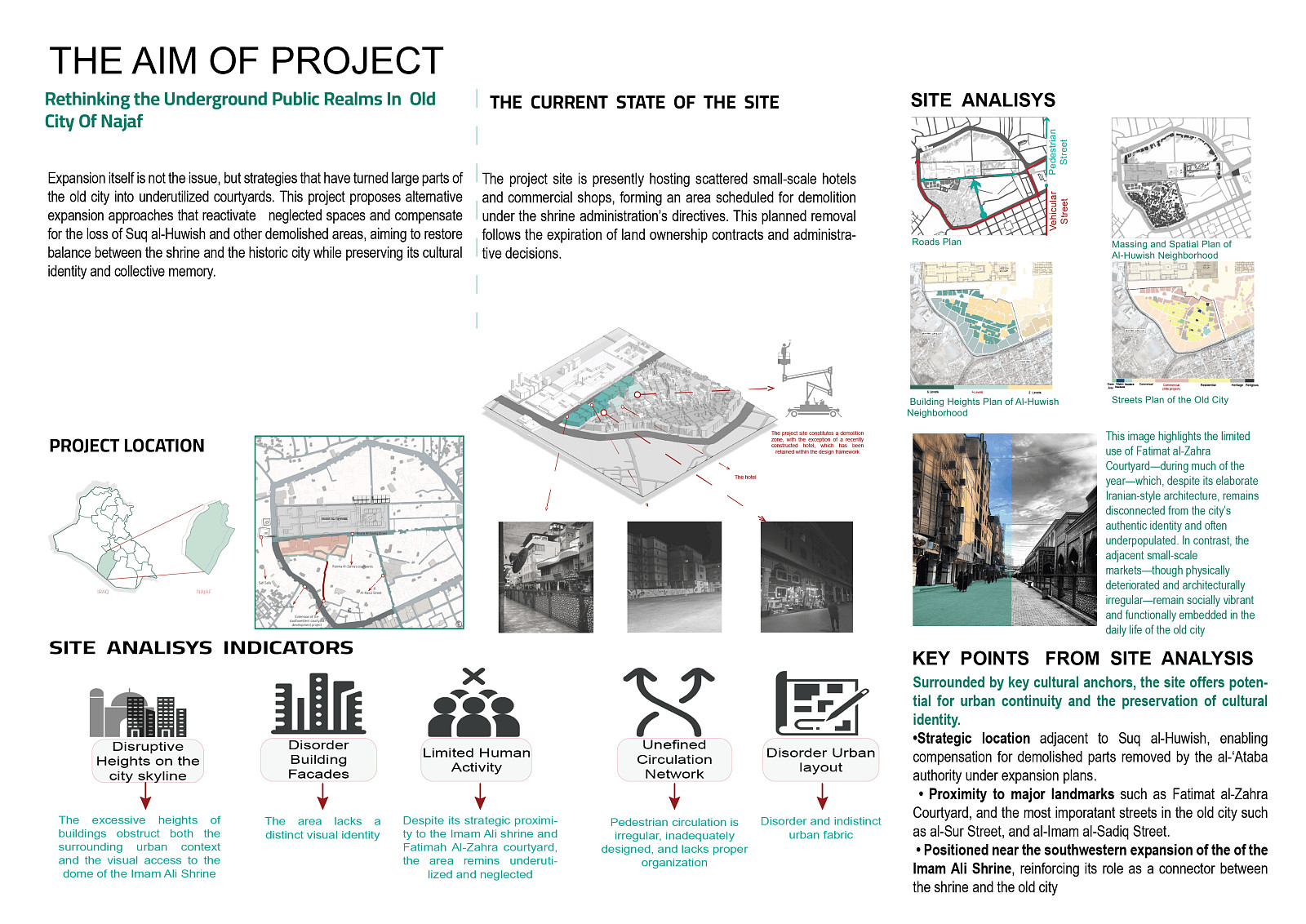
Expansion itself is not the issue, but strategies that have turned large parts of the old city into underutilized courtyards. This project proposes alternative expansion approaches that reactivate neglected spaces and compensate for the loss of Suq al-Huwish and other demolished areas, aiming to restore balance between the shrine and the historic city while preserving its cultural identity and collective memory.
Project description
The continuous expansion of courtyard spaces raises a fundamental question:
does this strategy genuinely support the city’s identity, or does it pose a threat to it?
For context, Sahn al-Zahra (61,000 m²), combined with subsequent expansions, has increased the total courtyard space of the Imam Ali Shrine to nearly 140,000 m².
This situation prompts several critical questions that shaped the core of my design approach:
• Does the old city truly require an additional 29,000 m² at the project site, effectively replicating the model of Sahn Fatima al-Zahra?
• Can neglected urban spaces such as Suq al-Huwish—be reactivated rather than erased, and can the previously demolished sections be restored or compensated?
• Is it possible to remove the physical barriers separating the shrine from the old city to restore spatial balance and continuity?
• Most importantly, can the needs of pilgrims be harmonized with daily urban life in a way that reflects and preserves the city’s identity and collective memory?
These questions form the foundation of the project, guiding a design strategy that seeks to reframe the relationship between shrine expansion and the old city—not merely through spatial interventions, but through the reactivation of urban memory and cultural identity.
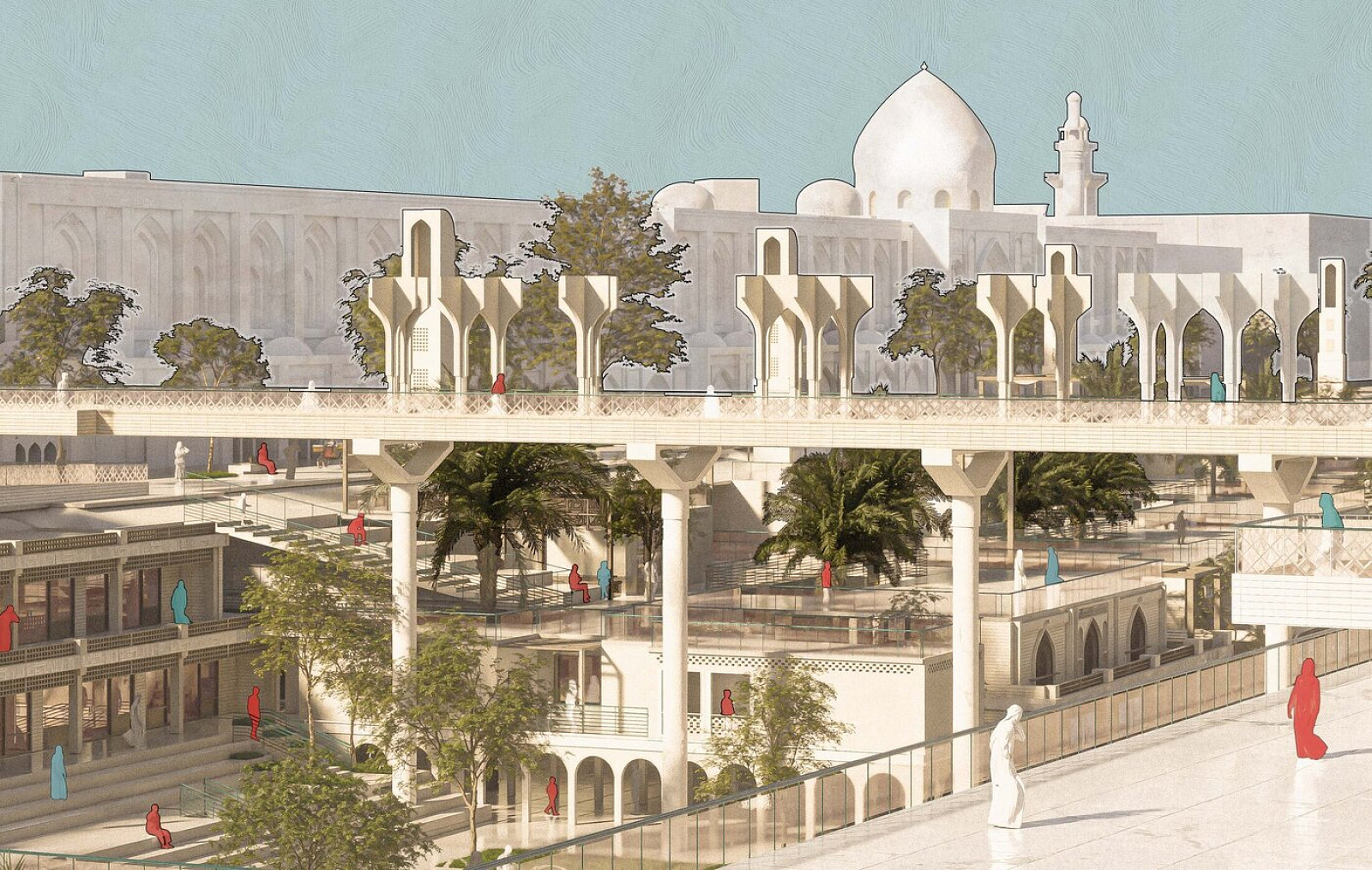
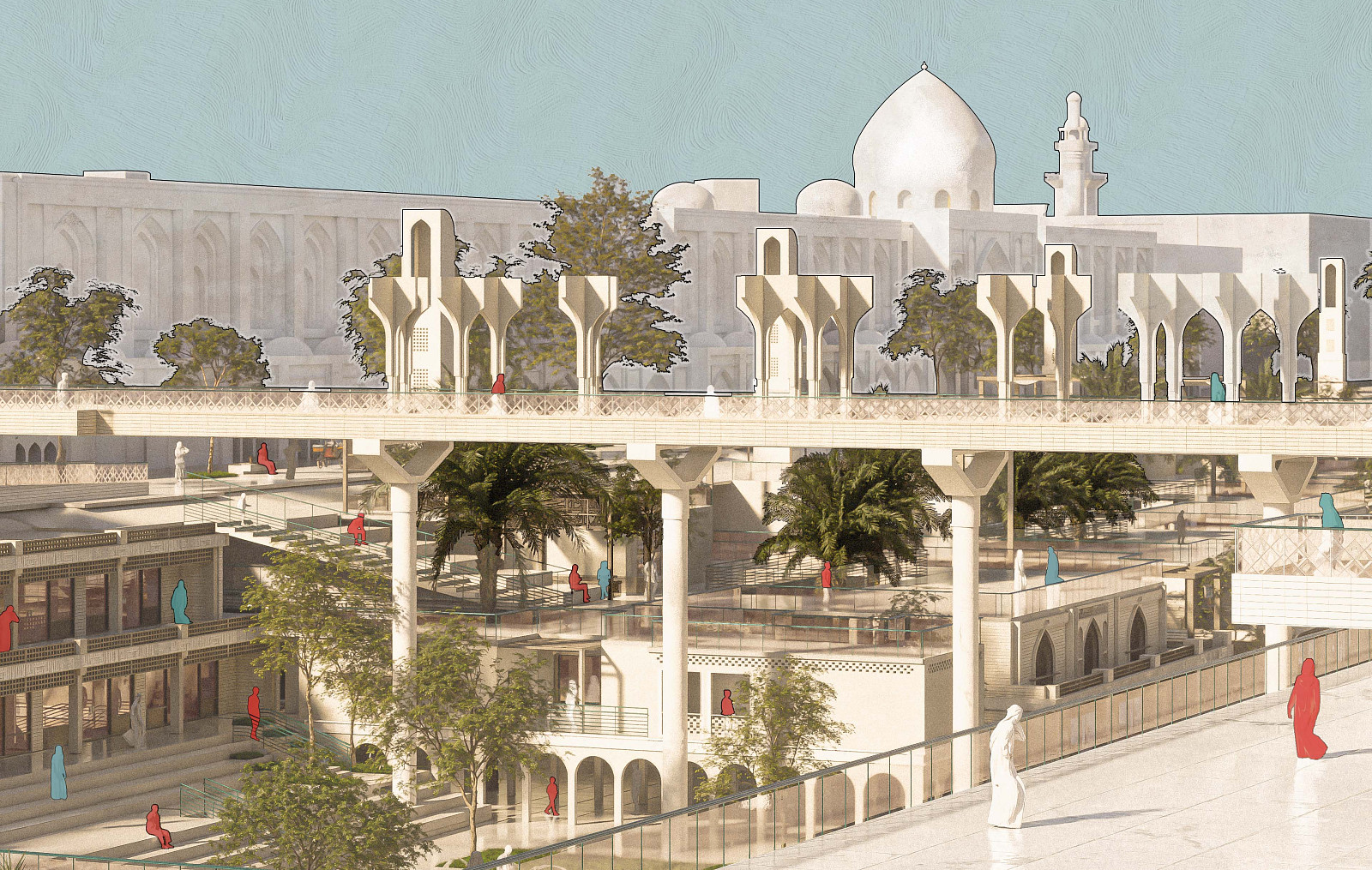
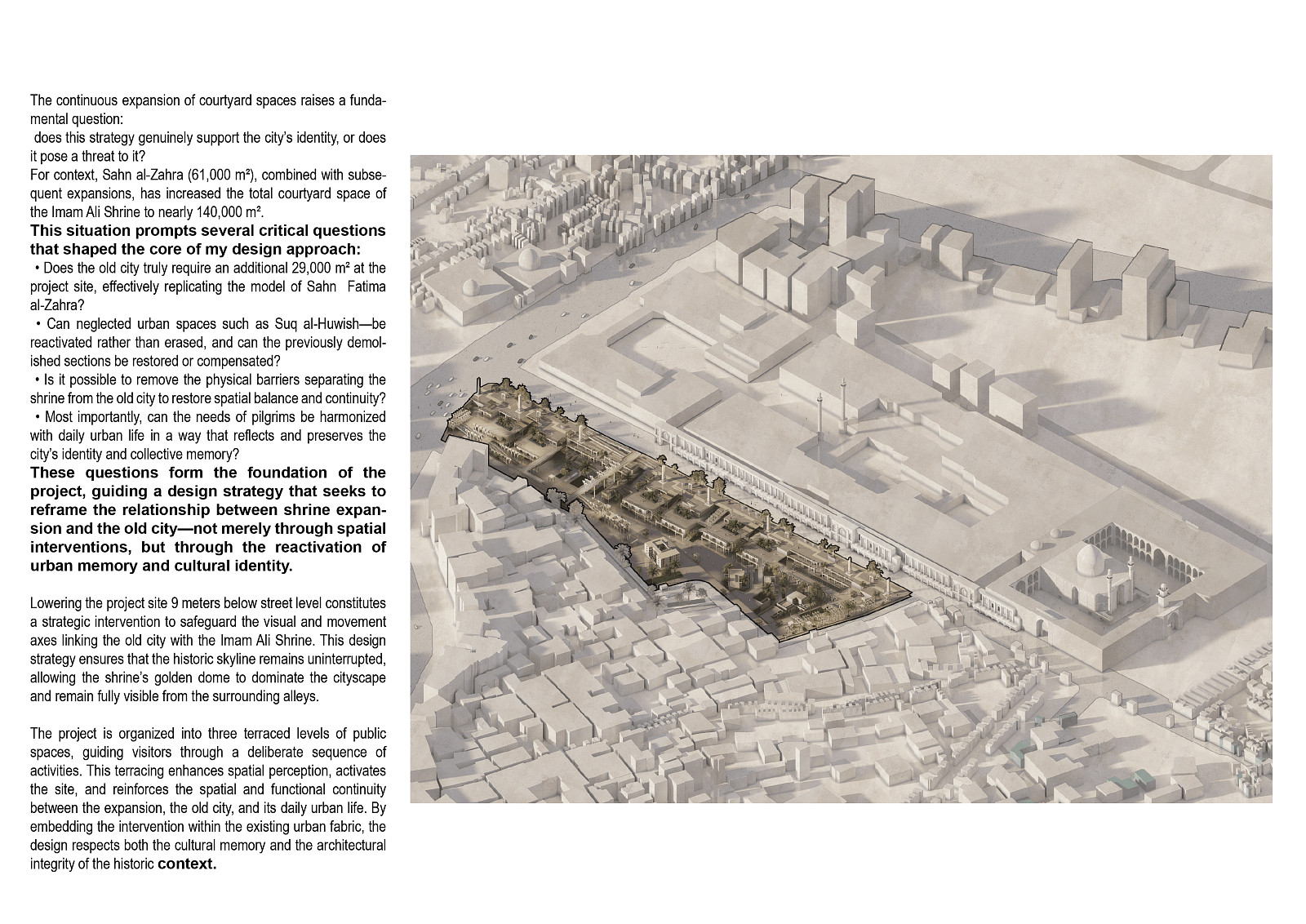
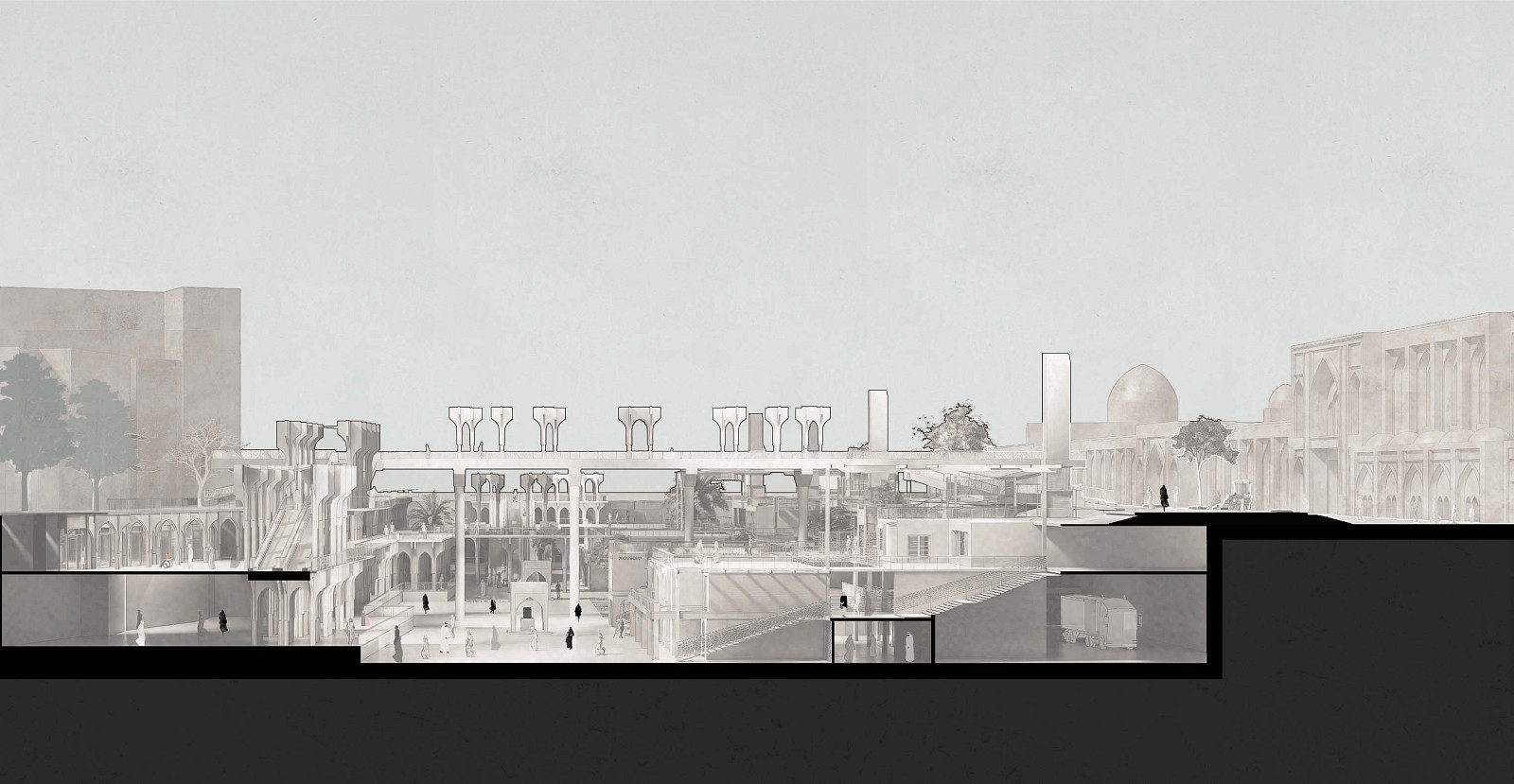
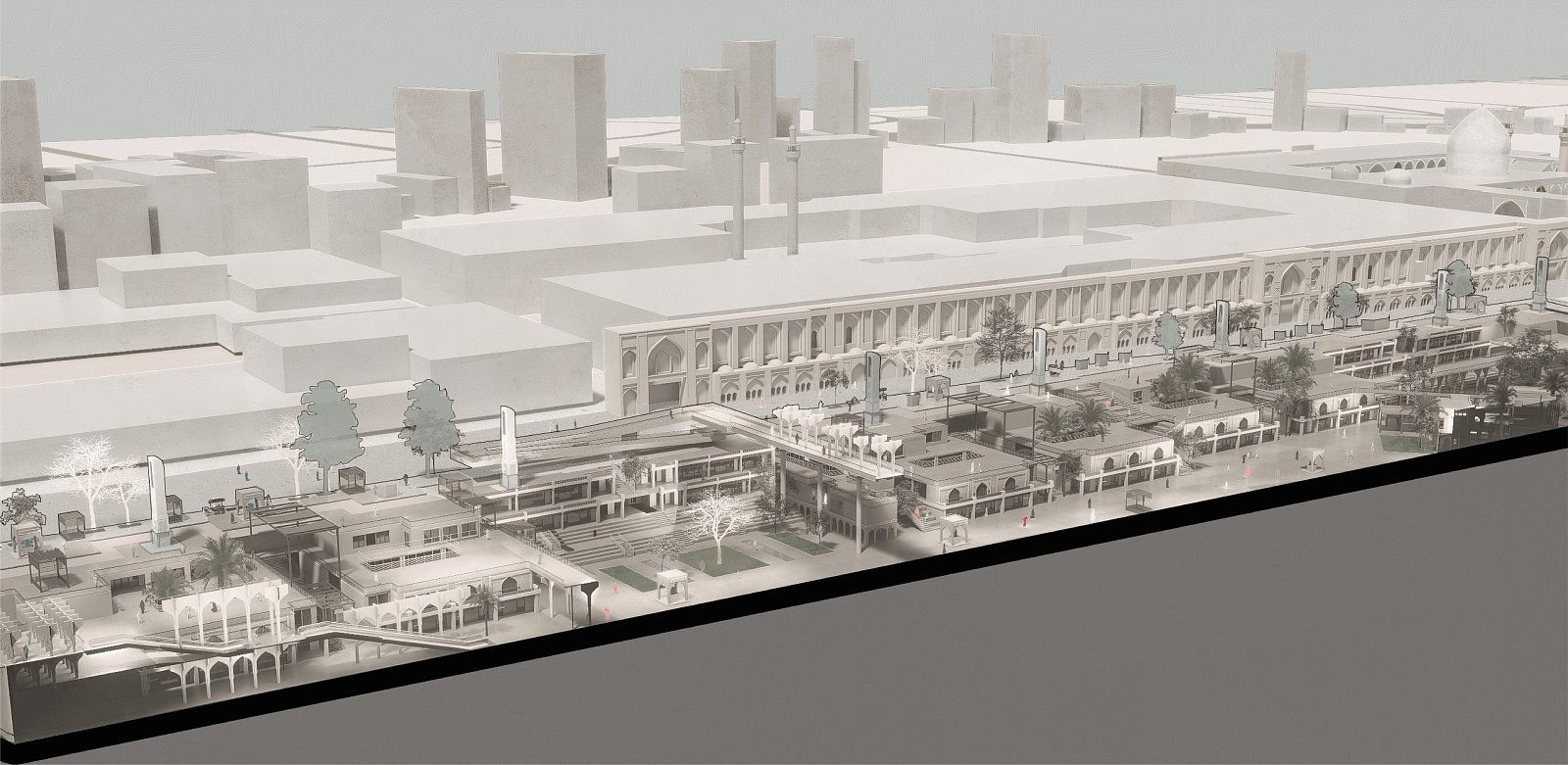
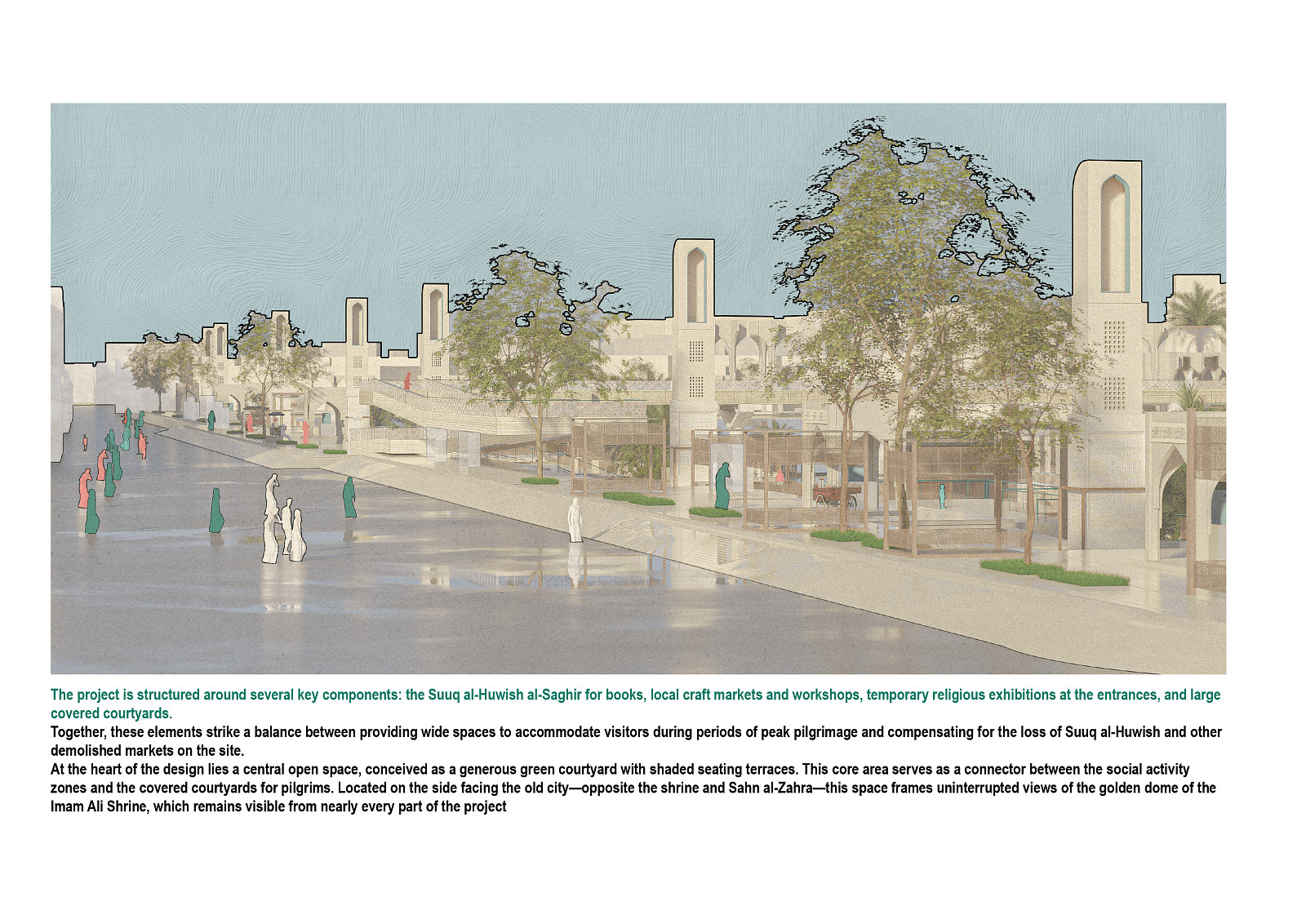
Lowering the project site 9 meters below street level constitutes a strategic intervention to safeguard the visual and movement axes linking the old city with the Imam Ali Shrine. This design strategy ensures that the historic skyline remains uninterrupted, allowing the shrine’s golden dome to dominate the cityscape and remain fully visible from the surrounding alleys.
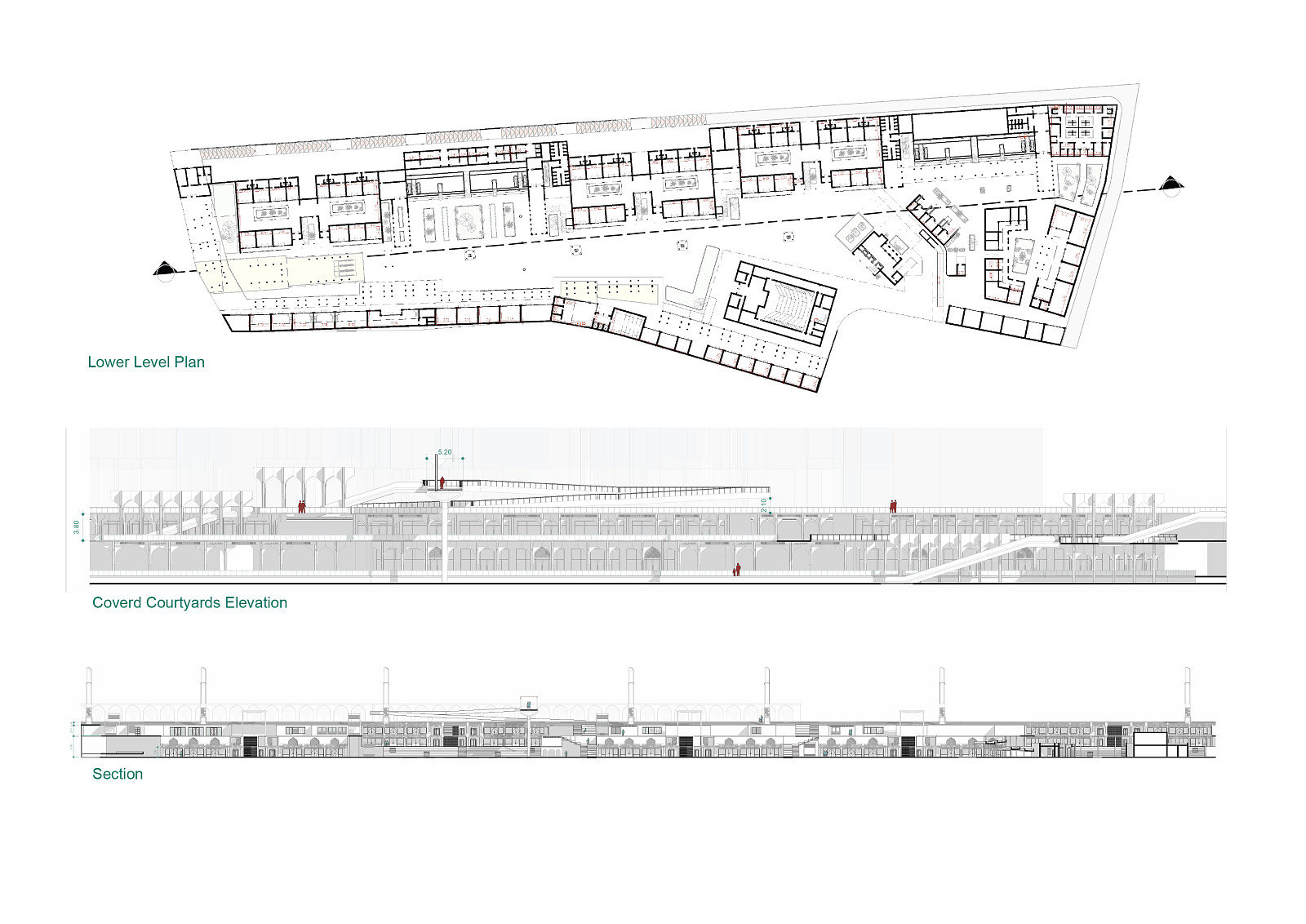
The project is organized into three terraced levels of public spaces, guiding visitors through a deliberate sequence of activities. This terracing enhances spatial perception, activates the site, and reinforces the spatial and functional continuity between the expansion, the old city, and its daily urban life. By embedding the intervention within the existing urban fabric, the design respects both the cultural memory and the architectural integrity of the historic context.
Technical information
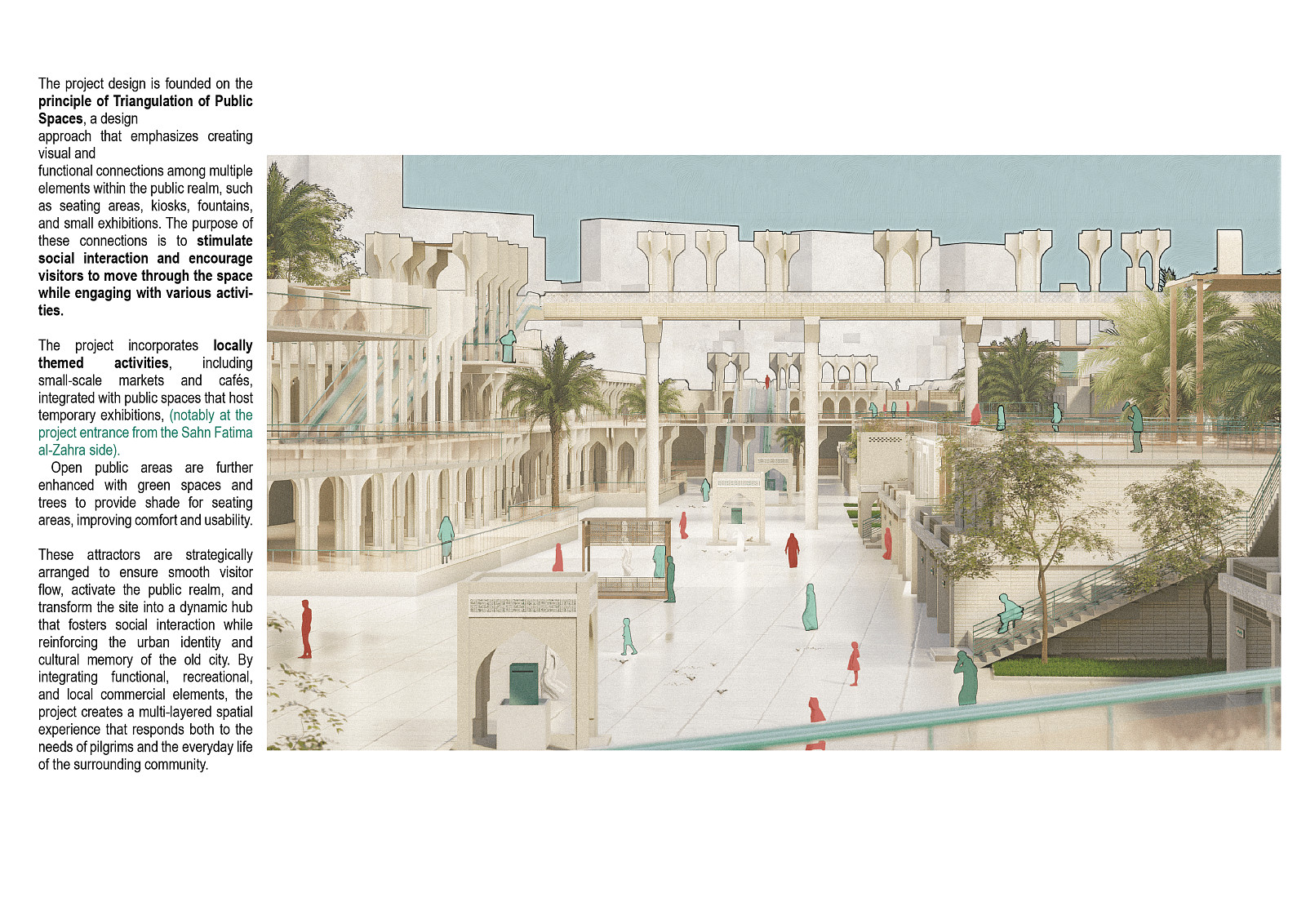
The project design is founded on the principle of Triangulation of Public Spaces, a design
approach that emphasizes creating visual and
functional connections among multiple elements within the public realm, such as seating areas, kiosks, fountains, and small exhibitions. The purpose of these connections is to stimulate social interaction and encourage visitors to move through the space while engaging with various activities.
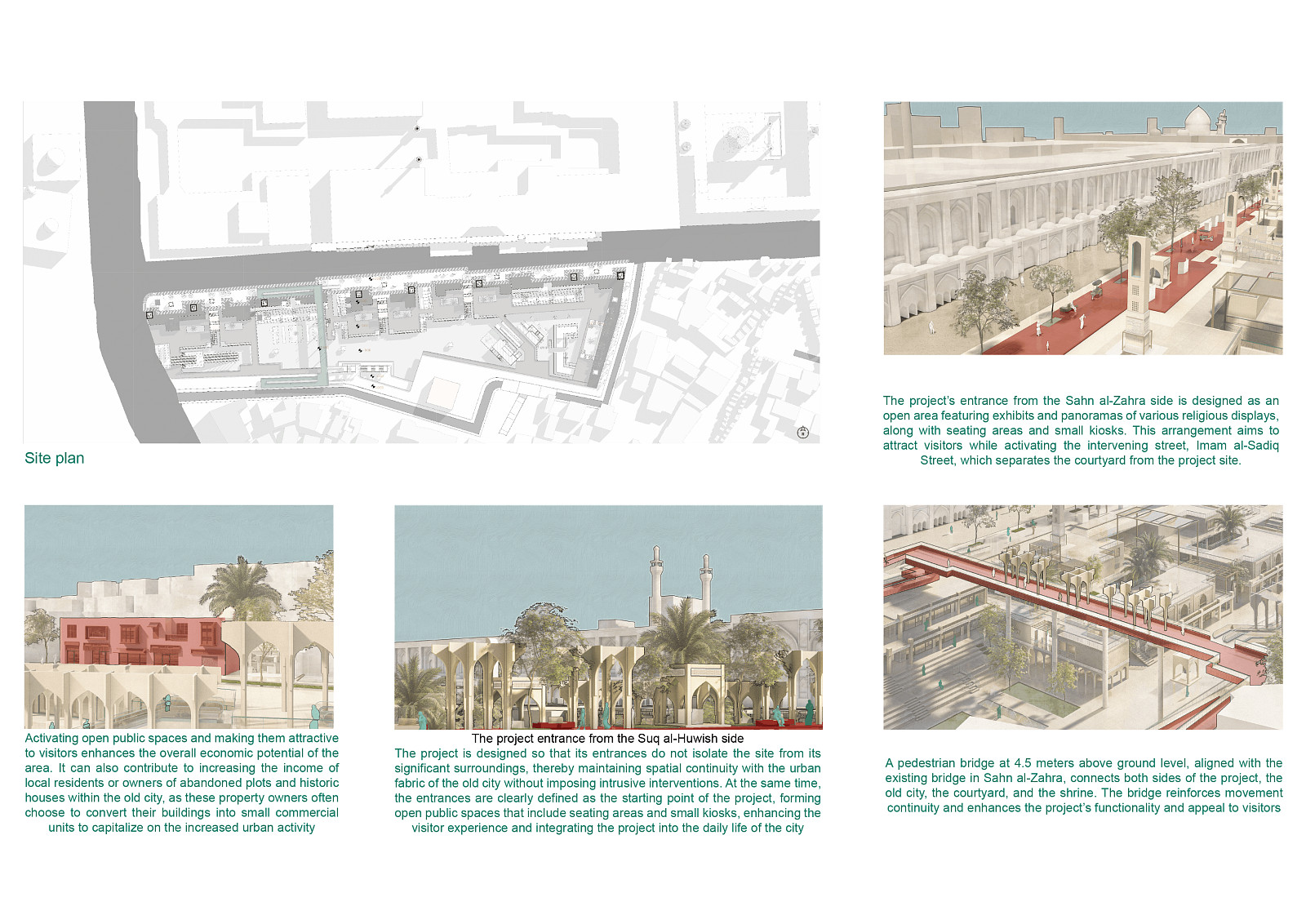
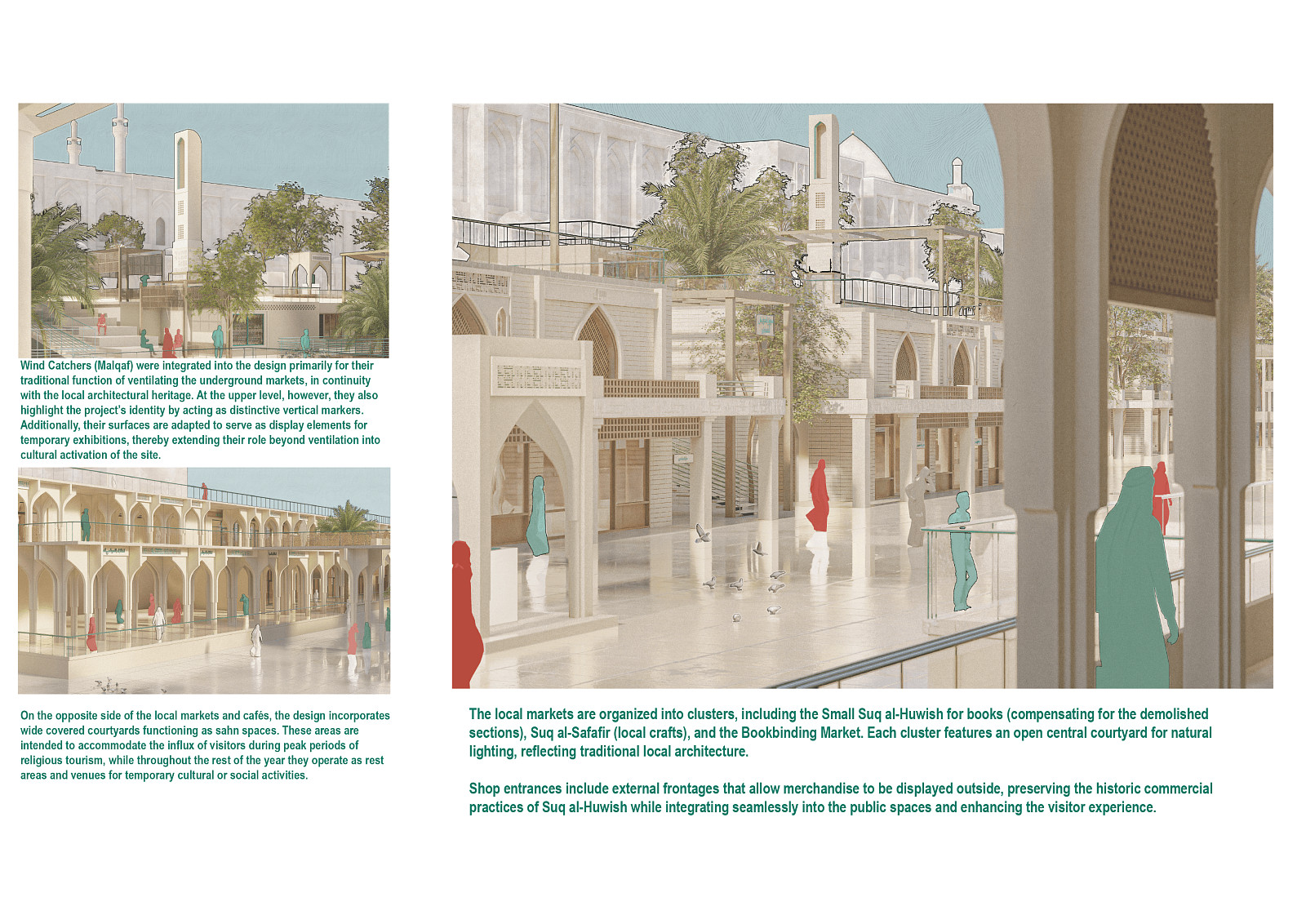
The project incorporates locally themed activities, including small-scale markets and cafés, integrated with public spaces that host temporary exhibitions, (notably at the project entrance from the Sahn Fatima al-Zahra side).
Open public areas are further enhanced with green spaces and trees to provide shade for seating areas, improving comfort and usability.
These attractors are strategically arranged to ensure smooth visitor flow, activate the public realm, and transform the site into a dynamic hub that fosters social interaction while reinforcing the urban identity and cultural memory of the old city. By integrating functional, recreational, and local commercial elements, the project creates a multi-layered spatial experience that responds both to the needs of pilgrims and the everyday life of the surrounding community.

Copyright © 2026 INSPIRELI | All rights reserved. Use of this website signifies your agreement to the Terms of Use, Privacy Policy, and use of cookies.