Huellas de Jardin - Arsenal Memorial Park


Project idea
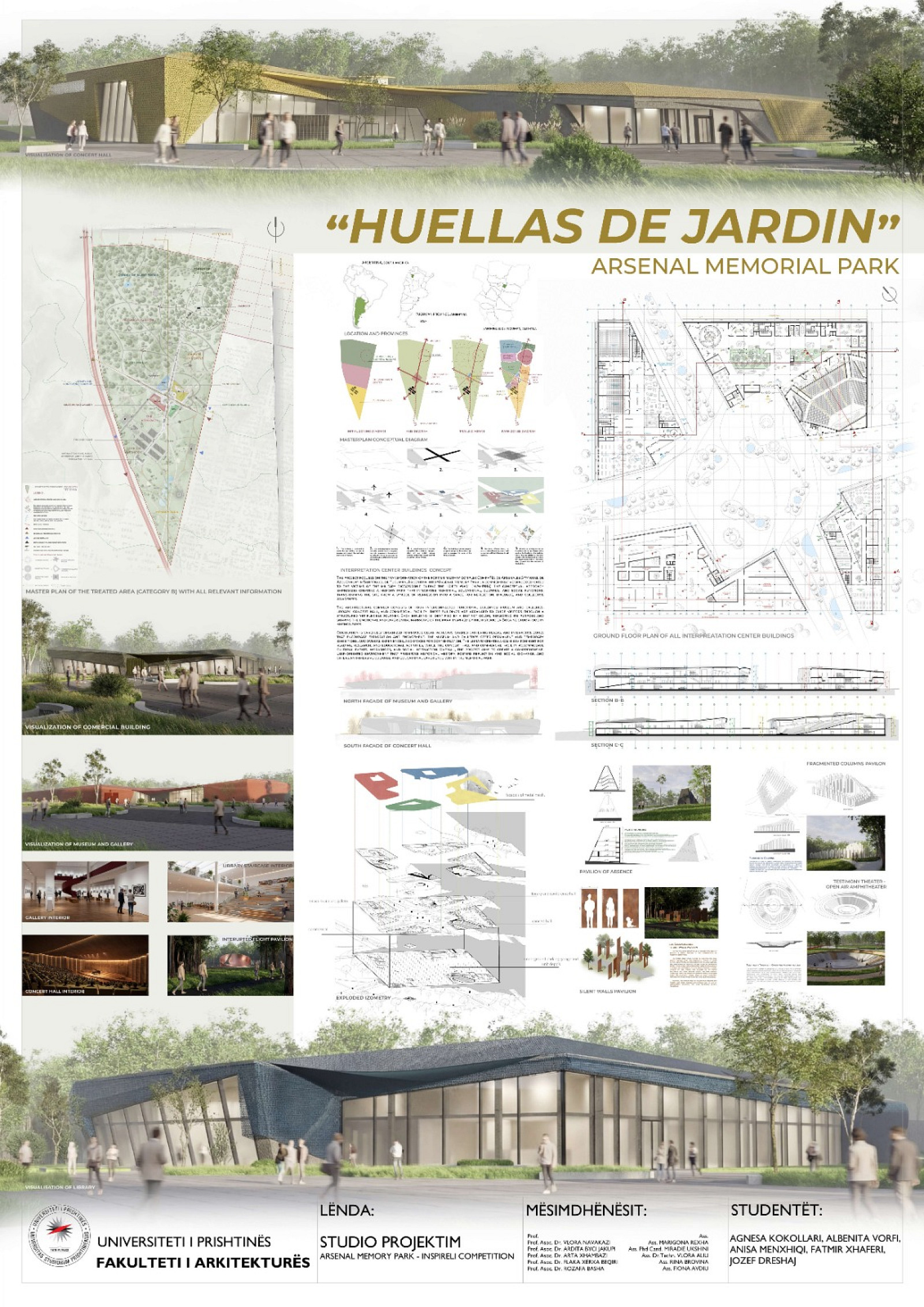
Arsenal Memory Park is envisioned as a place where architecture becomes a medium for remembrance, education, and collective healing. The project transforms a former military site associated with the events of Argentina’s Dirty War into an inclusive public environment that preserves memory while creating opportunities for cultural and social interaction.
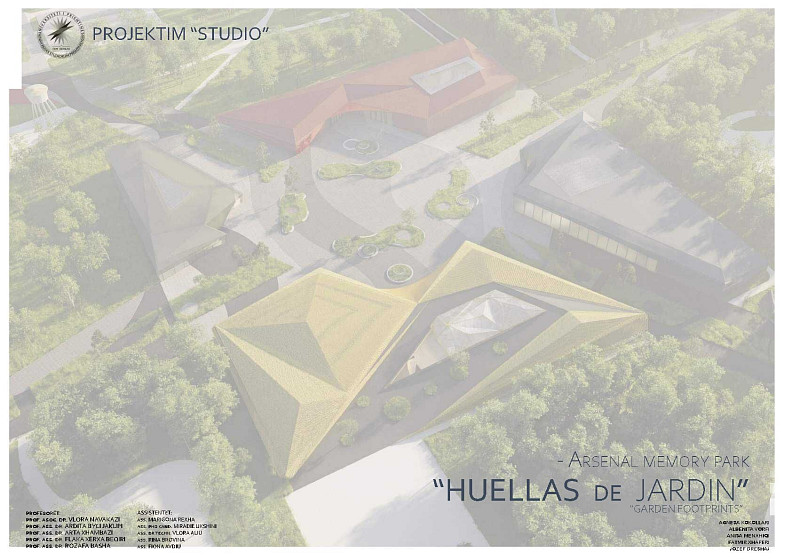
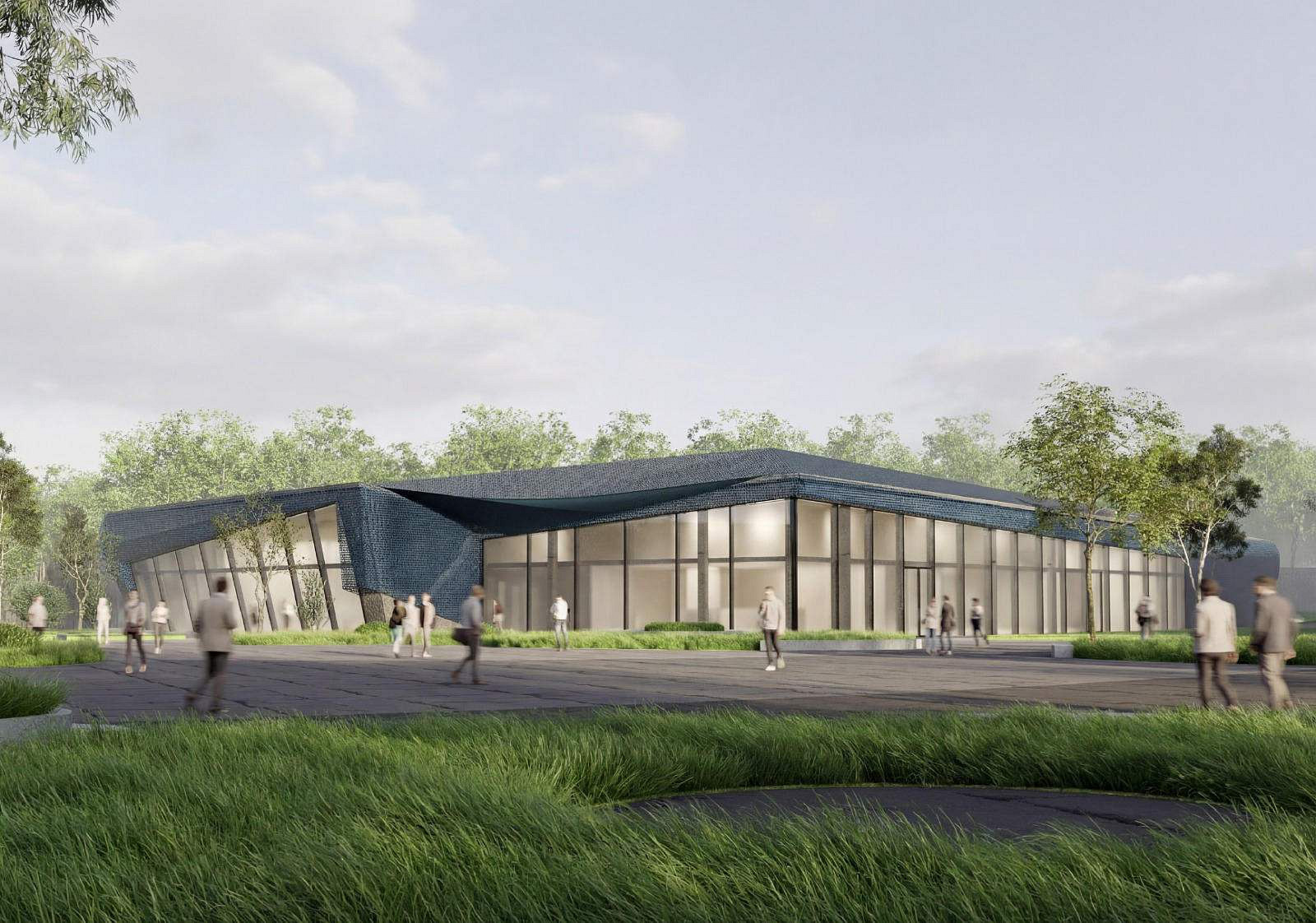
The design is guided by the existing orthogonal urban structure of the site, generating clear circulation routes and a strong spatial hierarchy. At the center of the masterplan lies a public square that acts as the heart of the complex, connecting all major functions and encouraging gathering and exchange. The architectural forms respond to the natural topography and surrounding landscape, allowing the buildings to integrate with the terrain while preserving important visual connections toward the forested areas.
A significant part of the concept is inspired by the colorful identity of La Boca in Buenos Aires. Colors are used not merely as decorative elements but as a tool for orientation, identity, and emotional expression. Each building is assigned a distinct color corresponding to its function, creating a recognizable and memorable environment while reinforcing the cultural character of the project.
Project description
The project is organized as a sequence of spaces that guide visitors through a narrative journey, gradually revealing historical, educational, cultural, and recreational experiences. The visitor experience begins in the southern entrance zone, where preserved barracks and interpretive pathways introduce the historical significance of the site. These pathways lead toward a central public square that functions as the primary gathering space and the organizational core of the entire complex. From this point, visitors can access the four main buildings while remaining connected to the surrounding landscape and memorial spaces.
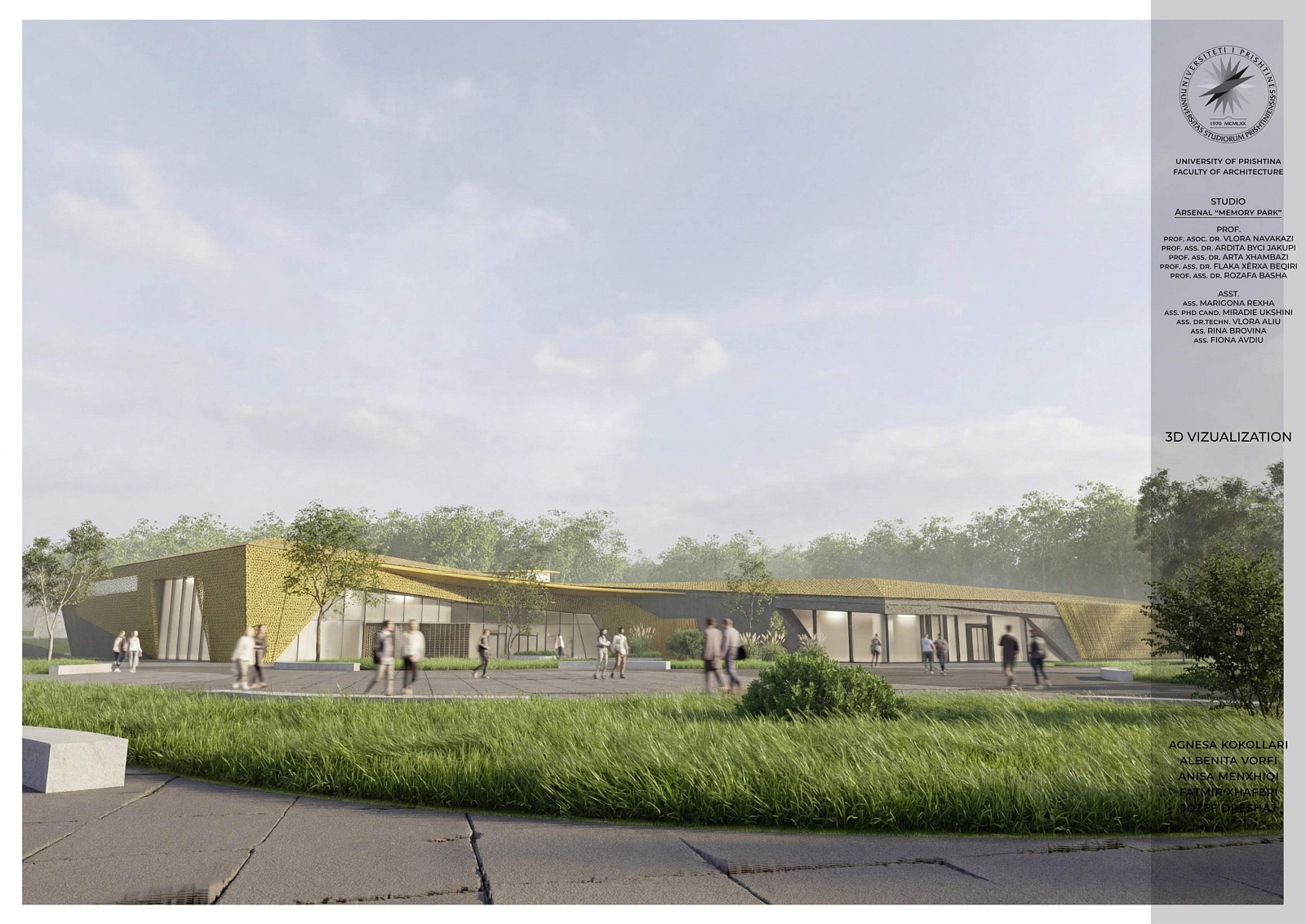
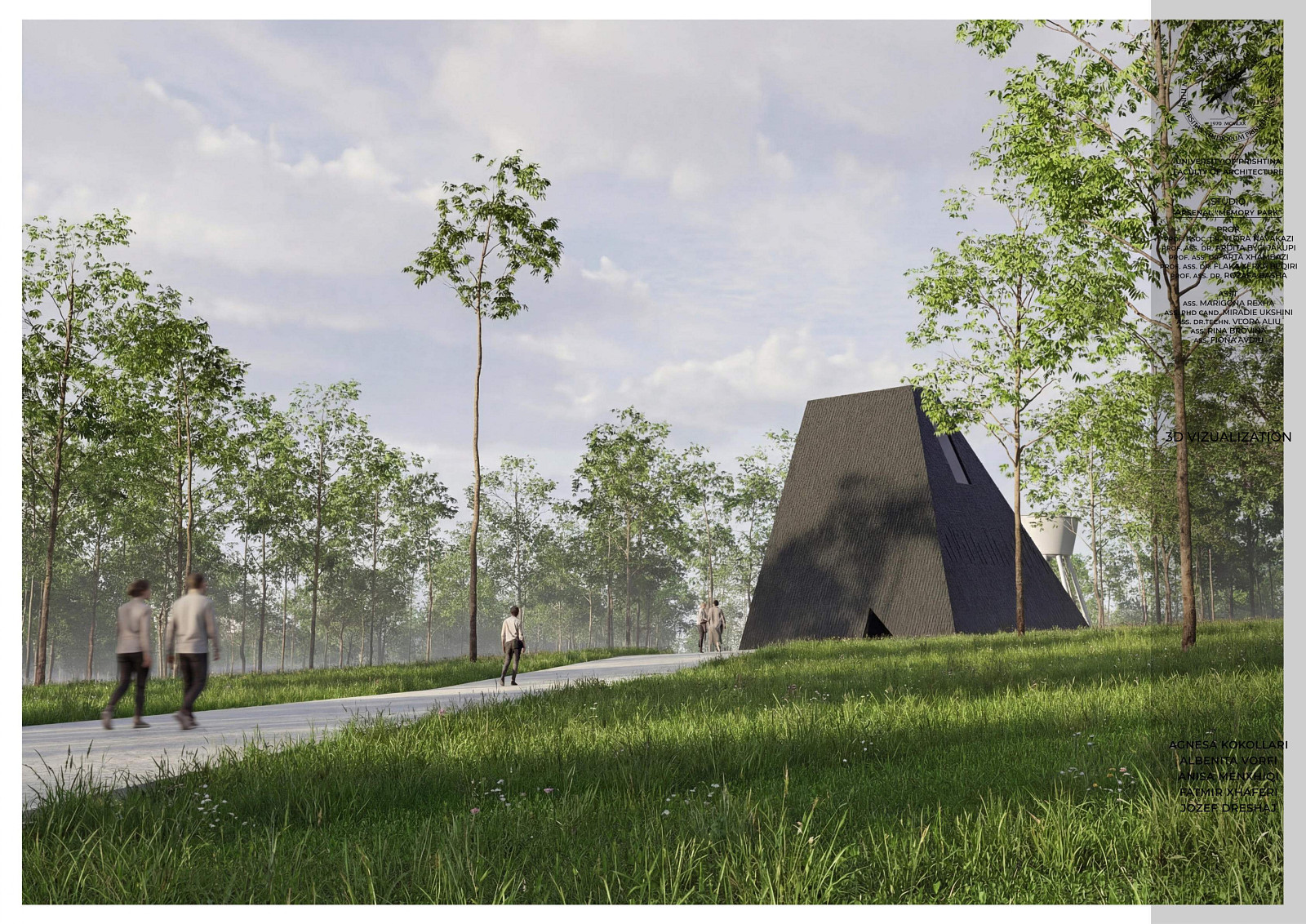
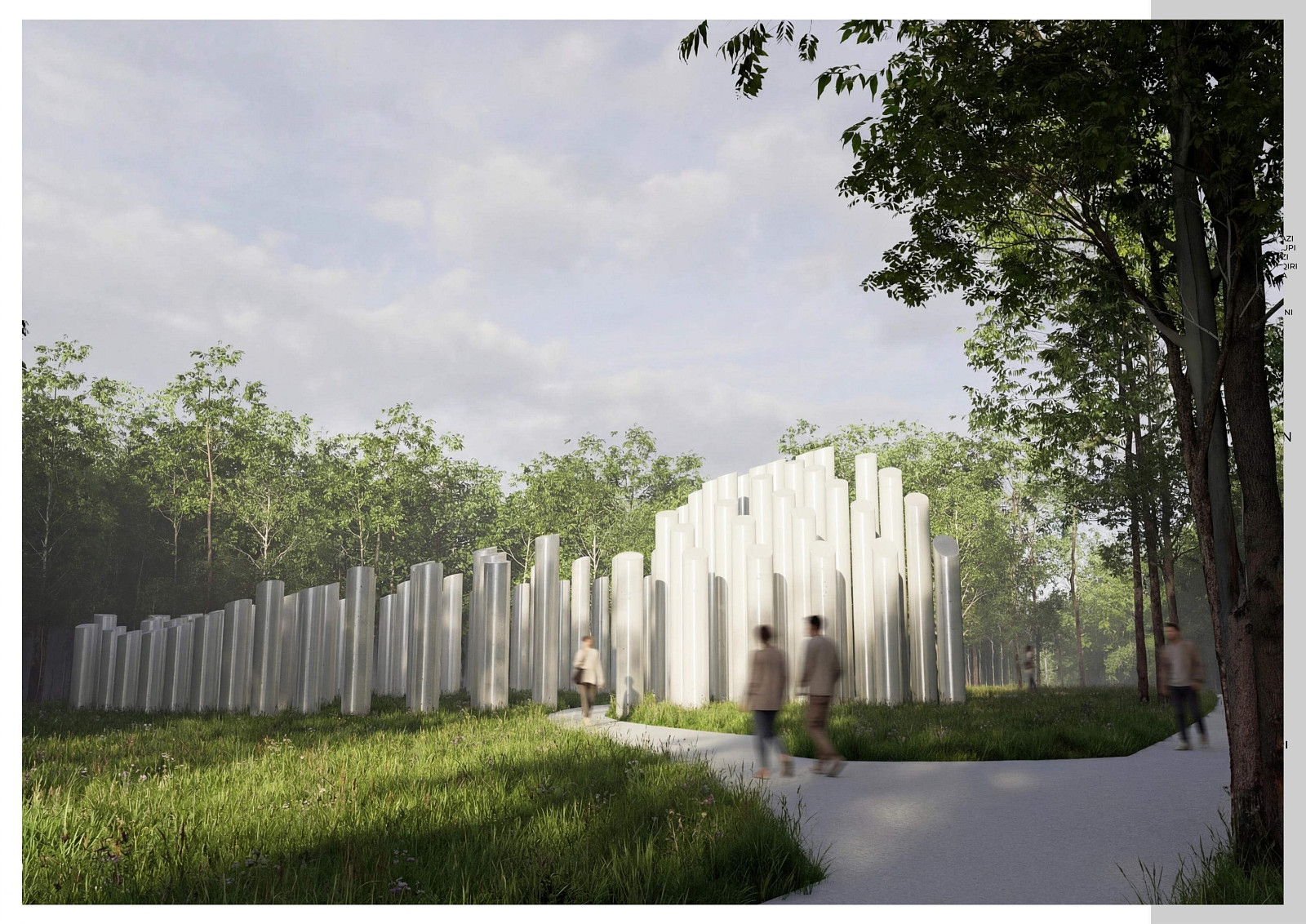
The museum and gallery building serves as the symbolic center of the project, presenting permanent and temporary exhibitions dedicated to memory, human rights, and historical events. Complementing this function, the library provides spaces for reading, research, conferences, educational activities, and community learning. The concert hall expands the cultural program through performances, workshops, immersive exhibitions, podcast studios, and public events, while the commercial building accommodates cafés, restaurants, and retail spaces that support everyday activity within the park. Beyond the main buildings, the project incorporates a series of thematic pavilions and landscape interventions that strengthen the memorial narrative. Spaces such as the Pavilion of Absence, Interrupted Flight, Testimony Theatre, and Reflection Pavilion create moments of contemplation and emotional engagement throughout the site. Together with the forest area and botanical garden, these elements establish a balance between remembrance, culture, education, and nature, transforming the former arsenal into a vibrant civic destination.
Technical information
The four independent buildings are unified through a shared underground level that serves as the structural, technical, and logistical backbone of the project. This common basement accommodates technical facilities, storage areas, service spaces, and approximately 800 parking spaces, ensuring efficient operation of the entire complex. The primary structural system is based on reinforced concrete columns, beams, and retaining walls designed to withstand both vertical and lateral loads while ensuring long-term durability. The structural grid provides flexibility for different programmatic requirements and allows efficient distribution of loads throughout the buildings. For large-span spaces such as the concert hall and conference facilities, the structure incorporates steel trusses supported by the main reinforced concrete framework. This hybrid solution enables column-free interiors, greater spatial flexibility, improved acoustic performance, and the integration of technical infrastructure required for cultural events and public gatherings. The façades are designed as envelope systems of colored perforated metal mesh panels mounted on secondary steel profiles. The combination of reinforced concrete, steel structures, and lightweight façade systems creates a durable and expressive architectural language that supports both the functional and symbolic objectives of Arsenal Memory Park.
Documentation
Created in:


Copyright © 2026 INSPIRELI | All rights reserved. Use of this website signifies your agreement to the Terms of Use, Privacy Policy, and use of cookies.