Breathing Pottery


 Mohamed Noeman
Project idea
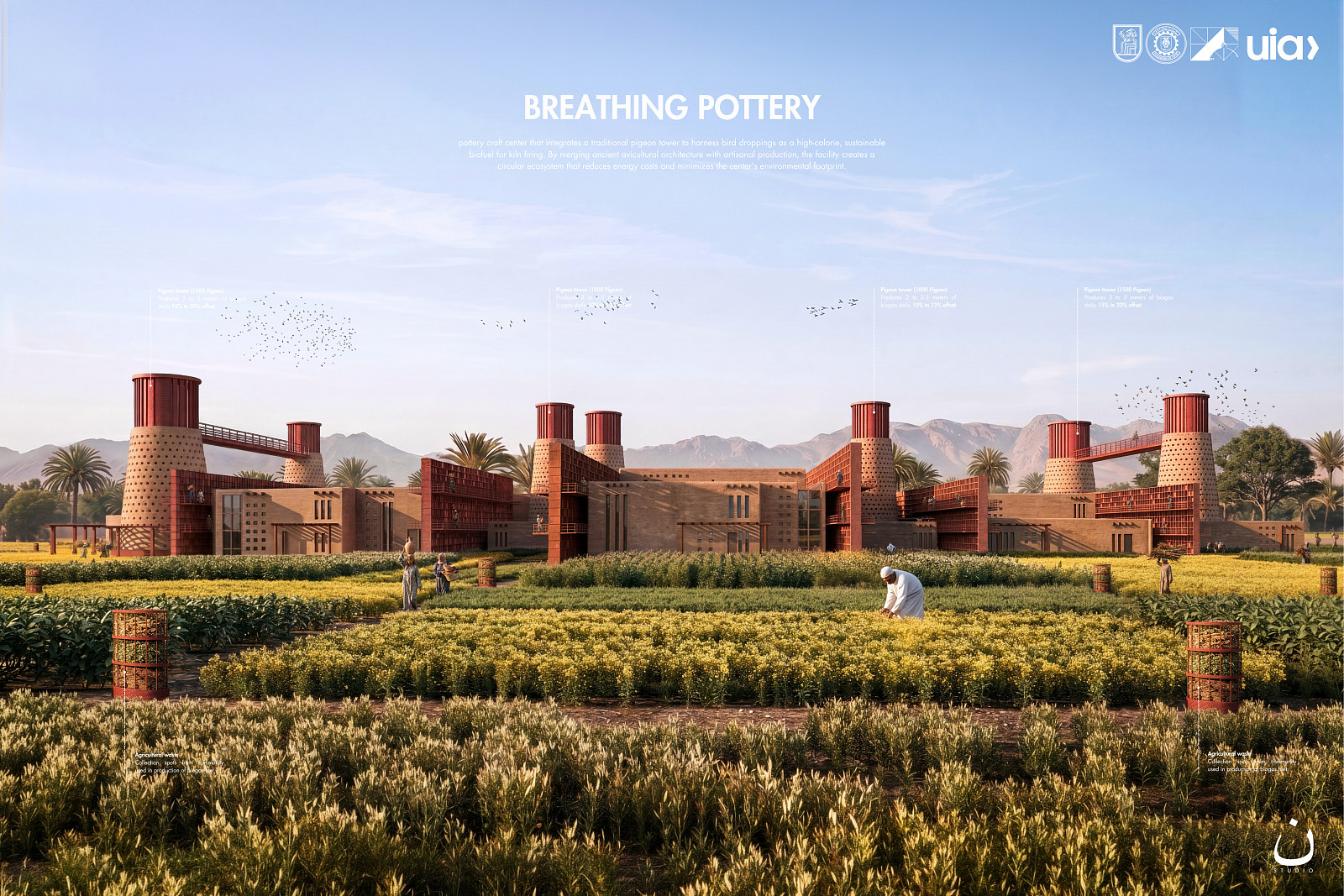
The core concept behind "Breathing Pottery" is the revitalization of the traditional pottery heritage craft in the village of Nag al Fakhura, Egypt. The project directly addresses an economic crisis facing local artisans: a massive increase in gas fuel costs over the past years that has increased the cost of production and led to huge decline in the pottery craft.
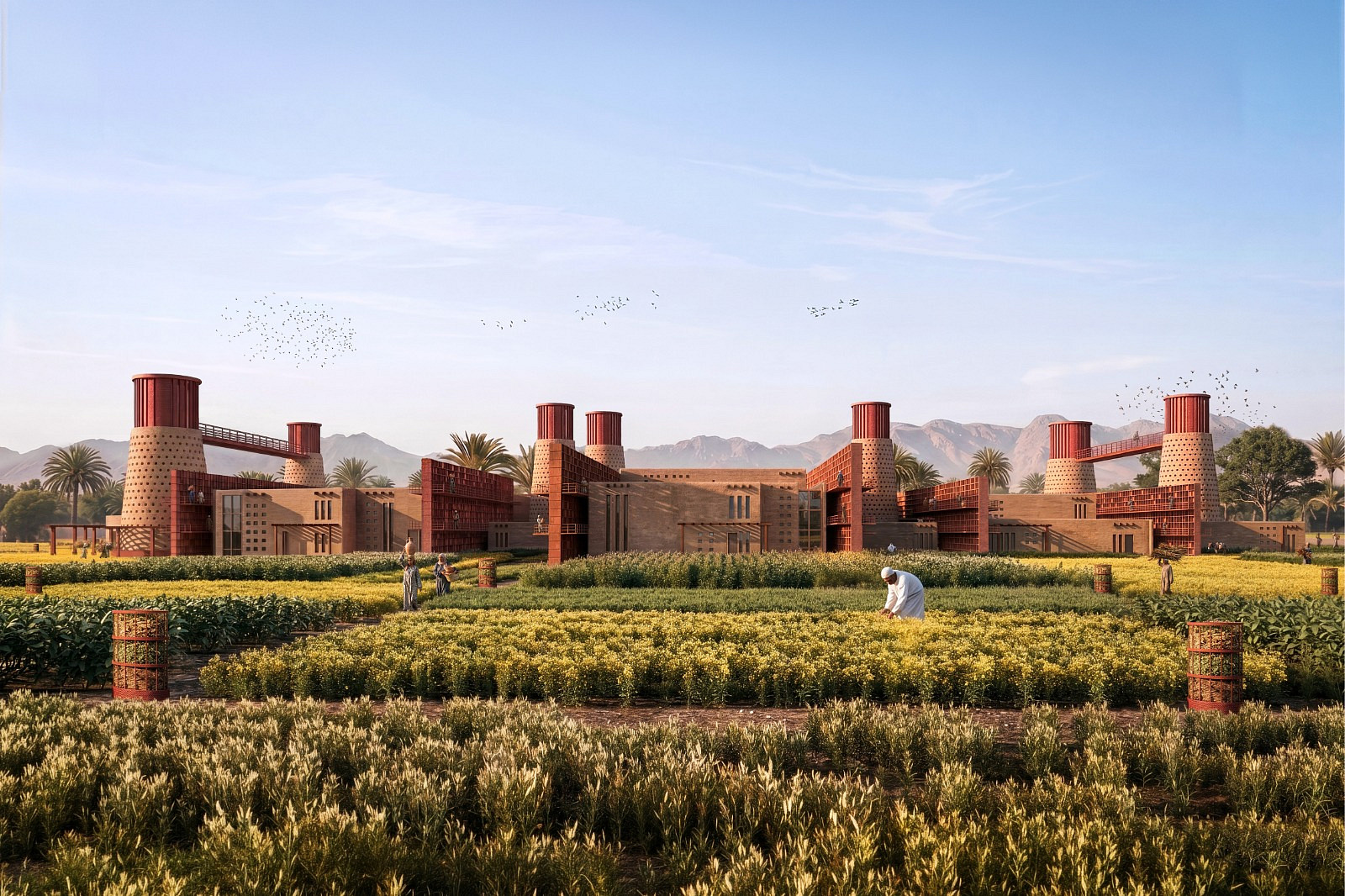
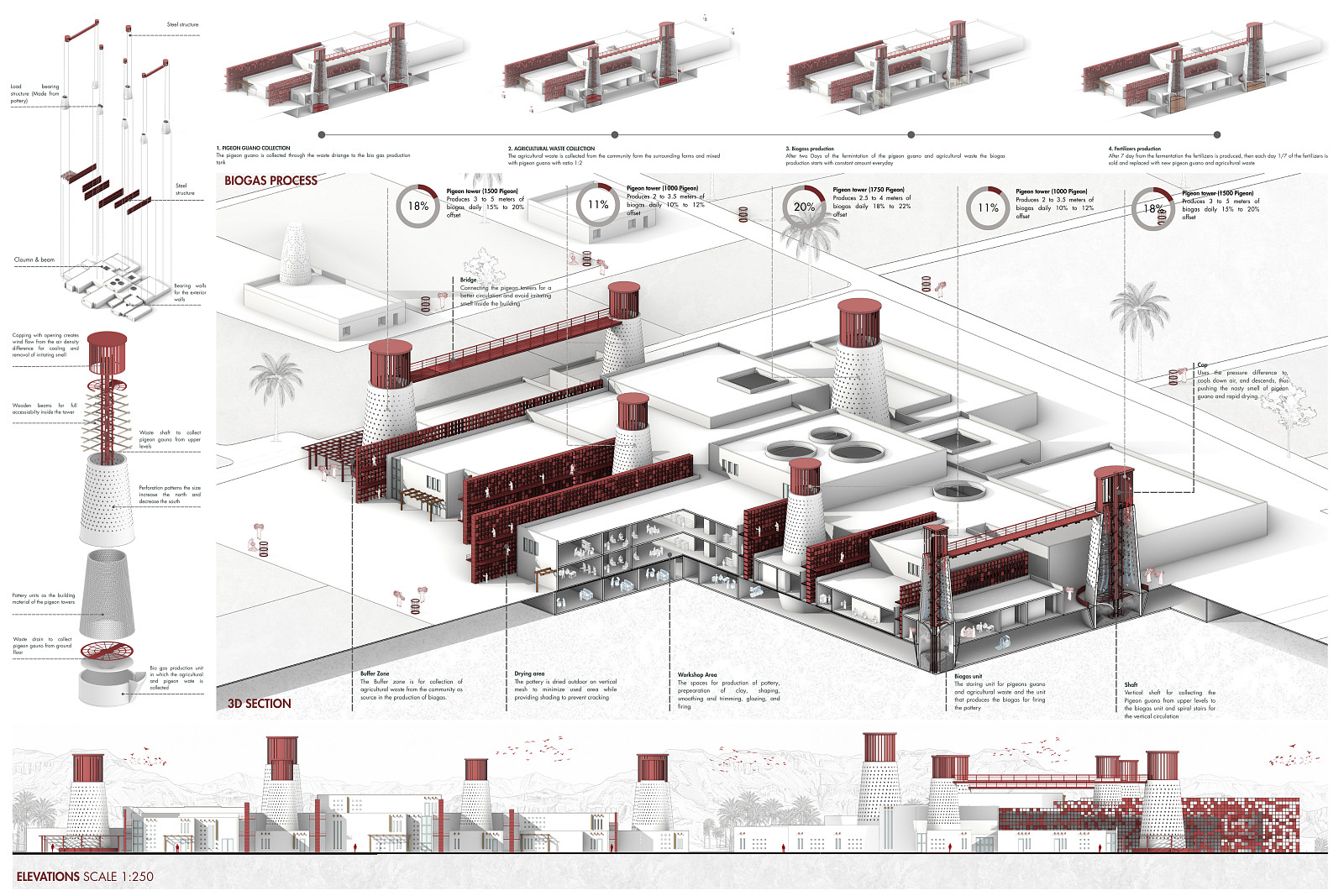
The architectural narrative is driven by an innovative hybrid typology that integrates vernacular Pigeon Towers with pottery workshop infrastructure. Located amidst active agricultural fields, the facility forms a symbiotic relationship with its surrounding landscape. By collecting agricultural waste from nearby farms and combining it with accumulated pigeon guano, the project generates an independent, sustainable source of biogas. This entirely eliminates the reliance on commercial gas fuels, bringing the daily project gas fuel expenditure down from 30 m^3 to zero, and securing the socio-economic future of the local crafting community and reviving the craft.
Project description
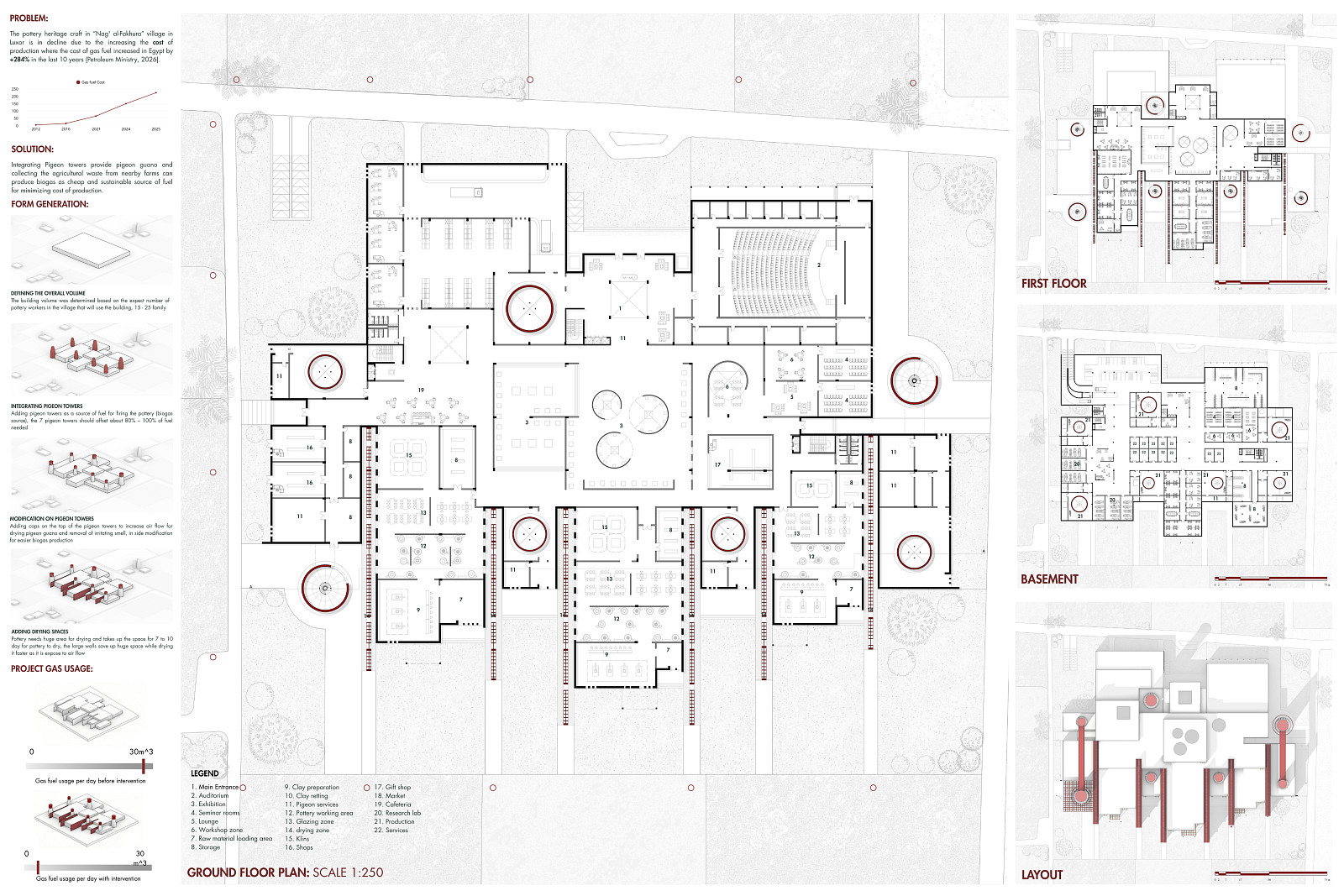
The building massing is dictated by functional workflow and the integration of seven distinctively scaled pigeon towers. The facility is organized into four primary operational zones spread across three distinct levels (Basement, Ground Floor, and First Floor):
Public & Cultural Zone: Located primarily on the ground floor, this zone welcomes the community and visitors through a grand Main Entrance. It features an Auditorium, Seminar rooms, a Lounge, an Exhibition hall for showcasing finished work, a Gift Shop, and a Cafeteria.
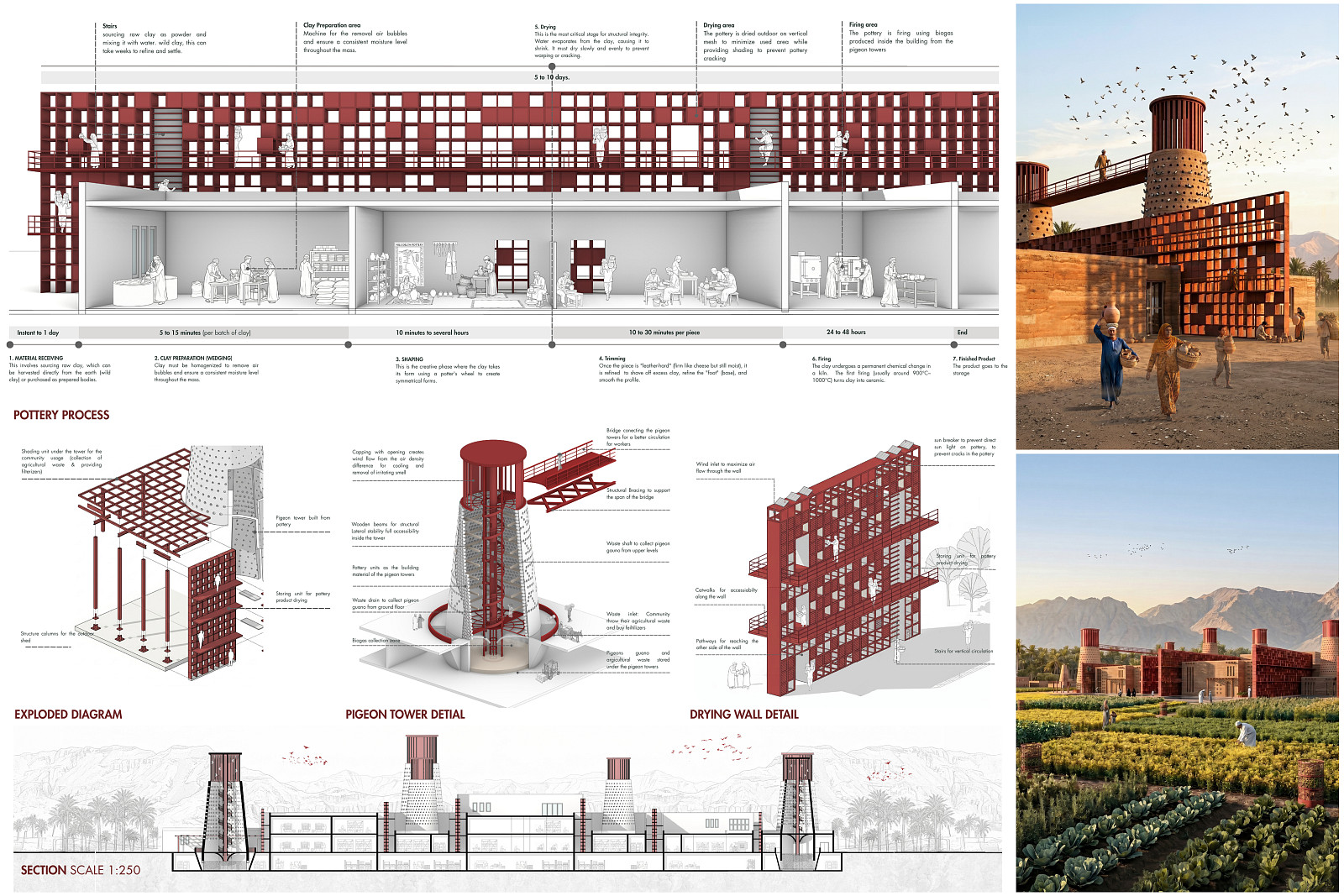
Production & Workshop Zone: A highly spatial zone consisting of a dedicated Clay Preparation area, Clay Retting spaces, Shaping zones, Glazing zones, and Firing zones. It accommodates a 25-family worker community.
The Drying & Courtyard Zone: A central, open courtyard features a specialized outdoor vertical mesh system used for the pottery drying process. This minimizes footprint requirements while providing crucial shading to prevent the clay from cracking.
Biogas, Storage & Service Zone: Positioned strategically around the towers, this technical zone contains the biogas storage units, raw material receiving spaces, and vertical service shafts.
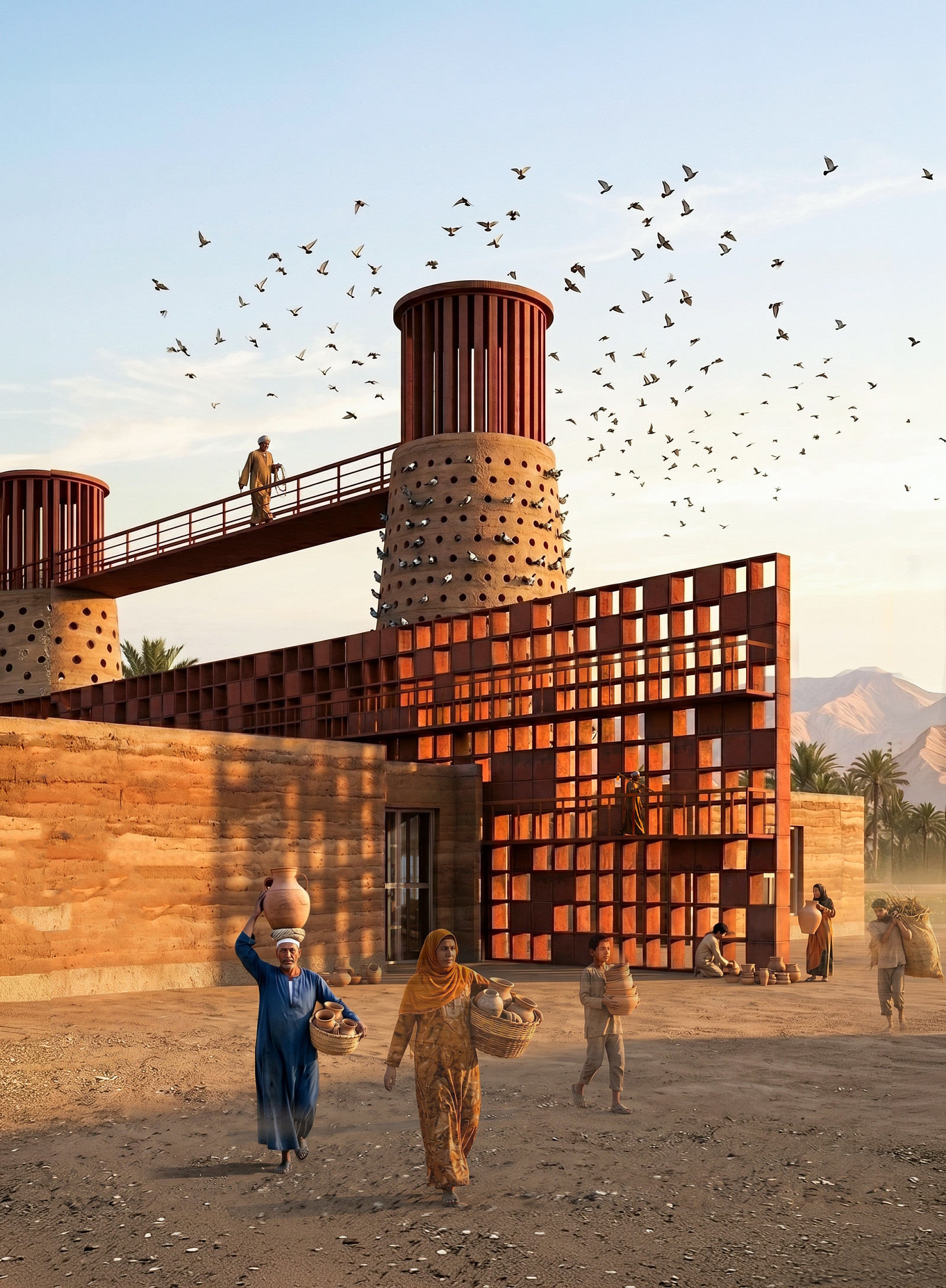
The architectural composition is unified on the upper levels by a system of elevated bridges connecting the towers. This fosters efficient service circulation, enables easy harvesting of pigeon guano, and creates dynamic viewing walkways across the complex.
Technical information
The structural logic and material choices of the complex are heavily rooted in sustainable passive design and local vernacular masonry techniques:
Biogas Integration & Vertical Shafts: Constructed from modular pottery units, the building features seven specialized structural Pigeon Towers housing 1,000 to 1,750 pigeons each. Together, they generate roughly 2 to 5 cubic meters of biogas daily per tower. Vertical shafts built within these structural towers safely collect guano, routing it directly to basement biogas units where the material undergoes anaerobic digestion to yield zero-emission fuel for the pottery kilns.
Passive Thermodynamic Ventilation: The distinct conical geometry of the pigeon towers creates a natural pressure differential (stack effect). This continuous updraft pulls unpleasant odors from the guano collections out of the habitable spaces while concurrently accelerating the natural drying process of nearby raw pottery.
Drying Wall Technology: The building envelope incorporates an engineered, porous "Drying Wall" detail. This vertical mesh structure functions as a tectonic skin that blocks harsh, direct solar radiation to protect the drying pottery from thermal shock and cracking, while utilizing ambient air currents to gradually draw moisture out of the clay.
Structural Mechanics: The sub-structure utilizes standard concrete columns and beams to handle load distribution across the basement and ground planes. The above-ground volumes use dense, load-bearing brick masonry—patterned with negative perforations—which honors traditional Egyptian brickwork, maximizes thermal mass to buffer day-night temperature fluctuations, and maintains an authentic earth-tied aesthetic.

Copyright © 2026 INSPIRELI | All rights reserved. Use of this website signifies your agreement to the Terms of Use, Privacy Policy, and use of cookies.