The Silt House


Project idea
The Silt House is a contemporary ceramic gallery, workshop and café conceived as a destination where craft, community and architecture intersect. The project explores how the process of making can become a public experience, transforming a traditional gallery into an immersive environment that celebrates creativity, learning and human connection.
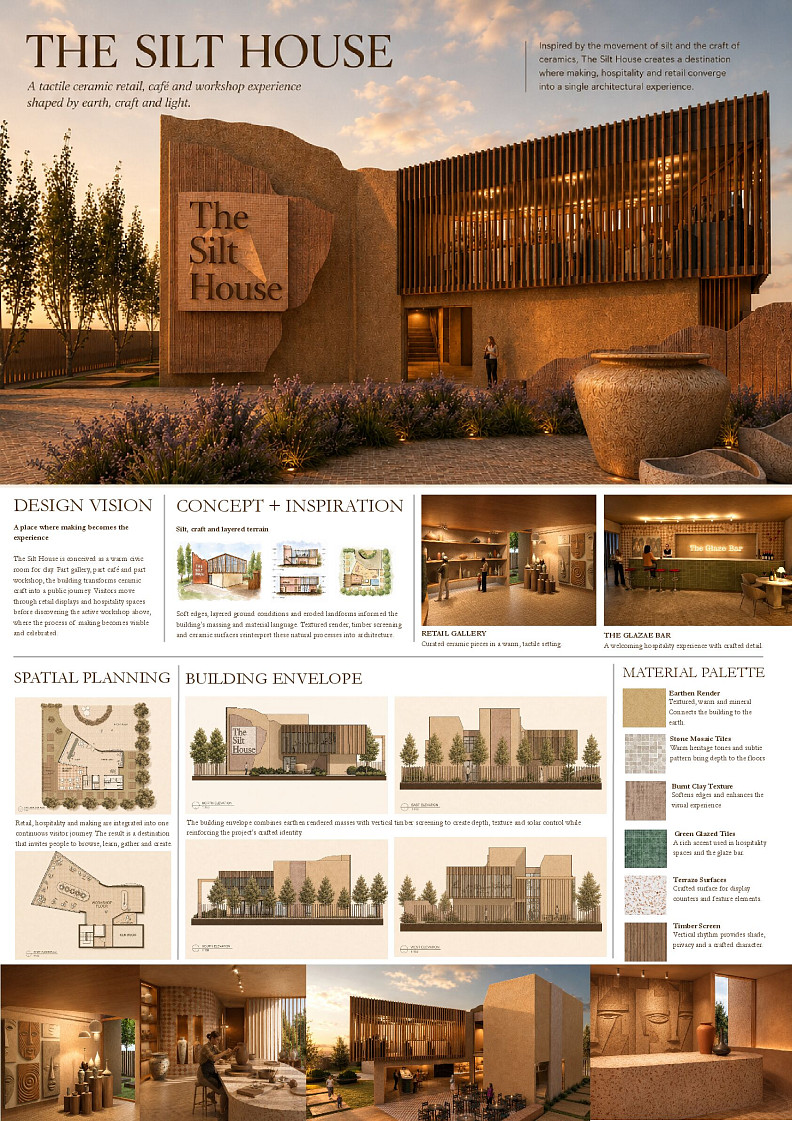
The design is inspired by the natural formation of silt and clay landscapes, where layers are shaped over time through erosion, deposition and environmental forces. These geological processes informed both the architectural language and material expression of the building. Sculpted forms, textured surfaces, earthy tones and layered materials reinterpret the qualities of sediment and handcrafted ceramics, creating a built environment that feels grounded, tactile and authentic.
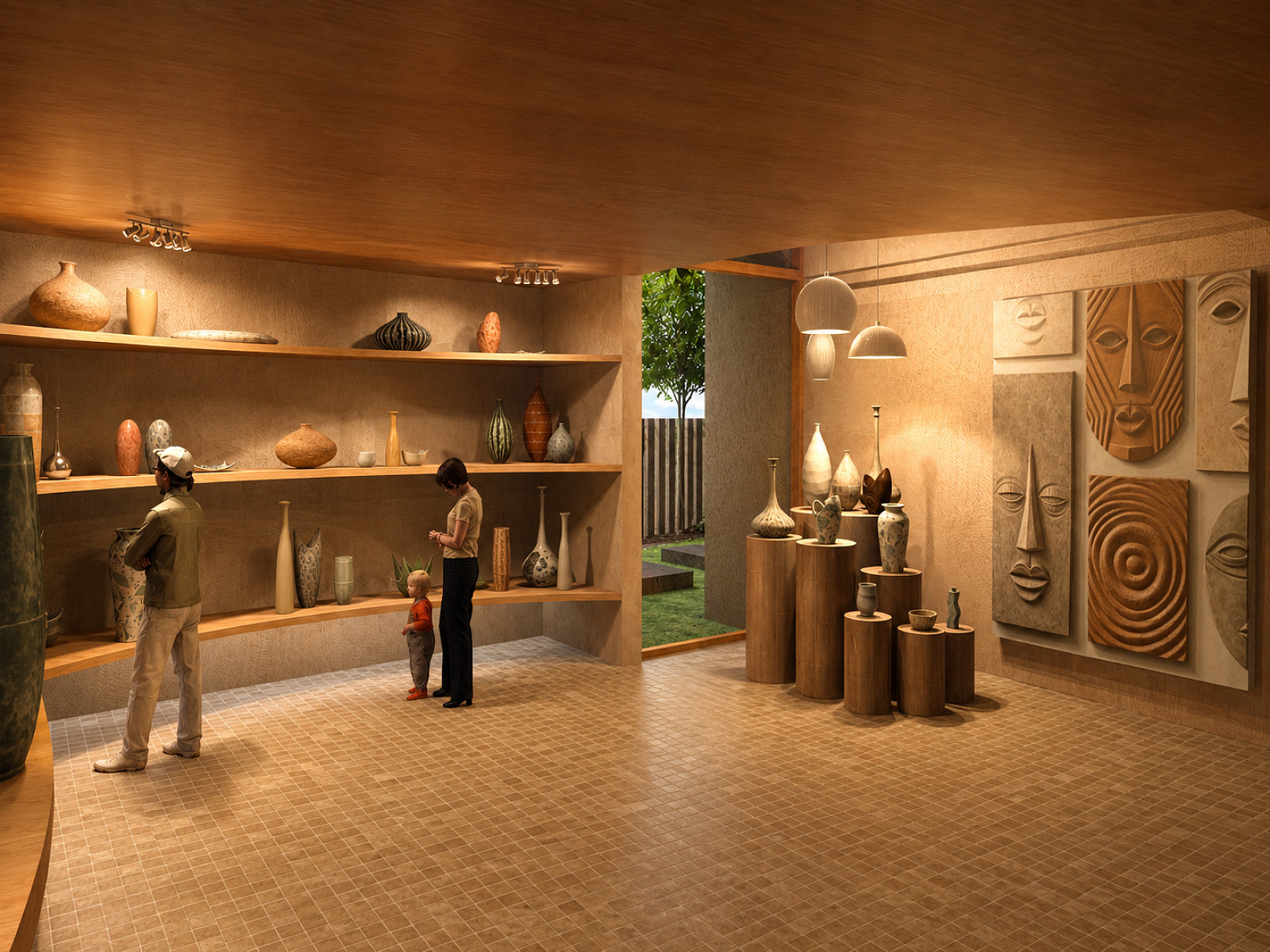
The primary objective of the project was to create a place where visitors could engage with ceramics beyond the finished object. Rather than separating production from exhibition, The Silt House integrates retail, hospitality and workshop functions into a continuous visitor journey. Guests are invited to explore curated ceramic displays, participate in workshops, observe the making process and gather within welcoming social spaces. This approach promotes a deeper appreciation of craftsmanship while fostering community engagement and cultural exchange.
Spatially, the project is organised to encourage movement, discovery and interaction. The ground floor acts as a public interface through the integration of gallery, retail and café spaces, while the upper level accommodates workshop and kiln facilities that support the complete lifecycle of ceramic production. Visual connections between these spaces reinforce the relationship between making and displaying, ensuring that the creative process remains central to the visitor experience.
The project aims to demonstrate how architecture can support cultural participation through thoughtful spatial planning, material authenticity and experiential design. By drawing inspiration from natural landscapes and traditional craft practices, The Silt House seeks to create a memorable and enduring destination that celebrates creativity, craftsmanship and the intrinsic connection between people, place and making.
Project description
The Silt House is a proposed two-storey ceramic gallery, workshop and café designed as an integrated cultural and community destination. The project combines retail, hospitality, exhibition and educational functions within a single architectural experience, allowing visitors to engage with ceramic craft through observation, participation and social interaction.
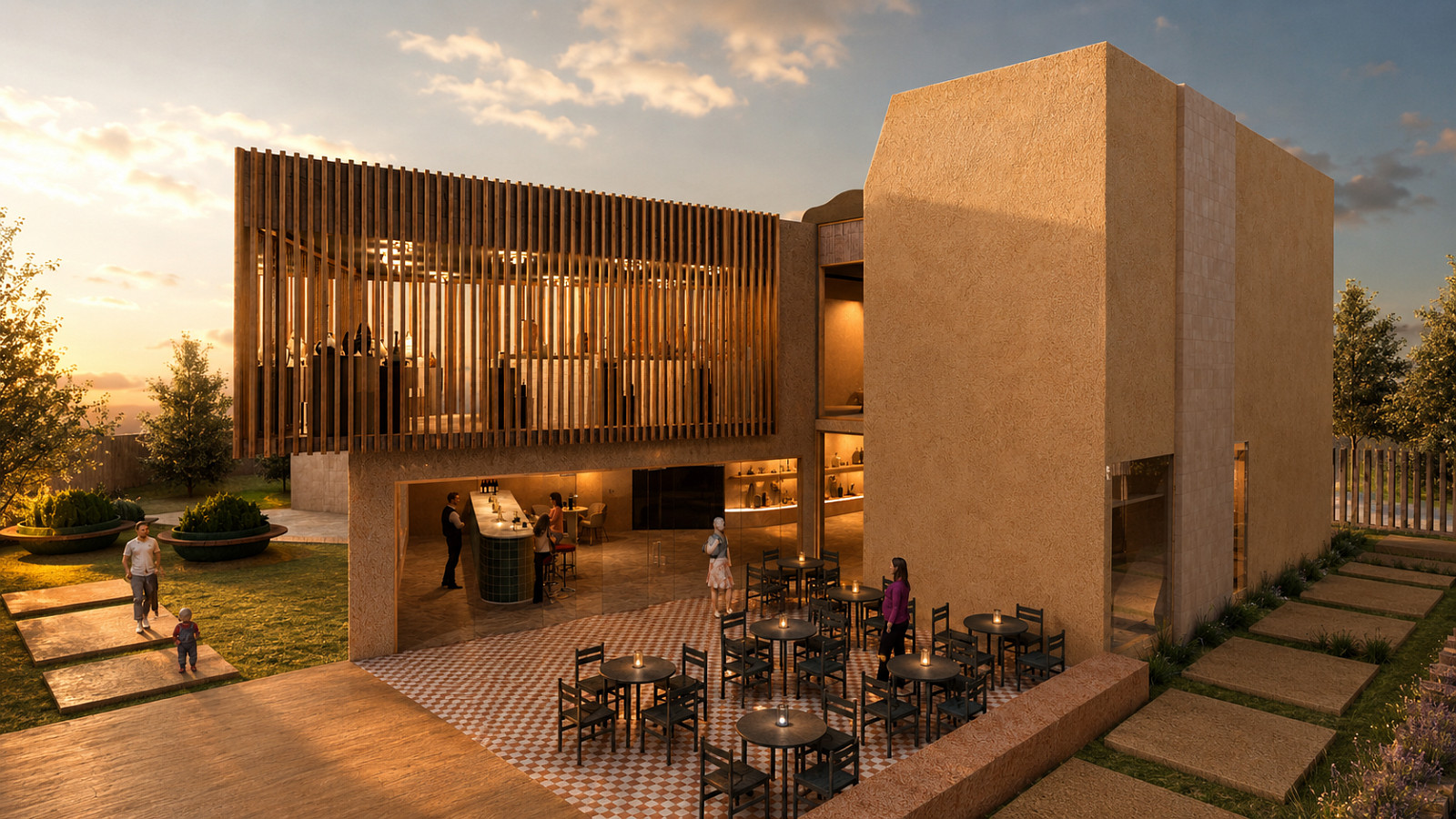
The scope of the project includes the design of the building form, public realm, internal spatial planning, material palette and visitor experience. The ground floor accommodates a public gallery, ceramic retail space, café, outdoor dining areas and supporting amenities, creating an active and welcoming environment for visitors. The first floor contains a flexible ceramic workshop and dedicated kiln facilities, providing spaces for learning, making and community engagement while maintaining visual connections to the public areas below.
The project addresses the need for a contemporary cultural venue that celebrates craftsmanship and promotes public participation in the creative process. Rather than treating production and exhibition as separate activities, the design integrates making, displaying and gathering into a continuous journey. Inspired by the layered qualities of silt, clay and natural landforms, the architectural response combines sculpted forms, textured finishes and warm natural materials to create a cohesive and immersive environment.
The solution extends beyond the building itself to include landscape integration, outdoor gathering spaces, accessibility considerations, intuitive circulation and flexible spaces capable of supporting exhibitions, workshops, demonstrations and community events. The overall outcome is a destination that strengthens connections between people, craft and place while providing a memorable and engaging visitor experience.
Technical information
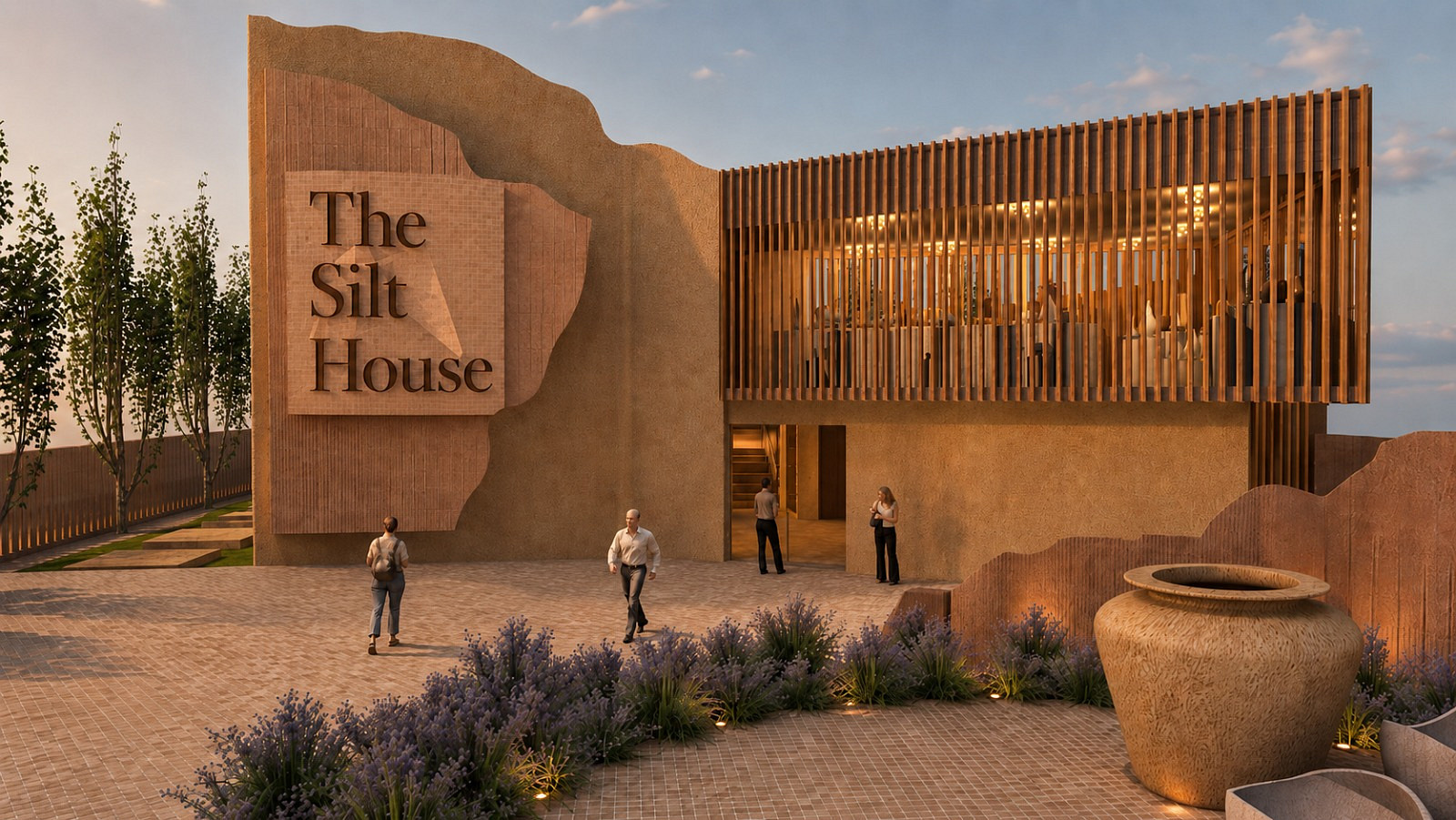
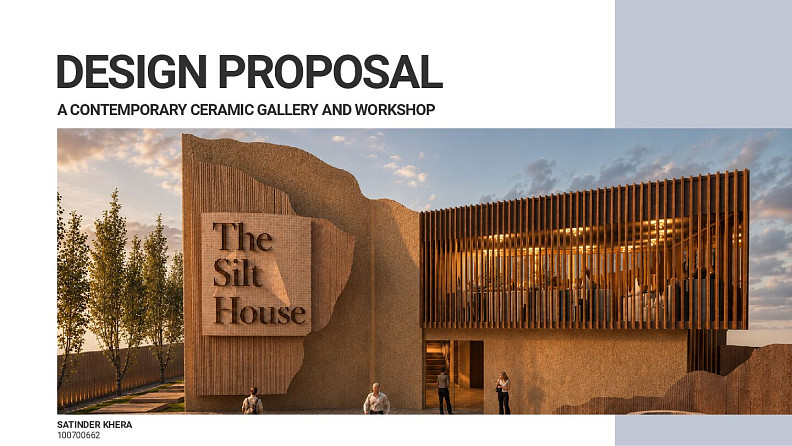
The Silt House is conceived as a two-storey contemporary cultural building comprising a ceramic gallery, retail space, café and workshop. The architectural form combines sculpted earthen-inspired volumes with lightweight screened elements to create a clear distinction between solid and permeable building components.
The primary structure is proposed as a reinforced concrete slab-on-ground with a steel-framed superstructure supporting upper-level workshop spaces and roof construction. External walls are formed using lightweight steel framing with high-performance external cladding systems finished in textured mineral render. Sculpted façade elements are expressed through shaped lightweight façade systems finished with Renaissance Plaster to achieve the appearance of naturally eroded clay and sediment formations.
The upper-level workshop volume is enclosed by a vertical timber screening system constructed from sustainably sourced hardwood battens fixed to a lightweight steel support frame. The screening provides solar shading, privacy and passive environmental control while allowing filtered daylight and natural ventilation to penetrate internal spaces.
The building envelope incorporates high-performance thermal insulation, double-glazed aluminium framed windows and external shading elements to improve energy efficiency and occupant comfort. Large openings at ground level establish strong visual and physical connections between indoor and outdoor spaces while maximising daylight penetration throughout the building.
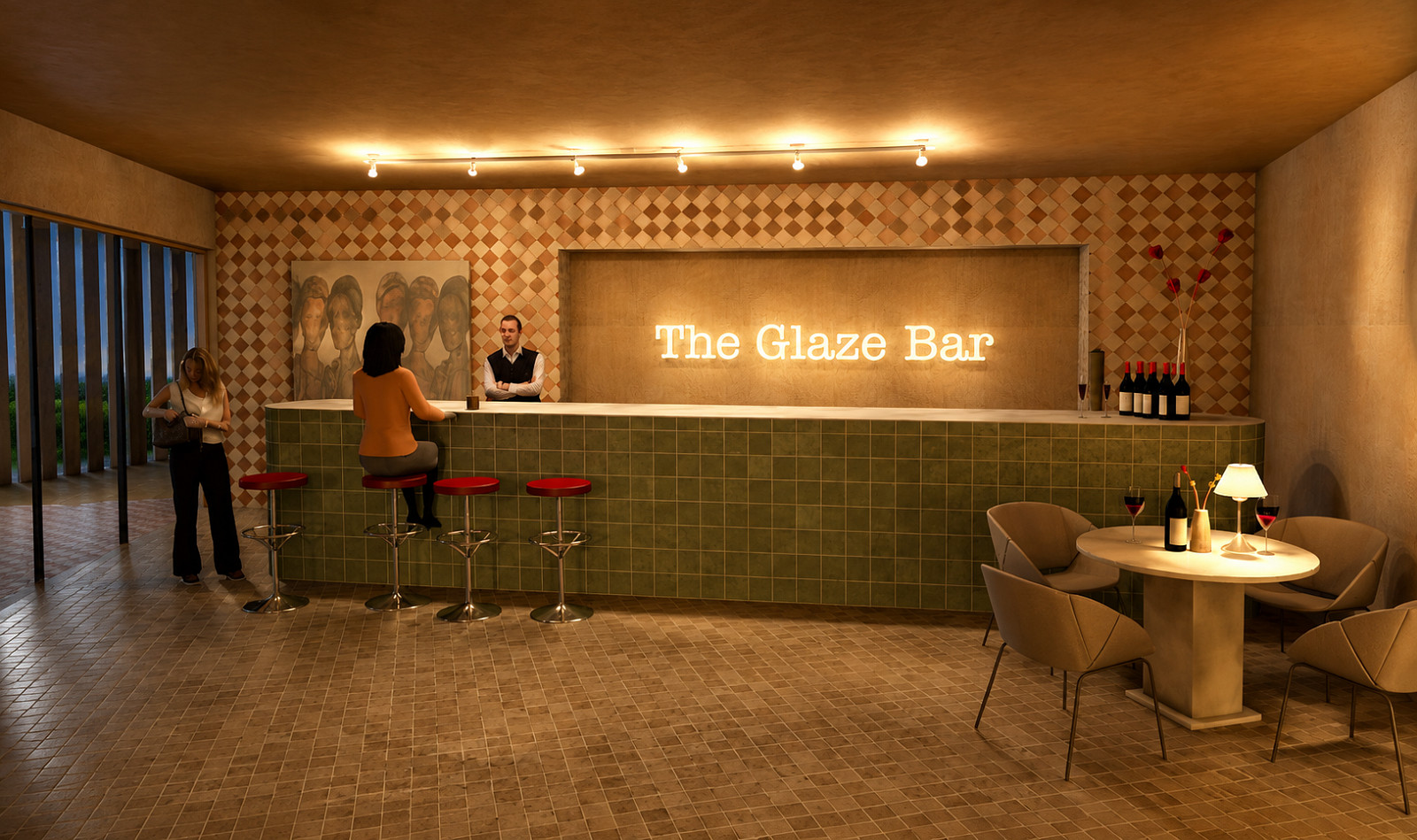
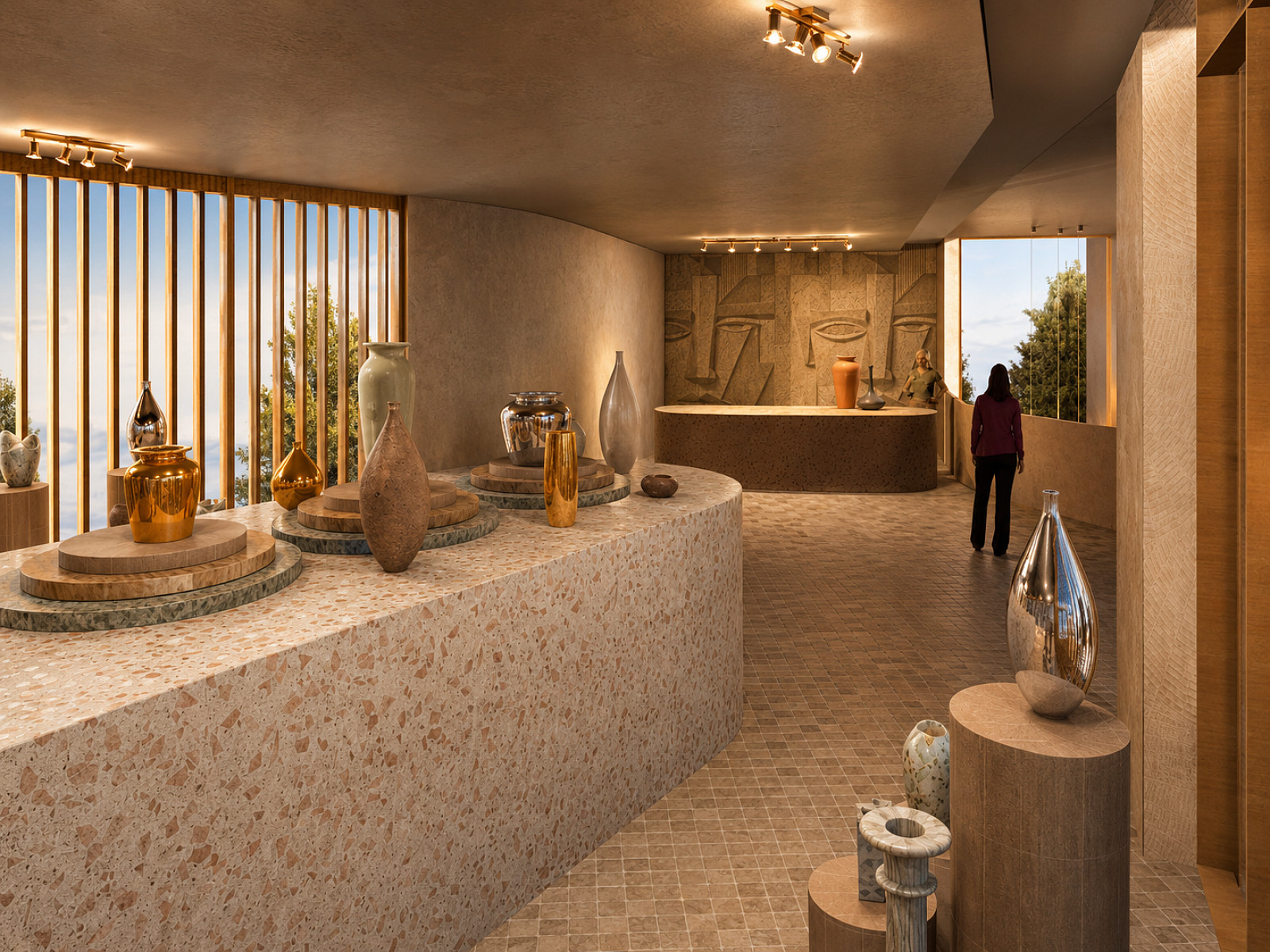
Internal finishes have been selected to reinforce the project's connection to ceramic craft and natural materiality. Walls are finished in clay-toned textured plaster, terrazzo surfaces are utilised for display counters and feature elements, and natural stone mosaic tiles provide durable flooring finishes within public areas. Green glazed ceramic tiles are incorporated within hospitality spaces as a visual reference to ceramic glazing processes.
Workshop facilities include dedicated ceramic workstations, wash-down areas, material preparation zones and a separately enclosed kiln room designed to accommodate specialist ventilation and fire safety requirements. Accessibility is provided through a centrally located lift, compliant sanitary facilities and step-free circulation throughout the building.
The landscape design incorporates permeable paving, native planting and outdoor gathering areas that extend the visitor experience beyond the building envelope. Together, these technical systems create a durable, functional and environmentally responsive building that supports exhibition, hospitality, education and community engagement activities.
Documentation
Created in:


Copyright © 2026 INSPIRELI | All rights reserved. Use of this website signifies your agreement to the Terms of Use, Privacy Policy, and use of cookies.