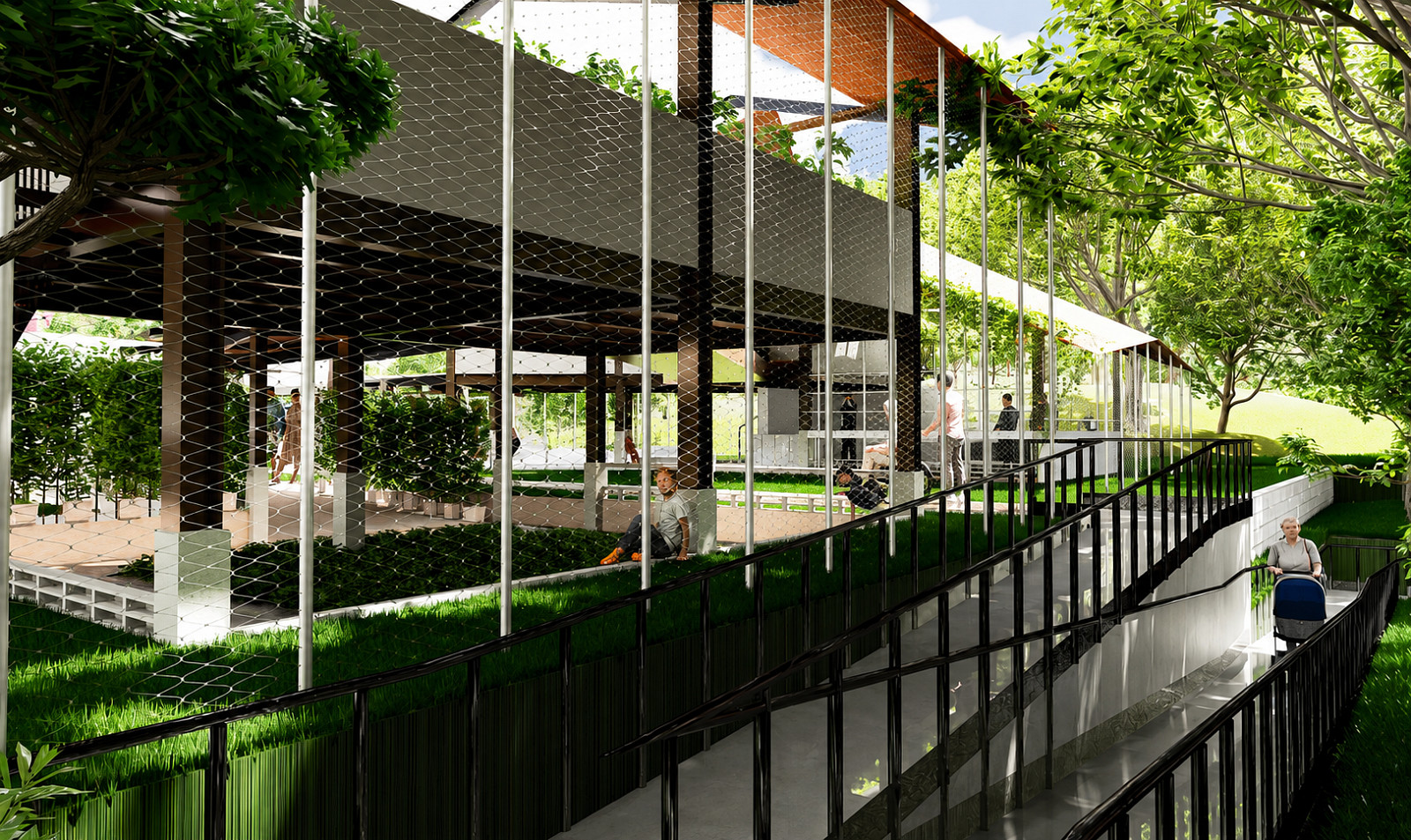
Vividarium - Ulam Agro Sensory and Education Hub


Project idea
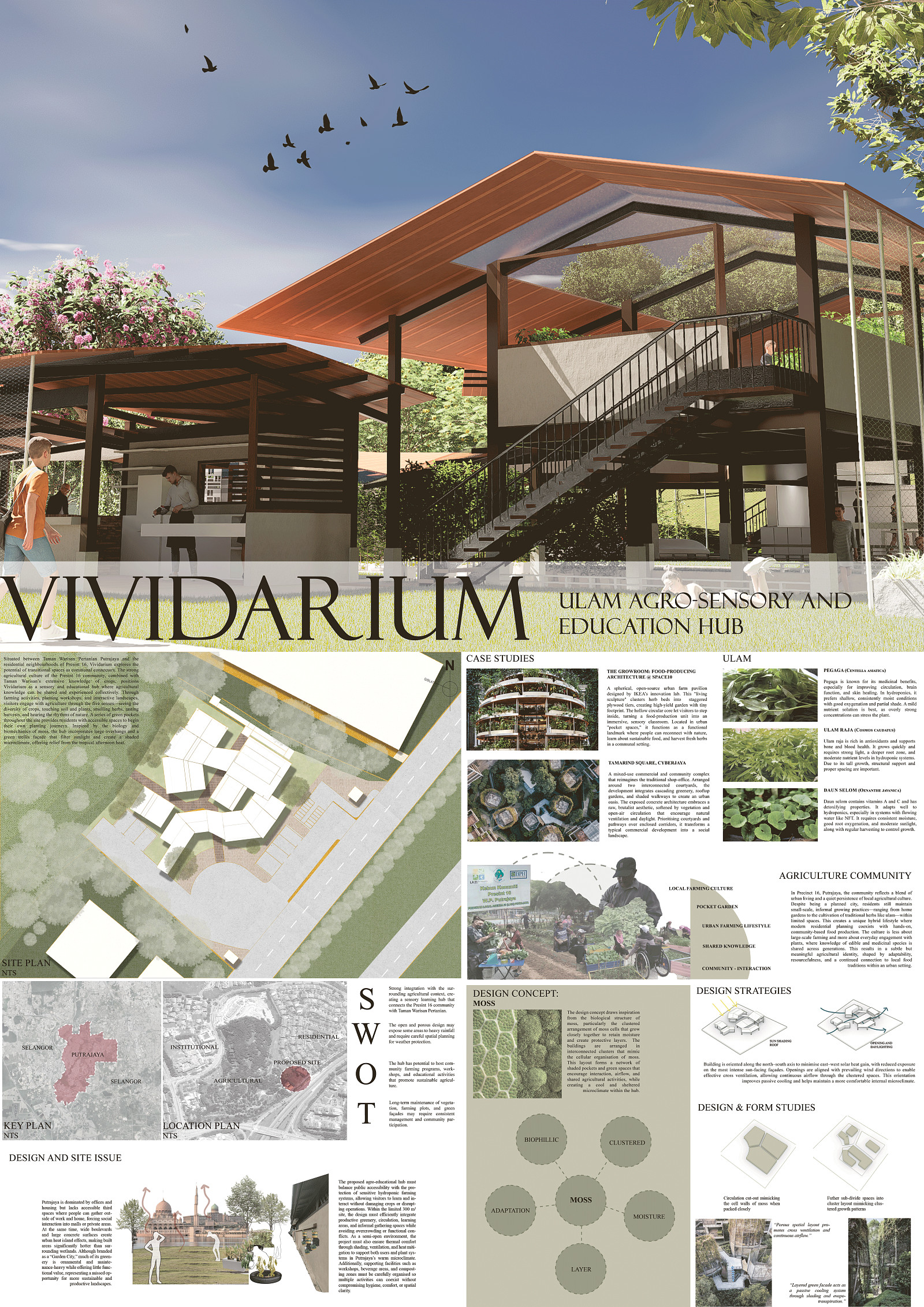
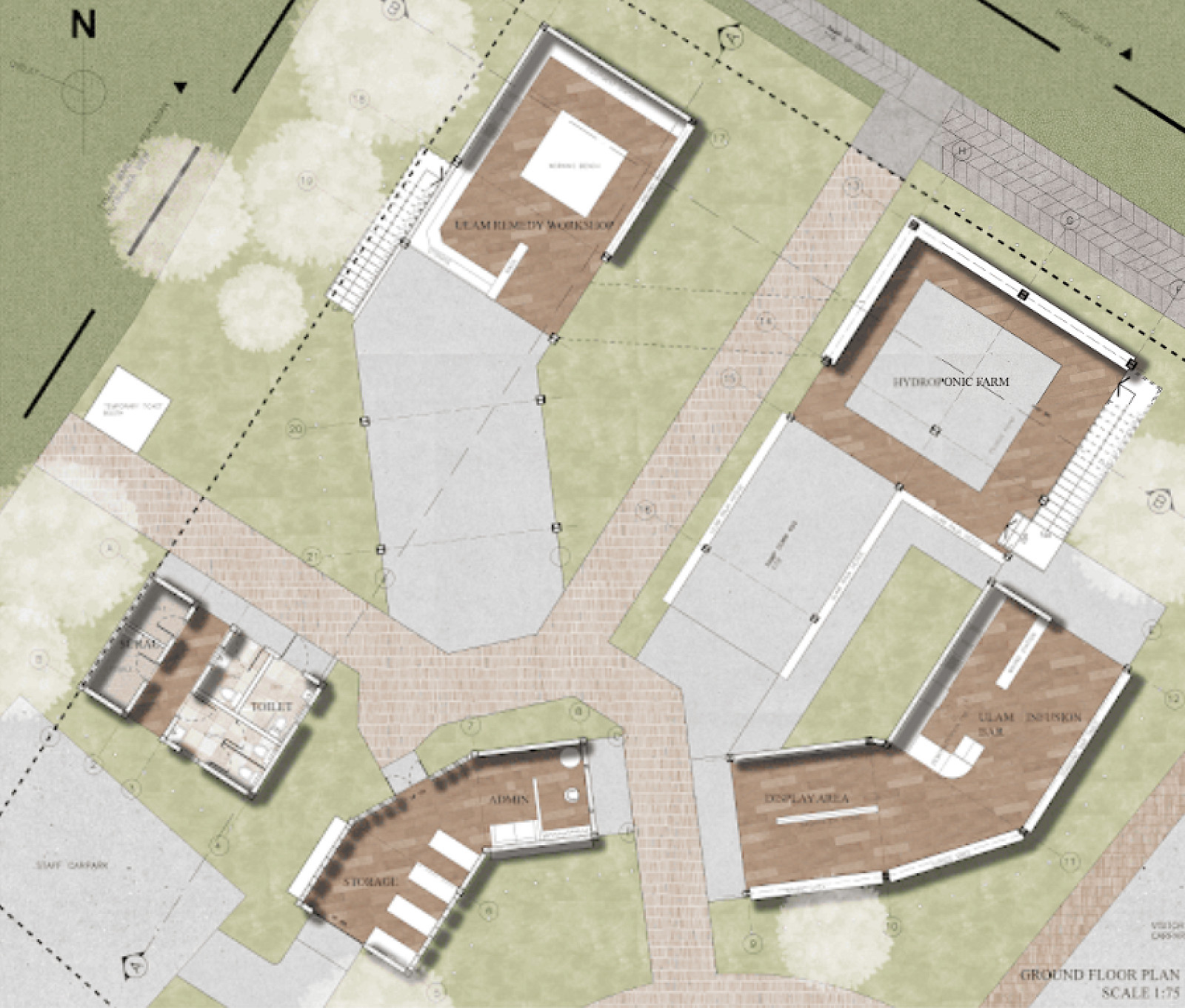
Vividarium is an agro-educational farming centre rooted in the living heritage of Malay culinary culture. Situated within Putrajaya's civic landscape, the project brings together the cultivation and study of ulam traditional Malay raw vegetables and herbs as both a horticultural practice and a form of living cultural knowledge.
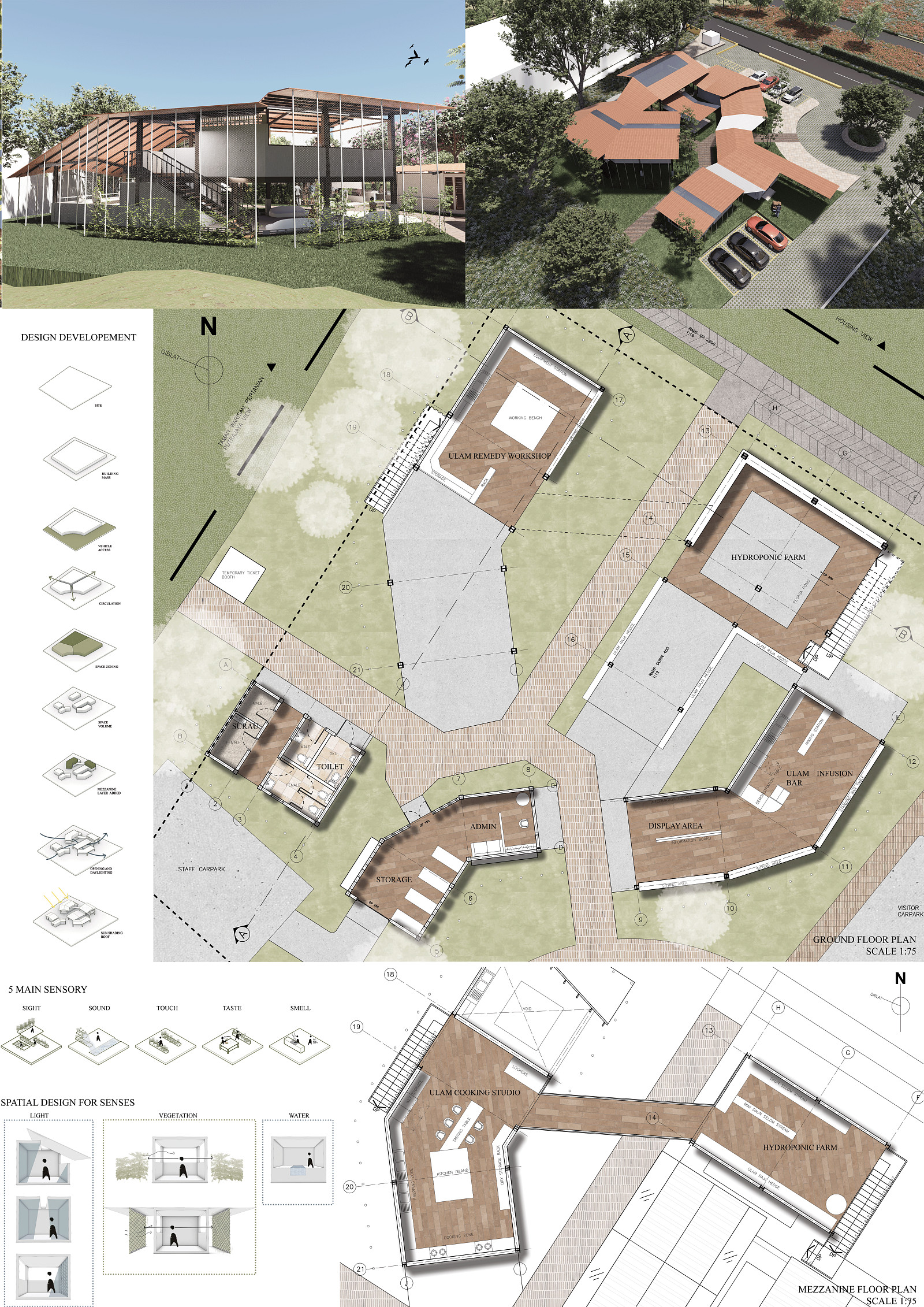
The design operates on two inseparable scales: the productive and the pedagogical. Farming plots, greenhouse modules, and open nursery zones create the agricultural backbone, while integrated learning studios, demonstration kitchens, and interpretive walkways form the educational layer. Visitors move through a sequence of spaces that gradually immerse them in the lifecycle of ulam from seed germination to harvest to preparation.
Within a compact 300 m² built-up footprint, the architecture prioritises spatial efficiency and sensory richness over scale. Low-profile built forms give way to cultivated ground, making the landscape itself the primary architectural gesture. Every programme element serves a dual purpose: a shaded pergola becomes a classroom; a composting station becomes a demonstration exhibit; a harvest table becomes a community gathering point.
Vividarium aspires to reposition the everyday act of growing and eating ulam as a form of ecological literacy reconnecting urban communities in Putrajaya to indigenous food systems, sustainable agriculture, and the quiet intelligence of traditional Malay plant knowledge.
Project description
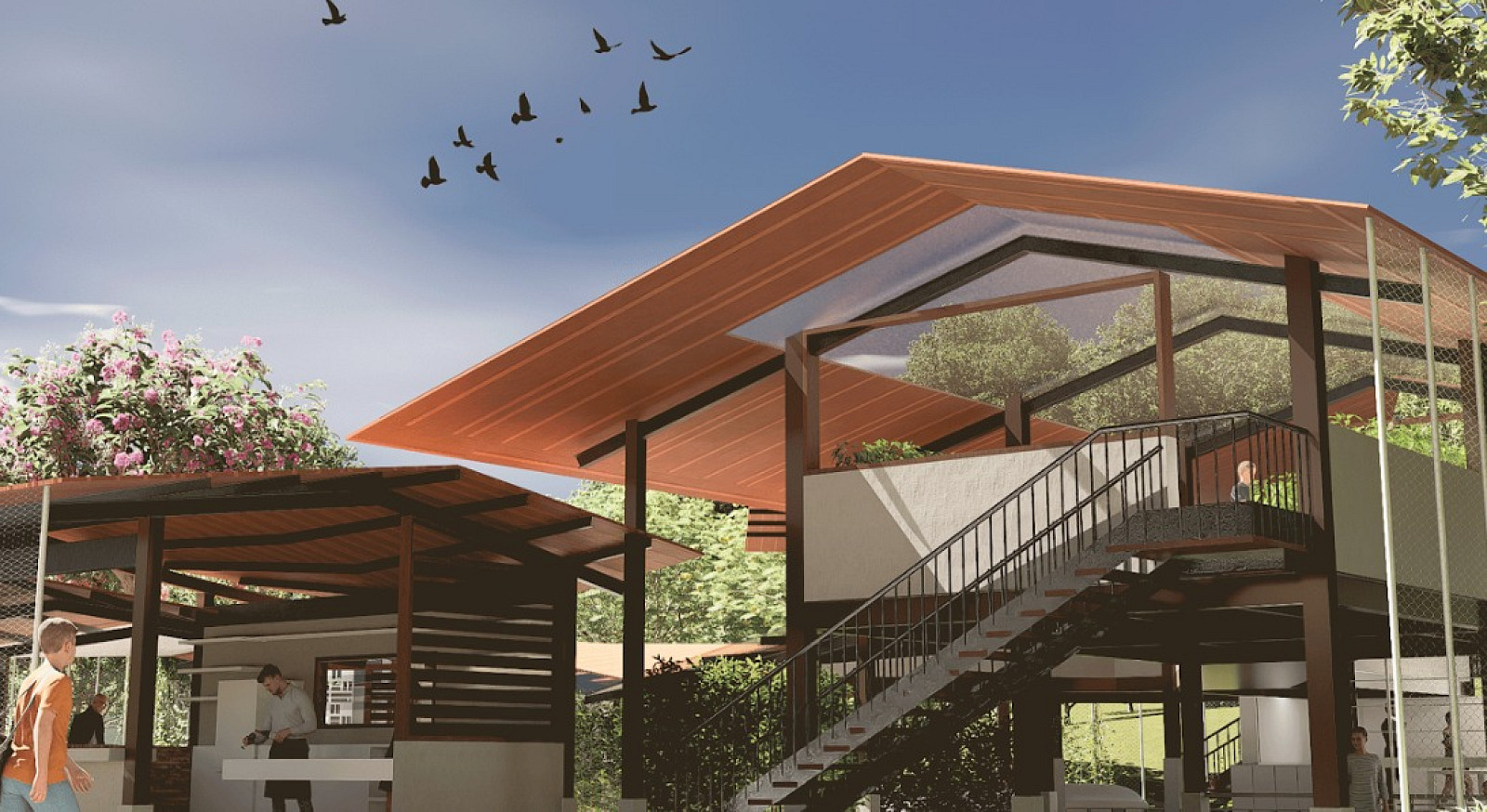
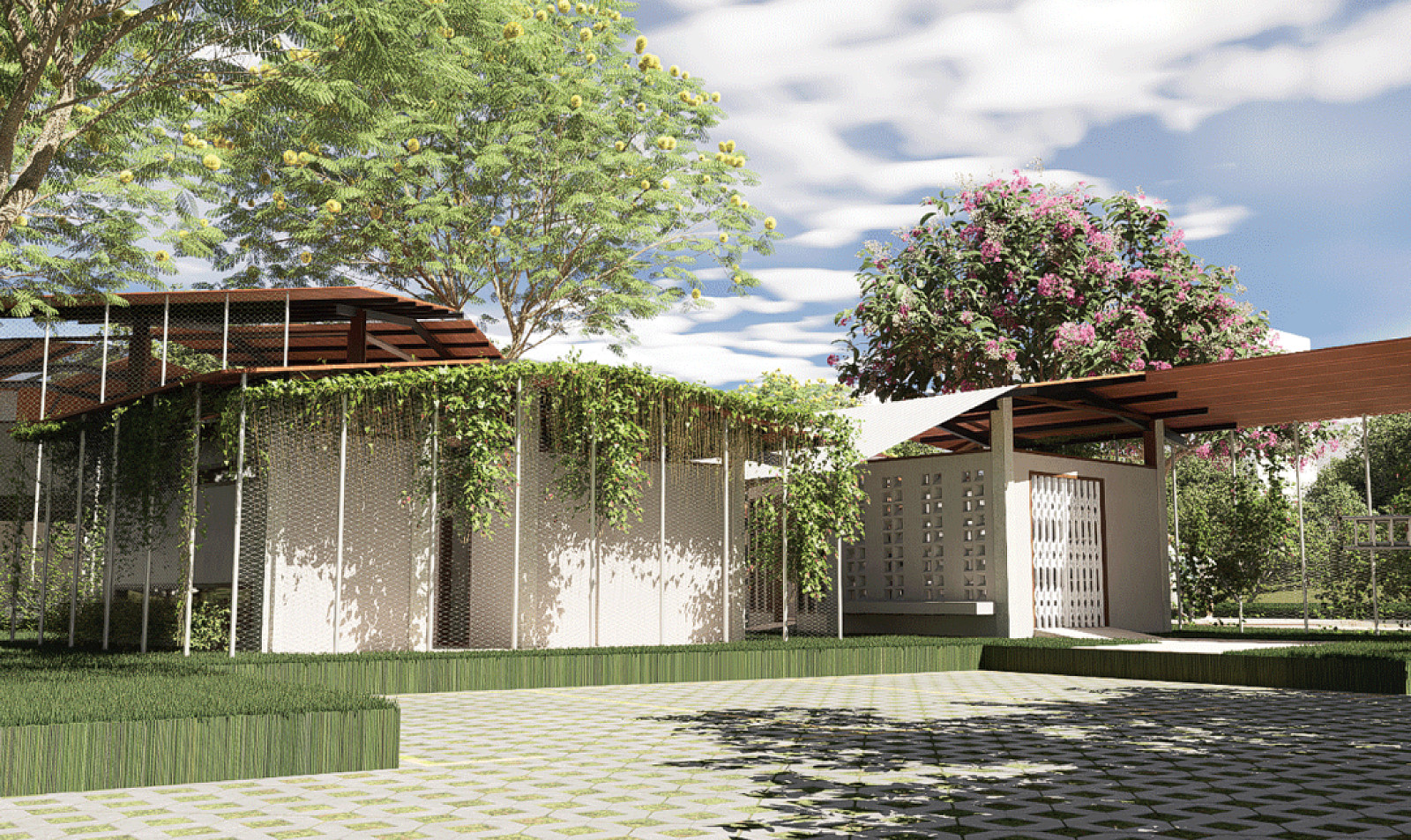
Vividarium draws its architectural language from the agrarian vernacular of the Malay landscape a vocabulary of open shelters, permeable enclosures, and ground-hugging forms that respond to both climate and cultivation. Rather than imposing a bold formal statement, the architecture recedes into its productive setting, allowing the growing landscape of ulam to become the dominant visual and spatial experience.
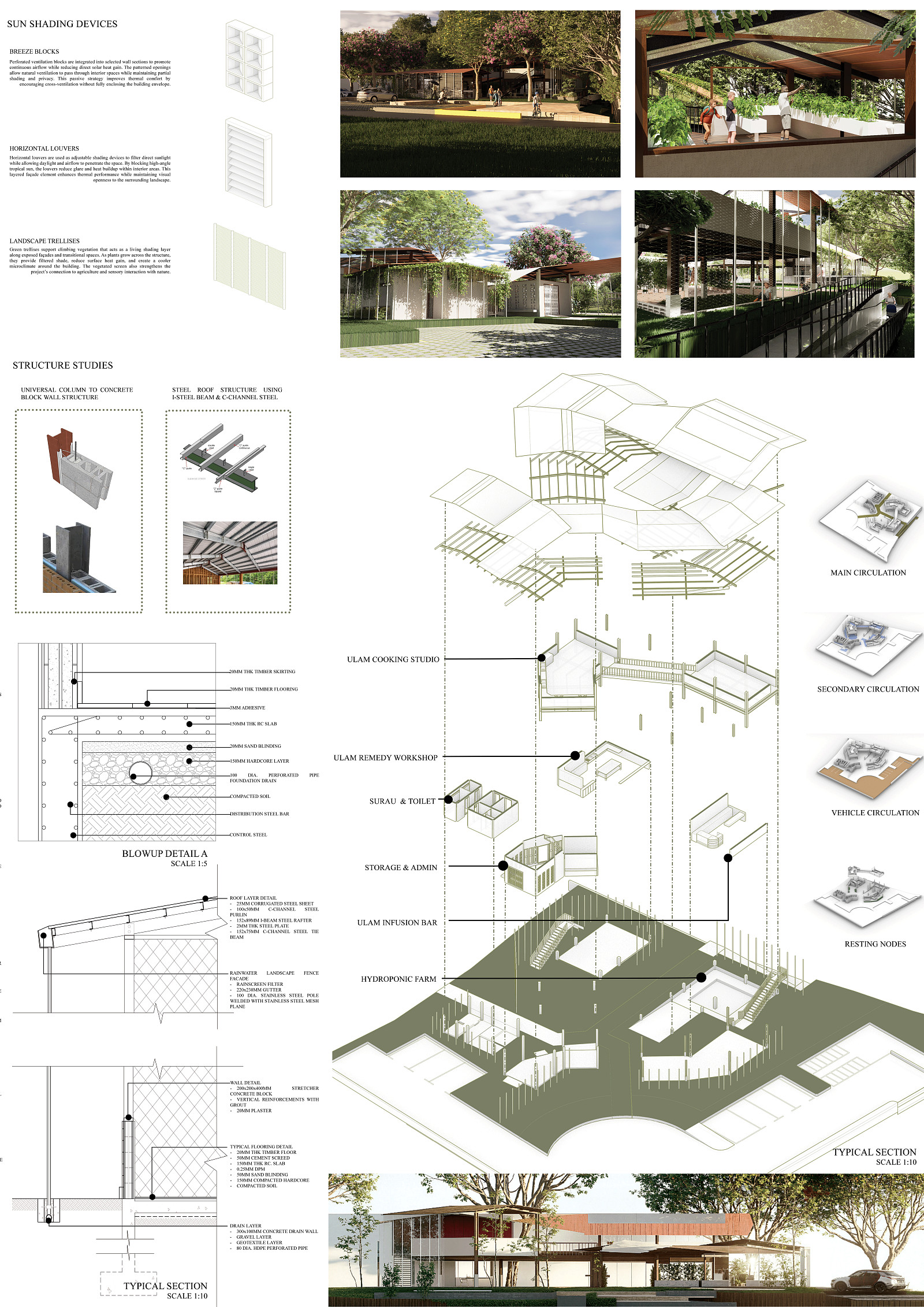
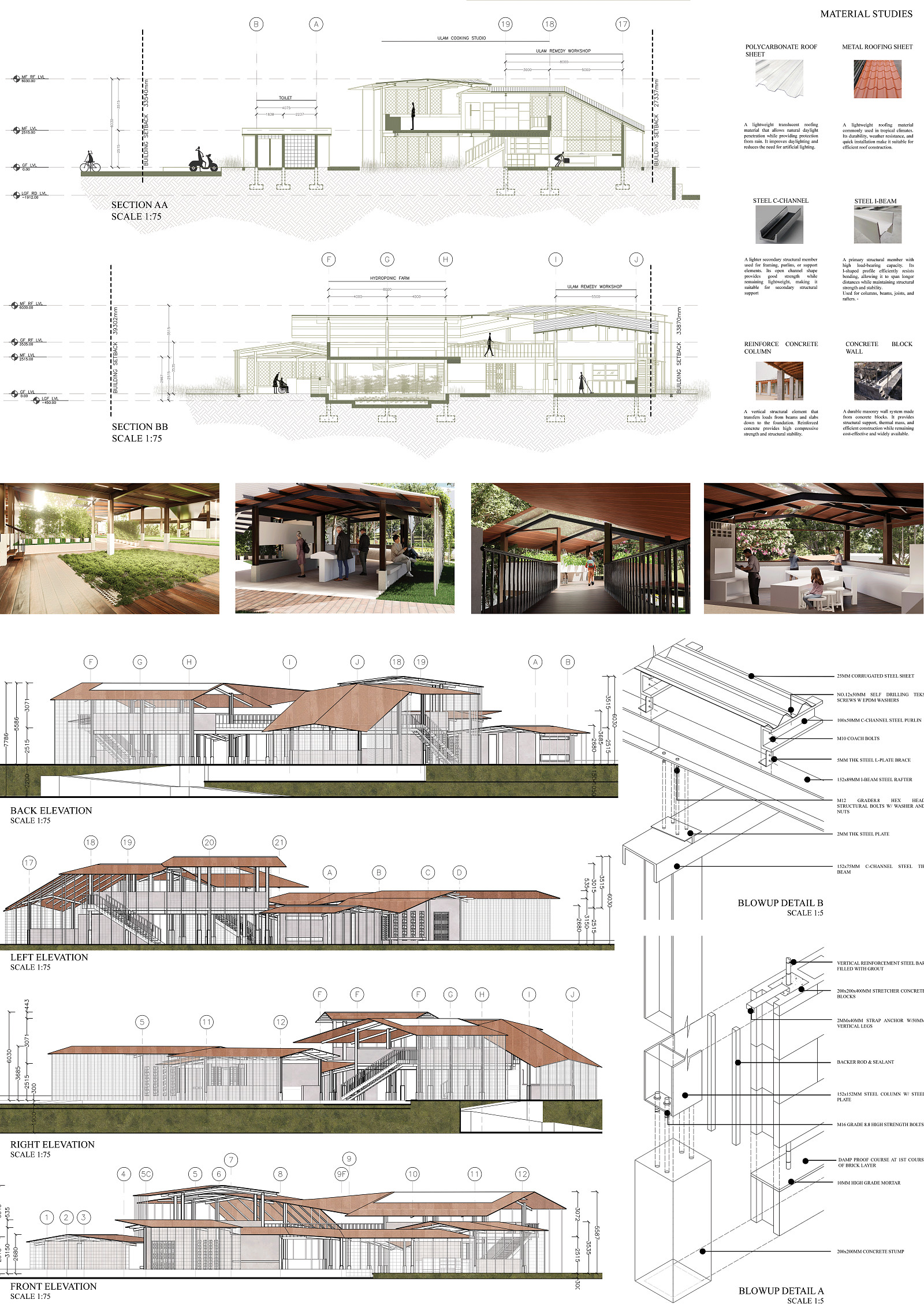
The built elements are conceived as light interventions. Timber frames, bamboo screens, and woven canopy structures define spaces without fully enclosing them, preserving the cross-ventilation and diffused light conditions essential to both plant growth and human comfort in Malaysia's tropical climate. Roof overhangs are generous, providing shade during harvest and learning activities while channelling rainwater into integrated collection systems that feed the irrigation network below.
Materiality is guided by three principles: local sourcing, low embodied energy, and ecological integration. Reclaimed timber forms the primary structural language, its warm grain and weathered texture reinforcing the project's connection to natural cycles. Rammed earth walls anchor the more permanent programme elements the demonstration kitchen and seed library lending thermal mass and a deep, textured presence that contrasts quietly against the lightness of the farming canopies above.
Ground surfaces are deliberately varied. Compacted laterite paths give way to permeable gravel beds, raised timber decking, and bare cultivated soil, creating a tactile sequence that draws visitors deeper into the agricultural landscape. There are no hard boundaries between architecture and farm; the built and the grown interpenetrate at every threshold.
Collectively, the material palette of Vividarium communicates a coherent environmental ethic one where the architecture does not merely house a farming programme, but actively participates in it, ageing and weathering alongside the land it tends.
Technical information
Vividarium is designed as a climatically responsive and ecologically integrated facility, where environmental systems are not supplementary additions but fundamental drivers of spatial organisation and architectural form. Every passive and active strategy is calibrated to Putrajaya's equatorial climate characterised by high humidity, consistent temperatures between 24°C and 35°C, and annual rainfall exceeding 2,000mm.
Natural ventilation is the primary cooling strategy. Building orientations are arranged to harness the prevailing southwest and northeast monsoon winds, drawing air through permeable bamboo screens and beneath wide roof overhangs. Stack ventilation principles govern the section of enclosed programme spaces, with high-level louvred openings expelling warm air and drawing cooler ground-level breezes through the teaching studios and demonstration kitchen.
Rainwater harvesting forms the backbone of the water management strategy. Sloped canopy roofs channel rainfall into subsurface collection tanks with a combined capacity sized to meet the full irrigation demand of the ulam farming plots during dry spells. Greywater from the demonstration kitchen is treated through a constructed wetland filter bed integrated into the landscape, with reclaimed water redistributed to secondary irrigation circuits.
Solar energy is harnessed through photovoltaic panels positioned on south-facing roof panels, generating sufficient electricity to power lighting, ventilation fans, and refrigeration in the seed library. A building energy monitoring system tracks consumption in real time, supporting both operational efficiency and its use as a live educational tool for visitors.
Soil health is maintained through an on-site composting system that processes organic waste from harvested ulam, closing the nutrient cycle within the site boundary. Permeable ground surfaces across the site reduce stormwater runoff, recharging the local water table and mitigating urban heat island effects within Putrajaya's civic precinct.

Copyright © 2026 INSPIRELI | All rights reserved. Use of this website signifies your agreement to the Terms of Use, Privacy Policy, and use of cookies.