Nurture


 Assoc. Prof. Sapinah Danial
Project idea
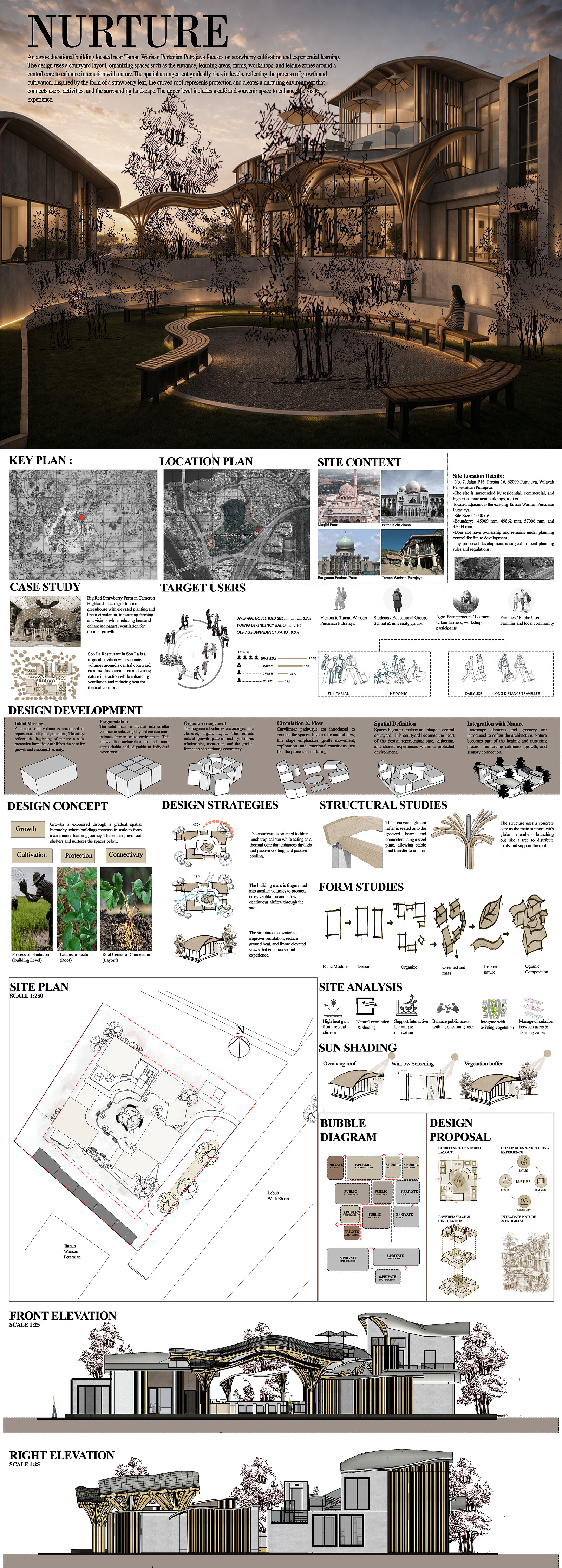
Nurture is an agro-educational farming centre dedicated to the cultivation and study of strawberries within the heart of Putrajaya, Malaysia. The project challenges the assumption that strawberry farming belongs exclusively to highland climates, positioning itself as a pioneering urban agricultural experiment that demonstrates the viability of controlled-environment strawberry production at a tropical latitude.
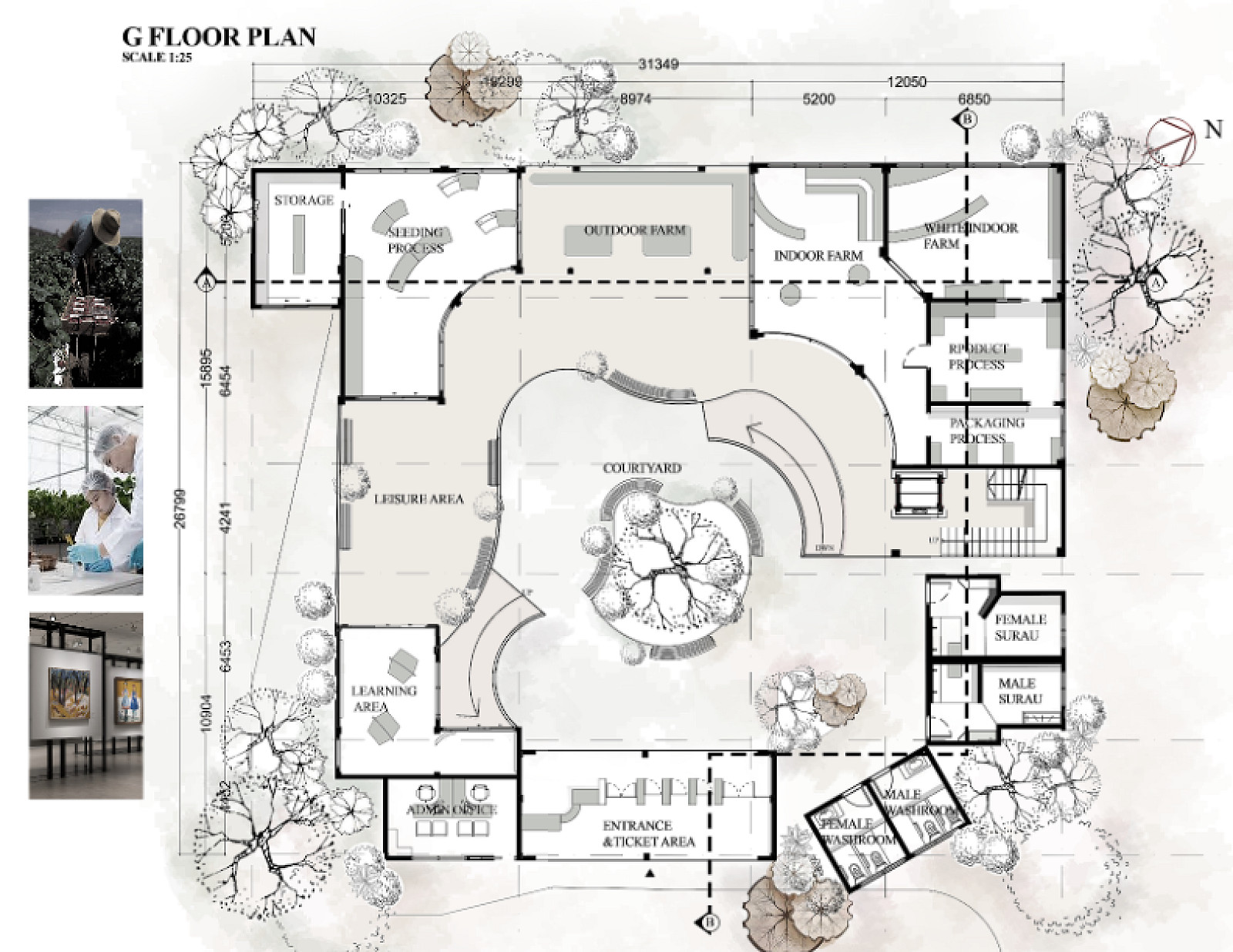
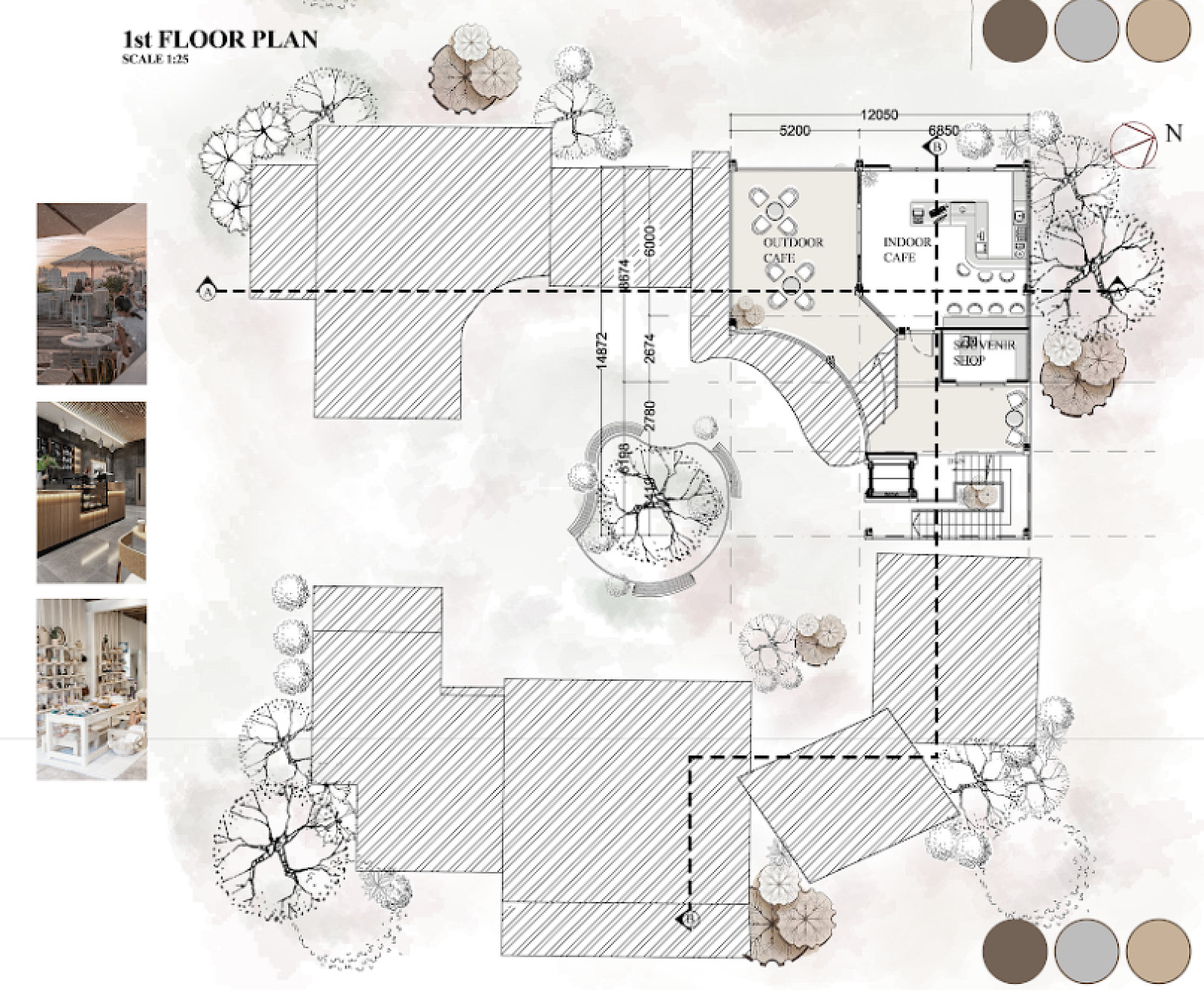
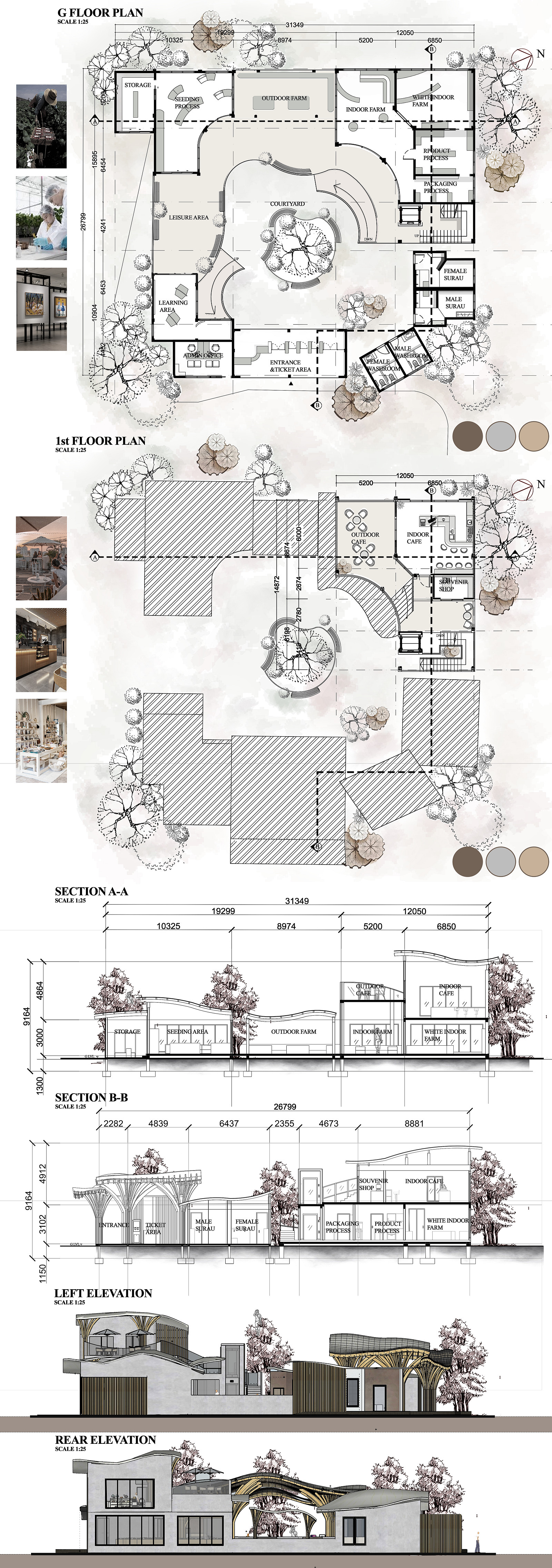
The project operates across two interconnected programmes farming and education each reinforcing the other. Vertical growing systems, climate-controlled greenhouse modules, and open hydroponic beds form the productive core of the facility, while learning laboratories, interpretive display zones, and guided harvest trails constitute the educational framework. Together, these elements create a continuous journey through the full arc of strawberry cultivation, from propagation and pollination to harvest and post-harvest handling.
Within a 300 m² built-up footprint, spatial economy is paramount. The architecture is compact yet generous in experience, with every square metre serving multiple functions. A seedling nursery doubles as a hands-on workshop space; a harvest pavilion transitions into a community tasting and produce display area; circulation paths are lined with growing troughs that educate visitors as they move through the facility.
Nurture is conceived not merely as a farming facility but as a civic resource a place where schoolchildren, urban families, and agricultural enthusiasts engage directly with the science, labour, and joy of growing food. By centring strawberry cultivation as its focus, the project introduces an unexpected and delightful agricultural character to Putrajaya's urban fabric, sparking curiosity and broadening public understanding of what is possible when education and farming grow side by side.
Project description
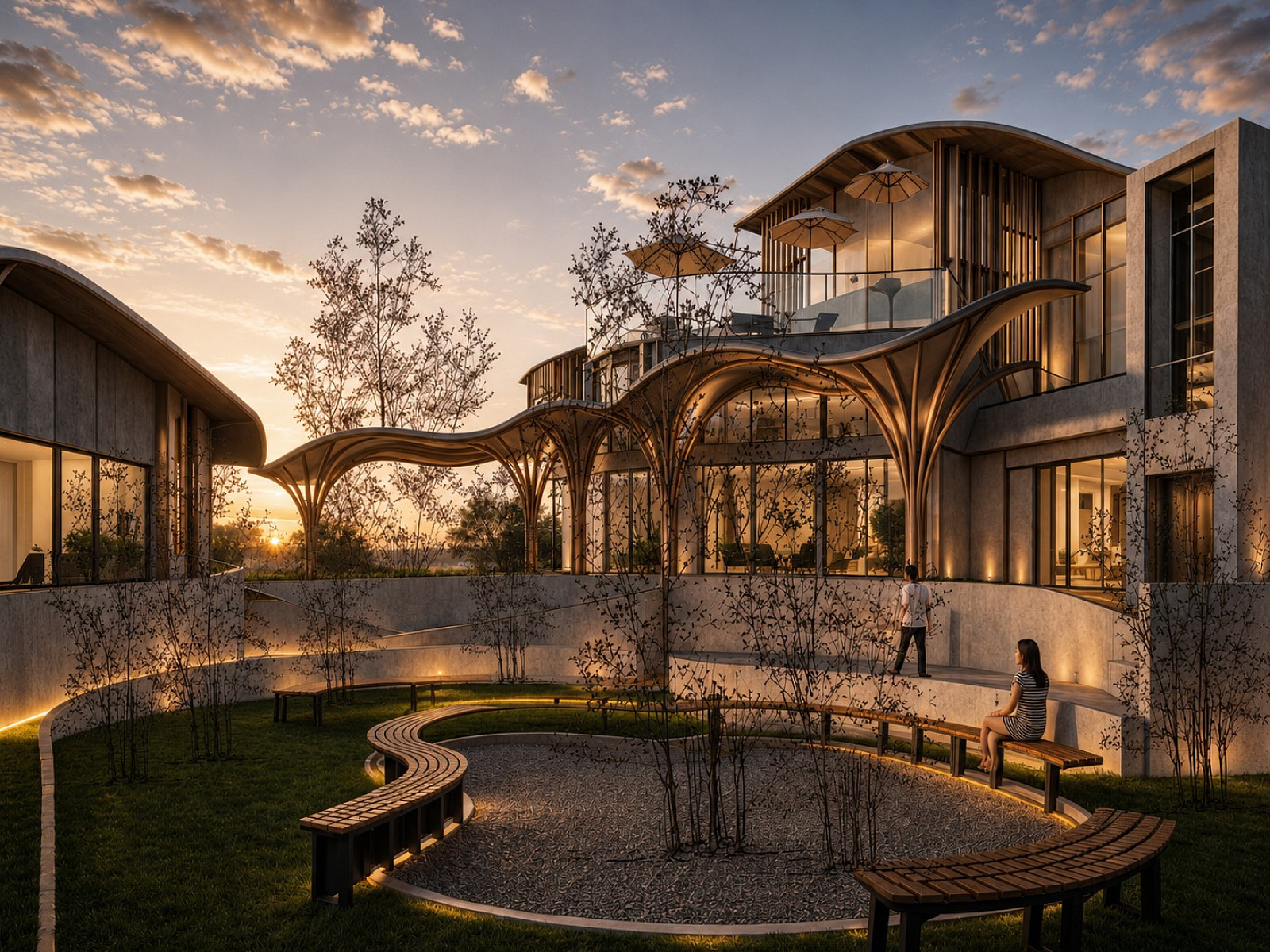
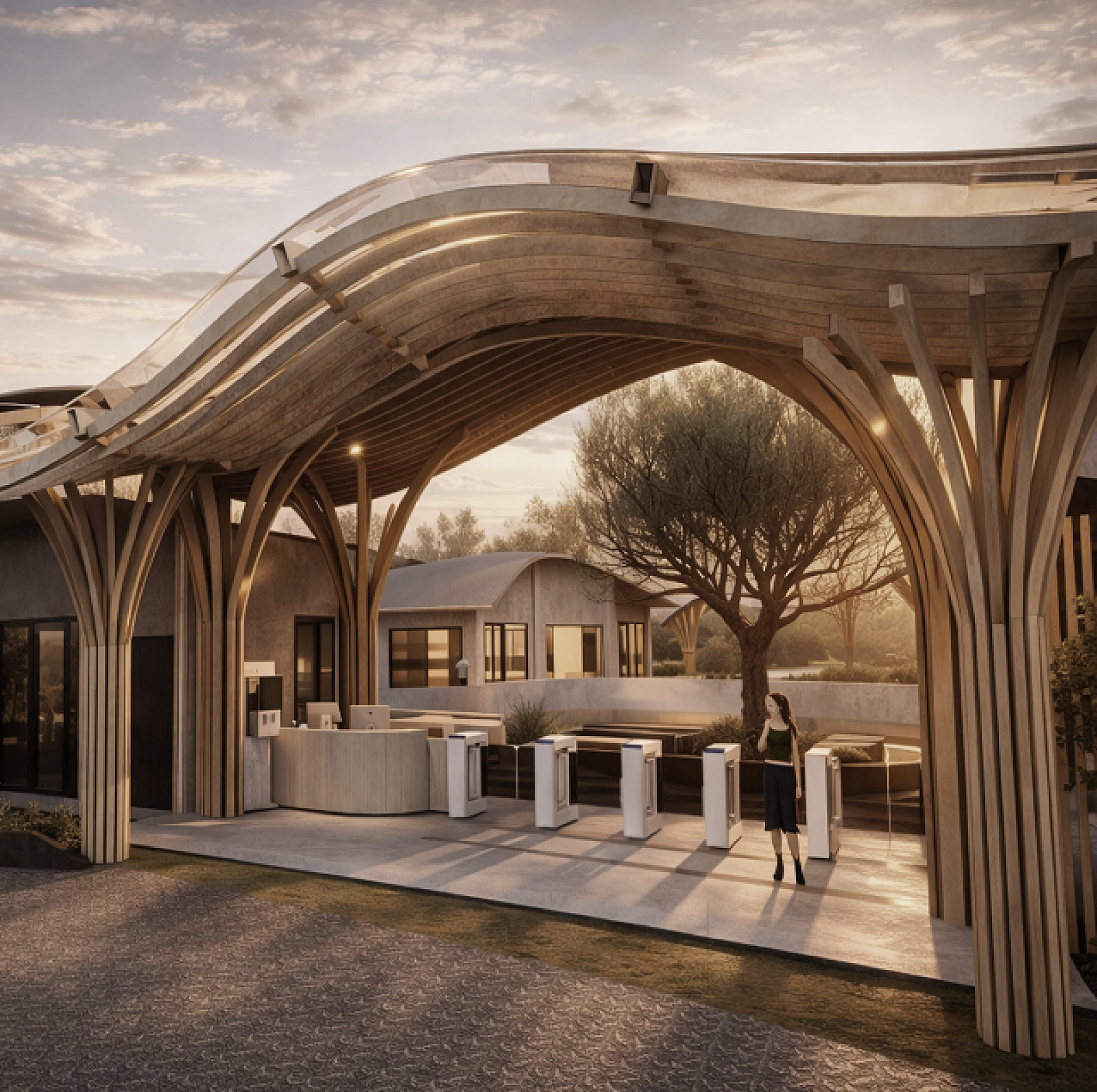
Nurture derives its architectural language from the delicate and cyclical nature of strawberry cultivation a built environment that mirrors the precision, care, and tenderness implied by its own name. The architecture is conceived as a series of lightweight, legible interventions that sit gently within Putrajaya's urban landscape, prioritizing openness, transparency, and a close sensory relationship between visitor and plant.
The primary structural language is one of slender steel frames and polycarbonate cladding materials chosen for their ability to filter and diffuse Malaysia's intense tropical sunlight into the soft, even illumination that strawberry plants require. These translucent enclosures glow warmly during morning and evening hours, giving Nurture a quiet luminosity that distinguishes it within its civic setting and signals its productive interior life to passers-by.
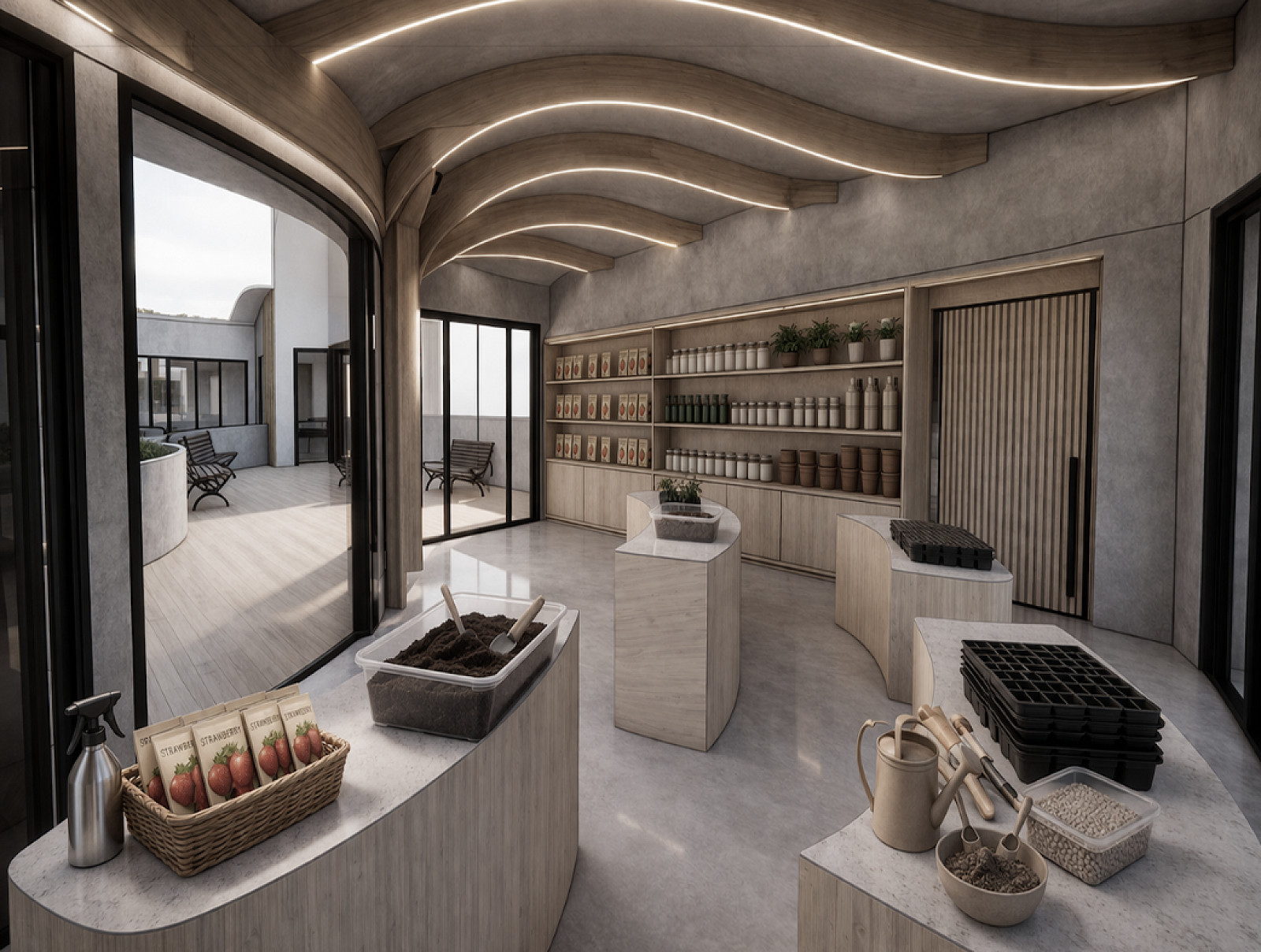
Timber is introduced as the primary material of human occupation. Decking, benches, workshop surfaces, and harvest counters are all finished in locally sourced treated timber, bringing warmth and tactility to spaces where visitors pause, learn, and engage. The contrast between the cool precision of the polycarbonate greenhouse modules and the warm grain of timber gathering spaces creates a spatial rhythm that guides movement through the facility naturally and intuitively.
Vertical growing walls constitute both a functional and architectural gesture. Stacked planting tiers line interior circulation routes, transforming movement paths into immersive green corridors where the fruiting strawberry plants become the walls themselves. These living surfaces regulate humidity, soften acoustics, and create an enclosed microclimate that is perceptibly cooler and fresher than the exterior environment.
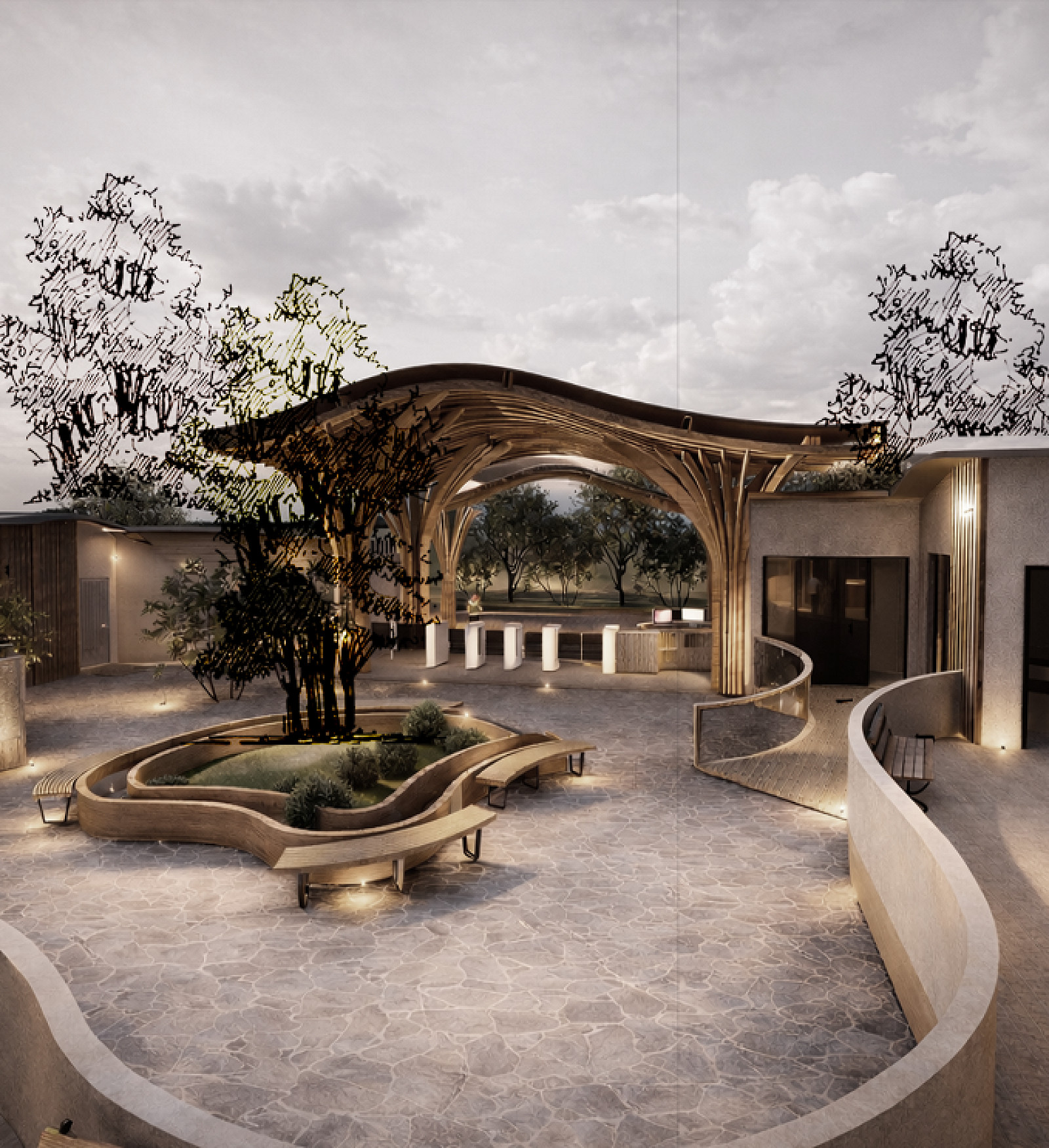
At ground level, the landscape is kept deliberately simple clean gravel paths, low planting borders, and open gathering lawns that frame the built elements without competing with them. Nurture presents an architecture of restraint and purpose, where every material choice and spatial decision serves the singular ambition of bringing people closer to the act of growing.
Technical information
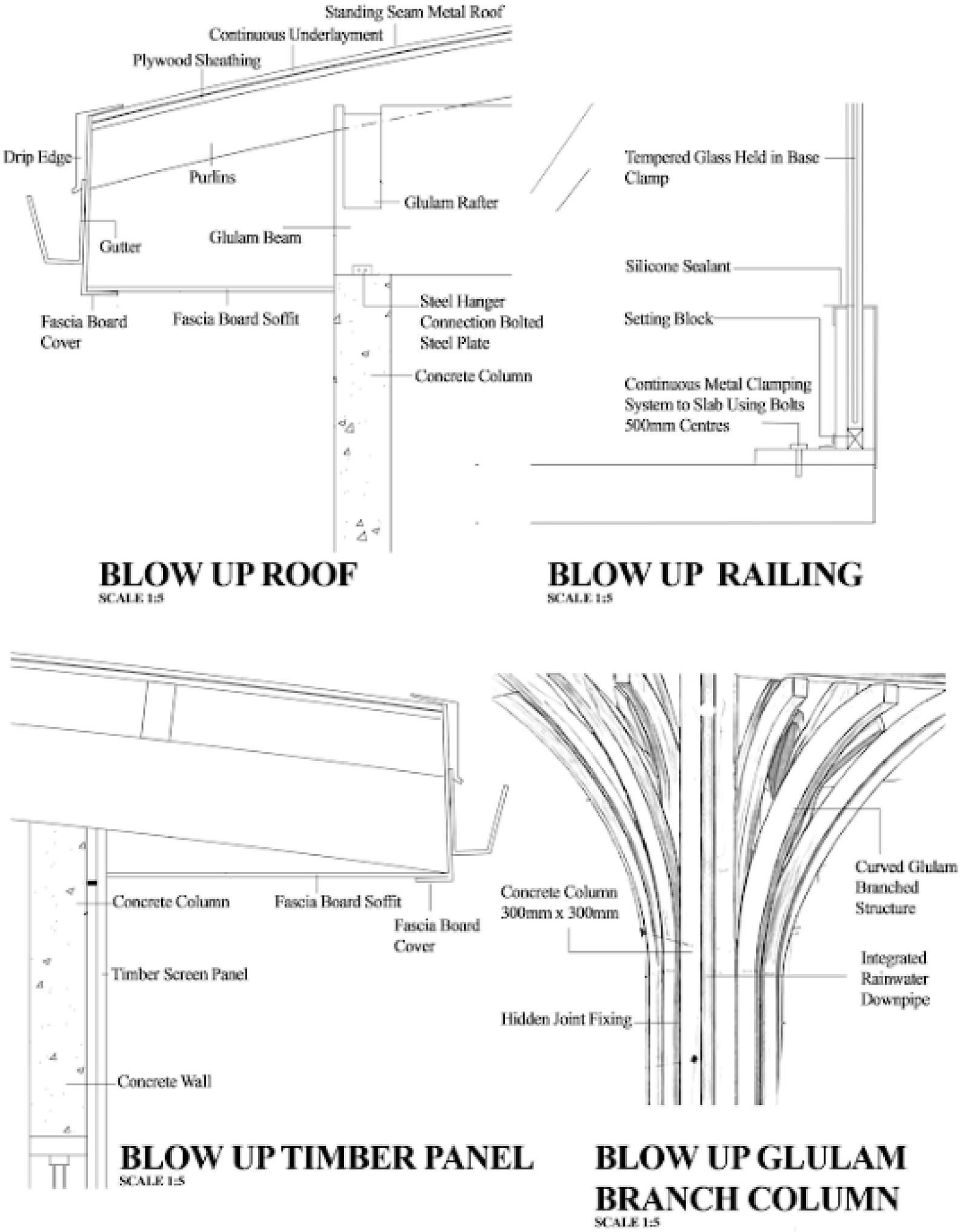
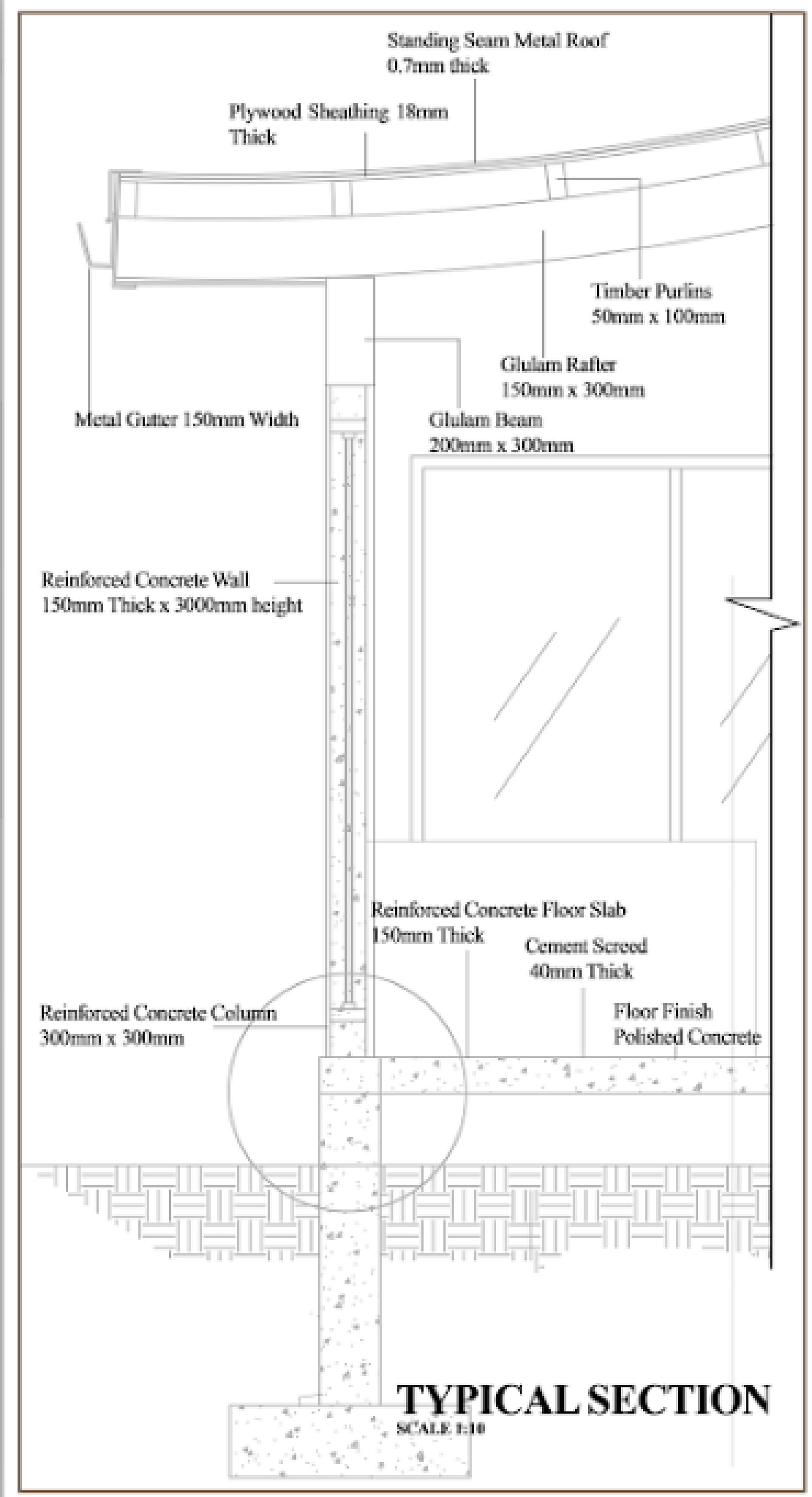
Nurture is structured around a modular lightweight steel frame system, selected for its precision, speed of assembly, and compatibility with the controlled-environment requirements of tropical strawberry cultivation. The structural grid is based on a 3-metre by 3-metre module, a dimension derived directly from the optimal growing bay width for vertical hydroponic strawberry systems, ensuring that structural logic and agricultural logic are fully aligned from the outset.
The primary frame consists of cold-formed steel hollow sections, bolted rather than welded to allow for future disassembly, reconfiguration, and expansion as the facility's programme evolves. Column sections are slender, minimising visual obstruction within the greenhouse modules and preserving the maximum light penetration essential to fruit development. Primary beams span between columns at eave level, supporting secondary purlins that carry the polycarbonate roof cladding system above.
Foundations are shallow reinforced concrete pad footings, sized to distribute column loads into Putrajaya's moderately bearing alluvial subsoil without the need for deep piling. A ground-bearing reinforced concrete slab of 150mm thickness forms the finished floor across all enclosed programme areas, incorporating a vapour barrier membrane beneath to manage moisture migration from the irrigated growing beds above.
The greenhouse enclosure panels are framed independently from the primary structure using aluminium extruded glazing systems, allowing thermal expansion and contraction to occur without transferring stress into the main steel frame. Polycarbonate twin-wall panels of 16mm thickness are selected for their superior thermal insulation, UV diffusion properties, and light weight relative to glass.
Timber elements — decking, canopy pergolas, workshop benches, and harvest counters — are connected to the steel frame through concealed bracket connections, maintaining clean visual junctions between material systems. All structural steel is hot-dip galvanised prior to installation, providing long-term corrosion resistance appropriate to Malaysia's high-humidity tropical environment and the moisture-intensive demands of an active farming facility.


Copyright © 2026 INSPIRELI | All rights reserved. Use of this website signifies your agreement to the Terms of Use, Privacy Policy, and use of cookies.