Blossom


 Assoc. Prof. Sapinah Danial
Project idea
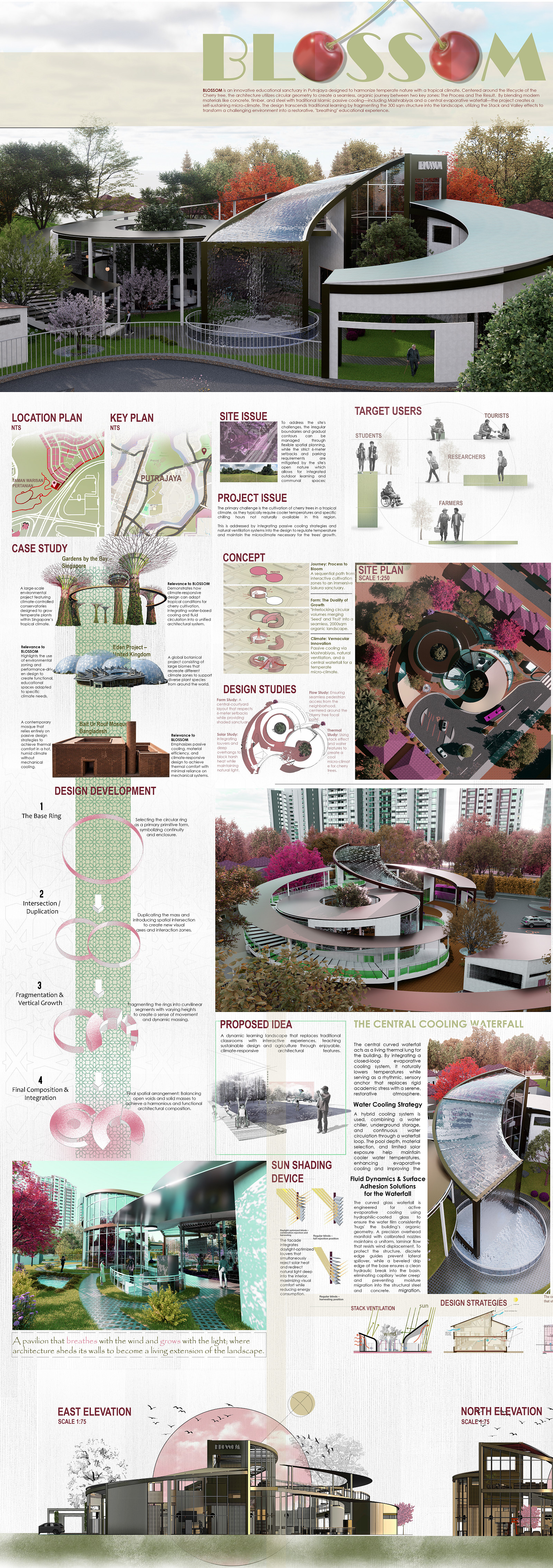
Cherry Bloom Agro-Educational Farm is proposed as a learning-based farming destination in Putrajaya that combines controlled cherry cultivation, public education, and architecture inspired by the organic form of cherry blossoms, stems, and fruit clusters. Since cherries require specific growing conditions, the project introduces greenhouse farming, hydroponic systems, mist cooling, and climate-responsive technology to demonstrate how temperate crops can be studied and cultivated within Malaysia’s tropical environment. The architecture adopts curved roofs, petal-like canopies, circular courtyards, and branching walkways to reflect the softness and growth pattern of cherry trees. Visitors move through a sequence of spaces including cherry nurseries, demonstration farms, learning galleries, workshops, tasting areas, and outdoor gardens. The project encourages students, families, and local communities to understand food production, plant science, sustainability, and innovative farming methods. Its design creates a nurturing environment where farming becomes an interactive experience rather than only an agricultural activity. By merging agro-education with cherry-inspired architectural language, the project becomes a unique landmark in Putrajaya, promoting environmental awareness, experiential learning, and appreciation of nature through a poetic relationship between cultivation, form, and community engagement. It also strengthens Putrajaya’s garden city identity by introducing a memorable learning farm for future sustainable agriculture and community tourism development.
Project description
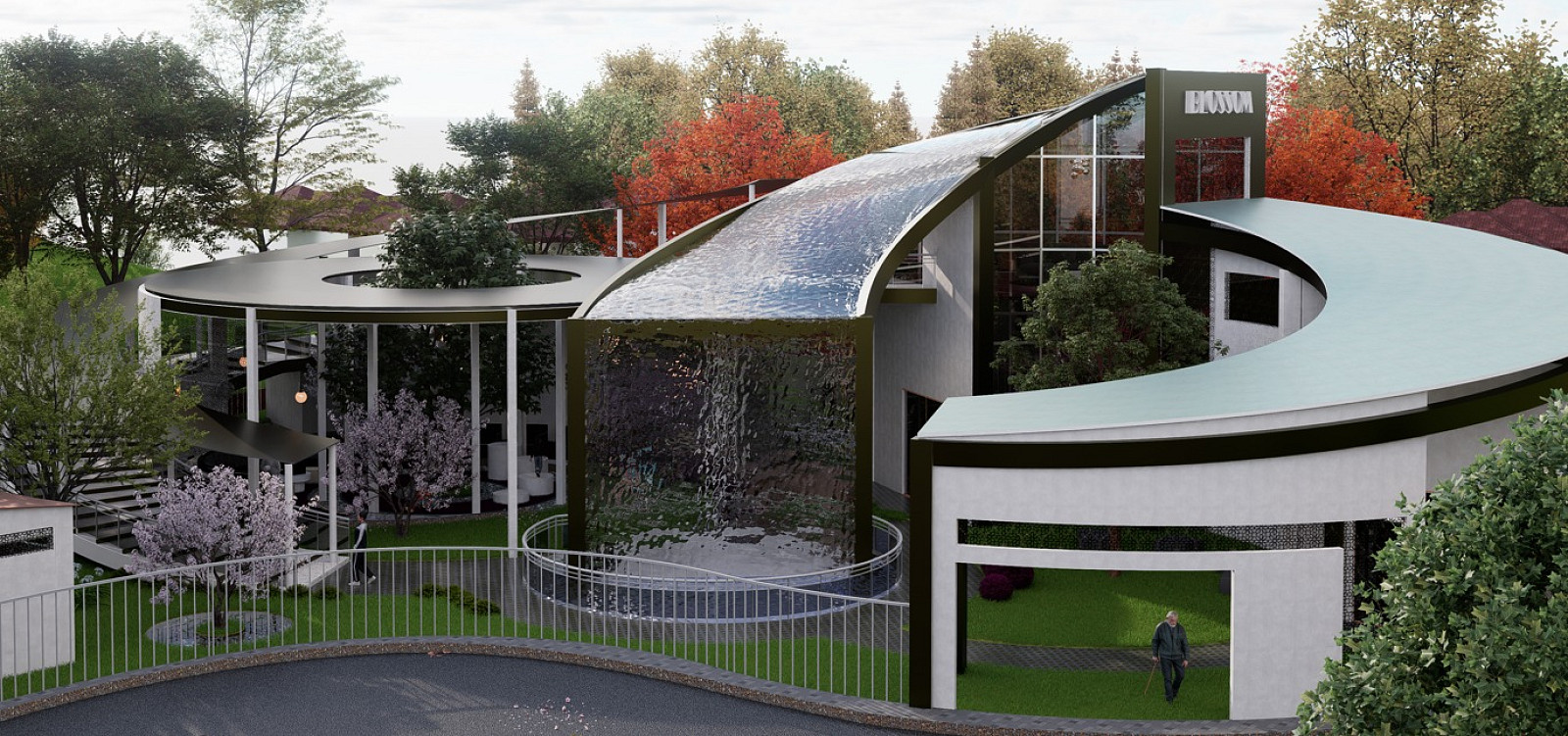
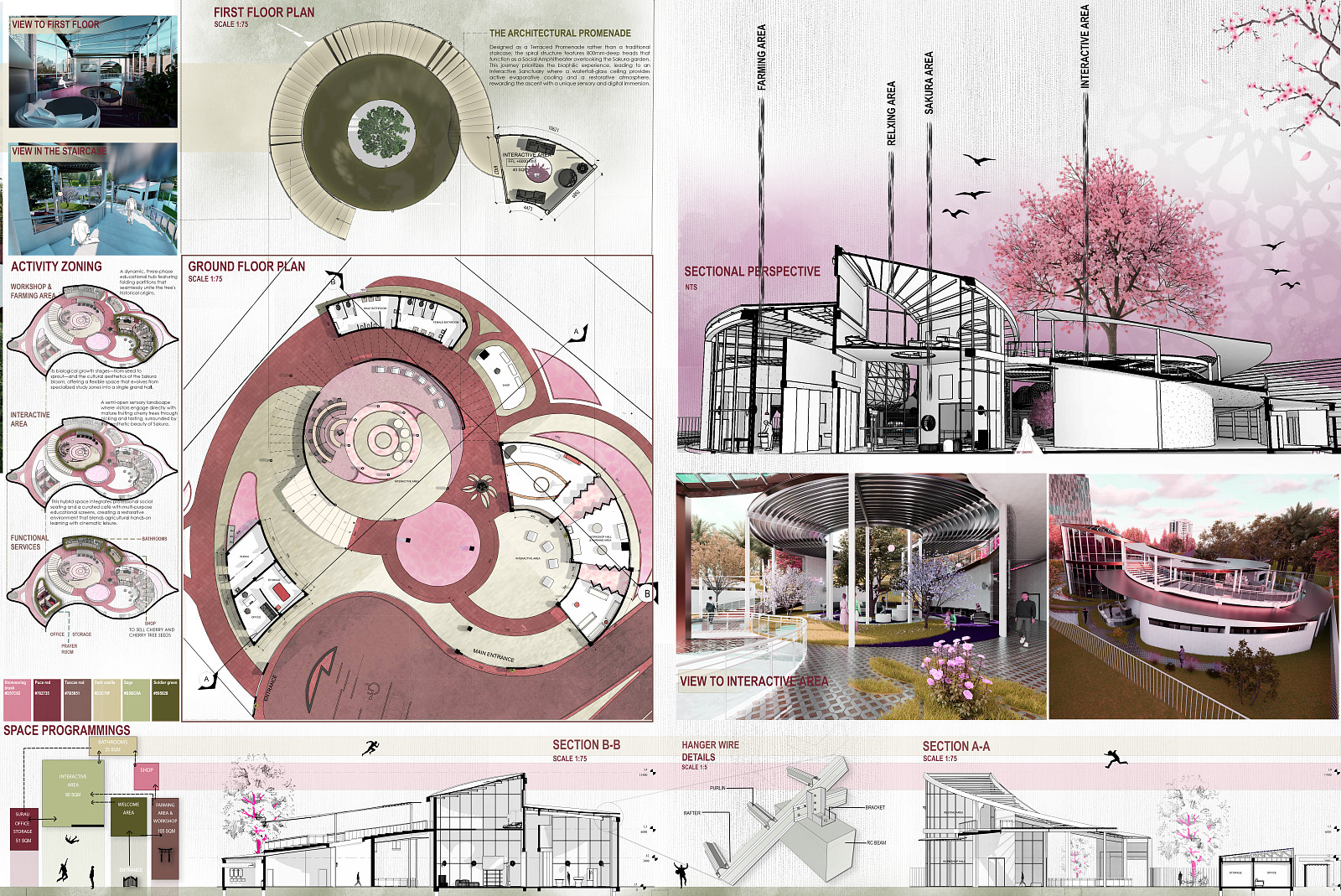
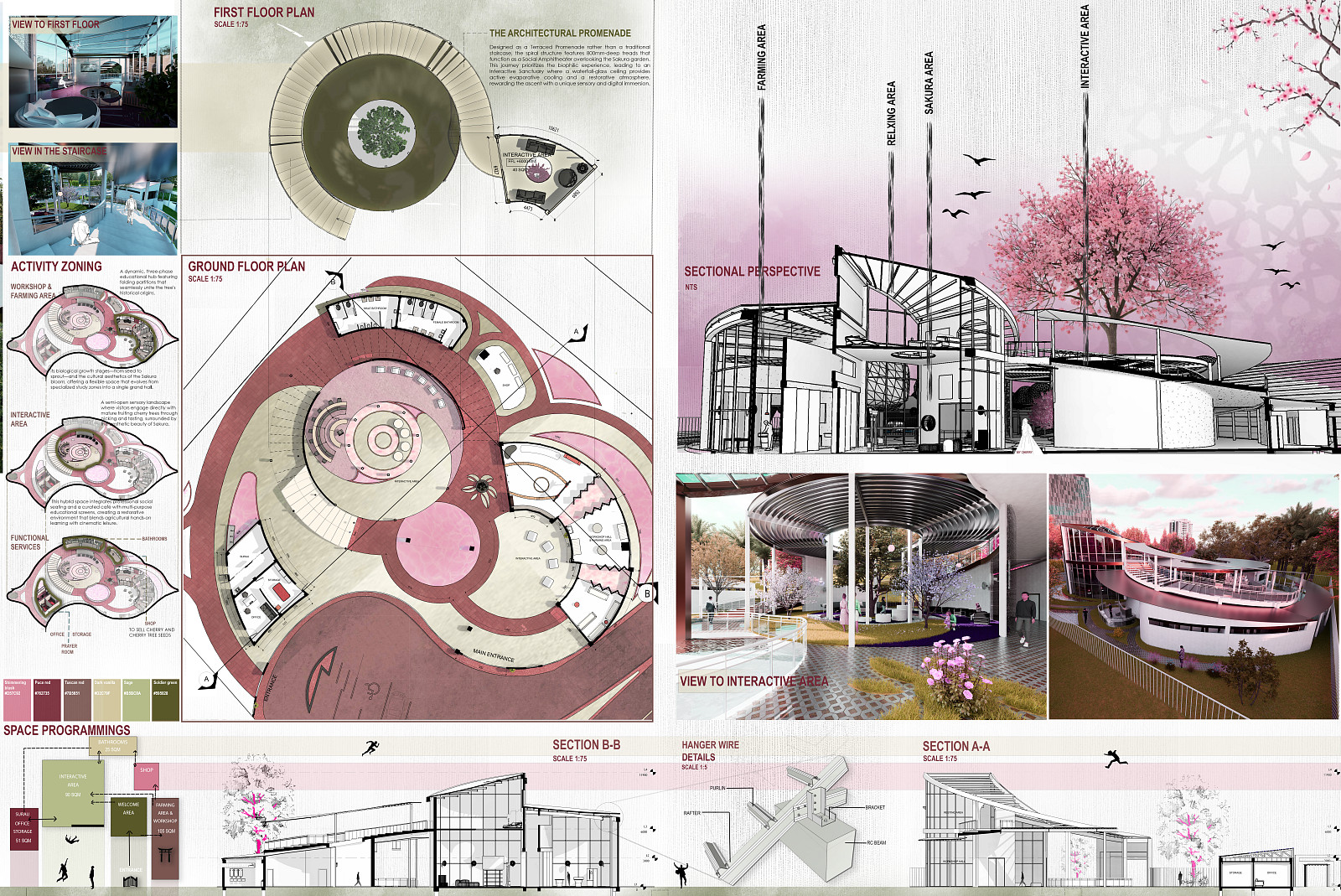
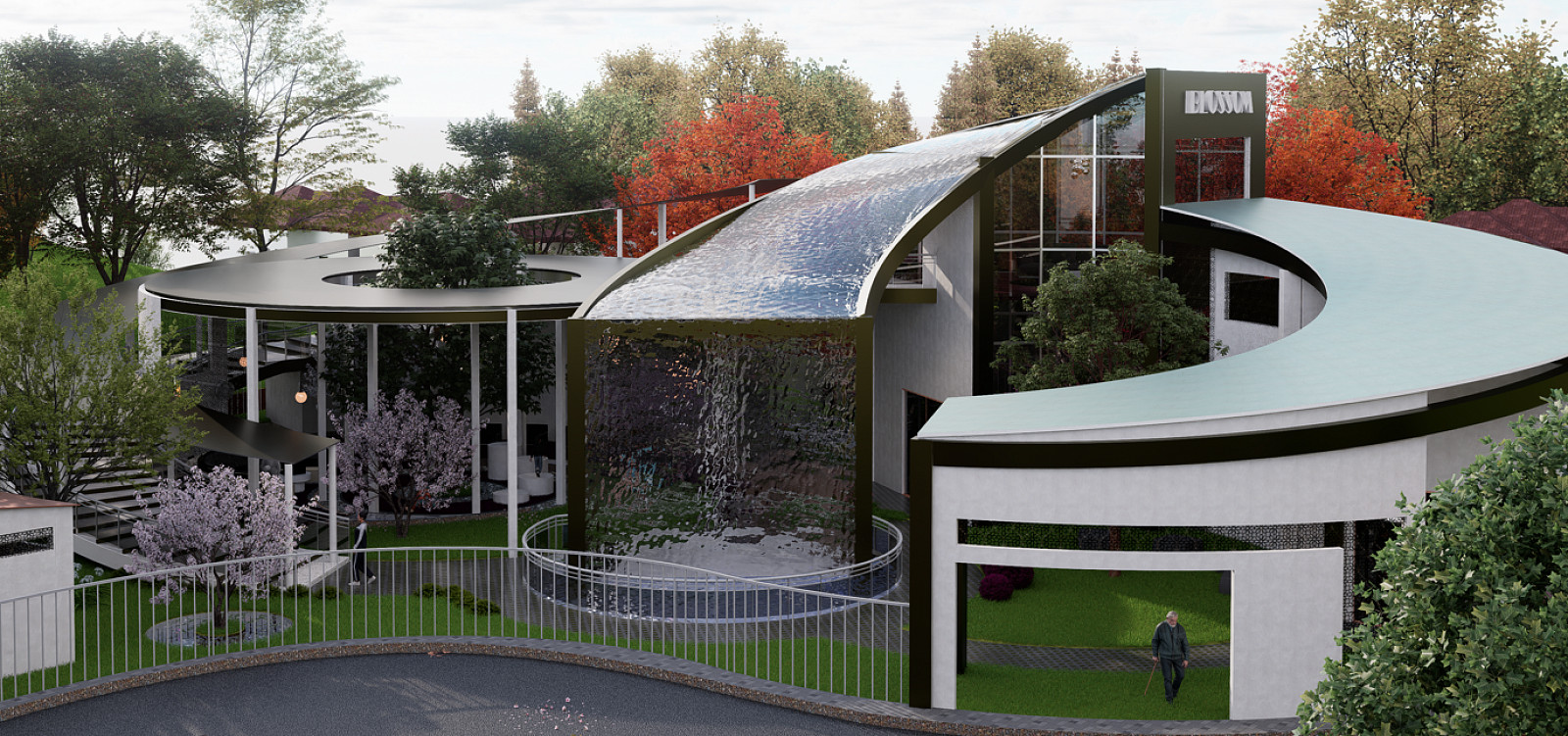
The project is designed as an agro-educational farming centre in Putrajaya where architectural elements translate the natural character of cherry trees into spatial experience. The main building form is inspired by the rounded cherry fruit, layered petals, and branching structure of cherry stems. Curved roof profiles create a soft blossom-like silhouette, while wide overhangs provide shade and frame outdoor farming areas. Petal-shaped canopies guide visitors through arrival spaces, learning gardens, greenhouse zones, and viewing decks. The circulation follows an organic branching layout, allowing visitors to experience farming, exhibition, workshop, and relaxation spaces as one continuous journey. Transparent greenhouse façades expose the cherry cultivation process, making farming visible as part of the architectural identity. Timber screens, vertical fins, and perforated panels are used to represent tree bark, leaf veins, and filtered daylight under a canopy. Courtyards are positioned as central gathering spaces, forming a calm microclimate for education, interaction, and seasonal displays. The overall architecture aims to be expressive, welcoming, and nature-driven, creating a landmark that connects farming technology, landscape, and community learning through cherry-inspired forms, textures, and spatial flow. Together, these elements shape a poetic educational farm where architecture becomes both shelter and storytelling for visitors of all ages today.
Technical information
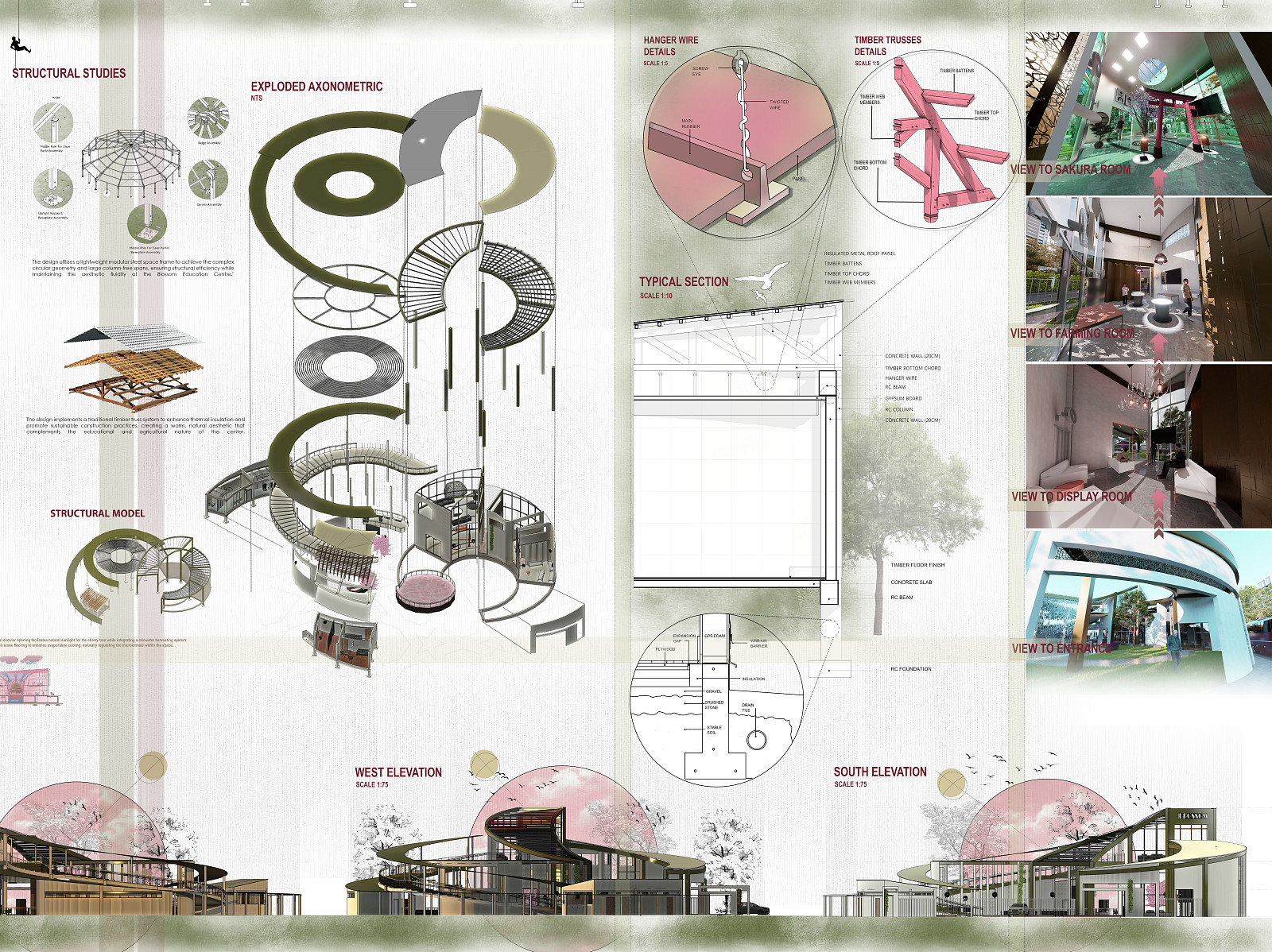
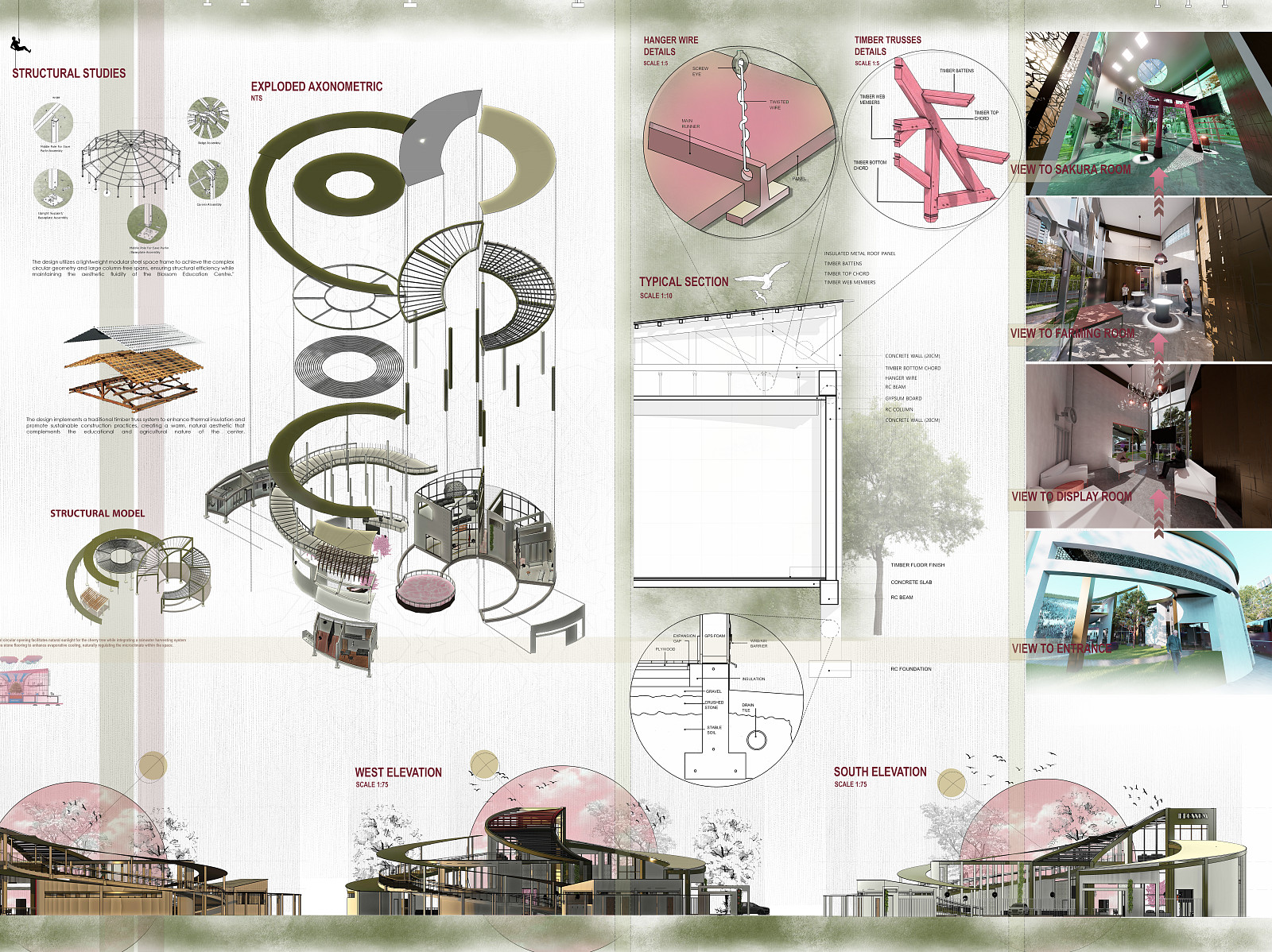
The technical design of the Cherry Bloom Agro-Educational Farm focuses on creating a controlled and sustainable environment suitable for cherry cultivation within Putrajaya’s tropical climate. The project uses climate-responsive greenhouse systems with insulated glazing, automated misting, ventilation fans, shading screens, and temperature monitoring to support plant growth. Hydroponic or soil-based raised planting beds may be integrated to improve water efficiency, crop control, and educational visibility. Rainwater harvesting is proposed to supply irrigation, while solar panels can support lighting, pumps, and environmental control systems. Structurally, the building may combine steel frames for long-span greenhouse areas with timber or composite elements to create warm, natural architectural expression. Curved roof forms are designed not only for aesthetic value but also to guide rainwater runoff and reduce heat gain through proper insulation and overhangs. Passive design strategies include cross ventilation, shaded walkways, courtyards, and filtered daylight to improve thermal comfort for visitors. The project also includes service areas such as storage, plant nursery rooms, mechanical rooms, irrigation control zones, and waste composting areas. Overall, the technical approach supports efficient farming, environmental learning, visitor comfort, and long-term operational sustainability. These systems ensure the farm operates as both a productive facility and practical daily teaching laboratory.


Copyright © 2026 INSPIRELI | All rights reserved. Use of this website signifies your agreement to the Terms of Use, Privacy Policy, and use of cookies.