GO ! 2025


Project idea
GO! 2025 – Cultural and Arts Hub
GO! 2025 is primarily inspired by the GO! Borderless project, the official slogan of Nova Gorica, Slovenia, and Gorizia, Italy, which were jointly selected as the European Capital of Culture 2025. The GO! Borderless initiative aims to overcome traditional, cultural, and social boundaries between the two countries. In response, this project creates a place that embodies this vision—a space where two peoples with different cultural backgrounds can meet and interact in a shared environment.
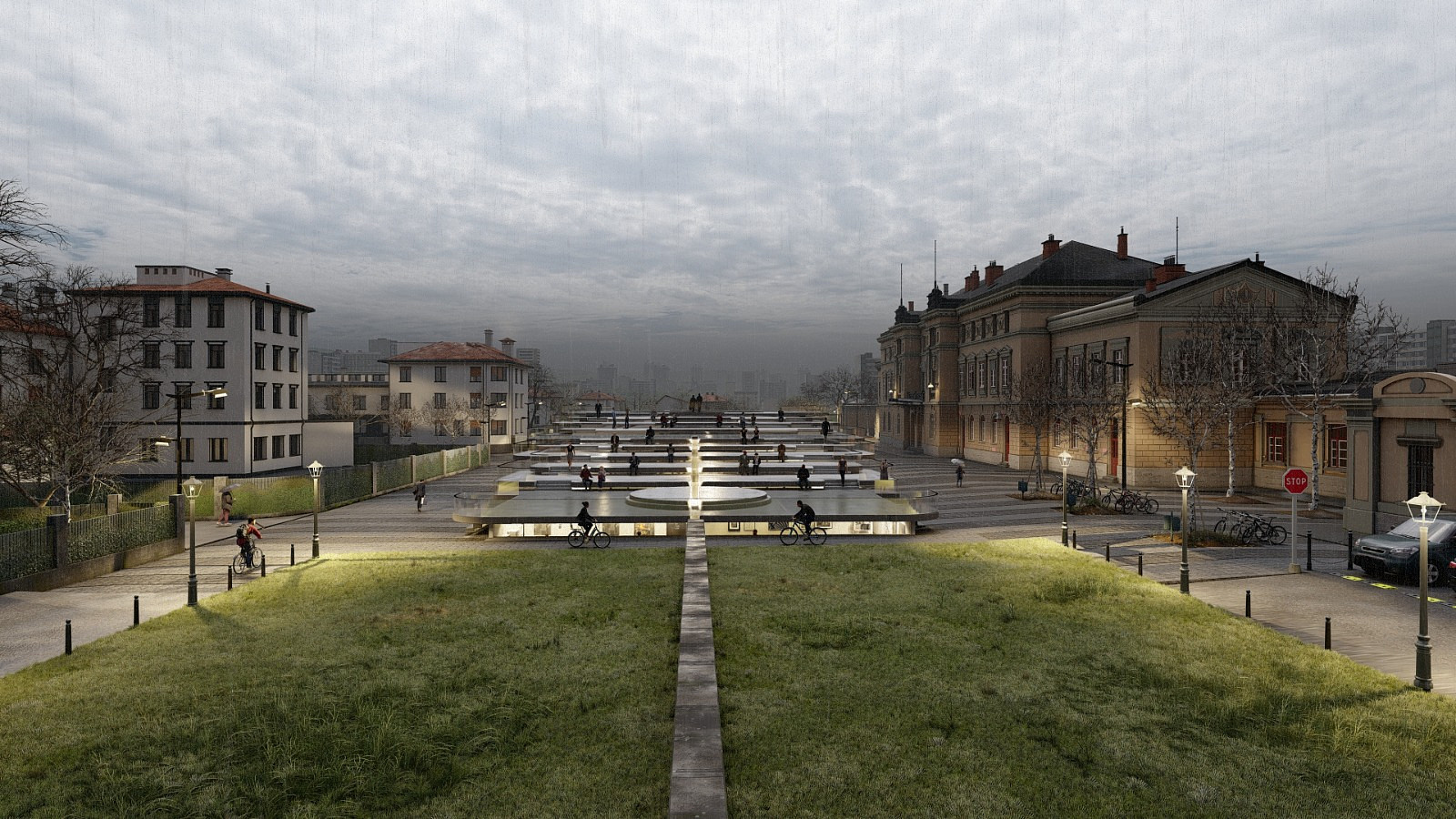
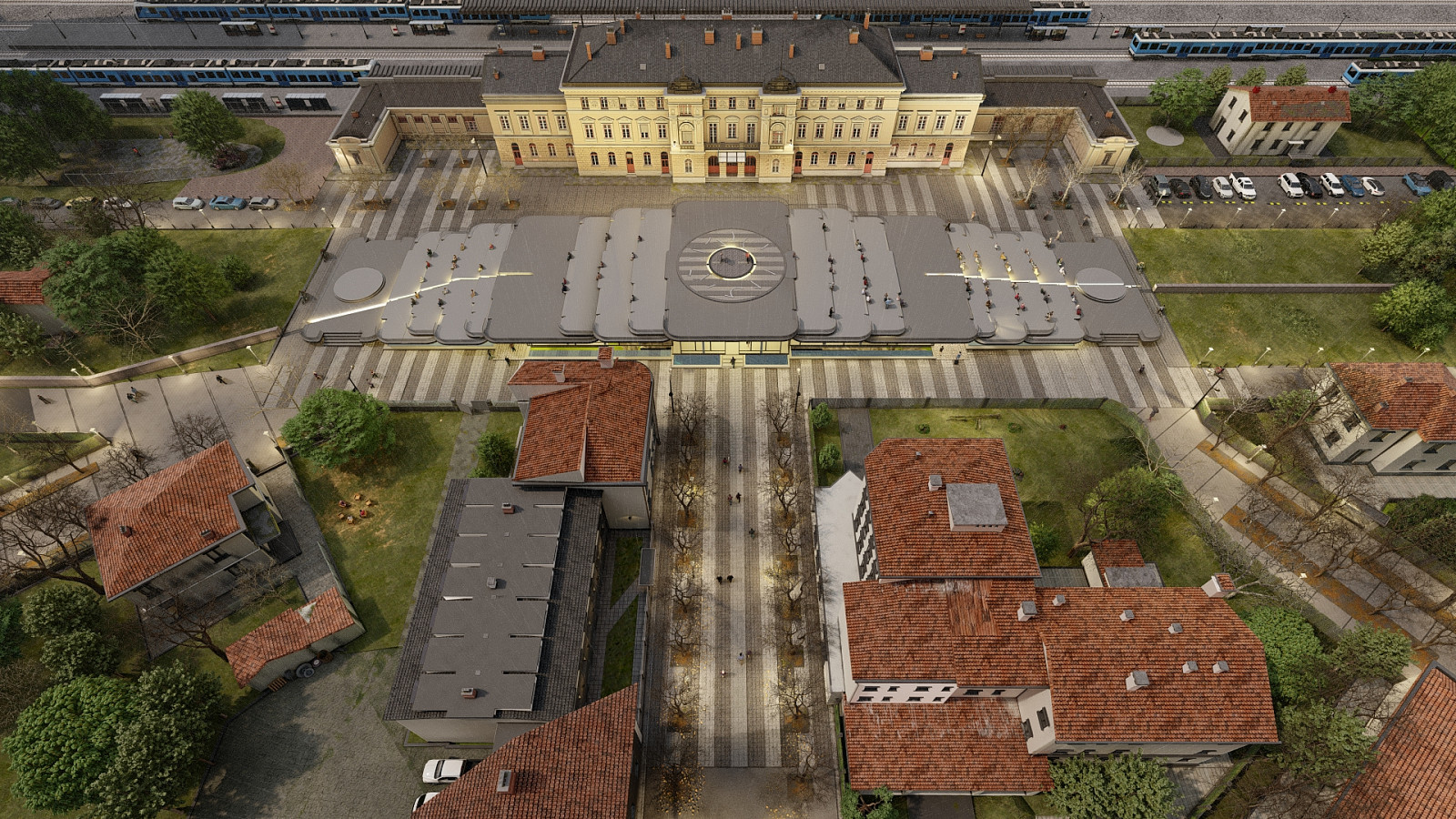
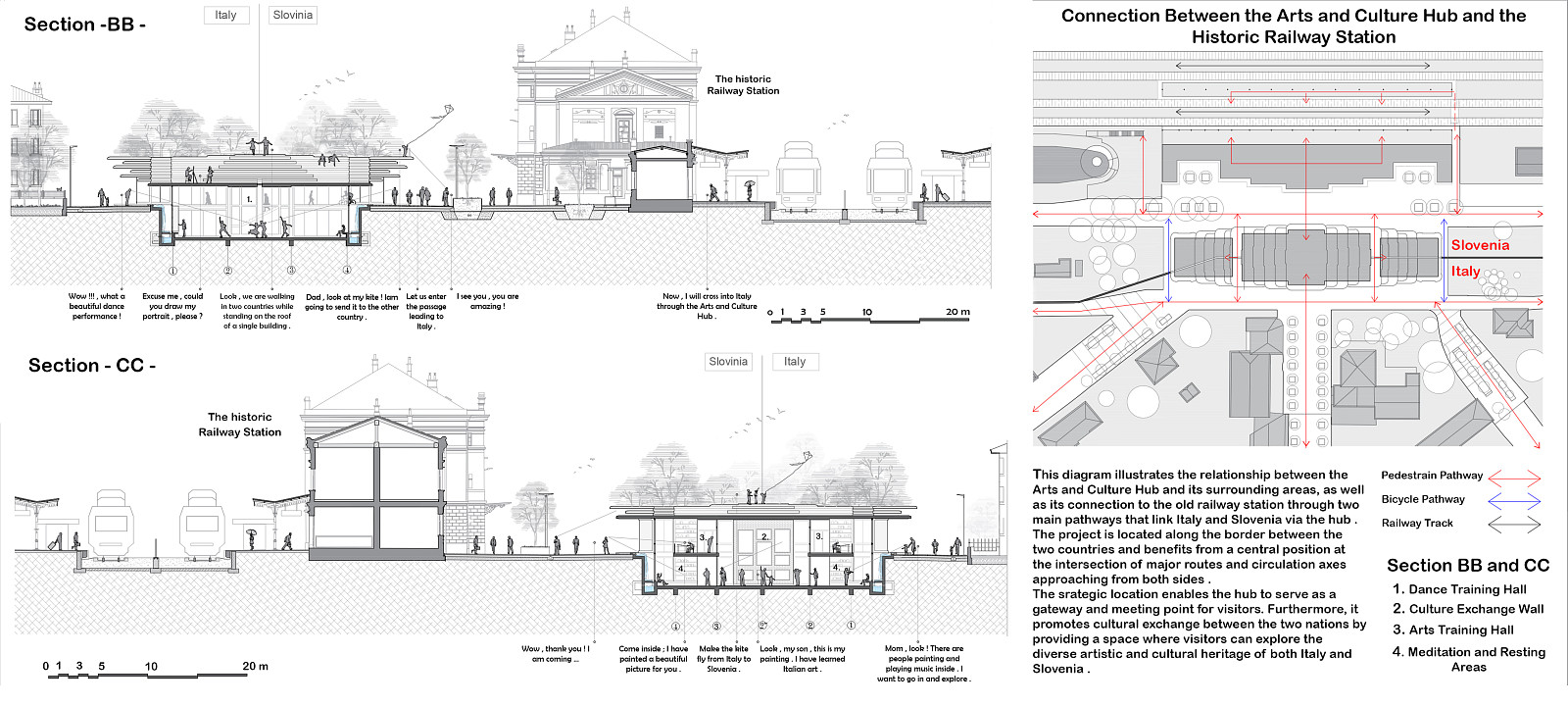
Located in Trg Evrope Square, where the border line between Italy and Slovenia passes, the Cultural and Arts Hub emerges from the ground, lifting both the plaza and the border line above it. The historic circular plaza is elevated to become the highest point of the building, while the border line itself is interrupted. Today, people cross between Italy and Slovenia through two public passages that connect the two countries via the Cultural and Arts Hub.
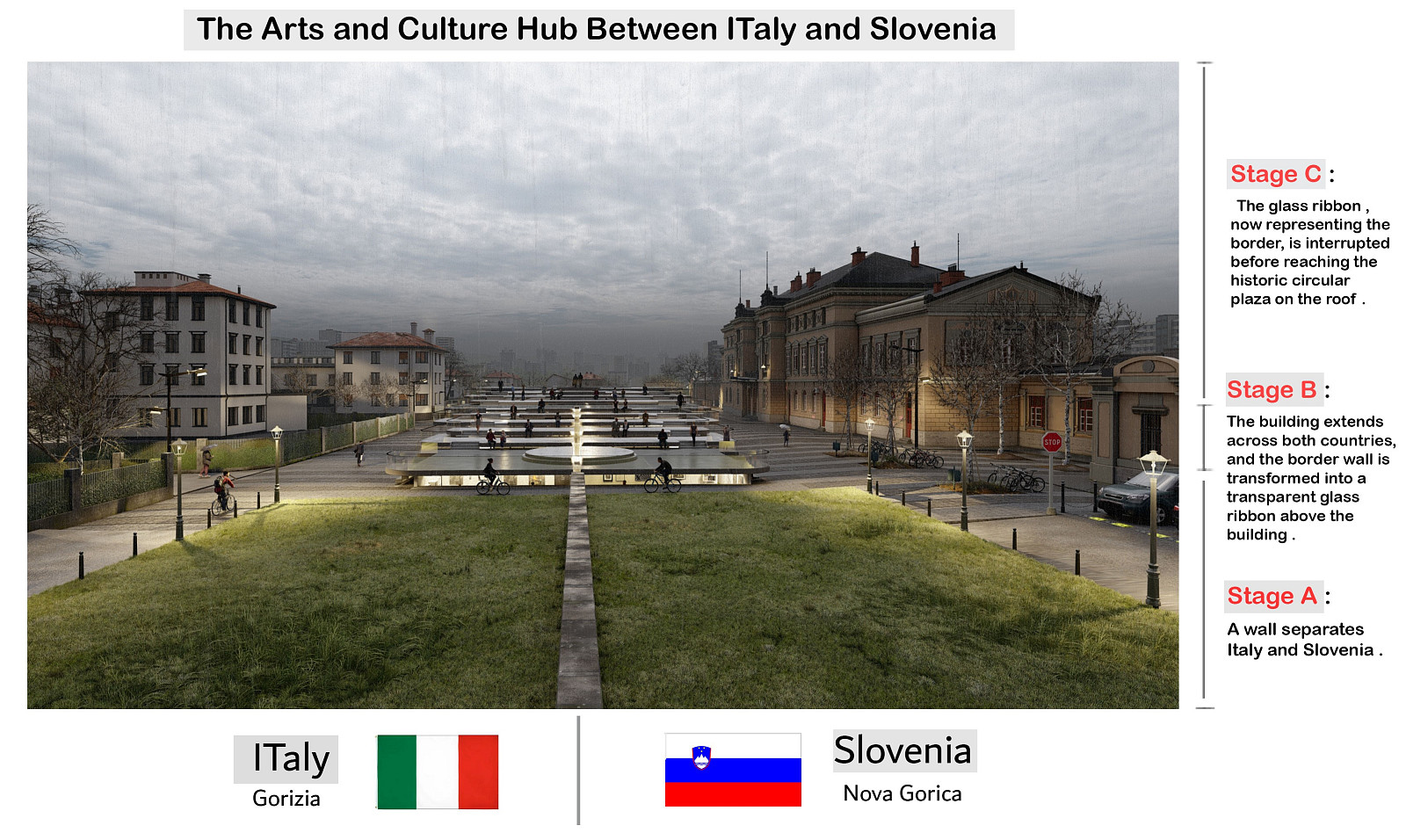
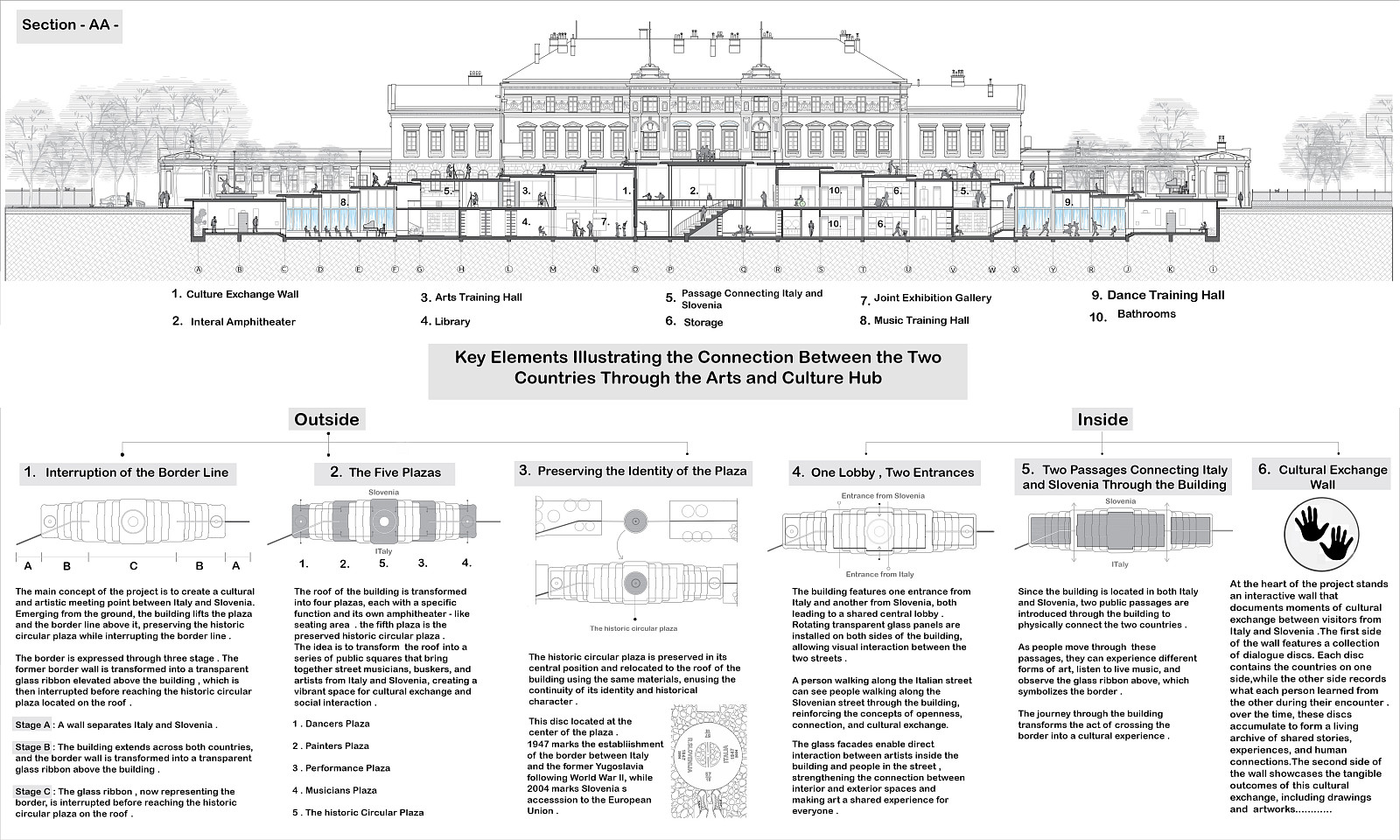
The concept of interrupting the border is expressed through three stages. The border line is transformed from a wall separating the two countries into a transparent glass ribbon elevated above the building. The ribbon is then interrupted before reaching the historic circular plaza located at the top of the building.
Stage A: A wall separates Italy and Slovenia.
Stage B: The building occupies both countries, and the border wall is transformed into a transparent glass ribbon above the building.
Stage C: The glass ribbon, now representing the border, is interrupted before reaching the historic circular plaza above.
The Cultural and Arts Hub is located equally within Italy and Slovenia. Despite its position in two different countries, the building does not express any formal distinction between them. Instead, it appears as a single, simple, and unified form that emerges from the landscape, symbolizing the interruption of the border and the meeting of culture and art between the two peoples. The diversity is expressed through the surrounding activities and cultural interactions rather than through the architecture itself.
The project's main objective is to encourage the exchange of knowledge, art, and culture between both sides of the border. Every visitor contributes part of their own culture while discovering and learning from others. The design conveys a message of peace, understanding, and cultural dialogue among people. By allowing movement between two countries through a single building dedicated to culture and art, the project transforms the border from a line of separation into a place of connection, interaction, and shared experience.
Project description
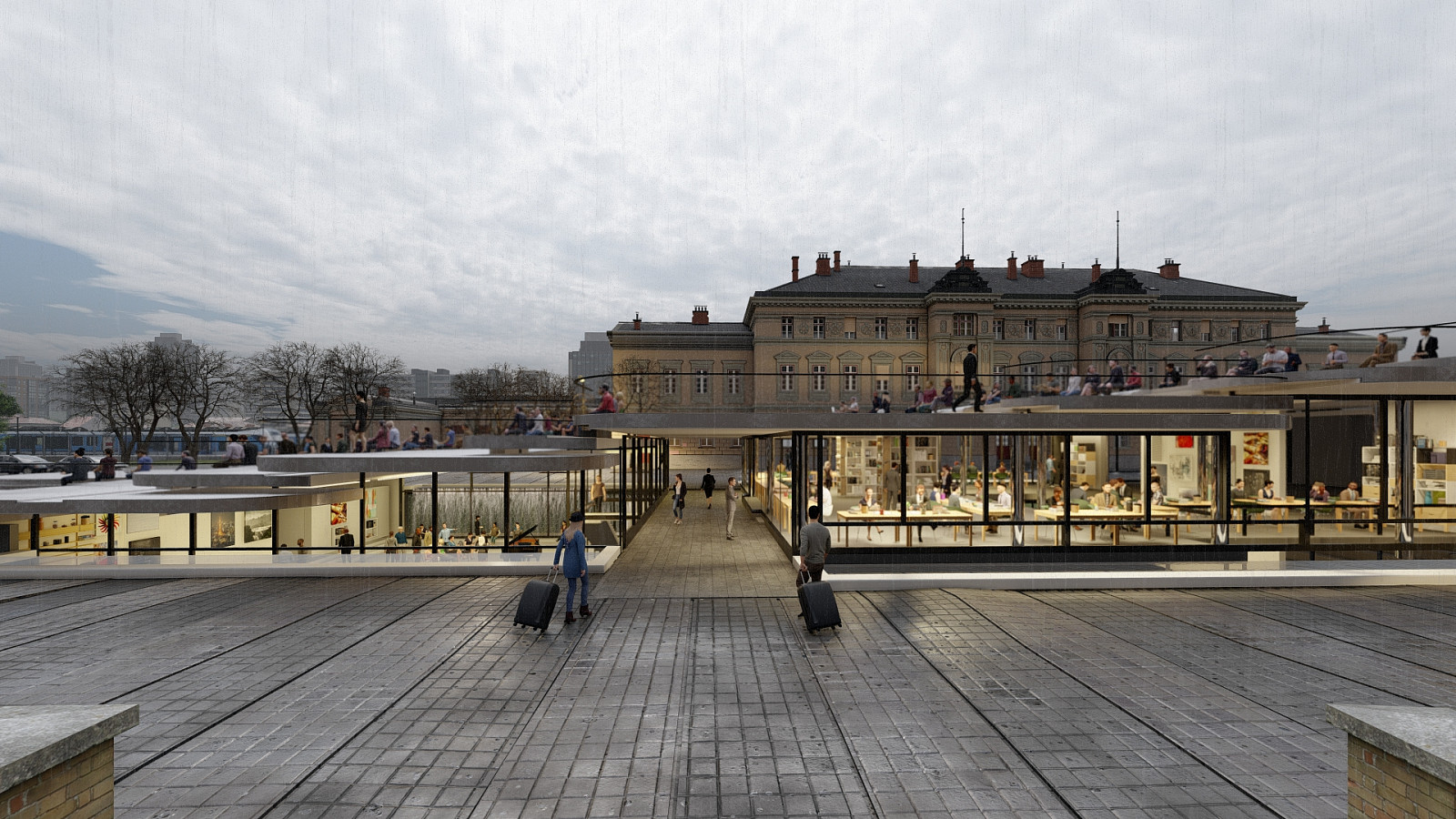
The roof of the building is divided into four main performance plazas while preserving the historic circular plaza at the highest point of the building. Each plaza has a specific function and its own seating terraces, creating a series of public spaces that bring together musicians, artists, and street performers from both the Italian and Slovenian sides. These spaces encourage collaboration and cultural exchange through shared artistic performances that attract and engage both communities.
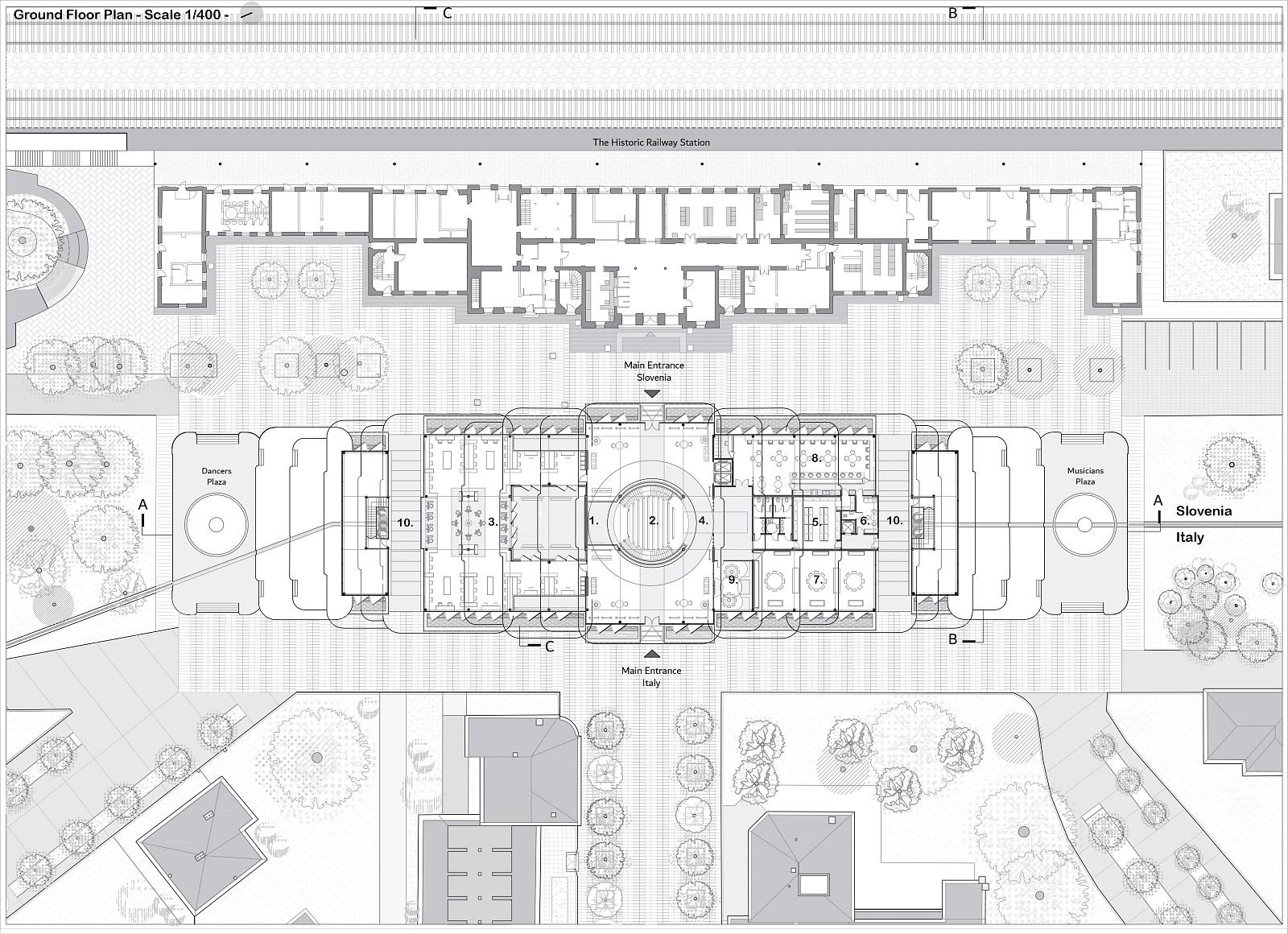
This concept continues inside the building, where one entrance from the Italian street and another from the Slovenian street lead to a shared central lobby that serves as a meeting point for visitors. The lobby contains exhibition areas dedicated to collaborative works and is centered around the Cultural Exchange Wall, the project's main interior element.
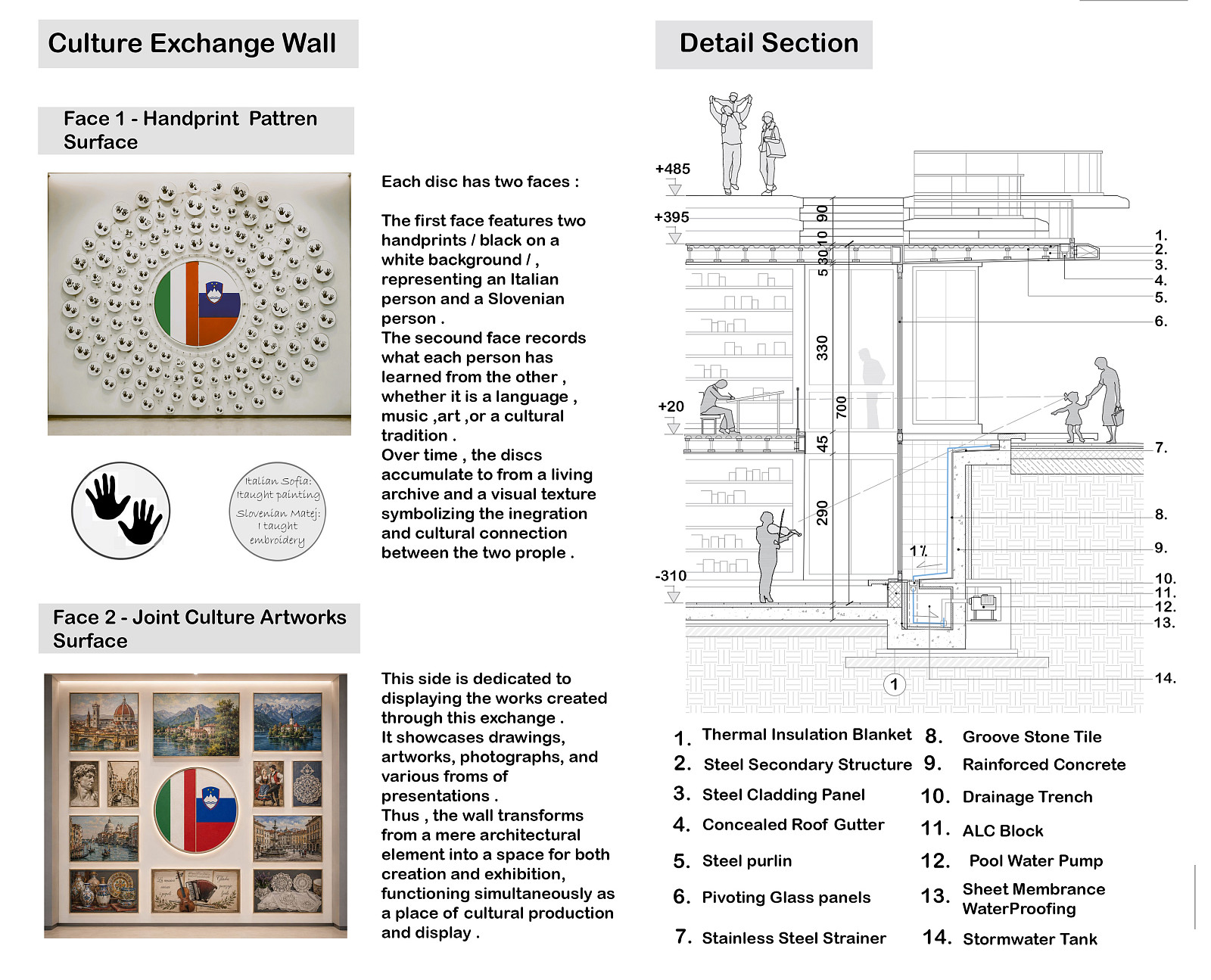
The Cultural Exchange Wall consists of two faces that represent the process of exchange between the two peoples. The first face, overlooking the lobby, features interactive double-sided discs. One side displays the handprints of two individuals, one Italian and one Slovenian, while the other records what each person has learned from the other. Together, these discs form a visual texture that symbolizes the cultural integration of the two communities. The second face of the wall is dedicated to displaying drawings, artworks, and collaborative projects created through this interaction.
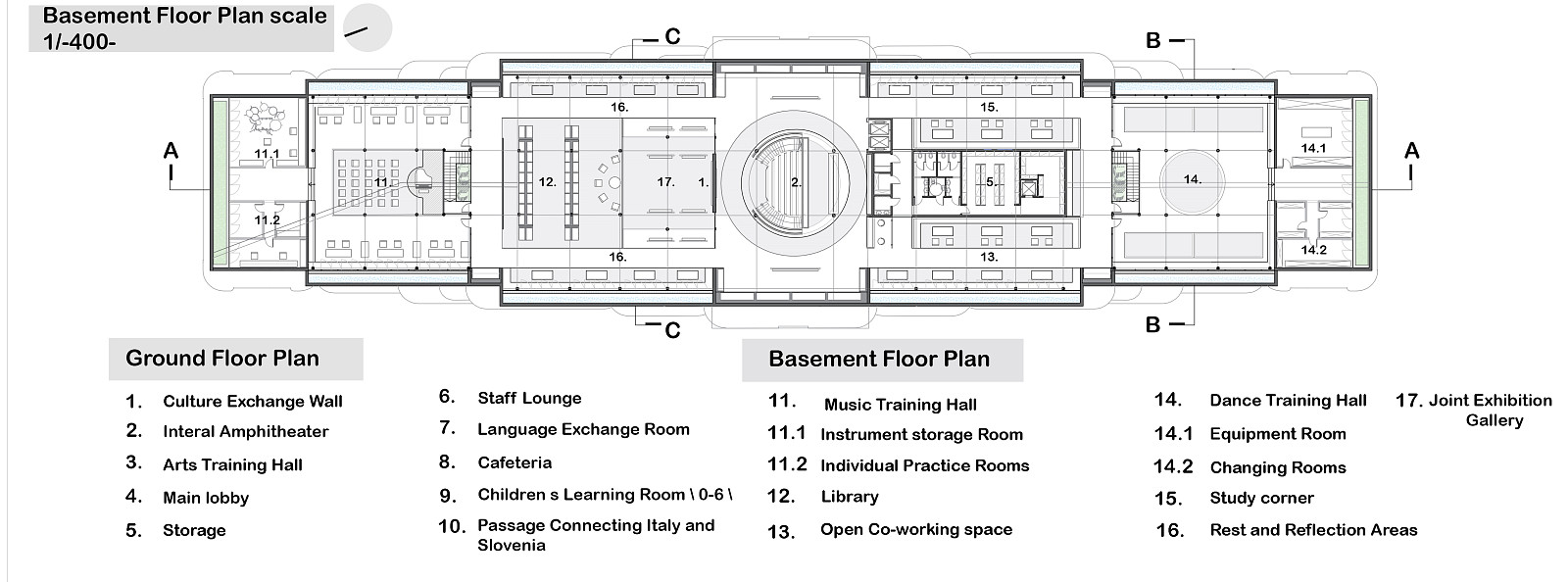
On the first floor, a multi-purpose arts hall is located at the heart of the building. Its central void creates visual and functional connections between the different activities and levels. The floor also includes a language exchange room for Italian and Slovenian, a learning room for children under six years old, and a cafeteria overlooking the historic railway station. A separate service entrance provides access to the staff lounge and storage facilities.
The basement level contains a music education hall, a dance hall, a library, a joint exhibition gallery, and open co-working spaces overlooking panoramic artificial waterfalls that create a calm and comfortable atmosphere.
The organization of these spaces is based on strengthening the connections between the different functions as well as between the interior and exterior environments. This relationship is further enhanced by the two public passages that connect Italy and Slovenia through the building. As visitors move through them, they can experience art, music, and various cultural activities, transforming the act of crossing the border into part of the overall experience.
As a result, the building becomes both a gateway between Italy and Slovenia and a center for everyday cultural activities, where people of all ages can meet, interact, and participate in a shared cultural experience.
Technical information
The Arts and Culture Hub is constructed using a lightweight steel structural system that provides flexible and open interior spaces. Lightweight materials were selected to reduce structural loads and improve construction efficiency. The building envelope combines glass and metal panels, reinforcing the concepts of transparency, openness, and cultural exchange. Large glazed surfaces and operable glass panels strengthen the visual connection between indoor and outdoor activities, while the accessible roof accommodates public plazas, performances, and gathering spaces.

Copyright © 2026 INSPIRELI | All rights reserved. Use of this website signifies your agreement to the Terms of Use, Privacy Policy, and use of cookies.