
Camanchaca


Project idea
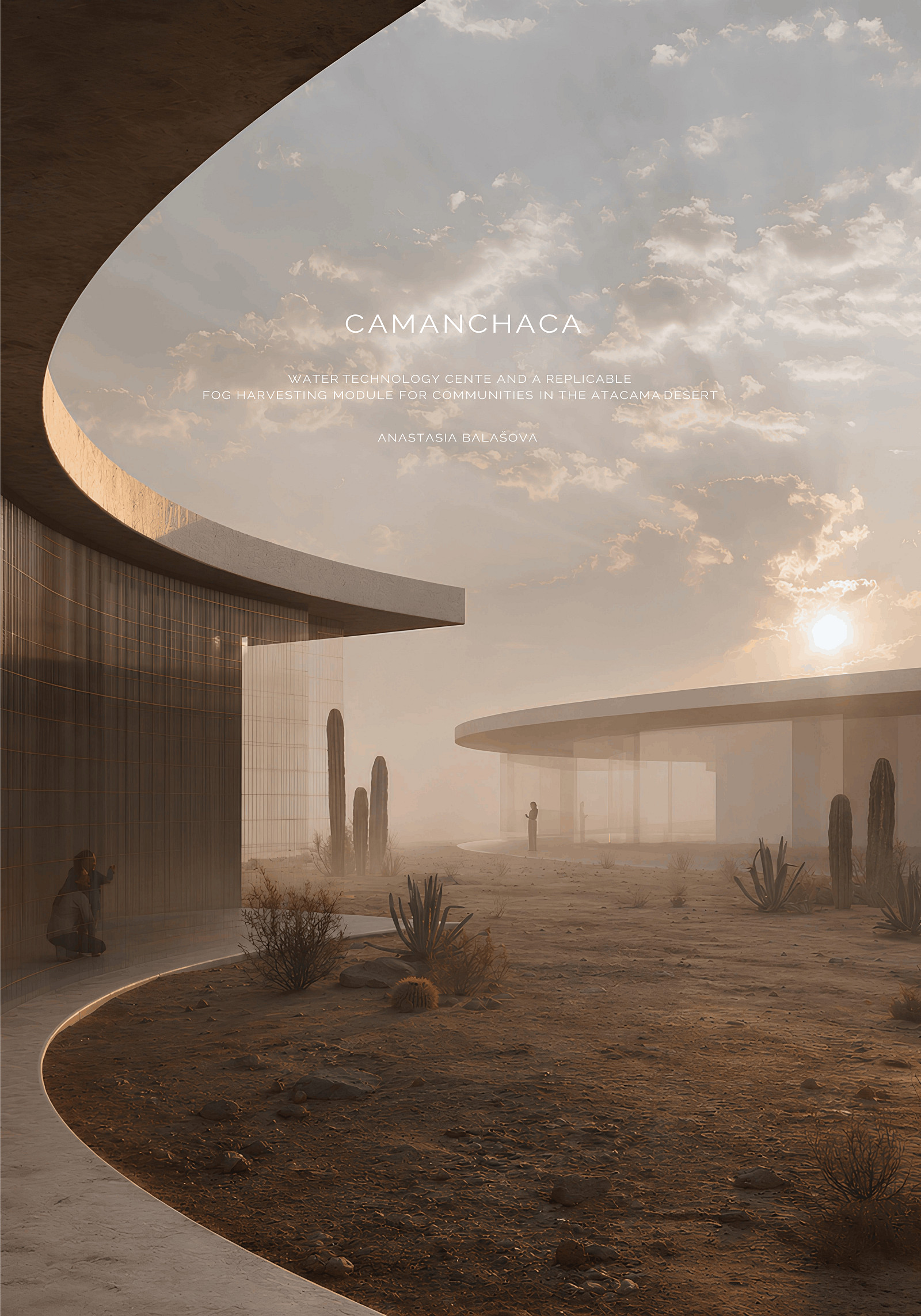
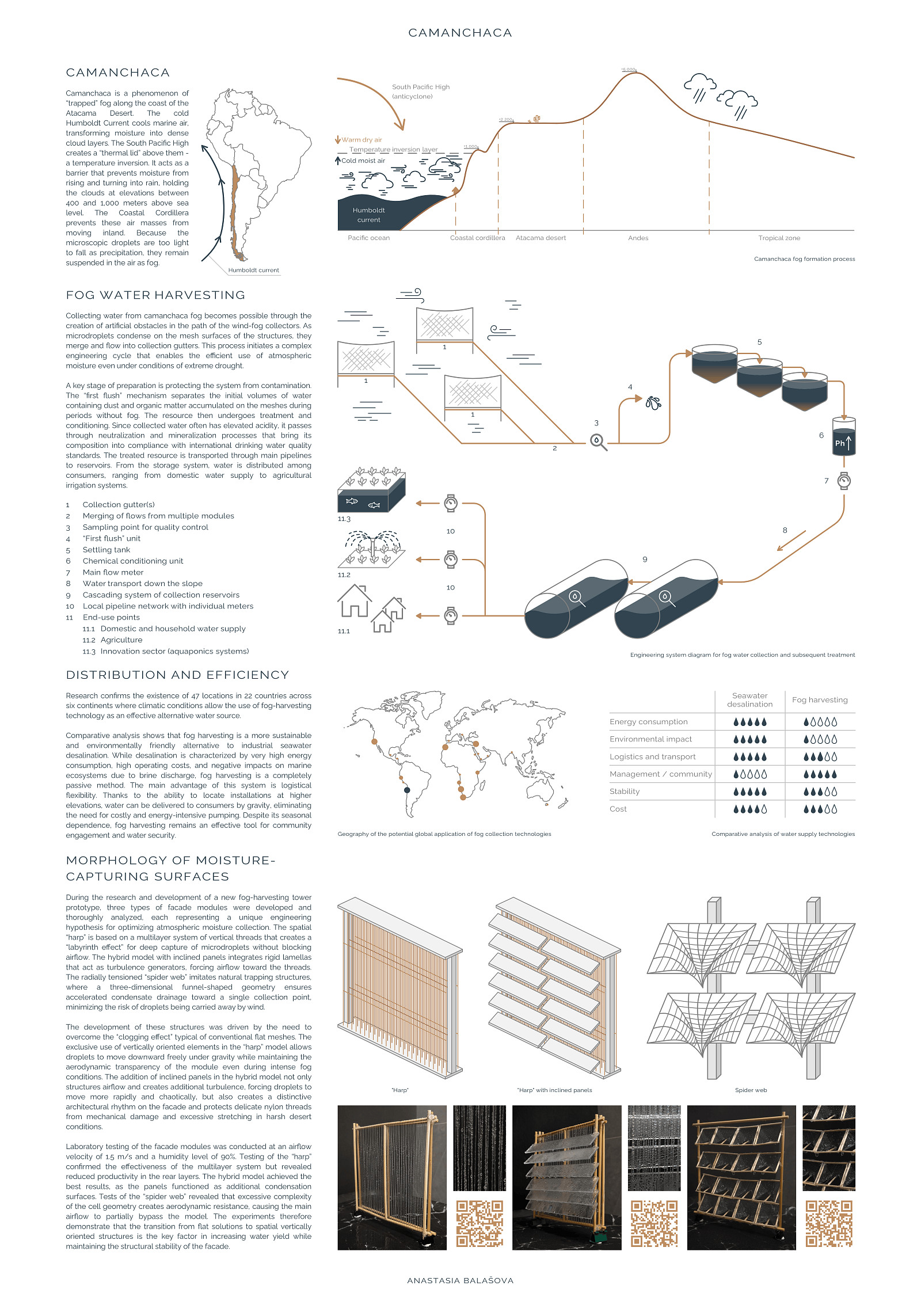
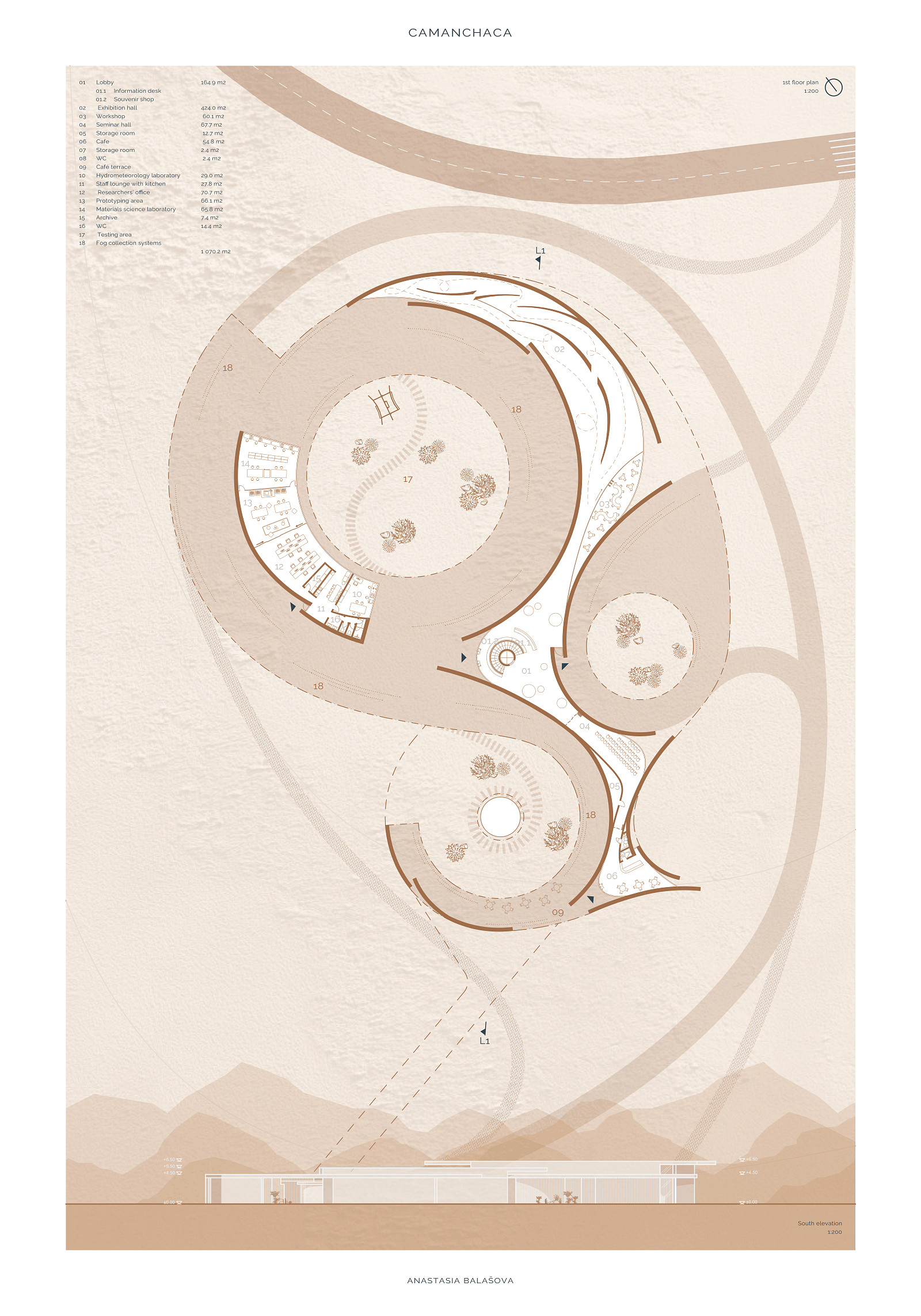
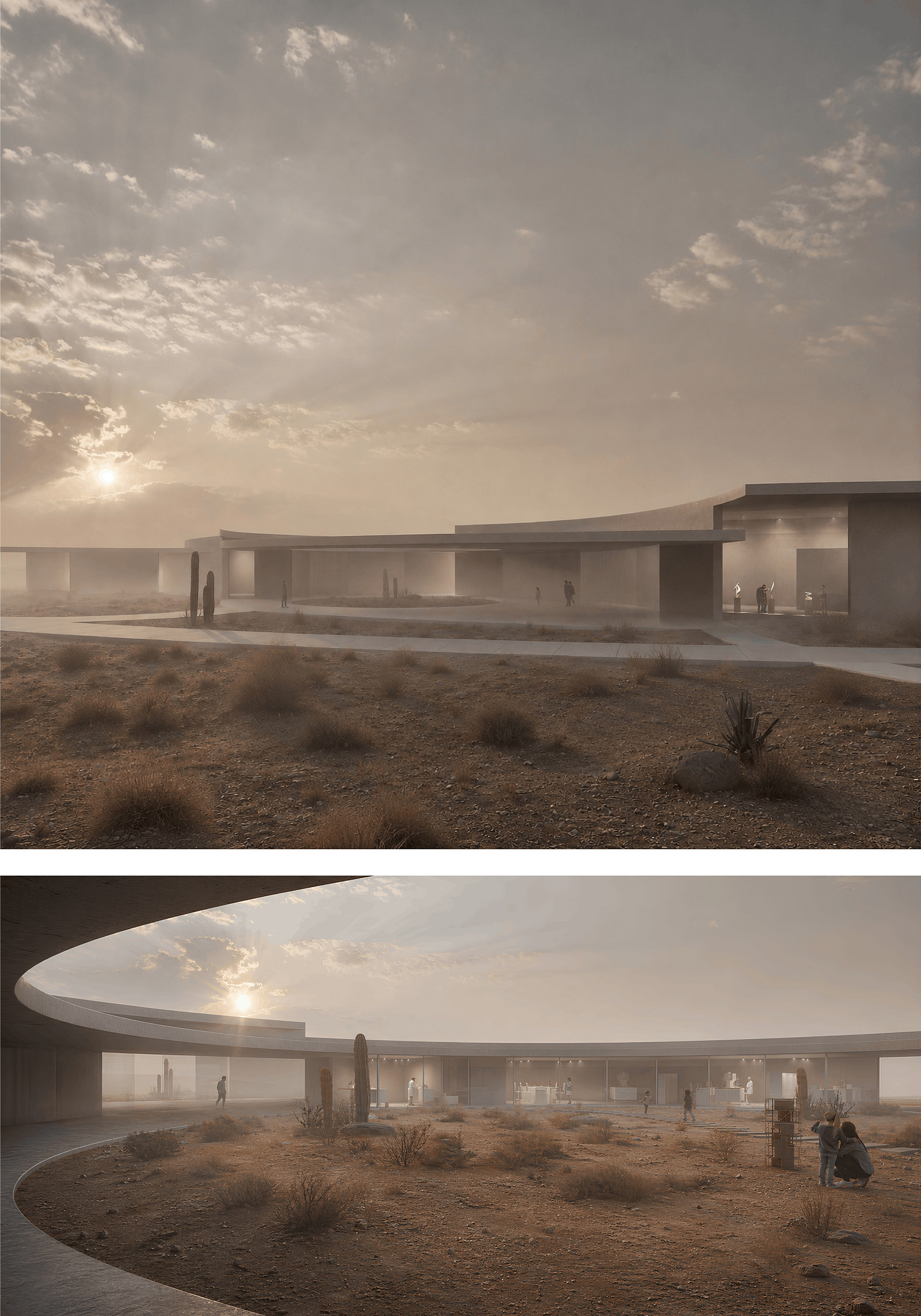
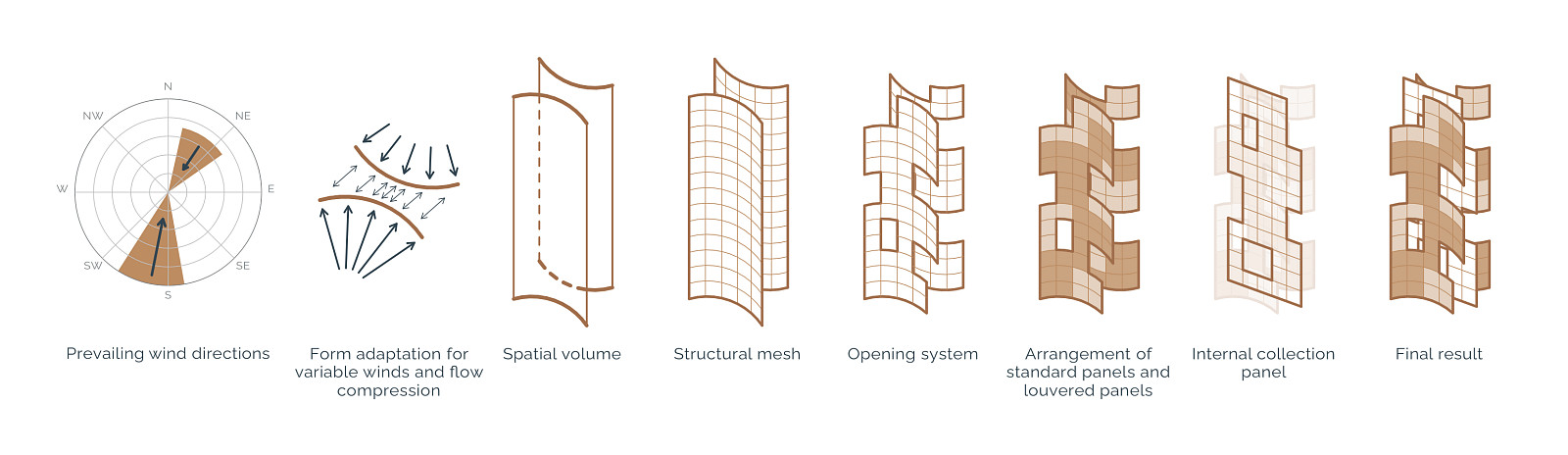
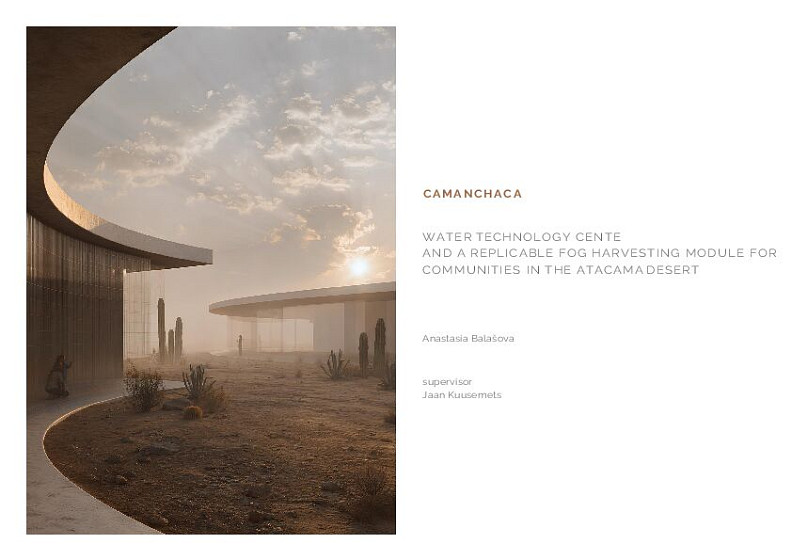
The project aims to address freshwater shortages in Chile's arid regions using Camanchaca fog harvesting systems. The concept centers on the creation of a passive fog collection system and the subsequent integration of these systems into the architecture. The project combines a research center with fog harvesting modules. The center not only studies and implements eco-technologies but also visually demonstrates their operation to visitors, transforming a utilitarian engineering system into a new tourist attraction.
Project description
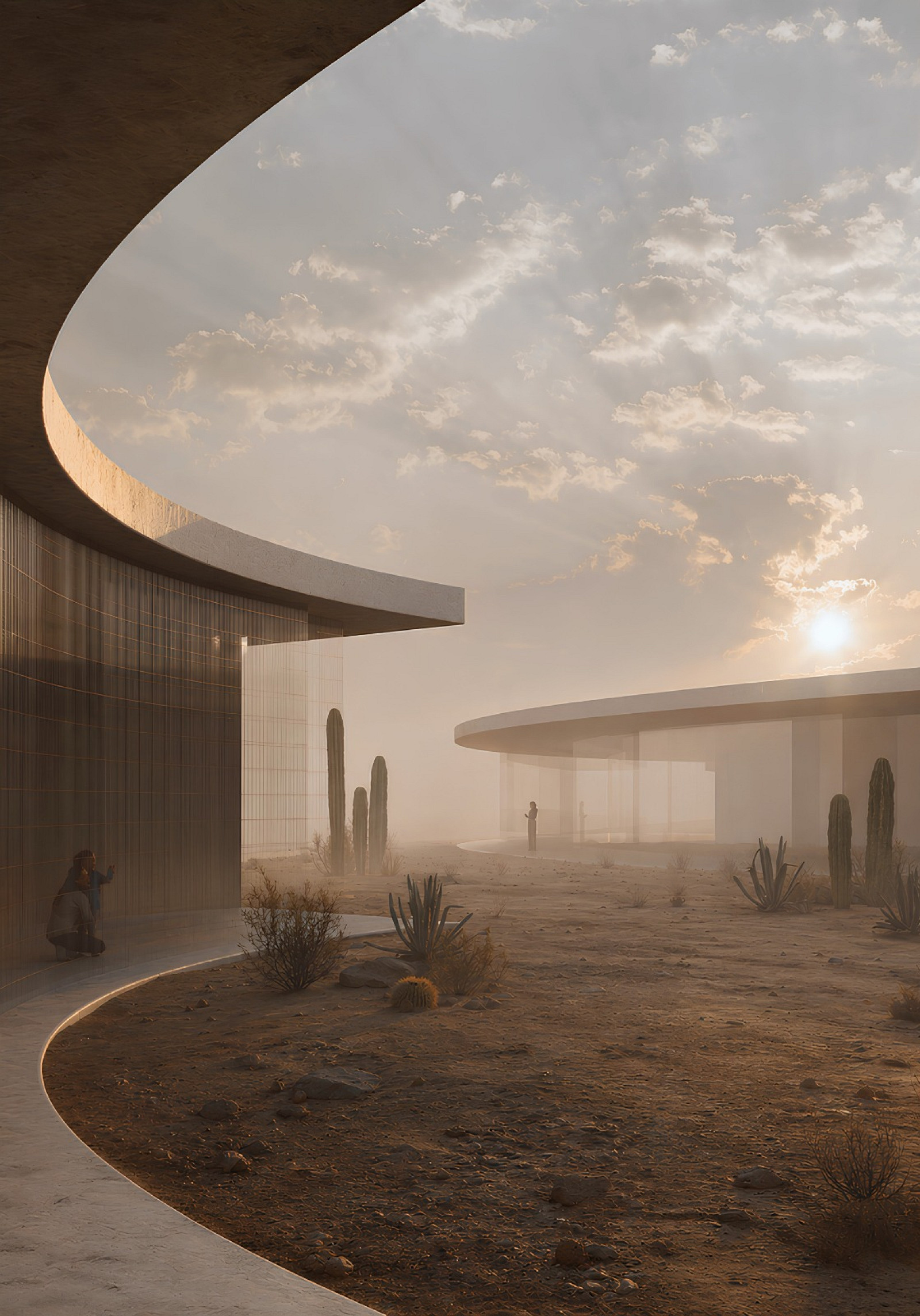
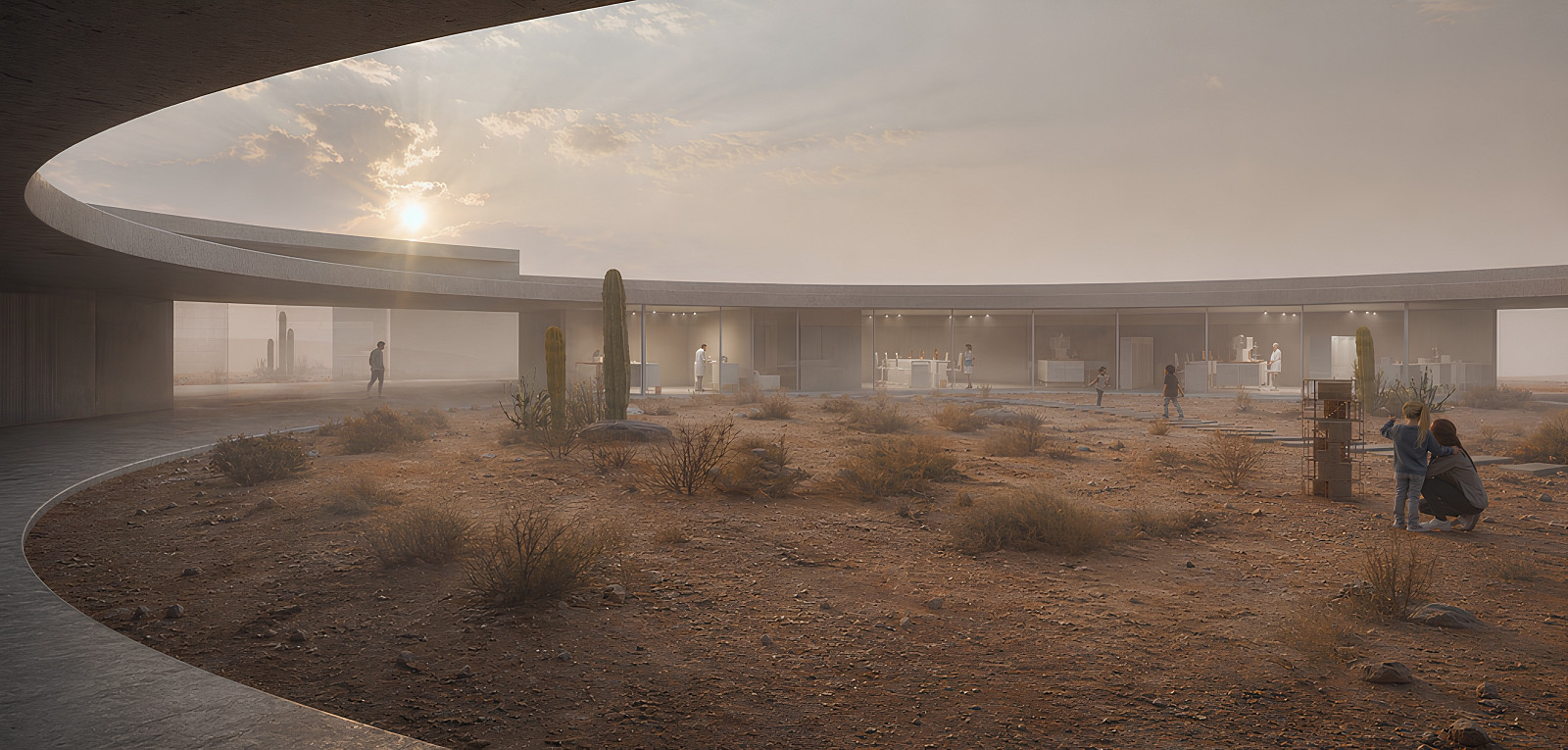
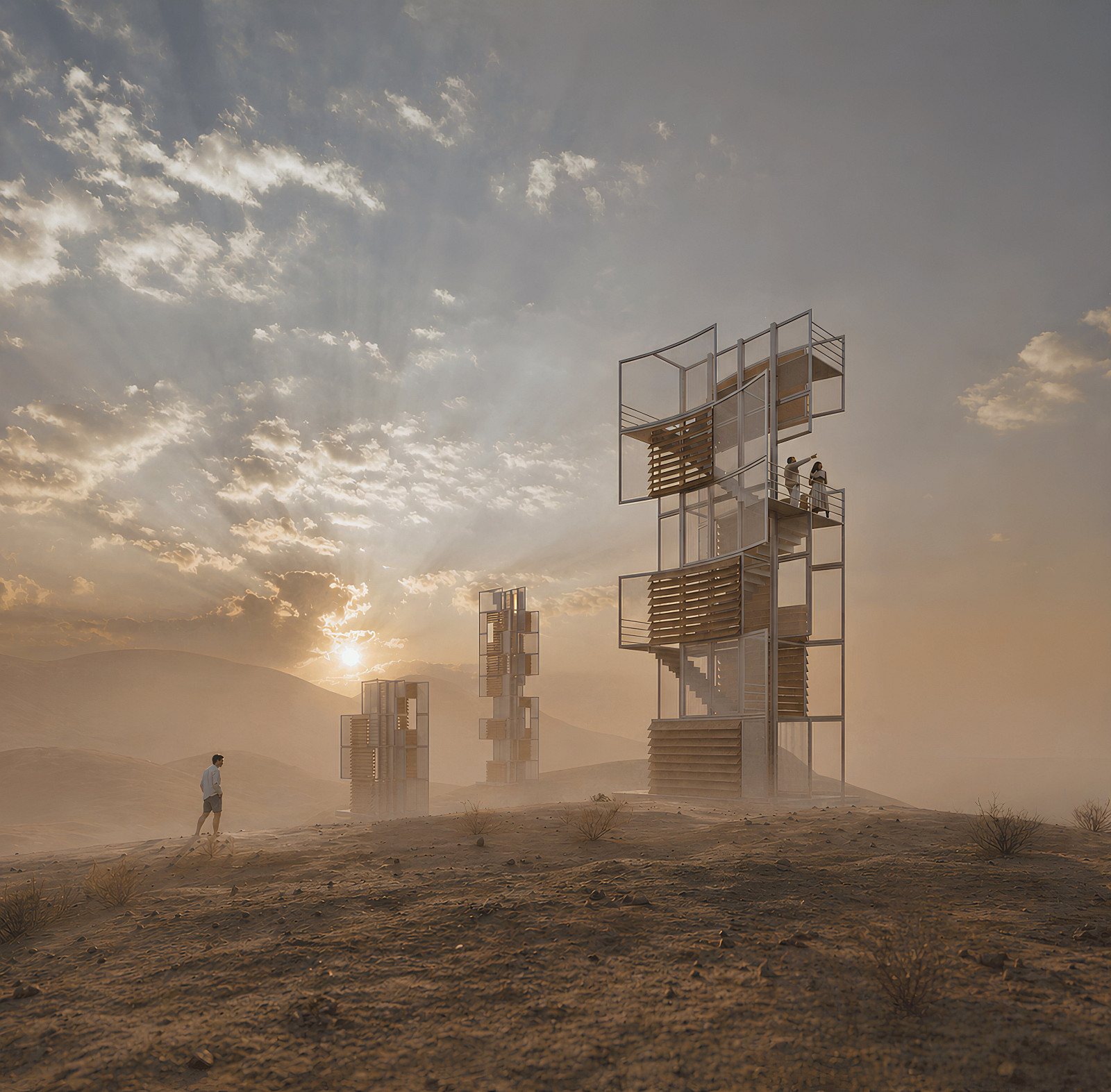
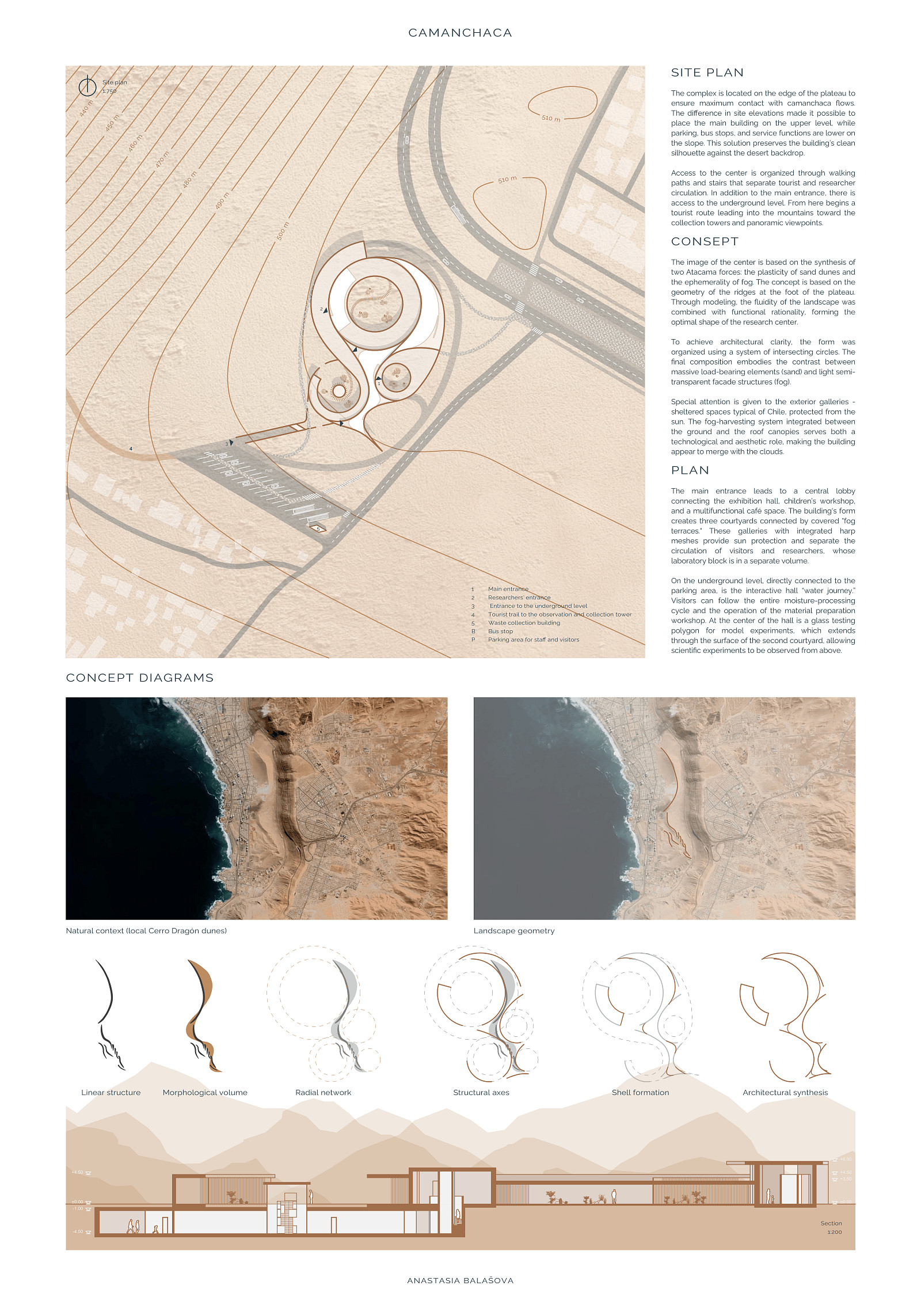
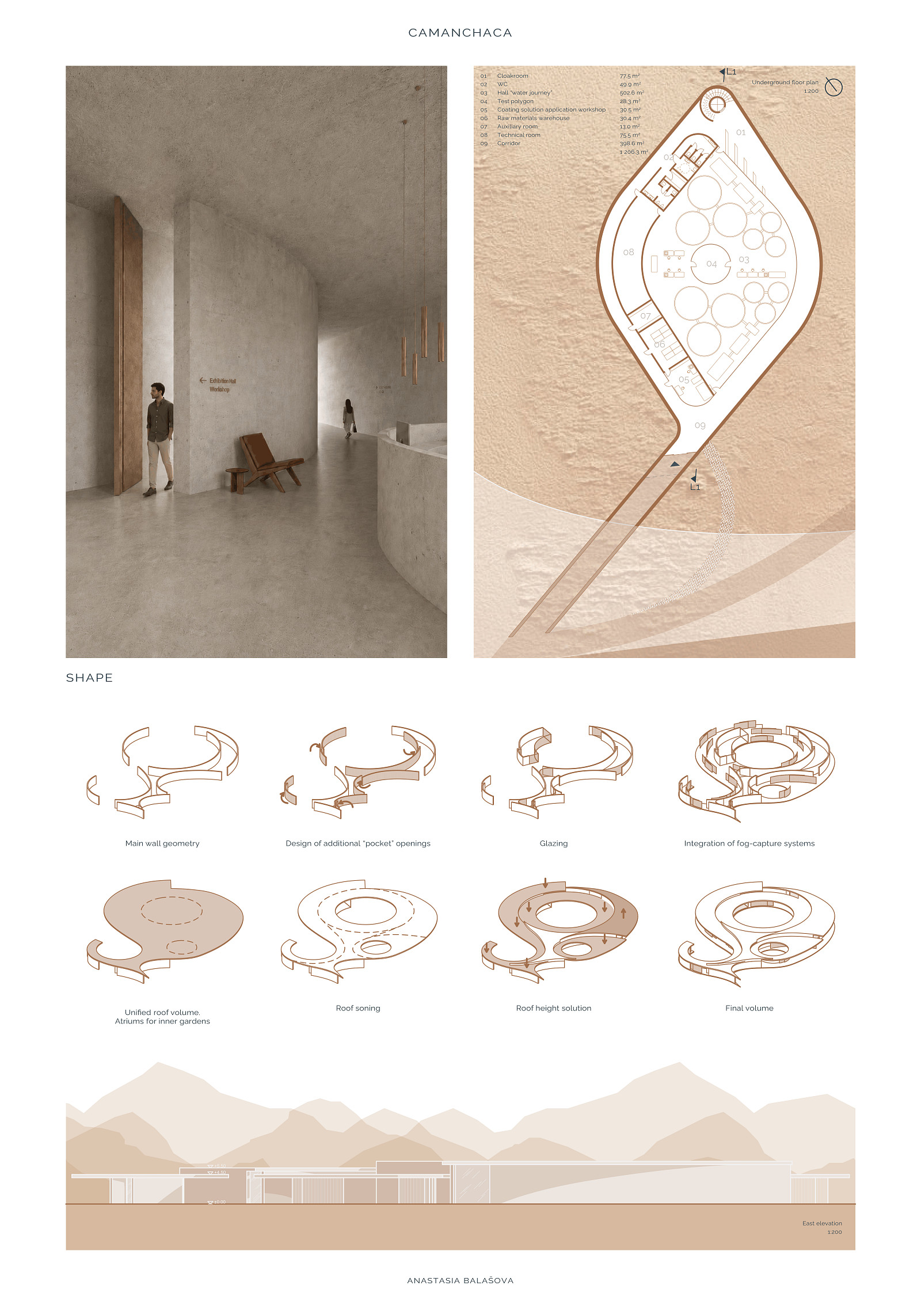
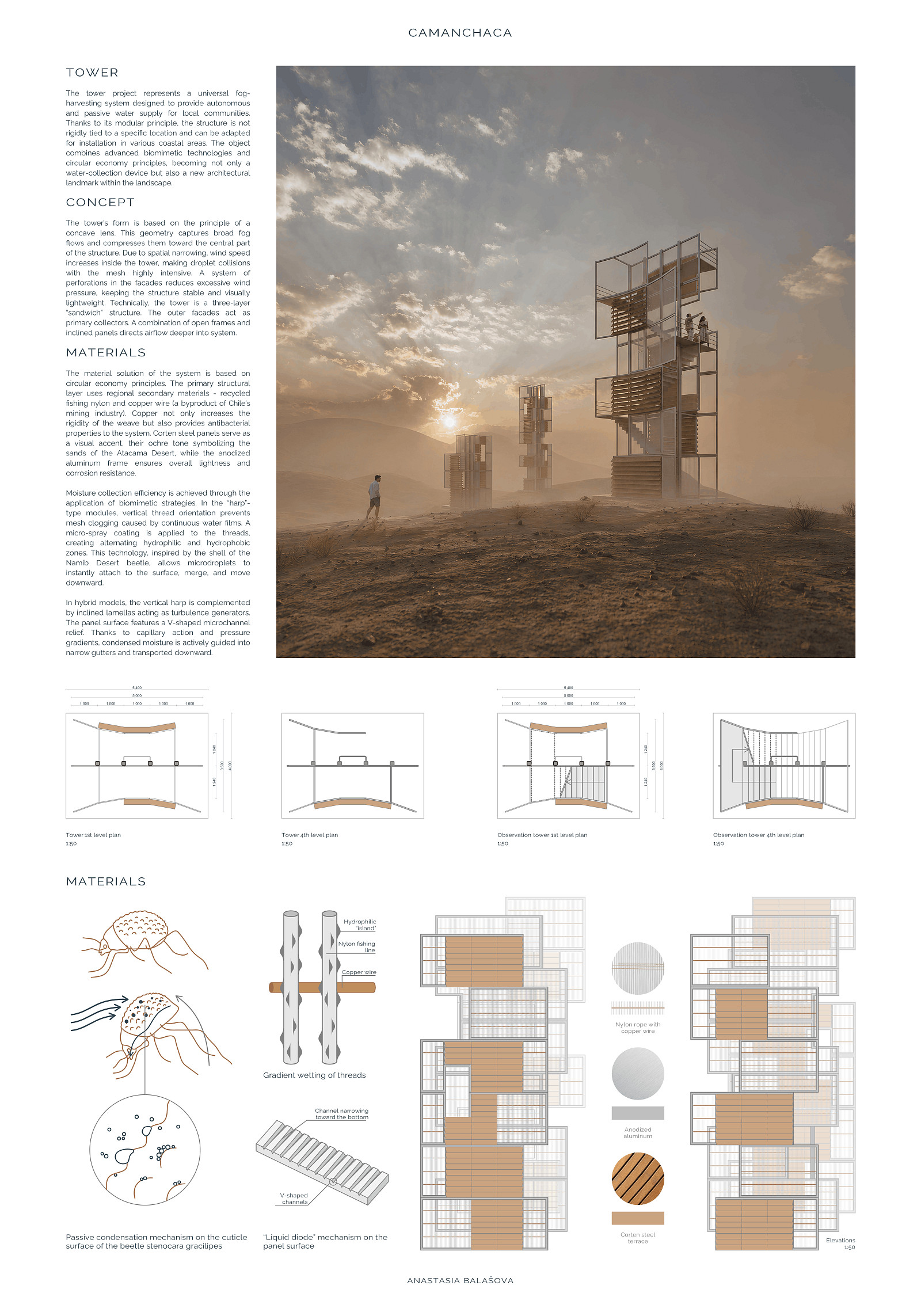
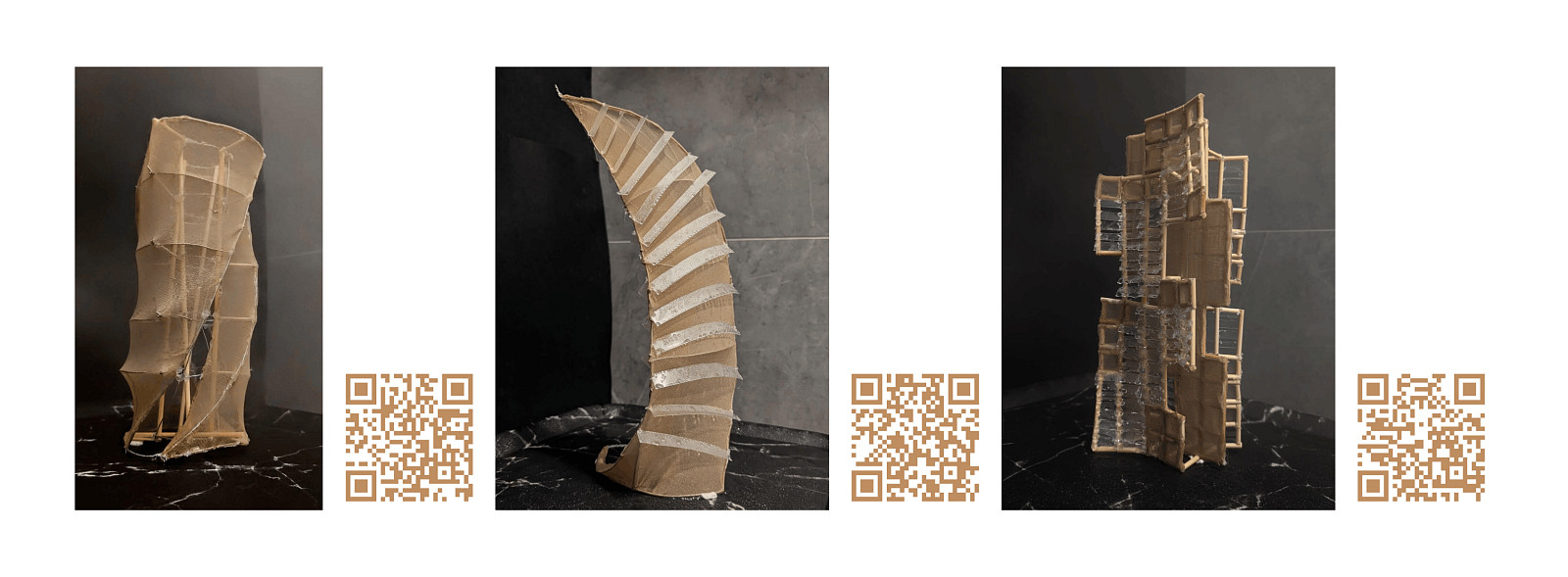
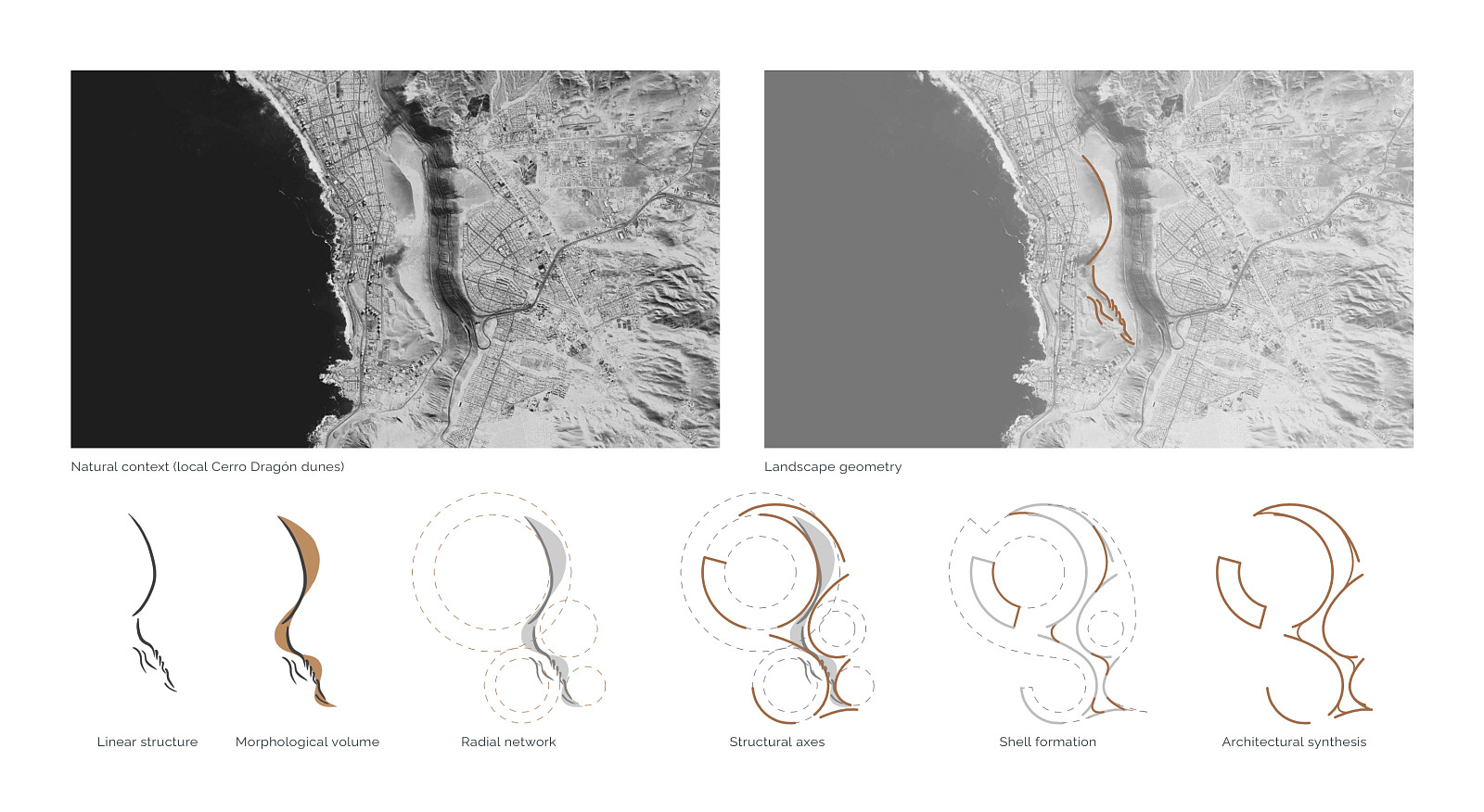
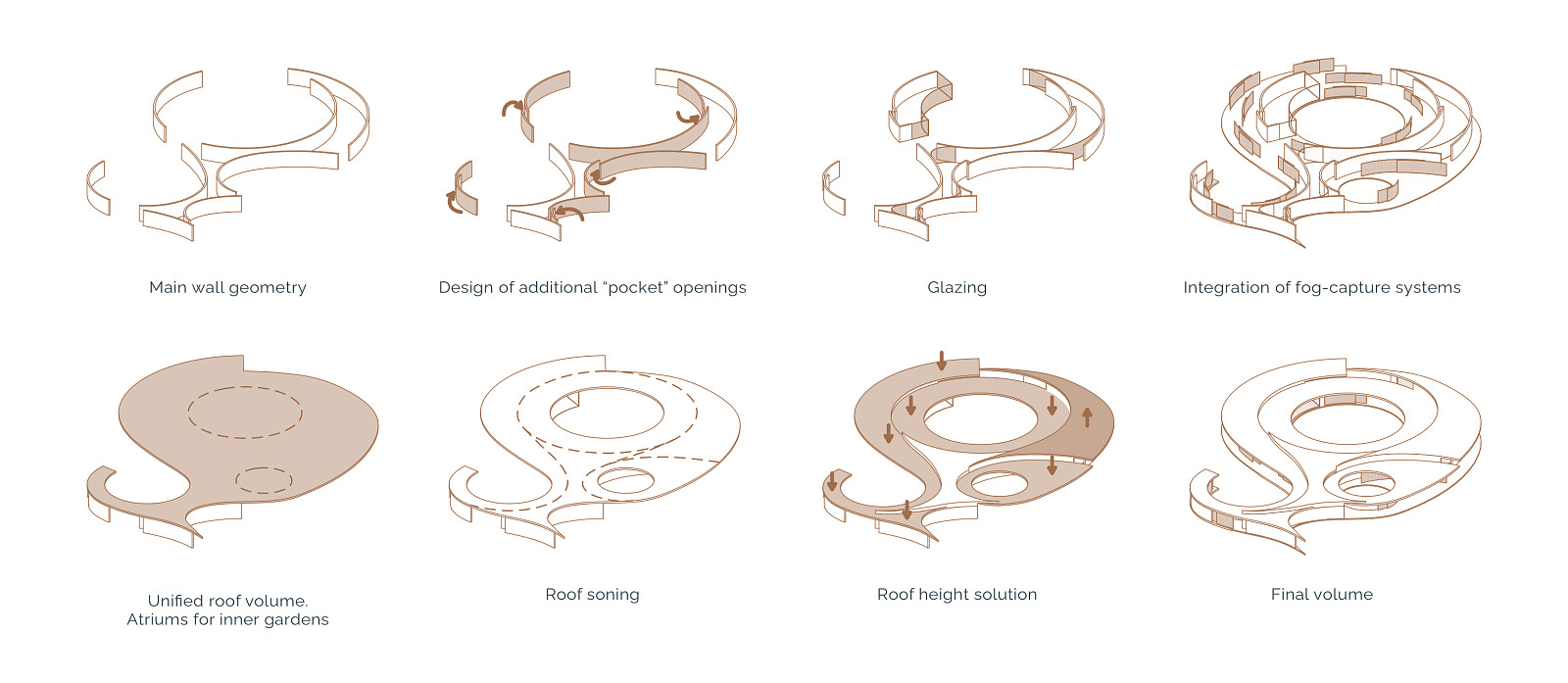
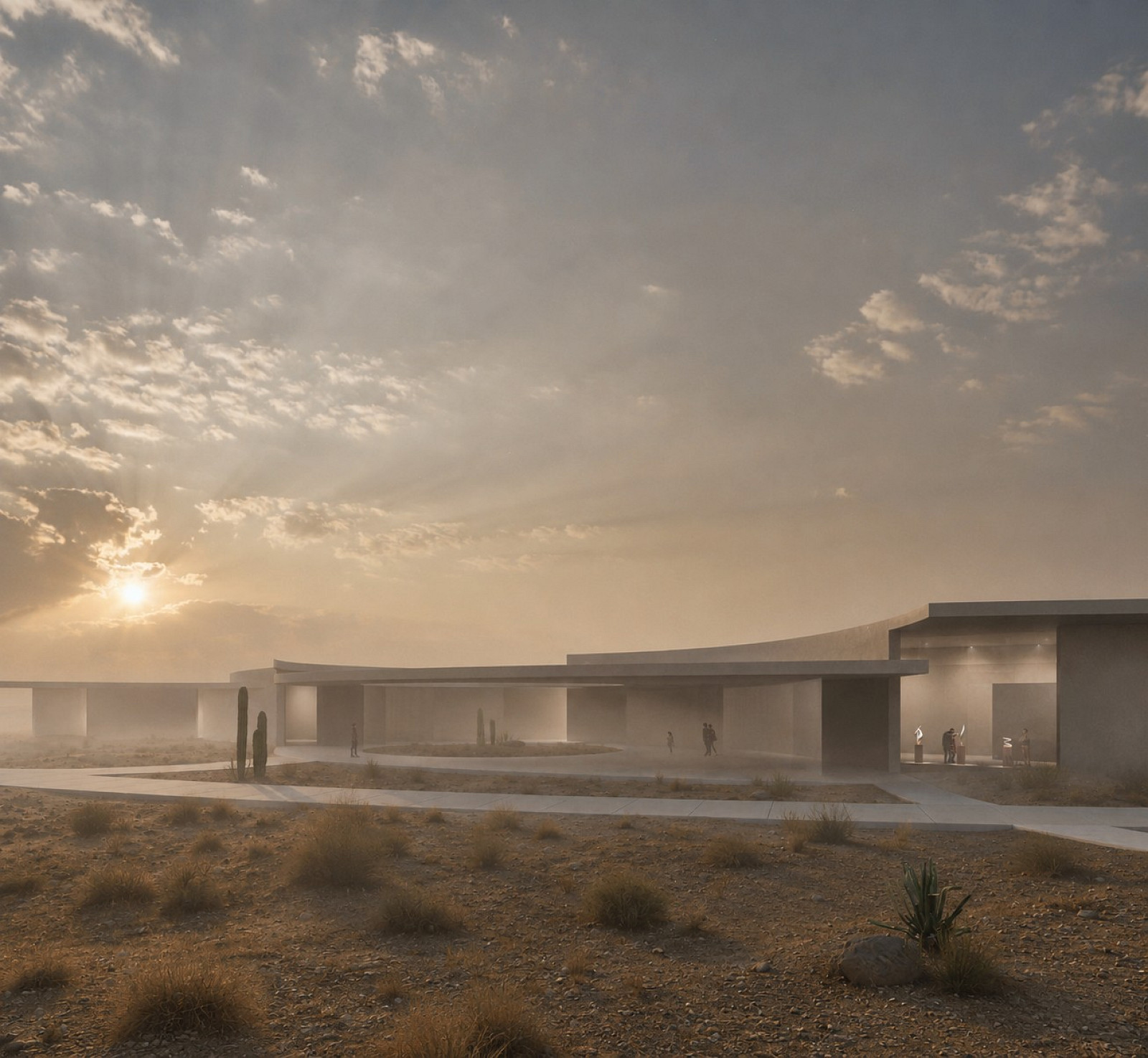
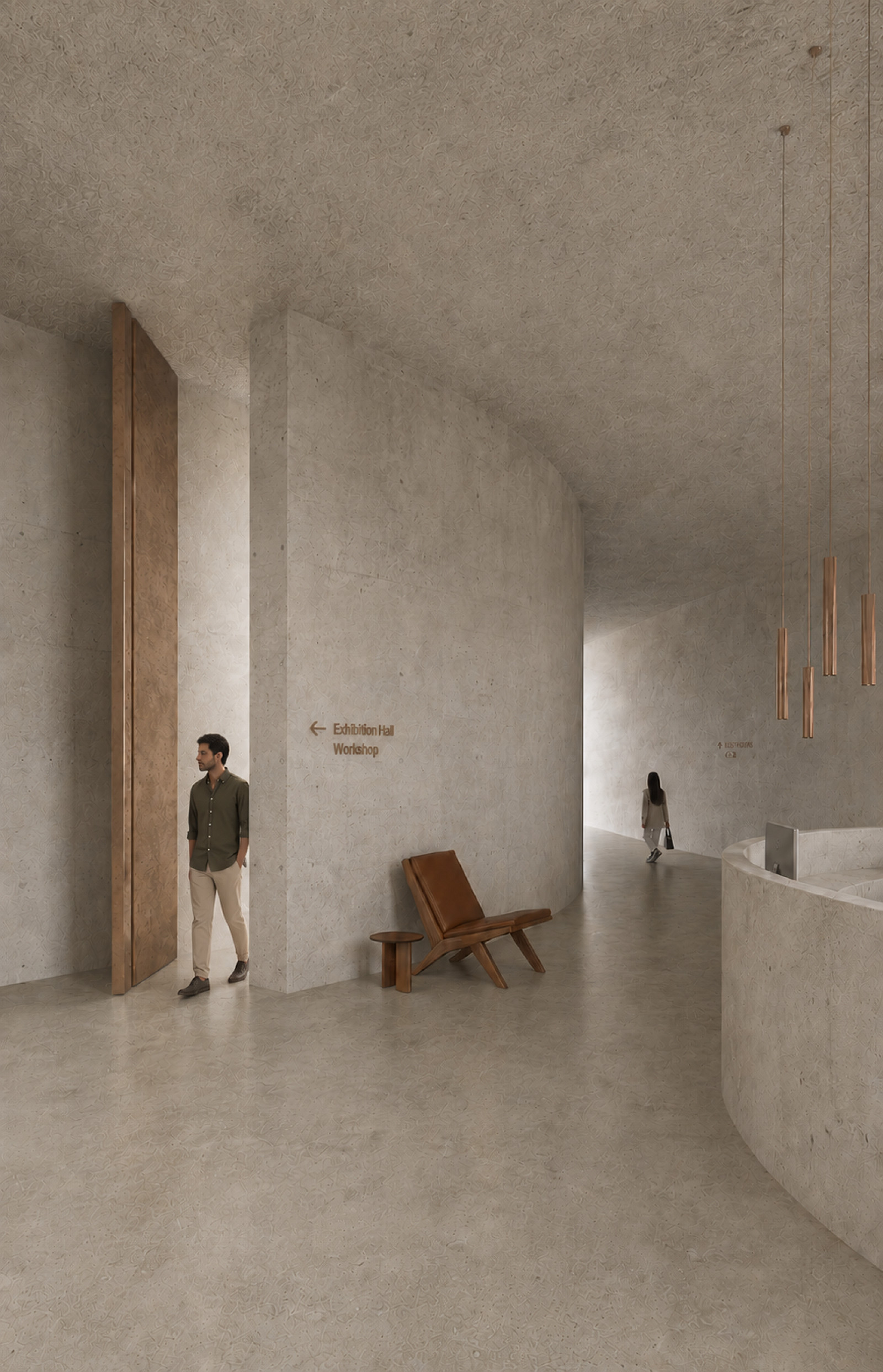
The architectural concept is inspired by the gracefulness of desert dunes, where the building's flowing lines form three courtyards connected by "fog terraces." These covered galleries, with integrated fog-catching nets, provide sun protection and separate the flow of visitors from the scientists, whose laboratory block is located in a separate volume. The public area includes a lobby, an exhibition hall, children's workshops, and a transformable café. The underground level houses an interactive "water path" room and a test site with a glass dome, allowing observation of the experiments from the courtyard. The project's main focus is the modular mist-catching towers, which serve both as a moisture-collecting utility unit and, in rare cases, as a vertical observation deck.
Technical information
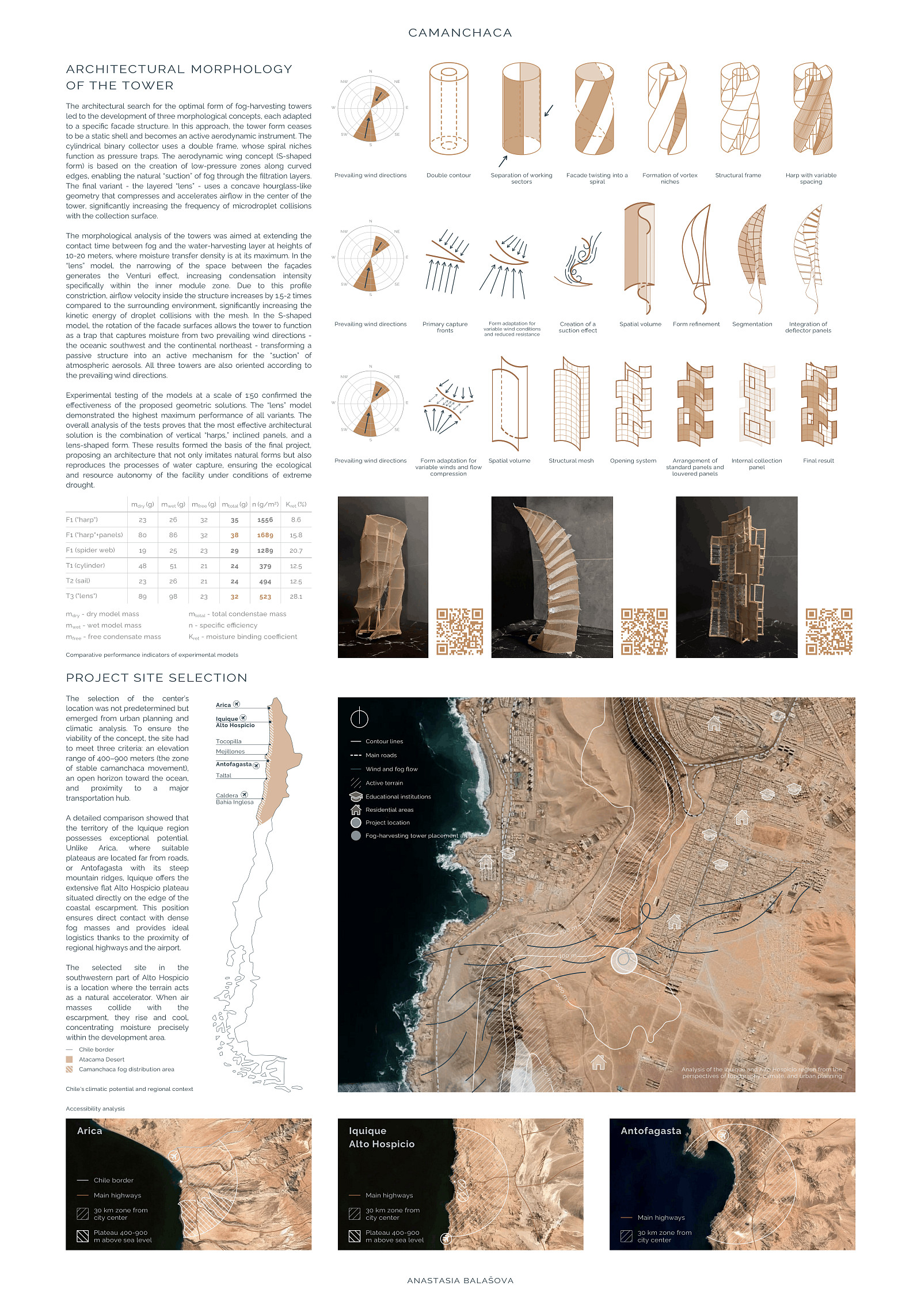
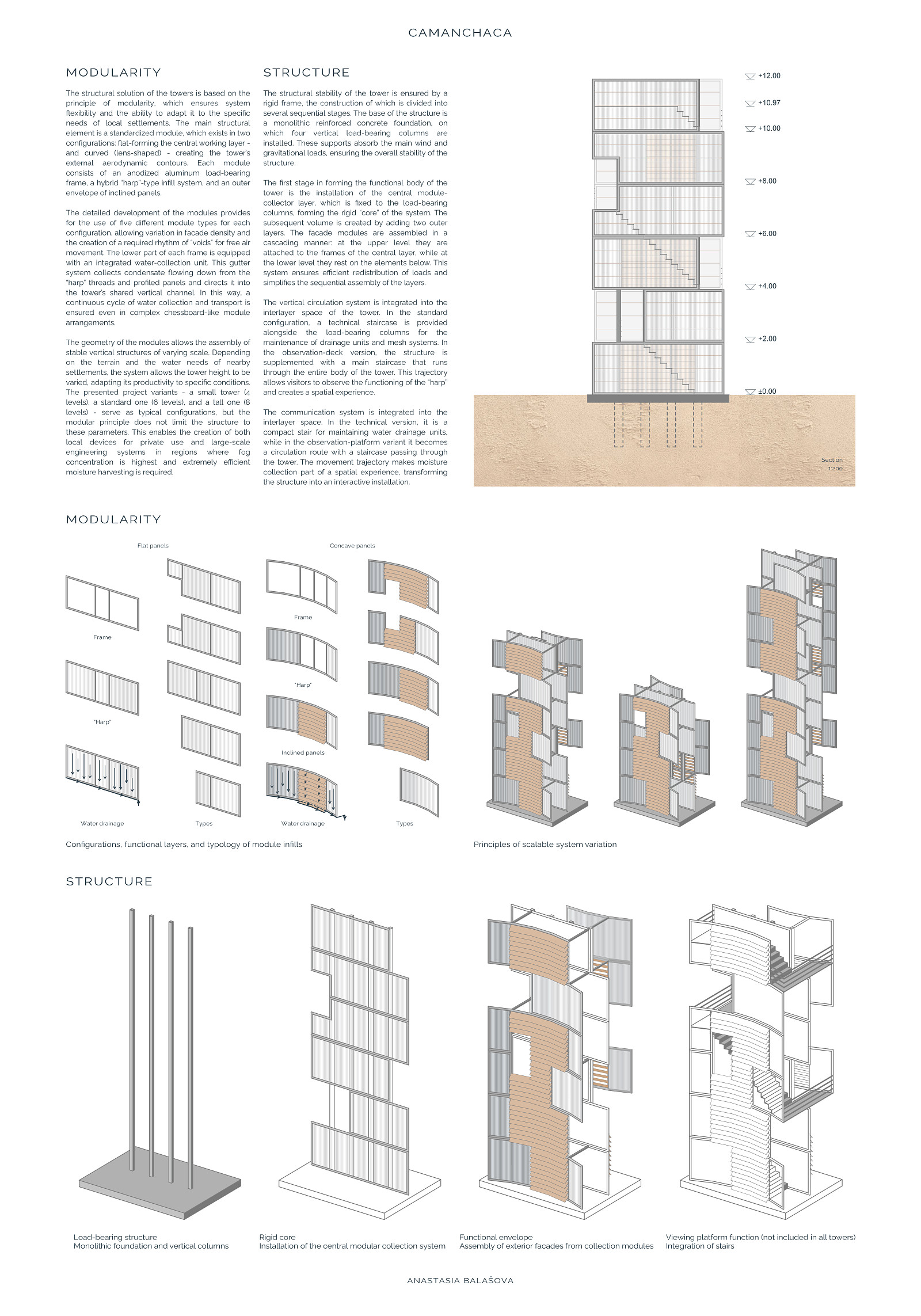
The tower's architectural system is based on a modular principle. The water-collecting towers' structural framework rests on a monolithic foundation with four additional pier foundations and supporting columns above, upon which three layers of technological modules are cascaded.
Documentation
Created in:


Copyright © 2026 INSPIRELI | All rights reserved. Use of this website signifies your agreement to the Terms of Use, Privacy Policy, and use of cookies.