The Aquascape: An Oceanarium Complex Rewilding the Myths of the Tidal Shore in Sabrang, Teknaf.


Project idea
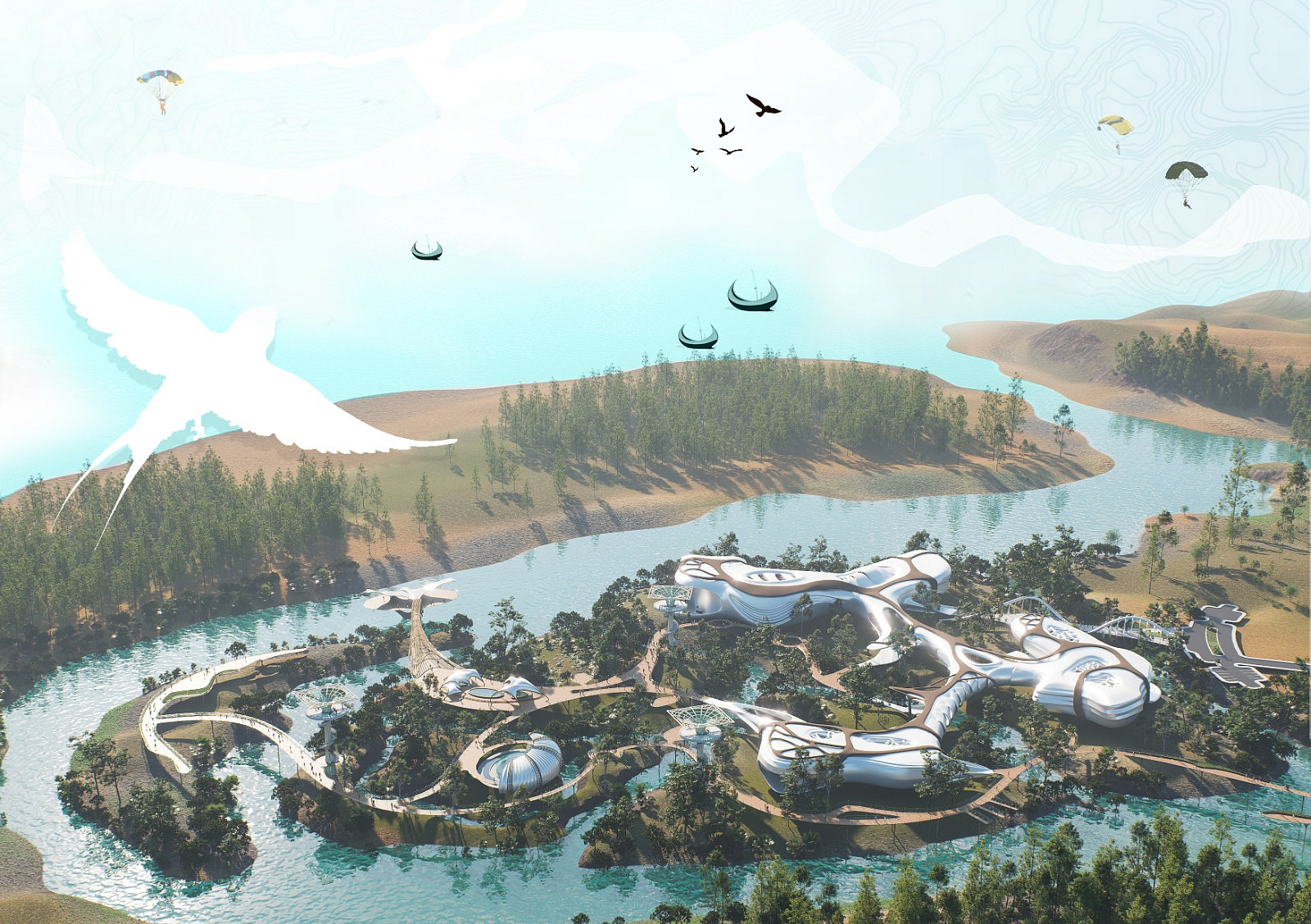
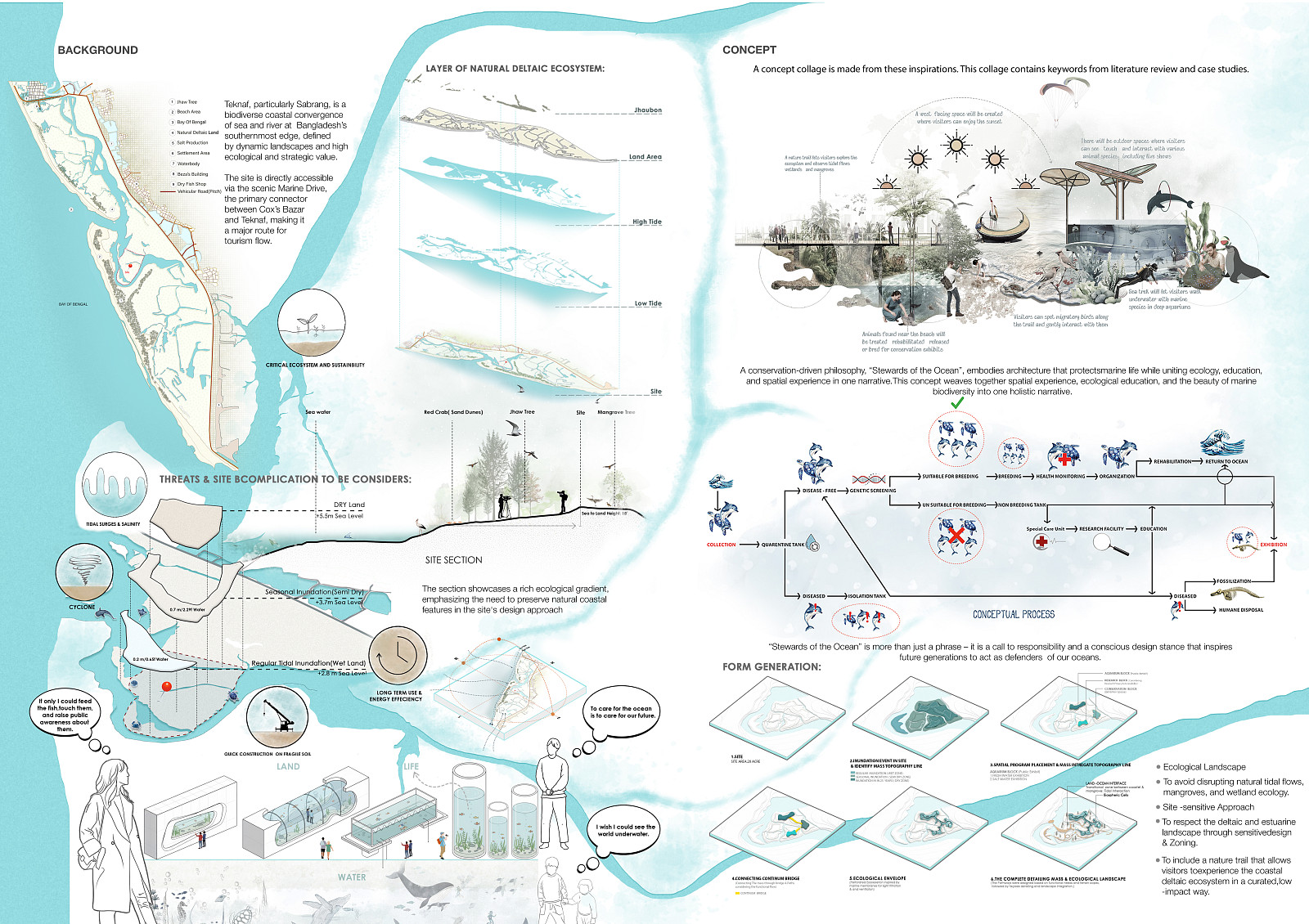
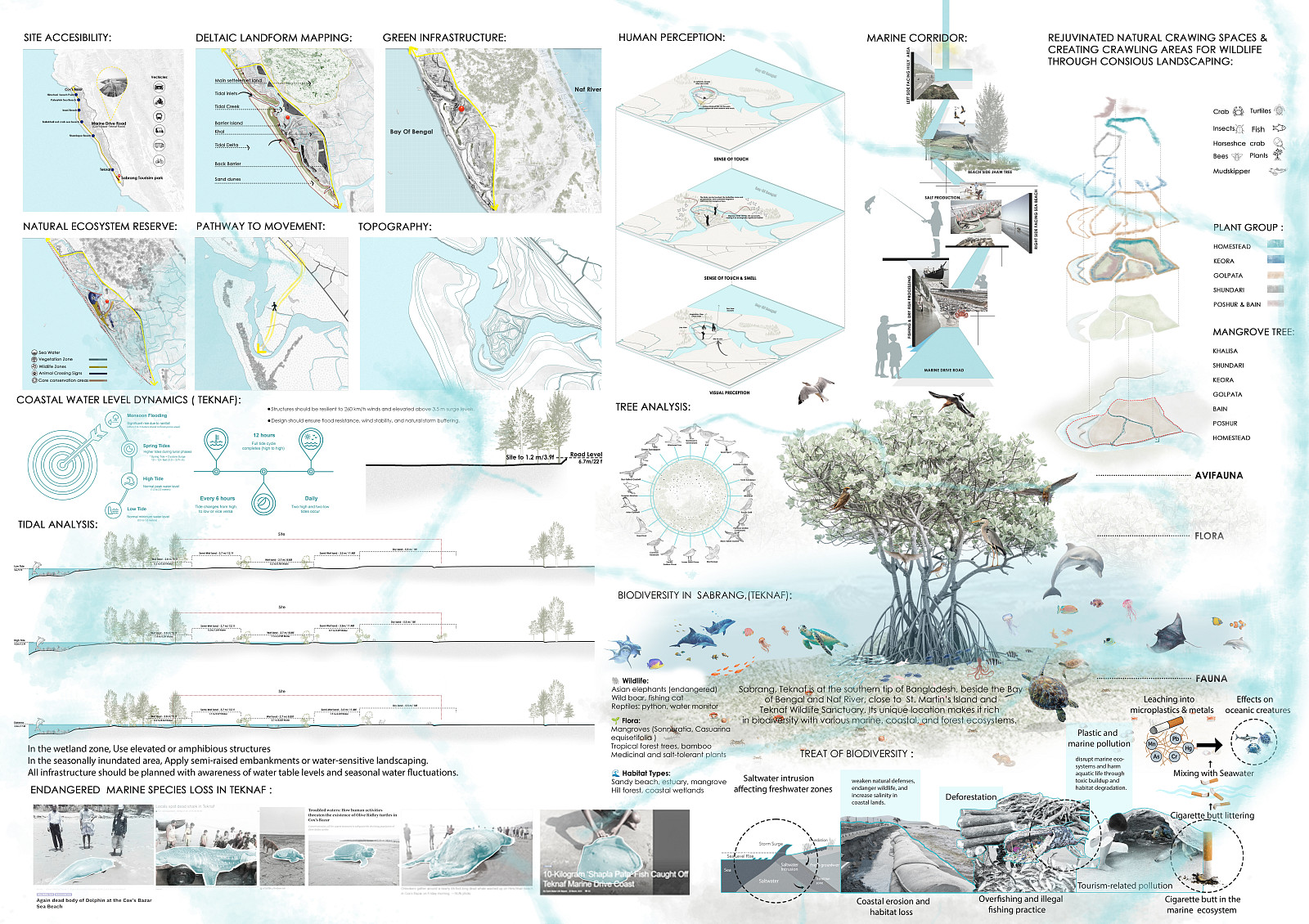
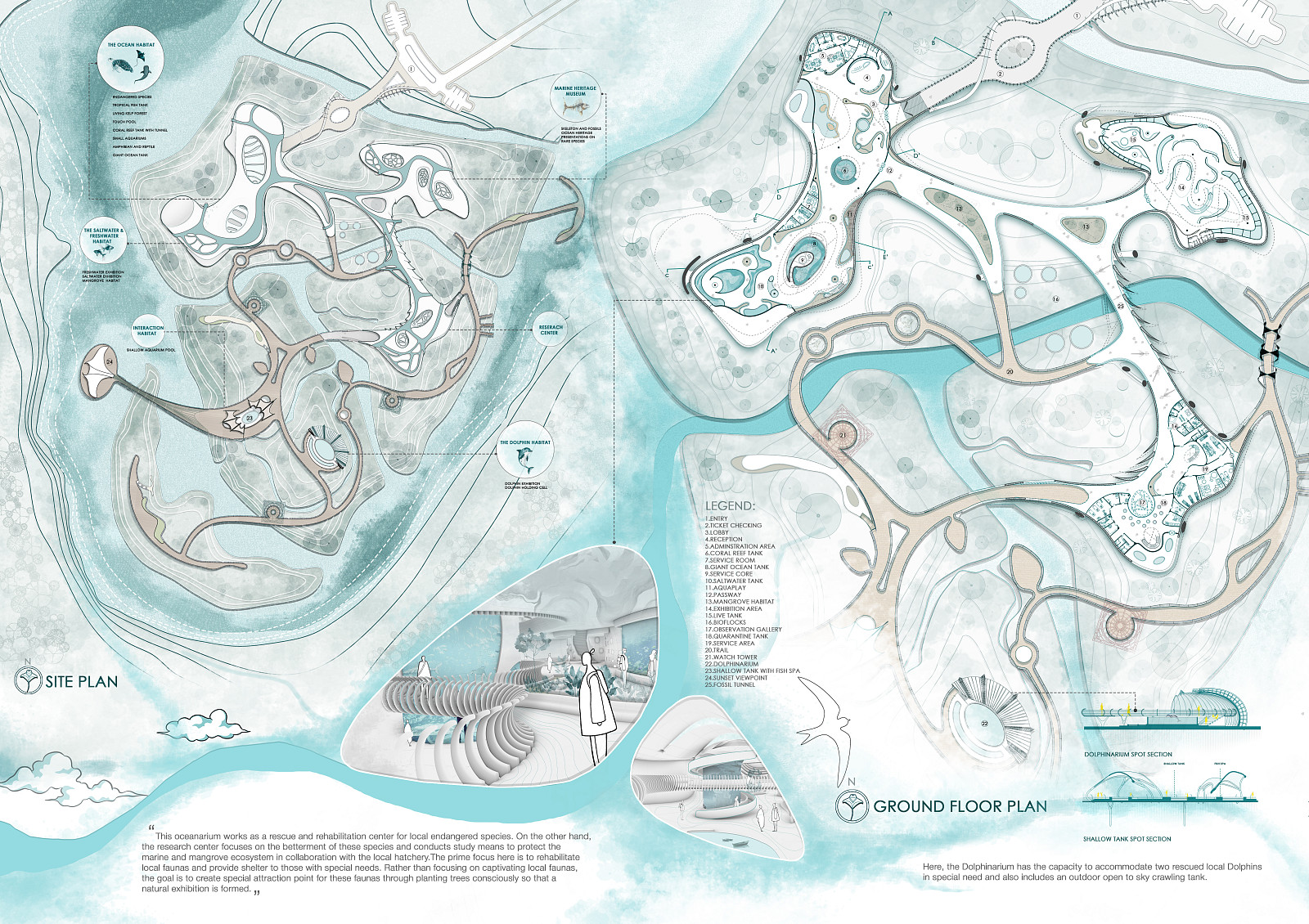
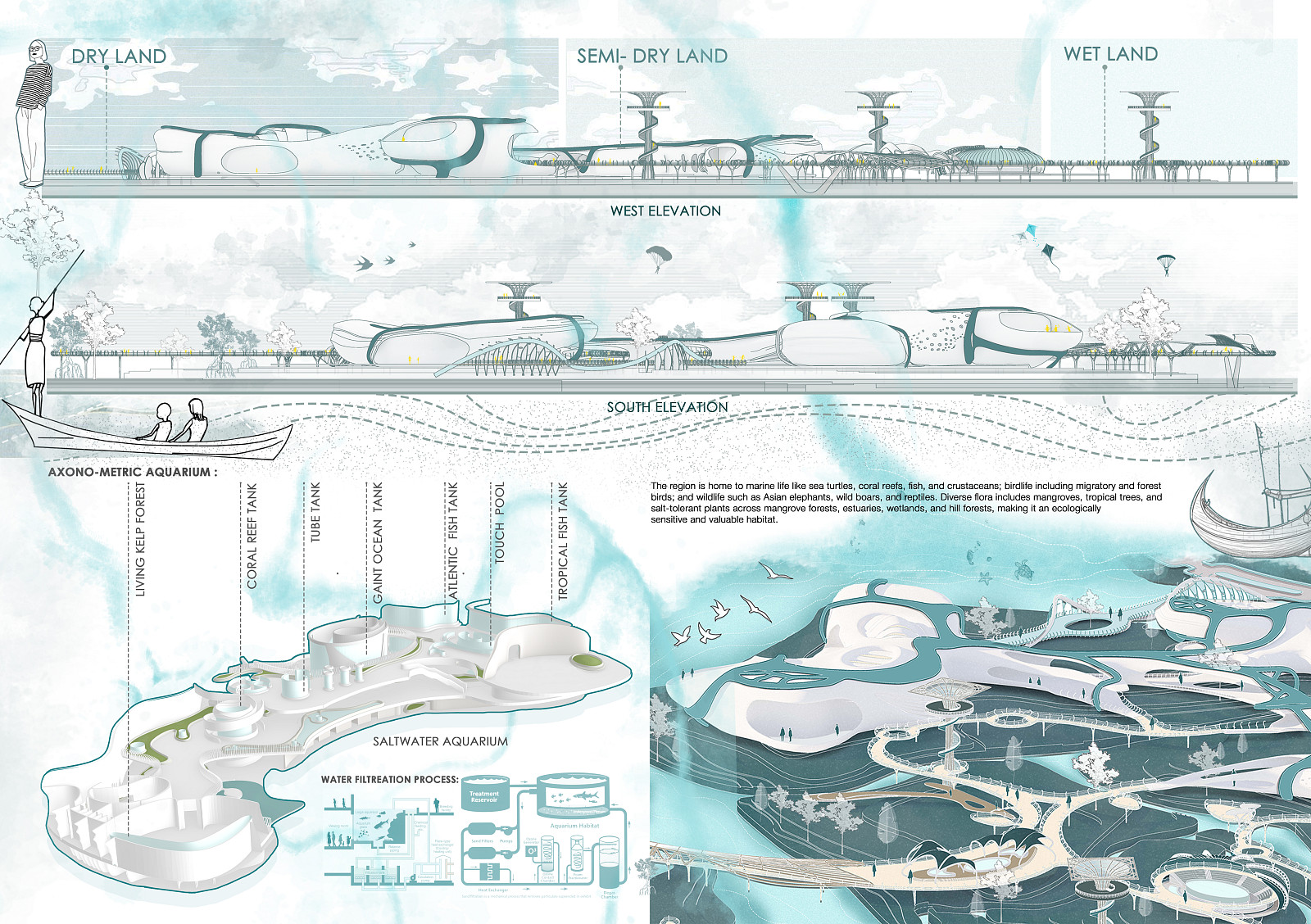
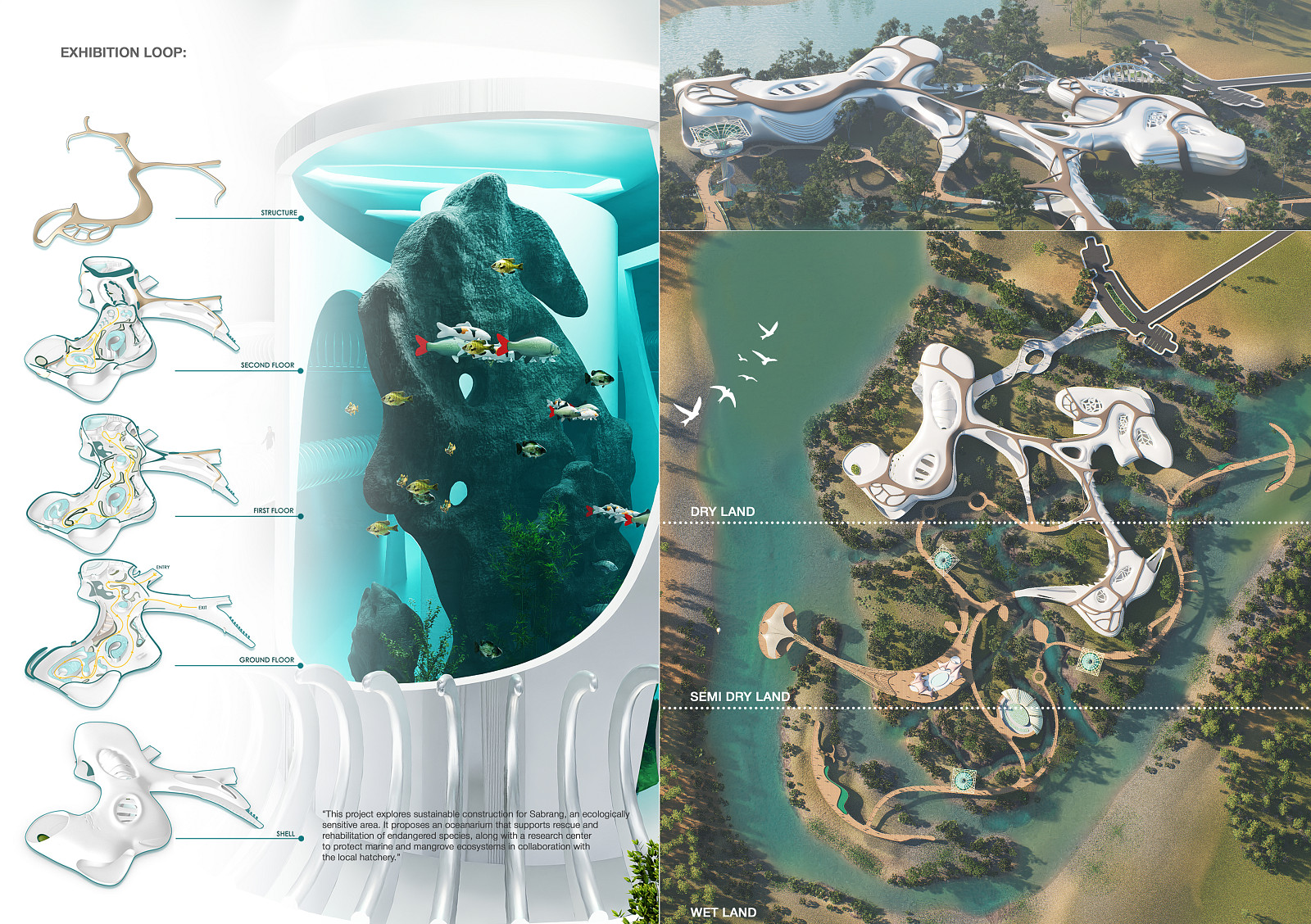
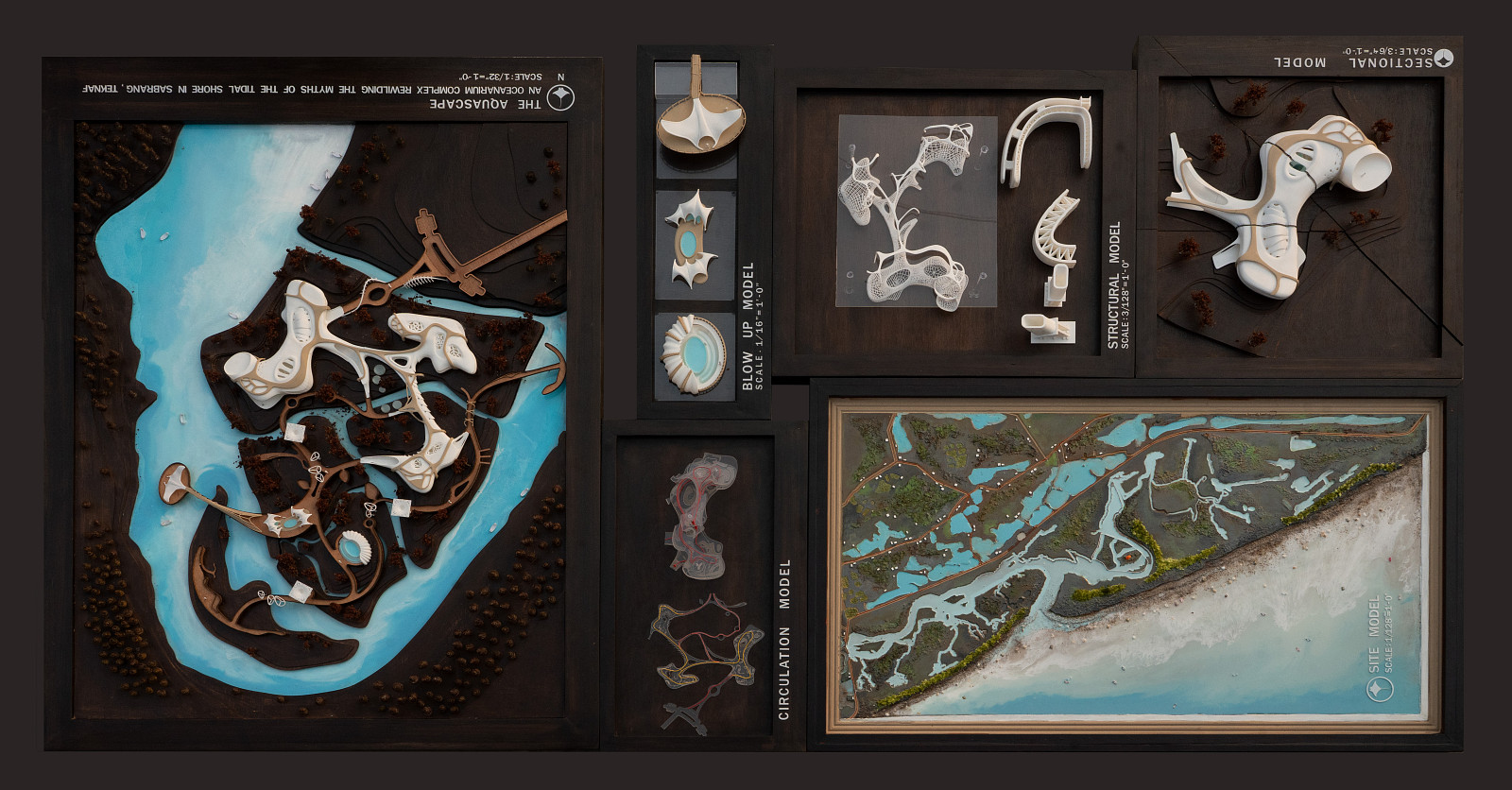
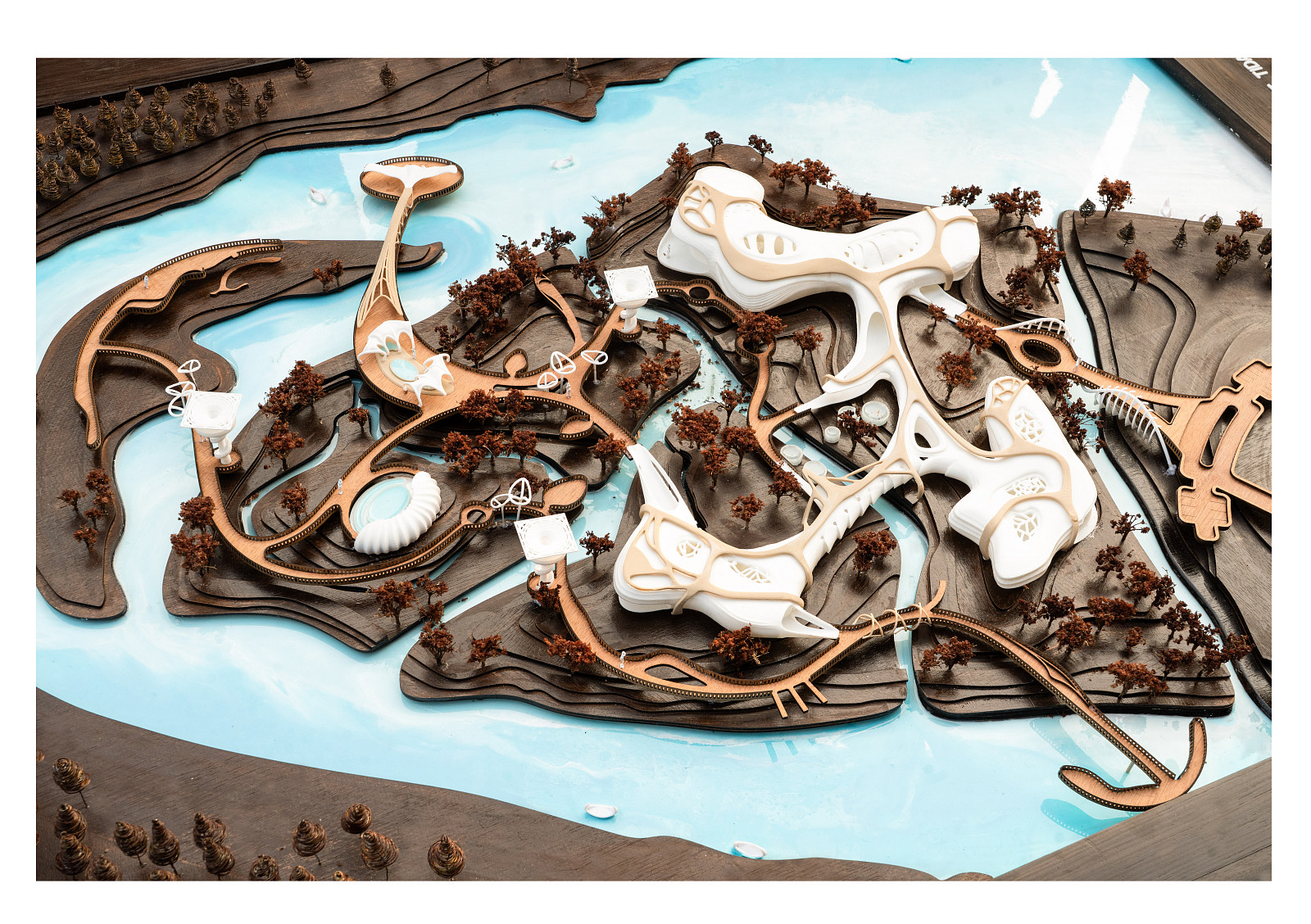
Sabrang, Teknaf—situated at the southernmost peninsula of Bangladesh—is a highly dynamic marine and estuarine microclimate characterized by shifting sand dunes, tidal channels, and a fragile coastal ecology that serves as a vital habitat for over 150 vulnerable migratory and estuarine species. However, aggressive, unplanned commercial tourism has introduced devastating land-filling practices that replace the natural deltaic topography with rigid concrete landscapes, severely disrupting regional hydrology and wiping out native biodiversity within this Ecologically Critical Area (ECA). The Aquascape is an architectural counter-offensive against coastal destruction and the traditional "glass-tank" model of wildlife captivity, proposing a climate-responsive, ecosystem-sensitive architectural prototype that functions as an open, fluid gateway where an average 3.0-meter daily tidal fluctuation and a 3.5-meter maximum storm surge limit dictate the shifting boundary of the architecture. Instead of resisting marine forces with rigid barriers, the design introduces a porous, restorative architecture that mimics fluid tidal currents to shift the definition of an oceanarium from a detached commercial exhibition to an active site of ecological coexistence, coastal rewilding, and erosion control. [Zoned Topography] To guide the architectural placement without harming the landscape, the master plan organizes the site into a zoned topography consisting of a stable Dry Zone for primary public entry, a Semi-Dry Zone prone to seasonal tidal shifts that utilizes elevated boardwalks, and an active intertidal Wet Zone where the building mass directly interfaces with changing water levels. By merging a state-of-the-art marine research facility with an immersive public learning trail, the project balances human engagement with environmental preservation, proving that coastal architecture can go beyond minimizing harm to actively heal, protect, and rewild a damaged deltaic ecosystem.
Project description
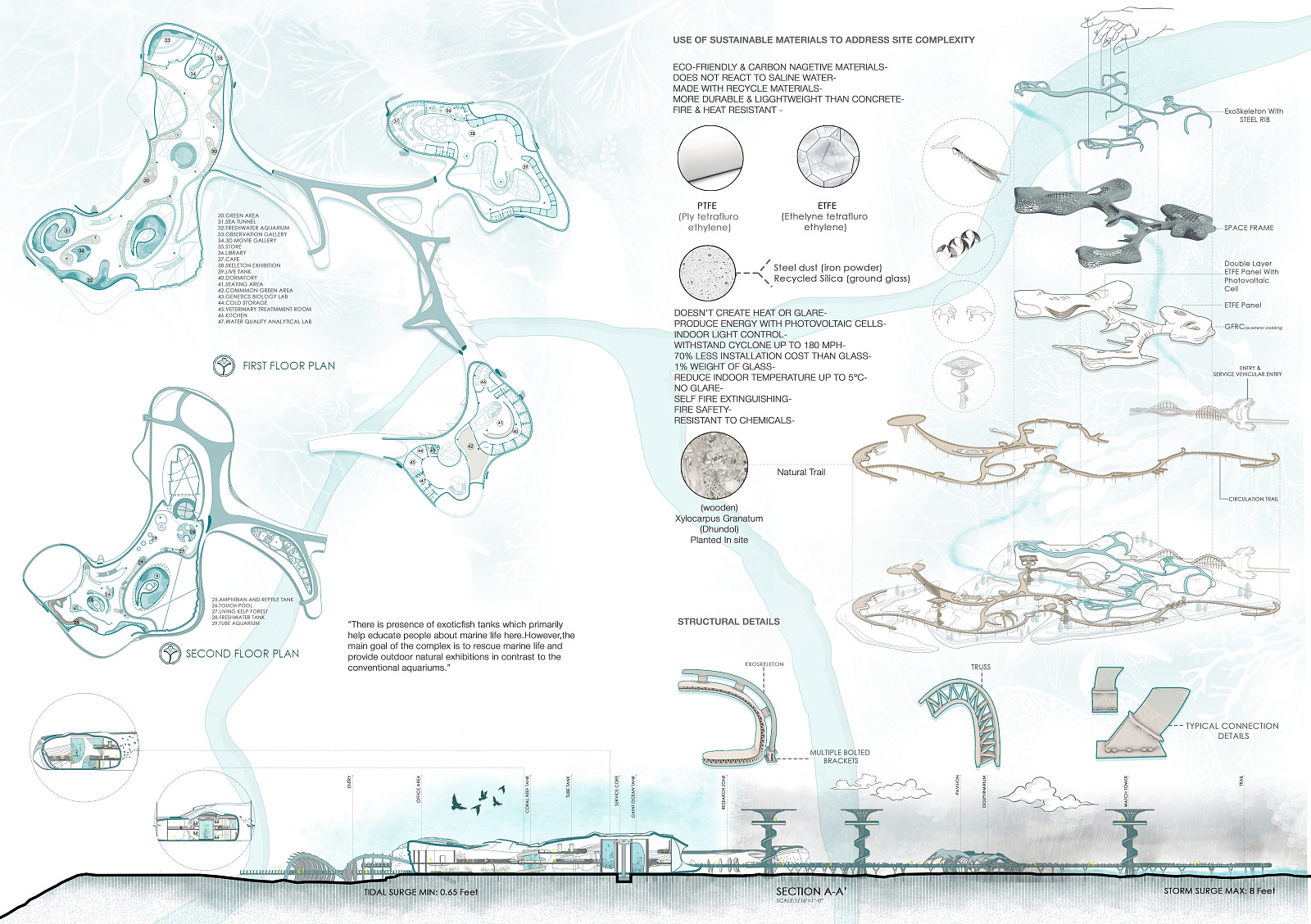
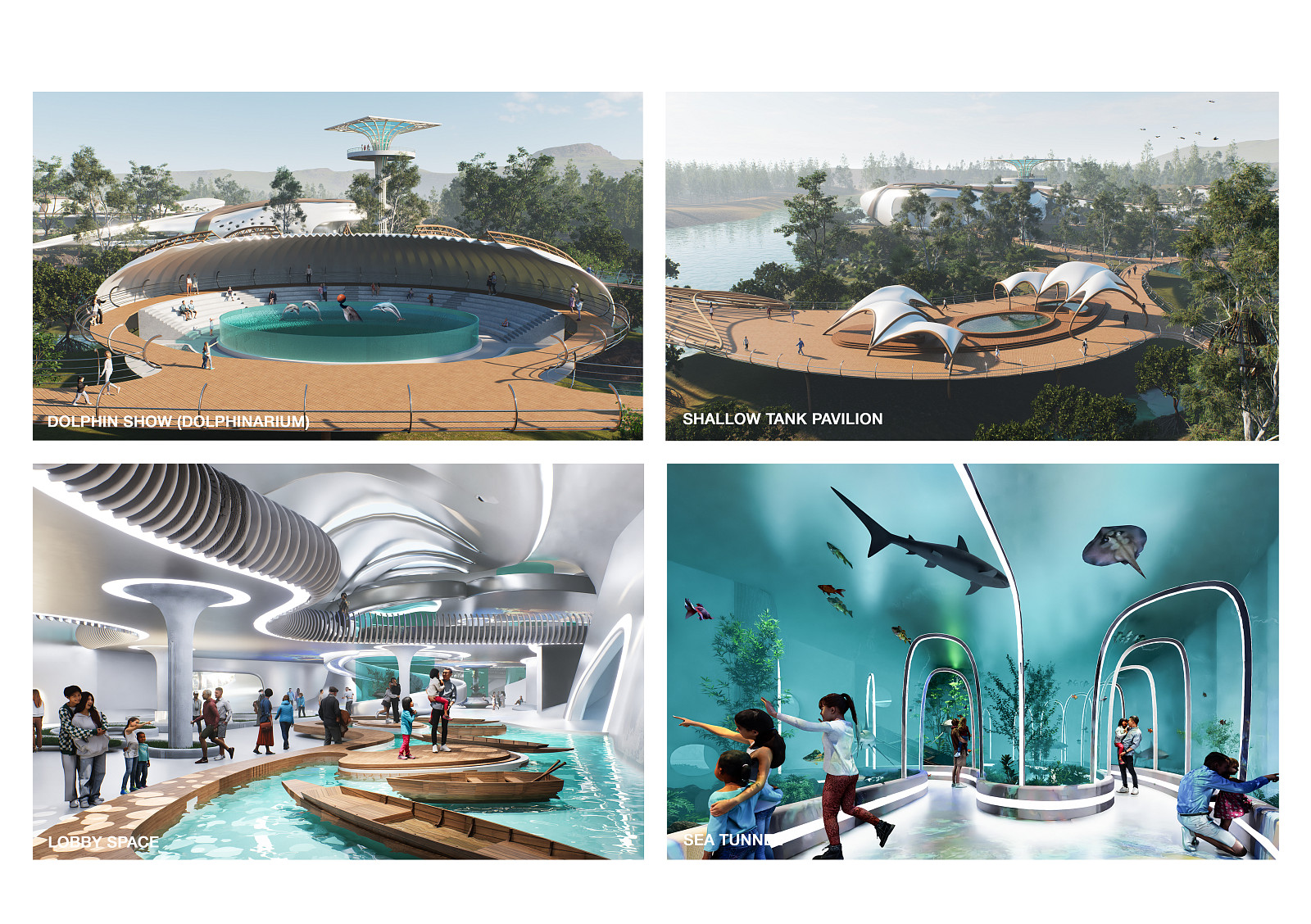
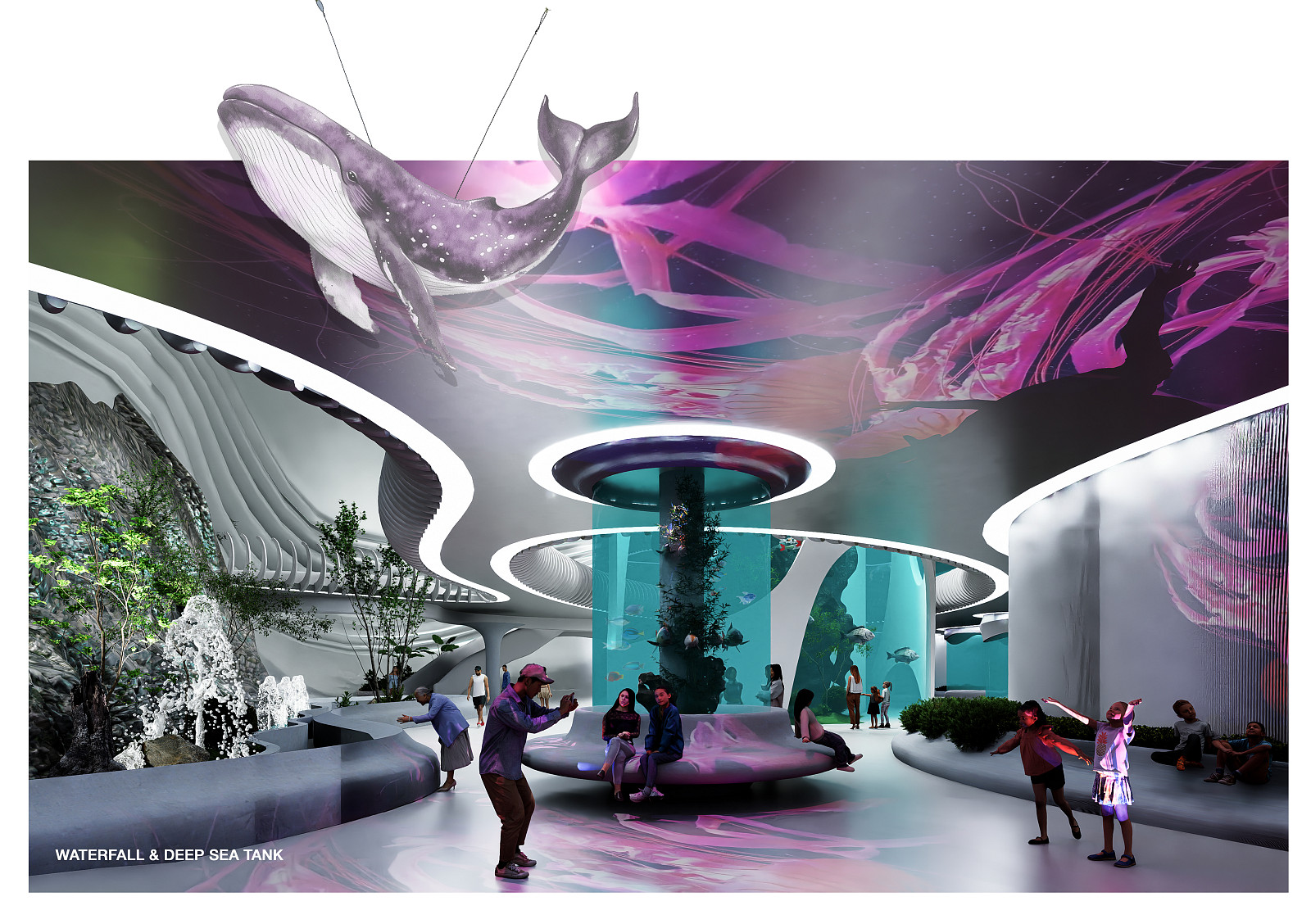
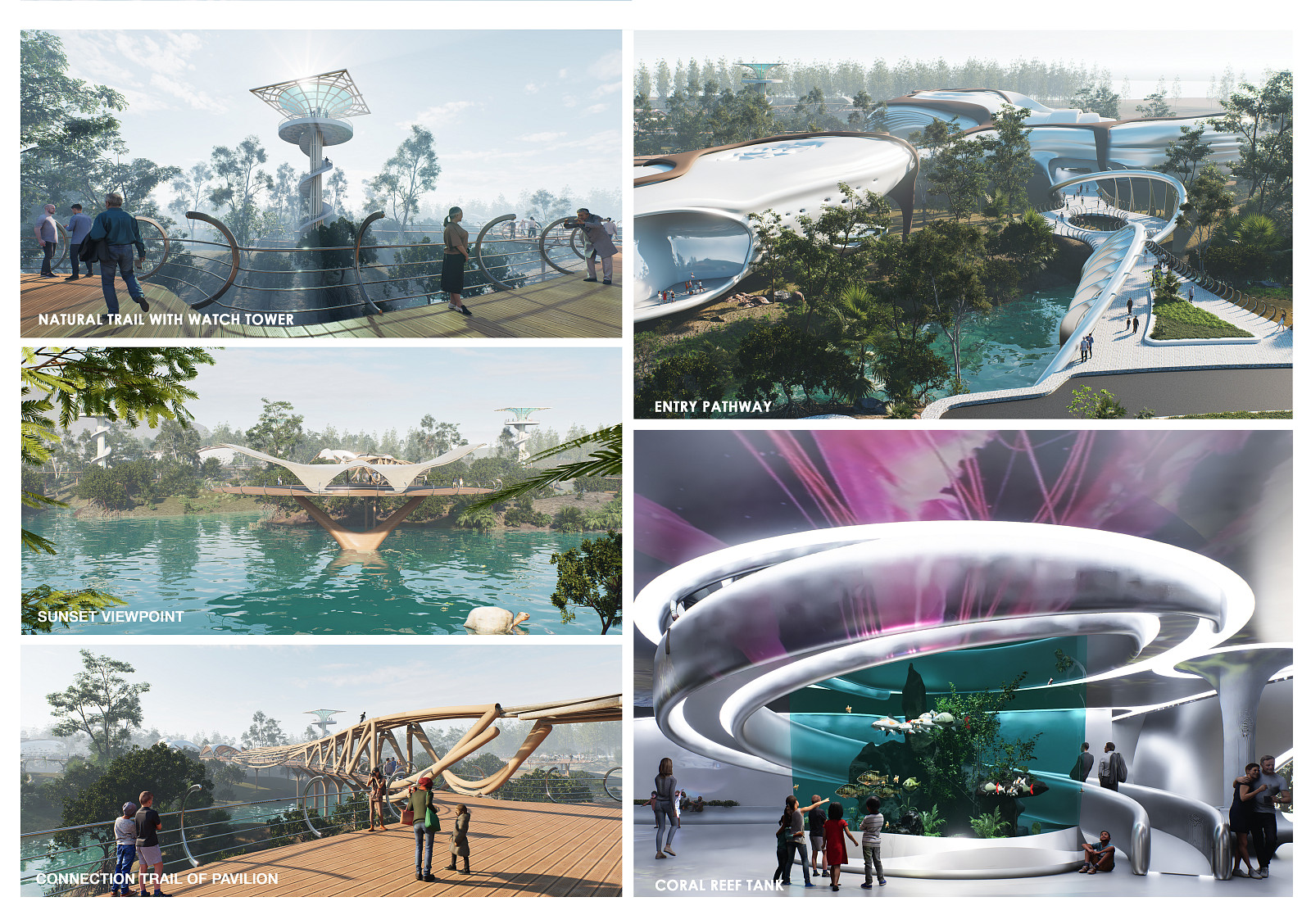
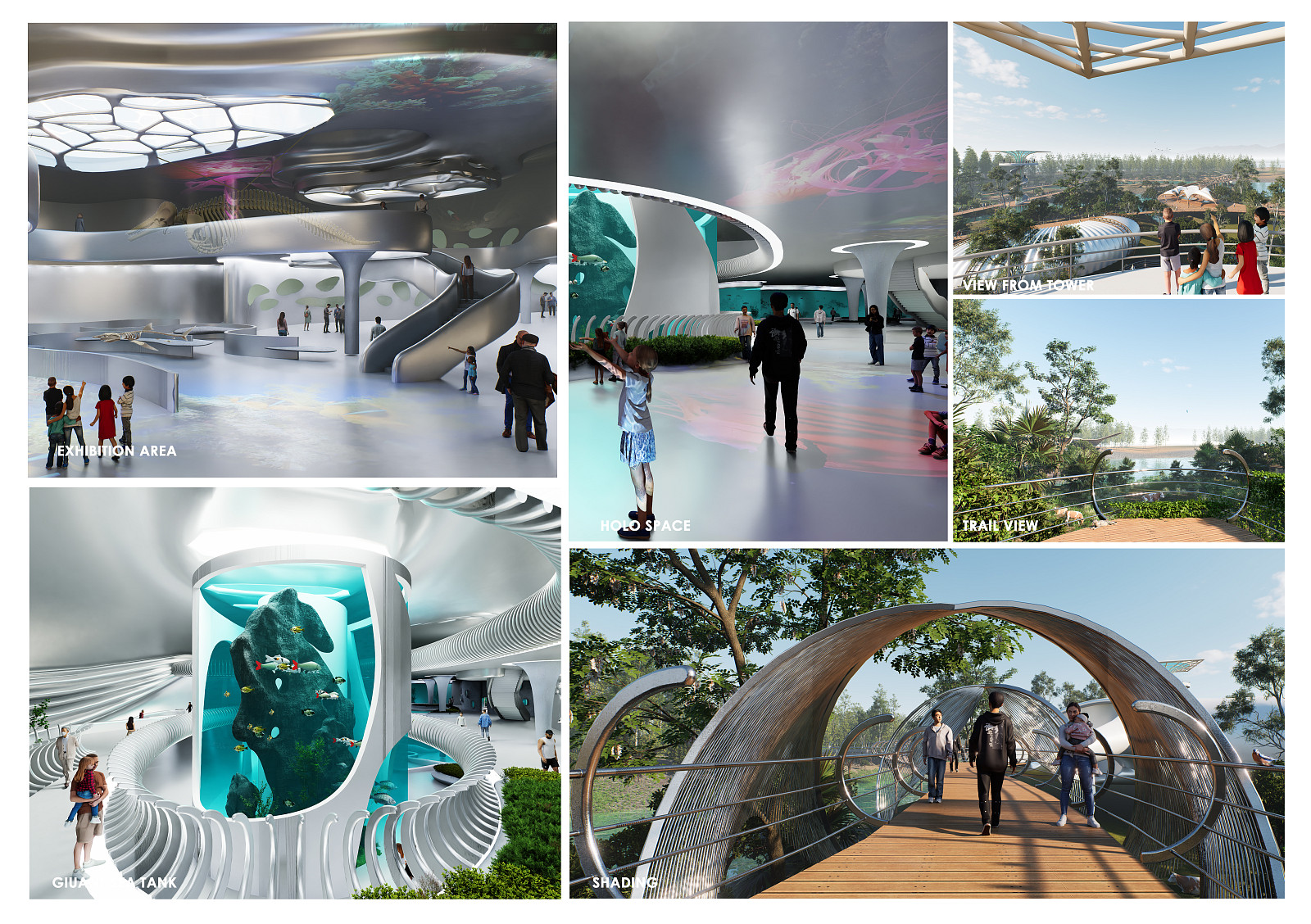
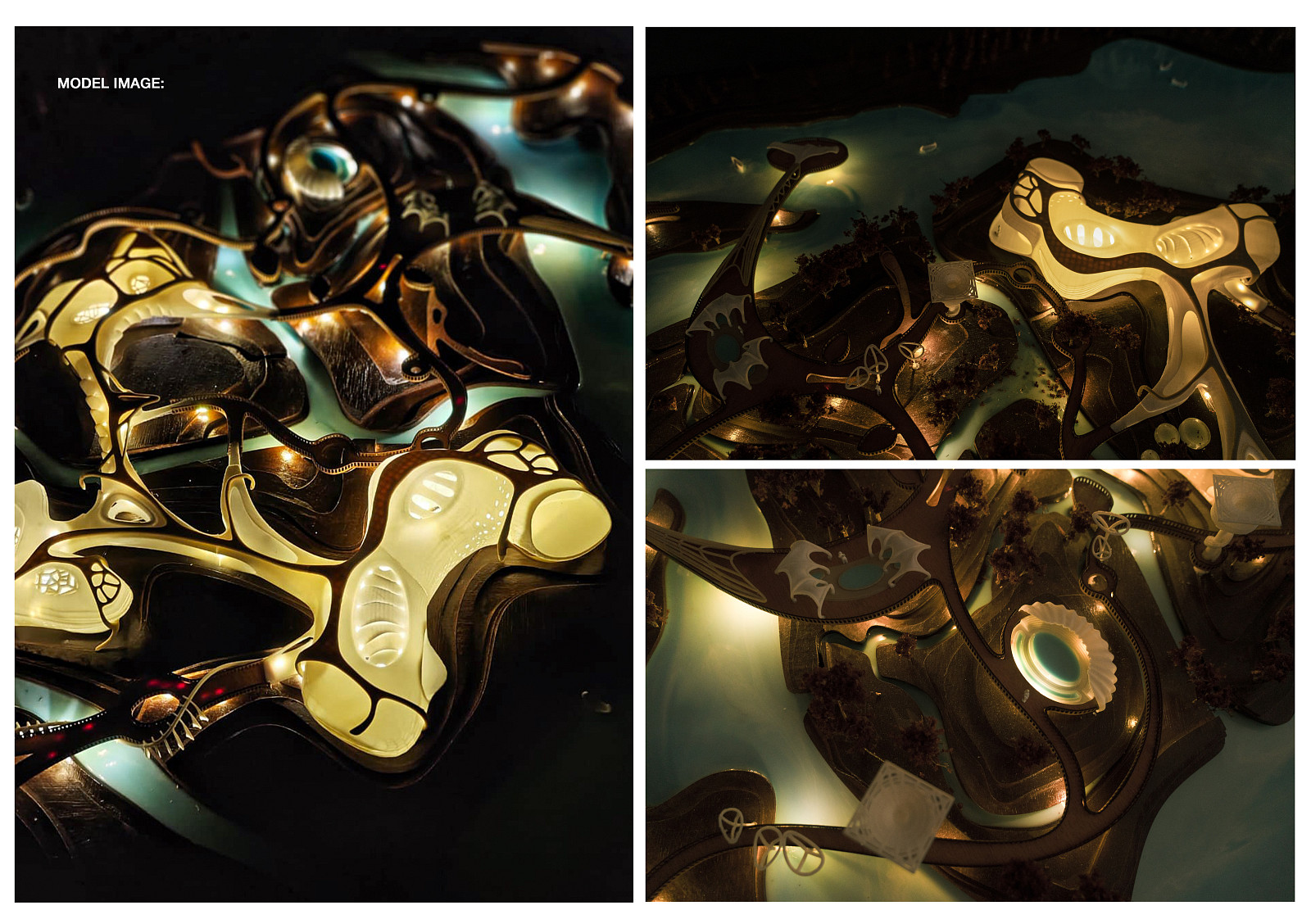
The primary objective of The Aquascape is to merge sustainable aquatexture with a state-of-the-art rescue, rehabilitation, and research network that protects vulnerable estuarine species while educating the public through immersive, outdoor natural exhibitions. The architectural morphology draws inspiration from the kinetic energy of marine whirlpools, translating into a continuous, curving Centrifugal Ribbon Loop that dissolves the boundary between interior and exterior landscapes while guiding visitors through a seamless, one-way experiential promenade. This journey balances a dual-core programmatic system where the Public Experiential Loop features immersive blue water tunnels and coral reef galleries, while the secure Scientific Conservation Core contains genetic screening labs, a veterinary clinic, quarantine facilities, and specialized marine nurseries. The architecture masterfully choreographs a profound atmospheric shift; as visitors descend along the centrifugal loop, the experience transitions from the blinding, wind-swept tropical sun of the elevated boardwalks into compressed, acoustic-dampened subterranean galleries where natural light is filtered dynamically through the moving tidal waters overhead to replicate the dappled, weightless serenity of the deep ocean benthic zones. These shallow pools are engineered with automated tidal gates that open at specific times of the day to mimic natural shoreline feeding routines, while visitor circulation routes and hourly entry caps are strictly controlled to prevent noise pollution from bleeding into the sensitive outdoor rehabilitation habitats. The surrounding terrain functions as an active extension of the architecture, featuring a meticulously planned Tidal Mangrove Corridor of native Keora and Baen trees that stabilizes loose mangrove soil, filters incoming tidal surges, and provides safe crawling and feeding spaces for local crustaceans and avifauna.
Technical information
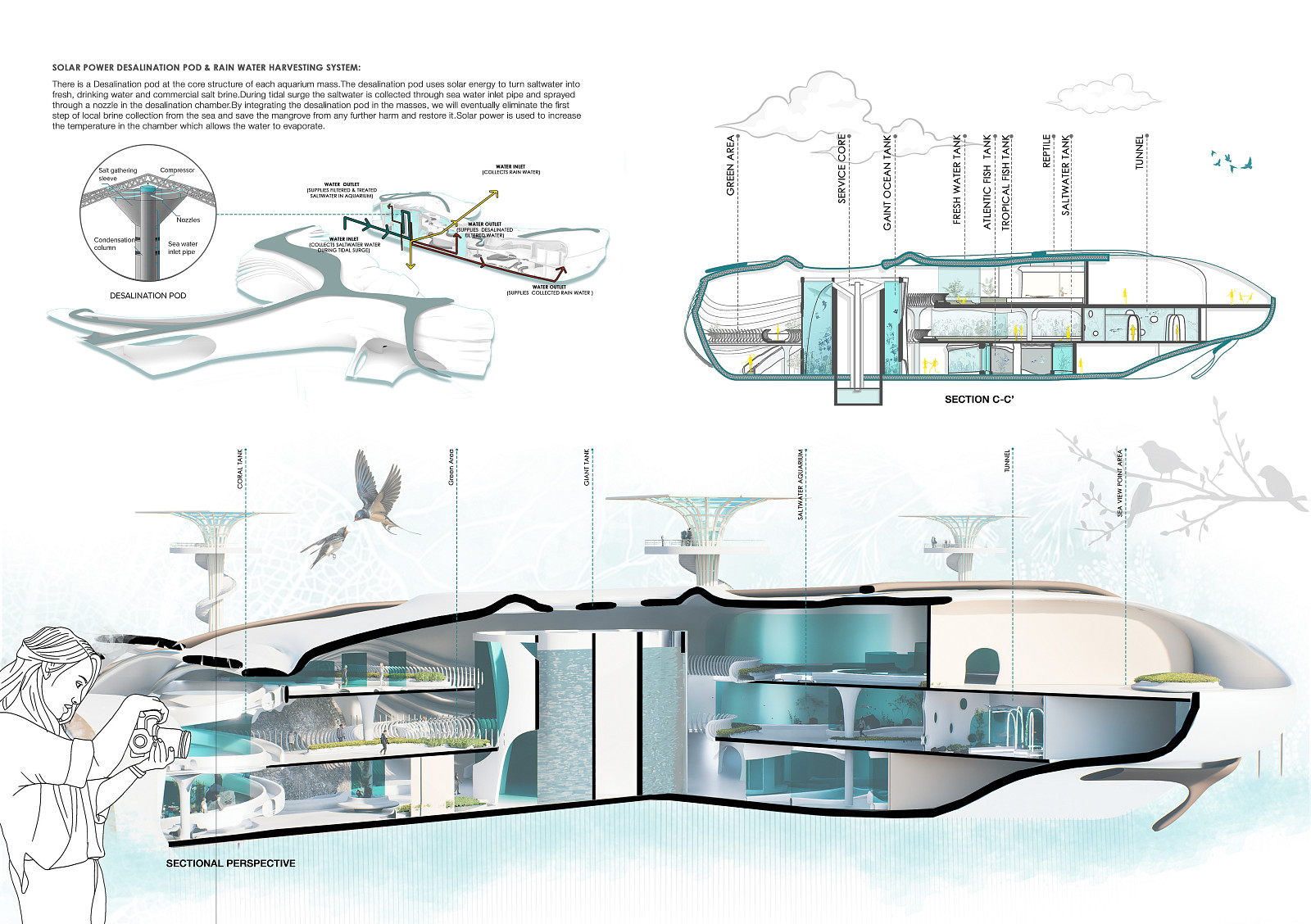
To anchor the immense weight of the oceanarium water tanks on Sabrang’s loose, saturated coastal soil, the engineering strategy utilizes a deep friction piling system that penetrates into the firm subterranean sand and clay strata, capped by an elevated structural raft foundation that allows surface tides to wash unhindered underneath the main building mass. To protect the primary infrastructure against salt crystallization and severe marine corrosion, the project introduces a dual-material approach where the primary load-bearing columns use marine-grade concrete, while Ferrock—a carbon-negative, highly resilient material produced from 95% recycled industrial waste—is utilized for the massive intertidal retaining walls, water intake channels, and public boardwalks because it cures rapidly in three days and gains strength when exposed to saltwater and carbon dioxide. The upper superstructure utilizes a lightweight, prefabricated glulam timber and steel rib framework clad in high-performance, recyclable zinc-titanium standing seam panels that reflect solar radiation and resist the aggressive salt-spray environment, creating low-slung, aerodynamic architectural masses that minimize wind resistance during severe tropical storms while integrated solar arrays generate 65% to 70% of the daily electricity demands. Water mechanics are managed through a continuous flow-through sub-sand abstraction system, where perforated intake pipes are buried deep beneath the beach sand bed to utilize the natural coast as a biological pre-filter before pumping pristine seawater into a centralized Life Support System (LSS). This filtered seawater matches the authentic regional marine chemistry for the giant exhibition tanks, and a controlled percentage is continuously circulated out into adjacent mangrove channels and tidal pools to dynamically flush and rewild the shore ecosystem. Back-of-house operations are managed through an independent service loop that runs completely separate from public paths, utilizing internal electric moving carts to handle water filtration maintenance, animal transport, and waste management across different levels without disrupting the public exhibition or startling recovering wildlife.

Copyright © 2026 INSPIRELI | All rights reserved. Use of this website signifies your agreement to the Terms of Use, Privacy Policy, and use of cookies.