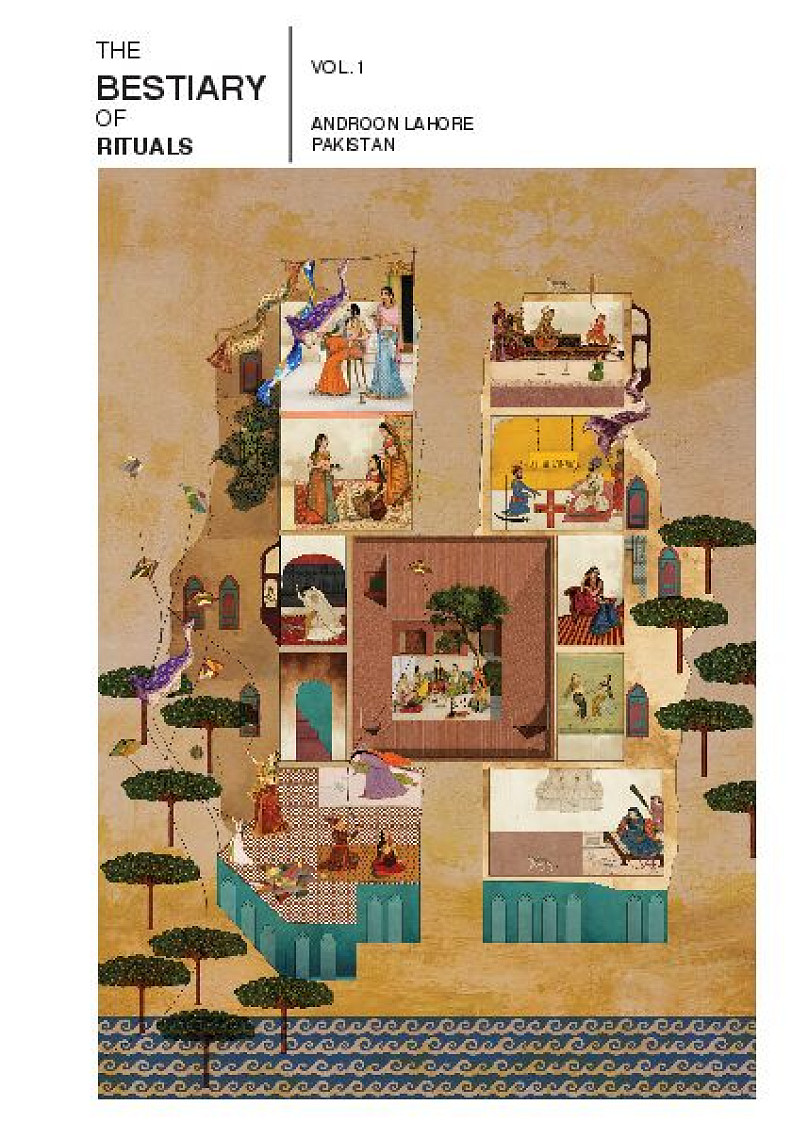
The Bestiary of Rituals


Project idea
Ritual, Memory, Performance and Resistance in the Making of Urban Life in Androon Lahore, exploring themes of Care, Play, and Survival. This research originates from an immense interest in the social dynamics of a highly stigmatized district, Heera Mandi in Androon Lahore, Pakistan. The initial objective is to document the cultural commons and the shared rituals that have been historically inherited within this context. To trace these inheritances, the study employs a combination of the sociology of images and ethnographic field visits.
As the research progresses, these rituals are understood not merely as inherited traditions but as adaptive responses to conditions of hardship. They reflect everyday negotiations with surveillance, stigma, and control, as well as infrastructural deficiencies and broader social inequalities. At the same time, these practices embody forms of communal continuity, social interaction, and collective life, often intersecting with elements of leisure and entertainment.
Building on these observations, the study proposes a systematic documentation of evolving rituals of survival, care, and play through the conceptual framework of a bestiary. The Bestiary of Rituals of Androon Lahore utilizes comparative analysis across multiple visual and narrative forms, including paintings, drawings, archival images, and self-produced photographs. This is complemented by storytelling as a method to reveal the layered and complex social dynamics of Androon Lahore, Pakistan.
Project description
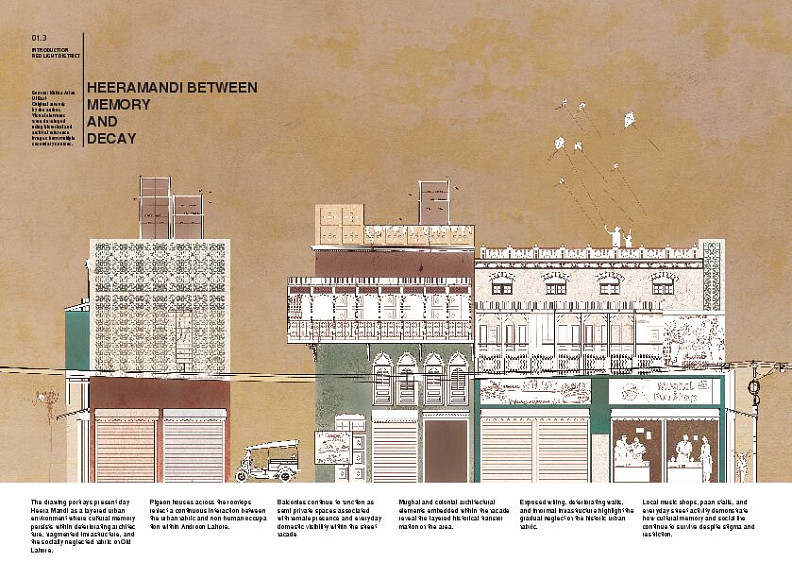
This thesis explores the spatial practices of Heera Mandi in Androon Lahore, Pakistan, as embodied rituals of survival, care, and play within a historically stigmatized urban context. It responds to the limitations of dominant narratives that reduce the area to a red-light district, overlooking the complexity of everyday life and the social systems through which residents sustain belonging, support, and continuity.
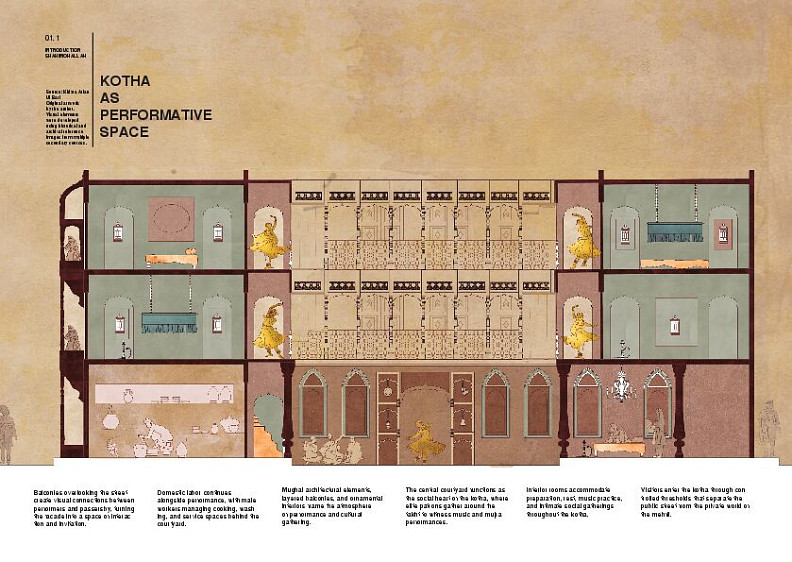
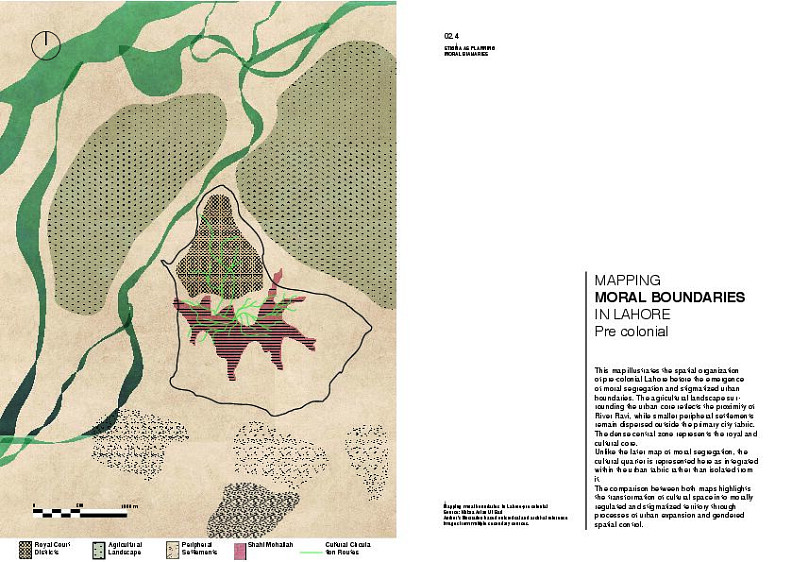
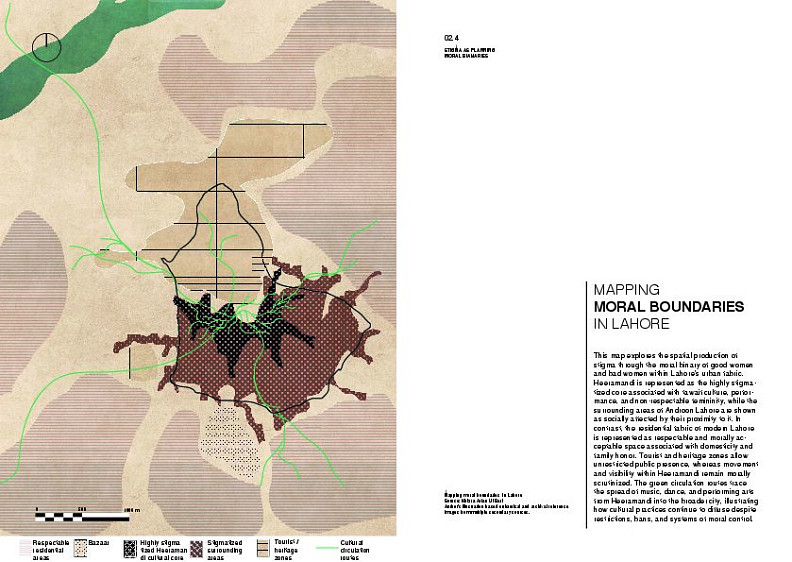
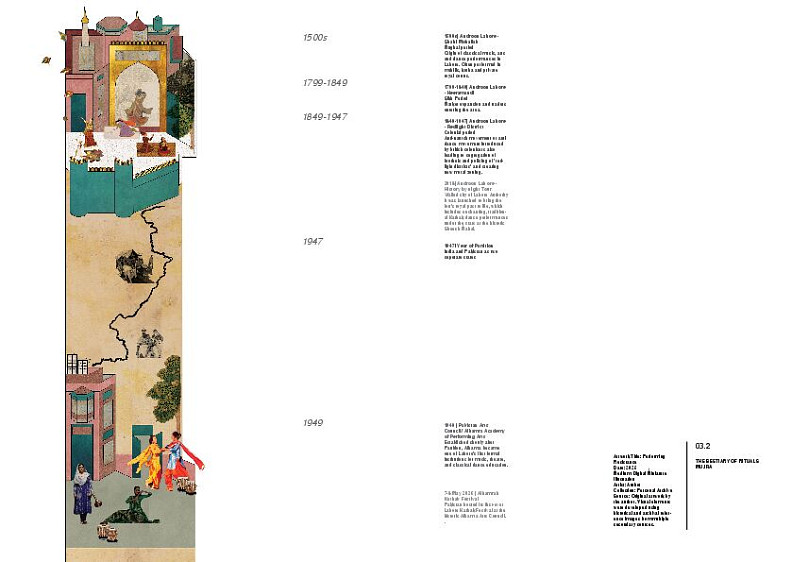
Grounded in the historical trajectory of Heera Mandi, from its origins in Mughal-era, Shahi Mohalla and its association with the tawaif tradition to its colonial reclassification and contemporary stigmatization, the study situates present-day spatial practices. Within this context, everyday actions in the mohallah are understood as more than responses to precarity; they become adaptive forms of collective existence shaped by conditions of surveillance, inequality, and exclusion.
The central inquiry of this thesis asks: How can the spatial practices of Heeramandi, Androon Lahore be understood as rituals of survival and care, and what is their potential in producing systematic change within the context of patriarchal society and the stigmitization of this mohallah ? In addressing this question, the study examines how these rituals negotiate stigma while simultaneously generating informal systems of care, social exchange, and communal support. The thesis argues that these everyday practices of survival, care, and play are deeply connected to how life is organized in Androon. These practices also challenge common stereotypes about the area and show how people continue to create meaning, relationships, and a sense of community despite stigma and hardship.
Technical information
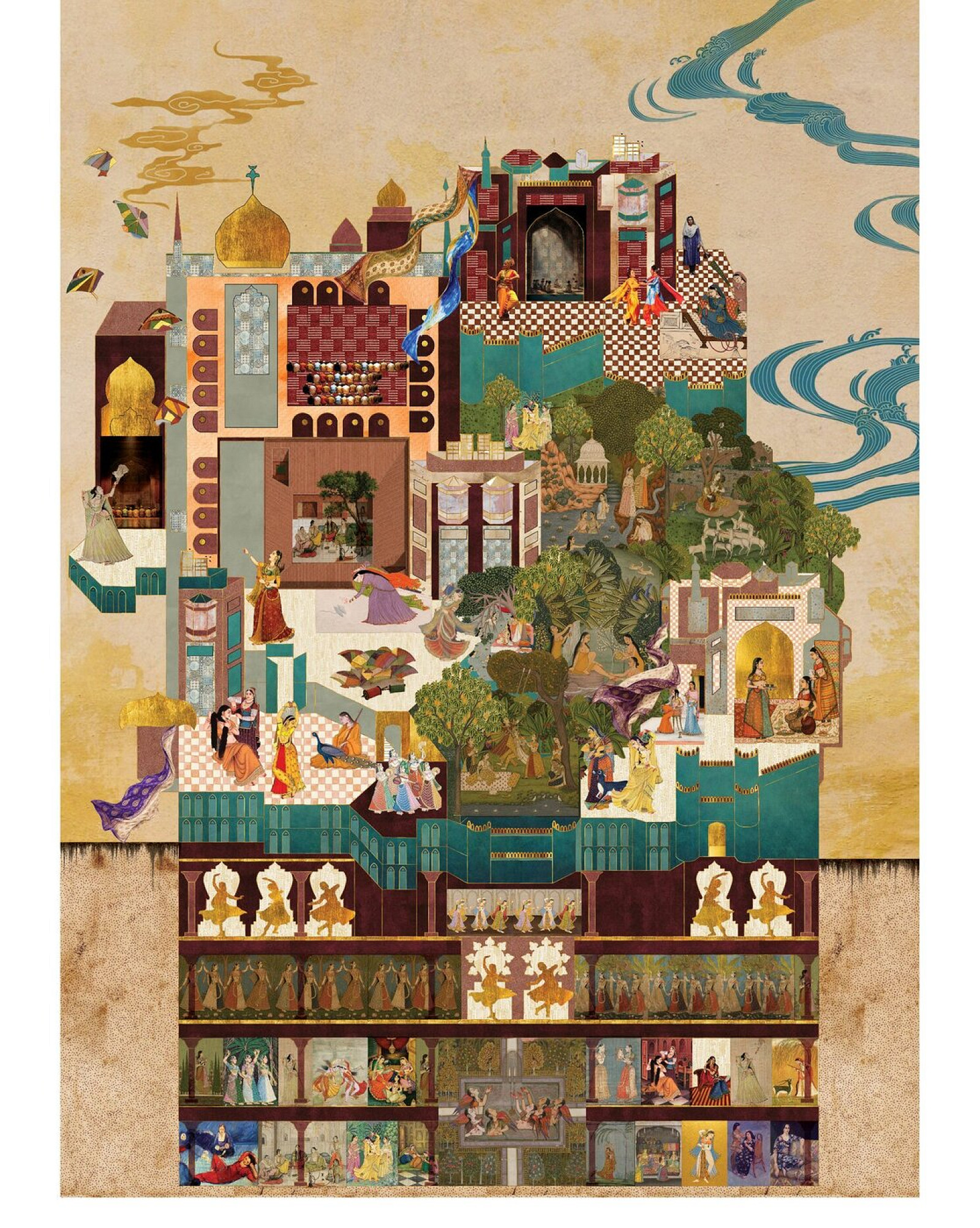
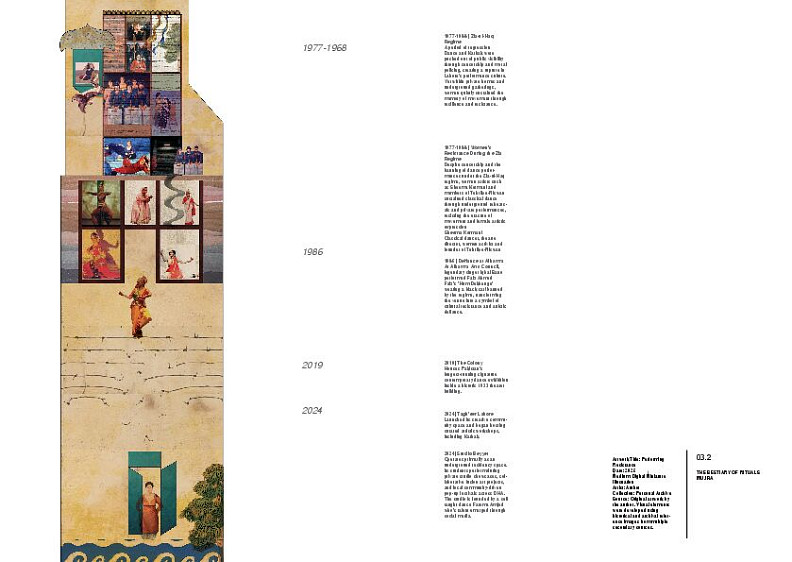
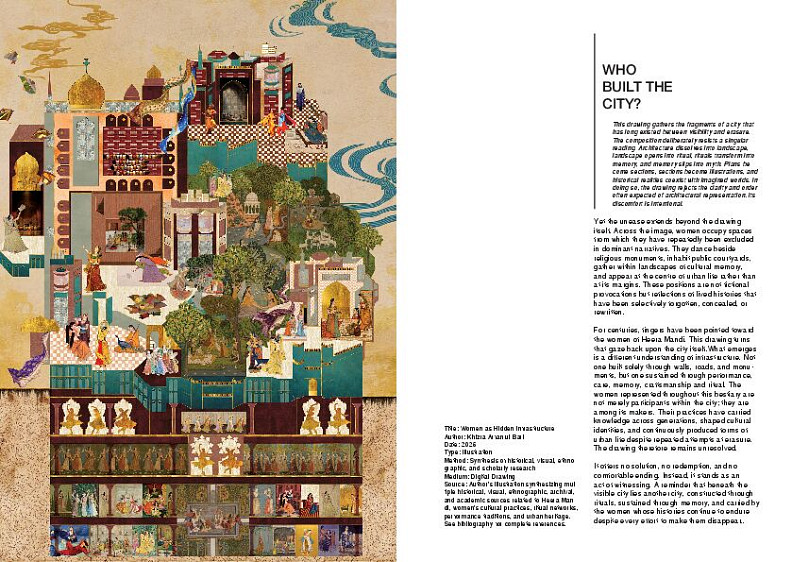
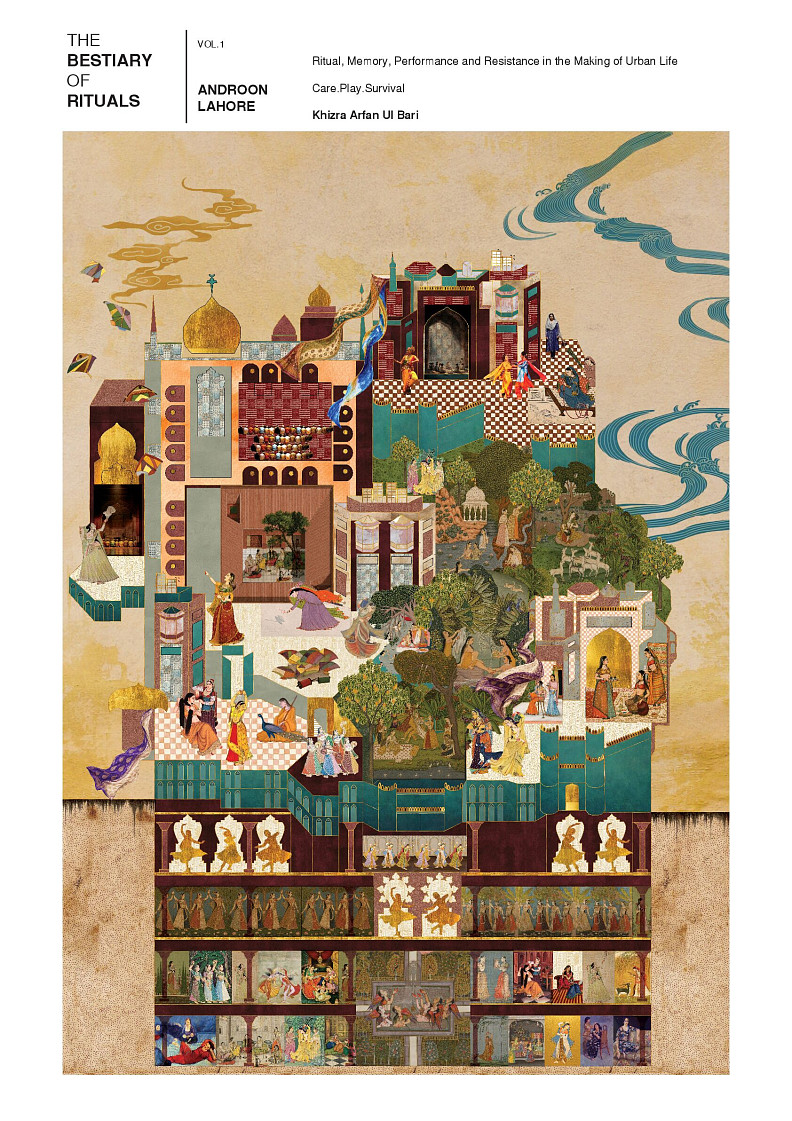
For centuries, fingers have been pointed toward the women of Heera Mandi. This drawing turns that gaze back upon the city itself.What emerges is a different understanding of infrastructure. Not one built solely through walls, roads, and monuments, but one sustained through performance, care, memory, craftsmanship and ritual. The women represented throughout this bestiary are not merely participants within the city; they are among its makers. Their practices have carried knowledge across generations, shaped cultural identities, and continuously produced forms of urban life despite repeated attempts at erasure.
The drawing therefore remains unresolved.
It offers no solution, no redemption, and no comfortable ending. Instead, it stands as an act of witnessing. A reminder that beneath the visible city lies another city, constructed through rituals, sustained through memory, and carried by the women whose histories continue to endure despite every effort to make them disappear..
Documentation
Show PDF 1Show PDF 2Show PDF 3Show PDF 4Show PDF 5Show PDF 6Show PDF 7Show PDF 8Show PDF 9

Copyright © 2026 INSPIRELI | All rights reserved. Use of this website signifies your agreement to the Terms of Use, Privacy Policy, and use of cookies.
