Karst Reborn


 Amir Shah
Project idea
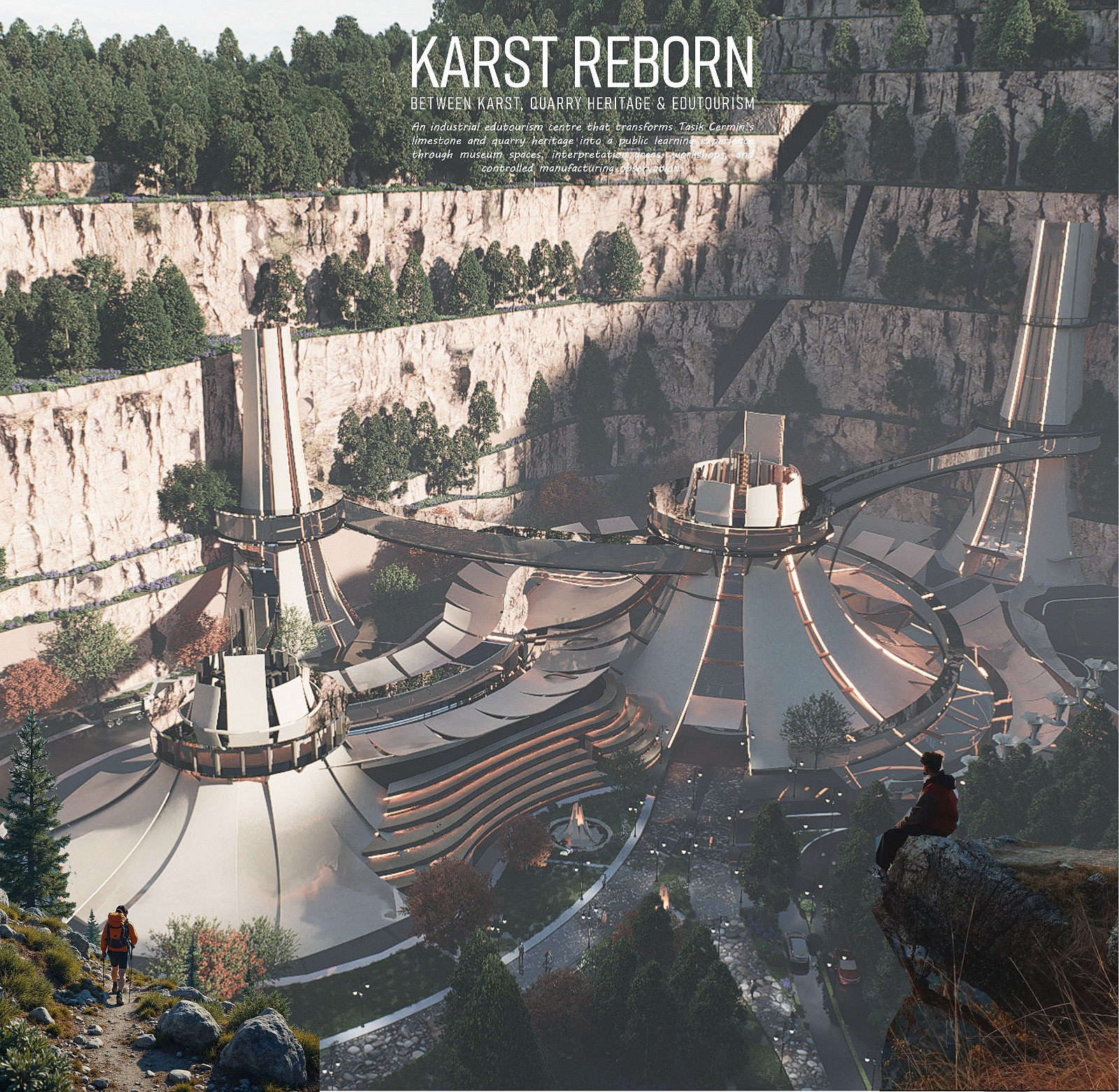
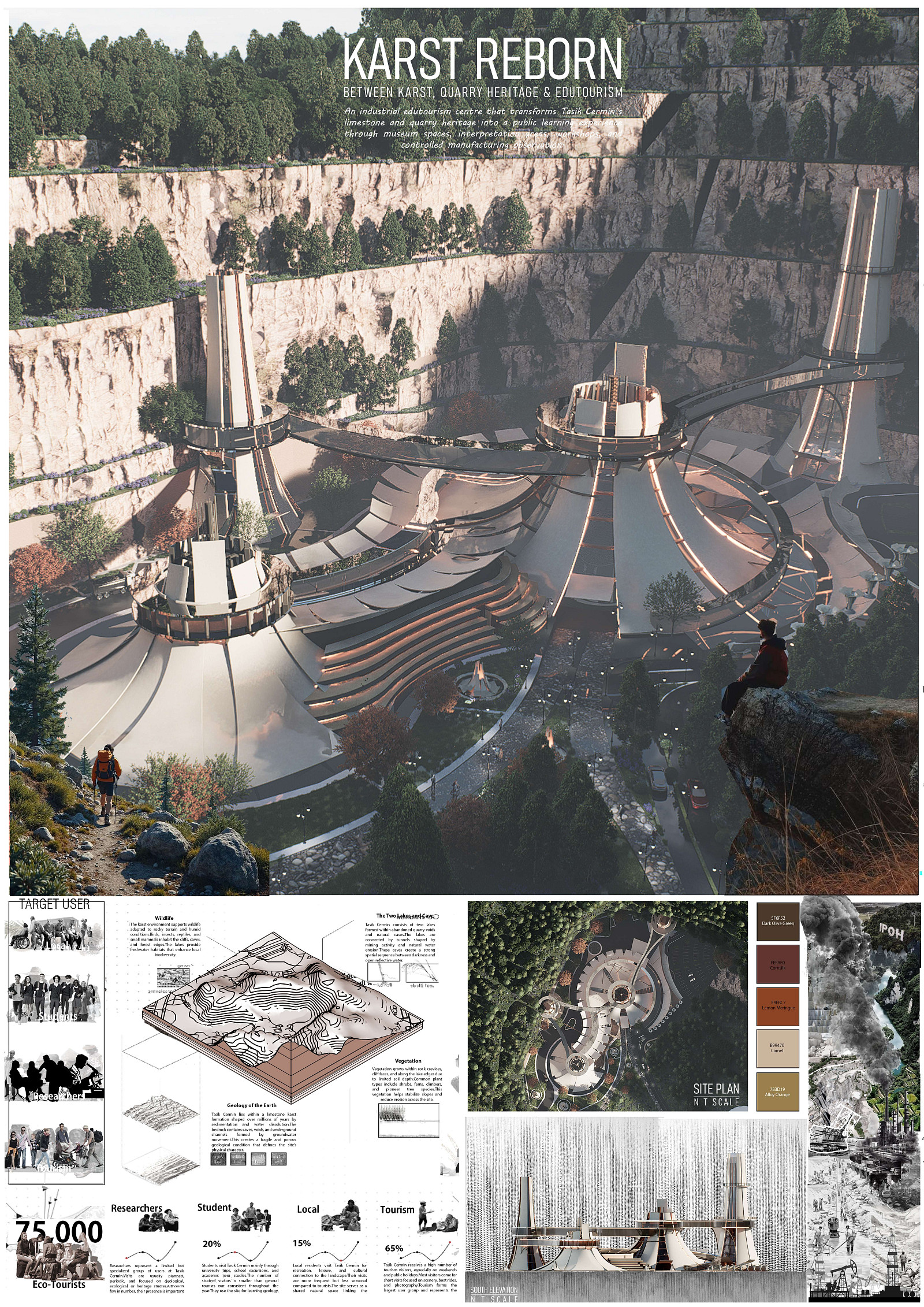
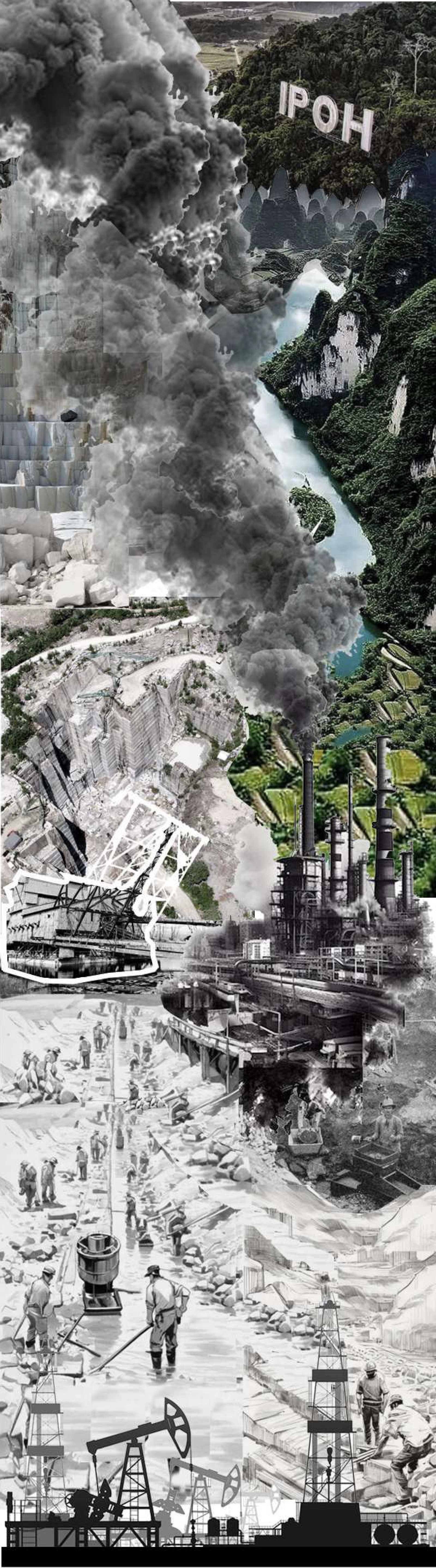
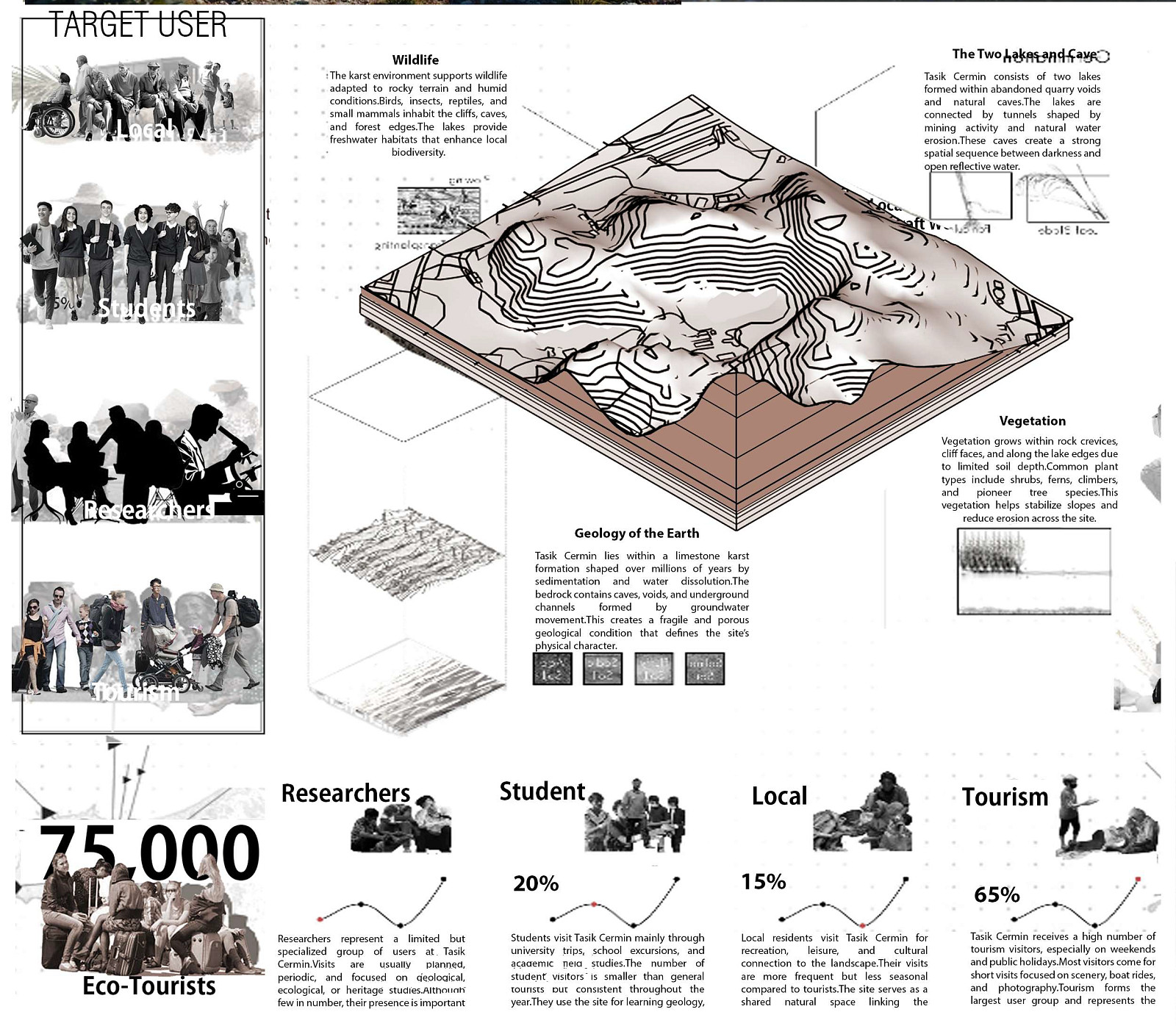
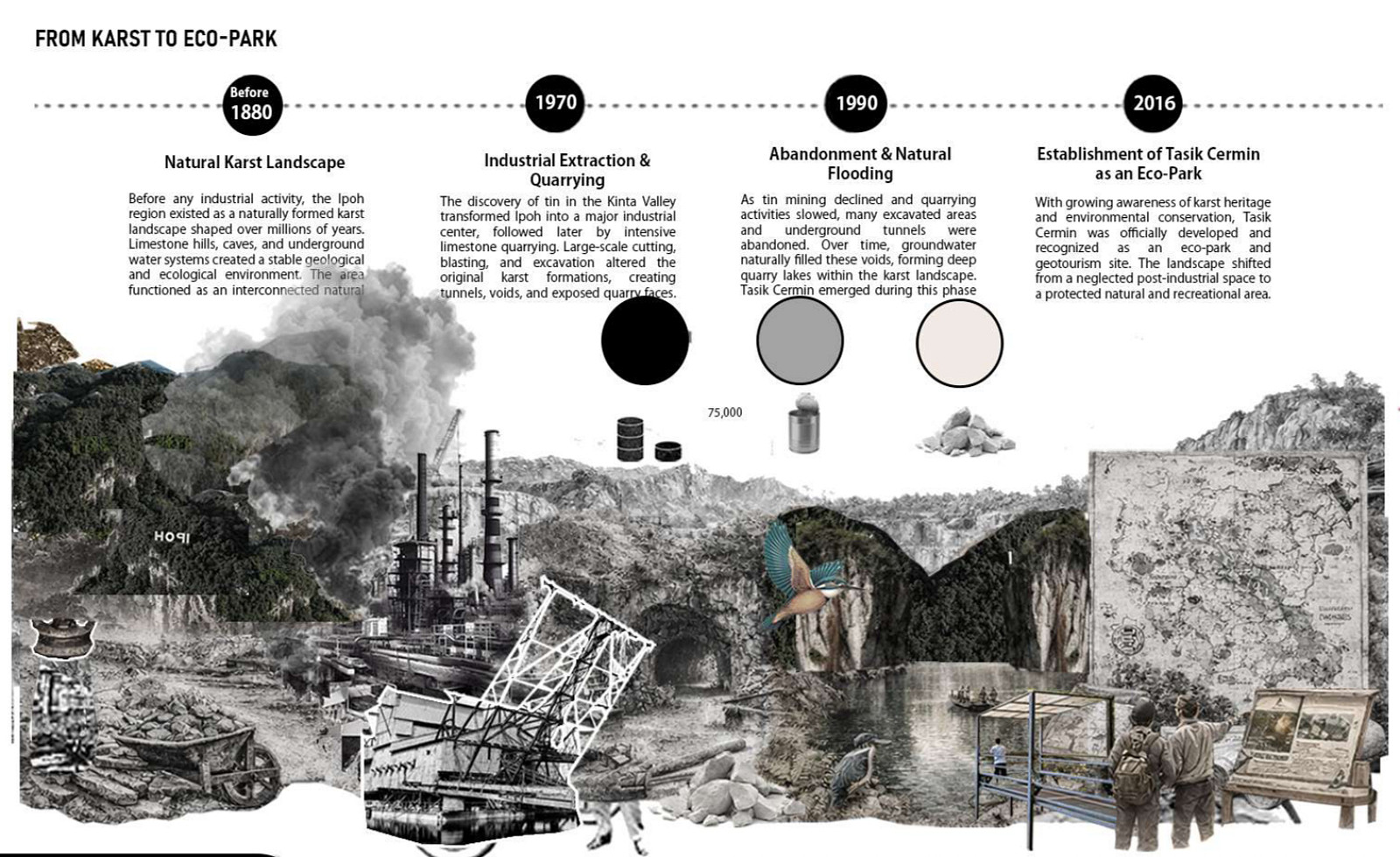
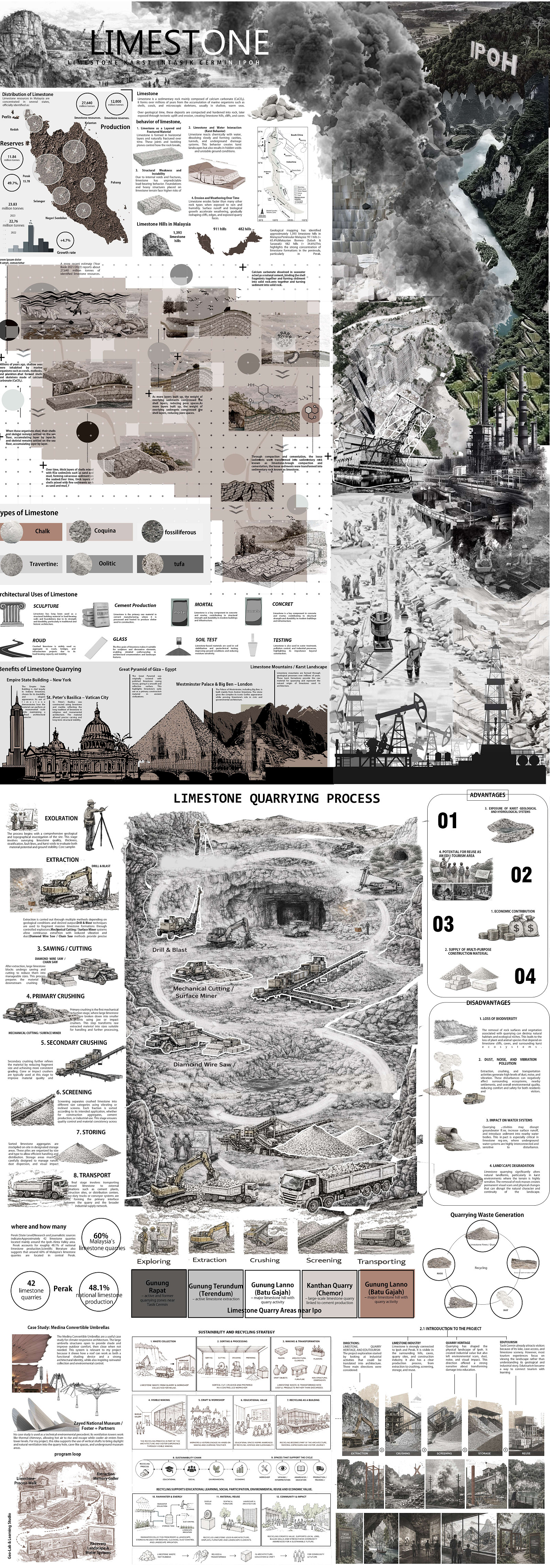
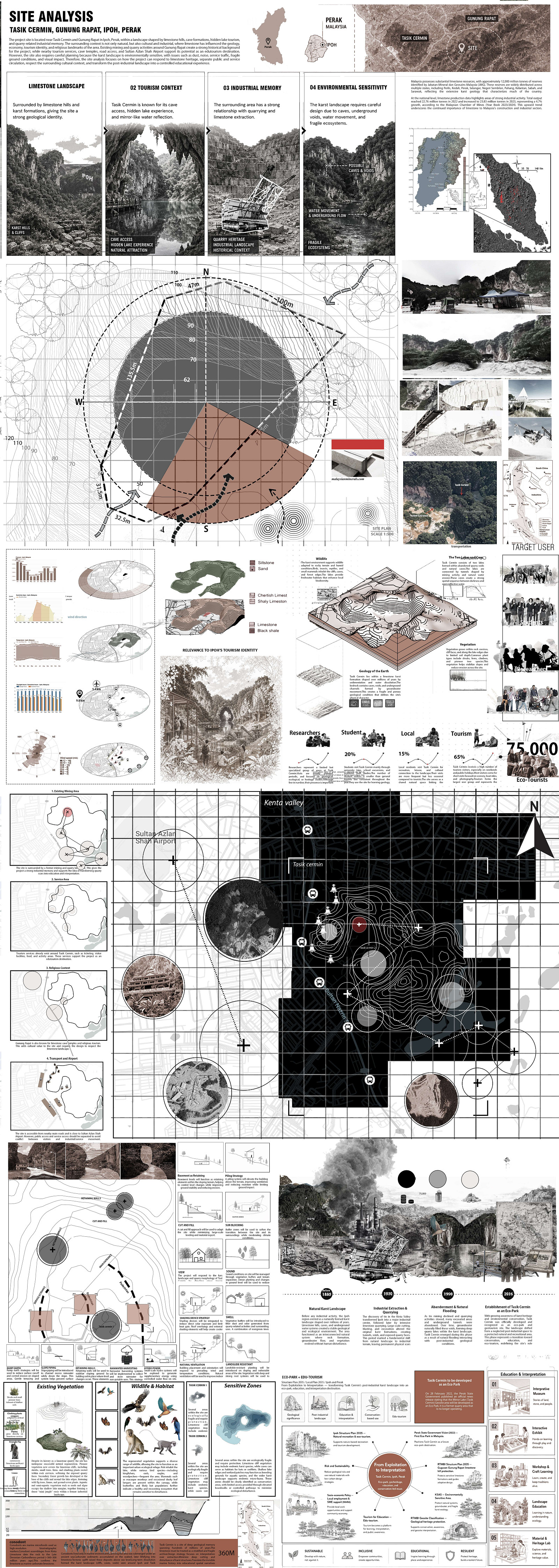
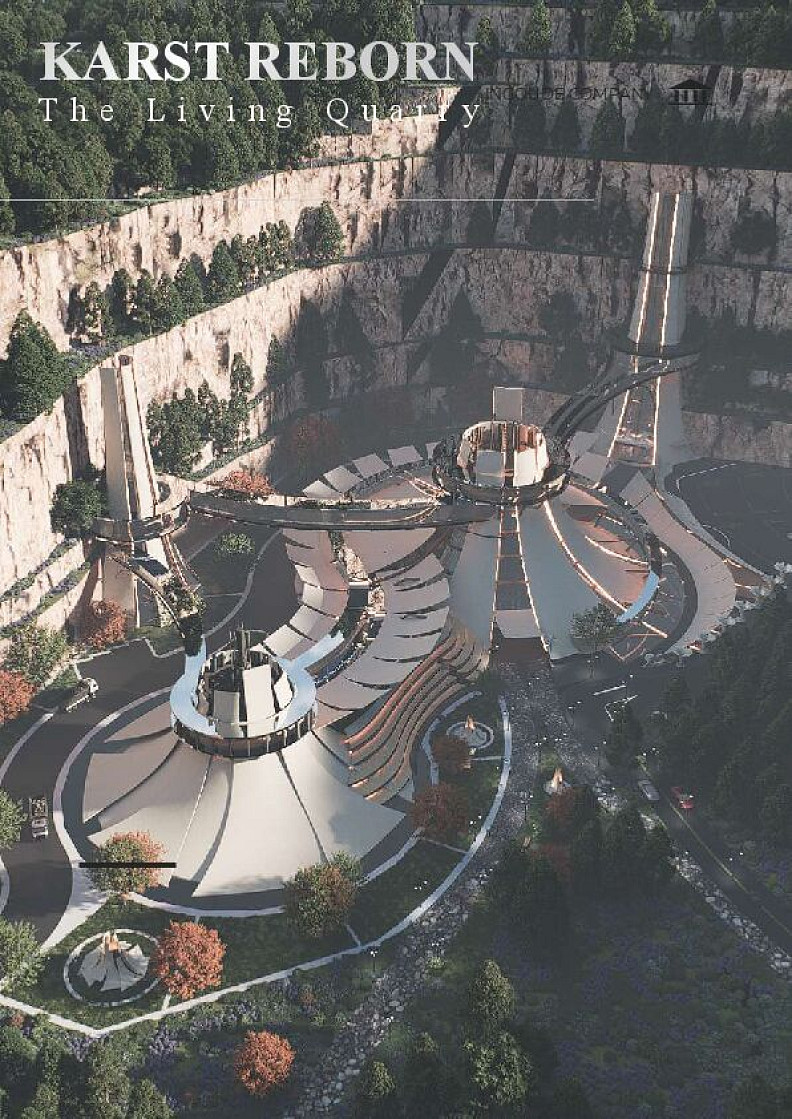
Karst Reborn is a limestone interpretation and educational tourism center located in Tasik Germin, Gunung Rapat, Ipoh. The project responds to the hidden story behind Ipoh's limestone landscape, where geology, quarry history, industrial production, environmental impact, and tourism intertwine, yet are often not clearly understood by visitors.
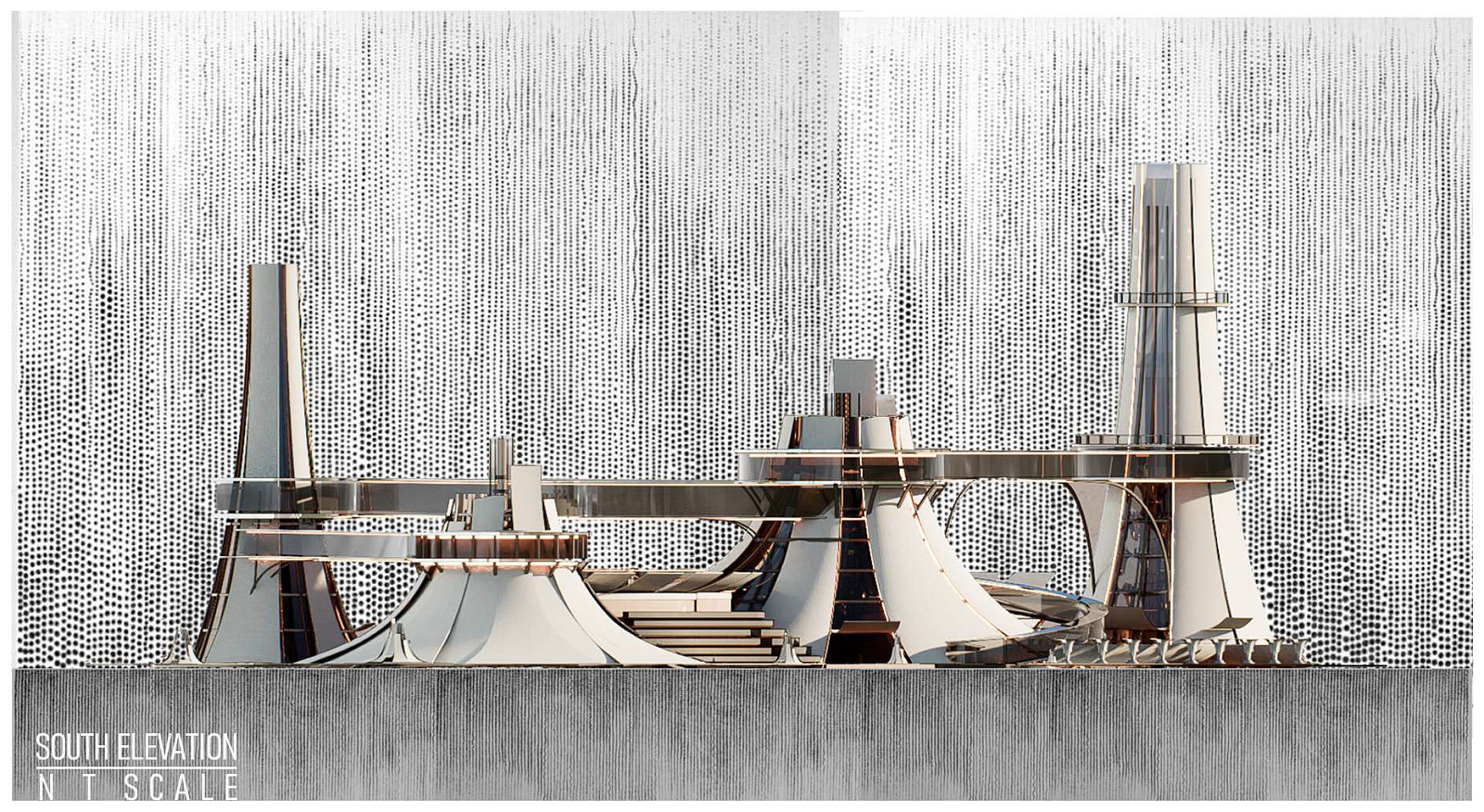
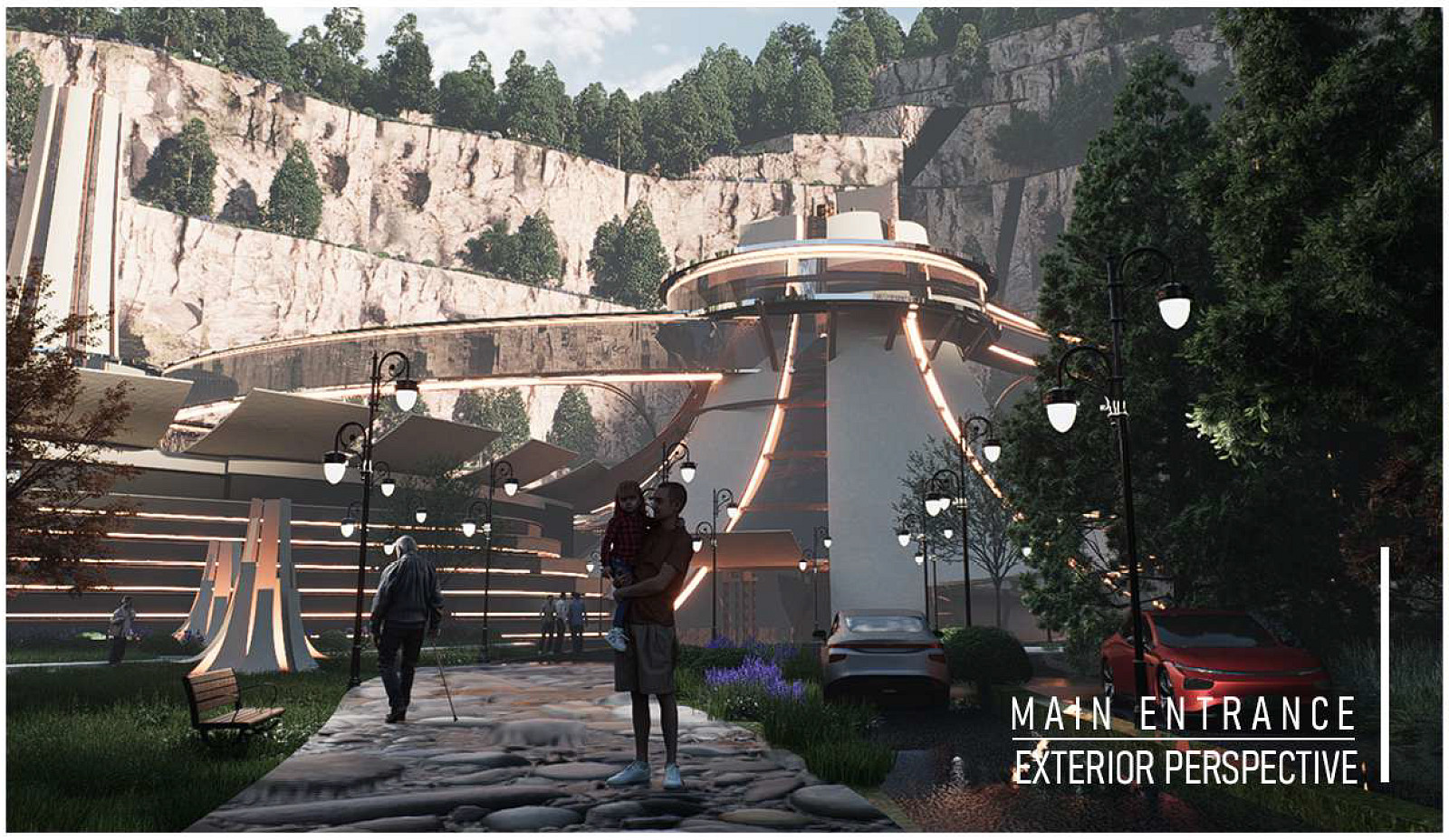
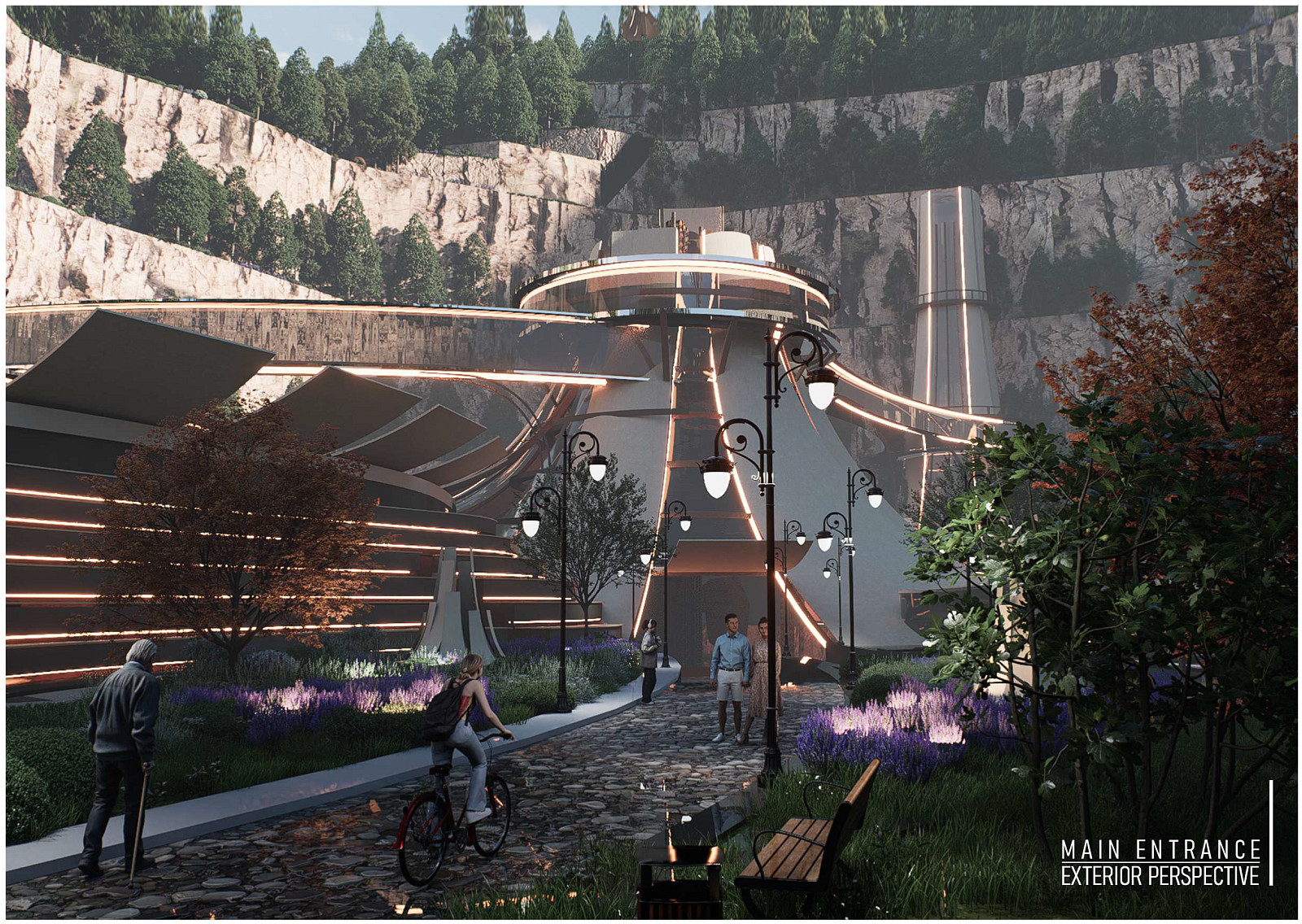
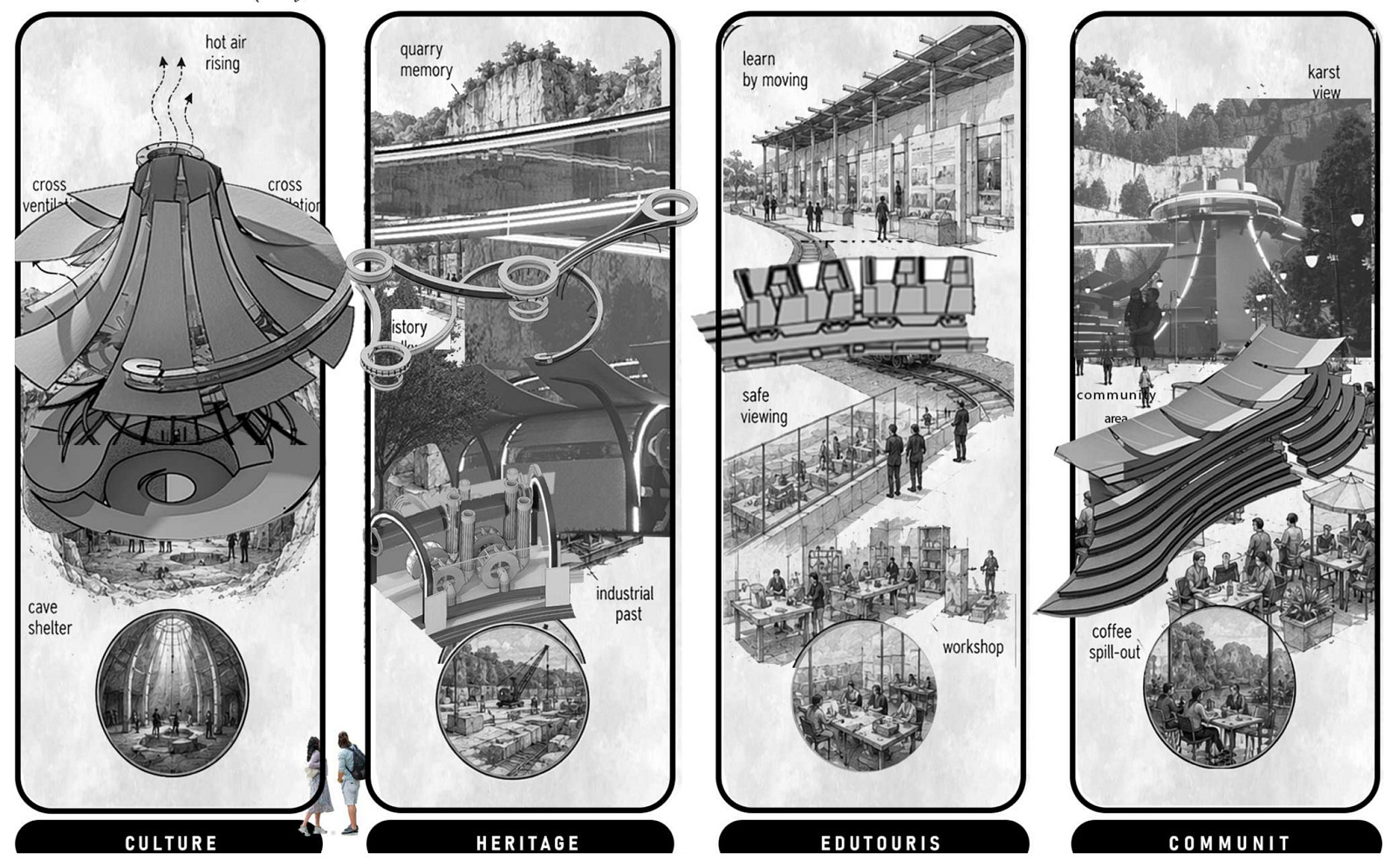
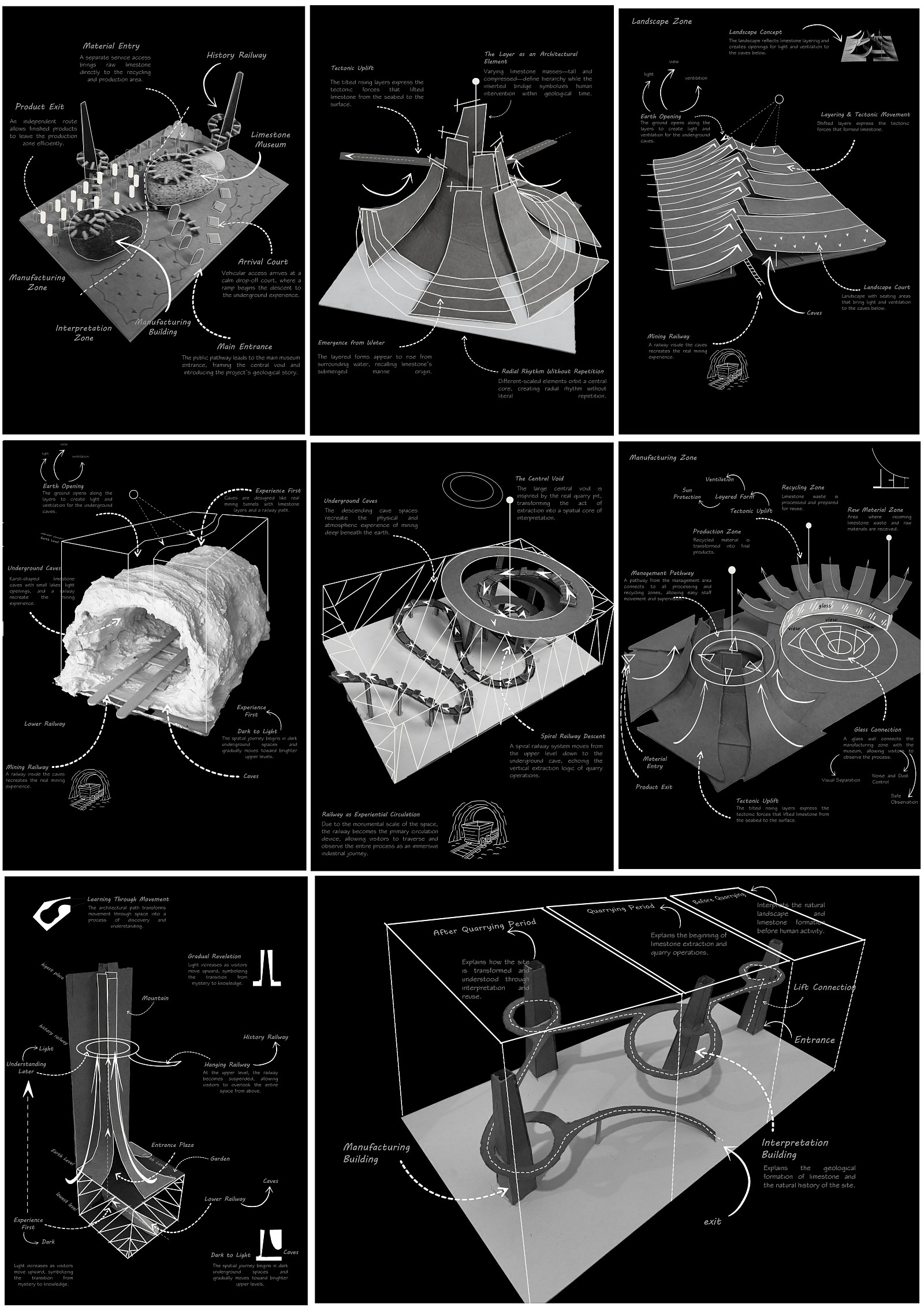
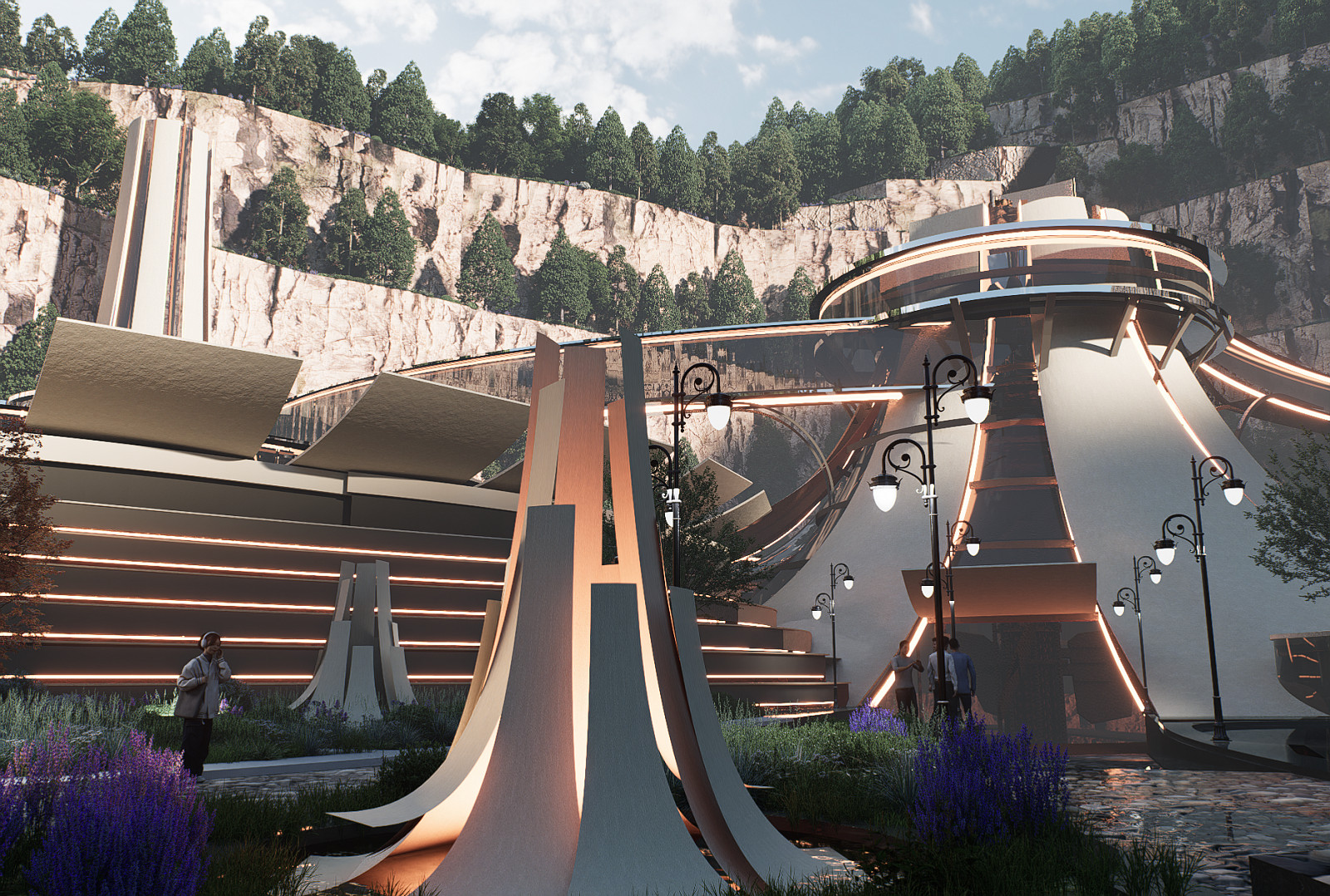
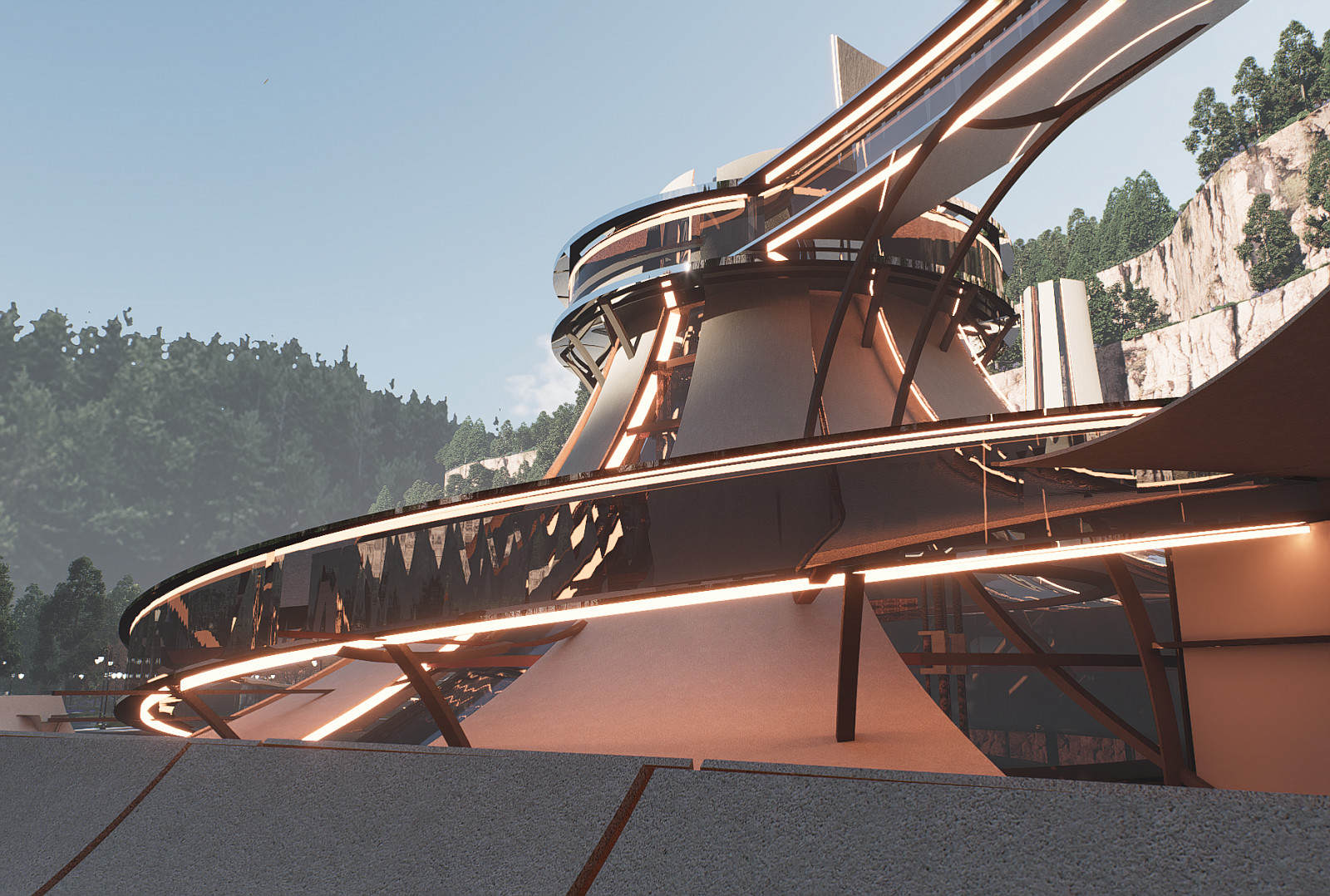
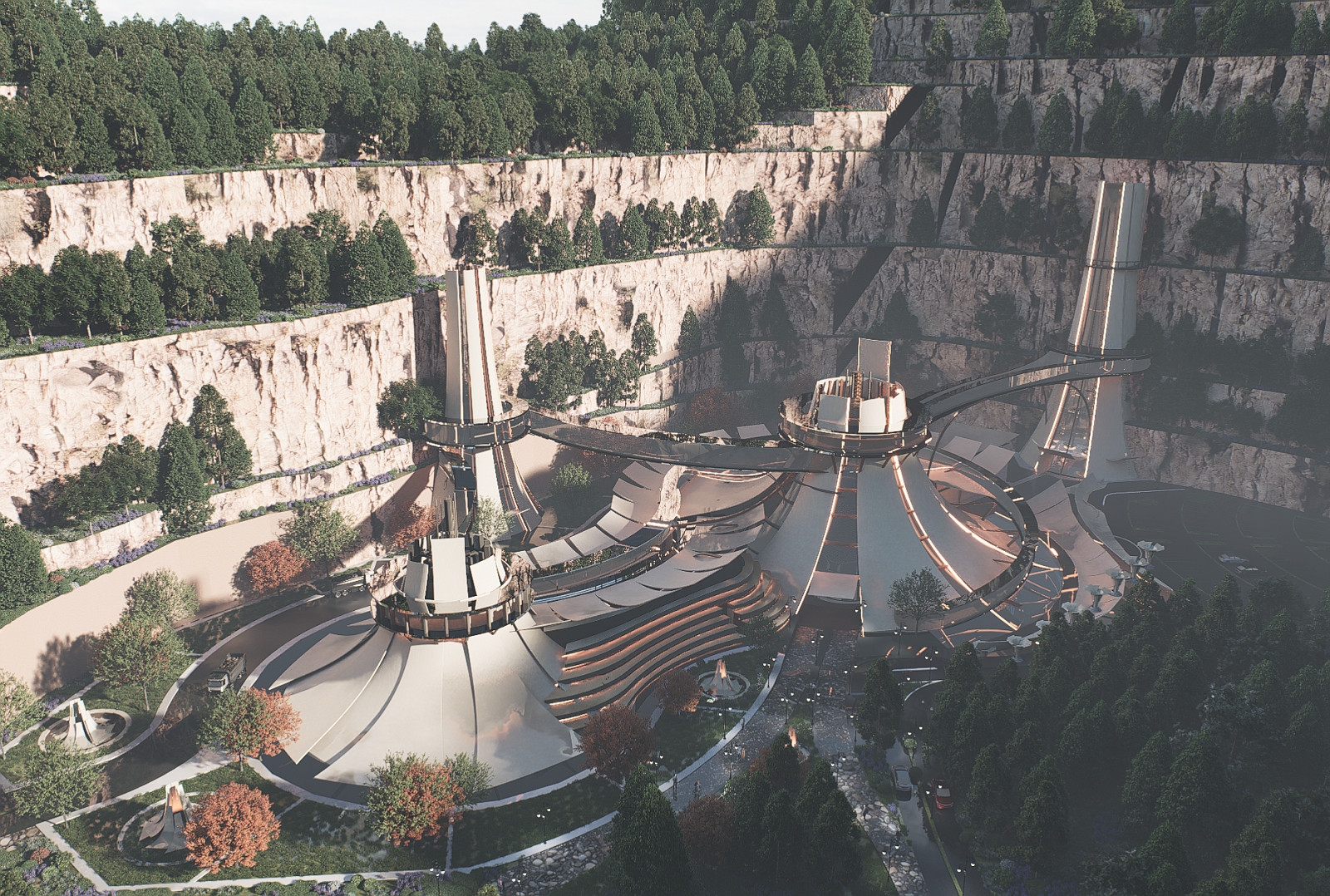
The central theme is [From Exploitation to Interpretation]. The project transforms the process of limestone extraction from an exploitative industrial activity into an educational architectural journey. Through terracing, a central quarry-like void, cave-inspired movement, and safe factory viewing, visitors learn how limestone is formed, extracted, processed, reused, and appreciated.
Karst Reborn is more than just a museum; it's a living learning center that connects the natural landscape, industry, heritage, craftsmanship, and environmental awareness into a single, integrated experience.
Project description
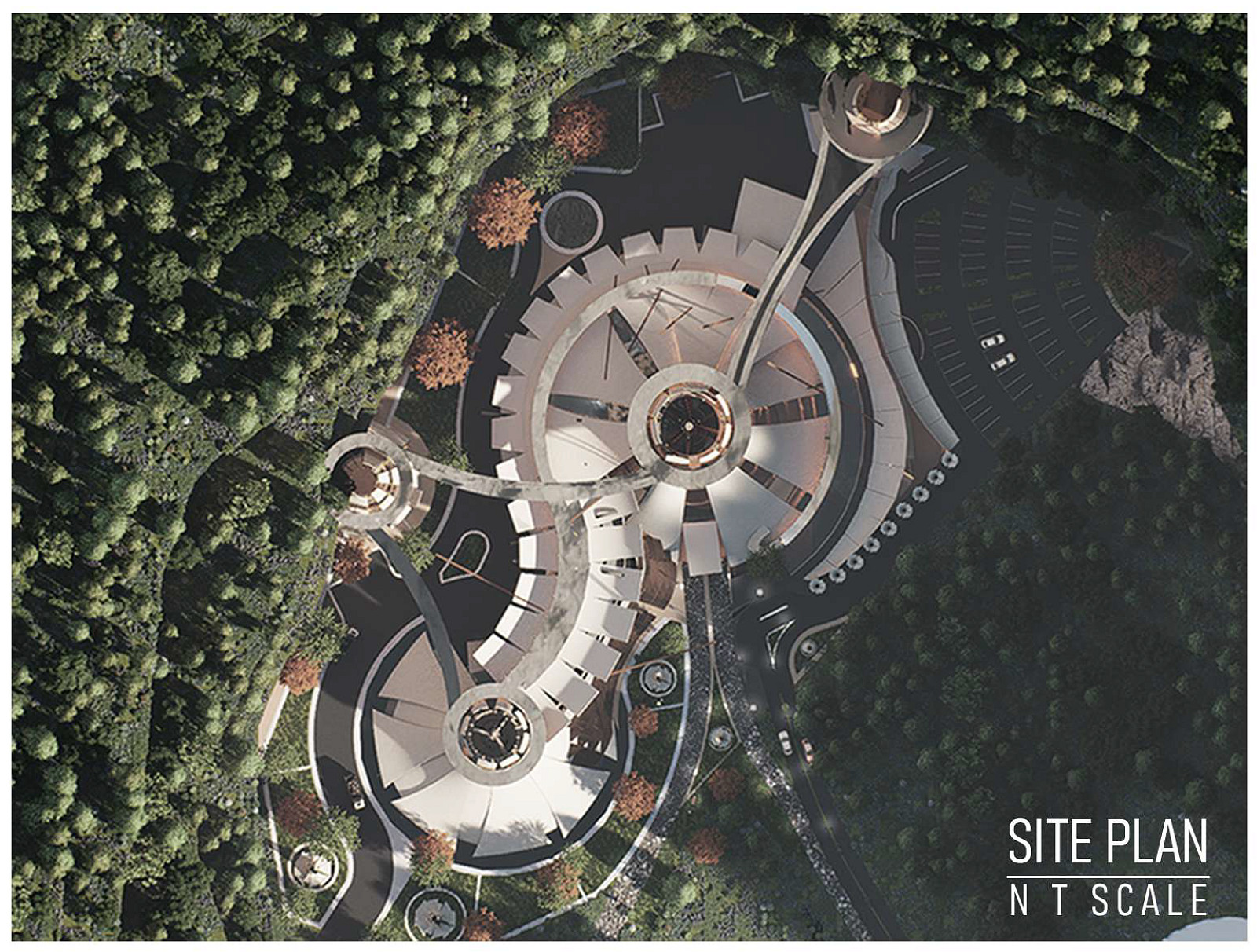
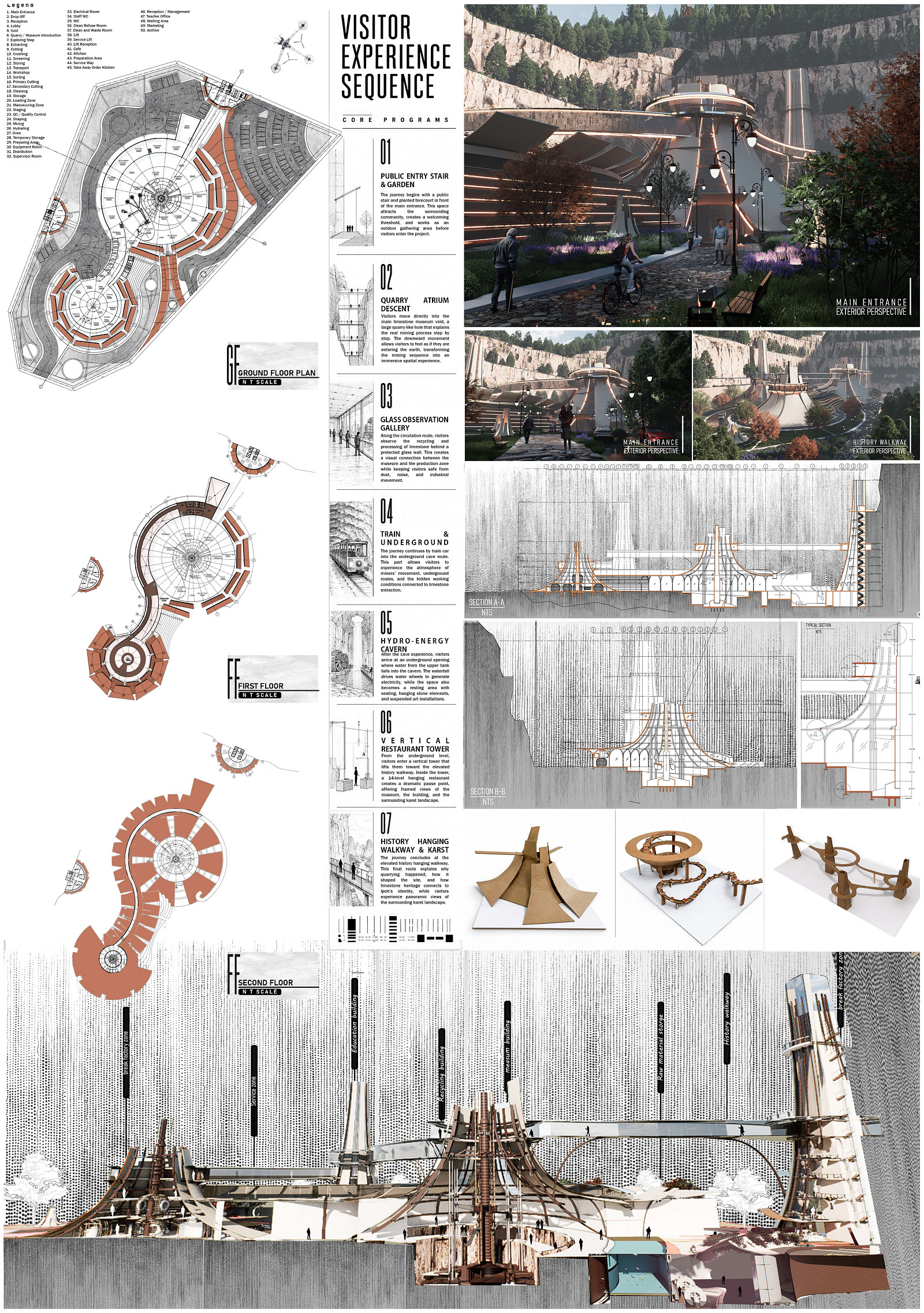
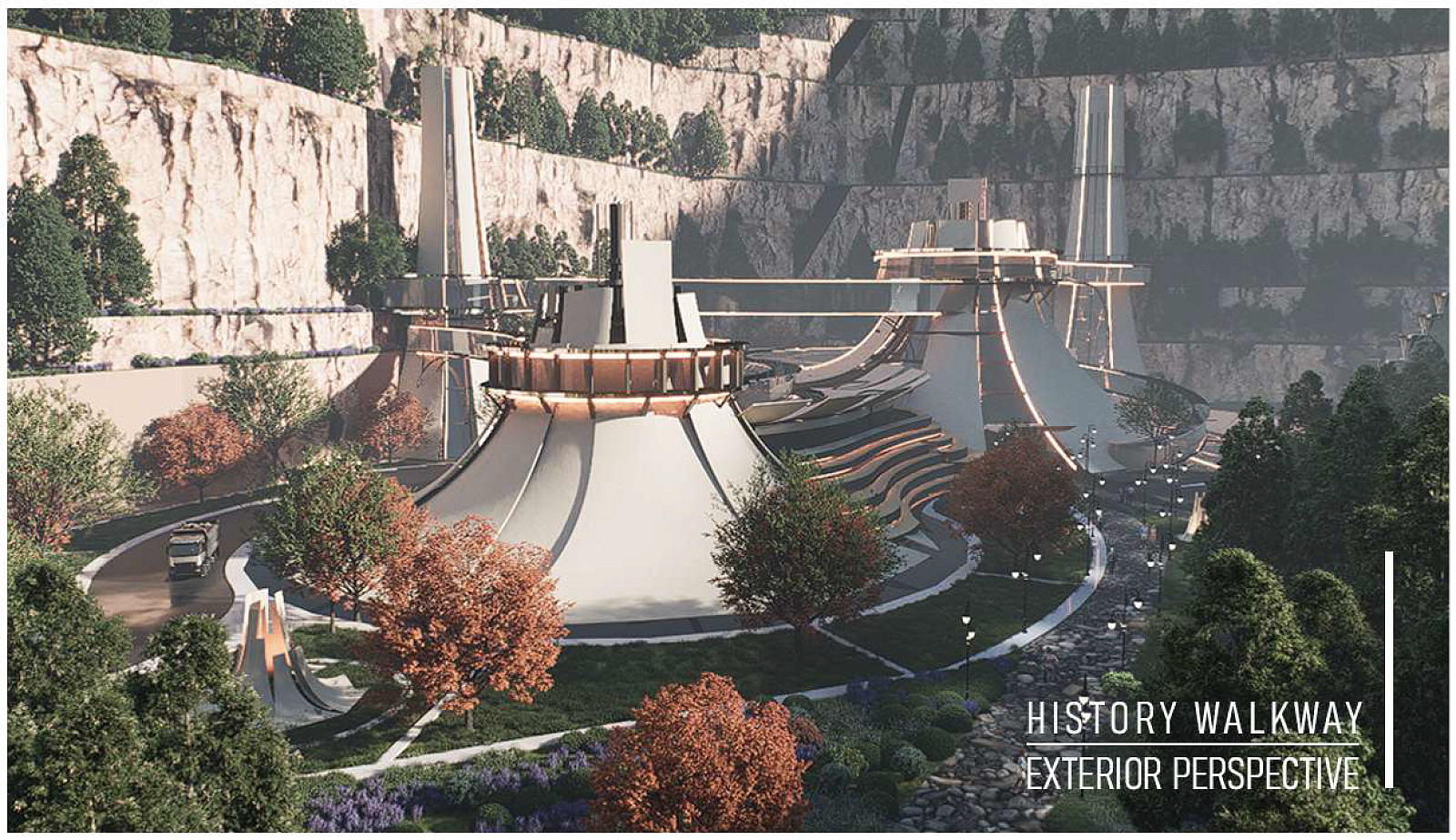
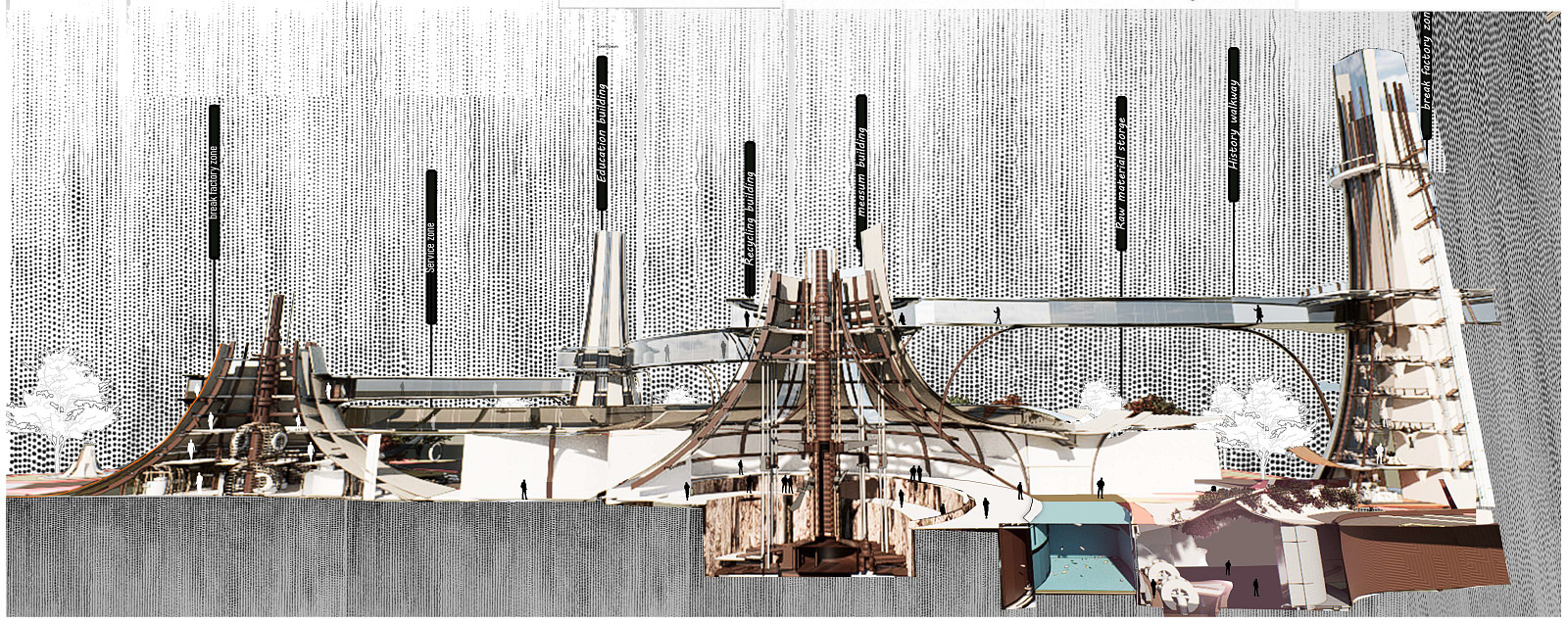
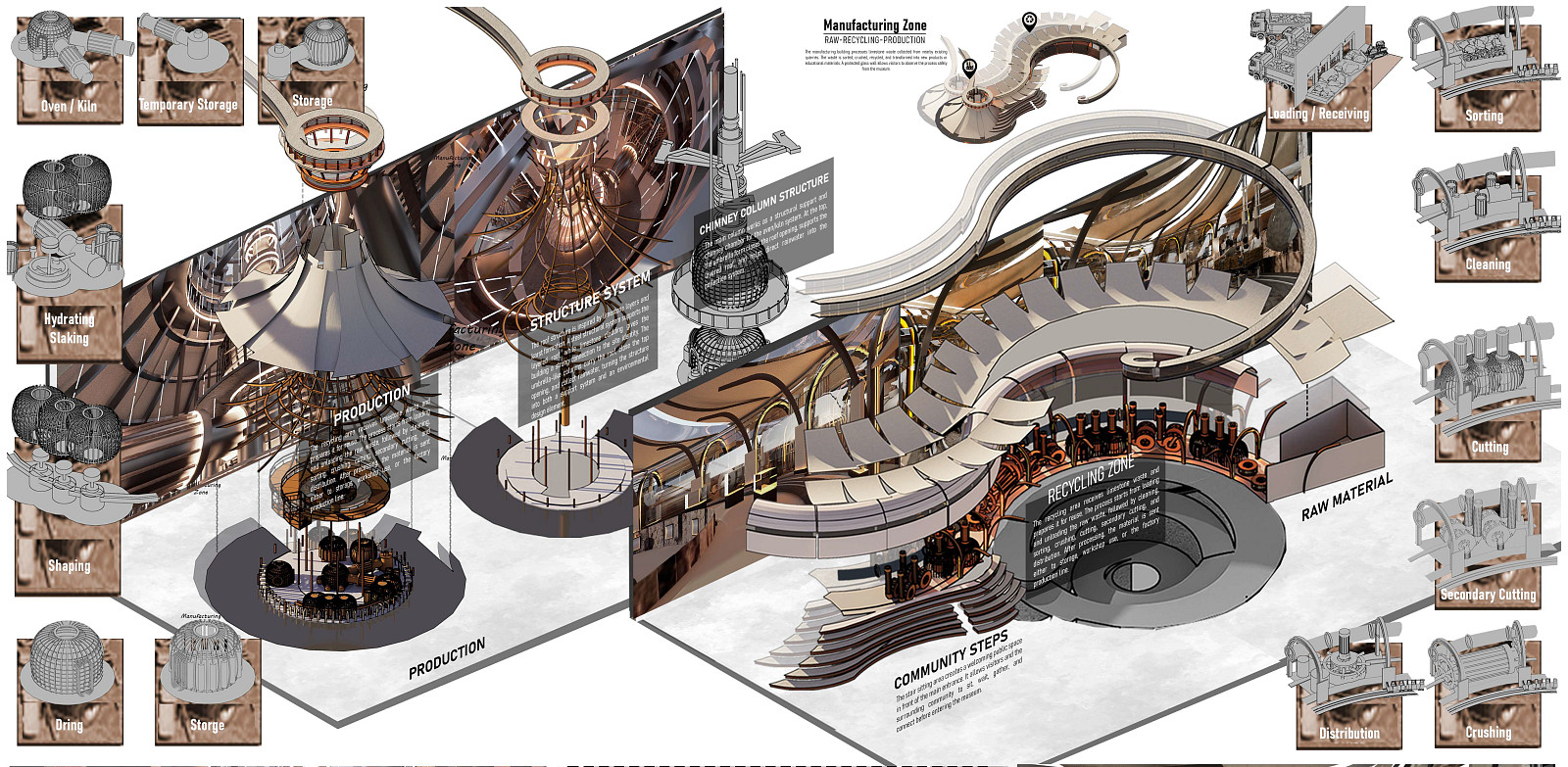
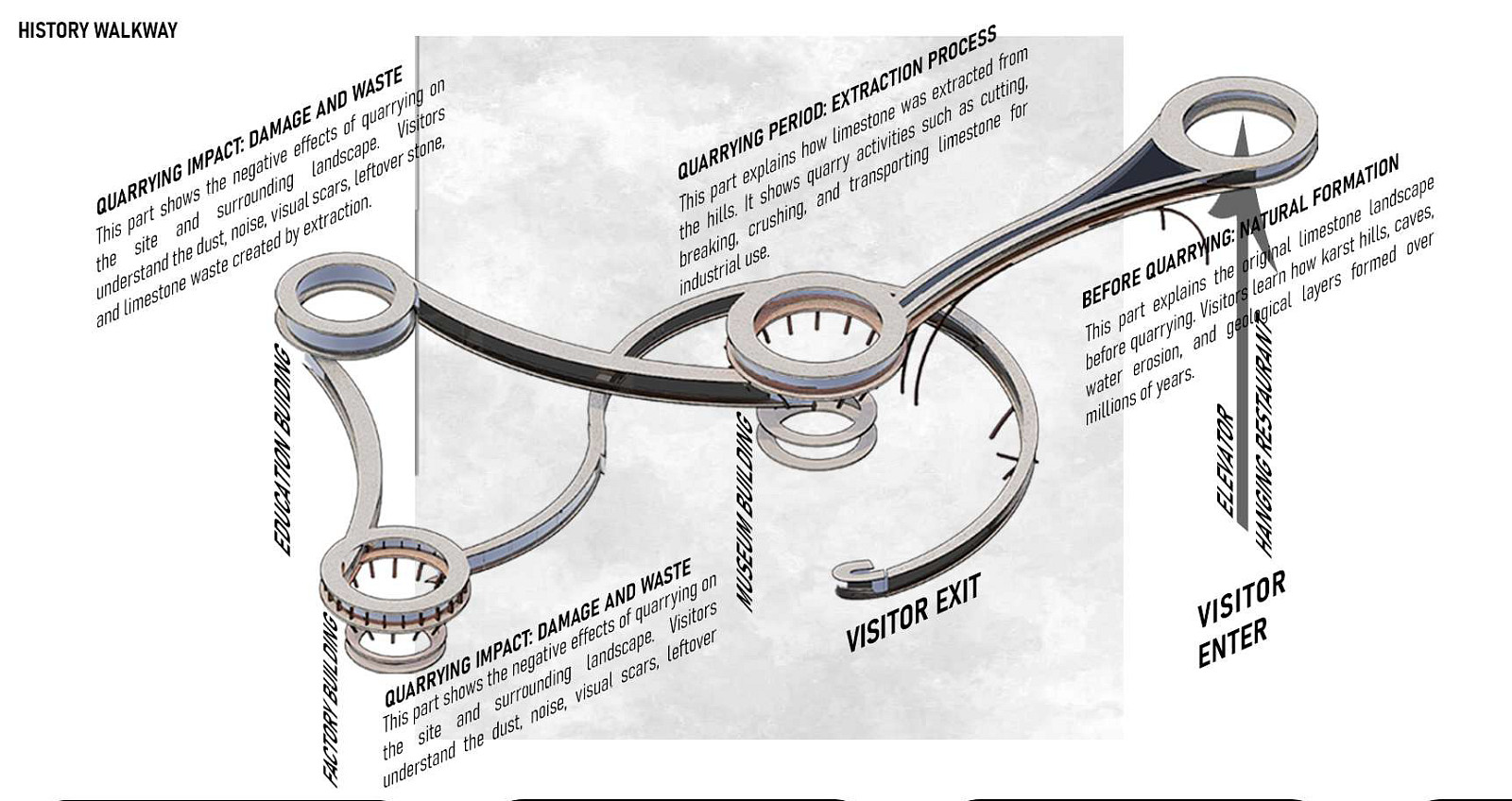
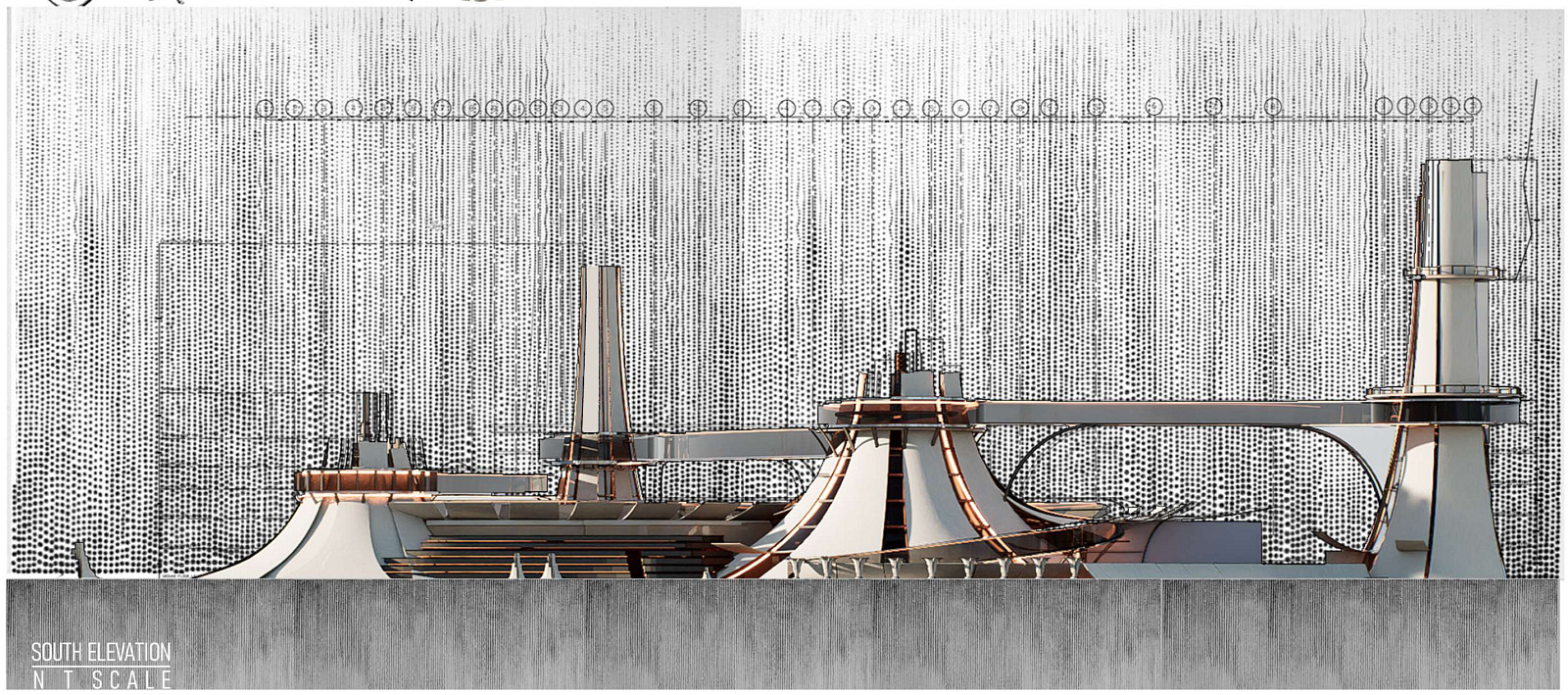
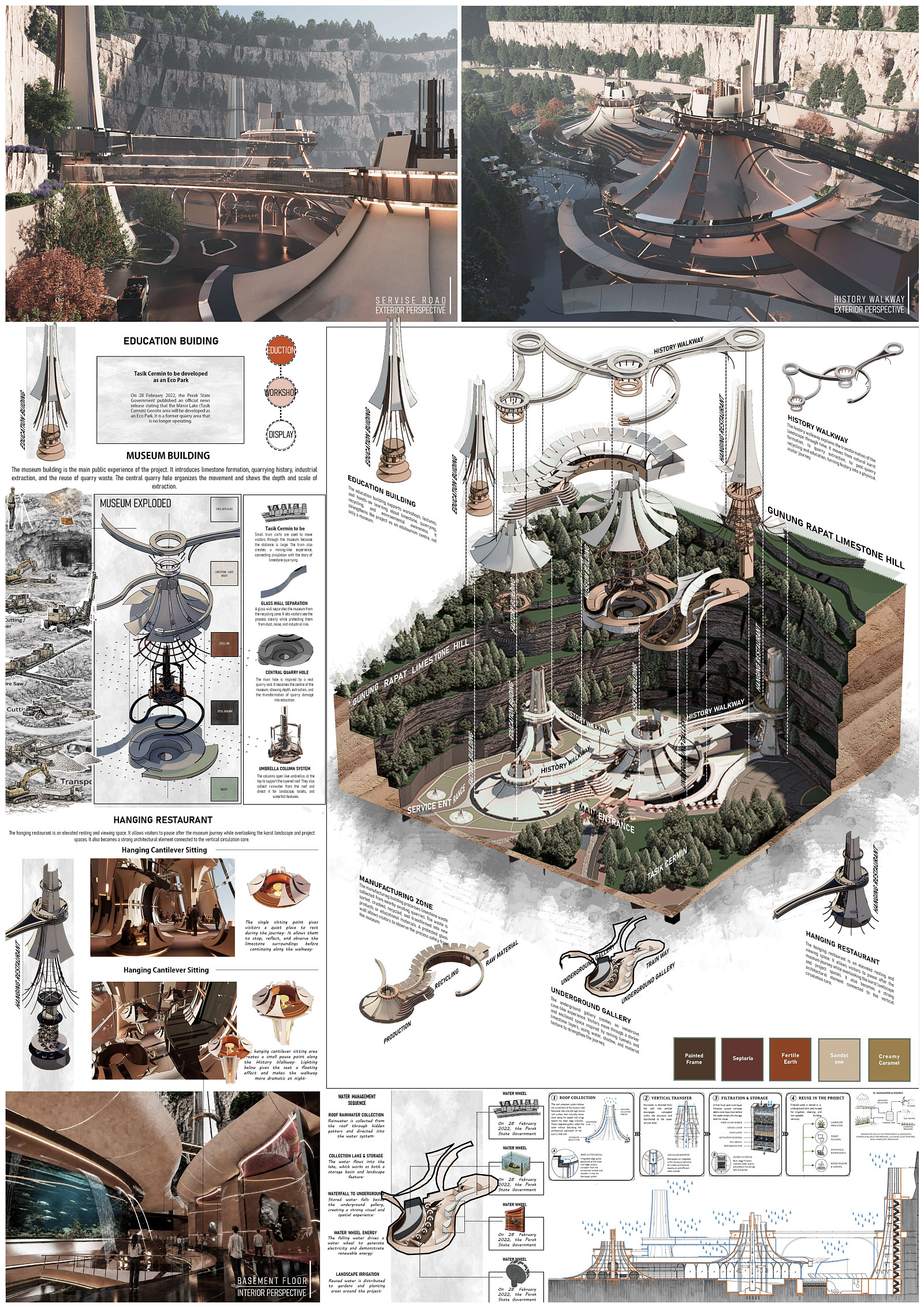
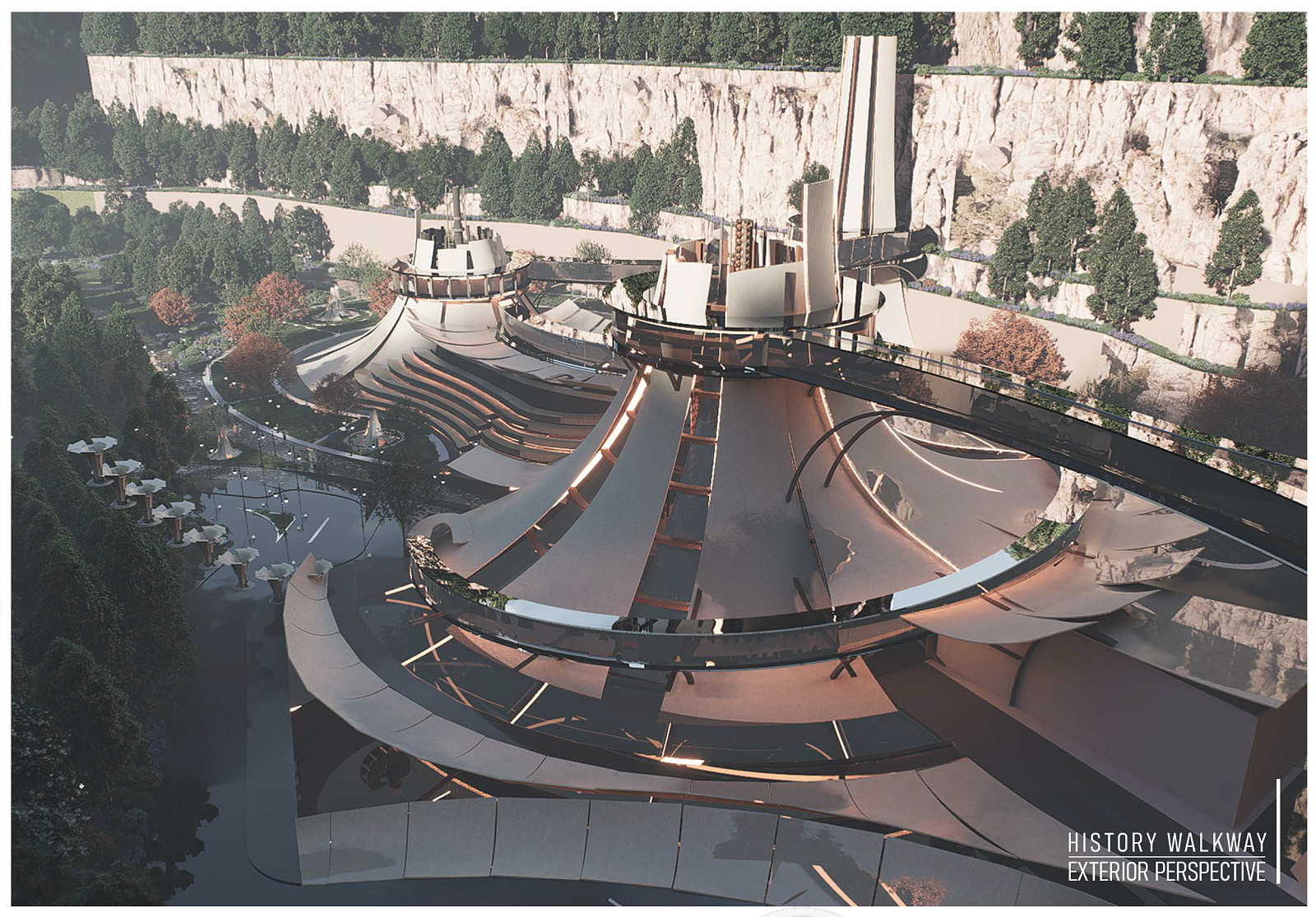
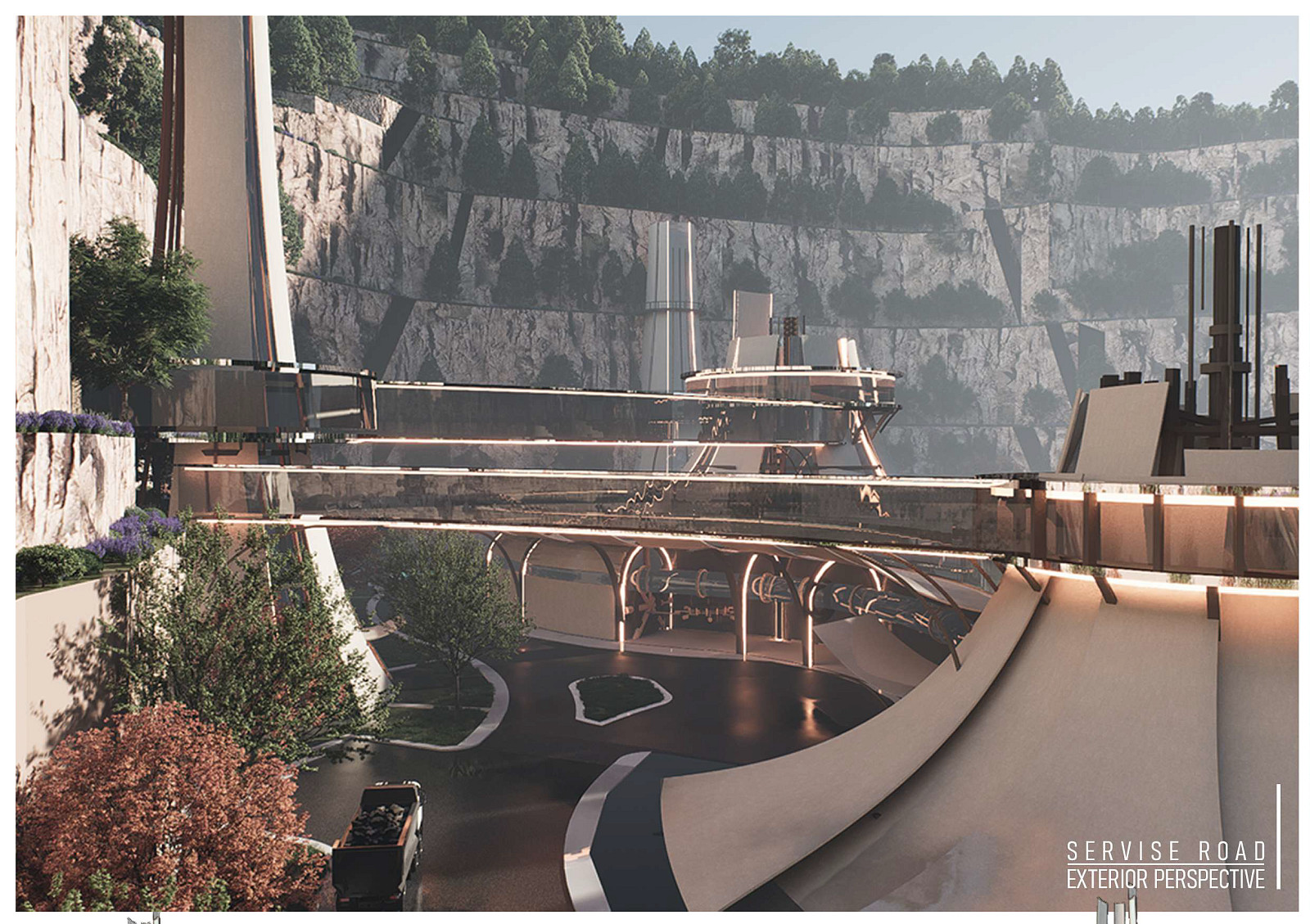
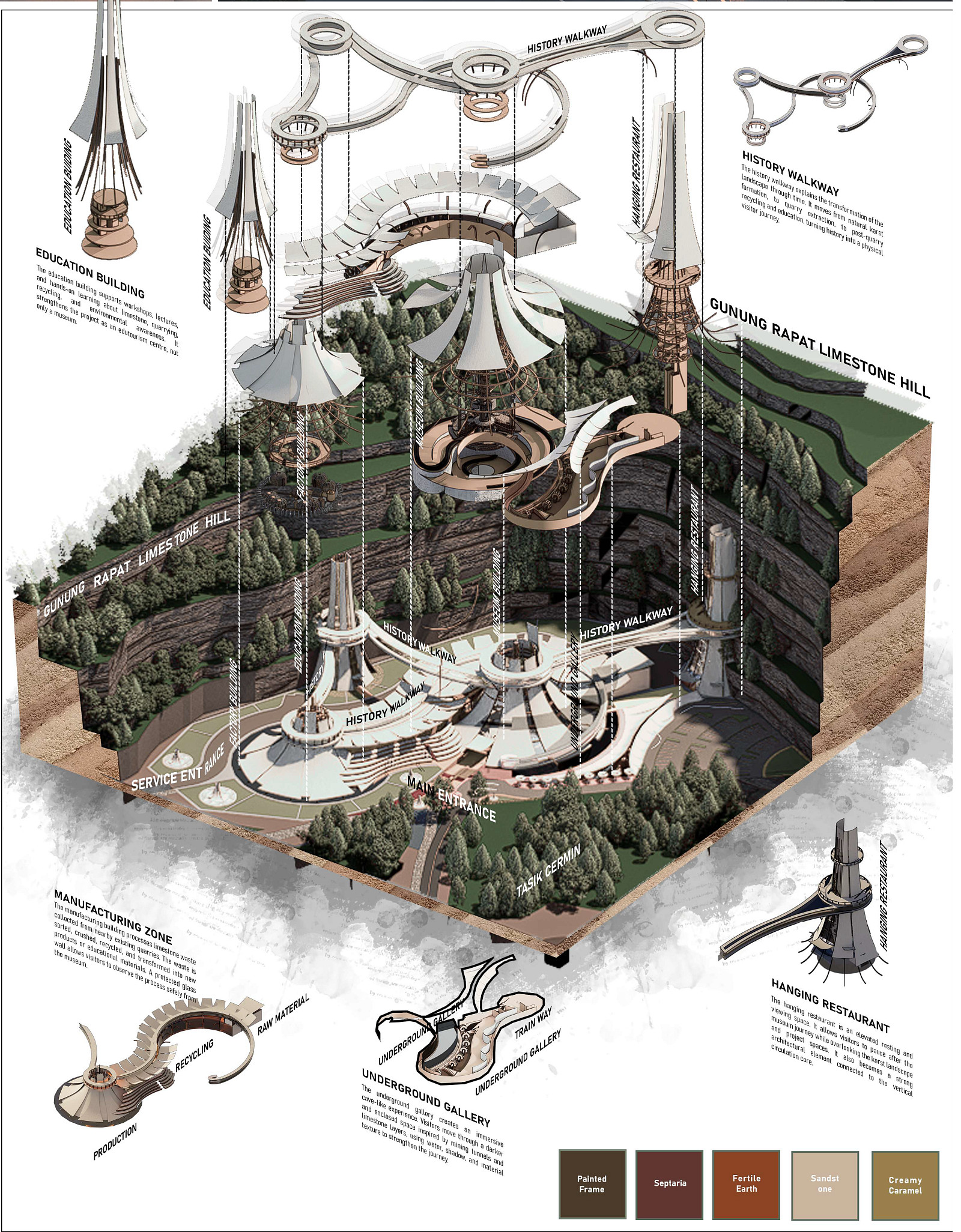
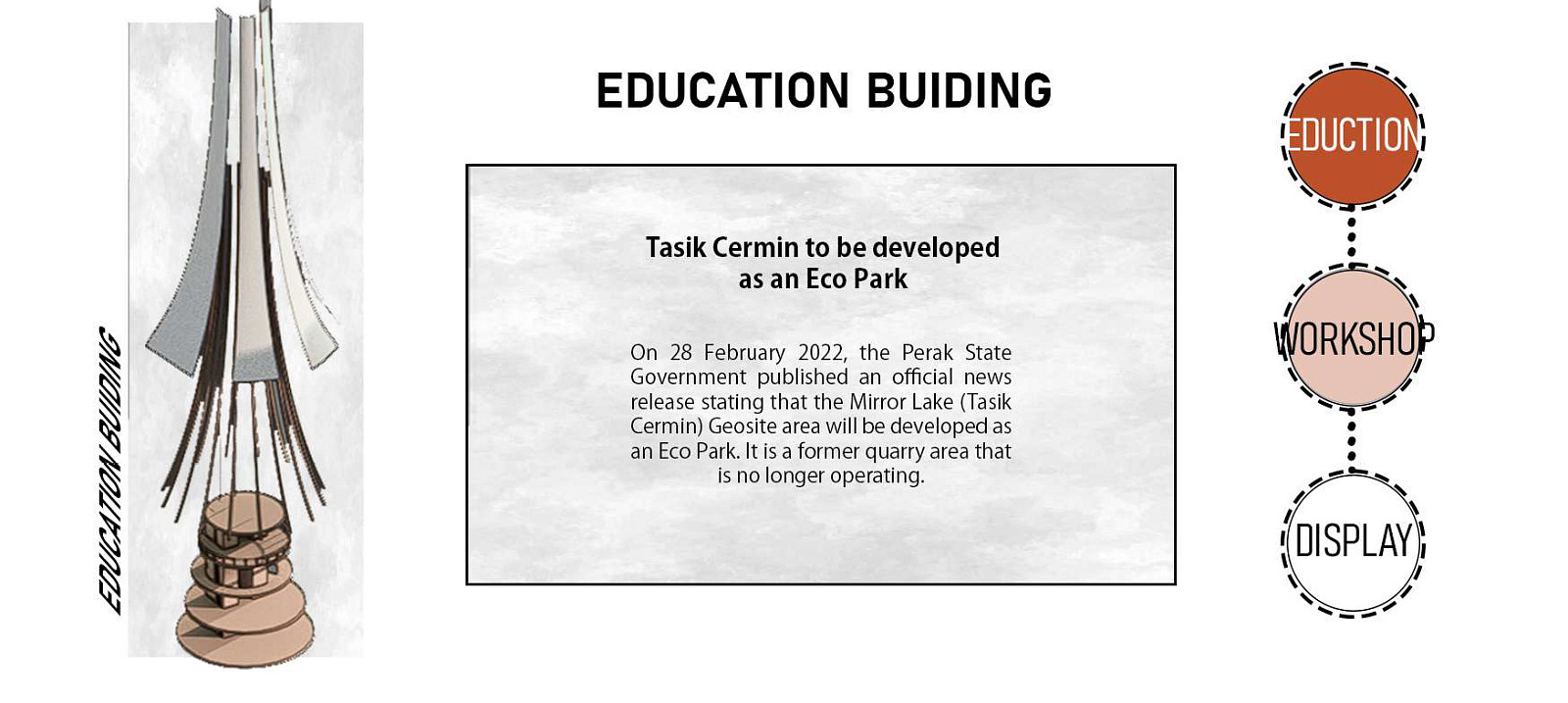
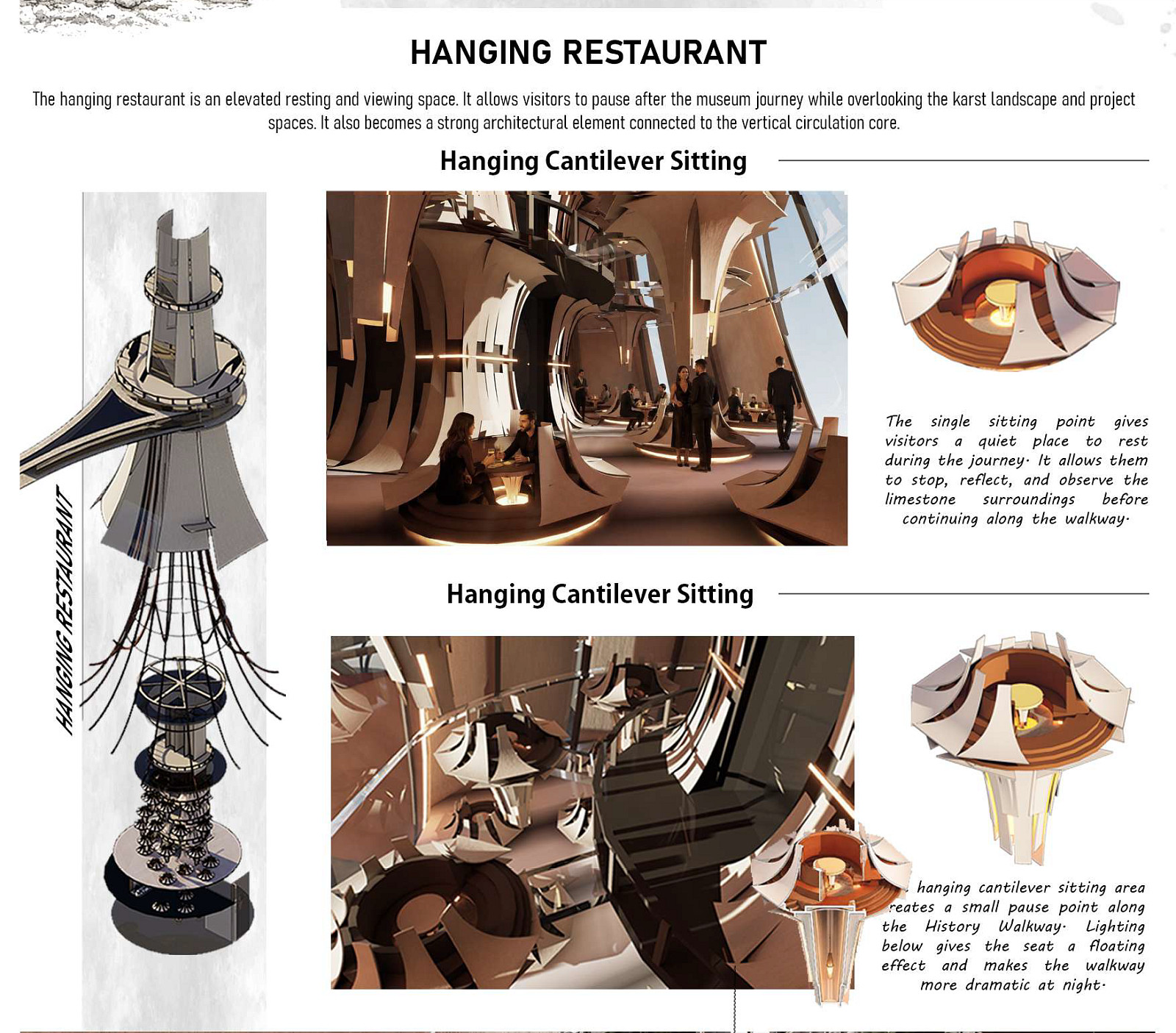
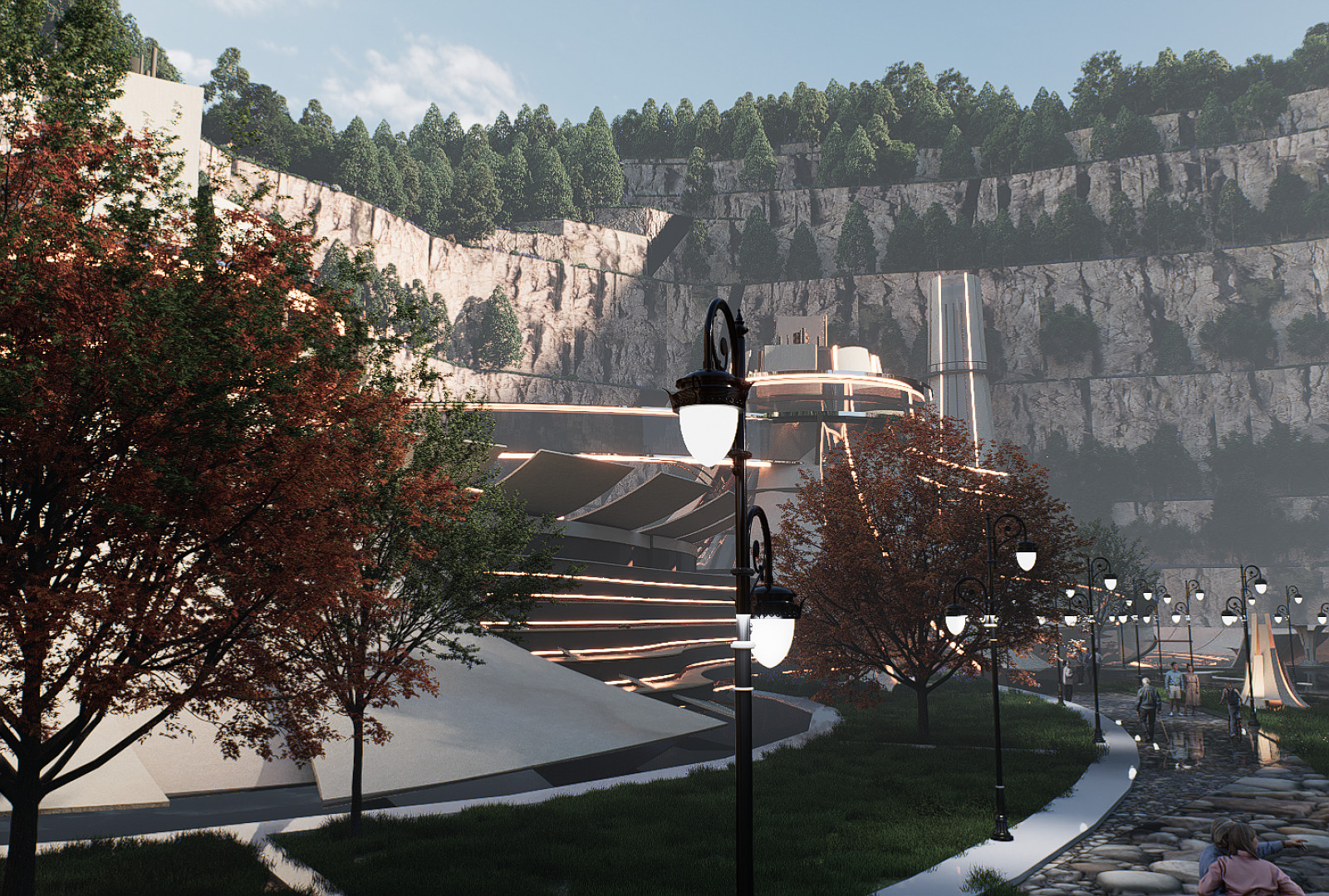
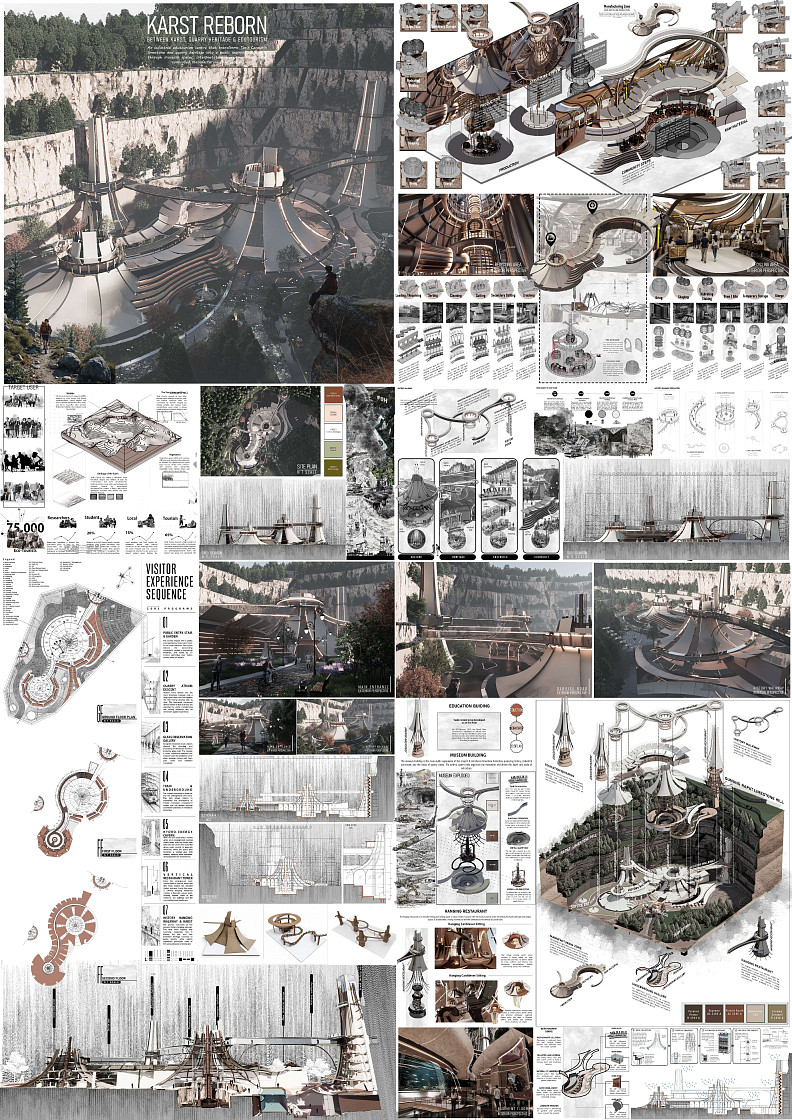
The project comprises a limestone museum, interpretive galleries, a central quarry-inspired space, workshops for reusing limestone waste, a controlled manufacturing area, a factory viewing area, an outdoor educational landscape, a restaurant tower, and an elevated historical railway.
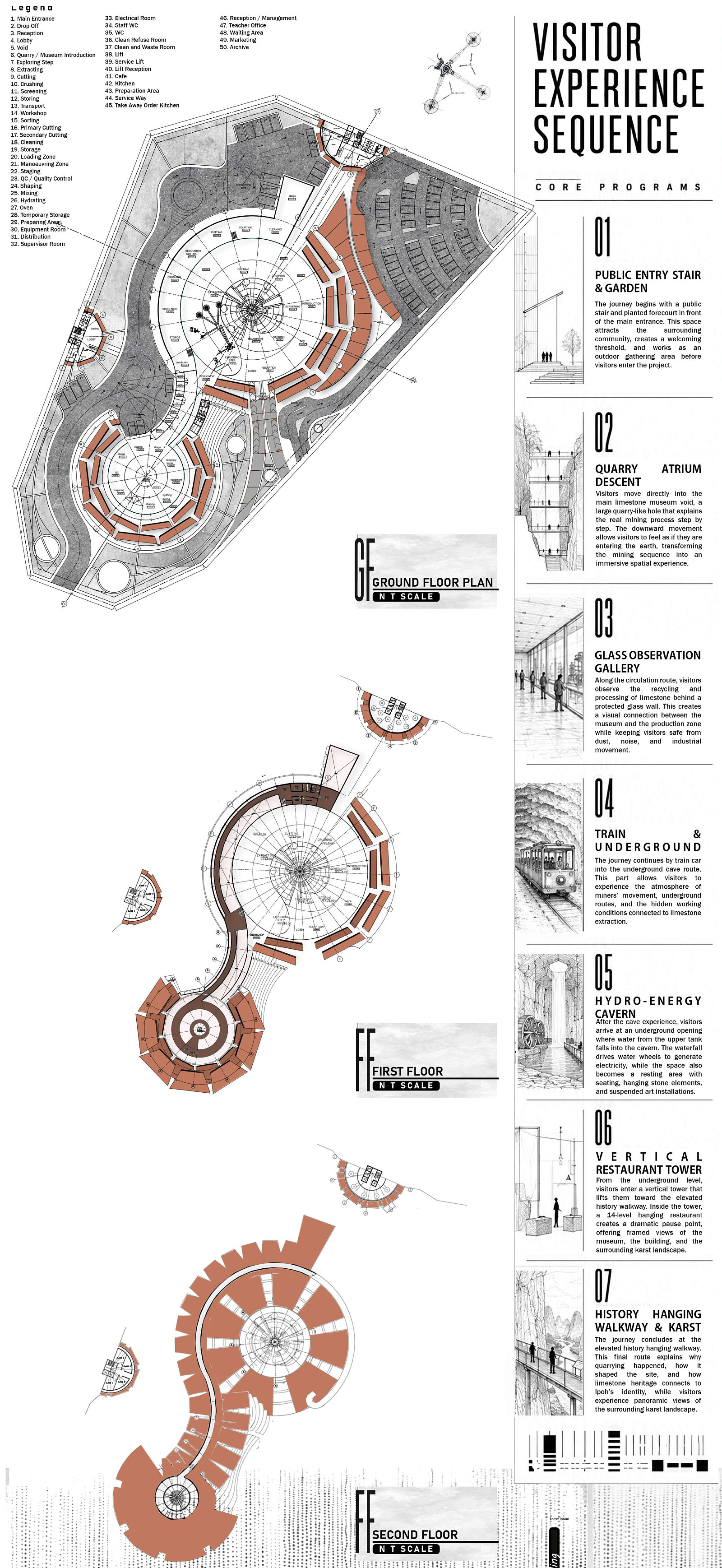
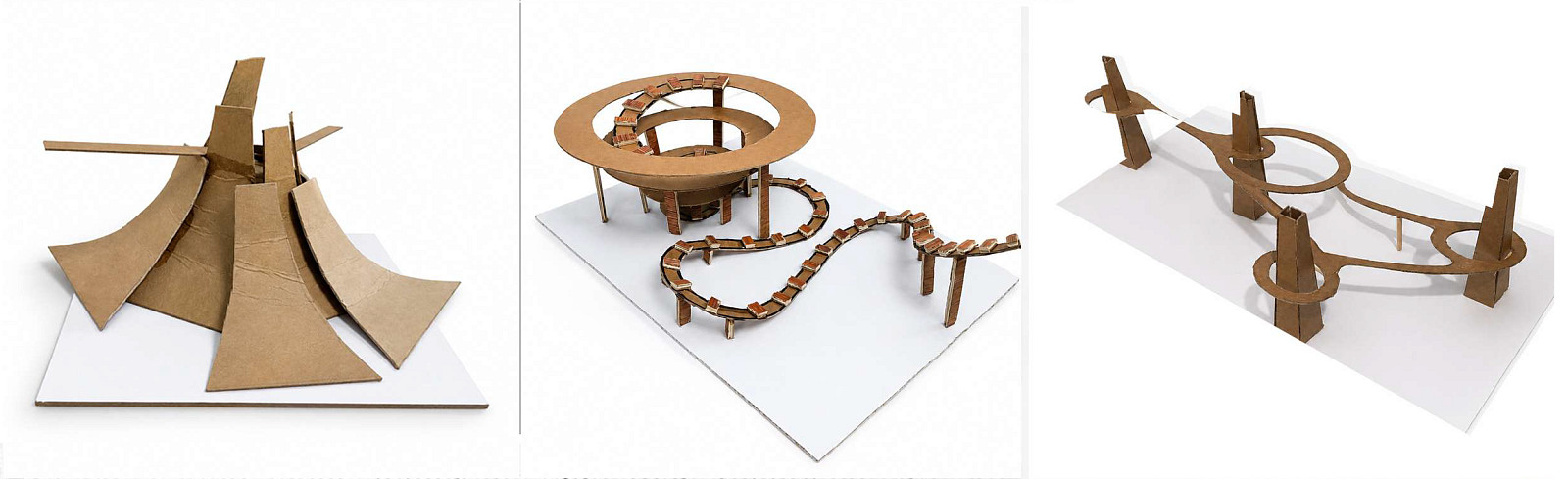
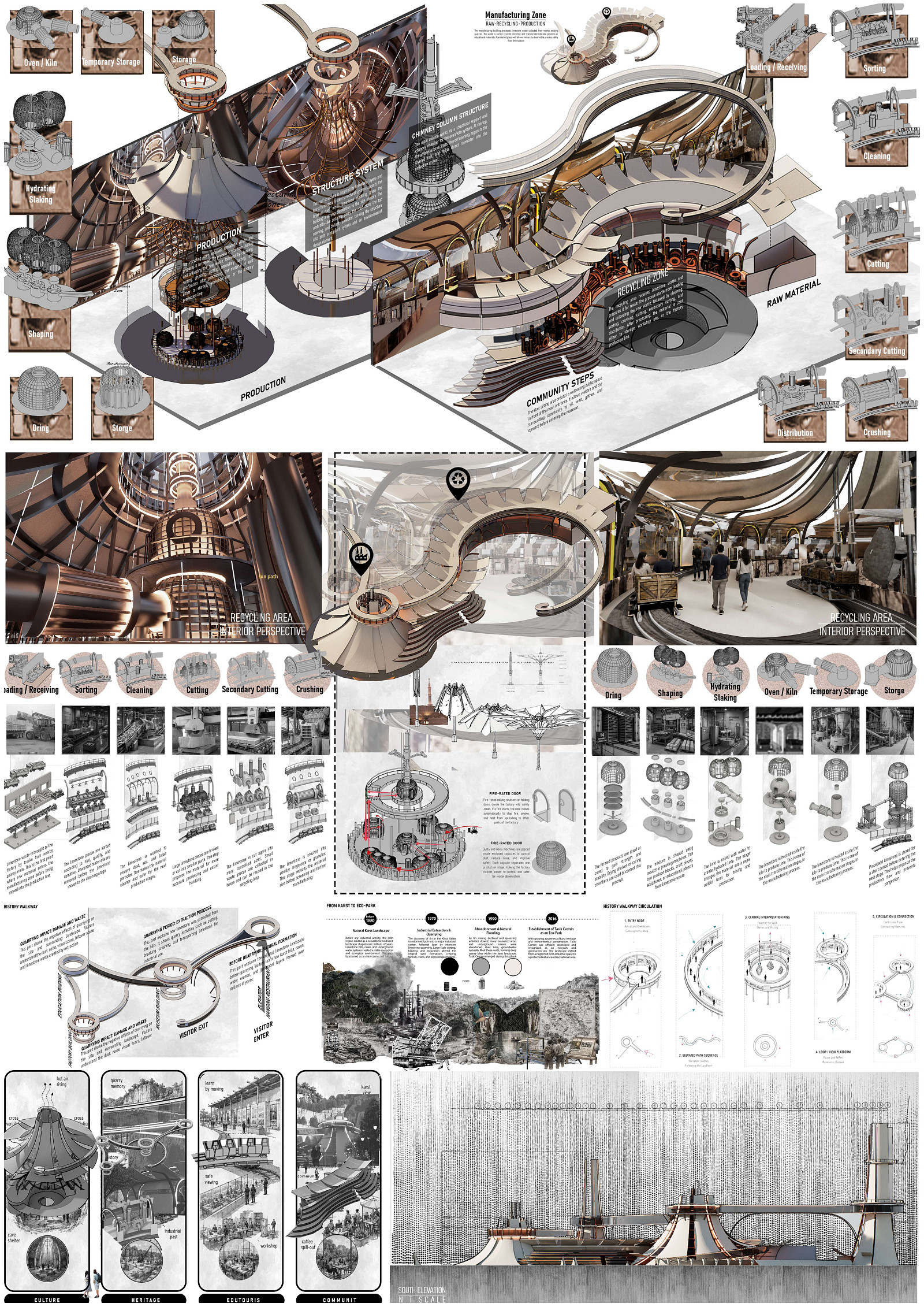
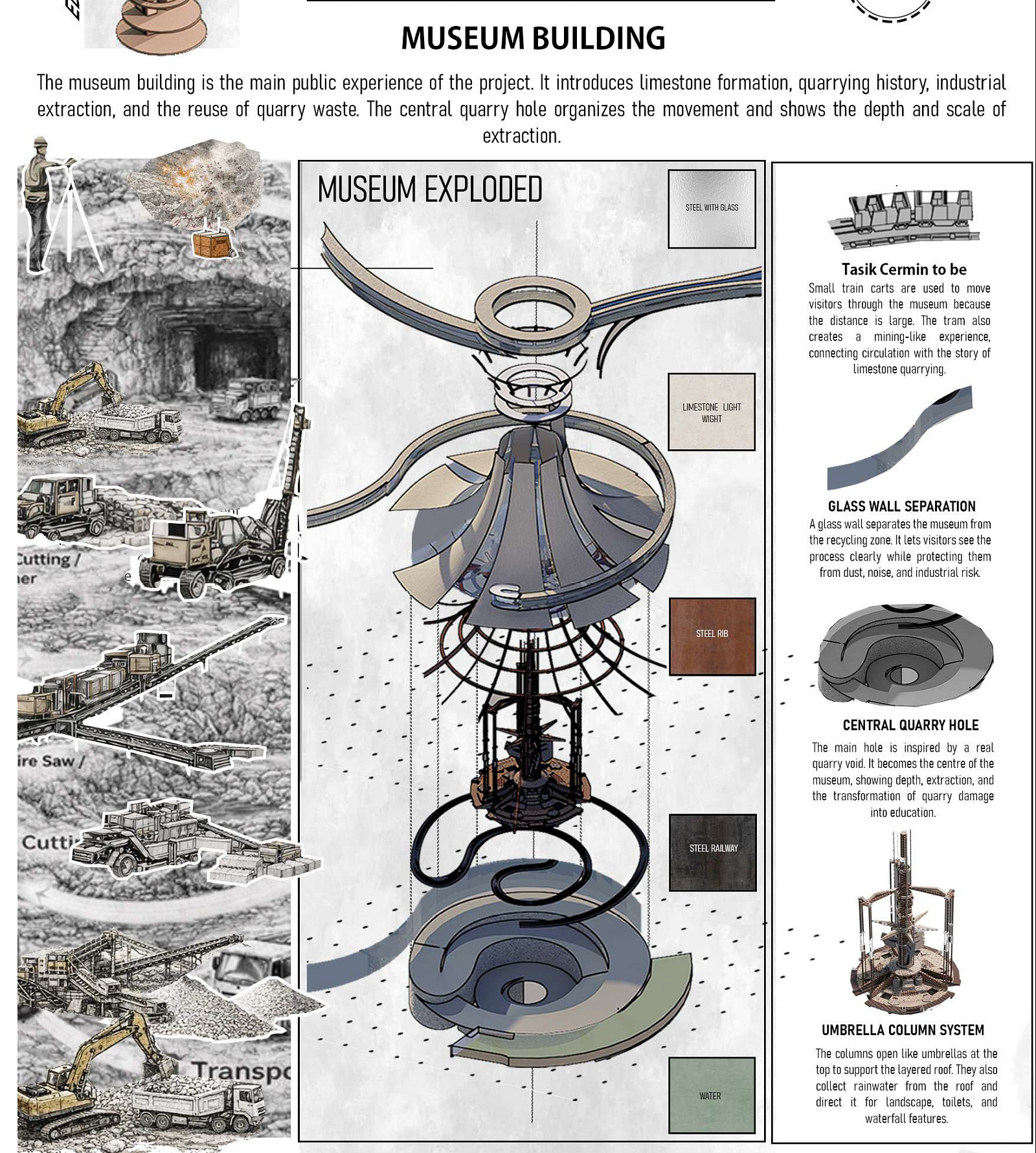
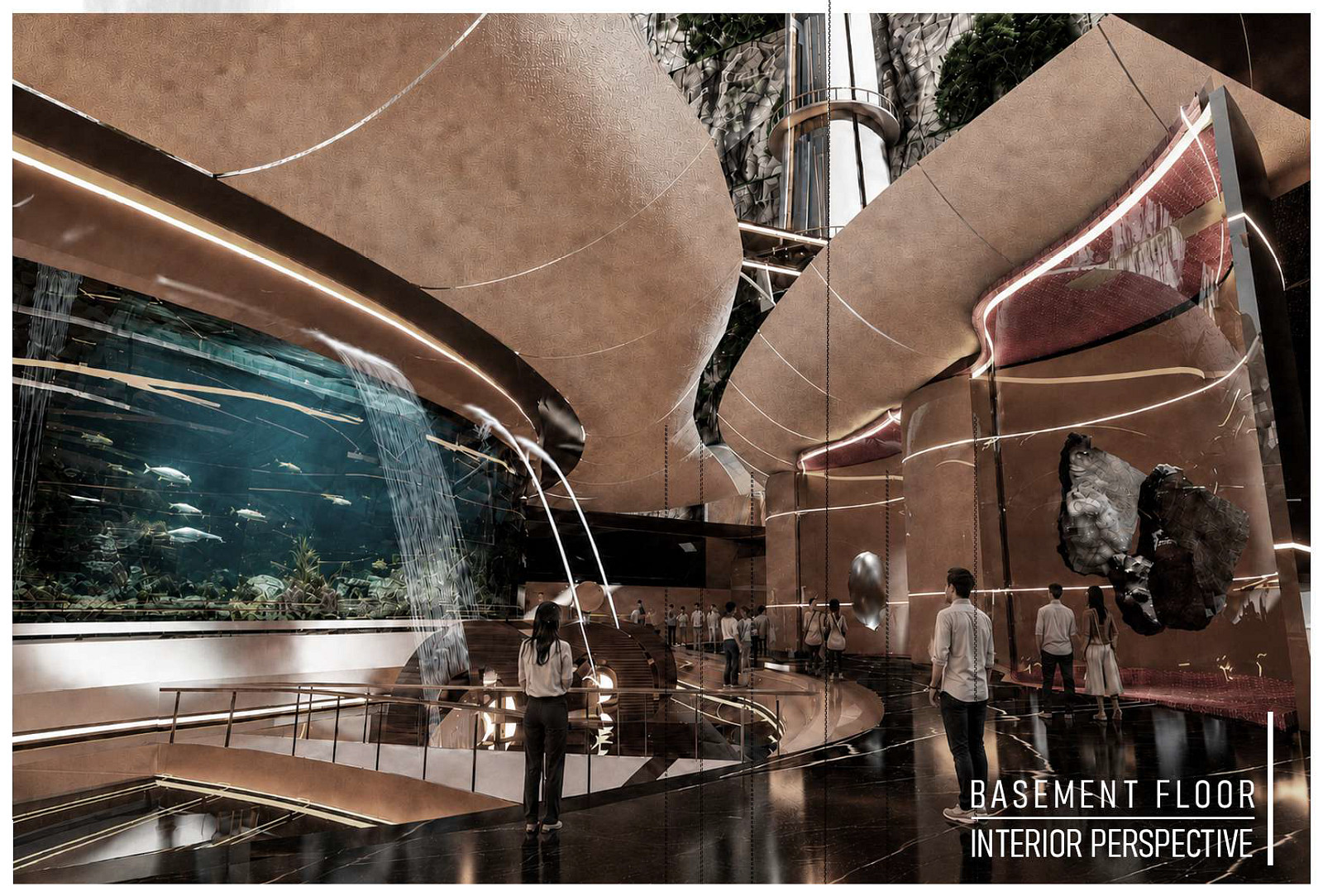
The central quarry space serves as the heart of the project. It organizes movement and creates a spatial experience inspired by quarrying, geological depth, and limestone layers. Visitors move from the limestone arrival and introduction area to the history of the quarries, viewing the factory, participating in workshops, descending into a cave-like environment, traversing the elevated railway, and finally reaching the meditation and rest areas.
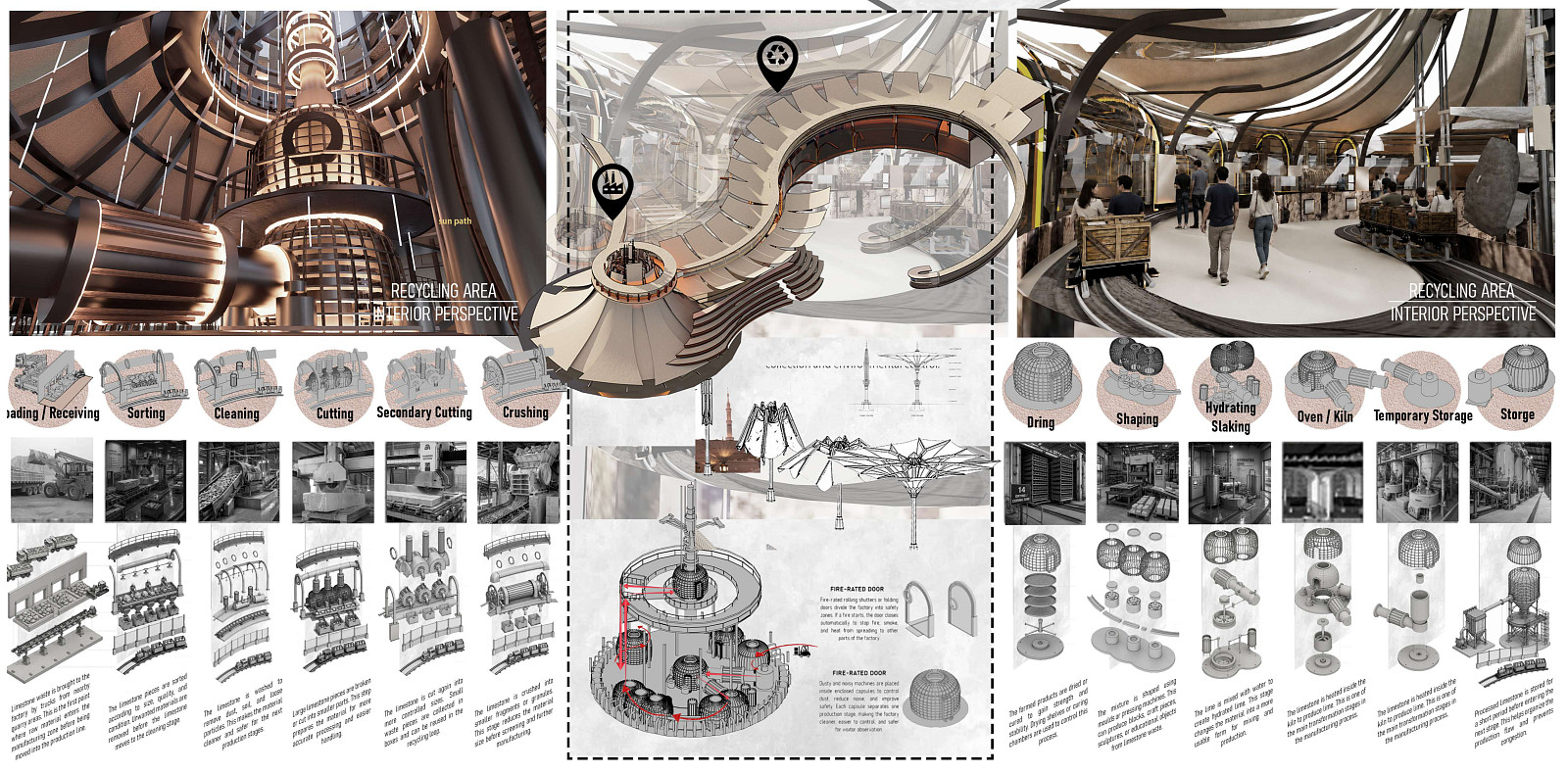
The manufacturing area processes limestone waste through stages of receiving, sorting, cutting, crushing, mixing, shaping, drying, storage, and display. Visitors observe this process safely through glass partitions and controlled viewing points, making the factory part of the educational experience without exposing the public to dust, noise, or hazardous machinery.
The project offers a hybrid model between a museum and a factory, supporting tourism, local crafts, industry interpretation, and environmental awareness in Ipoh.
Technical information
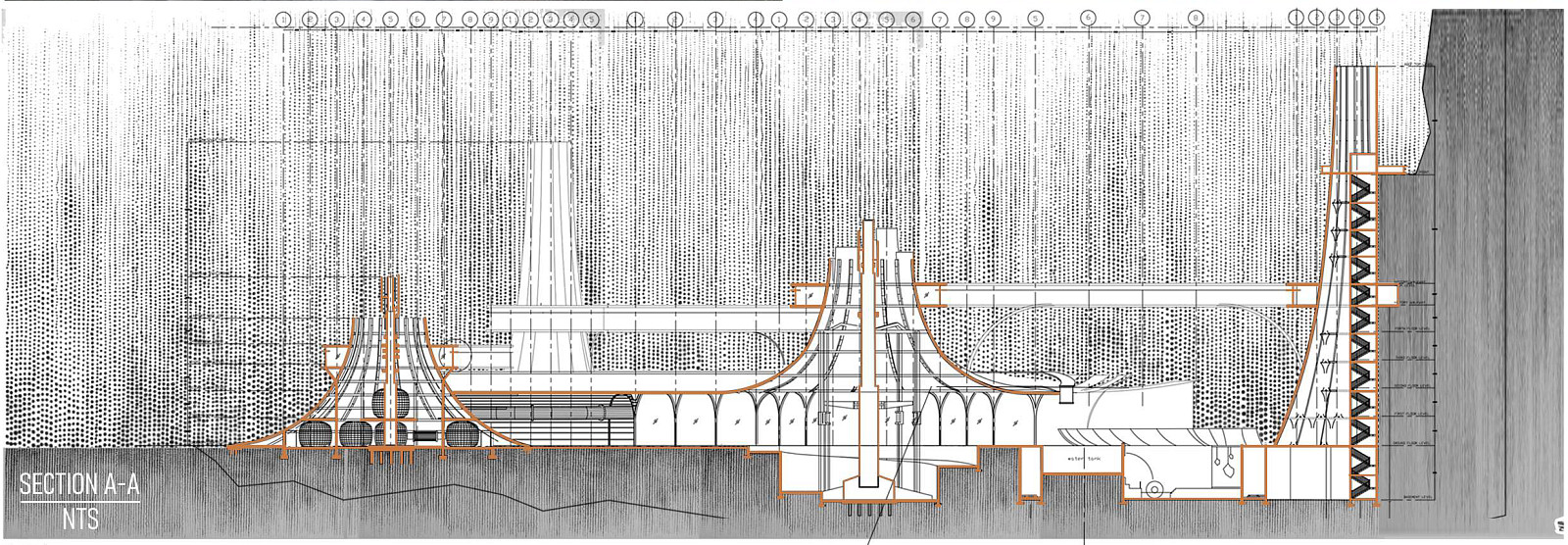
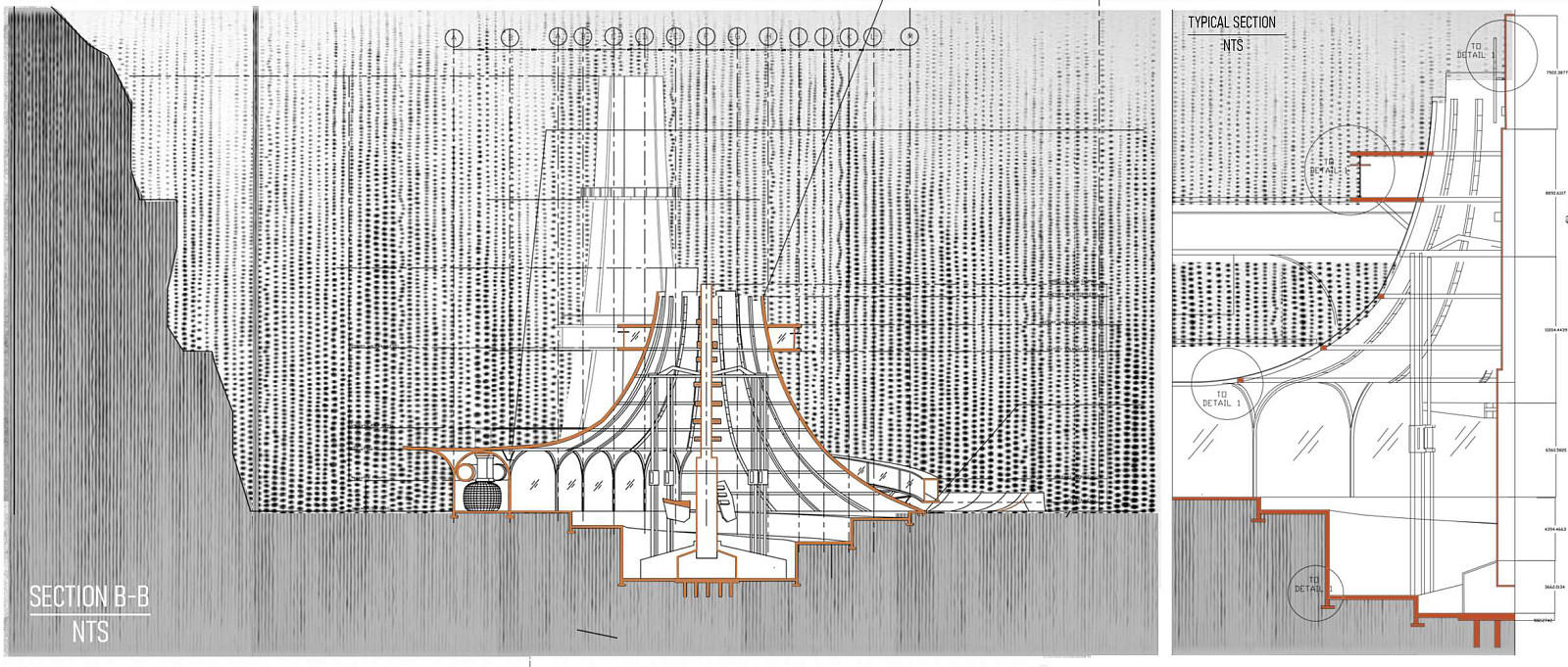
The project employs a hybrid structural system of reinforced concrete, steel ribs, ring beams, large-span columns, retaining walls, and layered roofs inspired by the limestone strata. The central quarry void is supported by structural rings, vertical cores, controlled skylights, and concrete retaining walls to emphasize the concept of depth, excavation, and geological strata.
The layout features a clear separation between public, semi-public, private, industrial, and service areas. Visitor traffic connects the lobby, showrooms, quarry void, factory viewing area, workshops, historic railway, restaurant, and outdoor landscape. Service traffic is separate for loading, waste management, storage, factory supply, staff movement, and maintenance.
The manufacturing areas utilize enclosed machinery, glass partitions, ventilation, filtration, sound insulation, and security separation to control dust, noise, vibration, and public access. Materials used include limestone finishes, concrete, steel, glass, metal flooring, perforated shade panels, interior wood finishes, and natural stone for the exterior landscaping.
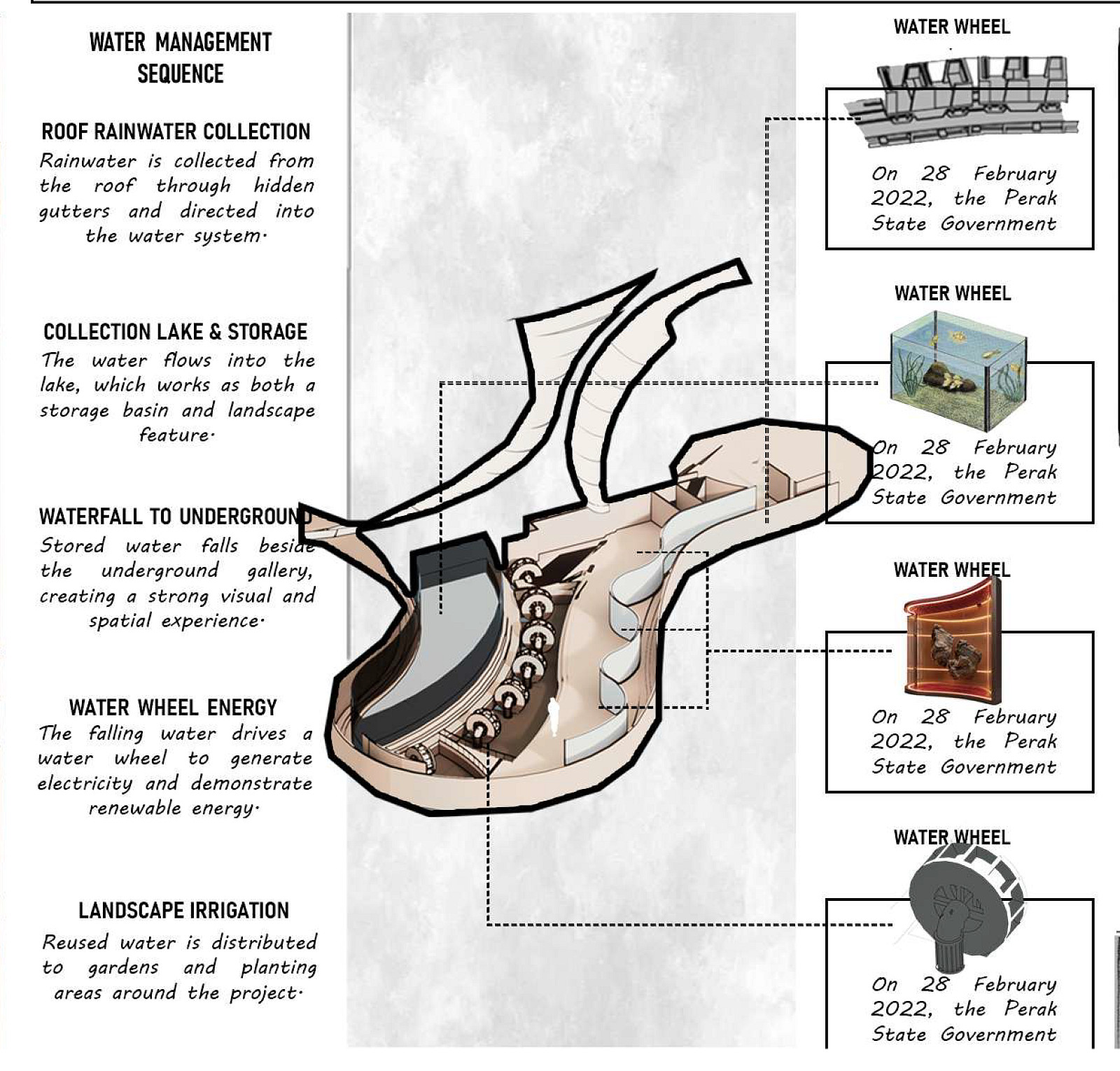
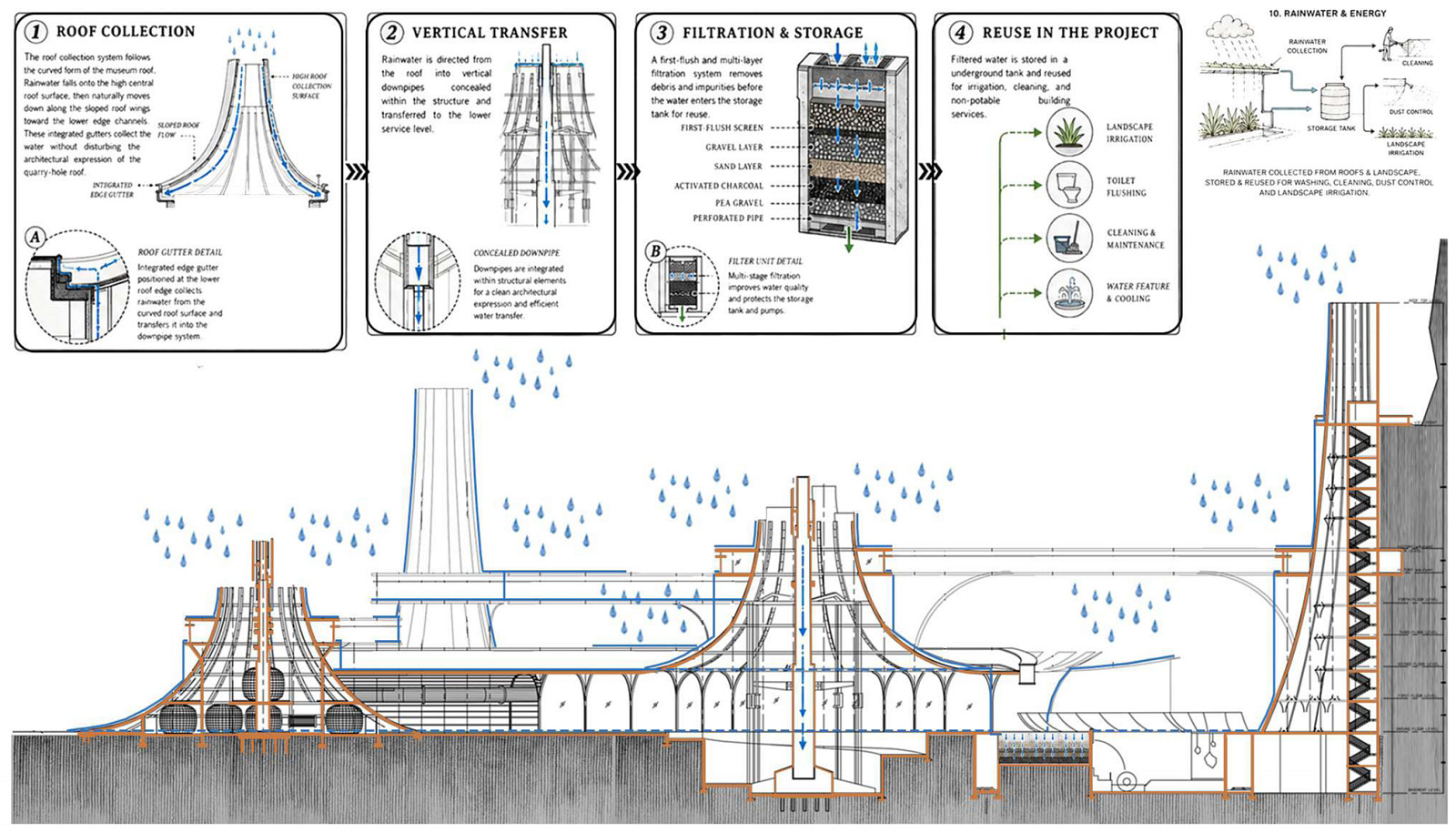
Environmental strategies include shaded walkways, deep projections, vertical fins, controlled light openings, overhead ventilation, insulating plant belts, rainwater harvesting from the roof, drainage control, and the reuse of limestone waste in crafts, sculptures, and educational displays.
Documentation

Copyright © 2026 INSPIRELI | All rights reserved. Use of this website signifies your agreement to the Terms of Use, Privacy Policy, and use of cookies.
