The Third Place


Project idea
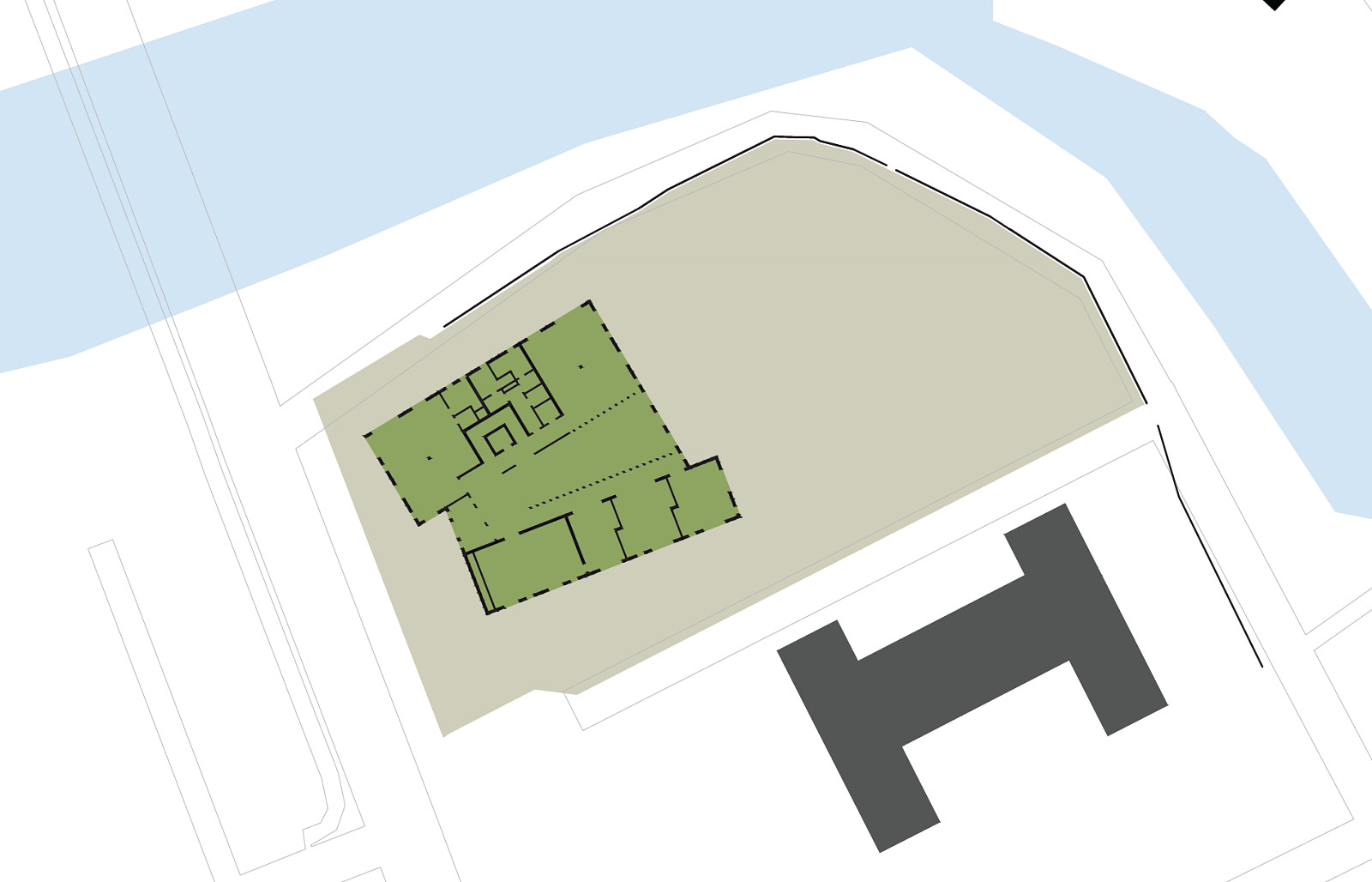
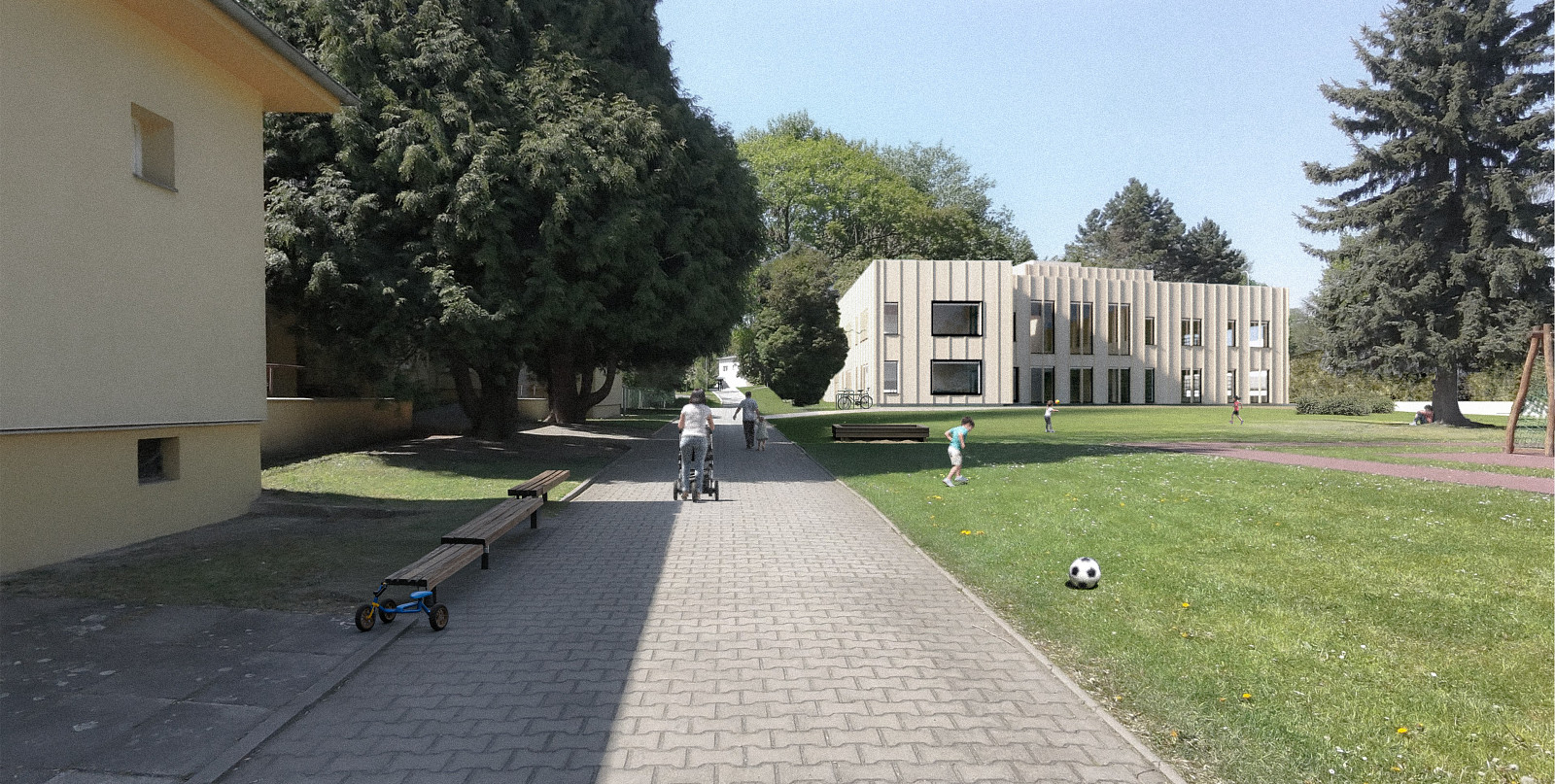
In this thesis, I focus on the design of a new leisure center in Benátky nad Jizerou. Inspired by Ray Oldenburg’s concept of the "third place," the building offers spaces for socializing, education, cultural events, as well as relaxation with a book, at a work desk, or at a computer. The aim is not only to meet the town's needs but also to respond to the highlighted lack of leisure spaces, especially for the youth, whose numbers are significantly increasing in this specific area
Project description
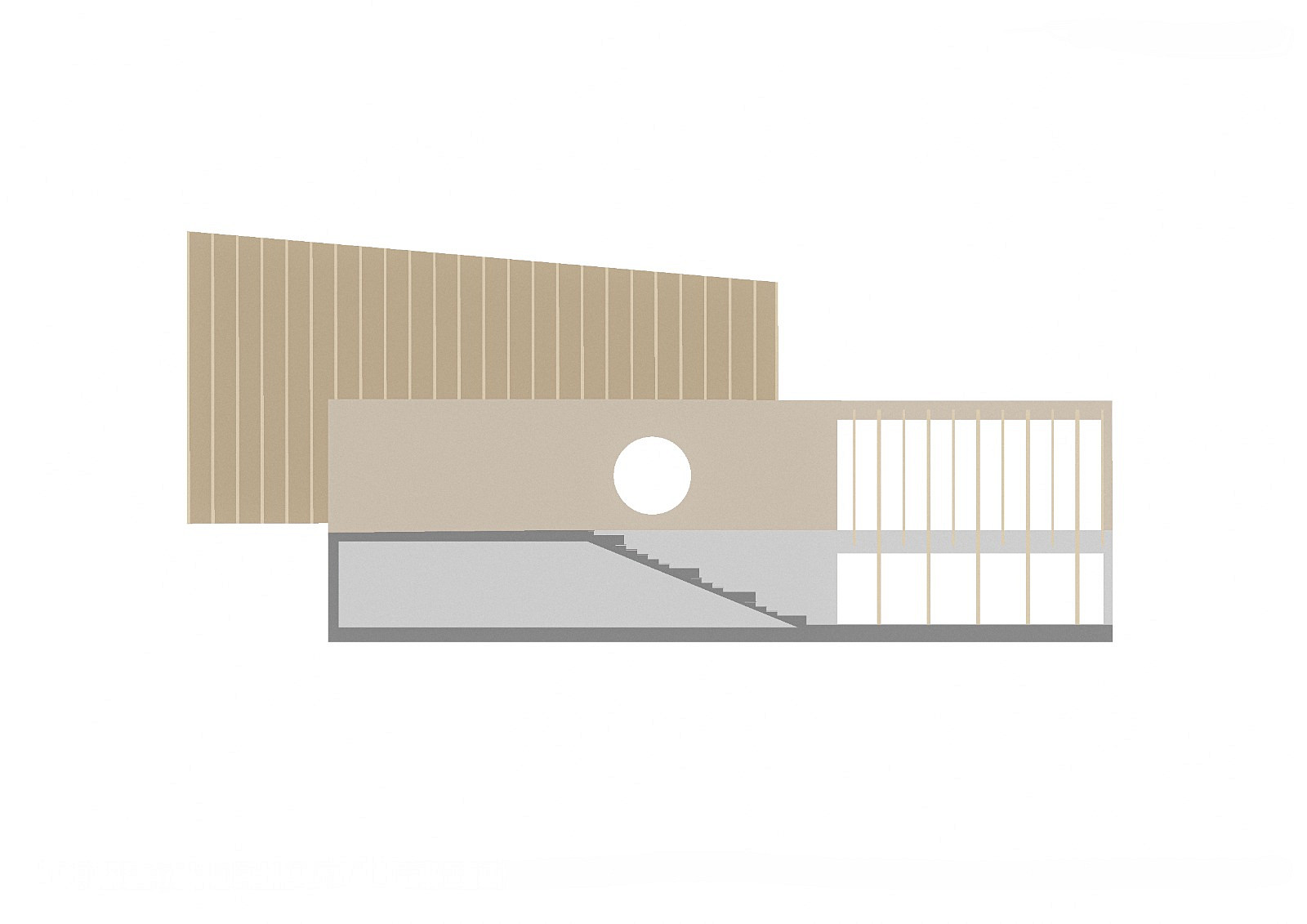
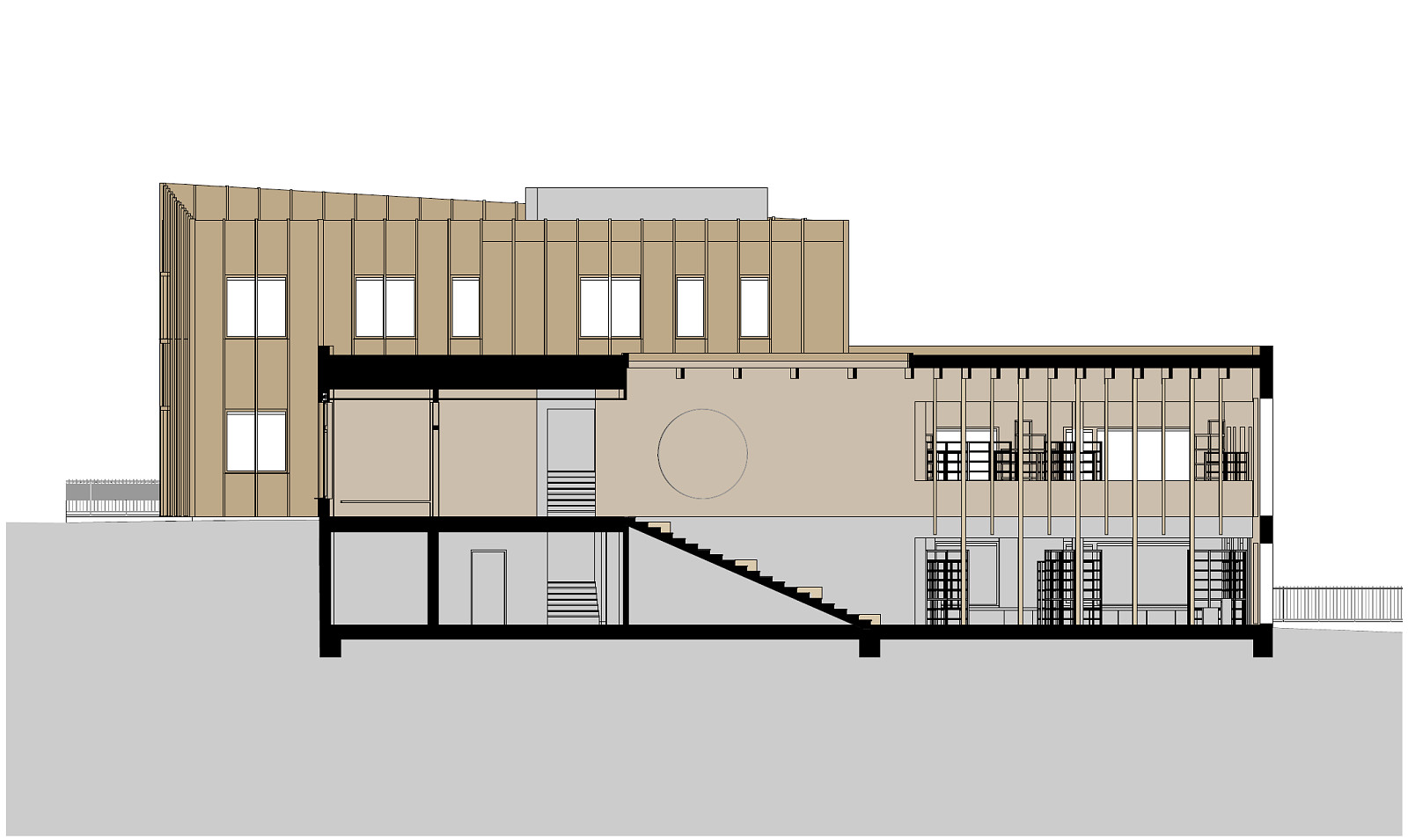
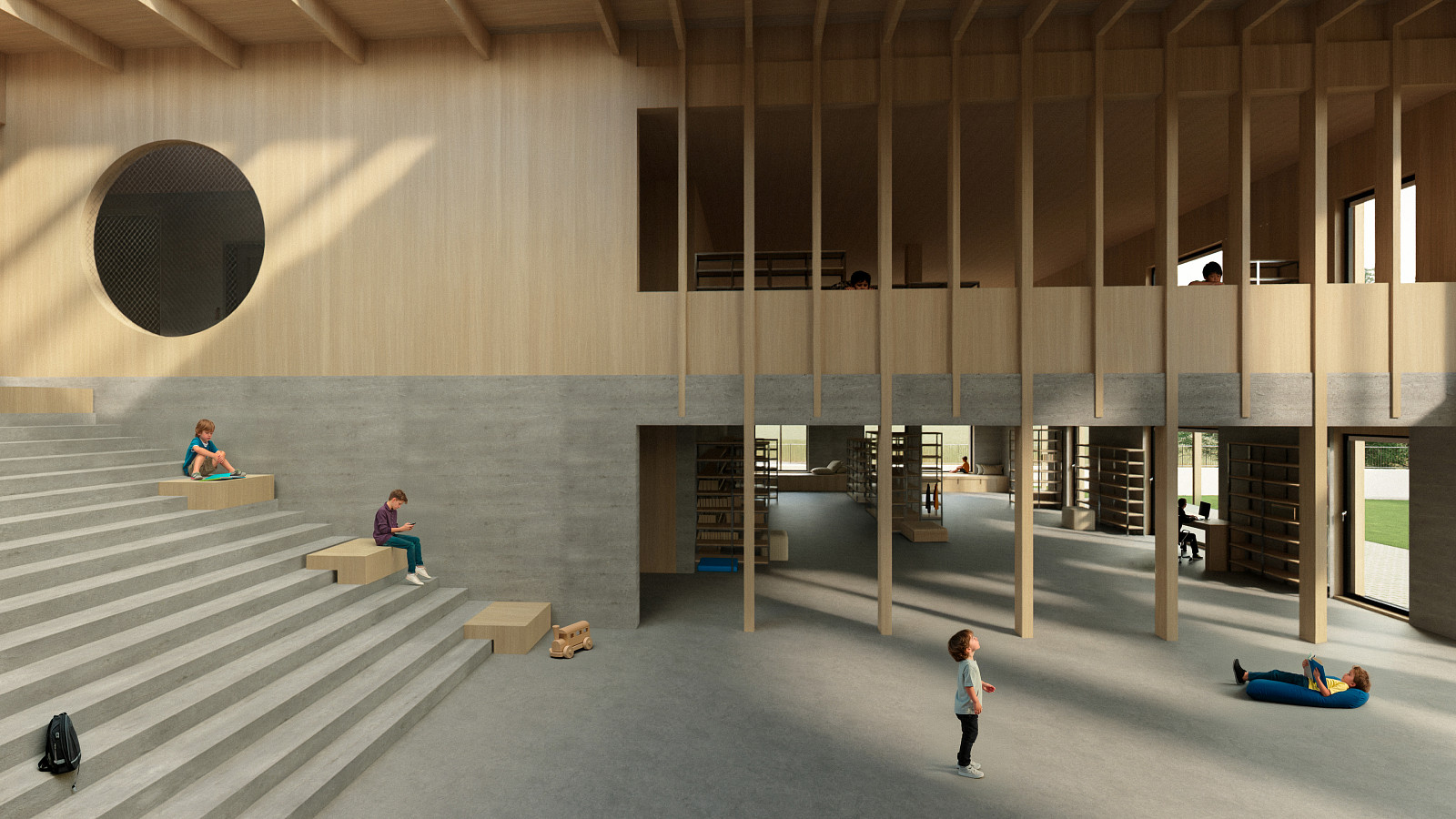
The main concept of the building is centered around the atrium, which forms the heart of the entire structure. It connects distinct spaces of various functions and characters, providing a communal social area. It also addresses the building's elevation change, stepping down from the main entrance on Tř. Osvobozených politických vězňů street to the garden, which is situated three meters lower. Reflecting the material concept, it features a reinforced concrete seating staircase set within a visually warm wooden environment, which opens the building toward the garden and provides additional space for sitting.
The design plays with the spatial transition from the lowered ceiling of the vestibule into the expanding atrium, culminating in the garden. This openness also allows for more flexible use, such as exhibitions or cultural events with lower acoustic demands; for events requiring specific acoustics, a main hall or classrooms are utilized as presentation spaces.
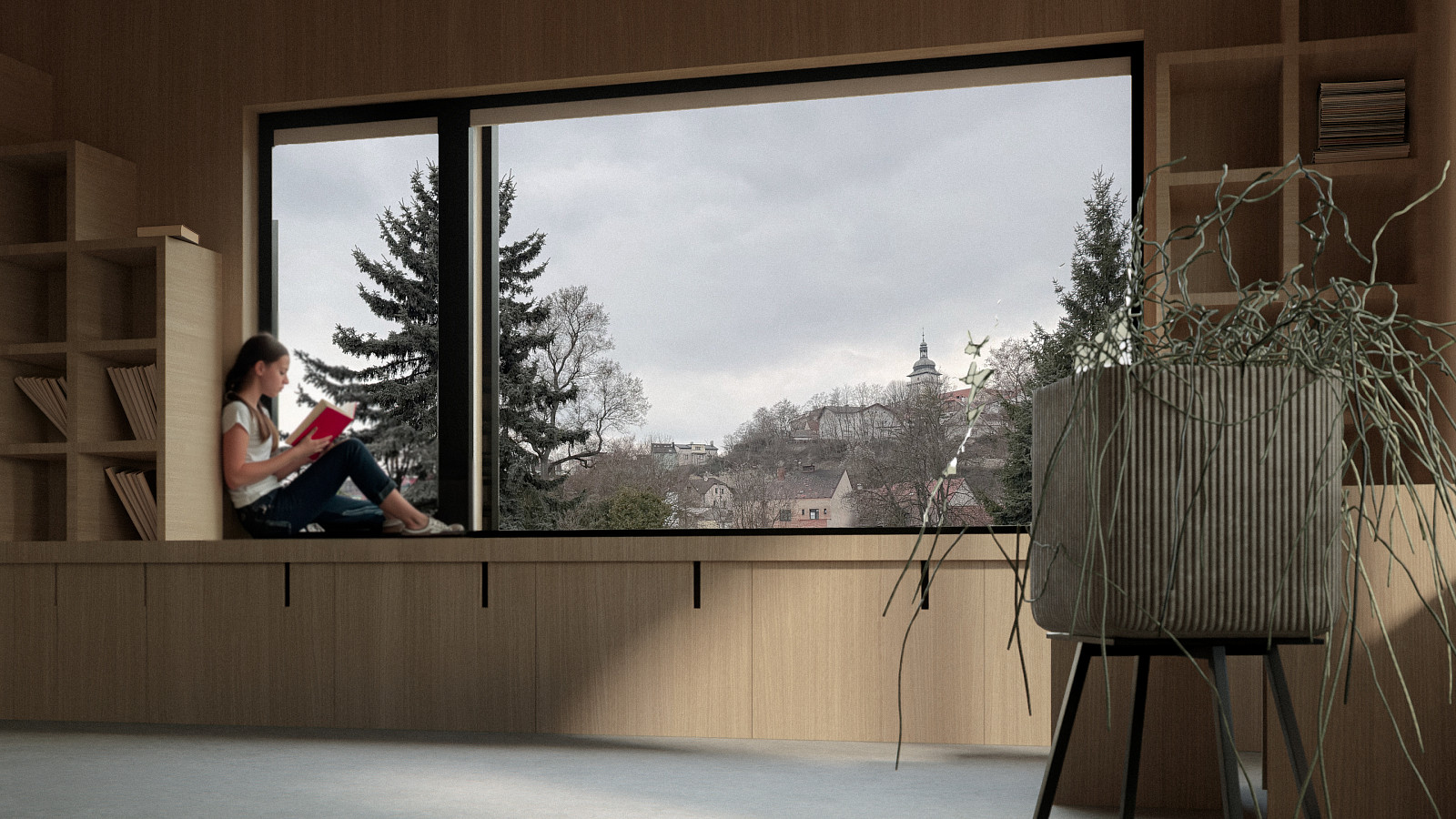
Additionally, the building features library spaces, a 3D printing workshop accessible to the general public, a computer study room on the top floor, and a ground-floor café offering a view of the old town's dominant landmark—the castle.
Technical information
Due to the sloping terrain towards the garden, with the basement partially embedded in the ground, the first underground level is predominantly constructed of exposed concrete. This material extends into the upper floors through a reinforced concrete core that houses the staircase and the elevator shaft. This visually cooler space, characterized by a lower clear height, is primarily designated for technical facilities, a workshop, and a recording studio, where concrete serves as a more suitable acoustic insulator.
The reinforced concrete ceiling of the basement forms a slab upon which the building continues as a timber structure, primarily utilizing glued laminated timber panels. This space stands in contrast to the underground section; it features a higher clear height and is visually warmer, making it more suitable for relaxation and focused studying.
The second above-ground level, again constructed from CLT panels but with a lower ceiling height, accommodates a computer study room and an office, as these functions do not require such a high ceiling.
Finally, this "timber assembly" is wrapped in a ventilated wooden facade—utilizing larch for its weather resistance—and topped with a green roof to enhance the building's cooling and blend seamlessly with the garden's vegetation.
Created in:


Copyright © 2026 INSPIRELI | All rights reserved. Use of this website signifies your agreement to the Terms of Use, Privacy Policy, and use of cookies.
