Cajita de Manzanas (Little Apple Box)


Project idea
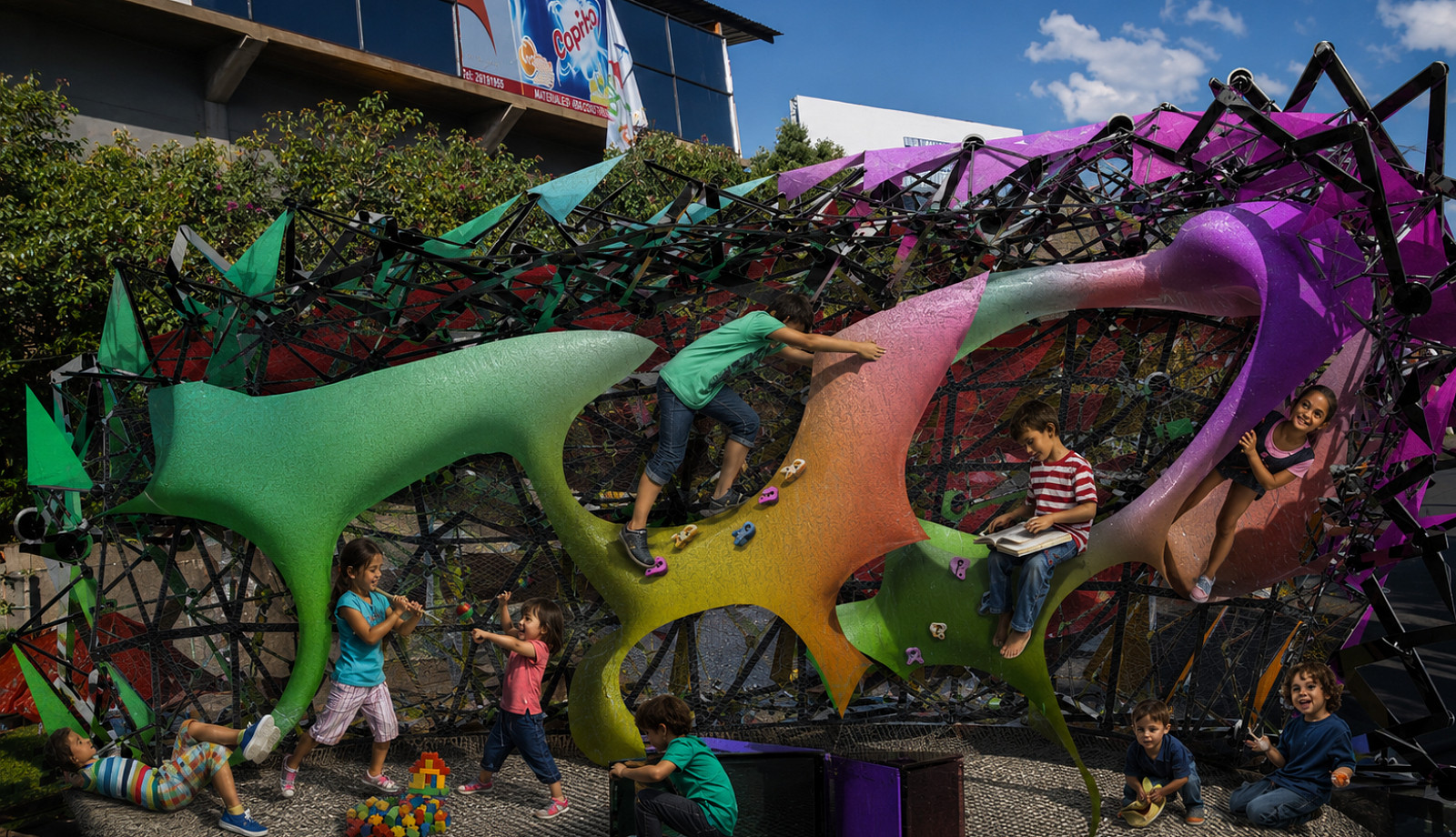
"Cajita de Manzanas" (Little Apple Box) is a social and nomadic architecture initiative rooted in the urban dynamics of La Paz, Bolivia. The project addresses a severe state of socio-spatial vulnerability: the children of itinerant market vendors who spend their after-school hours in precarious, unsafe public environments as their mothers rotate across different commercial sites up to four times a week. Due to the absolute lack of infrastructure dedicated to early childhood in these temporary setups, the main objective of this project is to guarantee Integral Human Development and defend children's rights through design. The goal is to introduce a flexible, transportable micro-infrastructure that provides a safe sanctuary, a playful "burrow", shielding children from sensory overload, traffic, and environmental hazards. The project aims to empower the gremial community by involving mothers in the construction process, transforming a logistical challenge into a space of protection, dignity, and collective belonging.
Project description
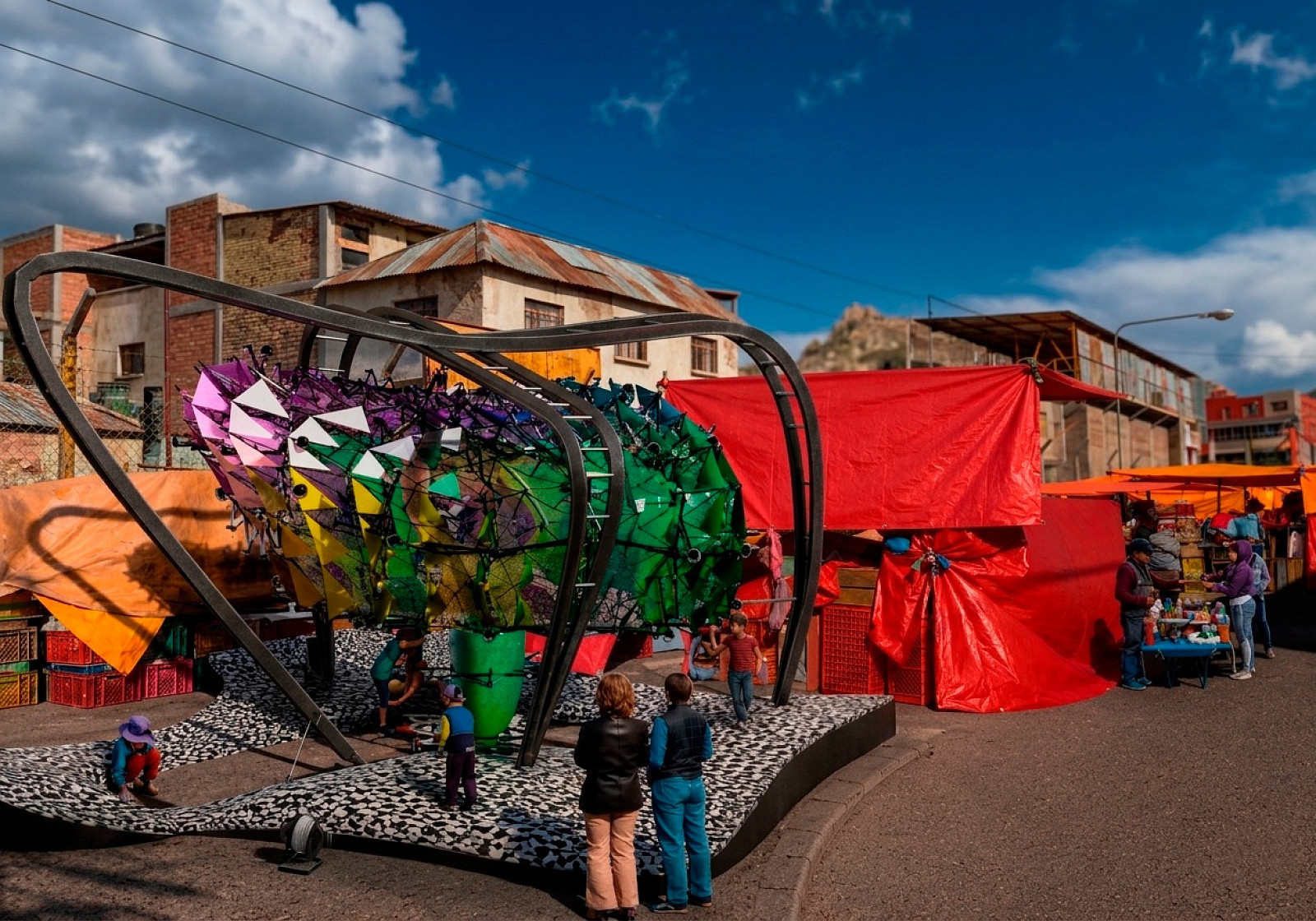
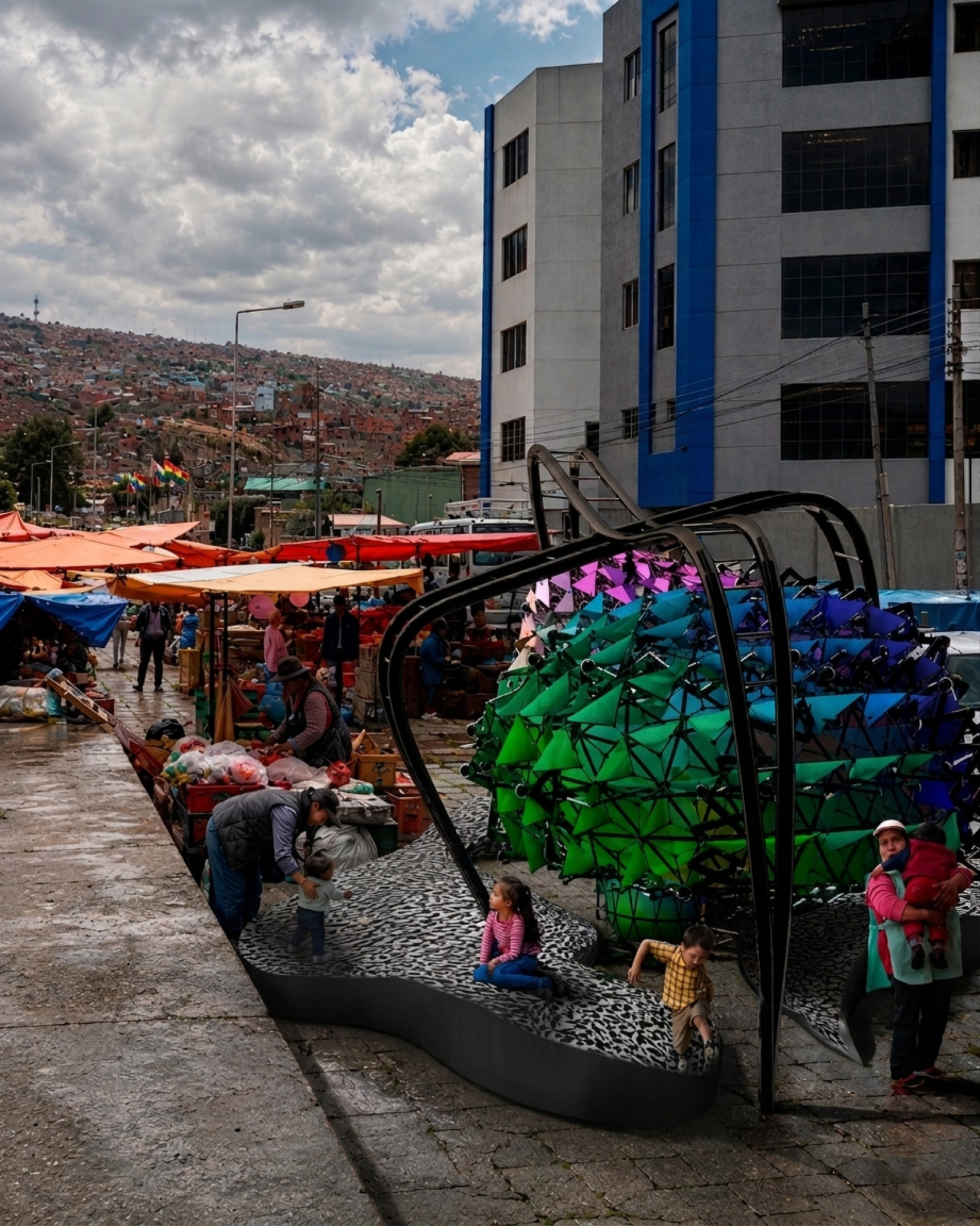
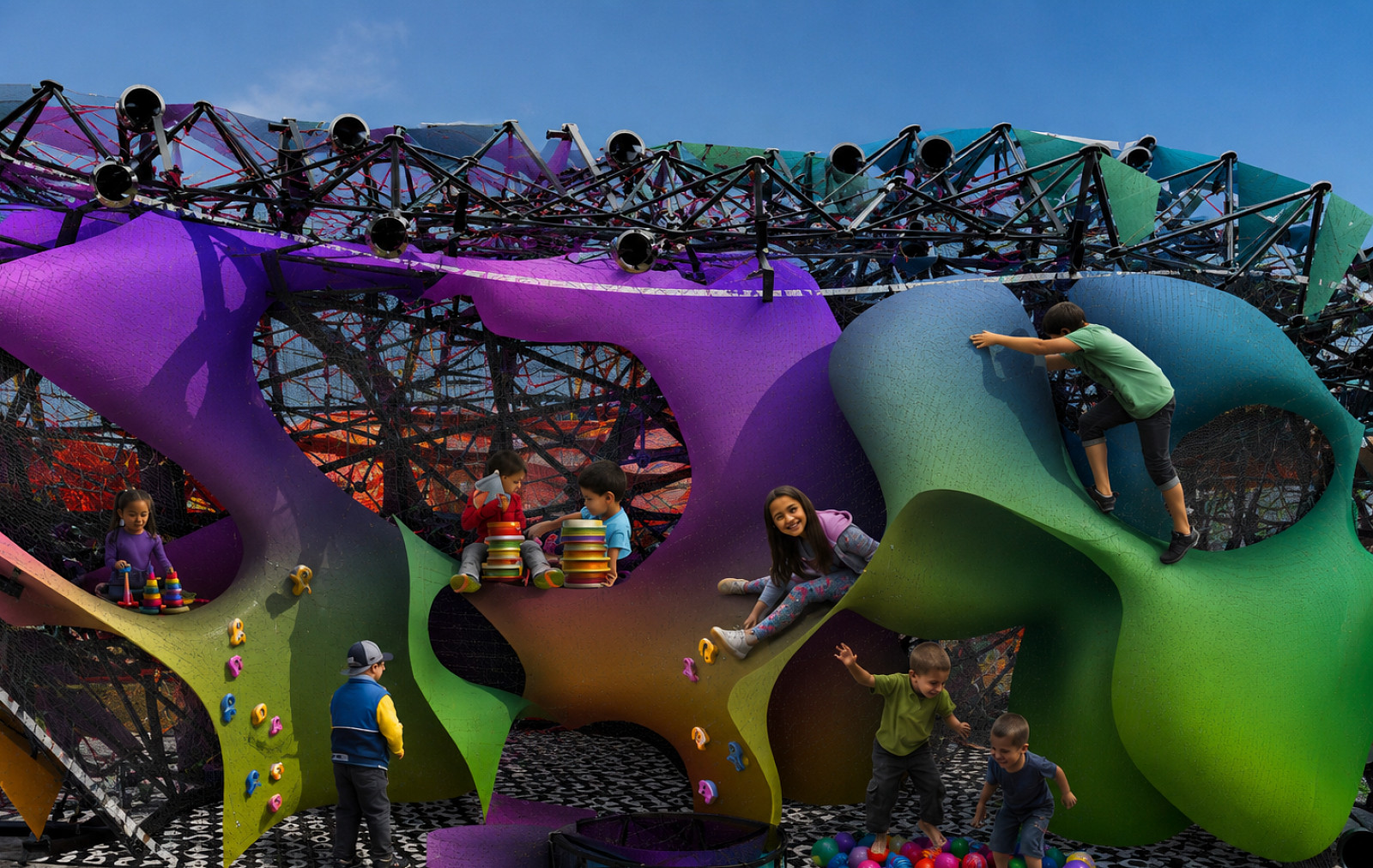
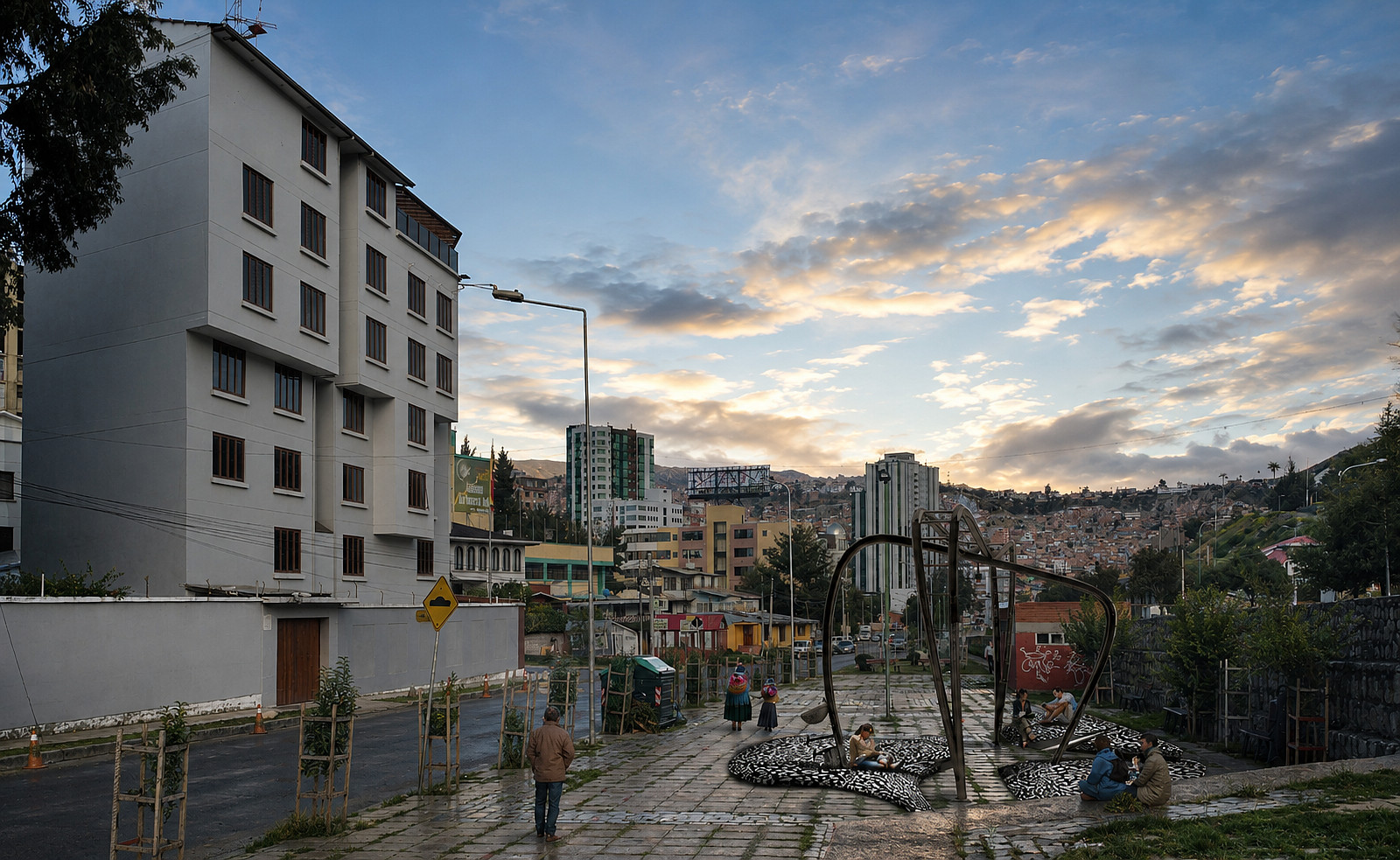
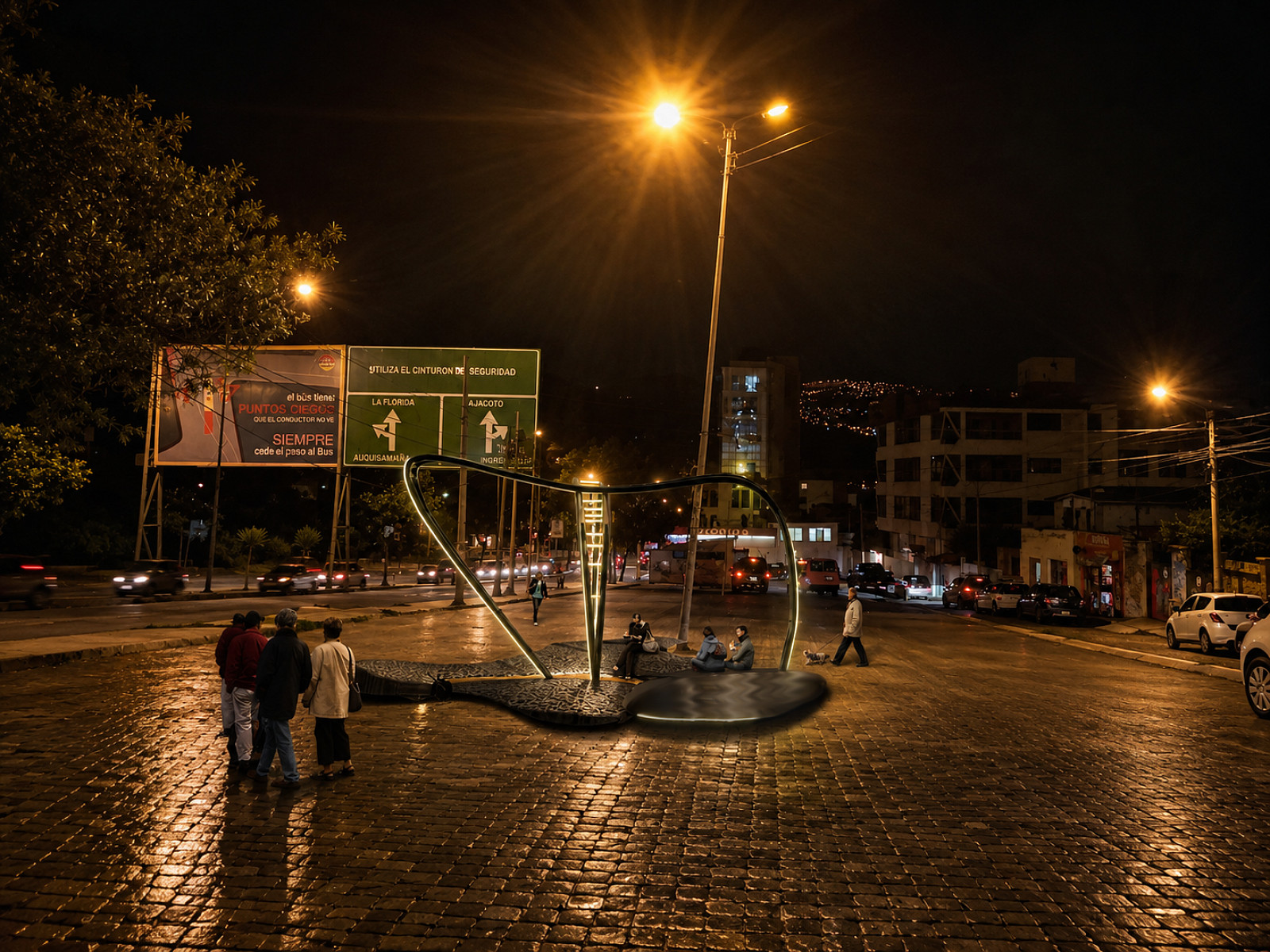
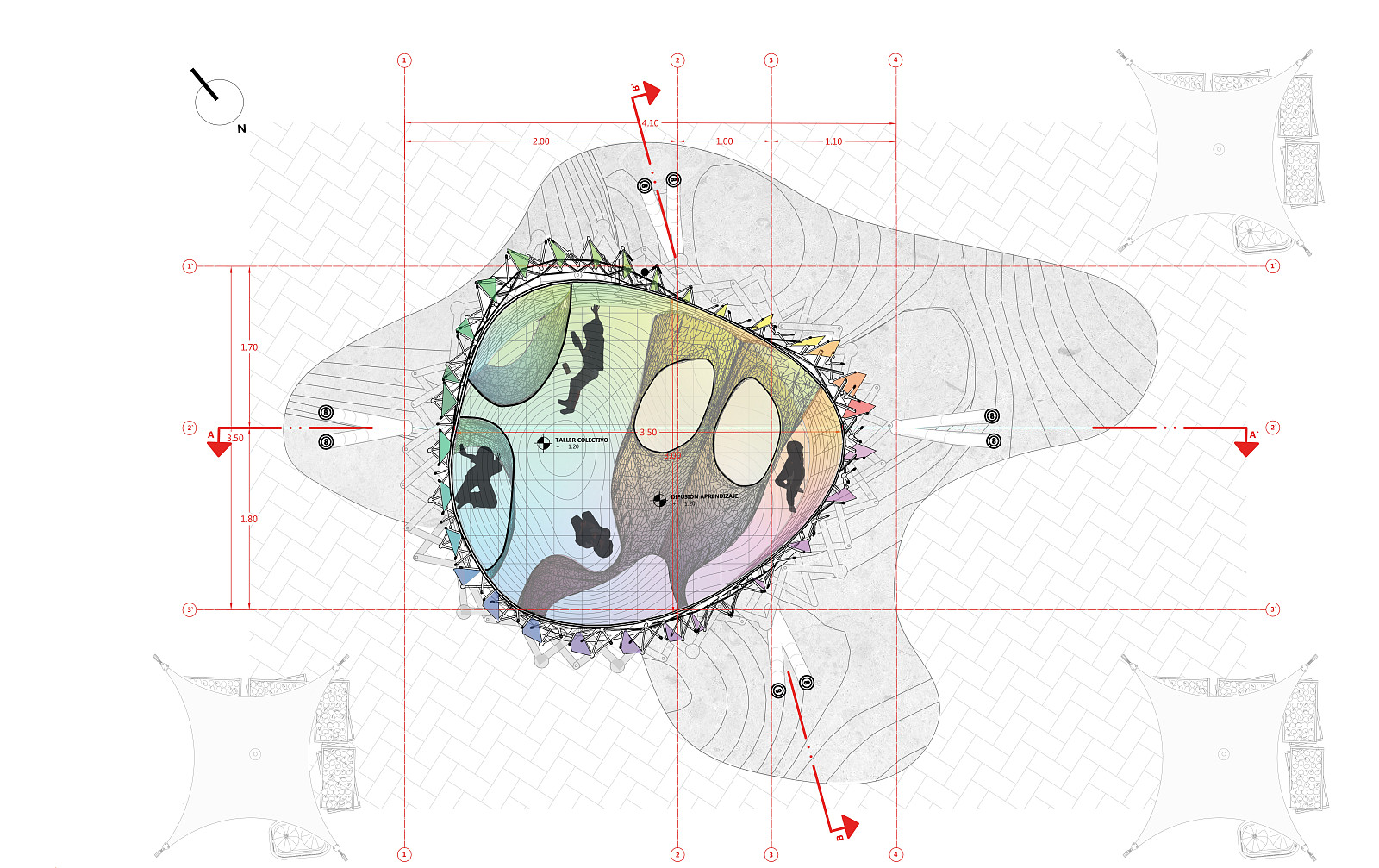
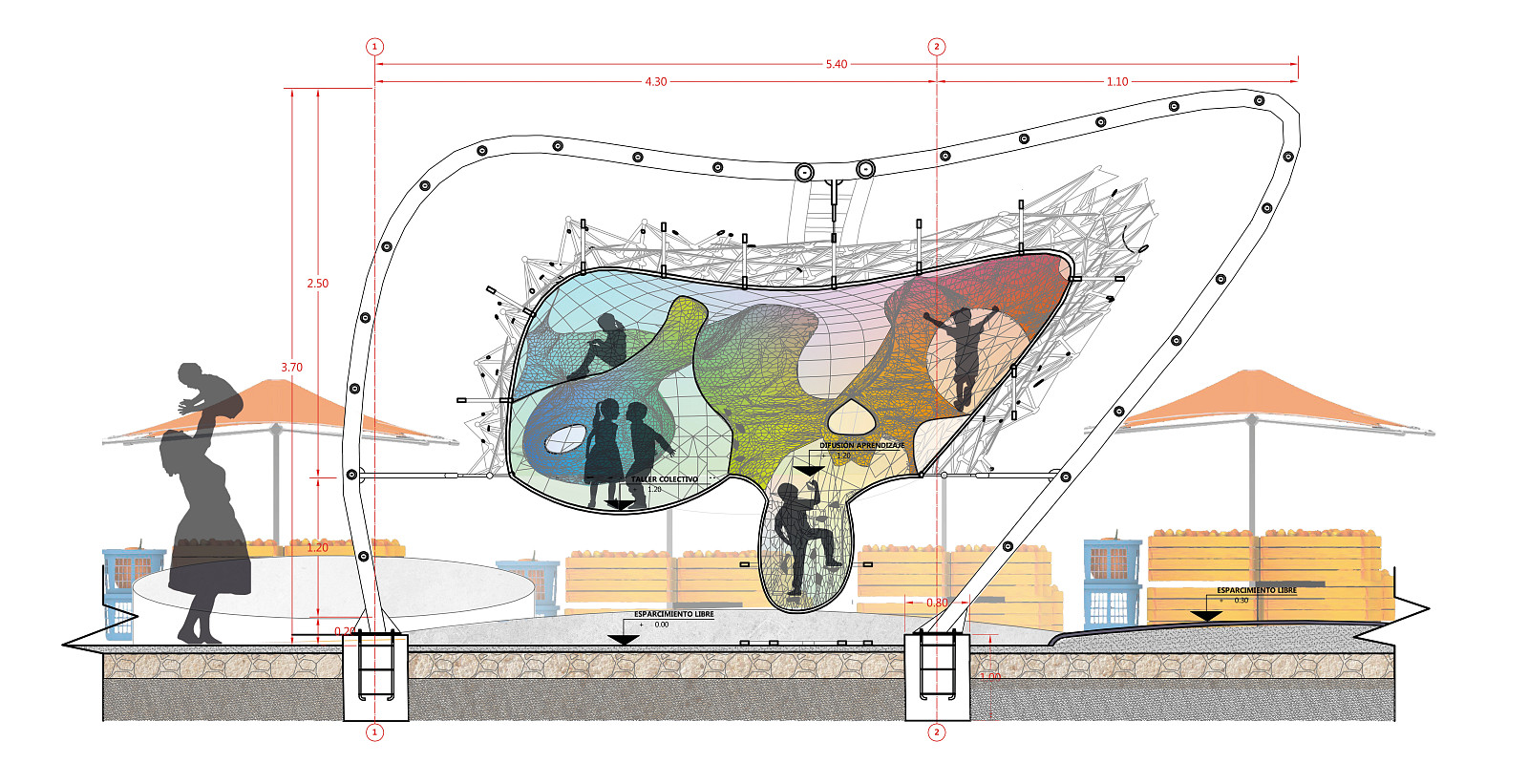
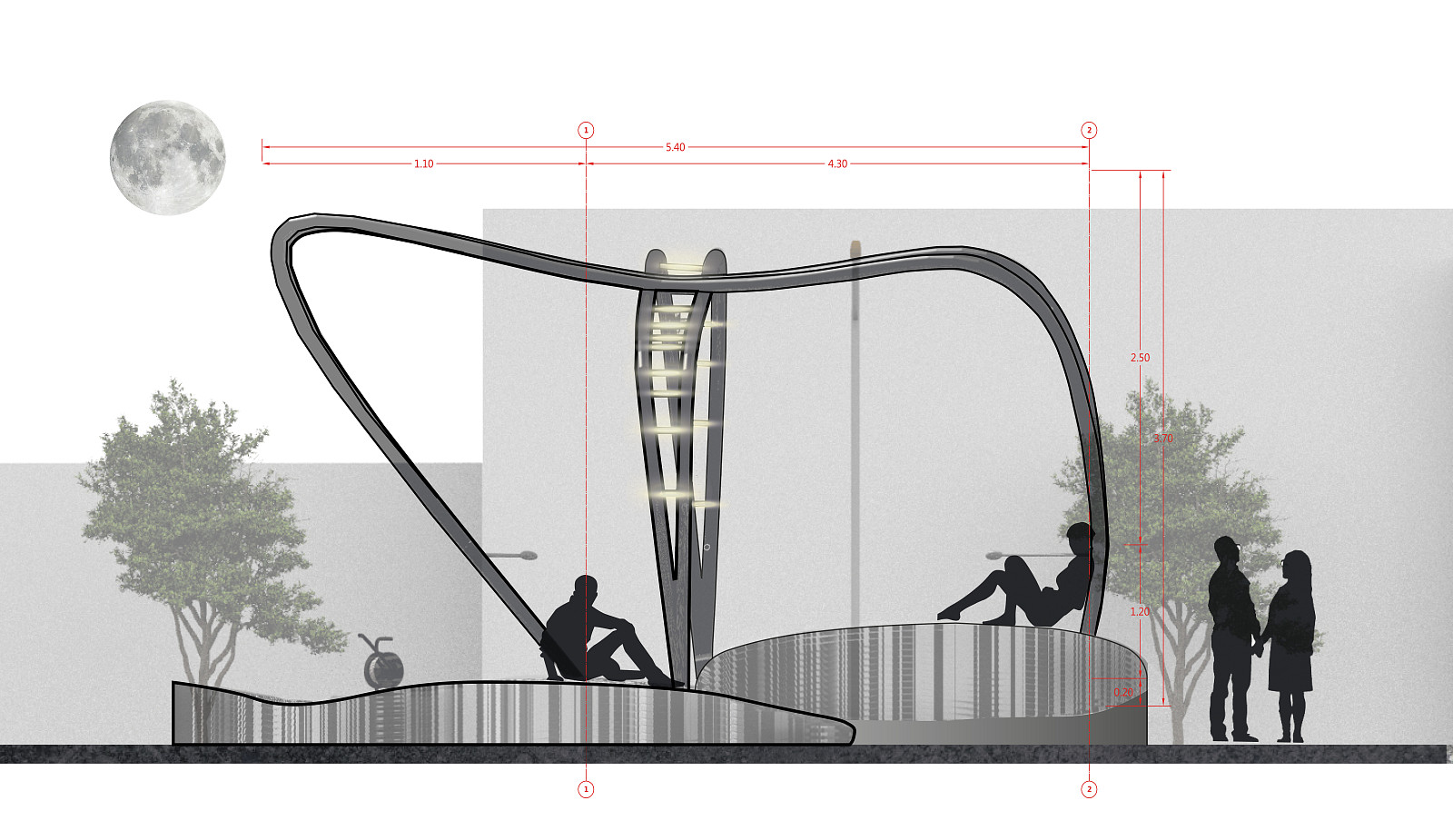
The architectural solution is conceived as a two-part infrastructure designed to operate seamlessly within the ephemeral logistics of the Mercado Itinerante Sur, covering three different urban spots, where the markets sets during the week. The first component is a permanent fixed structure anchored at the intervention sites, which functions as public furniture and a resting area for pedestrians when the market is absent. The second component is a dynamic, colorful collapsible membrane that is transported alongside the vendors’ merchandise. Driven by child ergonomics and behavioral mapping, the interior layout uses changes in scale, color, and texture instead of rigid walls to define space. This creates an organic, multi-sensory environment that encourages free play and cognitive learning. When the market day ends, the entire system collapses under the same pragmatic logic of a “chiwiña” (traditional market umbrella), leaving the public space clean and restored for the city.
Technical information
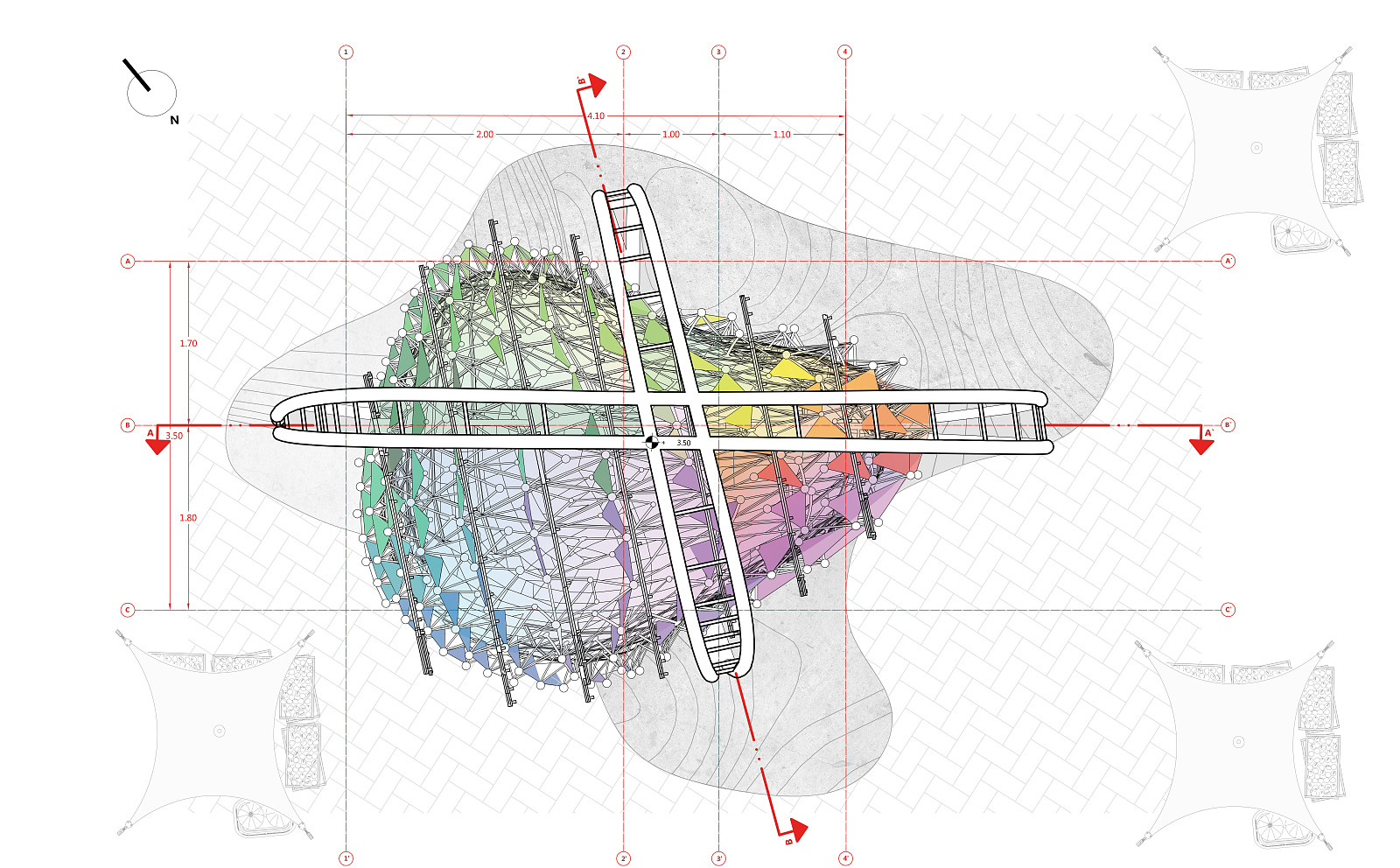
The construction proposal features an advanced four-layer tectonic envelope generated entirely through computational parametric design. The innermost layer is a flexible plastic membrane hand-woven by local mothers using traditional aguayo textile techniques, adapted here with recycled plastic yarn from discarded market bags to achieve high tensile strength. The second layer is a malla milimétrica (fine metallic mesh) for safety and enclosure. The third layer consists of a structural grid of lightweight aluminum bars connected by custom articulated nodes. The outermost layer incorporates triangular sun-shading panels engineered to block extreme solar radiation, a critical requirement for La Paz's high altitude of nearly 4,000 meters above sea level. This entire complex framework is non-standard: the computational algorithms processed data inputs of child ergonomics and kinetics, meaning that every single structural node, bar, and triangular shading panel holds a completely unique angle and dimension based strictly on its spatial coordinates within the global parametric model. The membrane expands and contracts smoothly via a manual pulley and lever mechanism, facilitating rapid assembly and disassembly by just two people.

Copyright © 2026 INSPIRELI | All rights reserved. Use of this website signifies your agreement to the Terms of Use, Privacy Policy, and use of cookies.