
Hag'otan: An Abaca Agro-Industrial and Livelihood Living Museum


Project idea
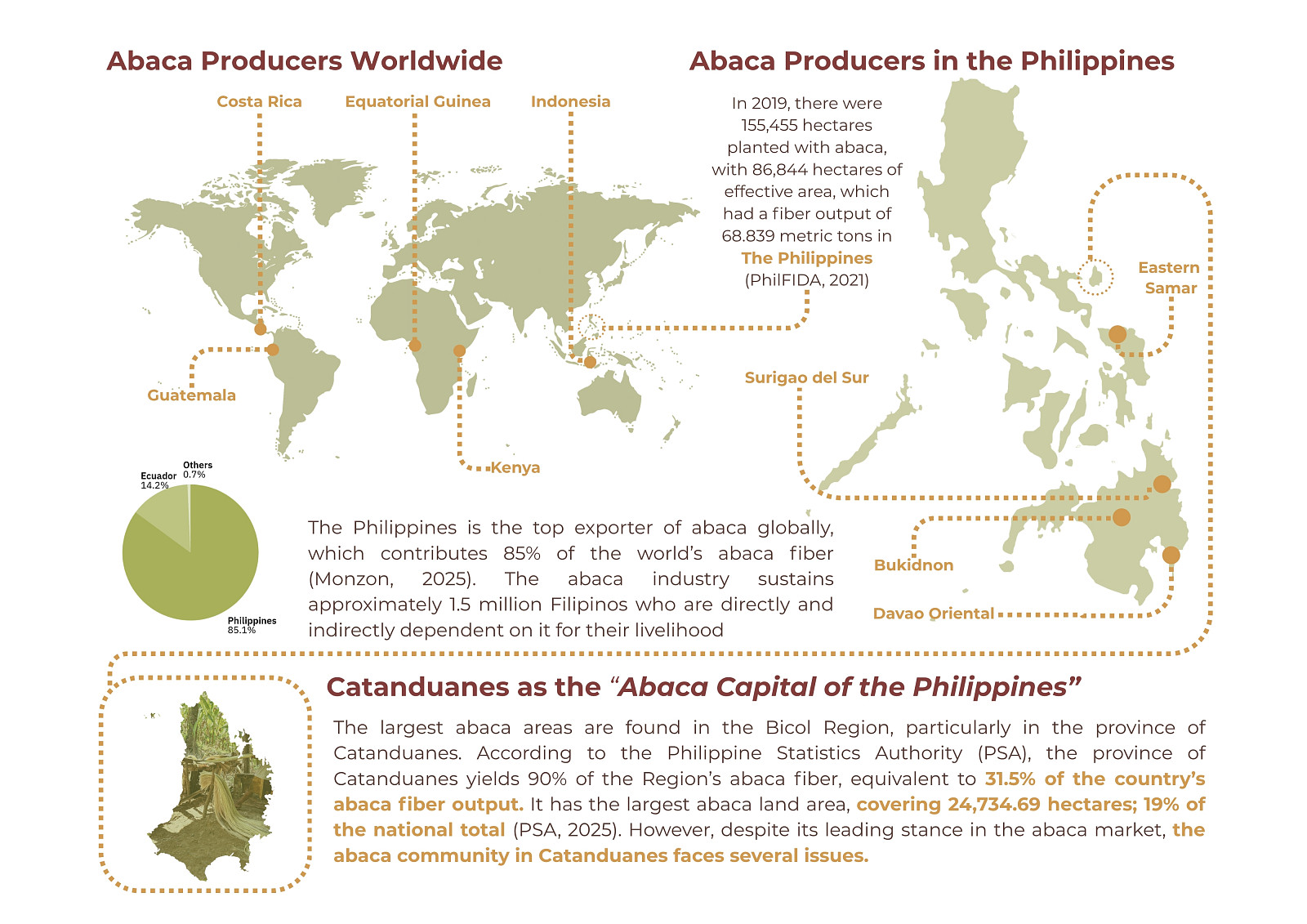
Abaca, a crop native in the Philippines and one of the world’s strongest natural fibers, has been woven into the fabric of Filipino culture since the nation’s pre-colonial era. First documented by Antonio Pigafetta during Ferdinand Magellan’s circumnavigation of the world, abaca later emerges as a vital product in Philippines’ participation in globalization in the 1800s, recognized as one of the finest and strongest material for ropes and marine cordage. Today, the Philippines leads global abaca production, supplying approximately 85% of the world’s abaca fiber.
The heart of the industry lies in the island province of Catanduanes, yielding one-third of the total abaca harvest of the country, cultivated by an estimated number of 16,000 abaca farmers. For generations, this industry has shaped Catanduanes’ identity, earning its distinction as the “Abaca Capital of the Philippines.”
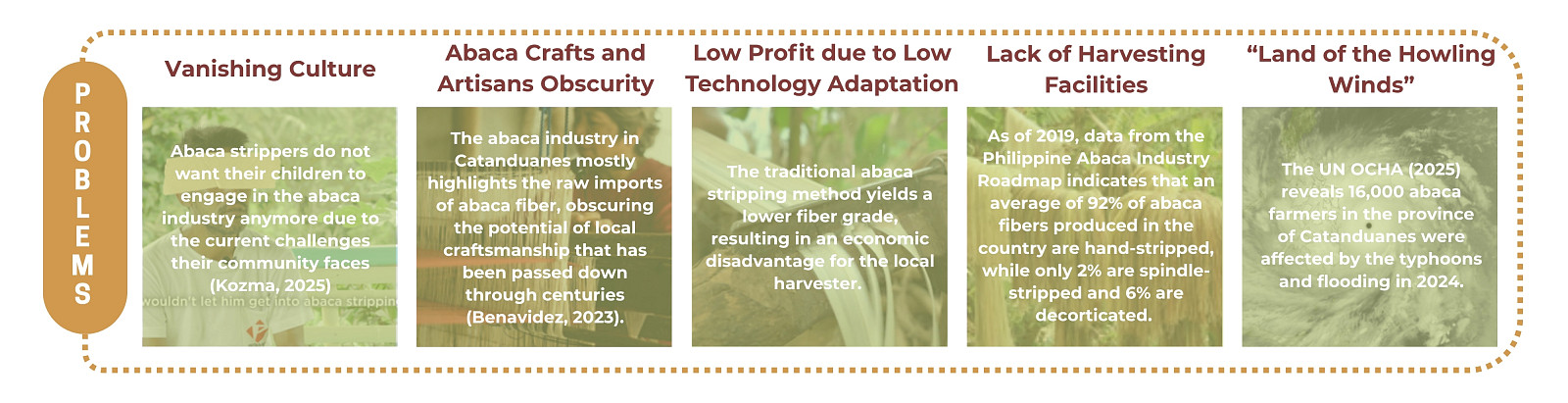
However, despite the long history and abundance of the crop, Catanduanes’ abaca industry faces mounting challenges. Stronger typhoons due to climate change, limited processing facilities, and the export of raw fiber over finished crats diminish local value and livelihoods.
As livelihoods grow uncertain and traditions become distant, the youth of Catanduanes slowly lose interest to the abaca industry, placing their abaca cultural legacy woven through generations at risk.
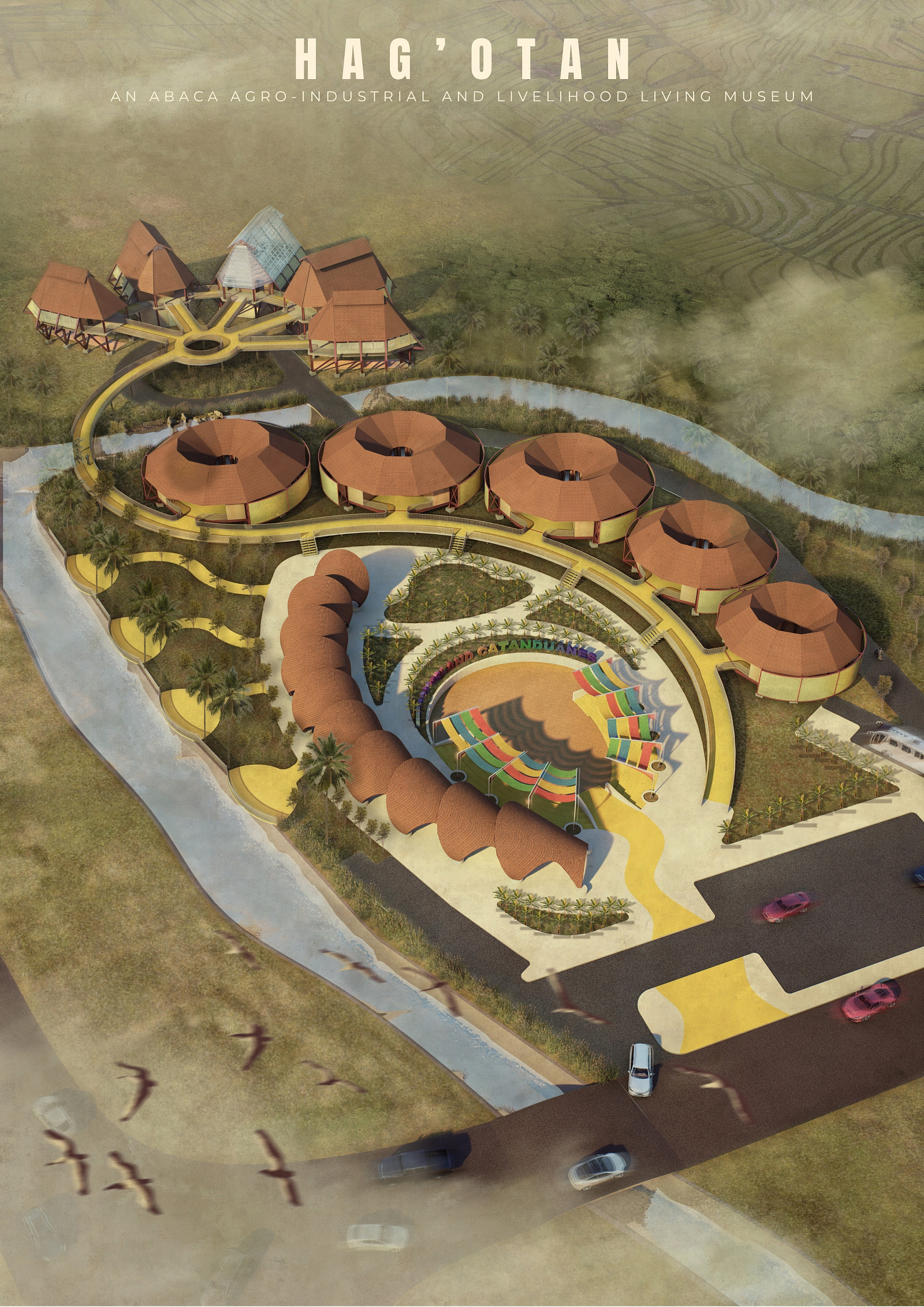
In response to the challenges surrounding Catanduanes’ abaca industry, Hag’otan emerges as an architectural solution. Designed as an Agro-Industrial and Livelihood Living Museum, it exhibits the transformation of abaca from crops to craft while fostering community engagement with abaca heritage. Embodying the principle of convergence, the proposal unites people, spaces, and purposes that seek to revitalize and upgrade the province’s abaca industry and identity.
Project description
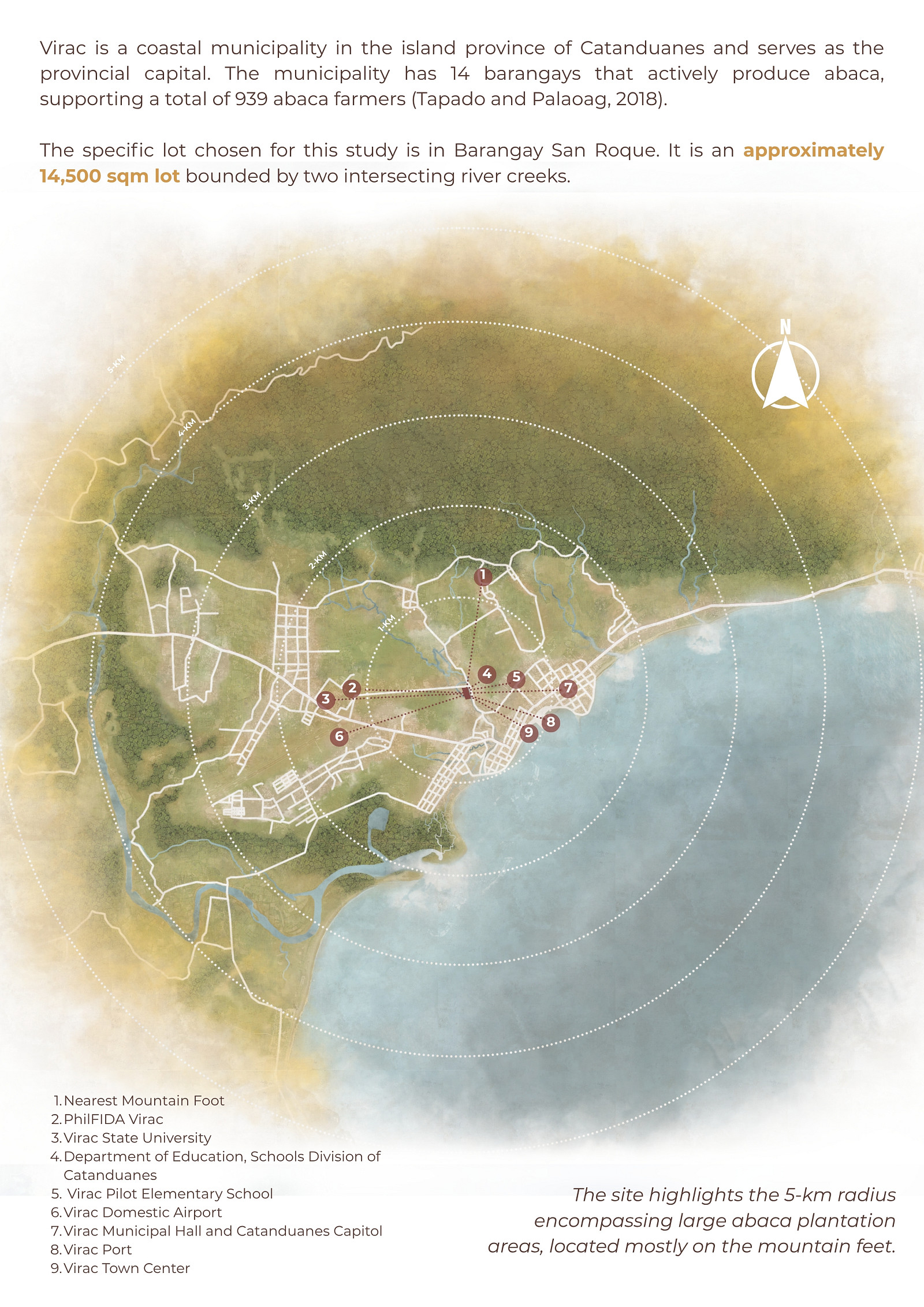
The site is located in Virac, the capital of Catanduanes and the host of the annual Abaca Festival. Strategically positioned between key institutional and civic nodes, it strengthens Hag’otan’s engagement with locals, youth, and tourists. Its selection aligns with Philippine Fiber Industry Development Authority (PhilFIDA) guidelines, mandating a 5000-meter radius encompassing abaca plantations for efficient harvesting and transport. The spatial program draws from PhilFIDA’s Philippine Abaca Roadmap, while integrating the Catandunganon’s crafting traditions.
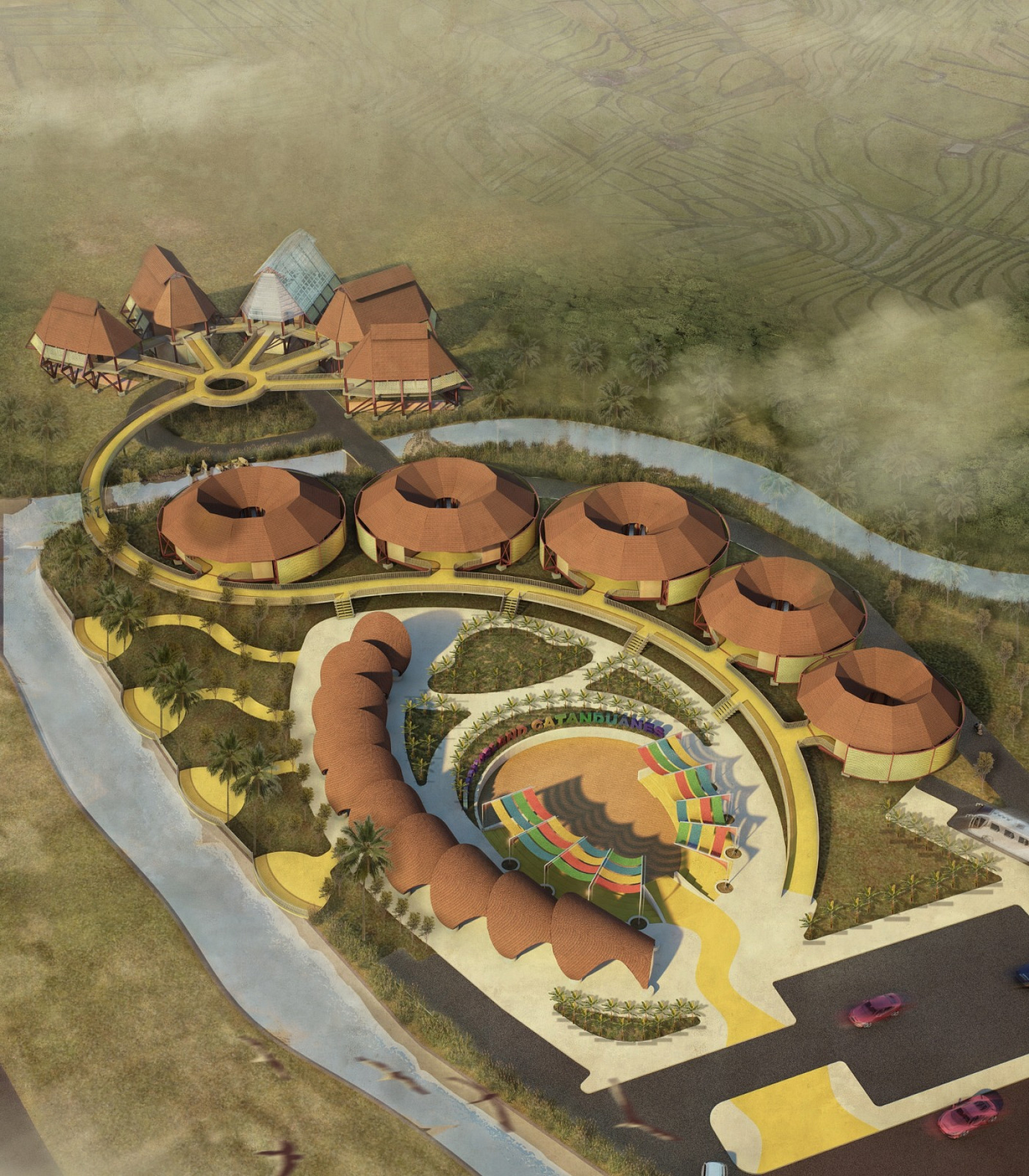
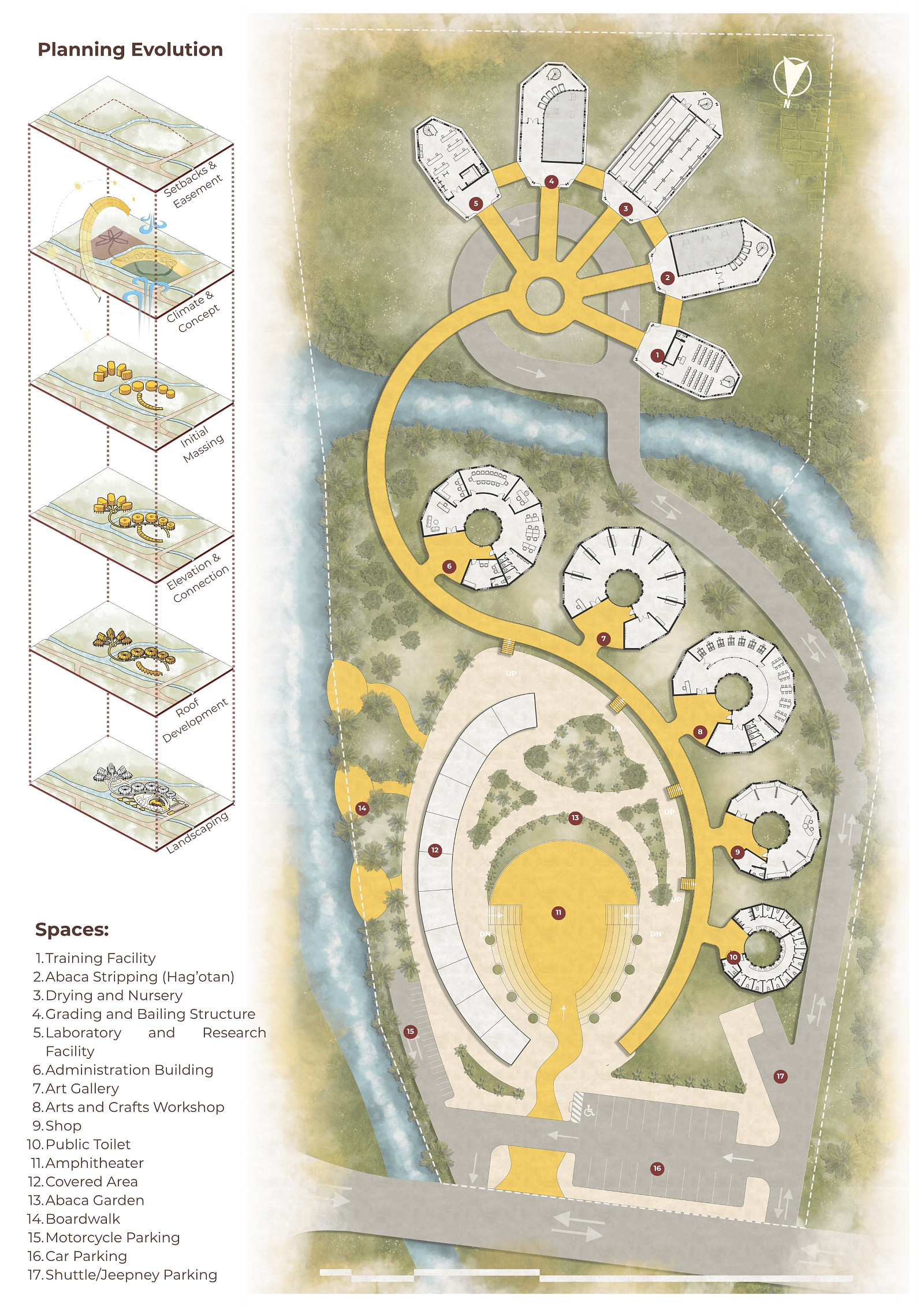
As Hag’otan translates the logic and sequence of activities in the abaca process, the complex is organized into three zones: cultivation, animation, and perpetuation.
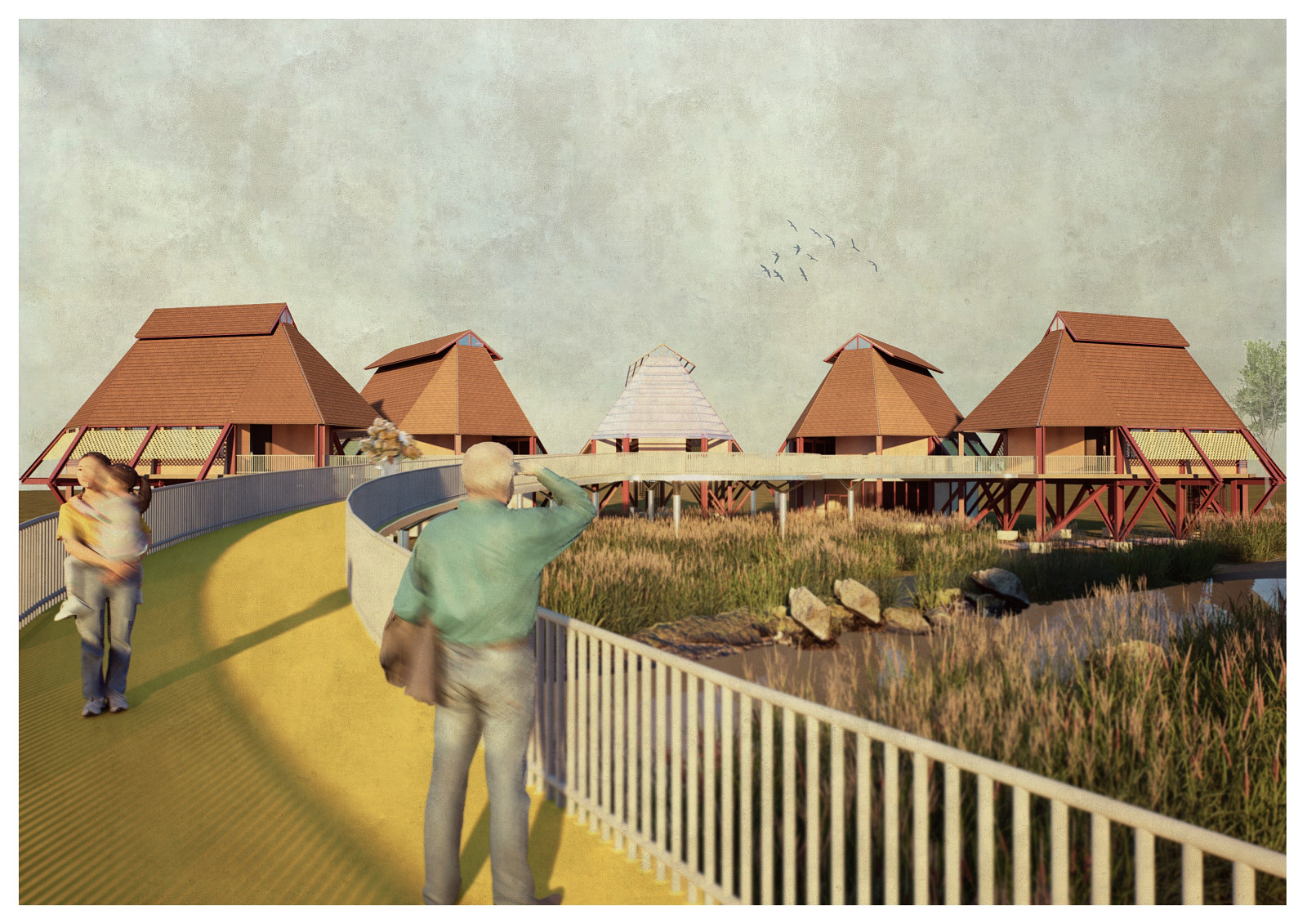
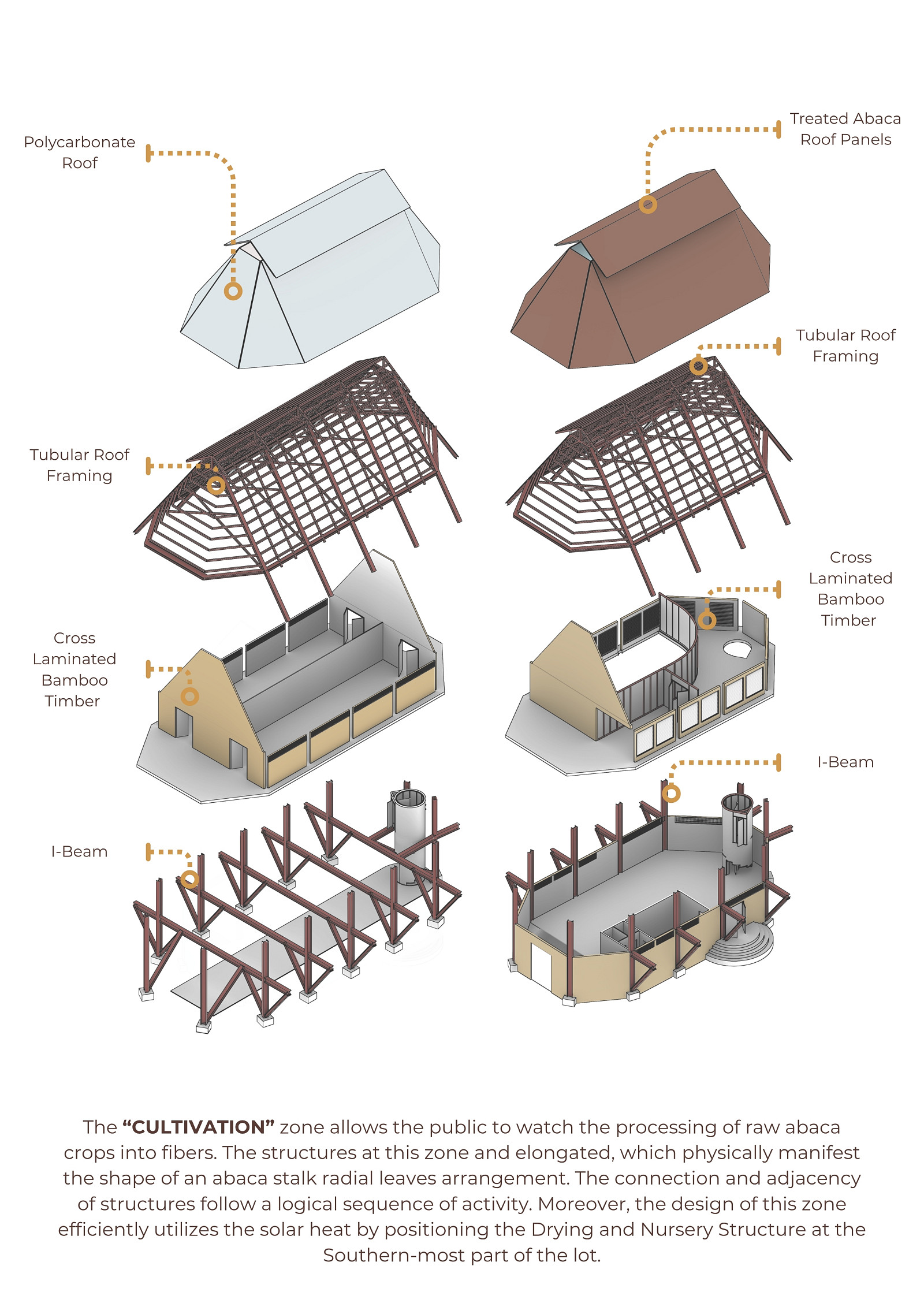
Cultivation zone embodies the transformation of abaca crops into fibers, featuring spaces that enhance the production and preservation. Facilities are organized following the radial form of abaca stalk leaves and the actual sequence of activities. The Training Center is placed adjacent to the abaca stripping (pagha-hag’ot) facility for observation, which connects to the polycarbonate-roofed drying structure. Dried fibers are transferred to the grading and bailing establishment for processing and storage. Finally, the laboratory is positioned near the nursery that is integrated with the drying facility.
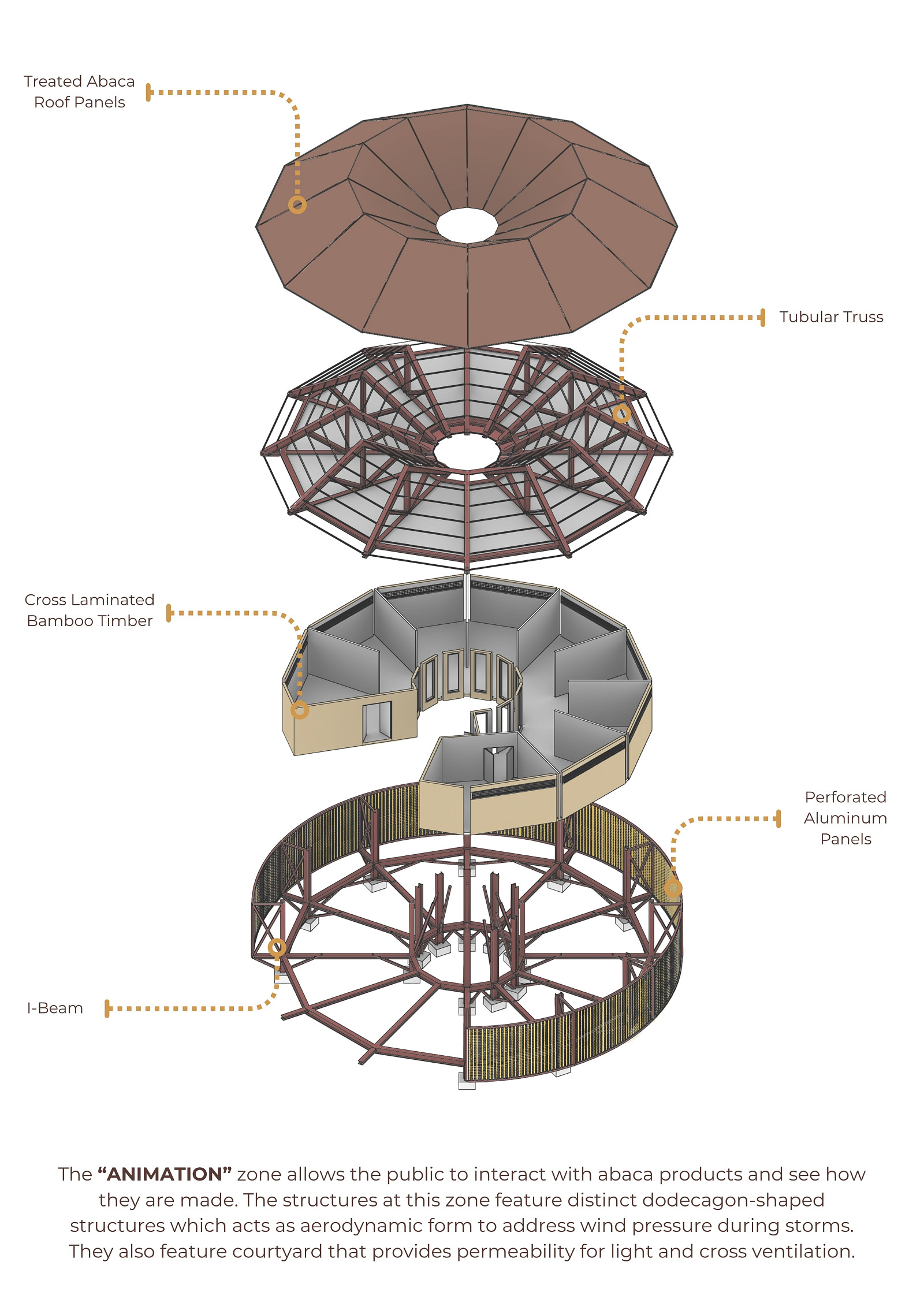
Animation zone represents the transformation of abaca fibers intro crafts, fostering interaction between local artisans and the public. Configured in a dodecagonal form inspired by rolled abaca fibers, it houses administration building, art gallery, arts and crafts center, shop, and public toilets. It is connected to the cultivation zone through a sloping steel bridge.
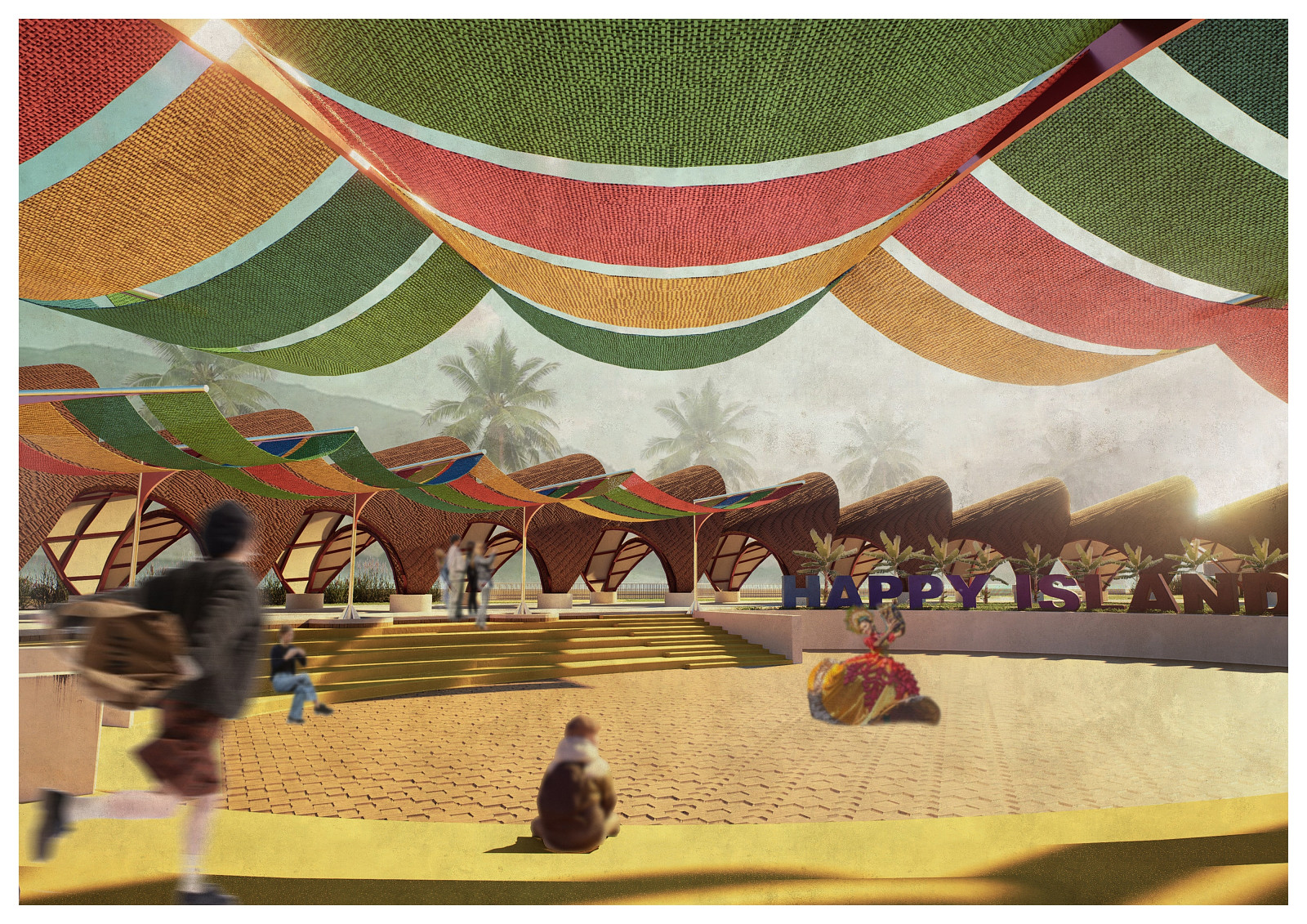
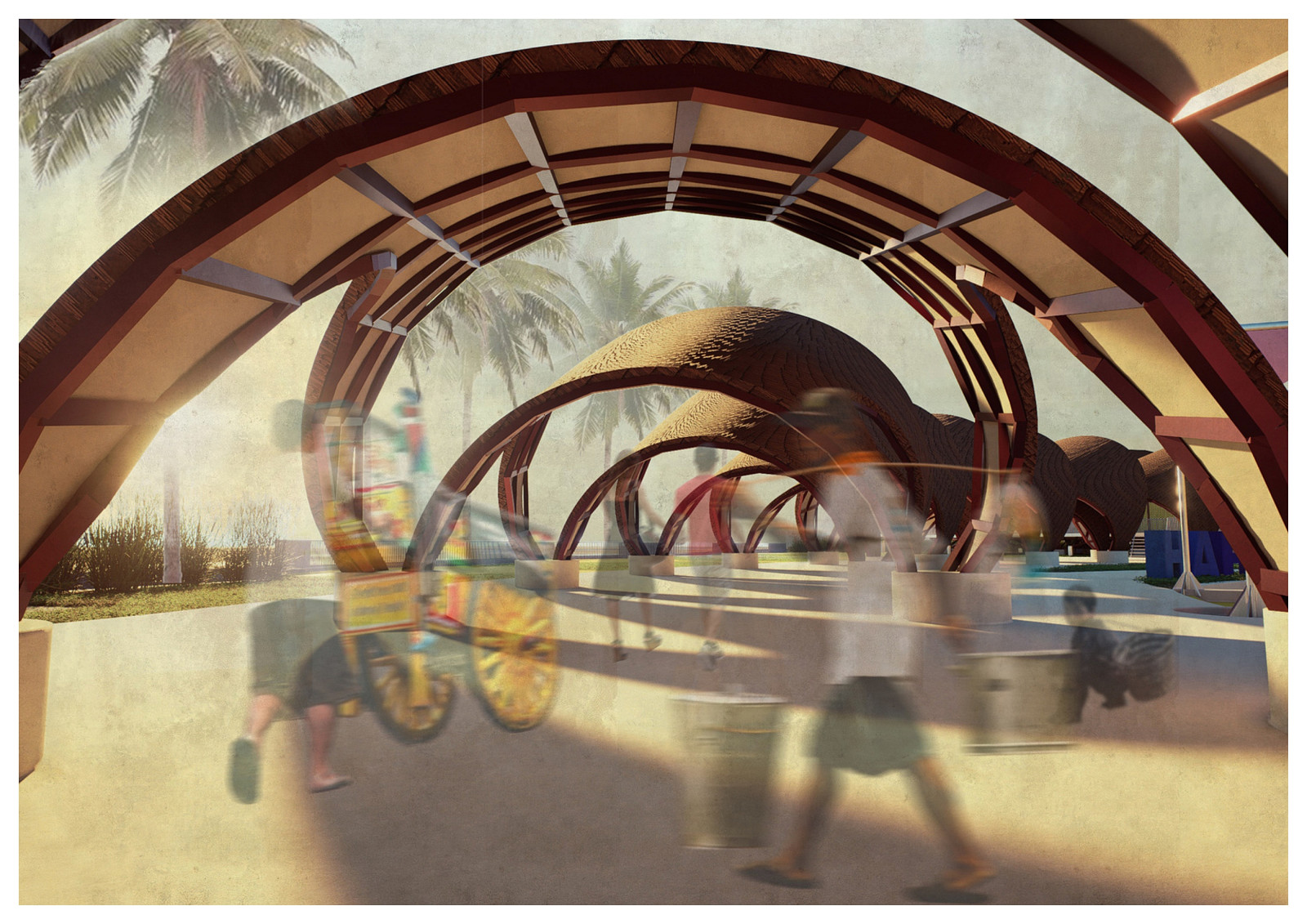
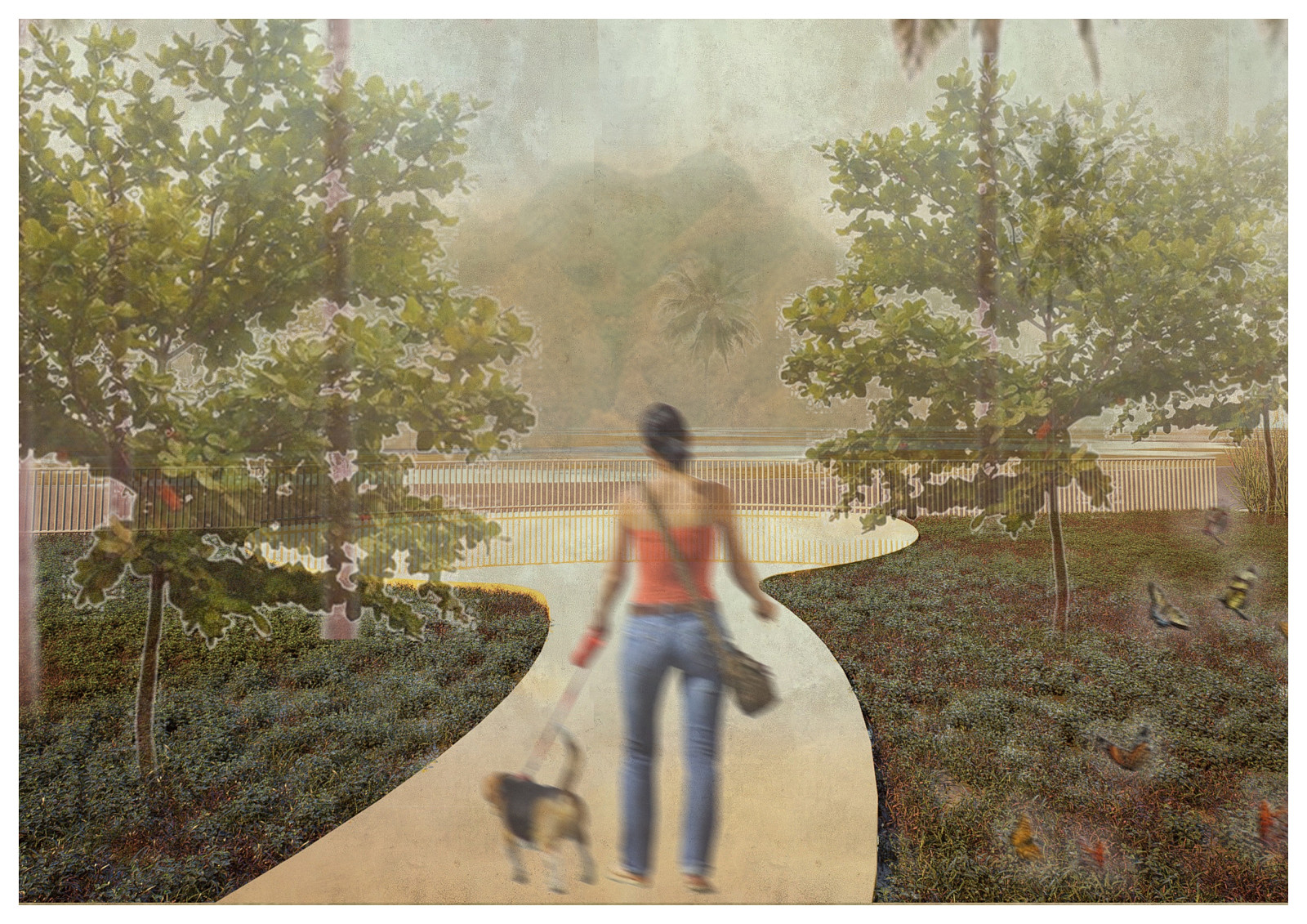
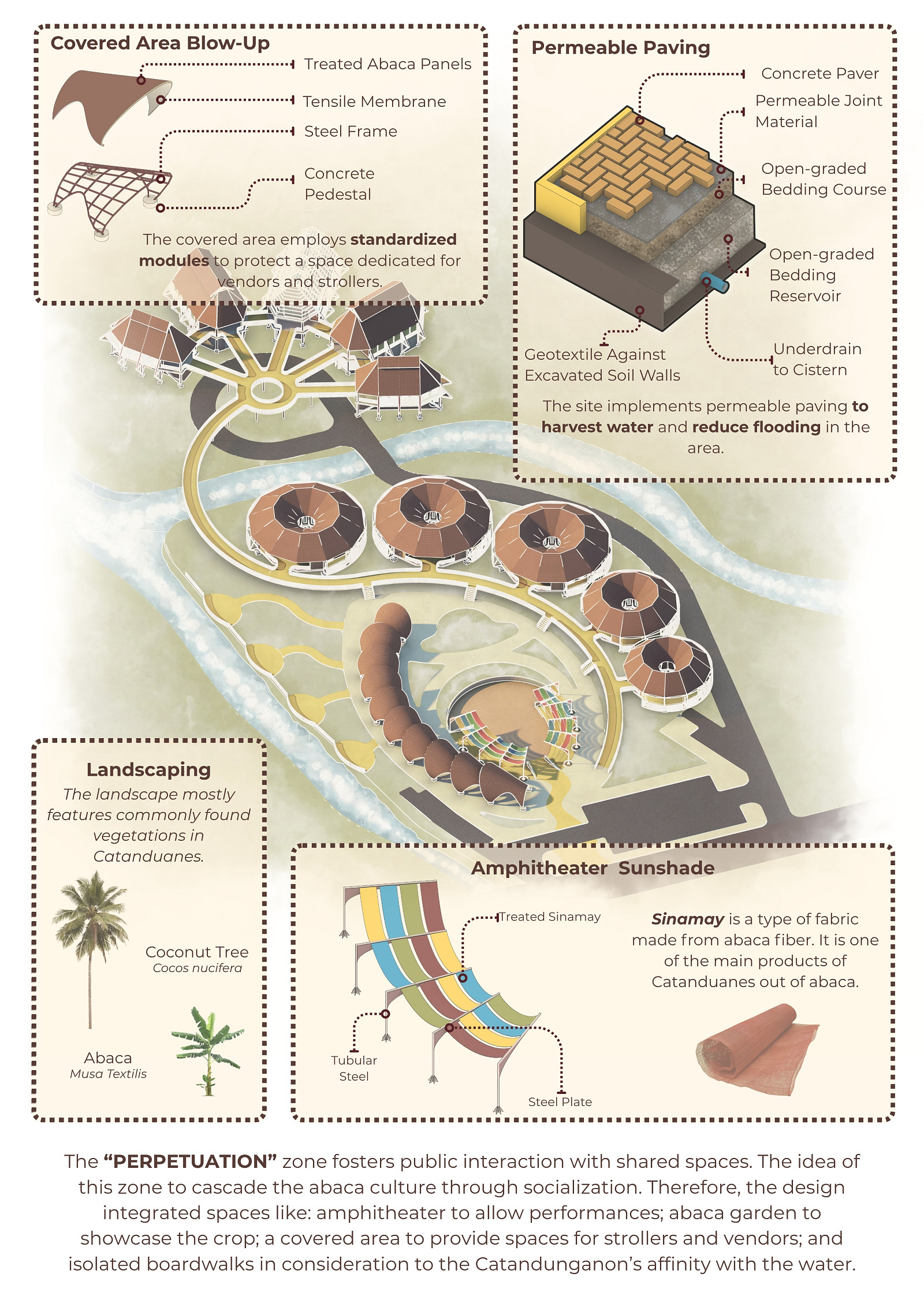
Perpetuation zone celebrates the continuity of abaca culture through communal engagement, similar to the essence of abaca crafts in their daily lives. It includes an amphitheater for performances and activities during Abaca Festival, a covered area inspired by rope form for vendors and strollers, an abaca garden for direct public engagement with the plant, and boardwalks in response to the local’s affinity with the water.
Technical information
Reflecting Catanduanes’ identity as the “Happy Island,” the design integrates flowing, curvilinear pathways and the accent of yellow, the hue of abaca fiber, to evoke joy and vibrancy.
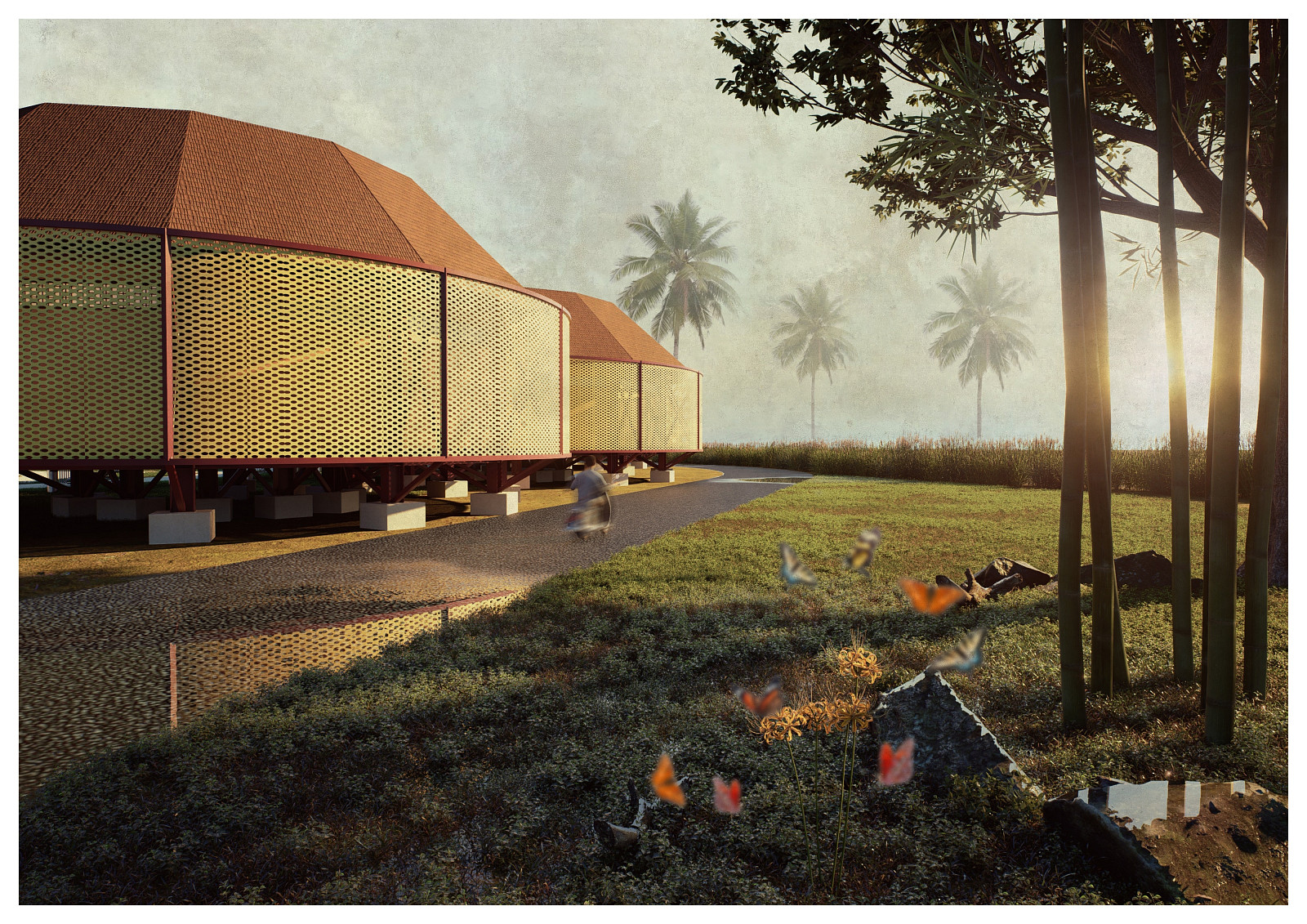
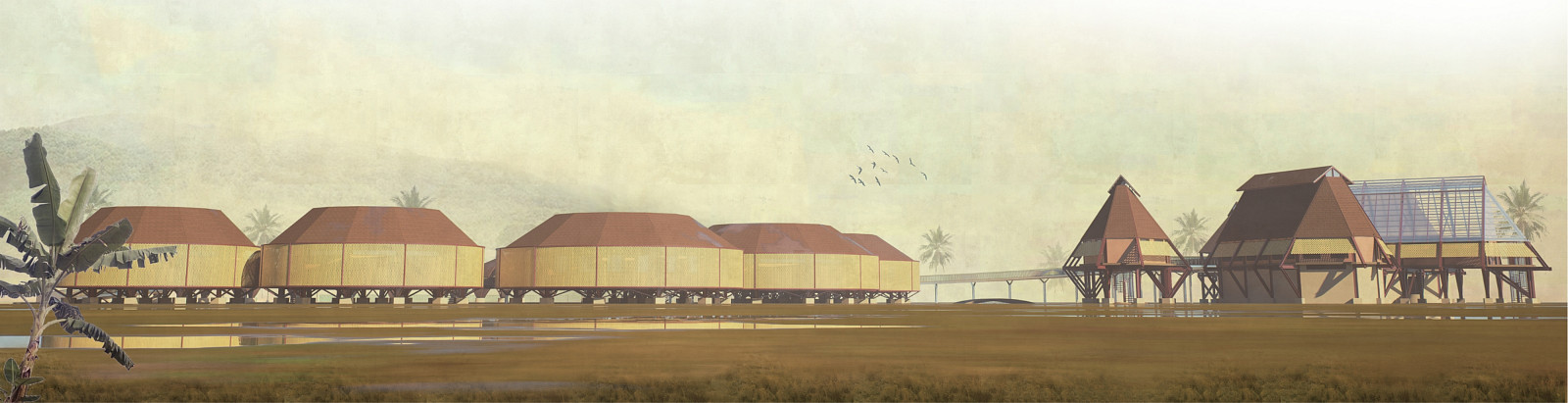
To enhance climate resiliency, all structures are stilted, while perforated aluminum skin is integrated to shield fenestrations from storm debris while allowing light and ventilation. Permeable paving is applied to harvest rainwater and mitigate flooding.
Prefabricated modular construction approach was adopted to ensure economic viability and replicability, using bolted steel frames and cross-laminated bamboo timber fabricated from locally sourced bamboo. These modular components form aerodynamic building masses deflecting strong wind pressures.
Lastly, abaca itself becomes a building material through roof panels and treated 'sinamay' (abaca fabric) shades. These elements evoke a sense of protection, mirroring abaca’s role as their primary economic security. By integrating this approach, the project creates new economic opportunities for local artisans

Copyright © 2026 INSPIRELI | All rights reserved. Use of this website signifies your agreement to the Terms of Use, Privacy Policy, and use of cookies.