ALLEYS OF HOPE | أزِقَة الأمل


Project idea
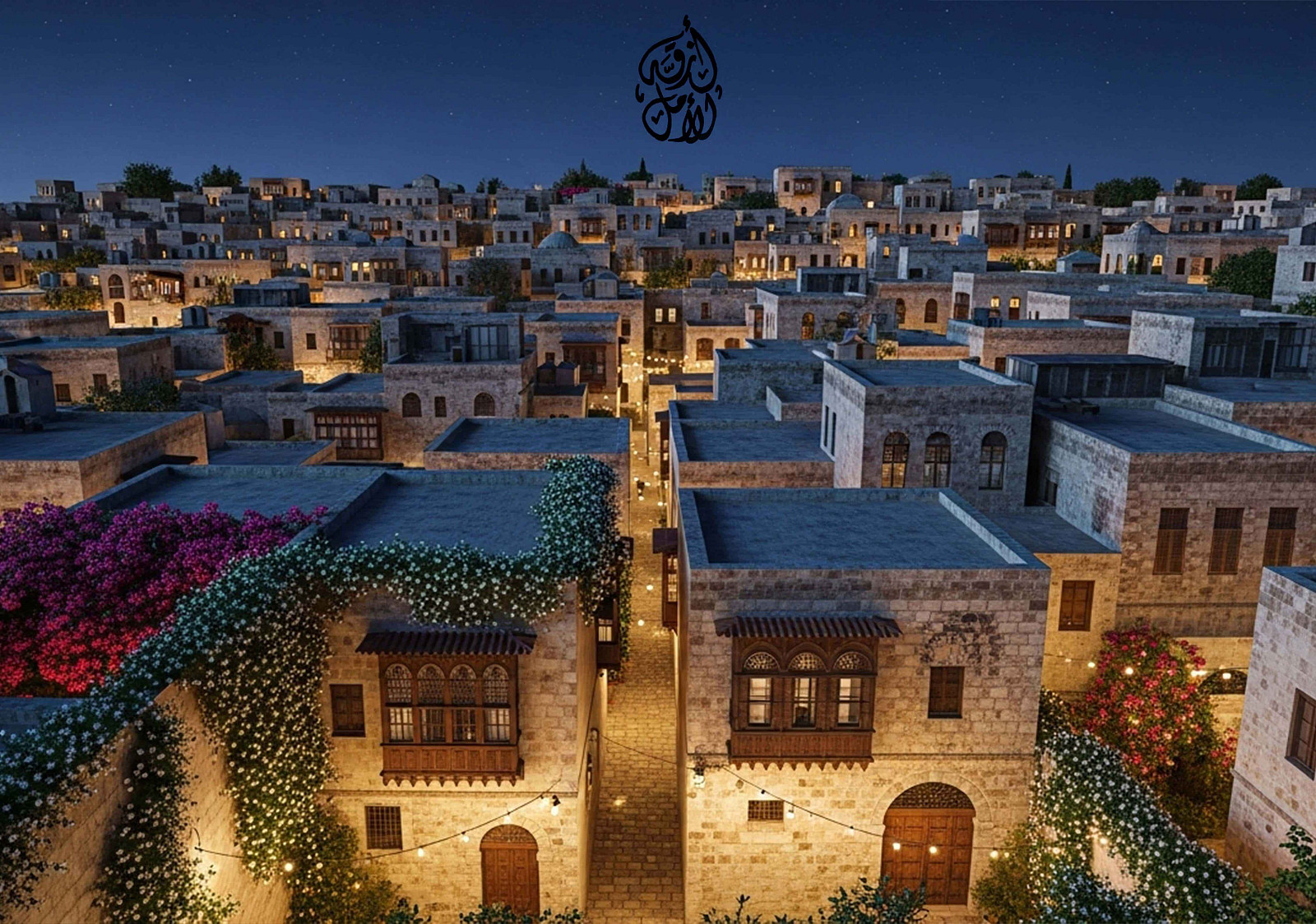
Alleys of Hope unfolds as a quiet revolution within Aleppo’s wounded fabric, where architecture becomes a language of healing. Restructuring the fabric of society, a community story untold by war, the project stitches memory with possibility, transforming forgotten passages into living arteries of dignity, resilience, and shared future—anchored in housing that restores safety, belonging, and visibility for widowed women.
The project revitalizes the area north of Aleppo’s Citadel, integrating urban regeneration, heritage-inspired housing, social empowerment for widowed women, and economic revival through traditional and contemporary crafts. It combines the rehabilitation of unused historic buildings into workshops with new courtyard-style housing, interactive public spaces, and sustainable strategies to create an inclusive, resilient, and culturally rooted community.
Project description
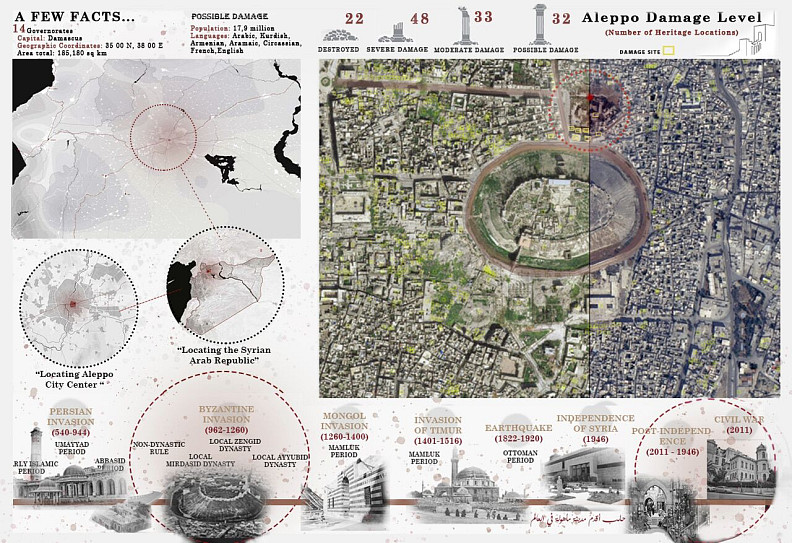
The project occupies the old Prison Land north of Aleppo’s Citadel—approximately 2 hectares—a deliberately chosen site that leverages the city’s historic presence as the starting point for a comprehensive civic revival. The site was analyzed through visual axes and the influence radius of nearby ancient gates and citadel alignments, treating the ground not as an empty lot but as an archive of collective memory and an opportunity to reconnect people with place.
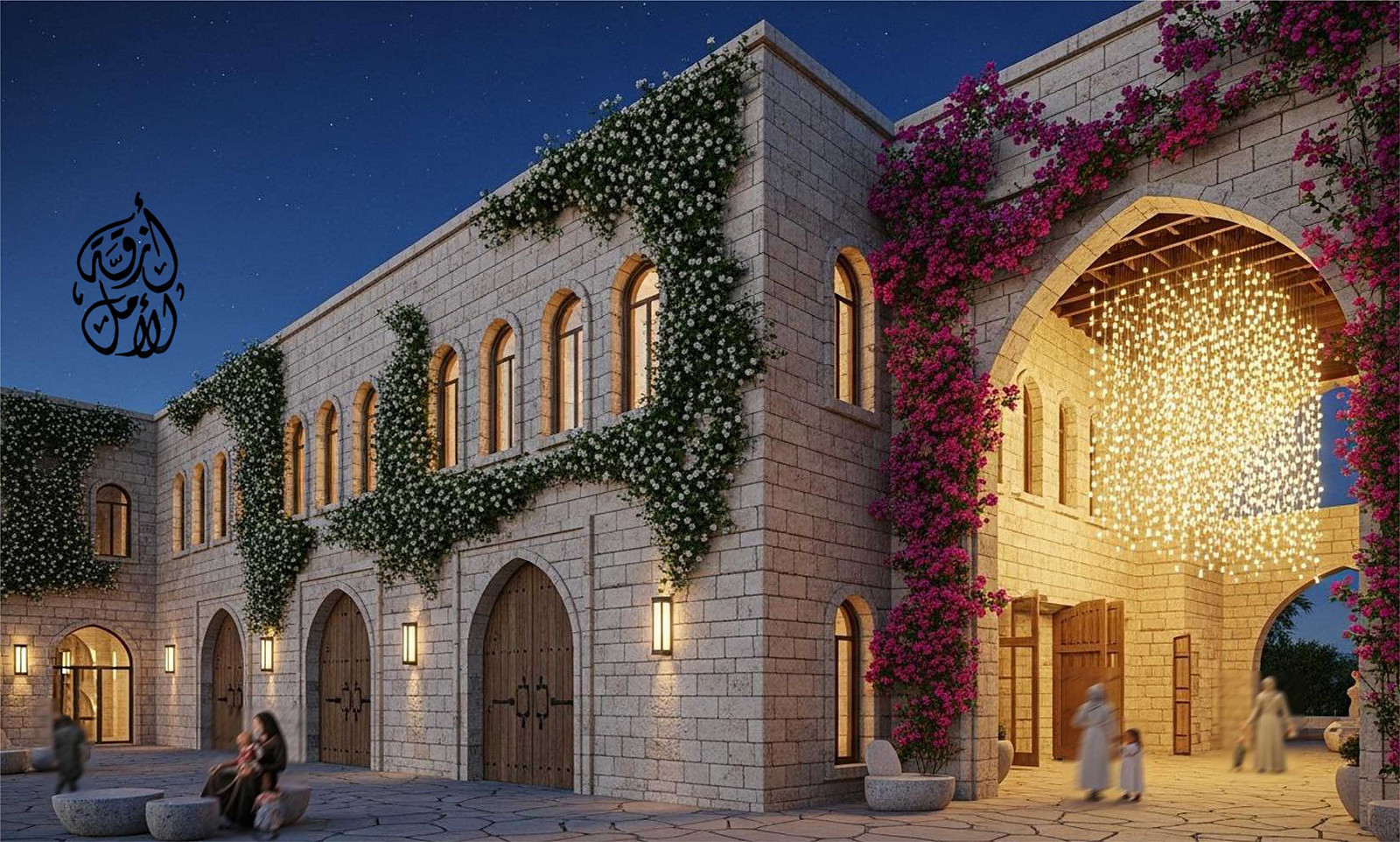
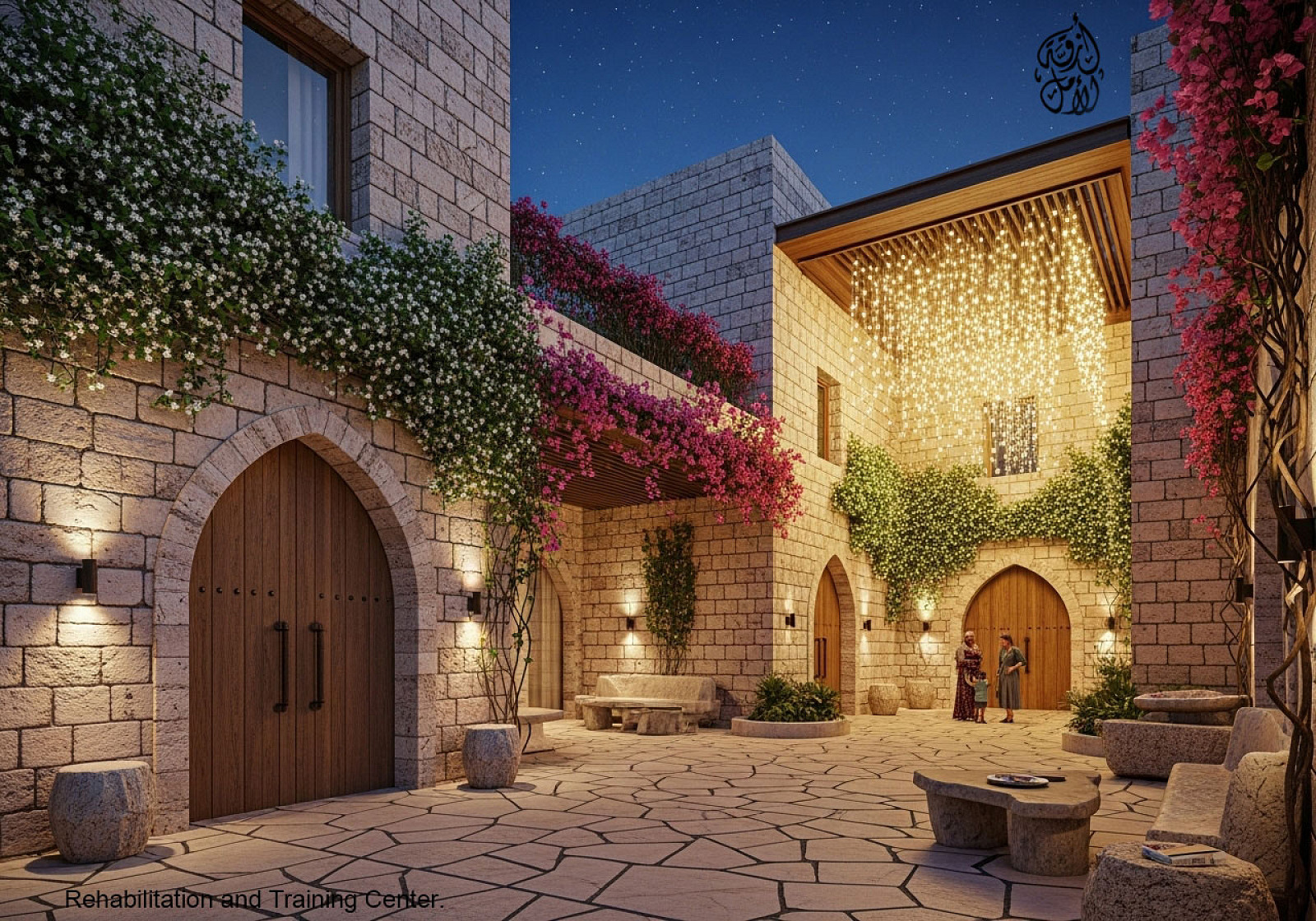
The design is organized into integrated sections responding to social and architectural context. A courtyard-based housing typology is central, expressed through three complementary architectural modes echoing Aleppine character. The courtyard mediates between domestic life and public space, providing natural light, ventilation, and privacy while enabling widowed women to engage in daily urban life. Temporary and mobile retail stalls support micro-commerce and local economic activity.
Derelict buildings on site were rehabilitated into workshops and micro-production clusters, allowing women to train, produce, and sell directly. Key historic buildings were restored with conservation sensitivity, while legacy protective units—like the bimaristan—serve flexible, rapid-response uses. A multipurpose civic center consolidates rehabilitation services, cultural activities, a forum and exhibition space, recreation, training, health, administration, and parking.
In line with sustainability, rubble and demolition waste were reprocessed into new construction materials, complemented by photovoltaic systems, greywater reuse, and green roofs to enhance environmental performance. The project is a therapeutic urban strategy: restoring dignity, enabling economic agency, and embedding memory into rebuilt form. By centering widowed women and fusing heritage with contemporary design, it demonstrates how architecture can catalyze lasting civic healing.
Technical information
1. Architectural Concept & Visual Identity
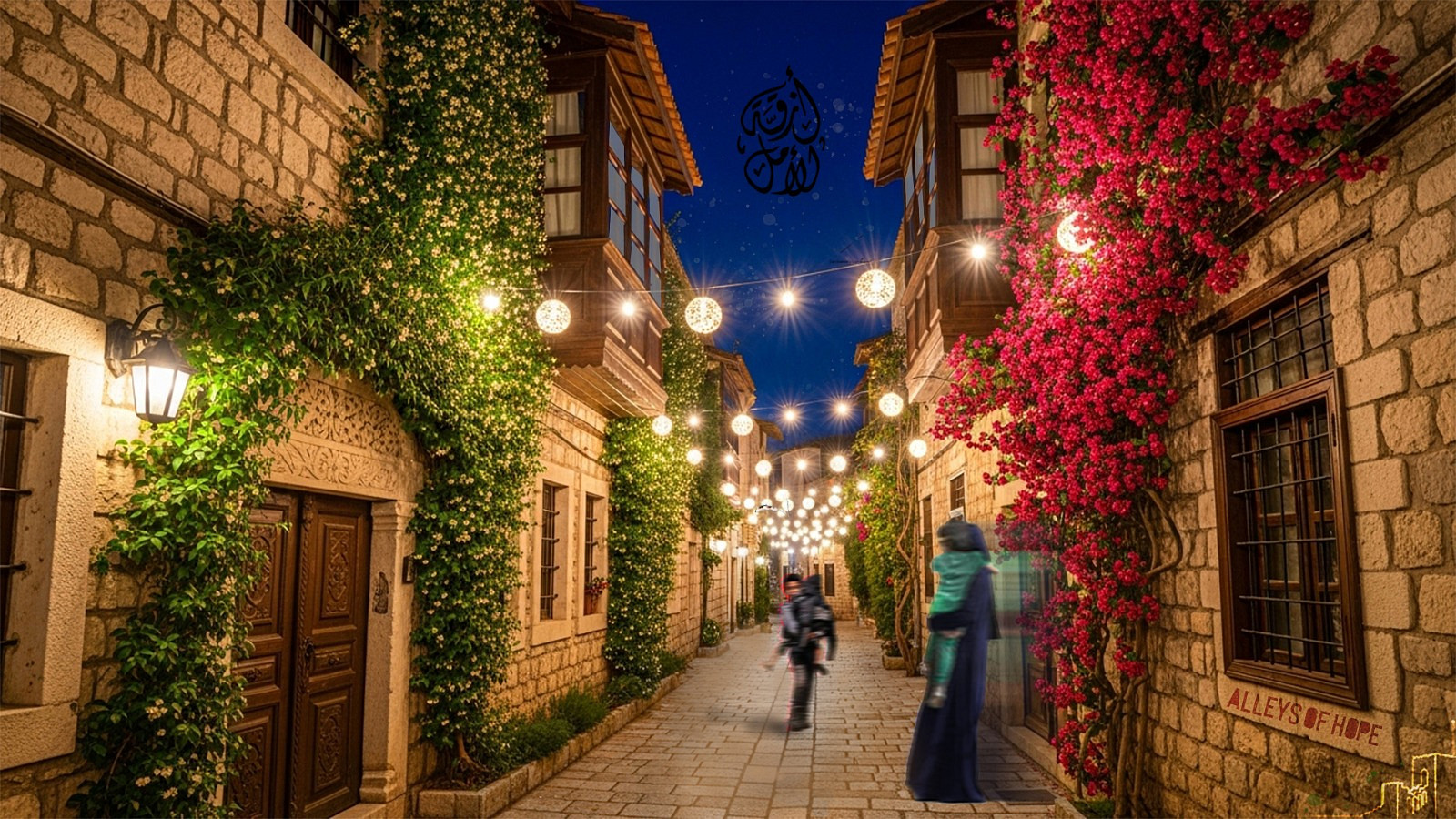
Urban Adaptive Reuse: The project centers on the adaptive reuse and revitalization of historic or neglected pedestrian alleyways. It harmonizes the existing vernacular fabric (traditional masonry, structural arches, and historic pathways) with contemporary placemaking interventions.
Chromatic Harmonization (Color Palette): Eradication of visual pollution through a meticulously curated color palette. Facades, fenestrations, and doorways are treated with cohesive, high-durability coatings designed to enhance psychological well-being and project a vibrant, optimistic spatial identity.
Public Art & Murals (Supergraphics): Integration of site-specific murals and supergraphics that reflect the socio-cultural narrative of the community, transforming blank building envelopes into dynamic public galleries.
2. Structural Rehabilitation & Infrastructure Integration
Facade Remediation: Comprehensive surface preparation, including efflorescence removal, crack injection, and moisture-barrier treatments. Restoration of degraded masonry is executed using lime-based mortars compatible with historic substrata.
Hardscaping & Paving Systems: Replacement of degraded ground surfaces with high-durability basalt pavers, porphyry stone, or interlocking concrete pavers. The layout integrates precise cross-slopes and longitudinal gradients to optimize stormwater drainage and prevent water ponding.
Subsurface Utility Consolidation: Mitigation of visual blight through the containment and rerouting of chaotic overhead electrical, telecommunication, and plumbing networks into concealed, fire-retardant architectural conduits or subterranean micro-trenches.
3. Circular Economy & Sustainable Material Lifecycle
Debris Recycling & Upcycling: Embracing the principles of a circular economy, the project structuralized the reuse of localized construction and demolition waste (CDW). Rubble and debris from damaged structures were mechanically crushed, sorted, and upcycled on-site.
Eco-Bricks for Housing Units: This recycled aggregate was utilized as a primary raw material to manufacture high-strength, sustainable eco-bricks. These blocks were directly deployed in the structural rehabilitation and reconstruction of adjacent housing units, as well as serving as a resilient sub-base layer for the newly paved alleyways, effectively transforming the remnants of destruction into the building blocks of renewal.
4. Environmental Sustainability & Biophilic Design
Vertical Landscaping (Biophilic Integration): Maximization of limited horizontal spatial footprints through vertical green walls, living facades, and suspended planters utilizing micro-irrigation systems. Species selection focuses on low-maintenance, indigenous climbing flora (e.g., Jasmine, Bougainvillea) to improve microclimates and air quality.
Photovoltaic Smart Lighting: Implementation of an energy-efficient LED illumination network powered by decentralized solar PV cells. The lighting scheme utilizes a layered approach—combining wall-washing, localized accent lighting, and historicist pedestrian lanterns—to eliminate dark zones, enhance public safety, and accentuate architectural textures at night.
5. Urban Furniture & Placemaking Elements
Integrated Street Furniture: Installation of bespoke, ergonomically designed benches (timber-slat or precast stone) structurally anchored to building plinths to preserve pedestrian clearance while fostering social interaction.
Wayfinding & Environmental Graphics: Implementation of a unified, low-profile signage system (Wayfinding) crafted from weather-resistant materials, featuring historical narratives and spatial orientation maps.
Sanitation Infrastructure: Strategic placement of modular, aesthetically integrated waste receptacles that promote source-separation and waste management without disrupting pedestrian flow.
Executive Summary:
The "Alleys of Hope" project serves as a benchmark for Sustainable Urban Renewal and Tactile Urbanism. By shifting the paradigm from mere cosmetic upgrading to a holistic spatial, structural, and circular economic rehabilitation—where war debris is upcycled into residential housing blocks—the intervention successfully revitalizes forgotten pedestrian arteries into resilient, safe, and culturally vibrant public realms that enhance community ownership and social cohesion
Documentation



Copyright © 2026 INSPIRELI | All rights reserved. Use of this website signifies your agreement to the Terms of Use, Privacy Policy, and use of cookies.