Fishing Regeneration hub


Project idea
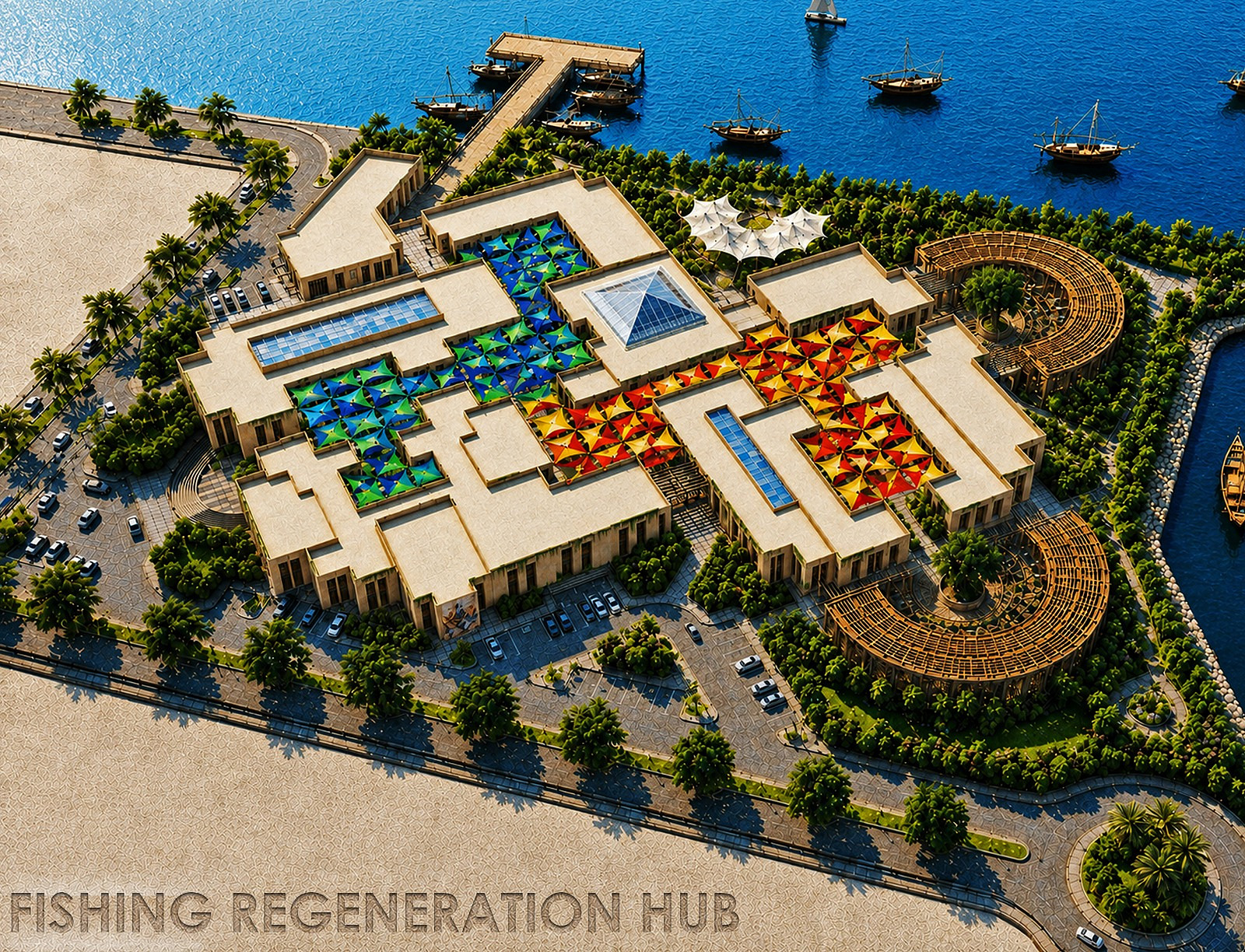
The Fishing Regeneration Hub is a community-centered architectural project located at Lake Burullus, Egypt. The project addresses the social, economic, and environmental challenges faced by local fishing communities, whose livelihoods have been threatened by poverty, inadequate education, declining fish resources, and unsustainable fishing practices.
The concept aims to regenerate both the fishing industry and the surrounding community by creating an integrated hub that combines fish processing and marketing facilities with education, healthcare, cultural spaces, and public gathering areas. Inspired by the relationship between fishermen and the lake, the project seeks to reconnect people with their environment while promoting sustainable development and preserving local identity.
The proposal transforms a neglected waterfront into a productive and socially inclusive destination that supports fishermen, their families, local residents, and visitors. Through education, innovation, and community engagement, the project creates opportunities for economic growth while protecting the ecological value of Lake Burullus.
Project description
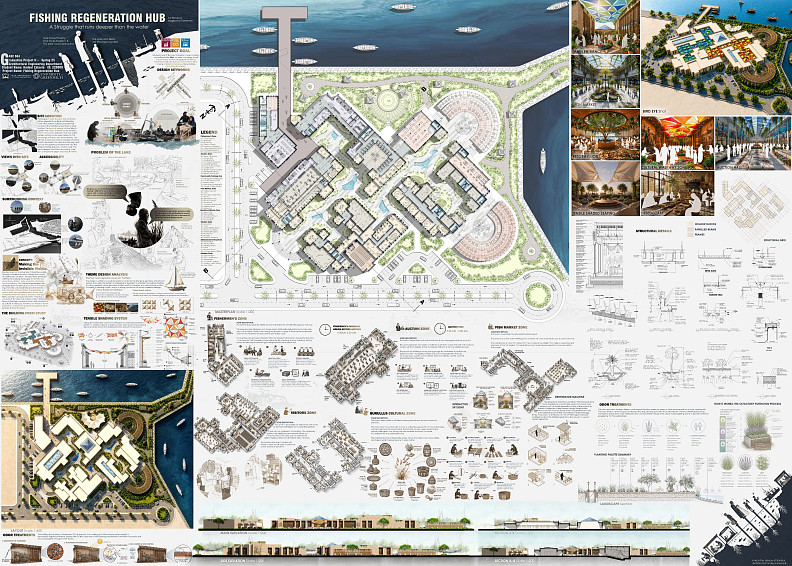
The project consists of several interconnected zones organized around landscaped courtyards and public spaces:
Fishermen's Zone including lockers, restrooms, fish processing facilities, equipment storage, quality inspection spaces, and administration.
Auction Zone for fish trading, order preparation, and distribution activities.
Fish Market Zone containing retail markets, food preparation areas, kitchens, restaurants, and fish-selling facilities.
Community Training Zone providing educational classrooms, workshops, digital training spaces, and healthcare facilities.
Burullus Cultural Zone that celebrates local traditions through exhibitions, artisan workshops, event spaces, and cultural activities.
Visitors' Zone containing public plazas, galleries, waiting areas, and recreational facilities.
The project promotes interaction between fishermen, residents, tourists, and investors while creating a sustainable economic ecosystem. Landscaped outdoor spaces, shaded courtyards, water features, and environmentally responsive design strategies improve user comfort and strengthen the connection between the built environment and the lake.
Technical information
The project is located on the waterfront of Lake Burullus in Kafr El Sheikh Governorate, Egypt. The design is based on a modular architectural system organized around interconnected courtyards that enhance natural ventilation, daylight penetration, and social interaction.
The building incorporates sustainable design principles including:
Passive shading systems inspired by fishing nets and local craftsmanship.
Courtyard-based planning to improve microclimate conditions.
Natural ventilation strategies to reduce energy consumption.
Extensive landscape integration using native and salt-tolerant plant species.
Water-sensitive design and ecological treatment systems.
Flexible modular spaces that can accommodate different community activities and future expansion.
Structure consists of 3 main types: Hollow blocks, panelled beams, and frames
Titanium Dioxide is sprayed on the terracota blocks to treat the fish smelly odors in the site
The structure combines durable contemporary construction techniques with materials and forms inspired by the local fishing culture. The design balances functionality, environmental performance, and cultural expression while supporting the long-term regeneration of the fishing community and the Lake Burullus waterfront.
Documentation

Copyright © 2026 INSPIRELI | All rights reserved. Use of this website signifies your agreement to the Terms of Use, Privacy Policy, and use of cookies.