Zone Zero: Proposed Penal Colony in Corregidor Island, Philippines


Project idea
The Philippines faces a severe prison overcrowding crisis, with correctional facilities operating far beyond their intended capacity. With the rising urban challenges of land scarcity in Greater Manila, traditional Panopticon-based prisons deprived inmates not only of freedom but also proper living space, opportunities for personal growth, and supportive and reformative environment. Punitive prison environment contributes to higher recidivism and hinder society reintegration. Therefore, this project proposes an Anti-Panopticon Vertical Prison that rejects the horizontal sprawl of Philippine prisons through building upwards while uplifting human spirits through architecture.
Beginning at Zone Zero, this development reimagines incarceration as a process of transformation rather than simply confinement. The proposed vertical prison draws inspiration from the point of rebirth wherein PDLs serves as a living framework for Renewal, Restoration, and Reintegration (3Rs) instead of being subjected solely to punitive measures. The facility is situated on Corregidor Island, featuring its strategic isolation, historical significance and proximity to Greater Manila which creates a secured setting and conducive to reform.
Project description
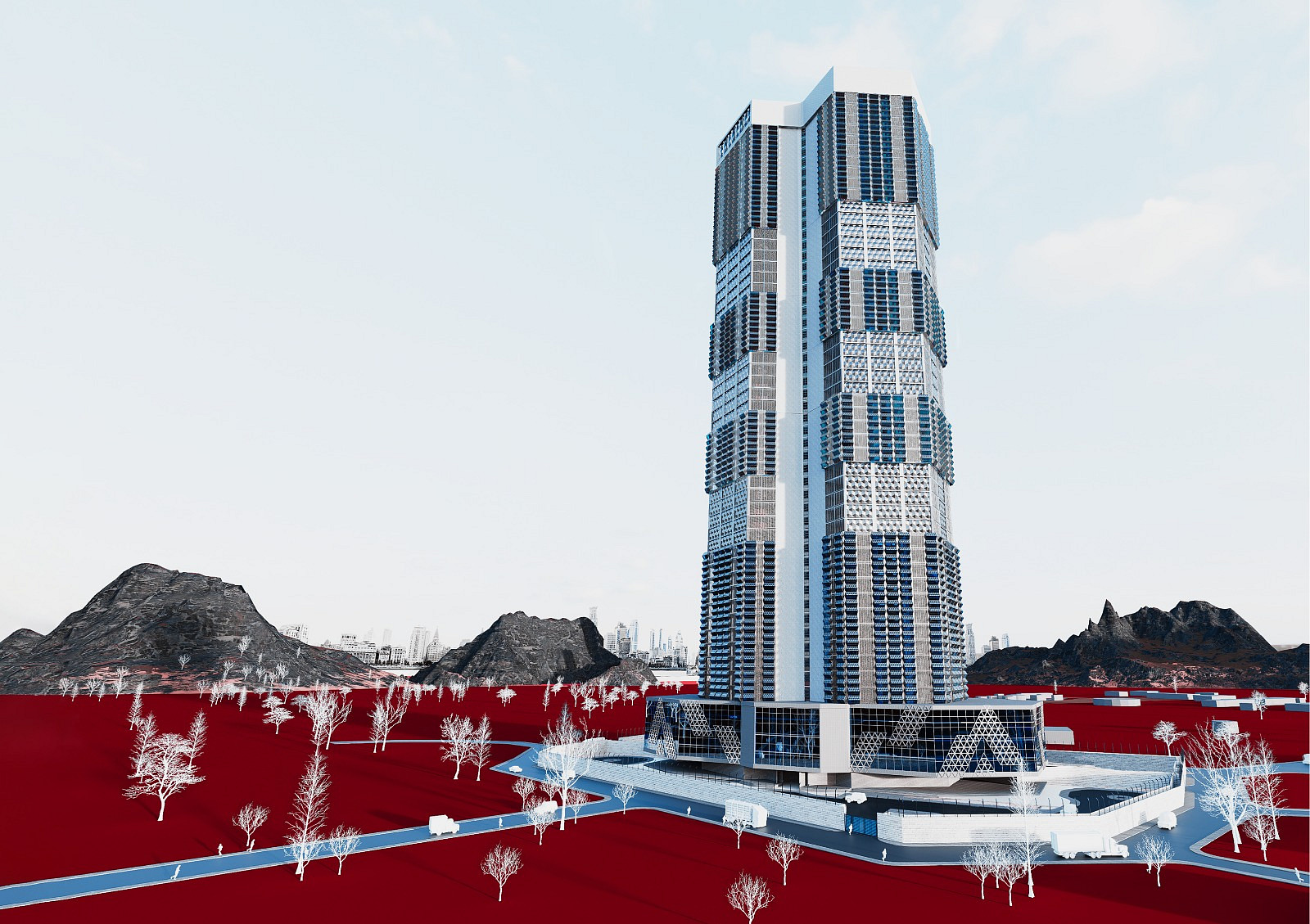
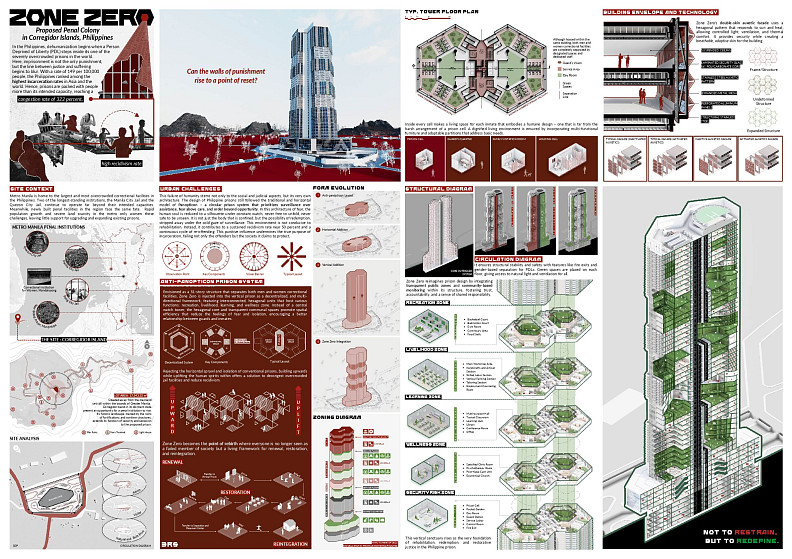
The project is envisioned as a 51-story structure, designed to accommodate both male and female inmates within a secure, rehabilitative, and sustainable environment. Unlike traditional correctional facilities with centralized surveillance, Zone Zero introduces a decentralized, multi-directional framework of interconnected hexagonal units organized into five (5) main zones: Recreation, Livelihood, Learning, Wellness, and Security Risk Zone. This planning framework also maintains secure separation between male and female inmates for enhanced safety and protection.
Instead of a central watch tower, its hexagonal core and transparent communal spaces foster spatial efficiency, reducing fear and isolation while encouraging positive inmate-guard relationships. Far from the harsh prison arrangements, each cell embodies a humane design through adequate access to natural light, ventilation, personal space, and flexible spatial organization. A dignified living environment is also ensured by incorporating multi-functional furniture and adaptable partitions that address basic needs.
Technical information
The proposed vertical penal colony sits on a pile-assisted raft foundation and utilizes a reinforced concrete core outrigger structural system to ensure stability against wind and seismic forces. Each floor is organized through a modular hexagonal planning framework to maximize spatial efficiency and support decentralized circulation.
The tower is enclosed with a hexagonal auxetic double-skin façade that acts as a breathing shell which regulates natural ventilation, daylight penetration, and thermal comfort throughout the building. Integrated green spaces on every floor also provides opportunity for recreation and livelihood programs such as urban gardening and vertical farming. High-performance glazing, perforated metal screens, and passive shading elements further enhance energy efficiency, while rooftop wind turbines, solar energy systems, rainwater harvesting, and greywater recycling contributes to the sustainable and self-sufficient operation of the vertical penal colony.
Documentation

Copyright © 2026 INSPIRELI | All rights reserved. Use of this website signifies your agreement to the Terms of Use, Privacy Policy, and use of cookies.