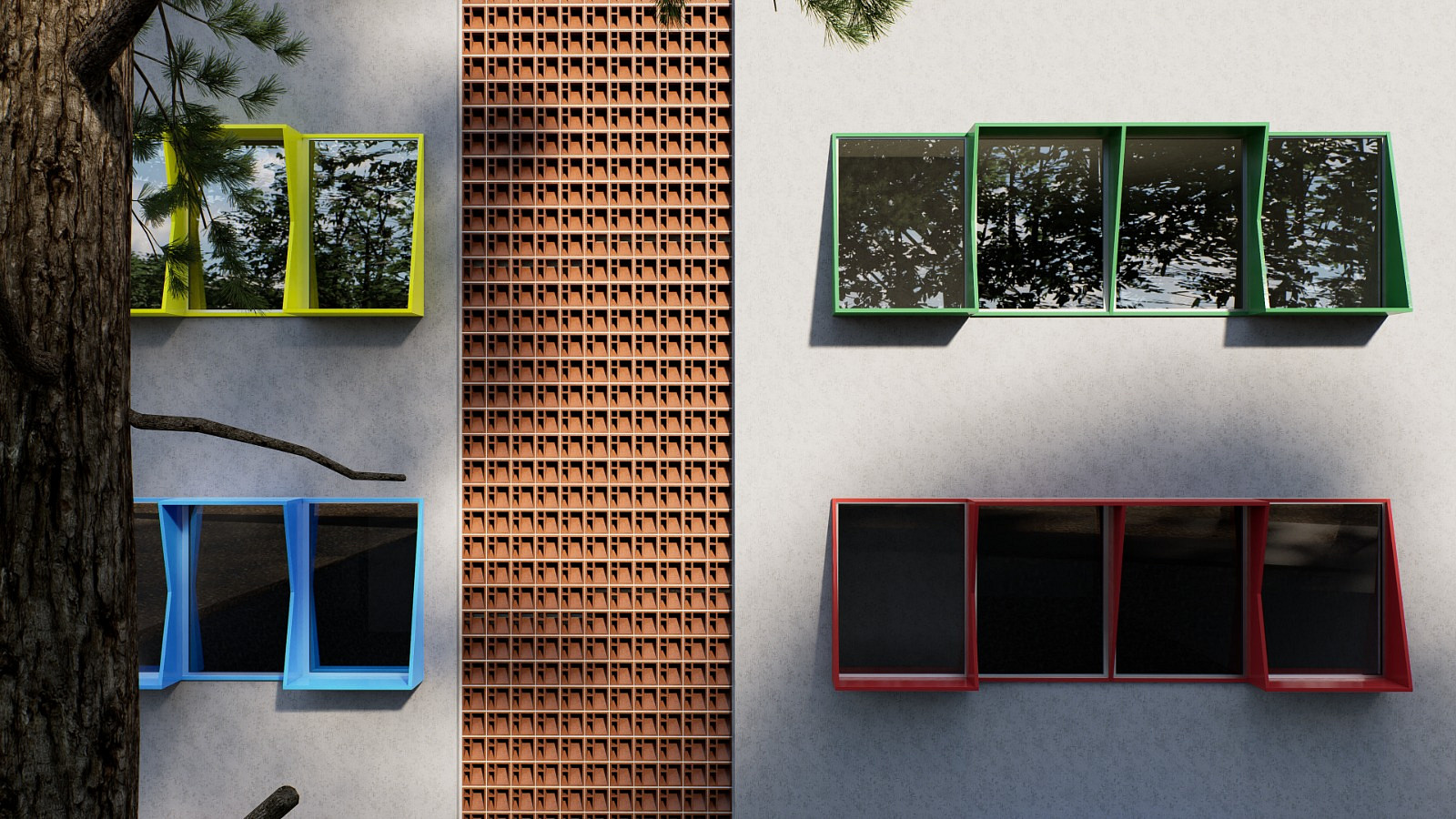
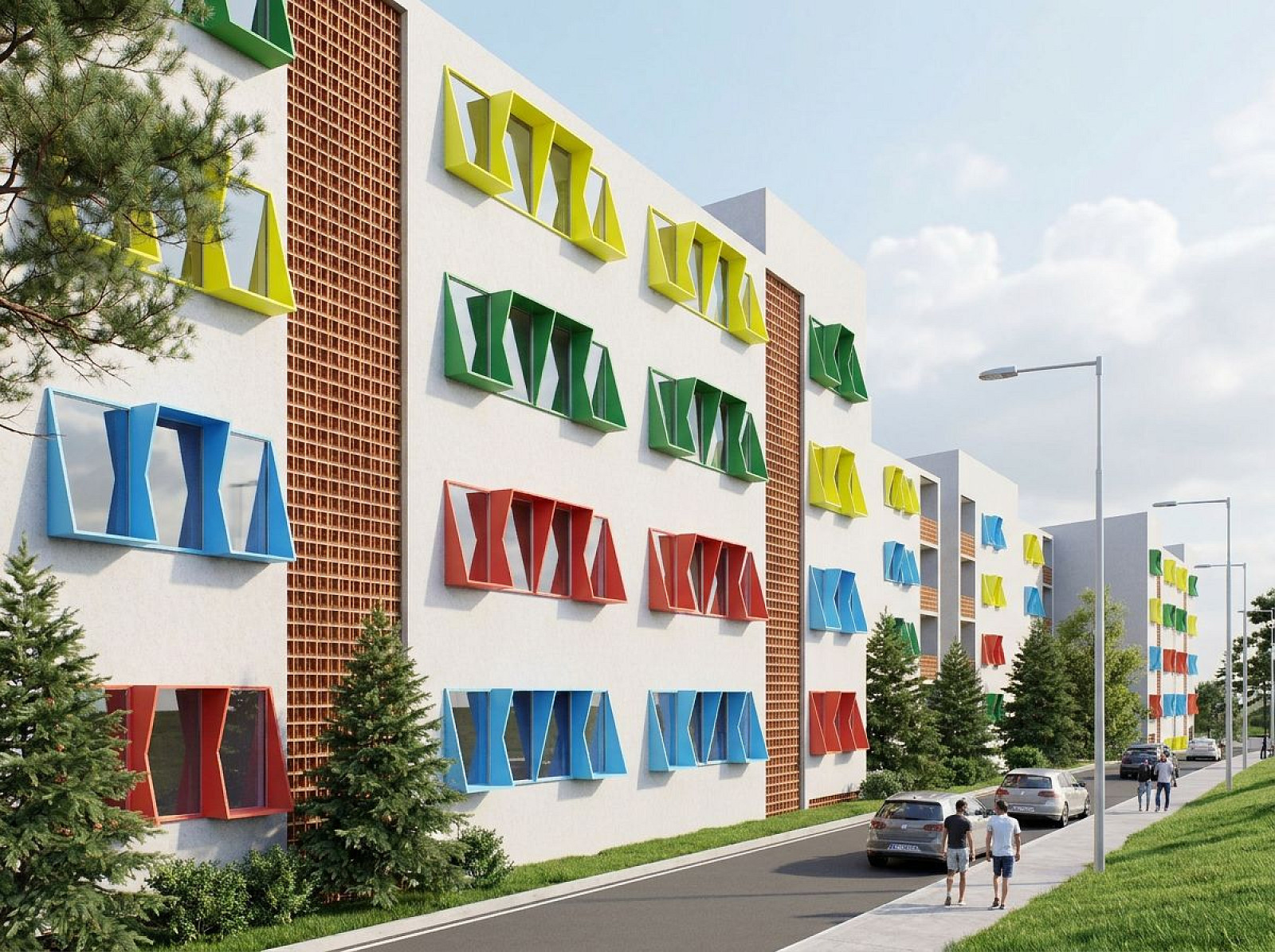
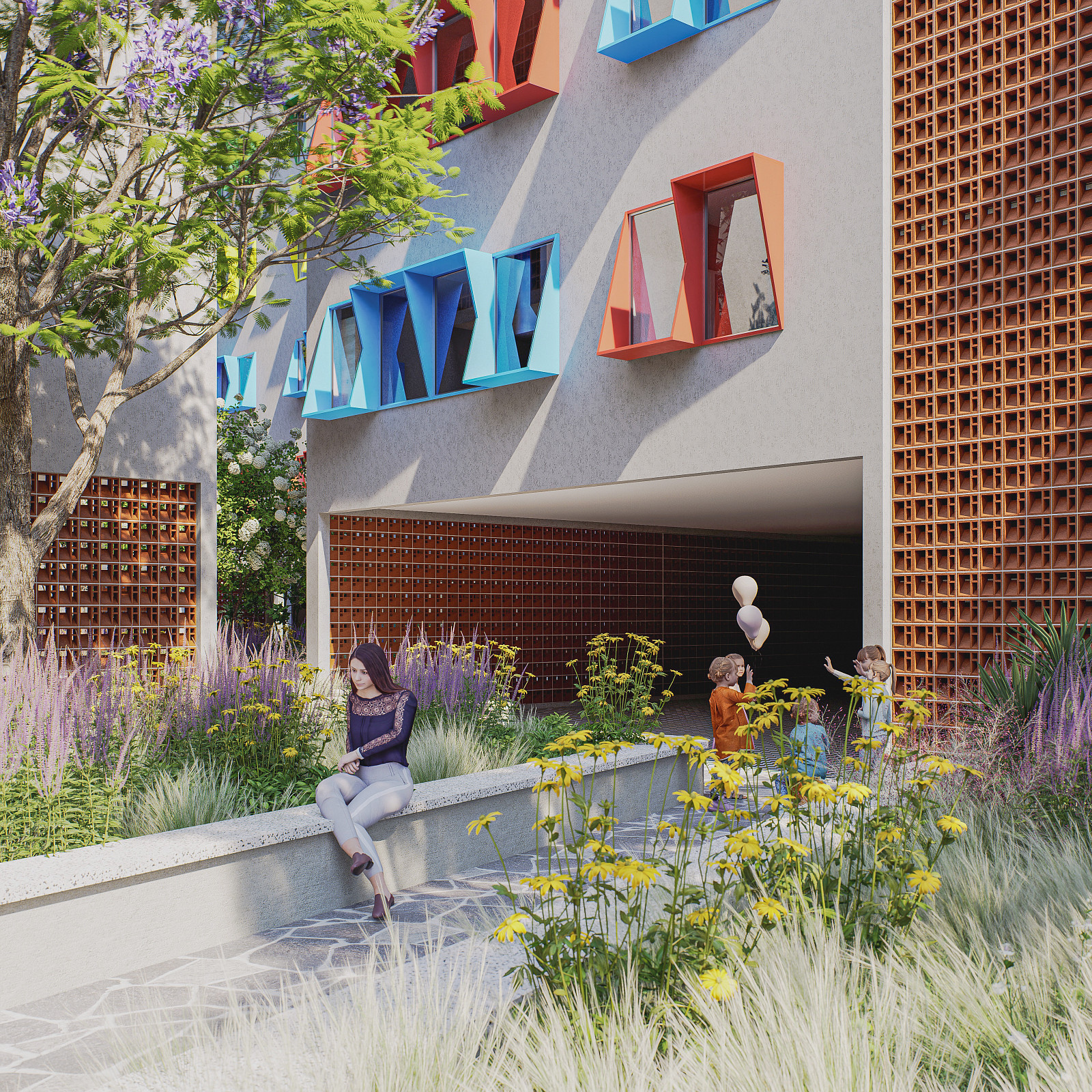
5M Residence


Project idea
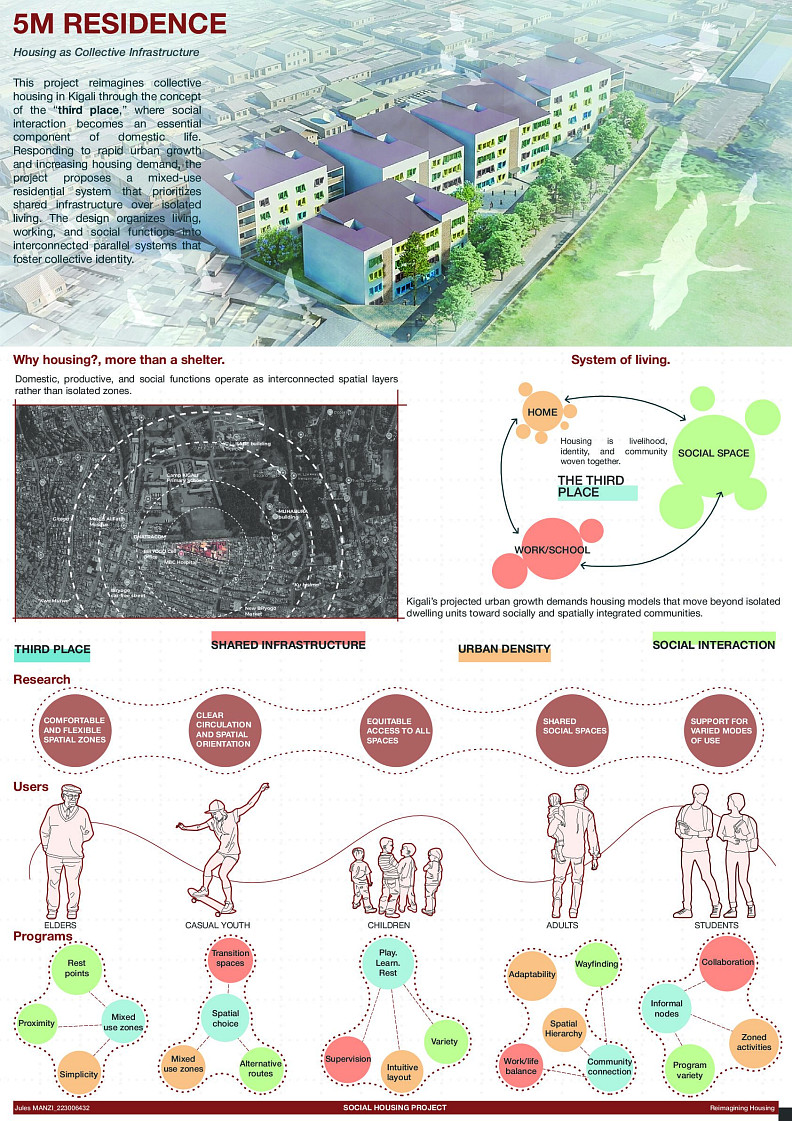
Housing as Collective Infrastructure — reimagining collective housing in Kigali through the concept of the 'third place,' where social interaction becomes an essential component of domestic life.
Project description
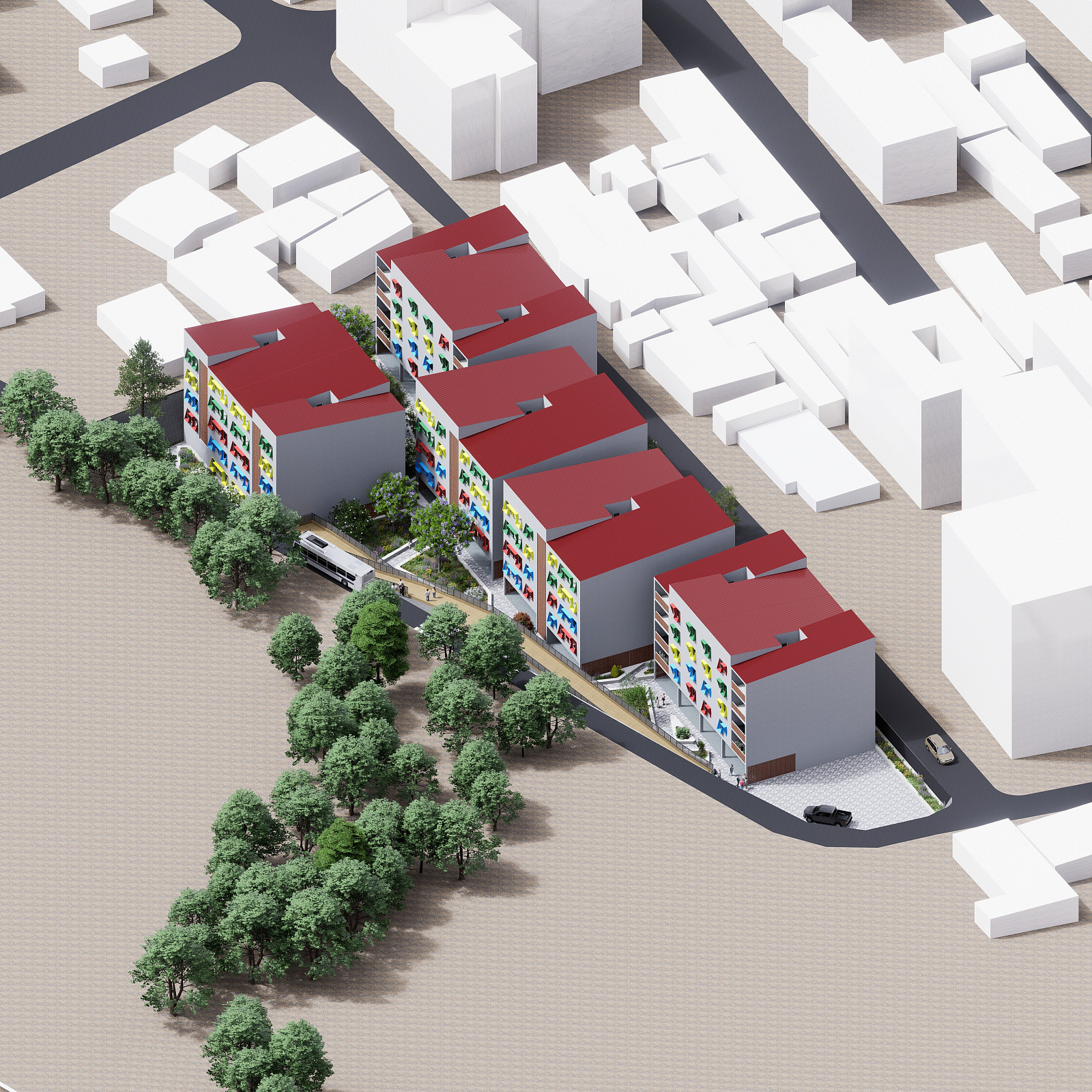
This project reimagines collective housing in Kigali through the concept of the 'third place,' where social interaction becomes an essential component of domestic life. Responding to rapid urban growth and increasing housing demand, the project proposes a mixed-use residential system that prioritizes shared infrastructure over isolated living. The design organizes living, working, and social functions into interconnected parallel systems that foster collective identity. Domestic, productive, and social functions operate as interconnected spatial layers rather than isolated zones. Kigali's projected urban growth demands housing models that move beyond isolated dwelling units toward socially and spatially integrated communities. The design addresses diverse user groups including elders, casual youth, children, adults, and students, with programs tailored to each group's needs such as rest points, transition spaces, play and learning areas, adaptability, and collaboration spaces.
Technical information
The project incorporates research principles including comfortable and flexible spatial zones, clear circulation and spatial orientation, equitable access to all spaces, shared social spaces, and support for varied modes of use. Key design strategies include third place integration, shared infrastructure, urban density, and social interaction. Programs are organized around proximity, simplicity, mixed-use zones, spatial choice, alternative routes, supervision, intuitive layout, variety, work/life balance, community connection, wayfinding, spatial hierarchy, informal nodes, program variety, and zoned activities.
Documentation
Created in:


Copyright © 2026 INSPIRELI | All rights reserved. Use of this website signifies your agreement to the Terms of Use, Privacy Policy, and use of cookies.