GastroHub Niklovka


Project idea
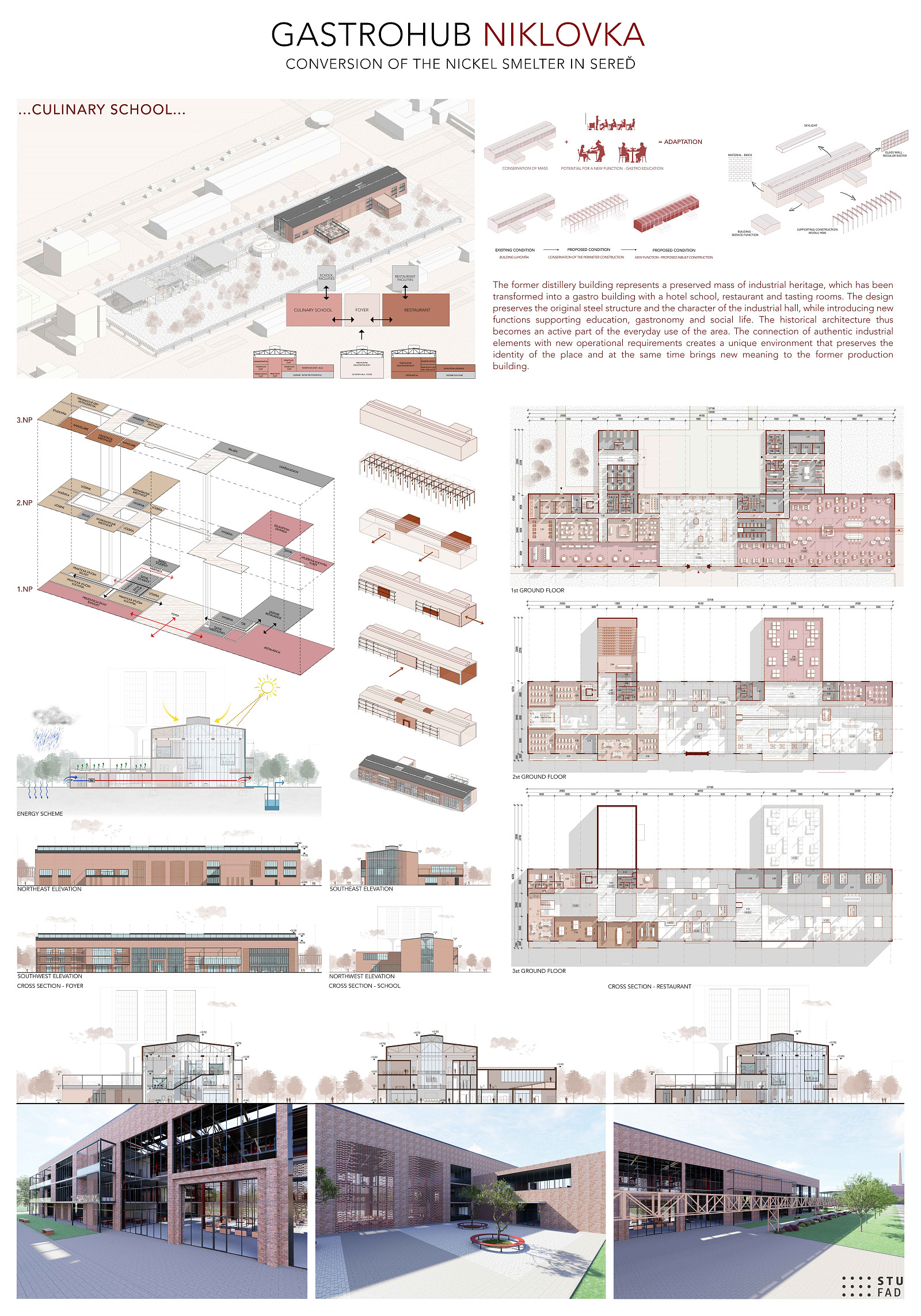
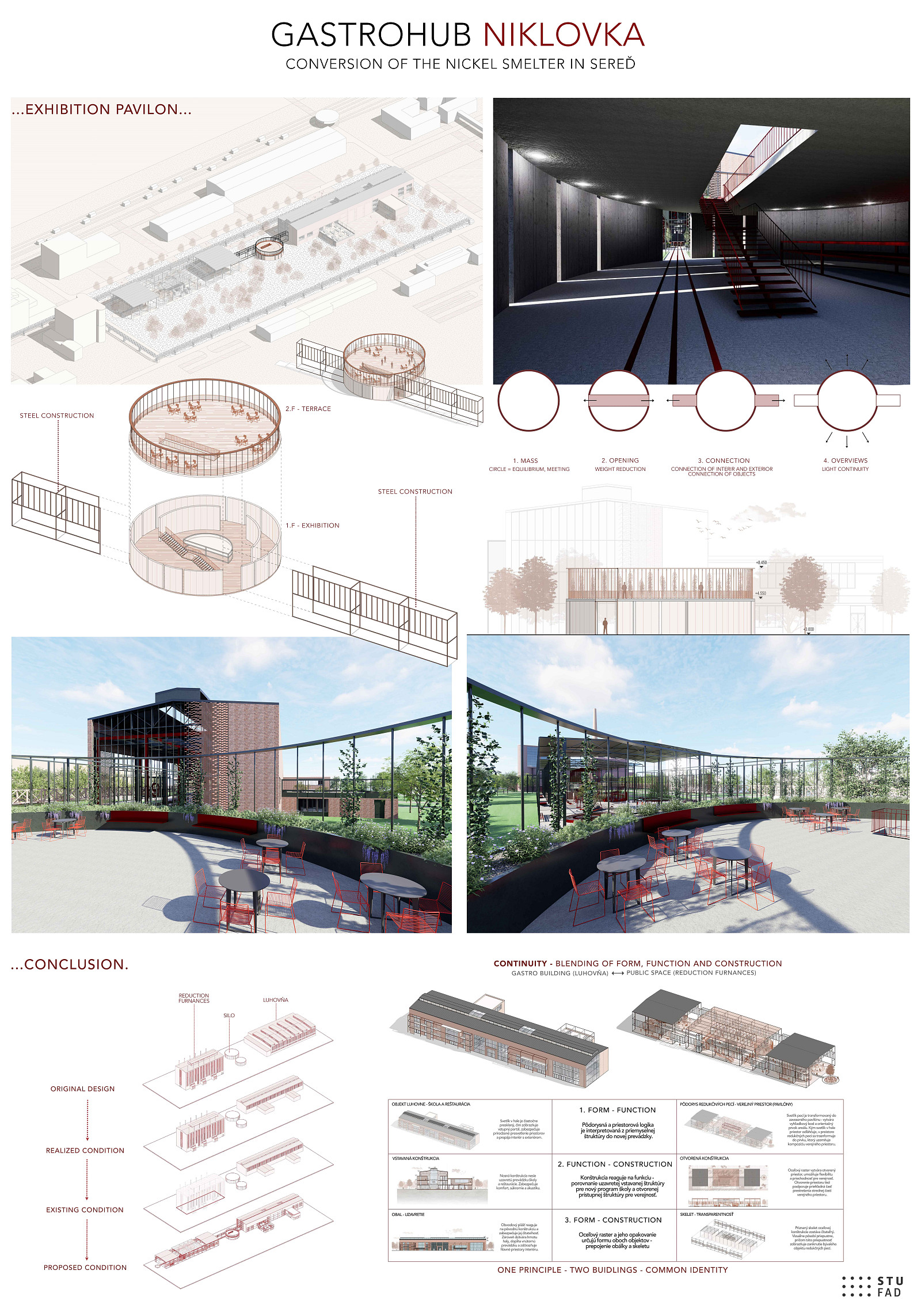
The GastroHub Niklovka project presents a vision for transforming part of the former Nickel Smelter industrial complex in Sereď into a new center for education, gastronomy, and public life. The proposal was developed in response to the long-term deterioration of one of Slovak most significant industrial sites, which, despite the loss of its original function, has retained its spatial quality, identity, and historical value. The main idea of the project is to establish a dialogue between the preserved industrial architecture and contemporary societal needs through the adaptive reuse of existing structures.
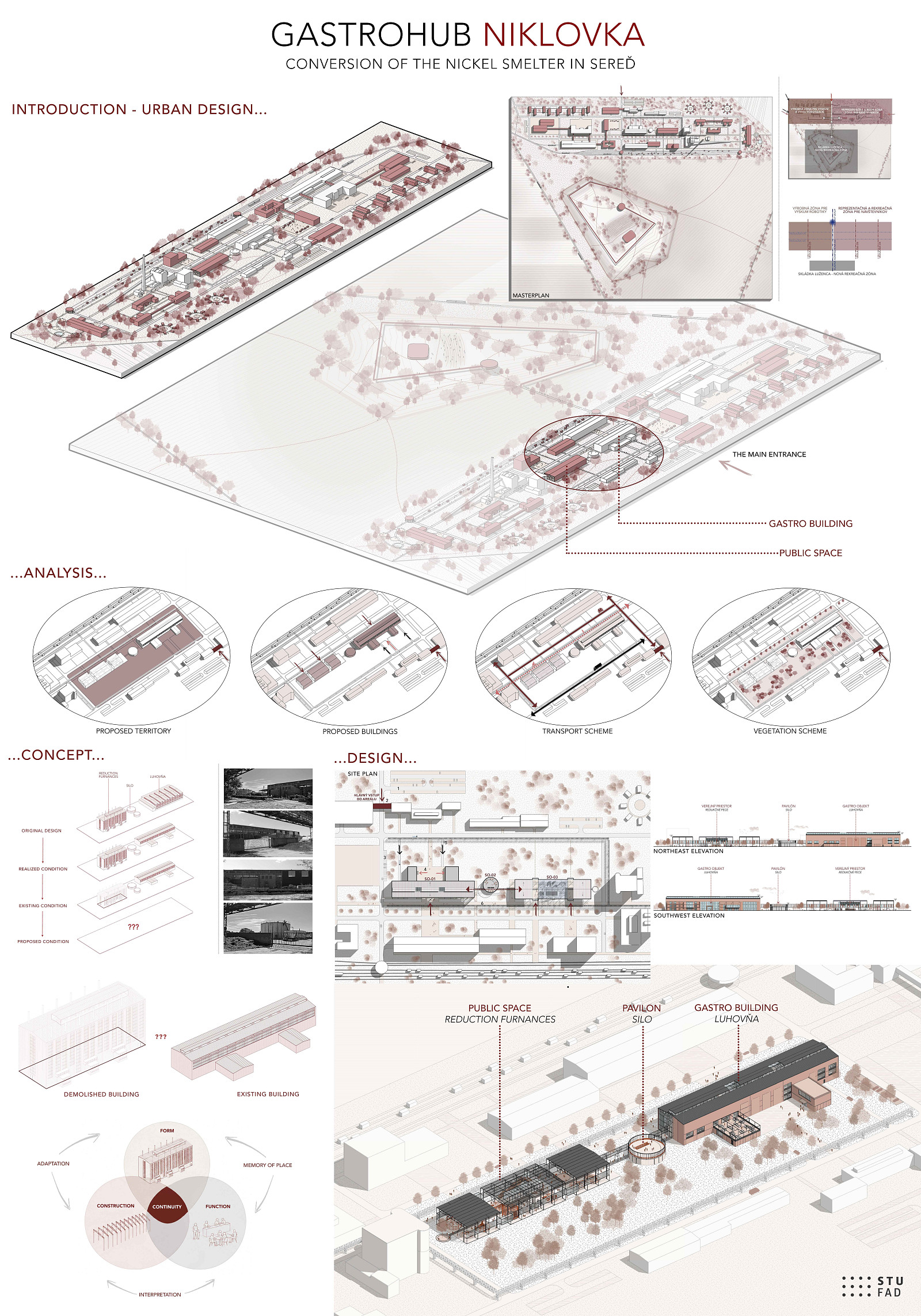
The concept works with two distinct forms of industrial heritage. The first is the preserved structure of the former leaching plant, which becomes the host of a new program consisting of a gastronomy-focused facility with a culinary school and restaurant. The second is the trace of the demolished reduction furnaces, which is reinterpreted through a public space and a system of pavilions that respect the original structural logic of the former building. The proposal does not perceive industrial heritage as a remnant of the past, but rather as an active element capable of shaping the future of the site.
The aim of the project is to create a place that connects education, gastronomy, culture, and community life. Through architecture, a continuity between past and present is established, while both the preserved and the vanished structures remain legible parts of the site's new narrative.
Project description
The architectural proposal is located in the central part of the former Nickel Smelter complex in Sereď and builds upon the broader urban vision for the transformation of the entire site. The urban design utilizes the original compositional axes of the industrial complex and complements them with new connections aimed at improving orientation, permeability, and overall accessibility of the area. The result is an environment that preserves historical spatial relationships while responding to the contemporary needs of the city and its residents.
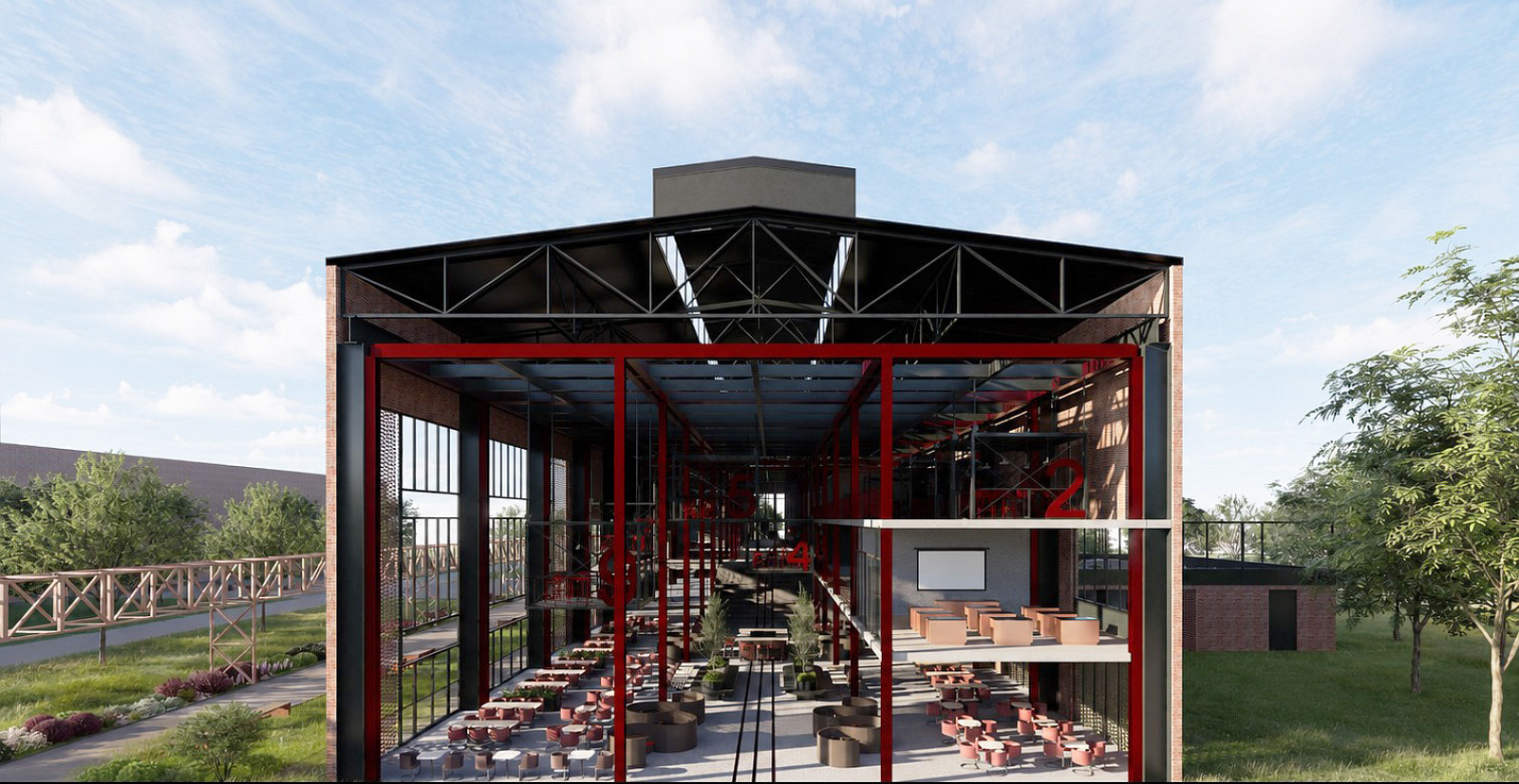
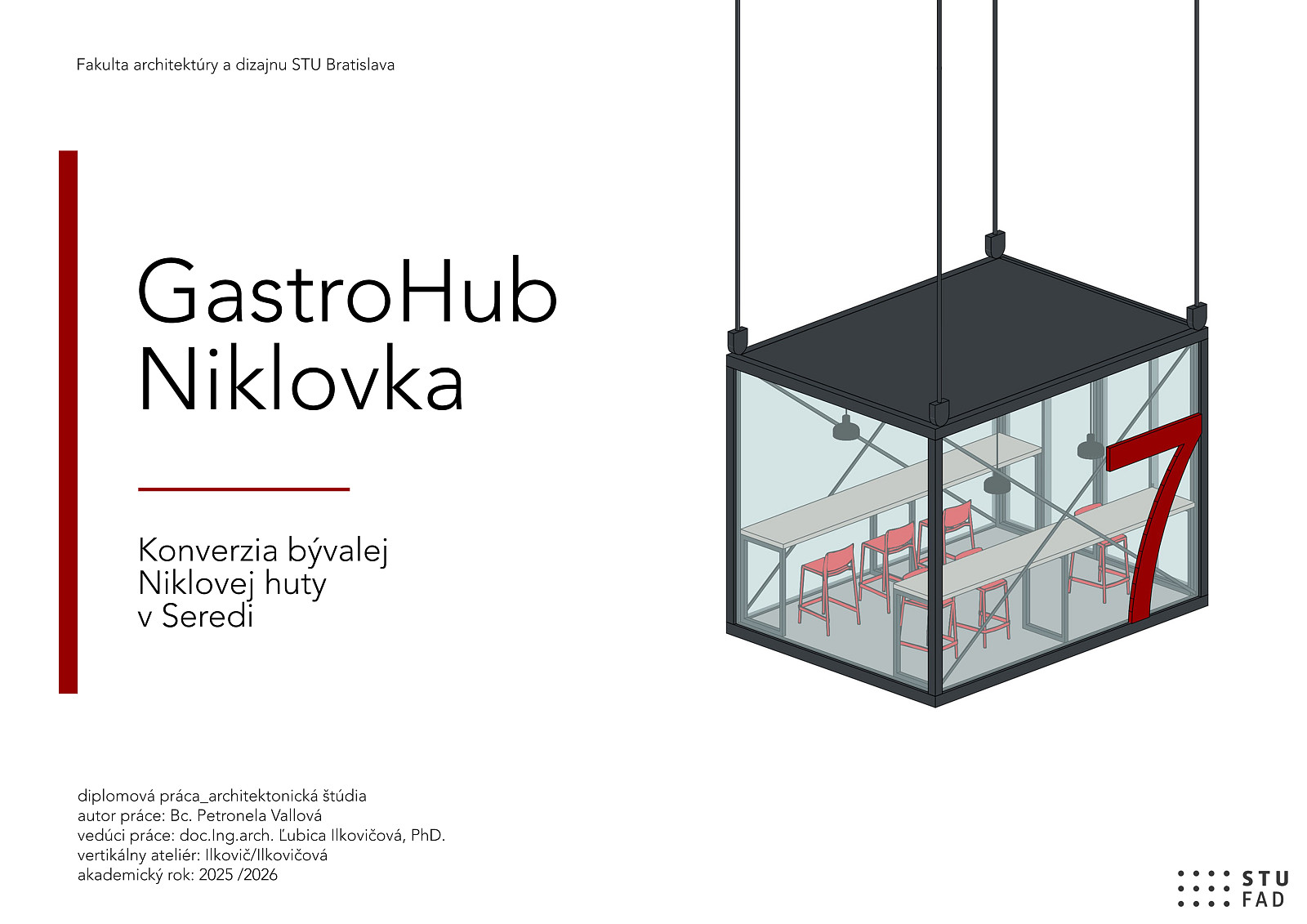
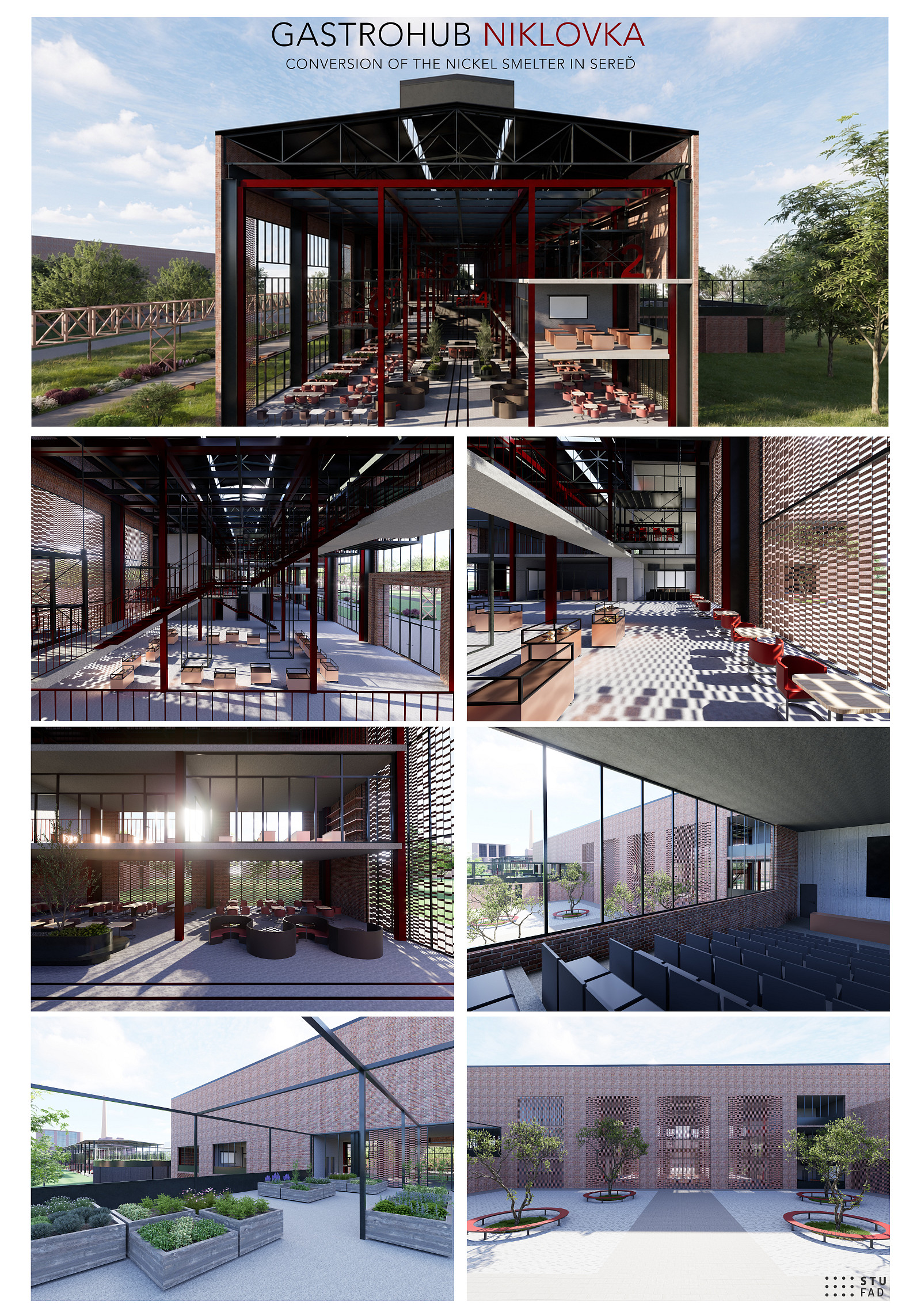
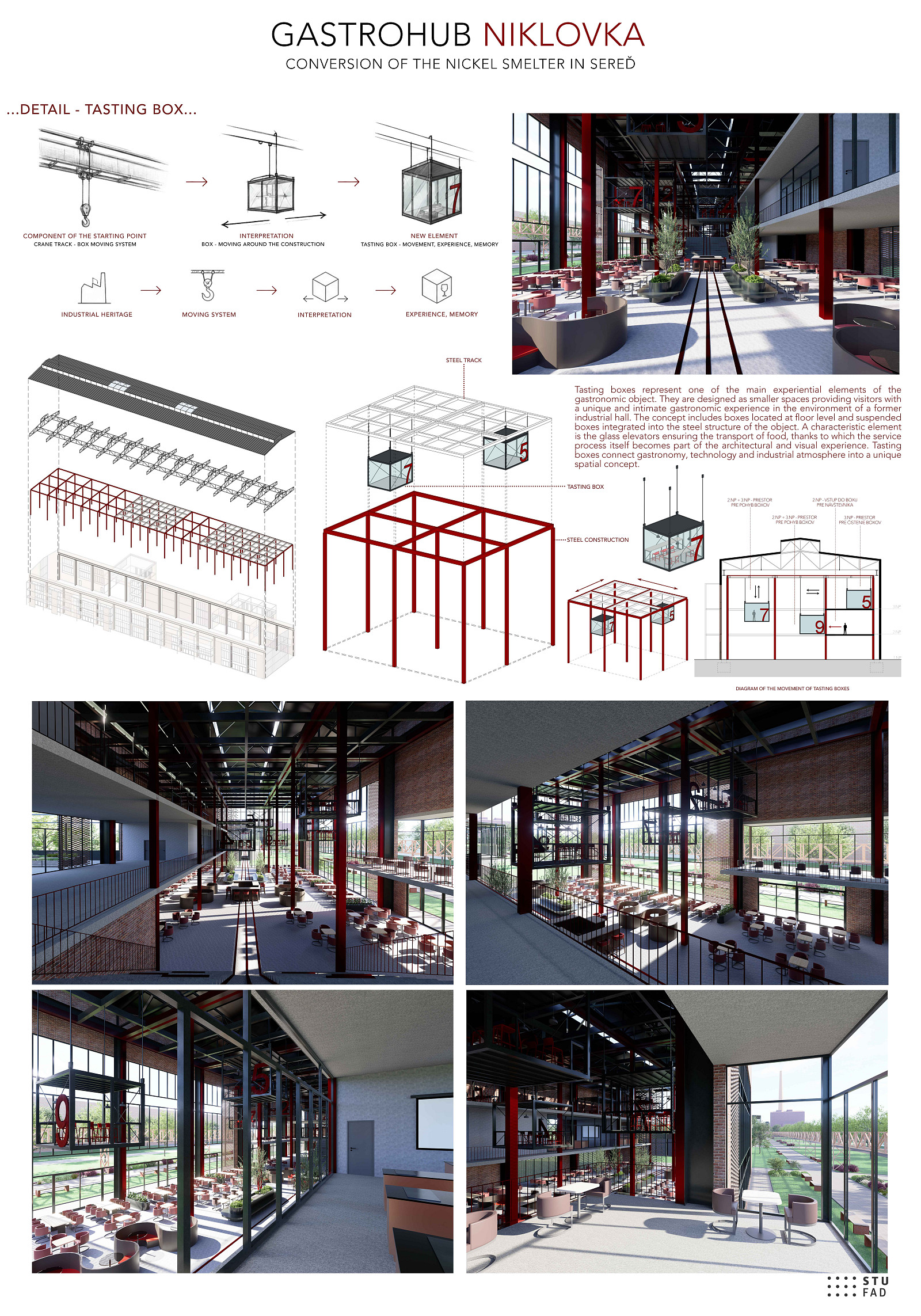
The dominant element of the proposed development is the former leaching plant, adaptively reused as a gastronomy-focused facility incorporating a culinary school, restaurant, and tasting spaces. The preserved steel structure and industrial character of the hall create an authentic setting for its new function. The interior is organized around a central foyer that connects the individual programs and forms the social heart of the building. An important component of the design is a series of tasting boxes, offering visitors a unique gastronomic experience within the setting of a former industrial production facility.
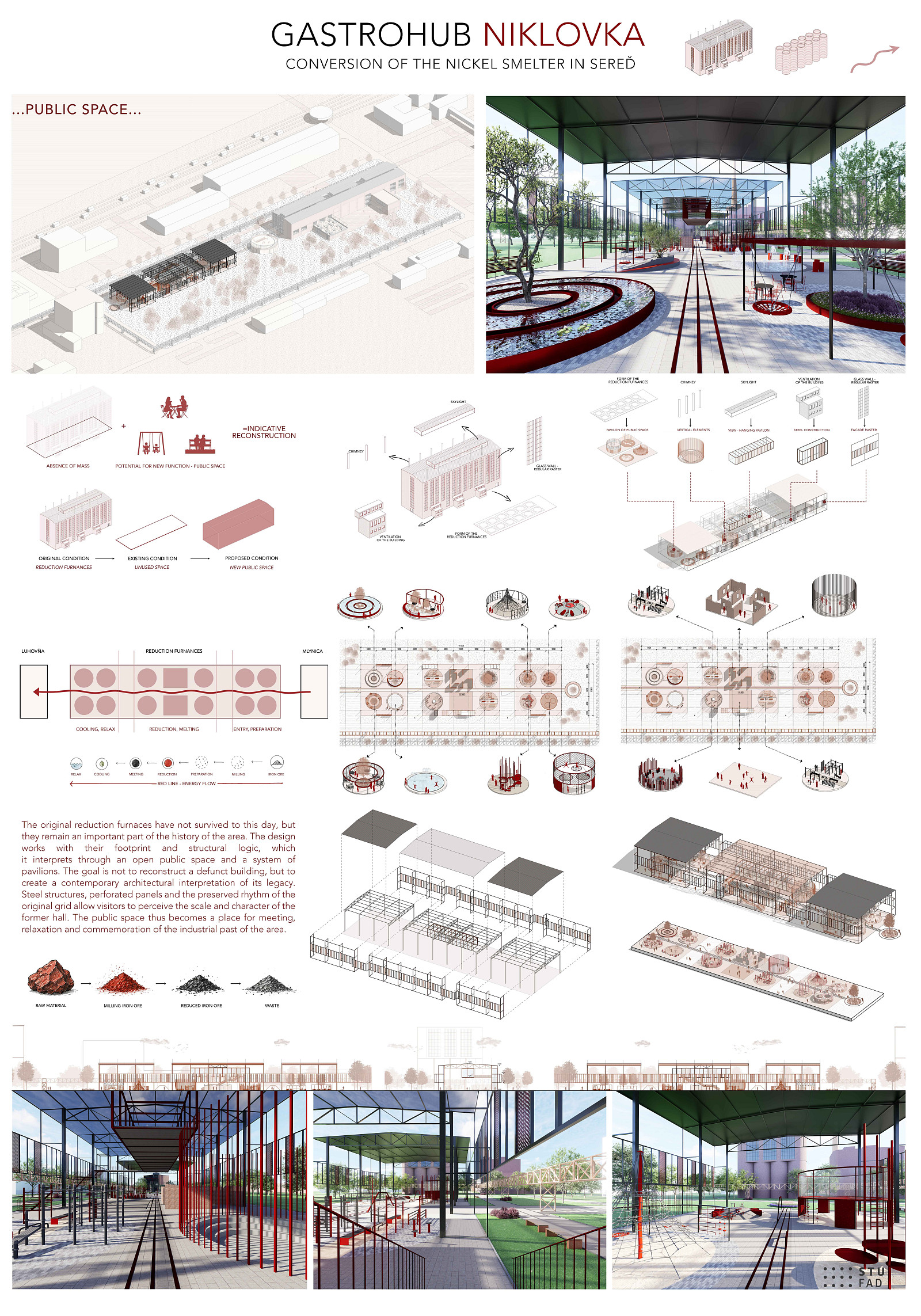
The second significant element is represented by the reduction furnaces, which have not been preserved. Their original footprint is reinterpreted through an open public space featuring a system of pavilions positioned on the sites of the former furnaces. This approach allows visitors to perceive the scale and structural logic of the original architecture without the need for a literal reconstruction.
The entire proposal is based on the principle of synergy between form, function, and structure. The historical layers of the site are preserved and reinterpreted so that they become a natural part of a new public and community environment. The project creates a new center of social activity that develops the potential of the area's industrial heritage while simultaneously supporting education, culture, and recreation.
Technical information
The technical solution of the proposal is based on respecting the original structural principles of the industrial complex while ensuring the legibility of contemporary interventions. In the case of the former leaching plant, the original steel load-bearing structure is preserved, serving as the building’s primary identifying feature. New functions are introduced through an independent steel framework designed as a reversible system, allowing future modifications without significantly compromising the historic integrity of the structure.
The architectural expression of the building is founded on the preservation of the original brick façade and its contemporary reinterpretation. A suspended brick screening system mounted on steel cables is positioned in front of the glazed façade surfaces, providing solar shading, light filtration, and a distinctive visual identity. Within the interior, a steel grid structure is designed to accommodate the tasting boxes, including the infrastructure required for their operation and technological servicing.
The area of the former reduction furnaces is defined by a steel frame structure that respects the original module and proportions of the demolished hall. The structure is complemented by a combination of transparent and solid roof elements, allowing natural daylight to penetrate the space while providing protection from adverse weather conditions. The perimeter zones utilize perforated metal panels whose pattern is derived from the brick motif used on the façade of the former leaching plant. This material strategy establishes a unified architectural language throughout the project and symbolically connects the preserved building fabric with the interpretation of the lost industrial structure.
The result is a technical solution that combines historical authenticity with the requirements of contemporary architecture, functionality, and sustainability.

Copyright © 2026 INSPIRELI | All rights reserved. Use of this website signifies your agreement to the Terms of Use, Privacy Policy, and use of cookies.