THE PIECE


Project idea
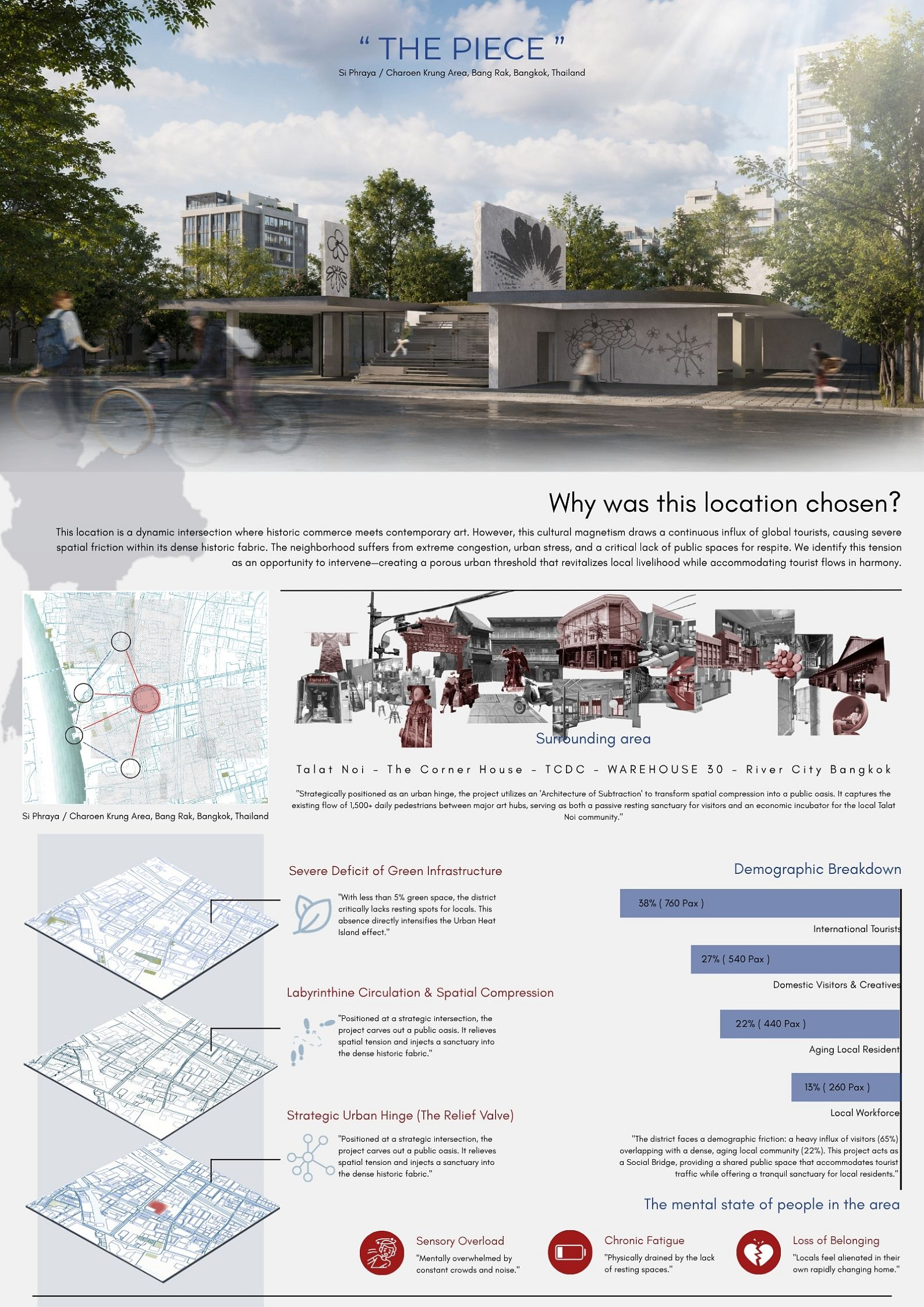
The Si Phraya and Charoen Krung area is a historic district in Bangkok standing at a dynamic intersection where traditional commerce meets a booming contemporary art scene. However, this cultural magnetism draws a continuous influx of global tourists, causing severe spatial friction within its dense historic fabric. The neighborhood suffers from extreme congestion, chronic urban stress, and a critical lack of public spaces for respite. Furthermore, there is a palpable demographic friction: a heavy influx of transient visitors (65%) overlapping with a dense, aging local community (22%). This rapid gentrification leaves the original residents feeling alienated and socially isolated in their own rapidly changing home.
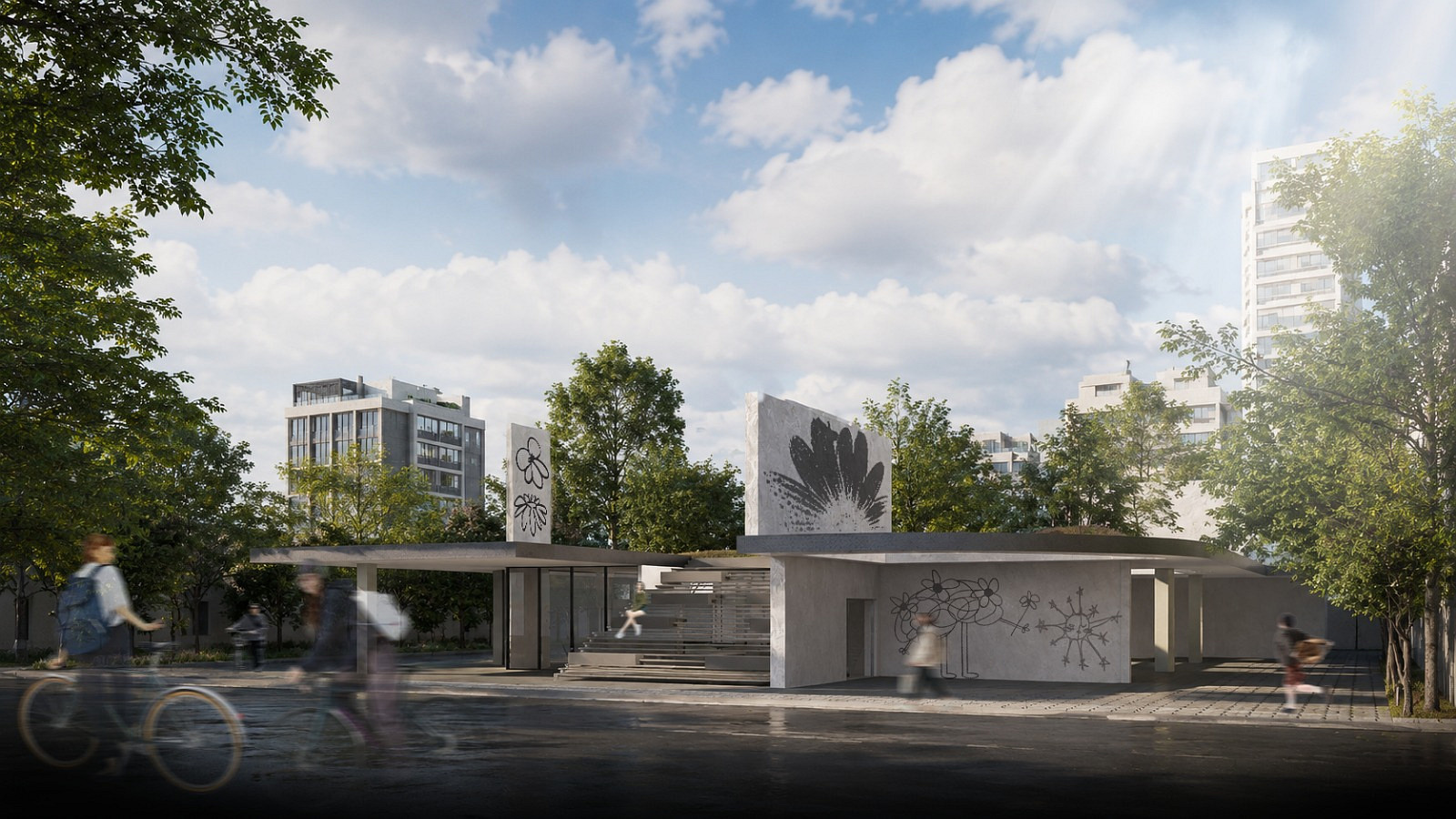
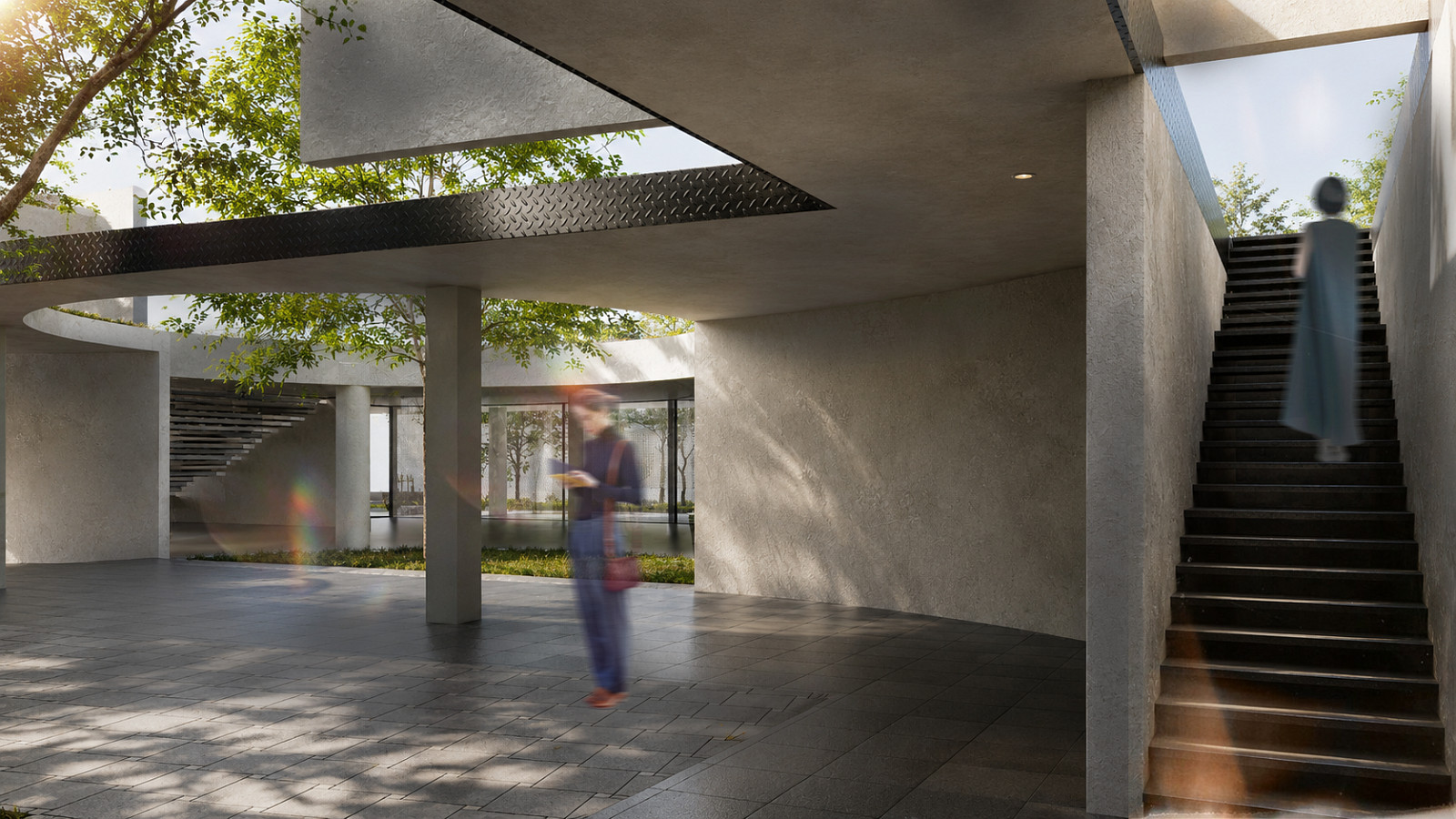
"The Piece" is conceived not as an architectural addition, but as an "Architecture of Subtraction." Rather than imposing another solid mass onto an already congested site, the project carves out a porous public oasis—an Urban Relief Valve. By strategically subtracting volume from a monolithic structure, the design mitigates spatial compression and introduces a tranquil sanctuary into the dense historic fabric. The project acts as a "Social Bridge," accommodating the daily flow of over 1,500 pedestrians and tourists while simultaneously providing an economic incubator and a restful haven for the local elderly community. It transforms urban anxiety into a serene, subtractive experience through a carefully orchestrated vertical journey.
Project description
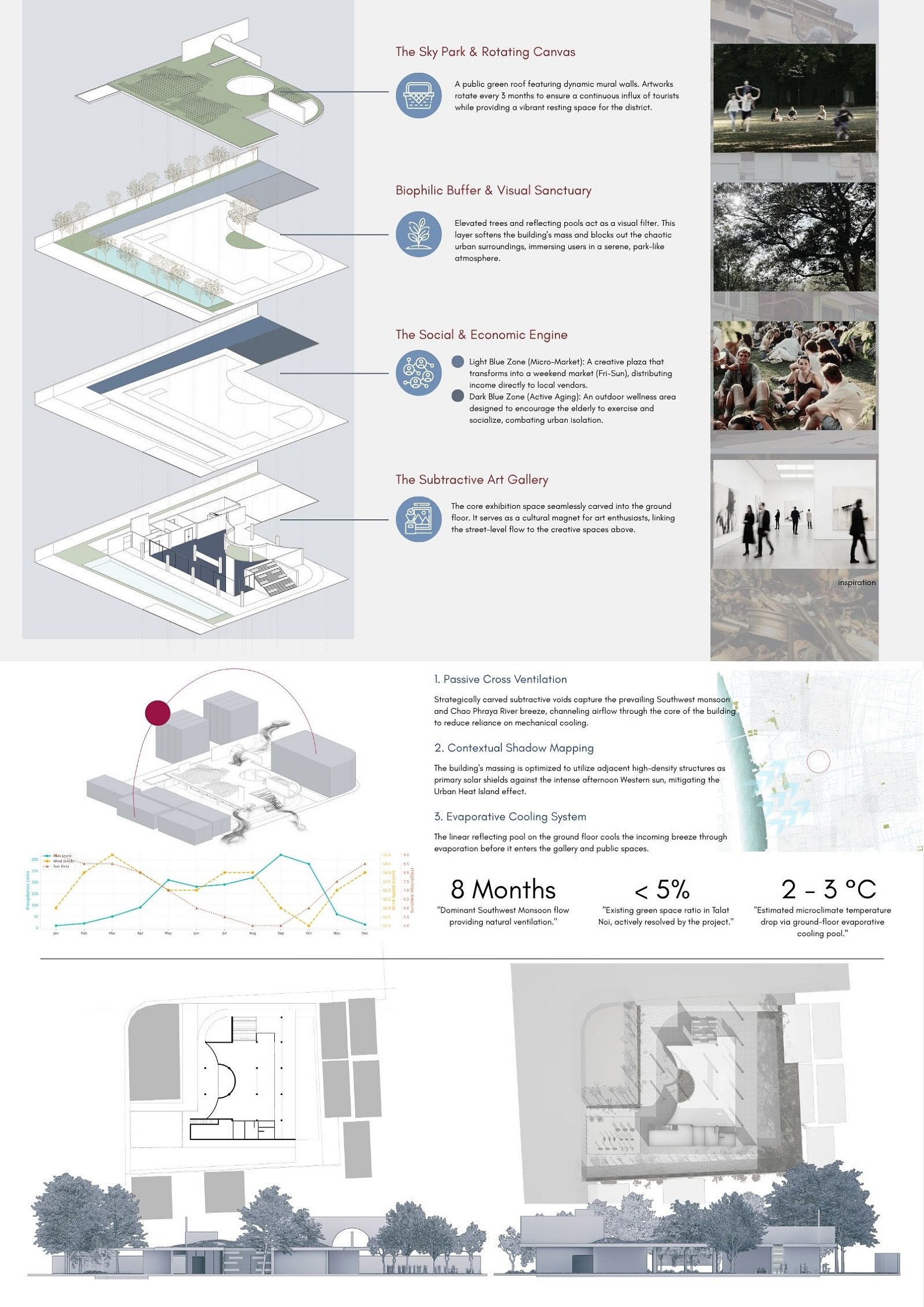
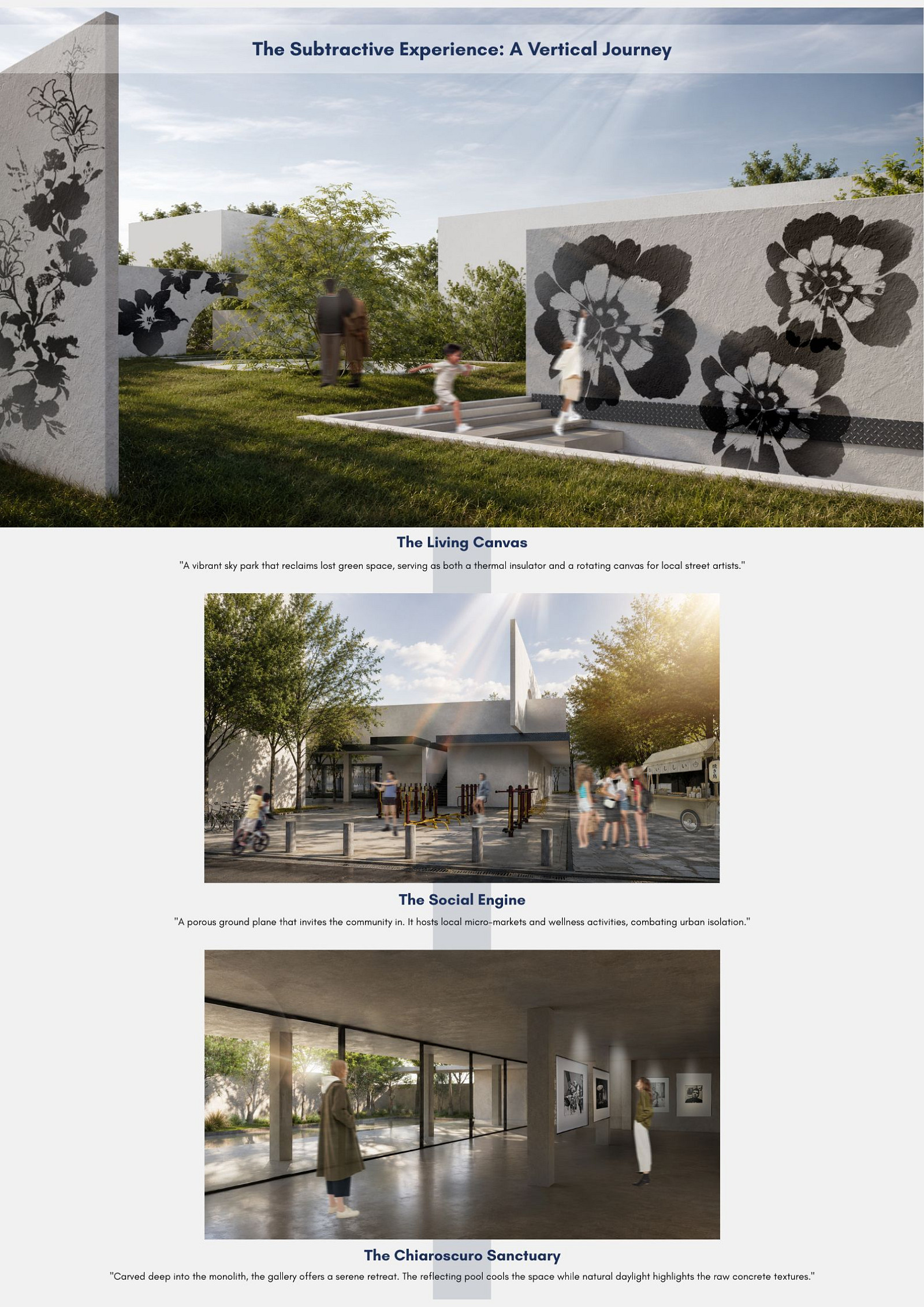
The spatial sequence of The Piece is designed as a vertical journey, layering three distinct urban experiences that directly address the psychological and physical needs of the community:
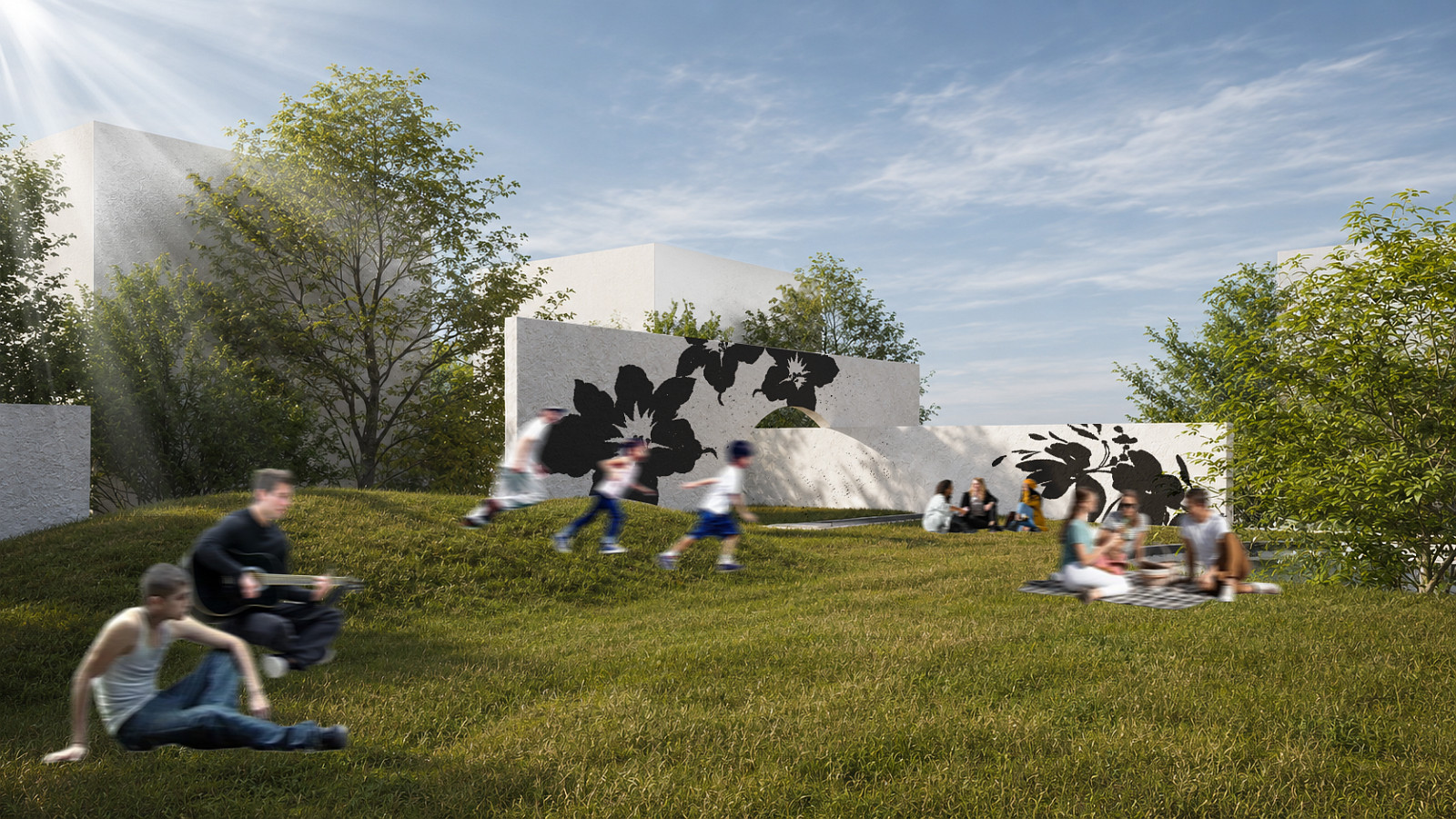
The Living Canvas (The Sky Park) With less than 5% green space in the surrounding district, the area suffers heavily from the Urban Heat Island effect and physical fatigue. The roof layer reclaims this lost green infrastructure, offering a vibrant sky park. It serves a dual purpose: acting as a thermal insulator for the spaces below, and providing a rotating canvas for local street artists. Dynamic floral murals on monolithic walls transform the space into a cultural landmark, while the expansive lawn offers a much-needed sanctuary for mental decompression.
The Social Engine (The Ground Plane) The street-level intervention is a porous, highly accessible plaza designed to combat social isolation. Recognizing the demographic divide, this layer is programmed to invite the community in. It hosts local micro-markets (distributing income directly to local vendors) and outdoor wellness areas designed to encourage the elderly to exercise and socialize. This level actively converts the heavy tourist footfall into direct economic opportunities for the original residents, blending the two demographics in a shared, harmonious space.
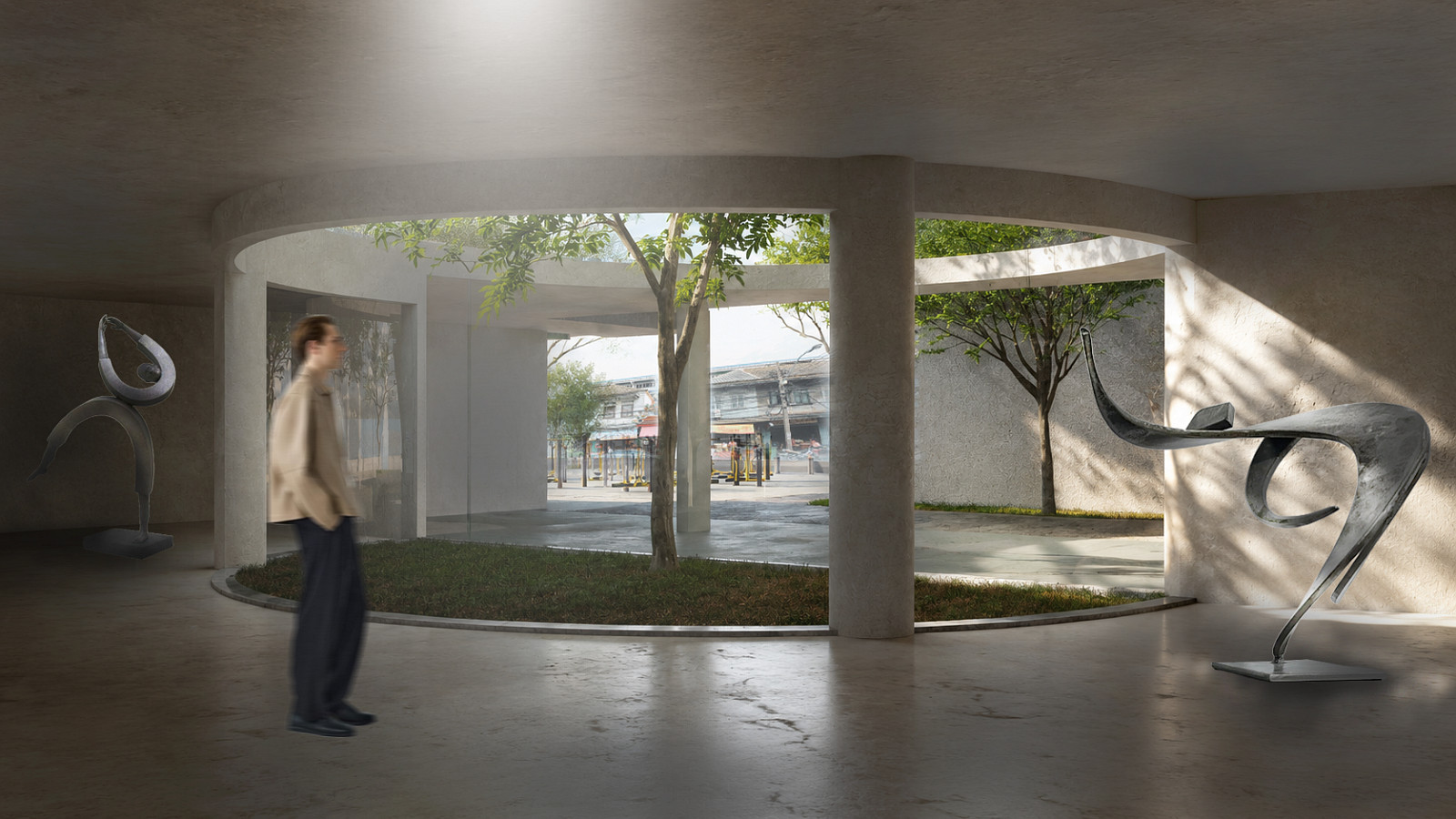
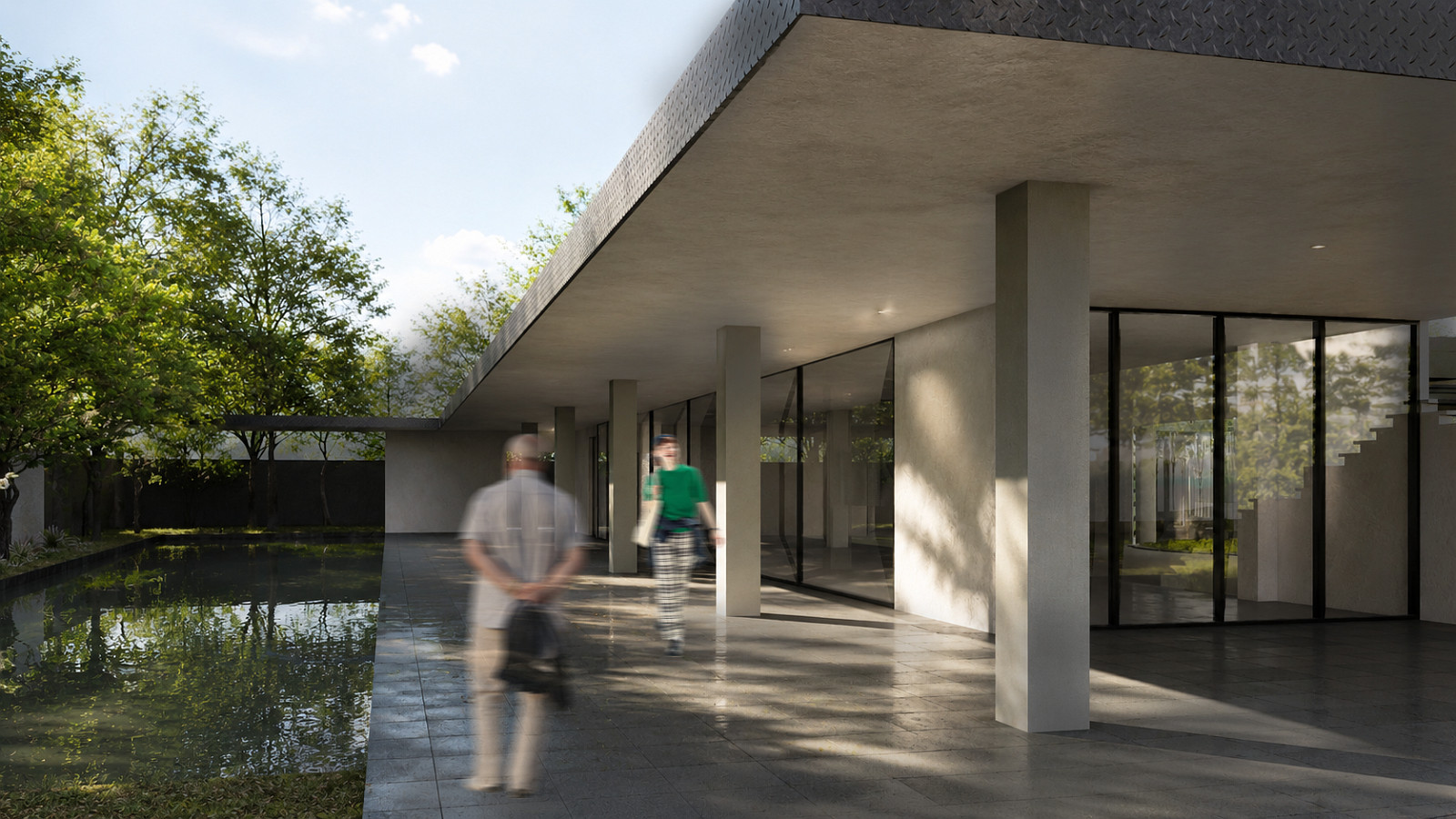
The Chiaroscuro Sanctuary (The Subtractive Art Gallery) Carved deep into the ground floor monolith, the core exhibition space serves as a cultural magnet for art enthusiasts. The subtractive nature of the architecture creates a profound sense of serenity, shielding visitors from the sensory overload of the chaotic alleyways outside. Raw concrete textures are highlighted by a dynamic interplay of natural daylight and deep shadows (chiaroscuro), offering a contemplative retreat that links the street-level flow to the creative spaces above.
Technical information
The Piece is deeply rooted in environmental resilience and microclimate optimization, utilizing the specific climatic conditions of Bangkok to achieve passive sustainability:
Contextual Shadow Mapping: Bangkok's intense afternoon heat primarily originates from the West and Southwest. The building's monolithic massing is strategically oriented to utilize adjacent high-density structures as primary solar shields. This contextual shading effectively blocks the harsh Western sun, significantly mitigating the local Urban Heat Island effect.
Passive Cross Ventilation: Situated near the Chao Phraya River, the site benefits from both the prevalent Southwest Monsoon (active 8 months of the year) and localized river breezes. The subtractive voids carved into the building's core act as wind tunnels, capturing and channeling this airflow through the public spaces, drastically reducing the reliance on mechanical cooling systems.
Evaporative Cooling System: A linear reflecting pool is integrated into the ground-floor gallery level. As the incoming river breeze passes over the water's surface, it is naturally cooled before entering the exhibition and public gathering spaces. This passive evaporative cooling system drops the localized microclimate temperature by an estimated 2-3 °C, providing immediate physical relief to weary pedestrians.
Structural Materiality: The primary structure utilizes cast-in-place concrete, emphasizing the raw, monolithic nature of the design. The thermal mass of the concrete, combined with the extensive green roof, stabilizes indoor temperatures, creating an energy-efficient and climatically responsive urban hub.

Copyright © 2026 INSPIRELI | All rights reserved. Use of this website signifies your agreement to the Terms of Use, Privacy Policy, and use of cookies.