CHILDREN’S EDUCATIONAL CENTER

Project idea
The task of the project was to develop a concept of an educational environment, in which, through a modern approach to the formation of space, it becomes possible to develop a versatile, creative personality in each student, which is especially important in the context of a progressive and informational society.
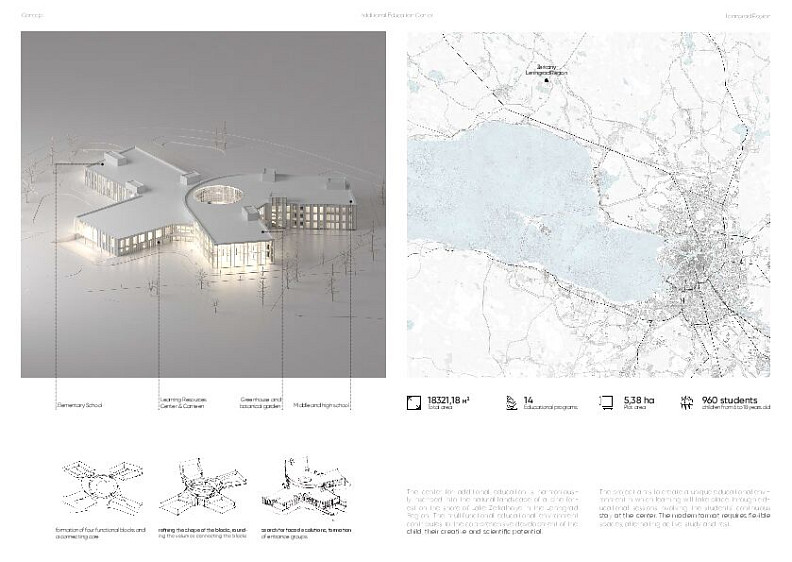
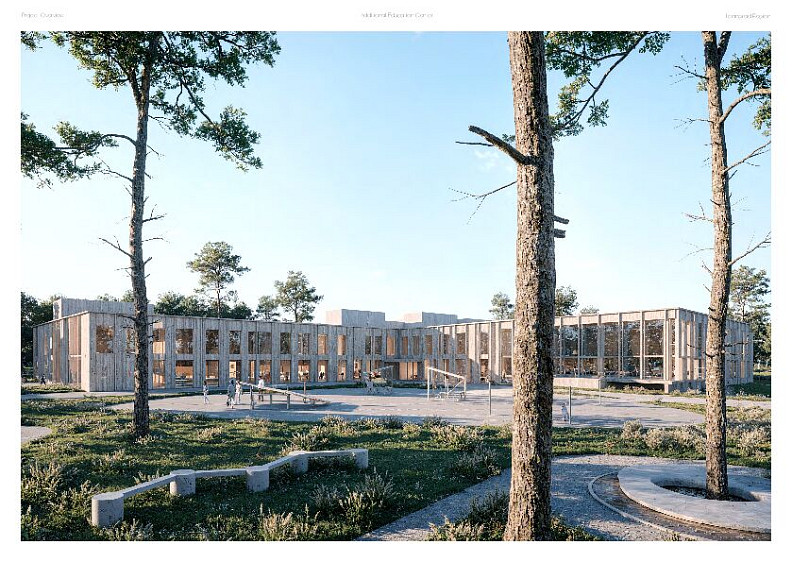
The center for additional education is harmoniously inscribed into the natural landscape of a pine forest on the shore of Lake Zerkalnoye in the Leningrad Region. The multifunctional educational environment contributes to the comprehensive development of the child, their creative and scientific potential.
The project aims to create a unique educational environment in which learning will take place through educational sessions involving the students' continuous stay at the center. The modern format requires flexible spaces, alternating active study and rest.
Project description
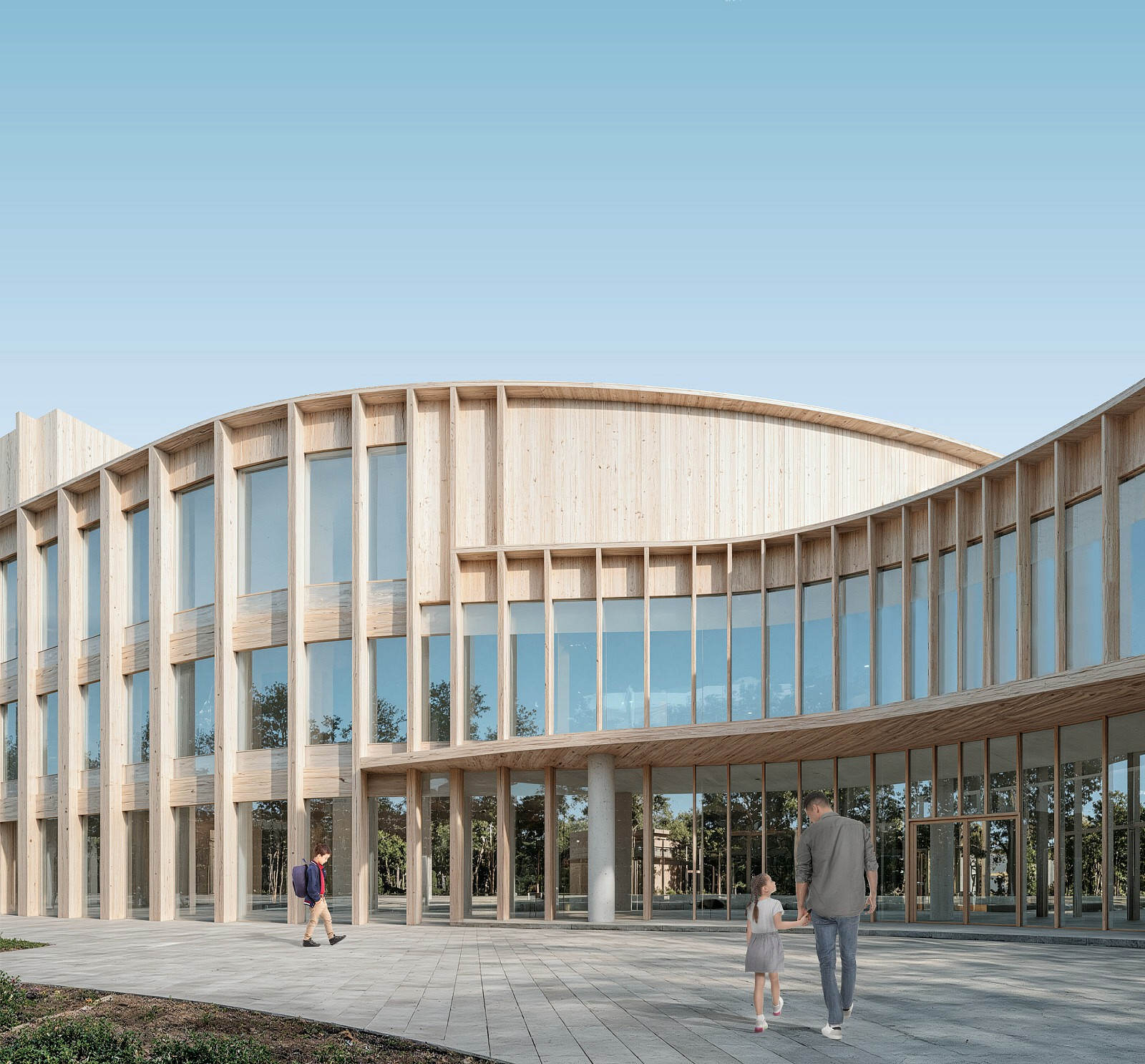
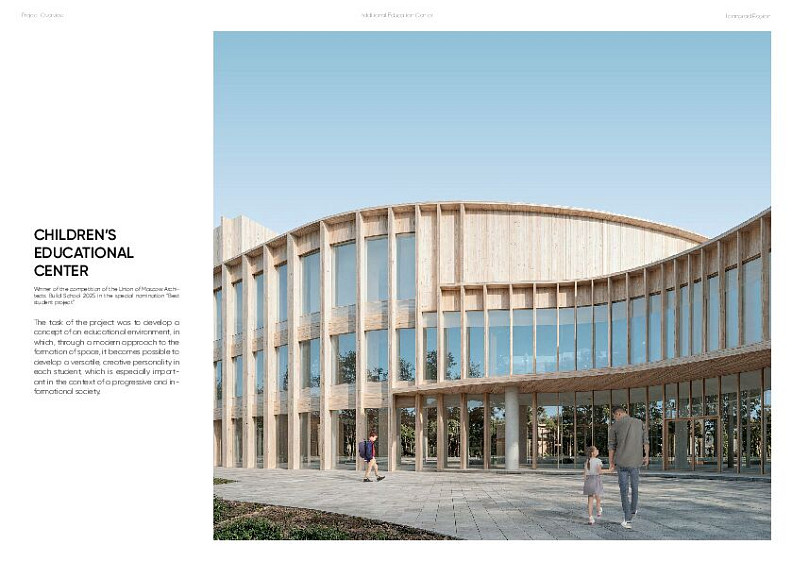
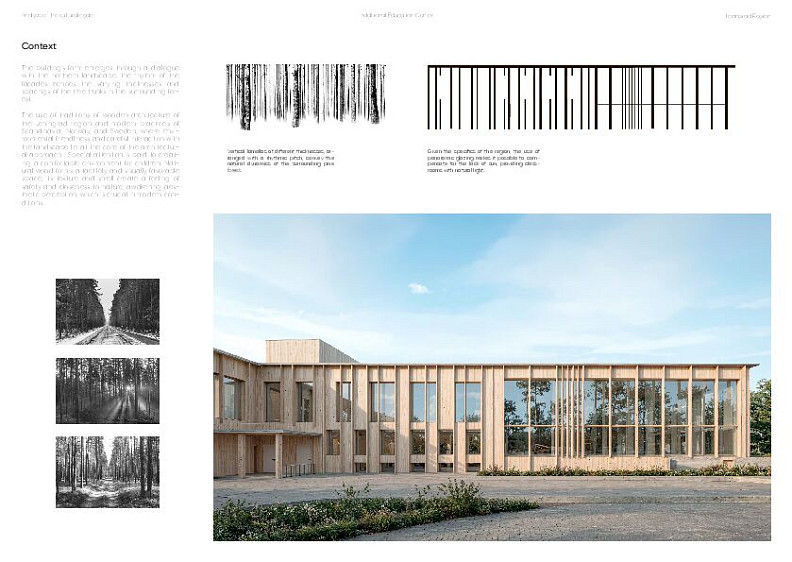
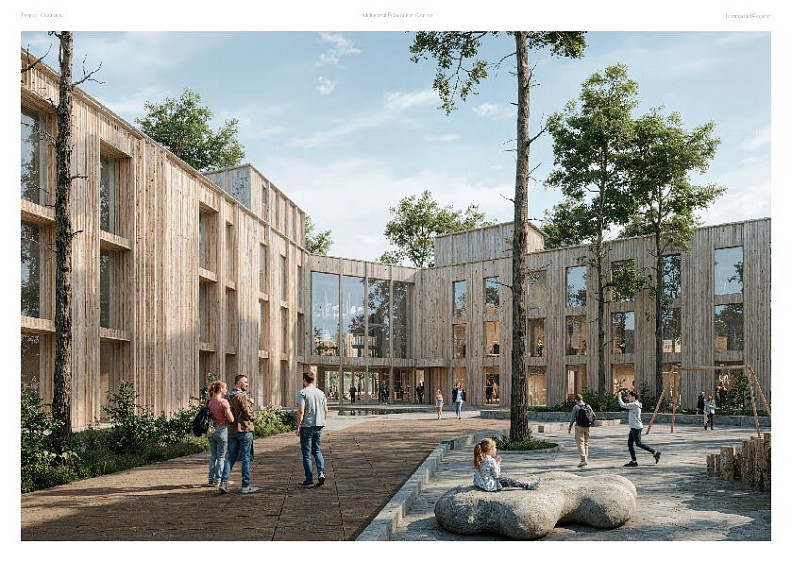
The building’s form emerges through a dialogue with the northern landscape: the rhythm of the facades echoes the varying thicknesses and spacings of the tree trunks in the surrounding forest. The use of traditions of wooden architecture of the Leningrad region and modern practices of Scandinavia, Norway, and Sweden, where environmental friendliness and careful interaction with the landscape lie at the core of the architectural approach.
Special attention is paid to creating a comfortable environment for children. Natural wood forms a tactilely and visually favorable space; its texture and smell create a feeling of safety and closeness to nature, awakening aesthetic perception, which is crucial in modern conditions.
Vertical lamellas of different thicknesses, arranged with a rhythmic pitch, convey the natural dynamics of the surrounding pine forest. Given the specifics of the region, the use of panoramic glazing makes it possible to compensate for the lack of sun, providing classrooms with natural light.
Technical information
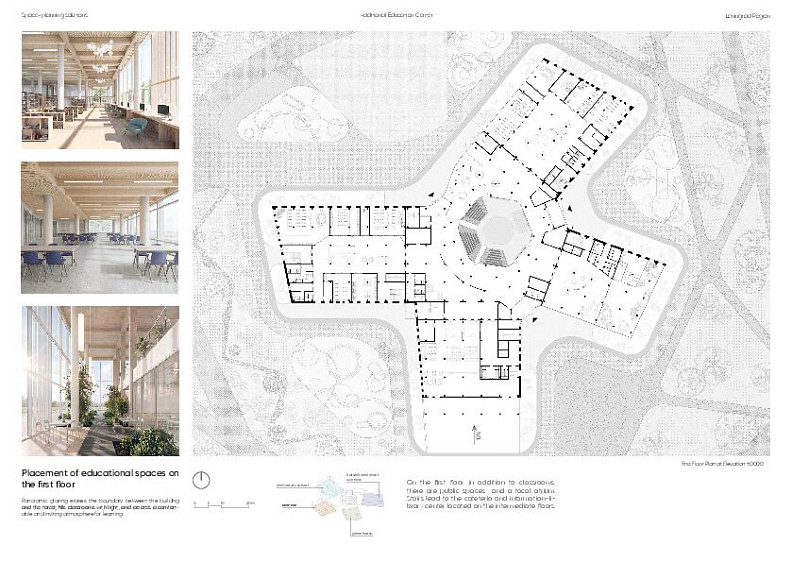
Panoramic glazing erases the boundary between the building and the forest, fills classrooms with light, and creates a comfortable and inviting atmosphere for learning. On the first floor, in addition to classrooms, there are public spaces and a focal atrium. Stairs lead to the cafeteria and information-library center located on the intermediate floors.
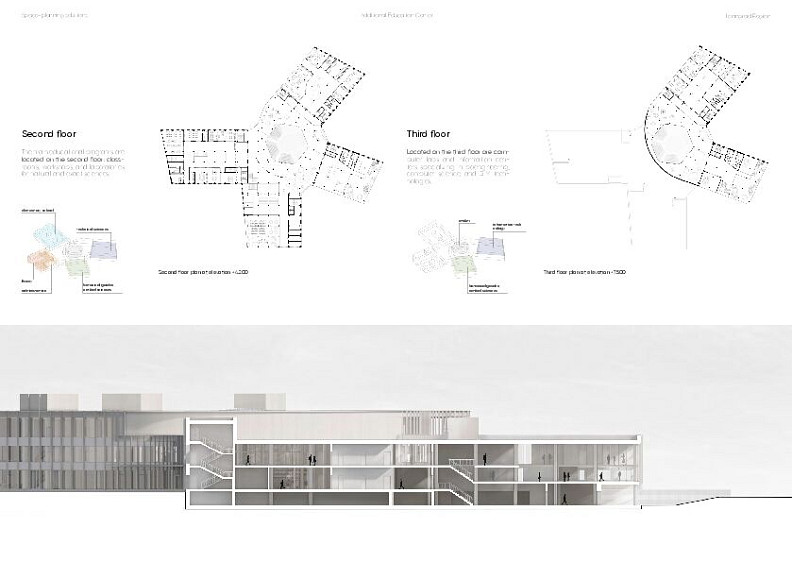
The main educational programs are located on the second floor: classrooms, workshops, and laboratories for natural and exact sciences.
Located on the third floor are computer labs and information centers specializing in bioengineering, computer science, and BIM technologies.
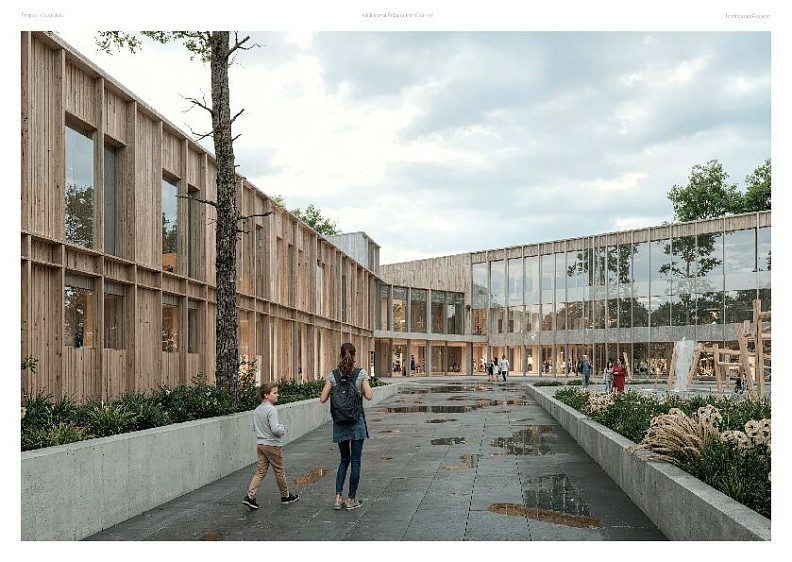
For younger students of the center, a separate entrance is provided with customized sports and playgrounds. The territory in front of the main entrance group provides various elements for classes and recreation of students outdoors. Walking routes are provided along the perimeter of the site; in the north of the site, there is an area for events with integrated tribunes.
Documentation
Show PDF 1Show PDF 2Show PDF 3Show PDF 4Show PDF 5Show PDF 6Show PDF 7Show PDF 8



Copyright © 2026 INSPIRELI | All rights reserved. Use of this website signifies your agreement to the Terms of Use, Privacy Policy, and use of cookies.