Asylum Block A


Project idea
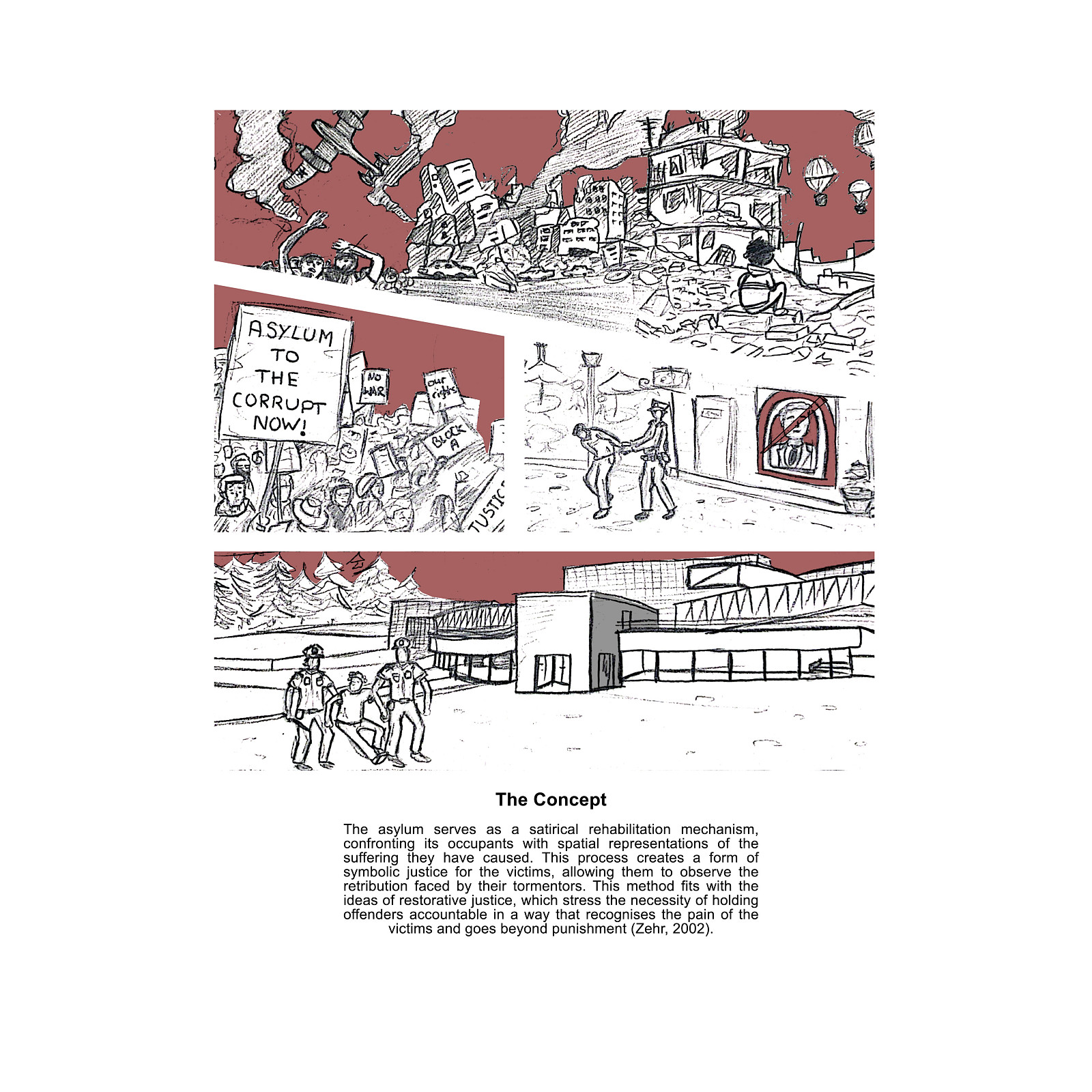
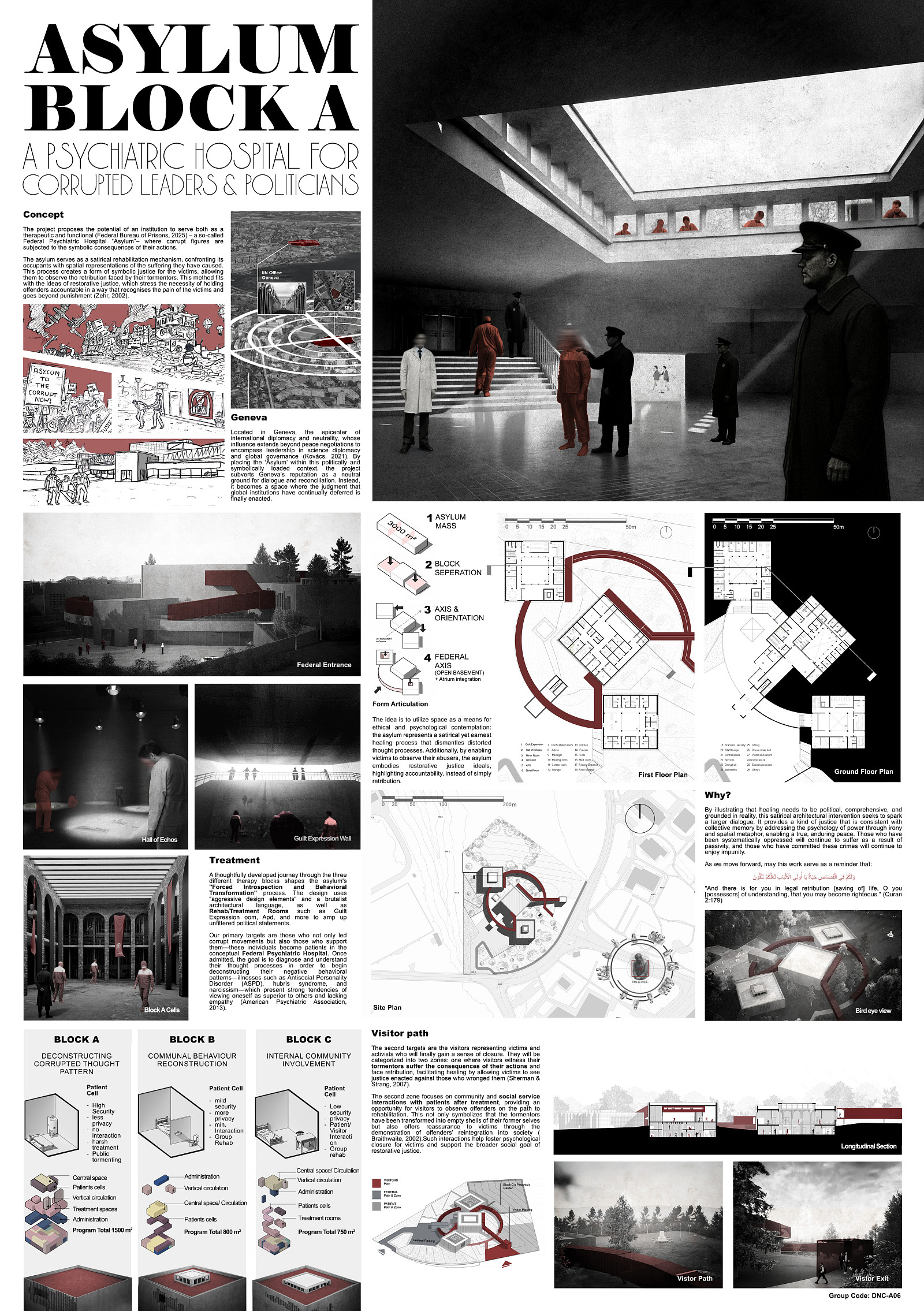
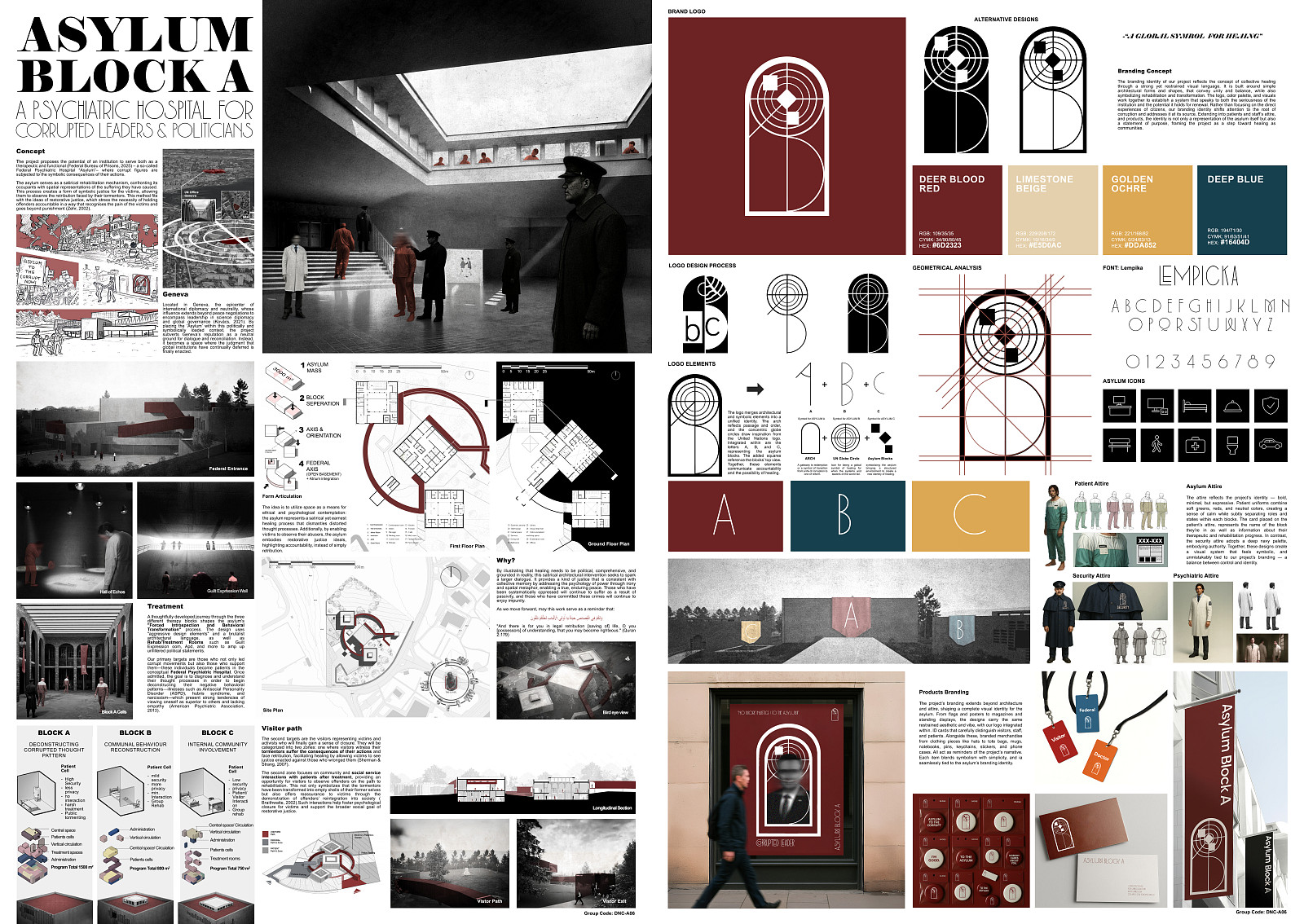
A satirical psychiatric hospital for corrupted leaders and politicians, serving as both a therapeutic and functional Federal Psychiatric Hospital where corrupt figures are subjected to the symbolic consequences of their actions through restorative justice principles.The asylum serves as a satirical rehabilitation mechanism, confronting its occupants with spatial representations of the suffering they have caused. This process creates a form of symbolic justice for the victims, allowing them to observe the retribution faced by their tormentors. This method fits with the ideas of restorative justice, which stress the necessity of holding offenders accountable in a way that recognises the pain of the victims and goes beyond punishment
Project description
By illustrating that healing needs to be political, comprehensive, and grounded in reality, this satirical architectural intervention seeks to spark a larger dialogue. It provides a kind of justice that is consistent with collective memory by addressing the psychology of power through irony and spatial metaphor, enabling a true, enduring peace. Those who have been systematically oppressed will continue to suffer as a result of passivity, and those who have committed these crimes will continue to enjoy impunity.
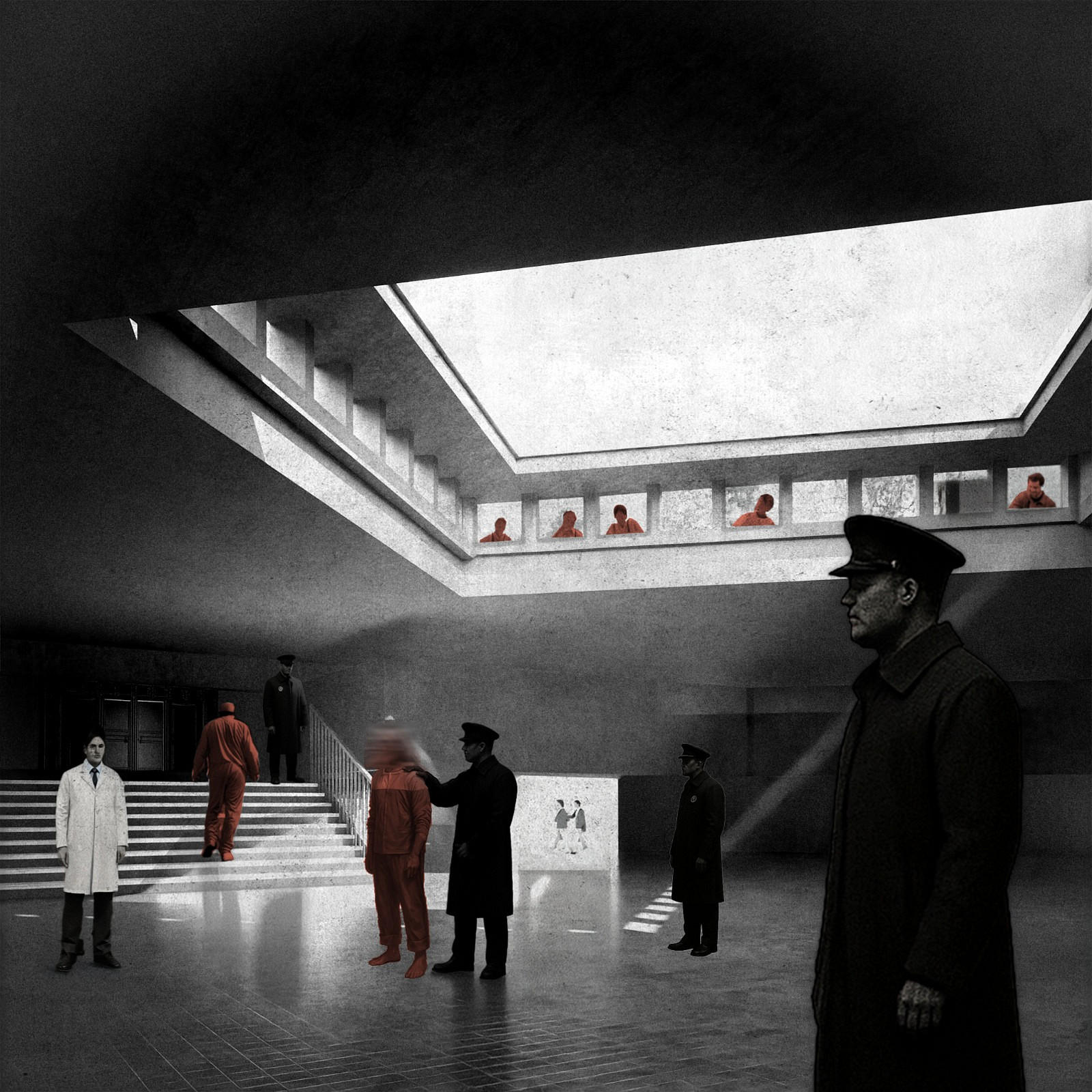
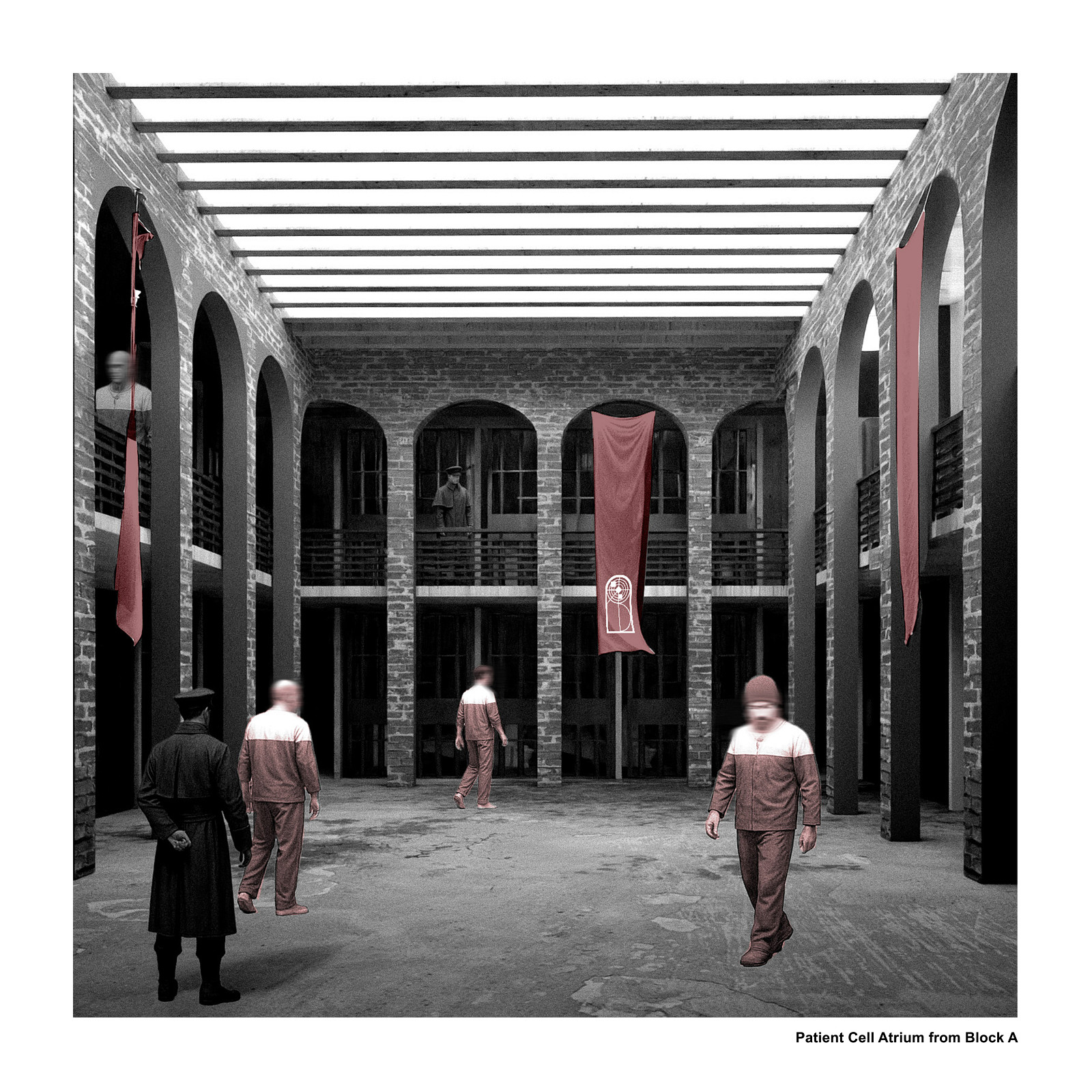
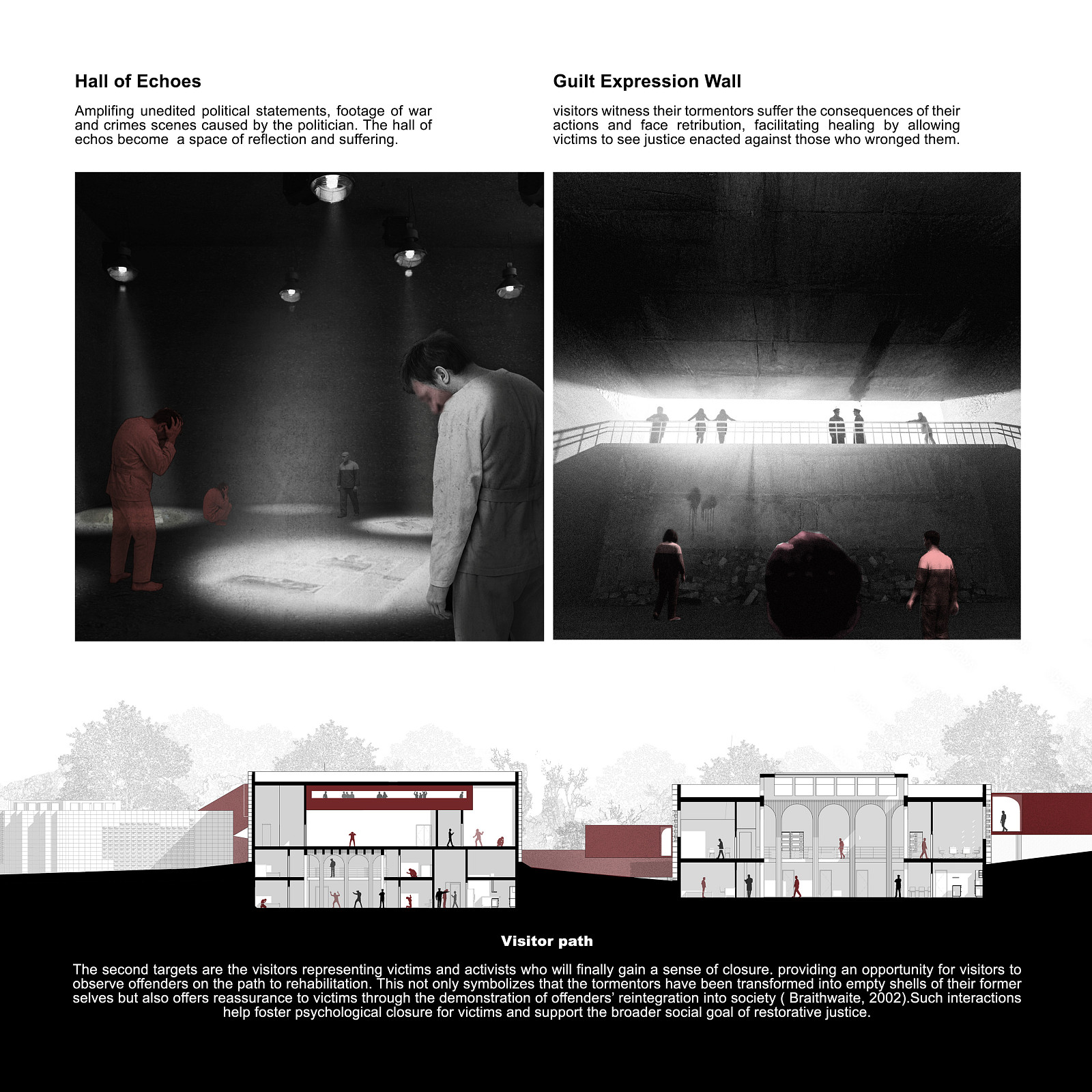
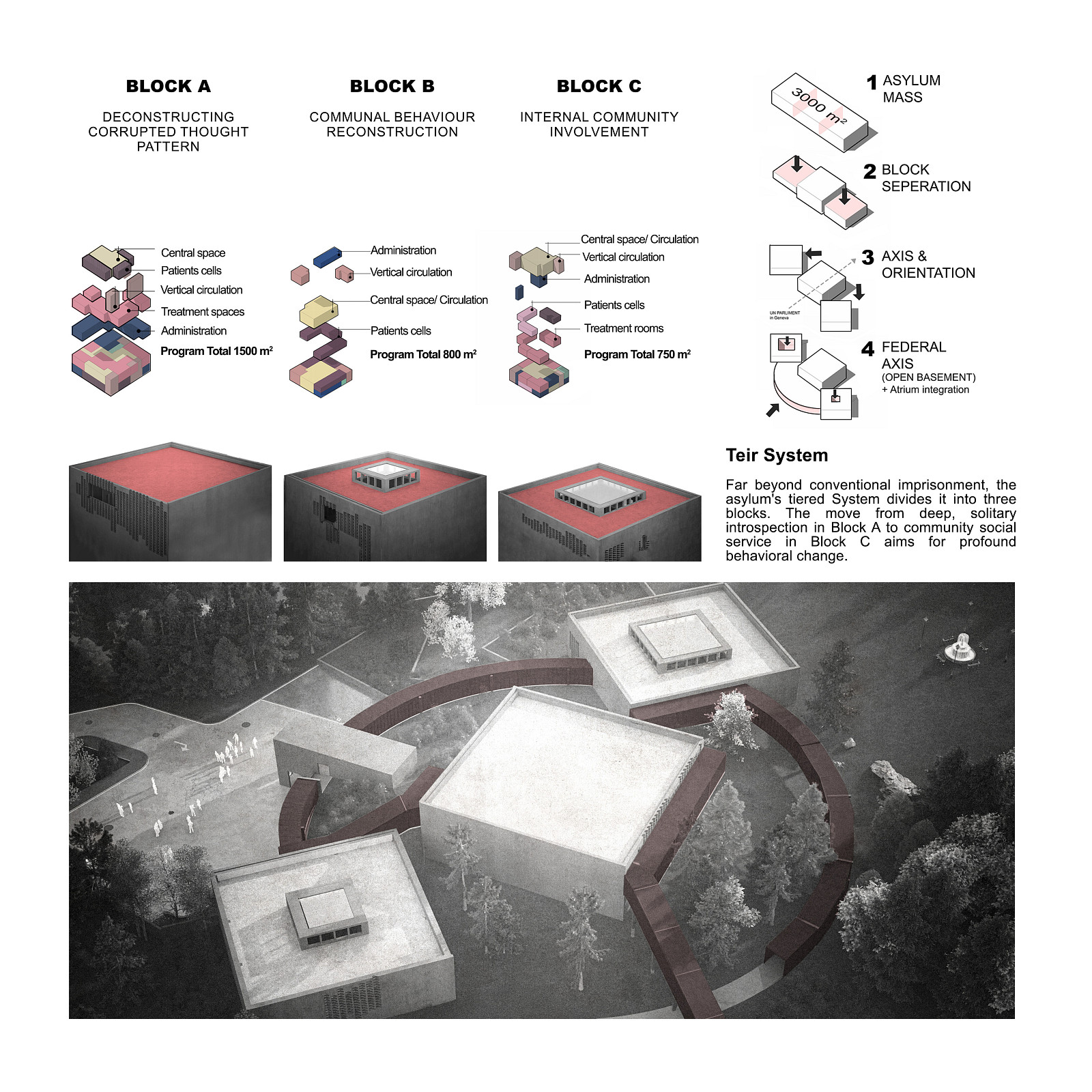
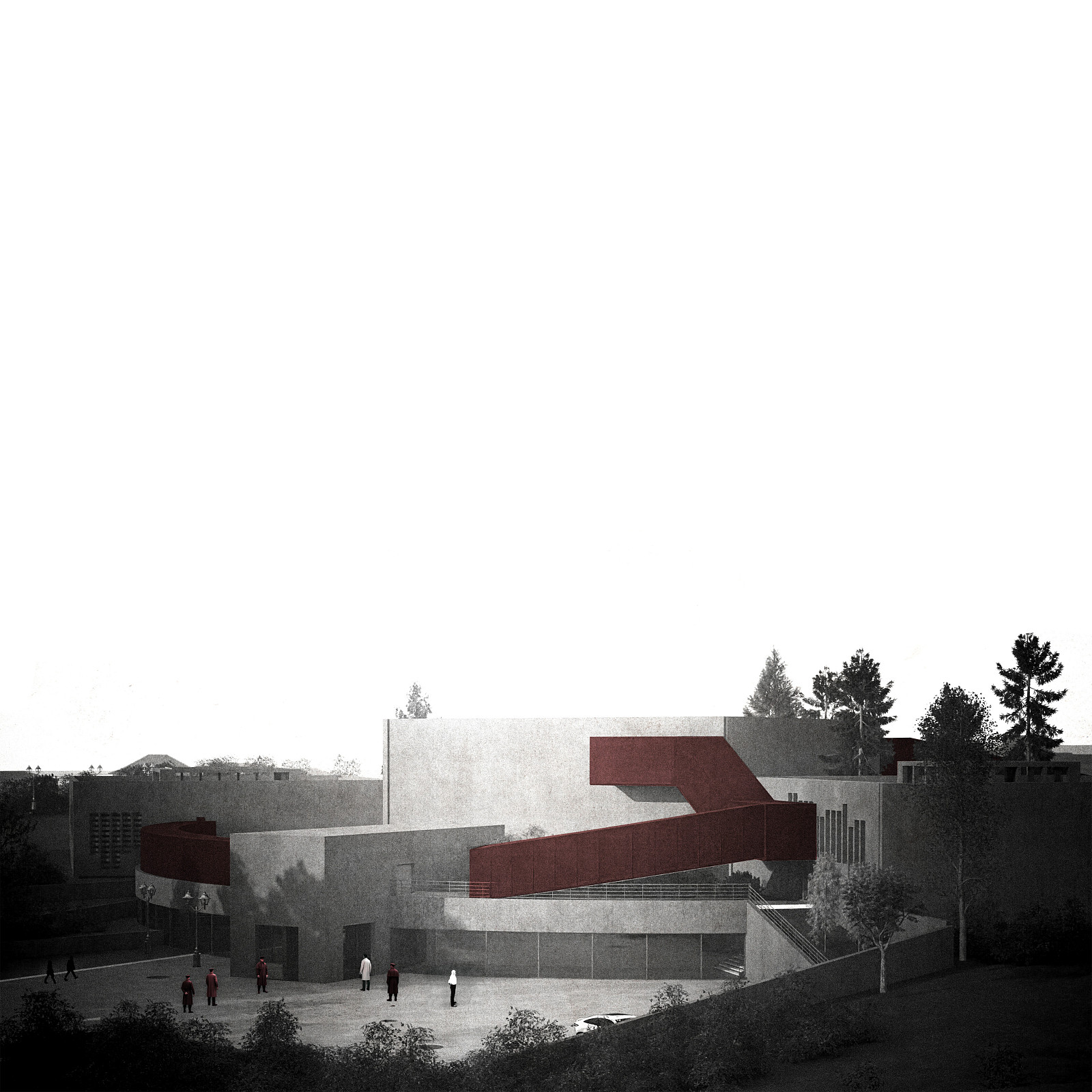
The project proposes a Federal Psychiatric Hospital 'Asylum' located in Geneva, the epicenter of international diplomacy and neutrality. The asylum serves as a satirical rehabilitation mechanism, confronting its occupants with spatial representations of the suffering they have caused. This creates a form of symbolic justice for victims, allowing them to observe the retribution faced by their tormentors. The design uses 'aggressive design elements' and brutalist architectural language, incorporating Rehab/Treatment Rooms such as Guilt Expression rooms. The program is organized into three blocks: Block A for deconstructing corrupted thought patterns, Block B for communal behaviour reconstruction , and Block C for internal community involvement. The facility targets those who led corrupt movements, treating conditions such as antisocial personality disorder, hubris syndrome, and narcissism. A visitor path allows victims and activists to witness their tormentors face consequences, facilitating healing through restorative justice.
Technical information
Treatment
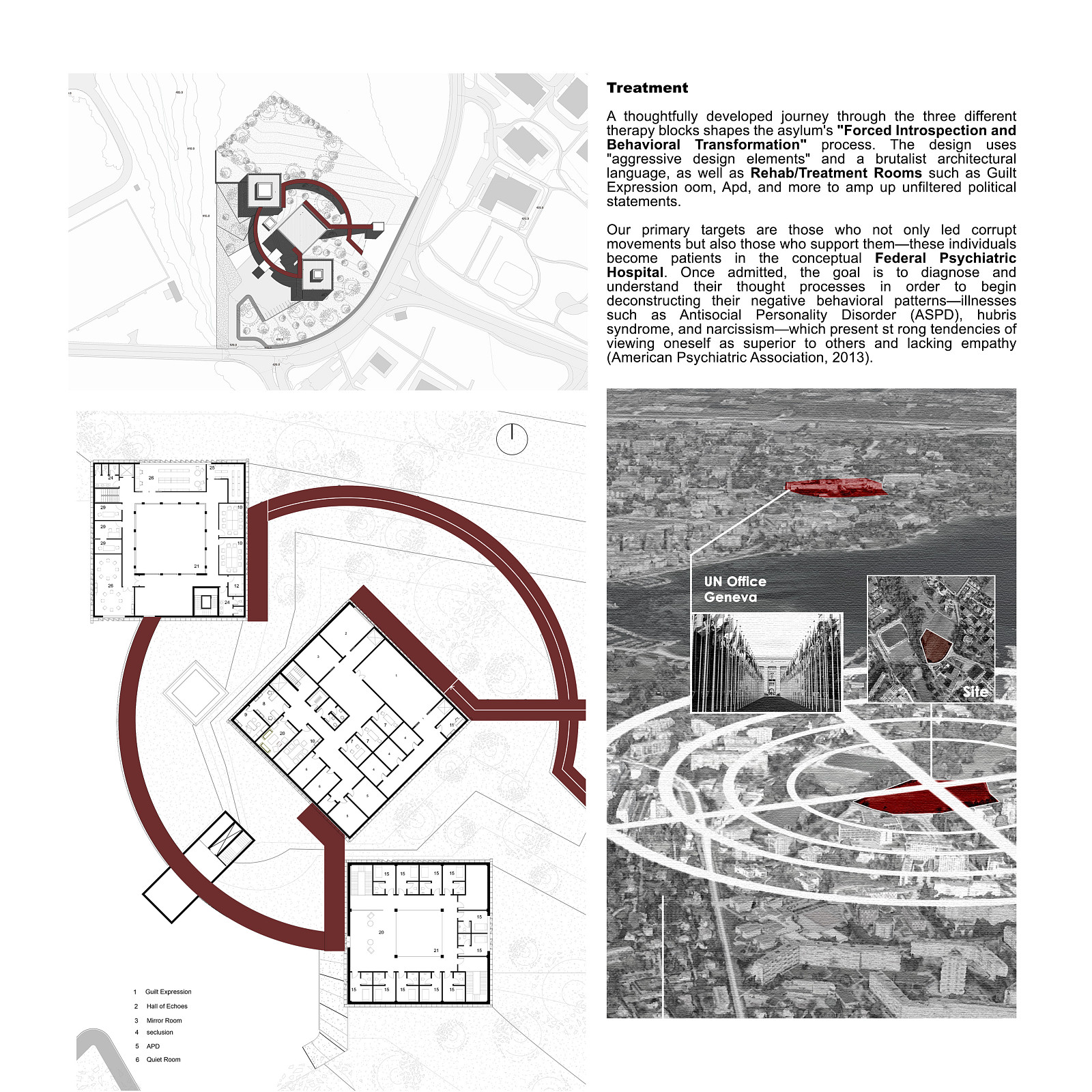
A thoughtfully developed journey through the three different therapy blocks shapes the asylum's "Forced Introspection and Behavioral Transformation" process. The design uses "aggressive design elements" and a brutalist architectural language, as well as Rehab/Treatment Rooms such as Guilt Expression oom, Apd, and more to amp up unfiltered political statements.
Our primary targets are those who not only led corrupt movements but also those who support them—these individuals become patients in the conceptual Federal Psychiatric Hospital. Once admitted, the goal is to diagnose and understand their thought processes in order to begin deconstructing their negative behavioral patterns—illnesses such as Antisocial Personality Disorder (ASPD), hubris syndrome, and narcissism—which present strong tendencies of viewing oneself as superior to others and lacking empathy (American Psychiatric Association, 2013).
The second targets are the visitors representing victims and activists who will finally gain a sense of closure. They will be categorized into two zones: one where visitors witness their tormentors suffer the consequences of their actions and face retribution, facilitating healing by allowing victims to see justice enacted against those who wronged them (Sherman & Strang, 2007).
The second zone focuses on community and social service interactions with patients after treatment, providing an opportunity for visitors to observe offenders on the path to rehabilitation. This not only symbolizes that the tormentors have been transformed into empty shells of their former selves but also offers reassurance to victims through the demonstration of offenders’ reintegration into society ( Braithwaite, 2002).Such interactions help foster psychological closure for victims and support the broader social goal of restorative justice.

Copyright © 2026 INSPIRELI | All rights reserved. Use of this website signifies your agreement to the Terms of Use, Privacy Policy, and use of cookies.