Speciality Coffee Roastery & Academy


Project idea
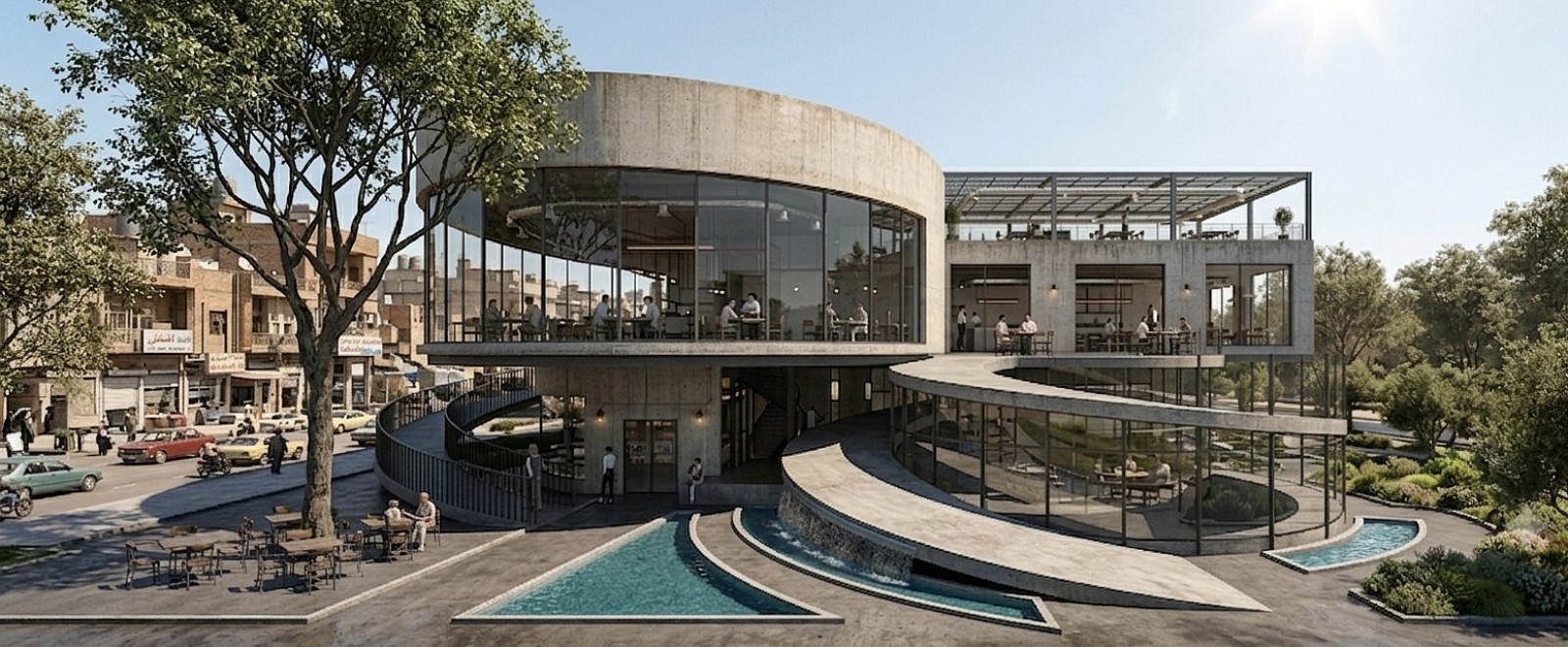
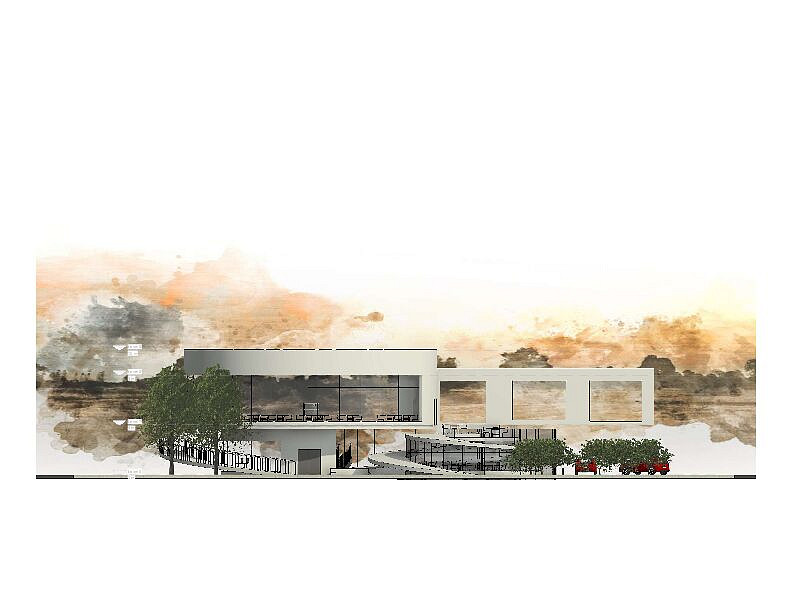
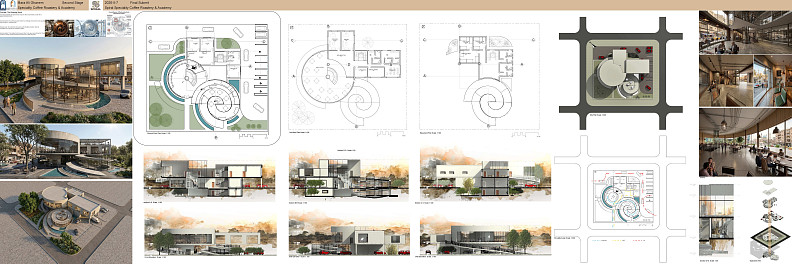
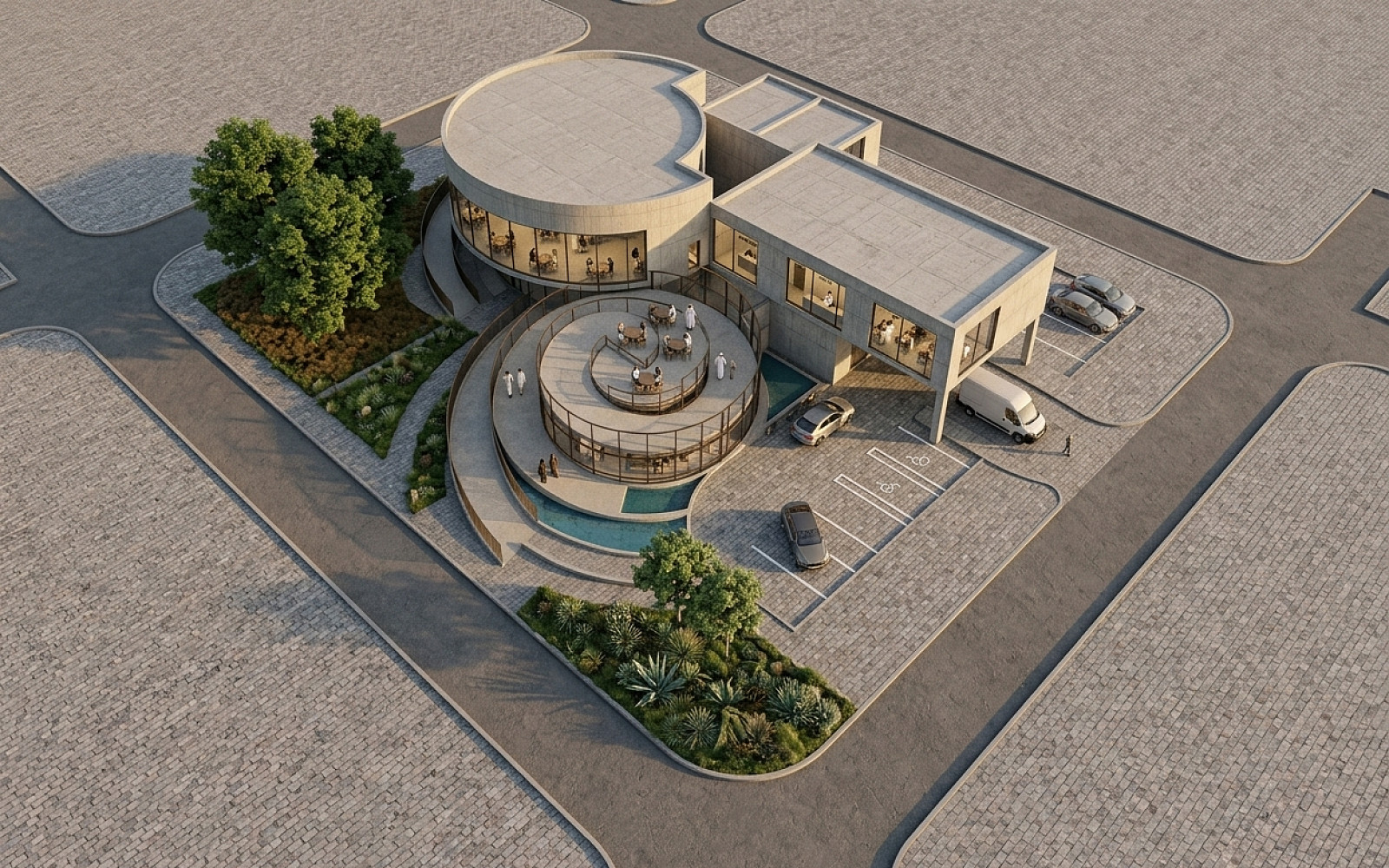
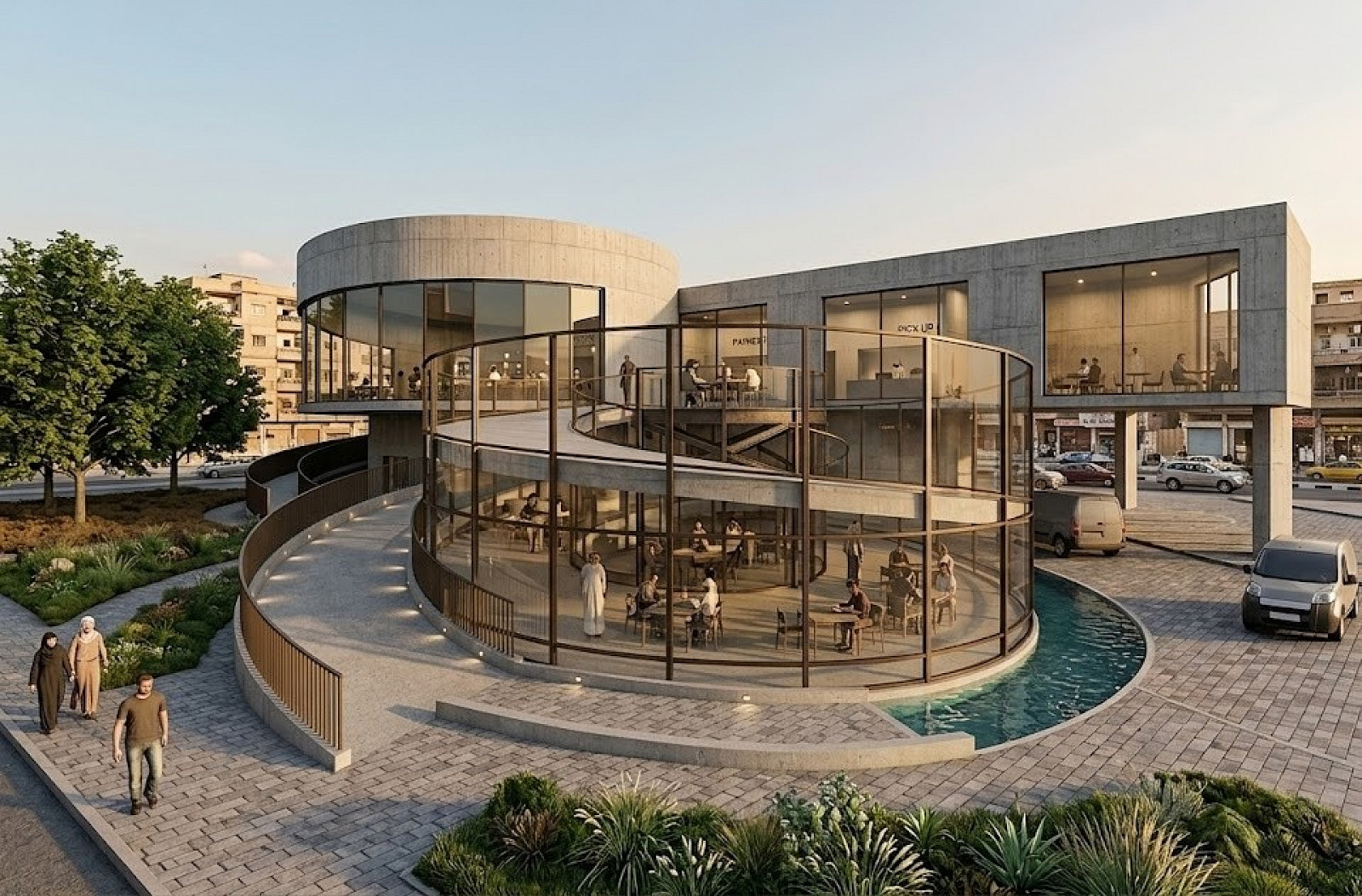
The design translates the spiral kinetic energy of coffee beans inside a roaster into a spatial architectural form. Spiral Dynamics: The continuous ramp mimics the centrifugal movement of beans, guiding users through a "roasting journey". Massing Logic: The cylindrical volume acts as the Roasting Chamber, while the rectangular block handles the Industrial Logistics. Fluid Circulation: The transition from the ground floor to the upper levels follows the "Mass Evolution" principle, turning a functional process into a visual experience.
Project description
Project Description: Kahramanah Specialty Coffee Roastery & AcademyThis academic project consists of designing an integrated, highly functional facility for a Specialty Coffee Roastery & Academy located at a strategic and dynamic site in Kahramanah Square, Baghdad. The building aims to act as a cultural hub and a visual landmark within the urban fabric, blending a contemporary identity with responses to Baghdad's climate and architectural heritage. The project is structured around three core operational sectors, tightly integrated within a compact footprint: 1. Commercial & Public Sector (Café & Retail Zone)This primary public area is designed to offer a complete sensory experience for coffee enthusiasts and professionals. It consists of the following components: Main Entrance & Lobby: The welcoming point and waiting area for visitors. Main Bar Counter: An expansive preparation bar that fosters direct, interactive engagement between the barista and consumers. Indoor & Outdoor Seating: Fluid, seamlessly transitioning seating spaces designed to accommodate both leisure visitors and remote professionals looking for a co-working space. Retail Area: A dedicated zone for selling specialty coffee products and merchandise. Drive-Thru Lane & Booth: A modern service layer featuring a dedicated pickup zone, specifically integrated to provide quick and efficient service for commuters during peak hours without disrupting pedestrian safety. 2. Industrial & Production Sector (Roastery & Storage Zone)Centering on the concept of "Production Transparency," this zone treats the industrial process as a visual showcase. It consists of the following components: Main Roasting Hall (Theater of Roasting): A highly visible space housing a large commercial roasting machine. It features extensive acoustic insulation, thermal controls, and heavy-duty ventilation, utilizing glass facades to turn the roasting process into a central visual attraction for the café's visitors. Green Bean & Roasted Coffee Storage: Organized back-of-house storage spaces designated for raw green coffee beans and freshly roasted batches. Packaging & Maintenance Areas: Dedicated zones for the final packaging of products and the maintenance/storage of roastery equipment. 3. Academic & Training Sector (Academy Zone)A specialized educational facility dedicated to training and certifying professional baristas, addressing the growing "Third Wave Coffee" culture in Iraq. It consists of the following components: Barista Training Room: A practical space equipped for hands-on technical brewing and espresso training. Theory Classroom: A classroom environment for theoretical lectures and presentations. Cupping Room: A controlled testing room tailored for coffee evaluation and sensory grading. Instructor Office & Training Storage: Administrative space for the academic staff and storage for training tools. 4. Support & Service InfrastructureTo ensure smooth everyday operations and environmental comfort, the project includes: Prep Kitchen & Administrative Space: A preparation kitchen alongside a General Manager's office, a staff break room, and locker facilities. Public & Accessible Restrooms: Separated restrooms for men and women, alongside fully compliant facilities for individuals with special needs. MEP & General Storage: Utility rooms housing electrical and mechanical systems equipped to manage the intensive ventilation, aroma control, and noise filtering demands of the facility. Key Design and Site Constraints:Site Dimensions & Footprint: The plot measures 45x40 m^2with a total area of 1,800m^2. The maximum allowable building coverage (footprint) is 60%. Structural System: The design must employ a structural skeleton system utilizing either concrete or steel framing. Circulation Management: A major requirement is resolving the complex urban traffic of the Kahramanah round-about by clearly separating pedestrian entry, customer parking (minimum capacity of 8 cars), the drive-thru lane, and rear service/loading docks for raw material deliveries and waste management.
Technical information
The construction of this building is based on a structural skeletal system
Documentation

Copyright © 2026 INSPIRELI | All rights reserved. Use of this website signifies your agreement to the Terms of Use, Privacy Policy, and use of cookies.