Multifunctional residential complex "Seventh Continent"

Project idea
PROJECT CONCEPT
"Seventh Continent" is a mixed-use high-rise development that reimagines the contemporary city as a vertically integrated urban ecosystem. The project responds to the challenges of rapid urbanization, increasing population density, transportation congestion, the shortage of public spaces, and the growing disconnection between urban environments and nature.
Located on the waterfront of the Kazanka River in Kazan, the development is conceived as a self-sufficient urban district where residential, commercial, recreational, and public functions are combined within a unified architectural framework. Rather than functioning as a conventional residential complex, the project creates a new piece of city a vibrant, interconnected environment designed for living, working, social interaction, and leisure.
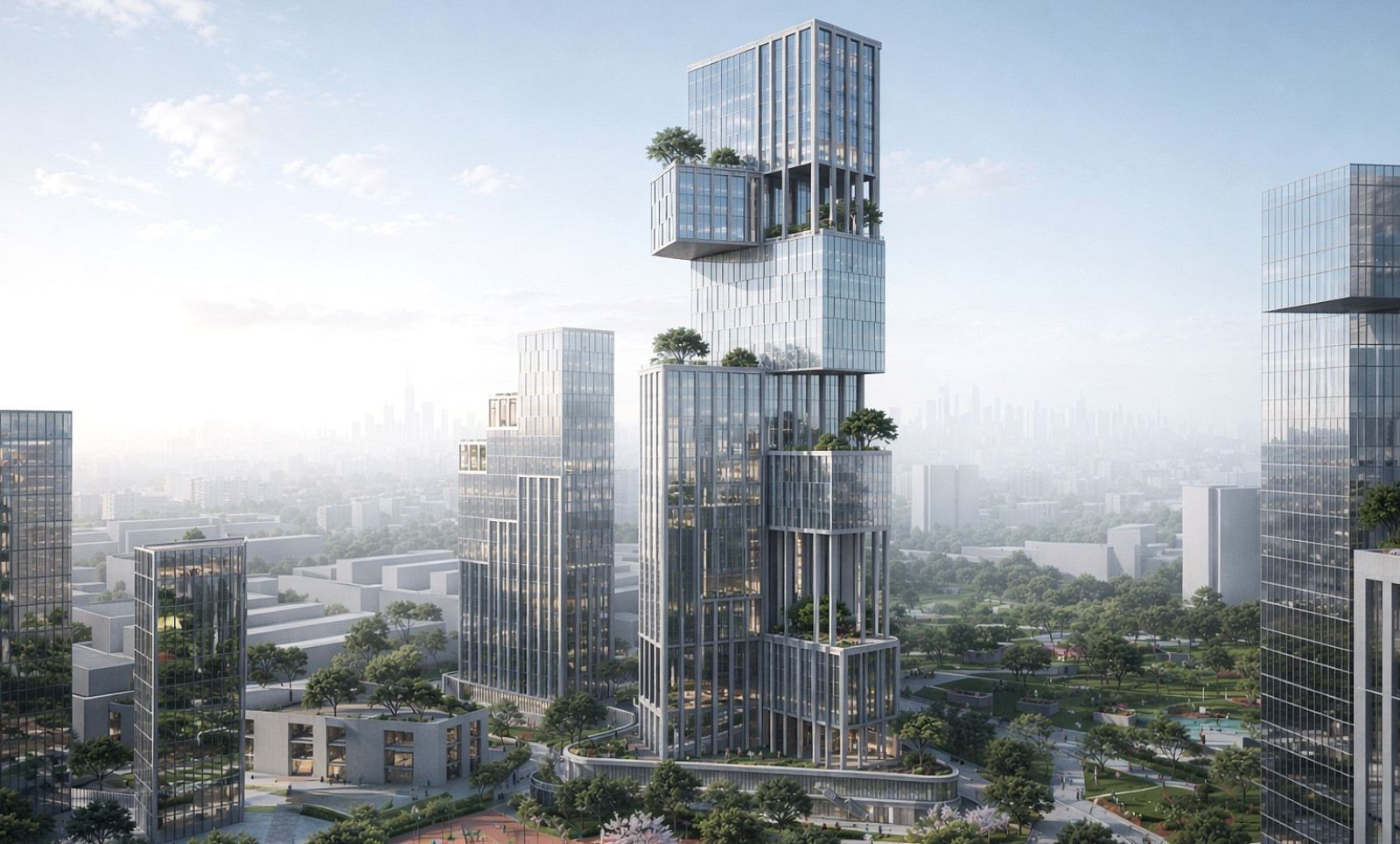
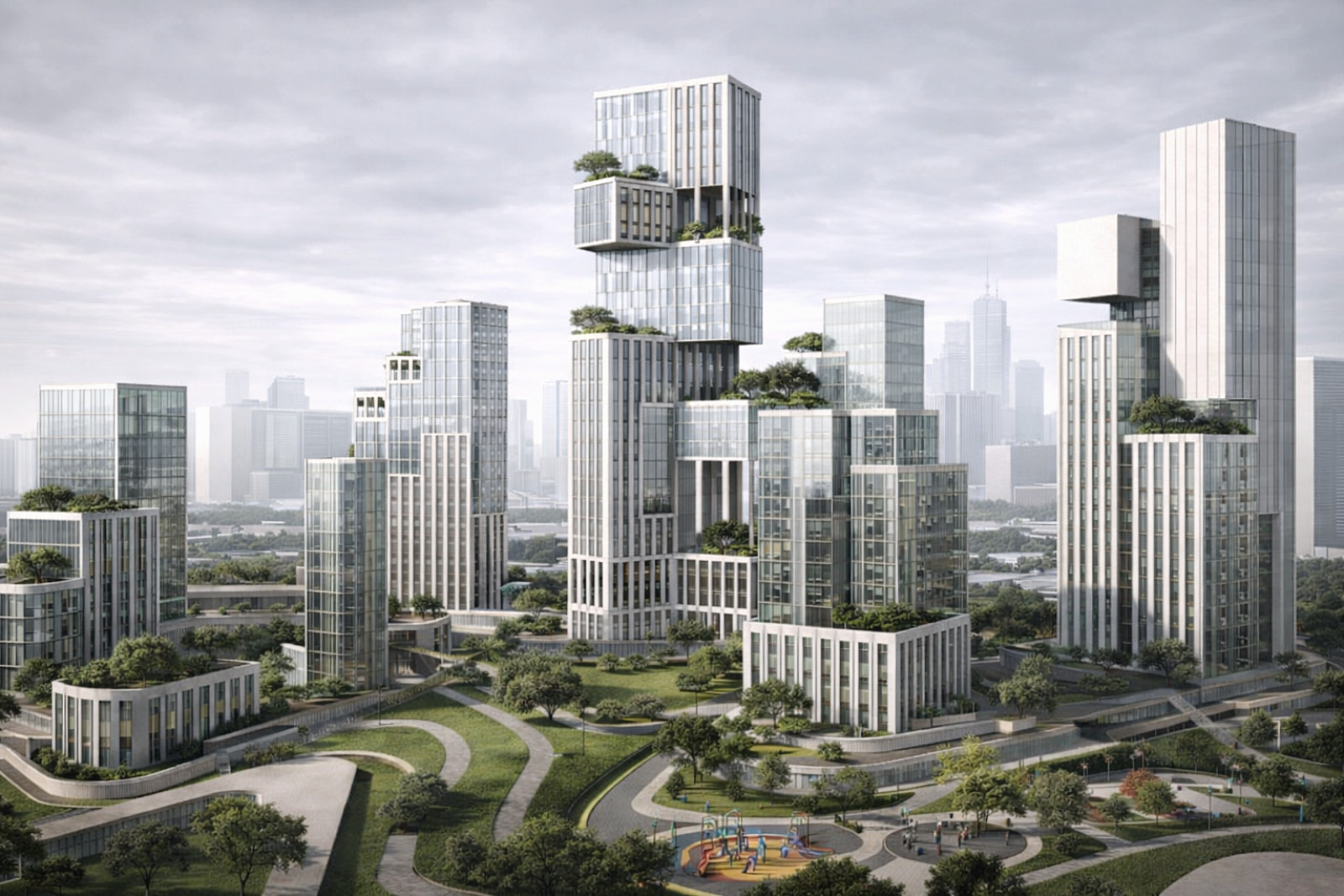
The name "Seventh Continent" reflects the project's central idea: the creation of a new artificial landscape within the city. Seven towers form a cohesive architectural composition and establish a new landmark on Kazan's skyline. Together, they create a recognizable silhouette while maintaining a strong connection to the surrounding urban fabric and riverfront.
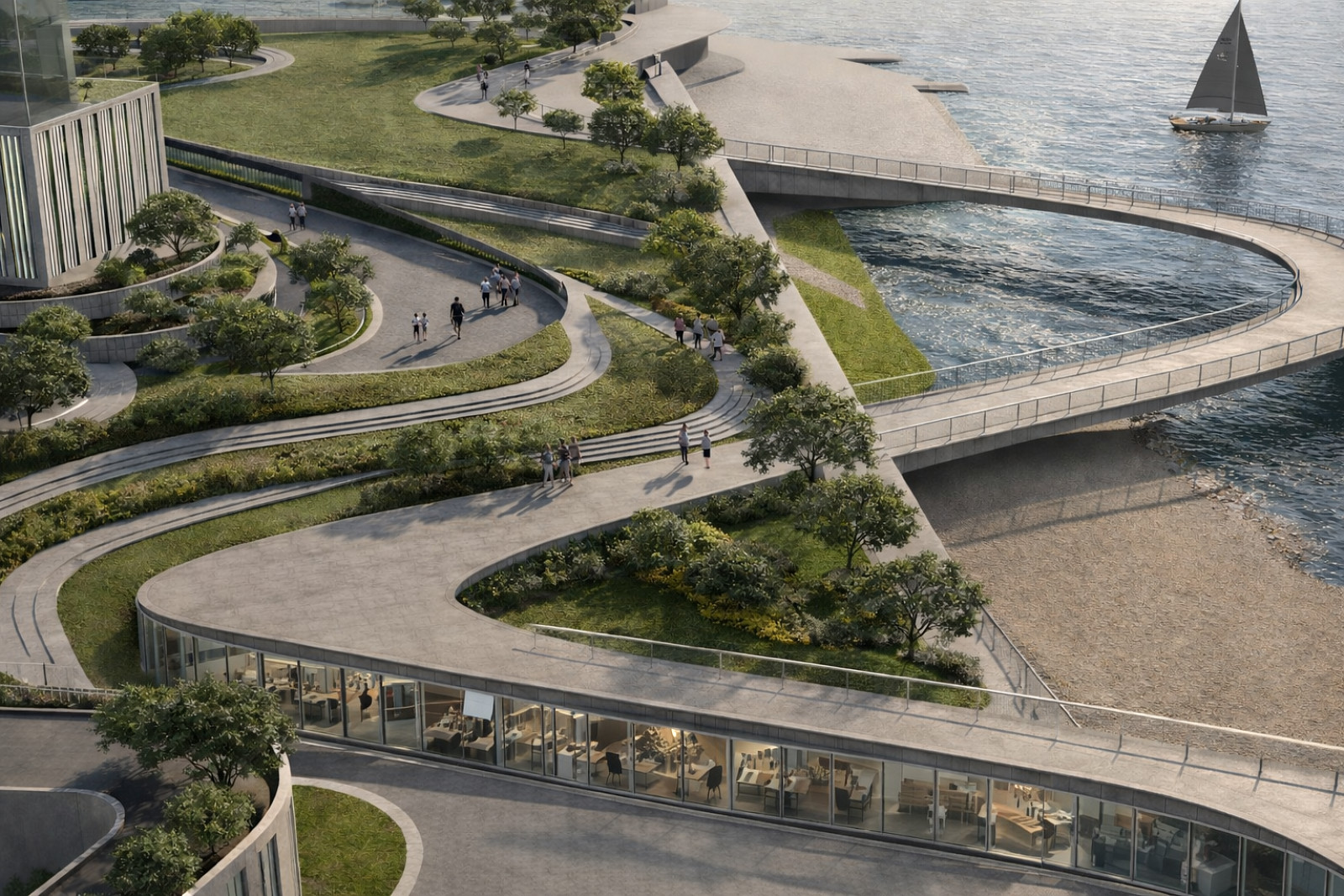
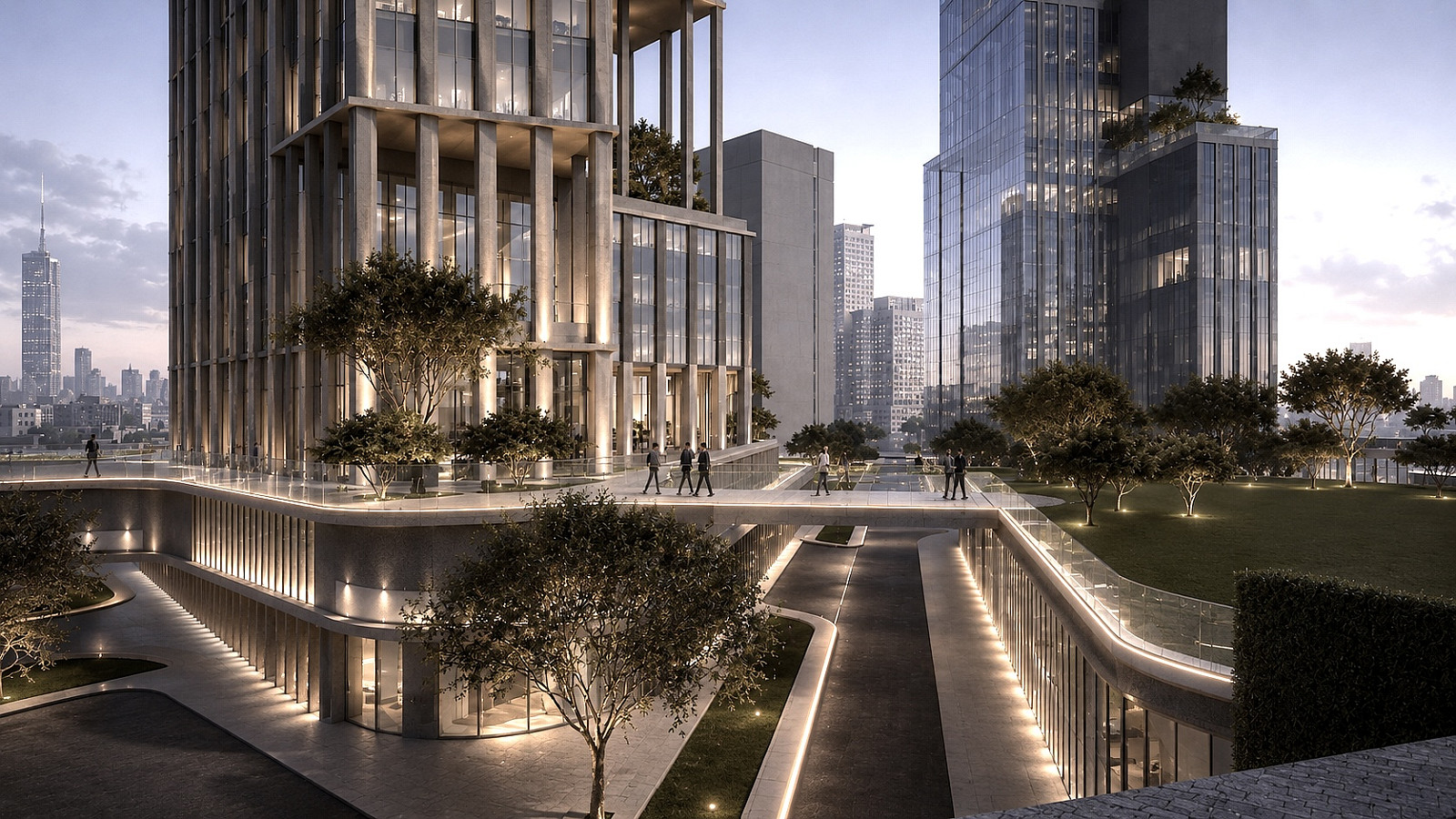
A key feature of the proposal is its multi-level circulation system. The project separates pedestrian and vehicular flows through a hierarchy of transportation and public-space networks. Roads, service access, and parking facilities are integrated into lower levels, while elevated pedestrian routes, terraces, bridges, and public platforms create a continuous car-free environment above ground. This approach enhances safety, improves mobility, and maximizes the quality of public space throughout the development.
The concept is based on the principle of the vertical city, where urban life extends beyond the ground plane. Public functions, green spaces, observation areas, and recreational facilities are distributed across multiple levels, creating a dynamic three-dimensional urban environment. The system of interconnected terraces and elevated public spaces encourages social interaction and provides new perspectives on the city and waterfront.
Nature plays a fundamental role in the project. Green roofs, sky gardens, landscaped terraces, and planted balconies form a continuous ecological framework that improves the microclimate, increases biodiversity, and enhances residents' well-being. The integration of greenery transforms the high-density development into a more sustainable and human-centered environment.
The podium serves as the social and functional heart of the complex, accommodating retail, co-working spaces, sports facilities, cultural venues, and community-oriented programs. This mixed-use approach creates a "city within a city," reducing dependence on external infrastructure and promoting a walkable lifestyle.
Beyond its architectural expression, the project addresses several critical urban challenges. It demonstrates how high-density development can coexist with high-quality public space, efficient transportation systems, environmental sustainability, and a strong sense of community. Through the integration of vertical urbanism, multi-level mobility, and nature-based design strategies, "Seventh Continent" proposes a forward-looking model for the future development of rapidly growing cities.
The project aims to redefine the relationship between architecture, infrastructure, and landscape, creating a resilient urban environment that supports both contemporary lifestyles and long-term sustainable growth.
Project description
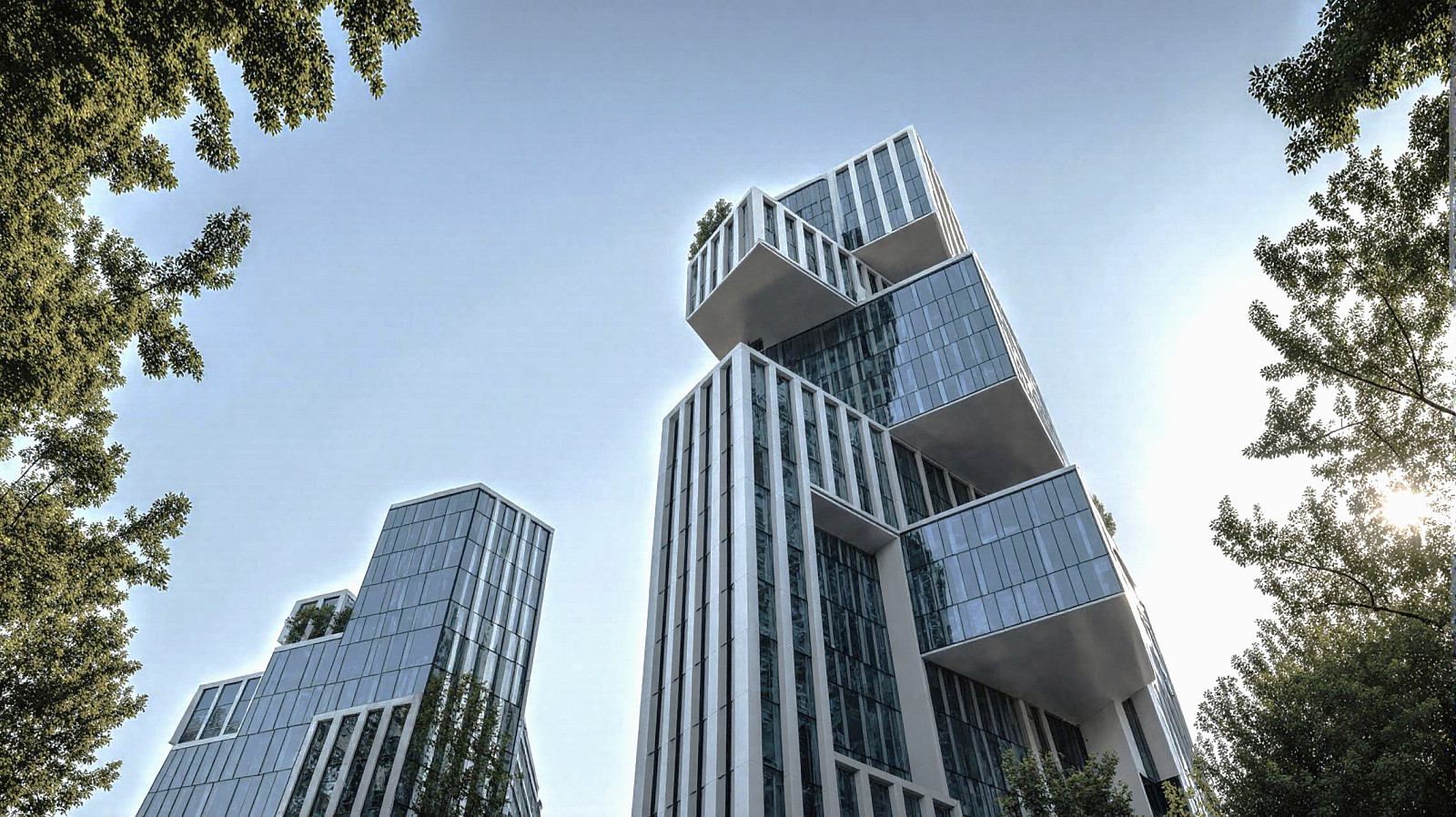
The complex consists of seven high-rise towers of varying heights, interconnected through a system of podiums and public spaces. The multi-level composition creates a dynamic skyline and establishes a new architectural landmark along the Kazanka River waterfront.
The architectural concept is based on the displacement and separation of building volumes, which visually reduces the perceived scale of the development while creating open terraces, observation decks, and elevated public spaces. Vertical landscaping is integrated into the structure of the complex, strengthening the relationship between architecture and the natural environment.
The towers are connected by two-story podiums accommodating public functions and circulation routes between the buildings, forming a continuous, comfortable, and accessible urban environment.
The facade design of the "Seventh Continent" residential complex is based on the combination of panoramic glazing, vertical rhythms, and contrasting materials that shape the project's contemporary architectural identity. Extensive glazed surfaces maximize views and establish a strong visual connection with the Kazanka River waterfront.
The facades achieve their distinctive character through the combination of clear and accent glazing, complemented by vertical fins that emphasize the buildings' verticality and slender proportions. Landscaped terraces are integrated into the façade composition, reinforcing the connection between architecture and nature while contributing to the project's recognizable presence within the city skyline.
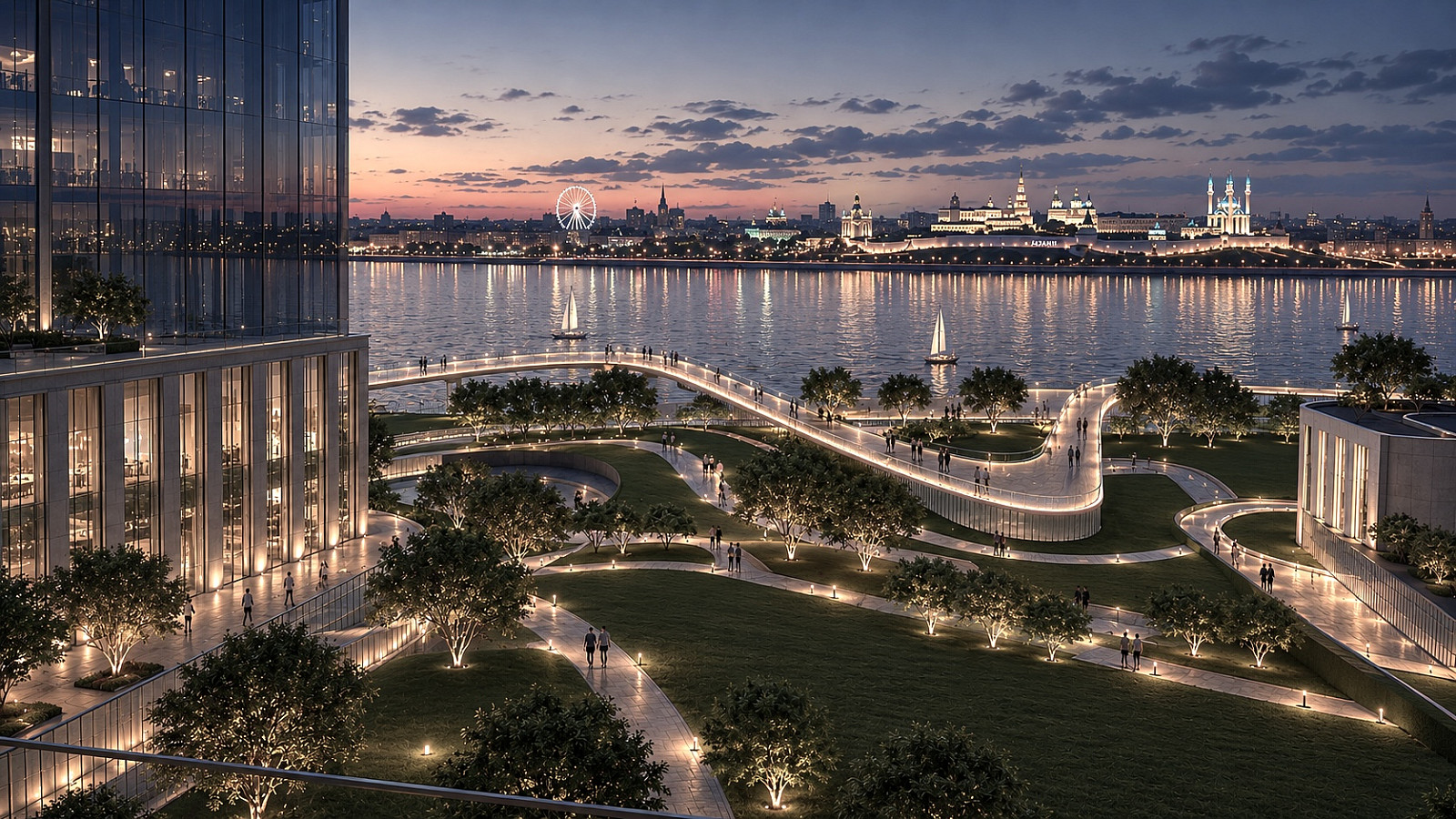
The master plan has been developed in response to the specific characteristics of the waterfront site and is focused on creating a comfortable, functional, and human-centered urban environment. The site incorporates public spaces, an enhanced riverfront promenade, pedestrian routes, active and passive recreation areas, and an interconnected landscape network.
Transportation infrastructure is supported by underground parking facilities, an internal circulation network, and pedestrian connections, minimizing the presence of vehicles within public areas and prioritizing pedestrian comfort and safety.
Particular attention has been given to the design of the waterfront zone, which includes direct access to the embankment, public gathering spaces, recreational facilities, and landscape-integrated amenities. Functional zoning ensures the efficient distribution of pedestrian and transportation flows while creating a safe and welcoming environment for residents and visitors.
Functionally, the complex is composed of a podium structure and two multifunctional towers rising 35 and 54 stories respectively.
The podium serves as the social and connective core of the development, accommodating public and transit-oriented functions. Its program includes an art gallery, grocery stores, retail units, fashion boutiques, cafés, restaurants, co-working spaces, a fitness center, cloakrooms, public facilities, and a grand lobby. Public terraces and recreational areas are located on the accessible rooftop. The podium consists of two floors, each with a floor-to-floor height of 5.0 meters.
The 35-story tower combines office and residential functions. Office spaces are located between Levels 3 and 10, while residential units occupy the upper floors beginning from Level 11. The tower contains a variety of apartment typologies and landscaped sky terraces positioned at elevated levels throughout the building. The floor-to-floor height for both office and residential levels is 3.6 meters.
The 54-story tower serves as the architectural focal point and vertical landmark of the complex. Office spaces are located between Levels 3 and 15, while the upper floors accommodate residential units of various layouts and sizes. The building incorporates multi-level landscaped terraces and elevated communal spaces designed for recreation and social interaction among residents. The floor-to-floor height for both office and residential levels is 3.6 meters.
Technical information
STRUCTURAL DESIGN
Podium Structure
The foundation slabs of the podium and tower structures are separated by expansion joints, allowing independent structural behavior and accommodating differential movements. Reinforced concrete columns with cross-sections of 400 × 400 mm are positioned along the perimeter of the expansion joints and at major structural grid intersections, forming the primary load-bearing system of the podium.
The floor system consists of monolithic reinforced concrete slabs with a thickness of 200 mm, while the first-floor slab is reinforced and increased to 250 mm in thickness. Reinforced concrete shear walls with a thickness of 300 mm provide additional lateral stability.
The structural frame incorporates reinforced concrete primary beams measuring 400 × 800 mm and secondary beams measuring 300 × 600 mm, arranged at a spacing of 3.0 m.
Tower 1
The primary load-bearing structure of Tower 1 consists of monolithic reinforced concrete pylons with cross-sections of 1600 × 300 mm, 1800 × 300 mm, 2400 × 300 mm and 3400 × 300 mm. Additional structural stability is provided by reinforced concrete shear walls with a thickness of 300 mm.
The floor system is composed of monolithic reinforced concrete slabs with a thickness of 200 mm. The beam system includes primary beams measuring 400 × 800 mm and secondary beams measuring 300 × 600 mm, spaced at 3.0 m intervals.
Tower 2
The primary structural system of Tower 2 consists of monolithic reinforced concrete columns with cross-sections of 1200 × 1200 mm combined with reinforced concrete shear walls having a thickness of 600 mm.
Floor structures are formed by monolithic reinforced concrete slabs with a thickness of 200 mm. The beam system includes primary beams measuring 400 × 800 mm and secondary beams measuring 300 × 600 mm arranged at 3.0 m spacing.
The connecting structures between the towers are designed using steel trusses, steel beams and tension members, providing long-span structural efficiency and architectural flexibility.
Foundation and Structural Materials
The development is designed on a piled raft foundation system combining reinforced concrete piles and foundation slabs to efficiently transfer loads to the ground.
All shear walls, beams, pylons, floor slabs and staircase structures are constructed from cast-in-place reinforced concrete with concrete strength class C30/37.
Building Envelope
External walls are designed as multilayer façade systems. The inner wall layer consists of aerated concrete blocks, while the outer layer is formed by a glazed curtain wall system. Thermal insulation is provided by mineral wool insulation positioned between the internal and external wall layers.
Internal partition walls between apartments and rooms are constructed from lightweight aerated concrete blocks.
Roof System
The buildings feature flat roofs with internal drainage systems and waterproofing membranes designed for long-term durability and weather protection.
Openings and Vertical Circulation
Windows and curtain wall systems utilize aluminum framing with high-performance triple-glazed insulated glass units, ensuring energy efficiency, thermal comfort and acoustic performance.
Internal doors consist of timber doors and fire-rated steel doors. External entrance doors are constructed from thermally insulated aluminum and steel systems.
Staircases and stair flights are executed in monolithic reinforced concrete, providing structural rigidity and fire safety.
Documentation

Copyright © 2026 INSPIRELI | All rights reserved. Use of this website signifies your agreement to the Terms of Use, Privacy Policy, and use of cookies.