Revitalization of Tell Jassan Archaeological Site, Iraq


 Nabil T. Ismael
Project idea
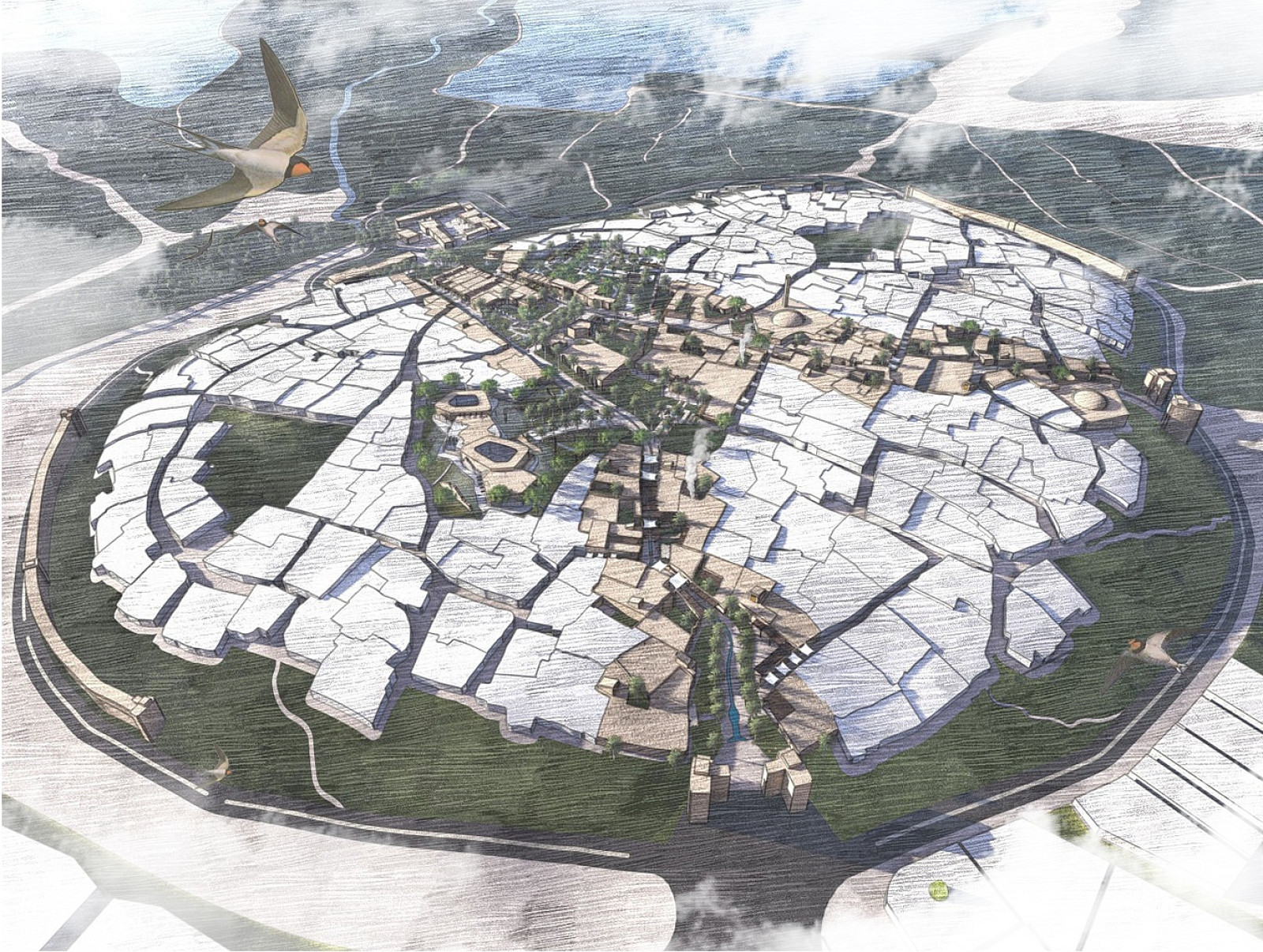
The project focuses on the urban regeneration and rehabilitation of Tell Jassan, an archaeological mound located in Wasit Governorate, Iraq. Tell Jassan is considered one of the most significant archaeological sites in the region, rising approximately 45 meters above the surrounding terrain and covering an area of about 141,000 square meters. The mound stands as a tangible witness to the succession of civilizations that inhabited Mesopotamia over thousands of years.
Located in Jassan Subdistrict within Badra District, the site is one of eighteen Sumerian archaeological mounds distributed across Wasit Governorate. These mounds were primarily constructed from mud and historically served as defensive settlements and observation points for protecting the region against invasions.
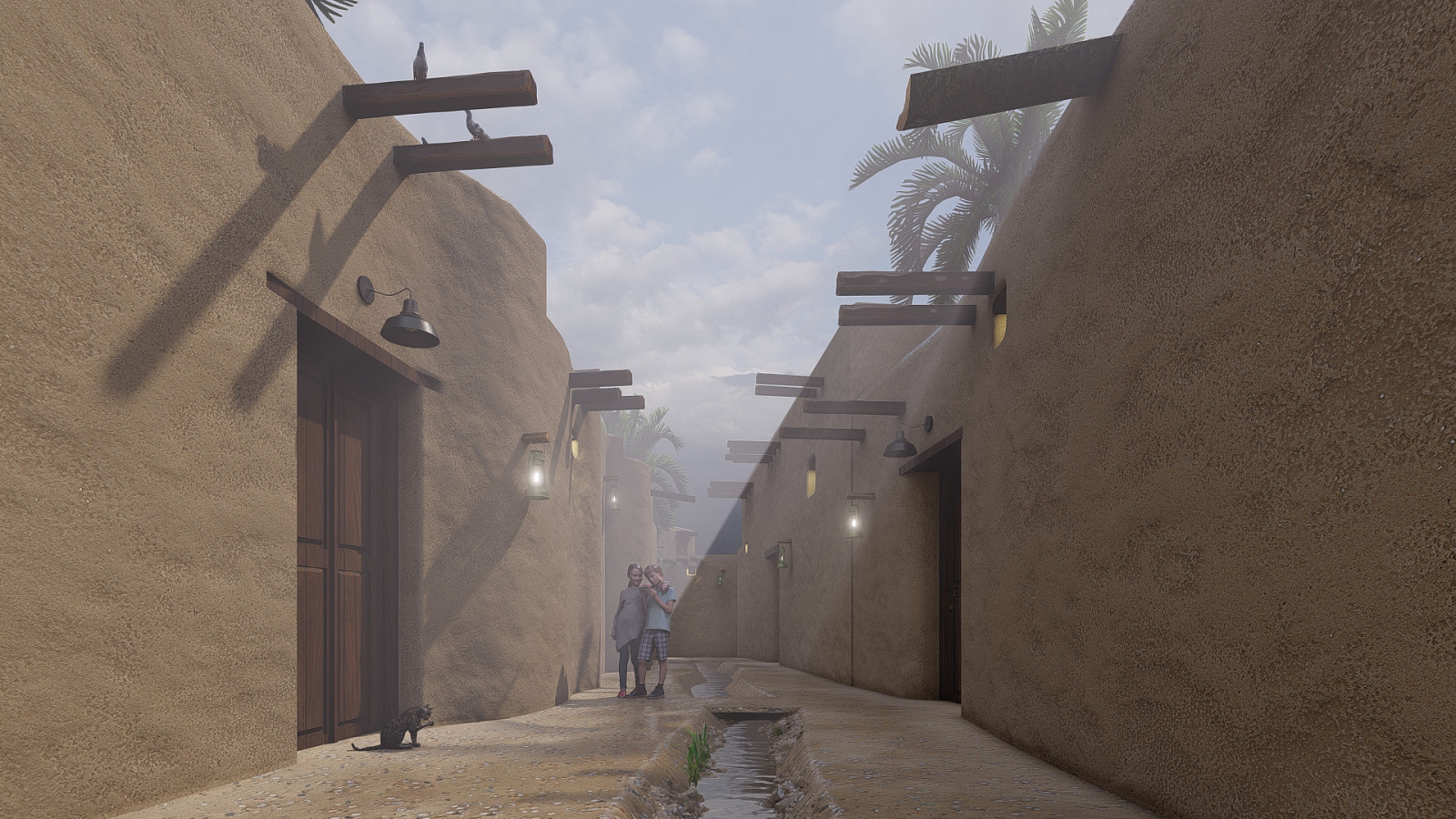
Tell Jassan is distinguished by its traditional urban fabric, consisting of houses built from mud and palm trunks interconnected by a network of narrow alleys locally known as “Aqad,” including Aqad Kraysha, Aqad Shakra, Aqad Al-Jami’, and Aqad Beit Namoos. The intersections of these alleys are referred to as “Ardhiyat,” such as Ardhiyat Al-Souq and Ardhiyat Beit Namoos. The mound is surrounded by orchards on three sides and contains three main gateways: Bab Al-Kabeer, Bab Al-Sagheer, and Bab Al-Abbadi. Historical accounts also indicate that the settlement was once enclosed by a defensive wall approximately two men high, of which only minor traces remain today.
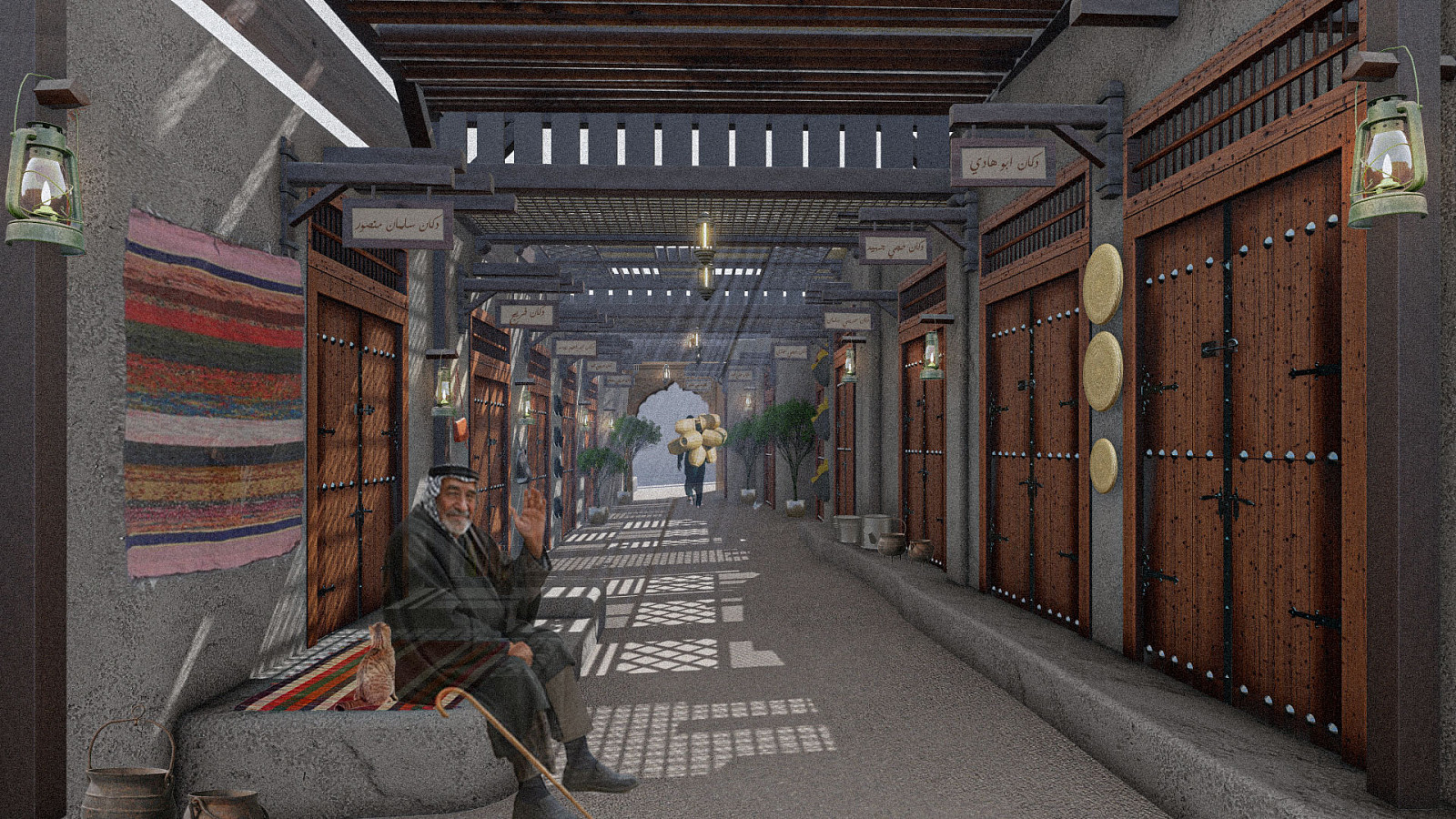
The mound contains 337 residential houses that historically accommodated around 500 families. It also includes a traditional marketplace comprising 115 shops and seven cafés, reflecting its former economic and social significance within the region.
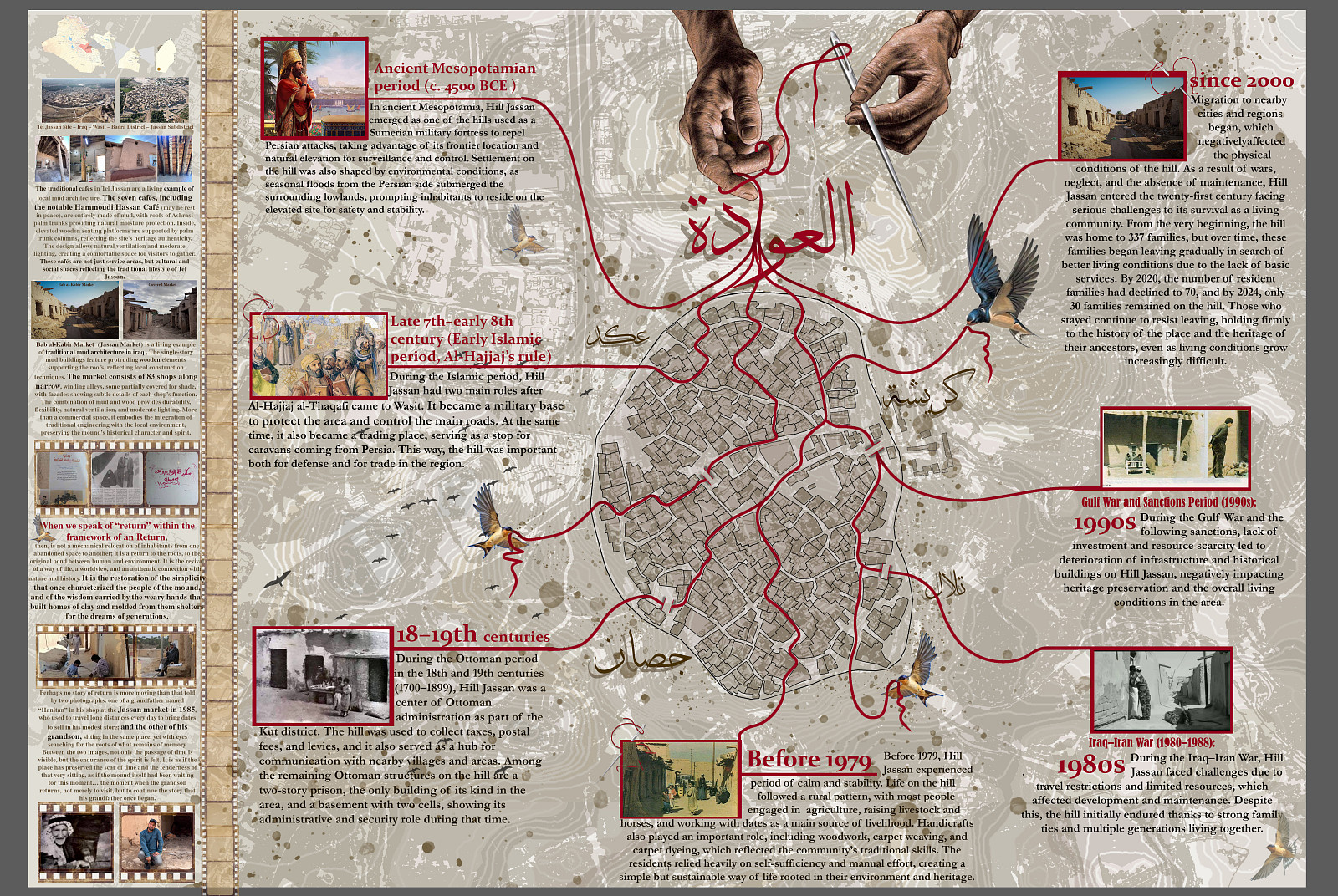
Despite continuous habitation over generations, successive wars, the absence of regular maintenance, and the decline of traditional mud-construction craftsmanship have led to the deterioration of the site’s urban fabric. Consequently, many residents gradually migrated from the center of the mound toward the surrounding areas, leaving only a small number of families who continue to reside there, preserving the heritage, identity, and memories of their ancestors.
The project’s design concept emerged from the remarkable resilience of these remaining residents and their strong attachment to the site despite numerous challenges. Their determination to preserve their ancestral home became the primary source of inspiration for the proposal. Accordingly, the project aims to support the local community while revitalizing the mound’s architectural and cultural heritage through a comprehensive urban regeneration strategy, transforming Tell Jassan into a sustainable cultural, residential, and tourism destination that preserves its historical identity and ensures its continuity for future generations. Furthermore, one of the key objectives of the project is to pursue the inscription of Tell Jassan on the UNESCO World Heritage List, recognizing its outstanding universal value and ensuring its long-term protection and international recognition.
Project description
The design concept emerged from a comprehensive analysis of Tell Jassan’s current condition and the gradual decline of its social, economic, and cultural vitality. Over time, the abandonment of traditional crafts, the deterioration of the urban fabric, and the migration of residents toward the outskirts of the mound created a state of peripheral concentration, leaving the historic core largely inactive and disconnected from daily life.
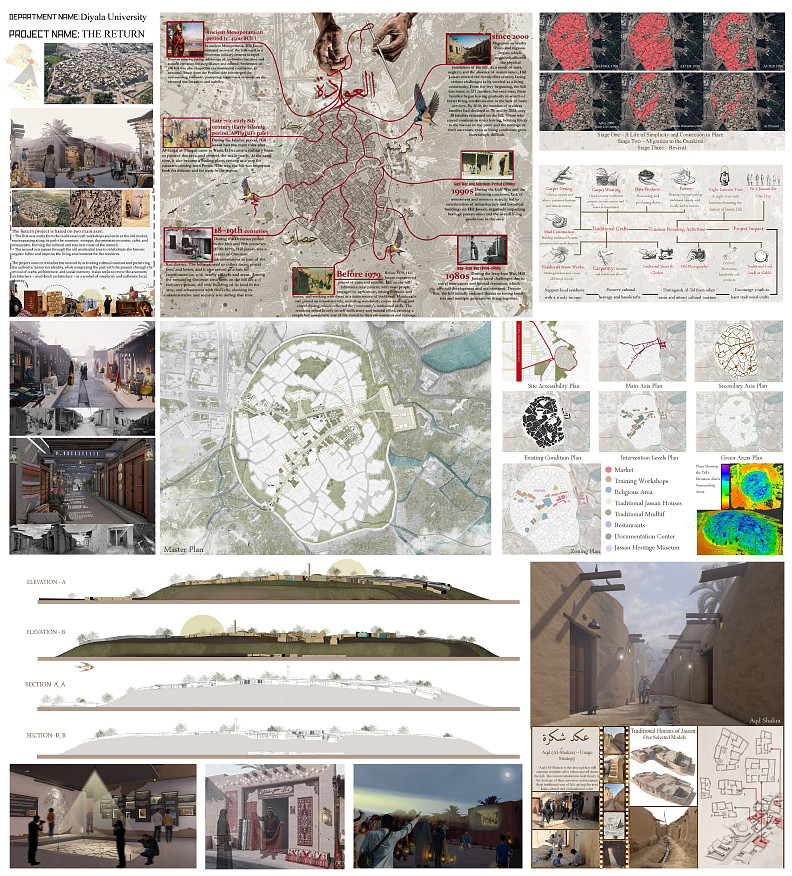
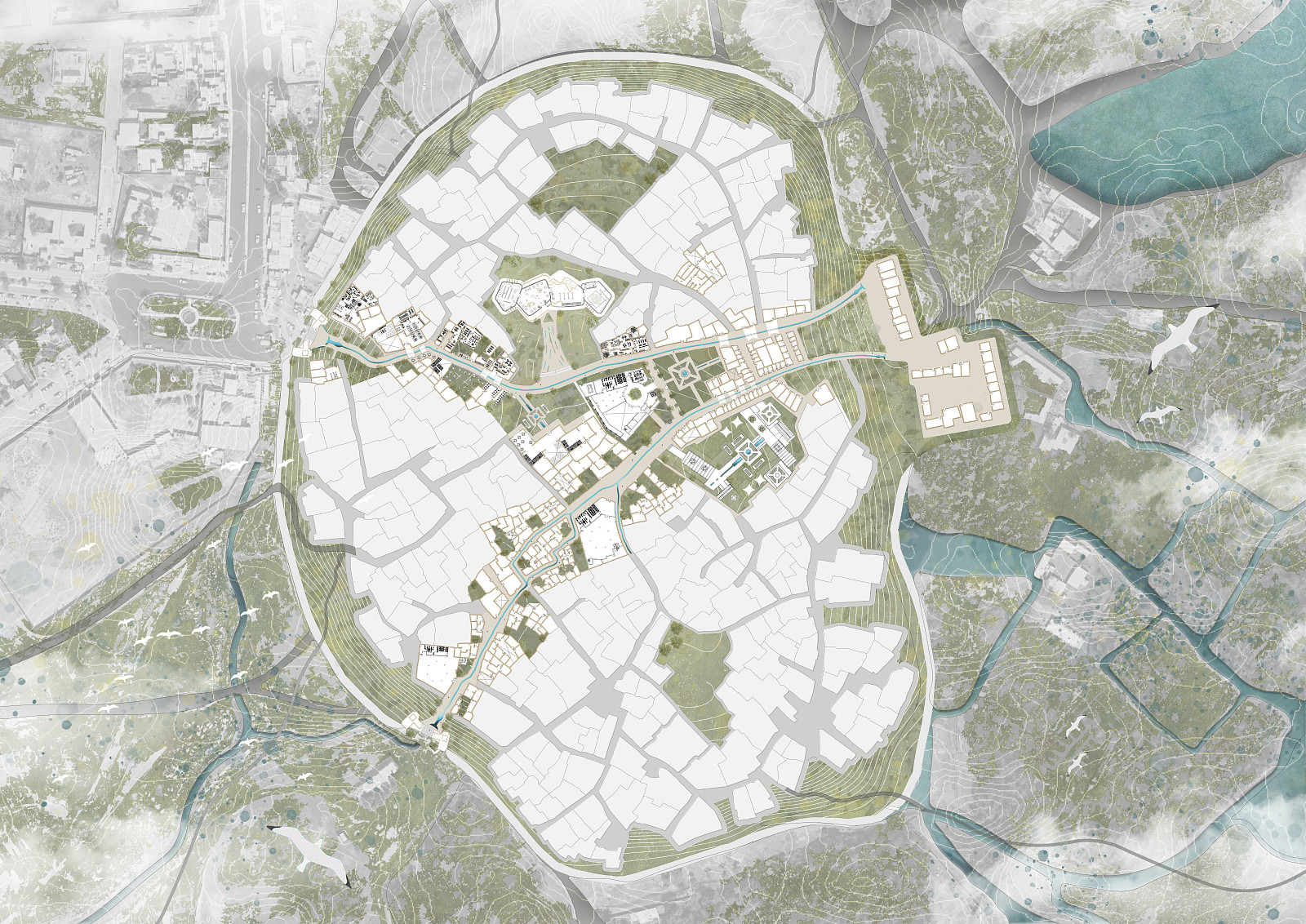
To address these challenges, the project introduces two primary urban axes that work together to reactivate the mound and restore its historical significance while preserving its cultural identity.
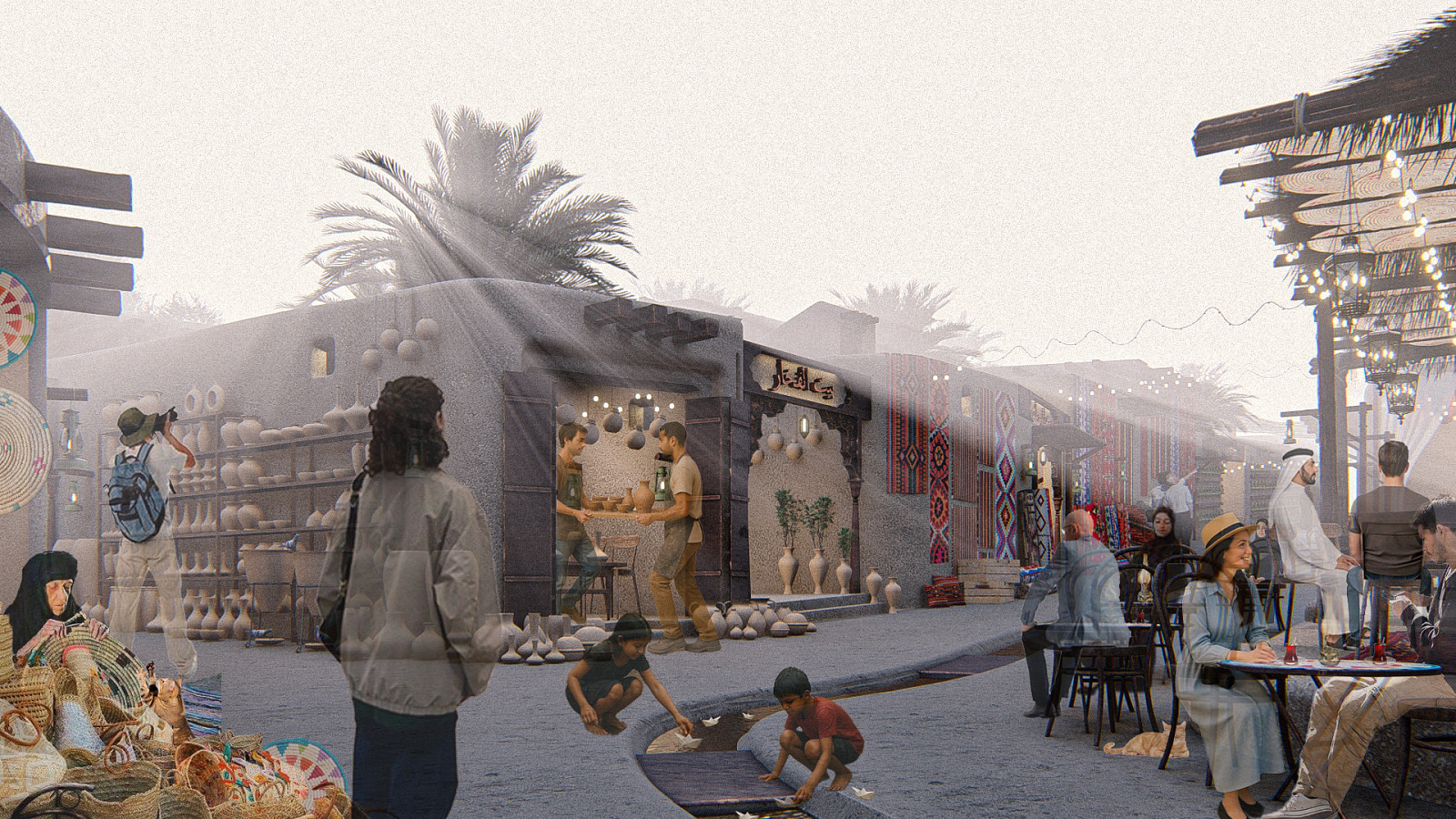
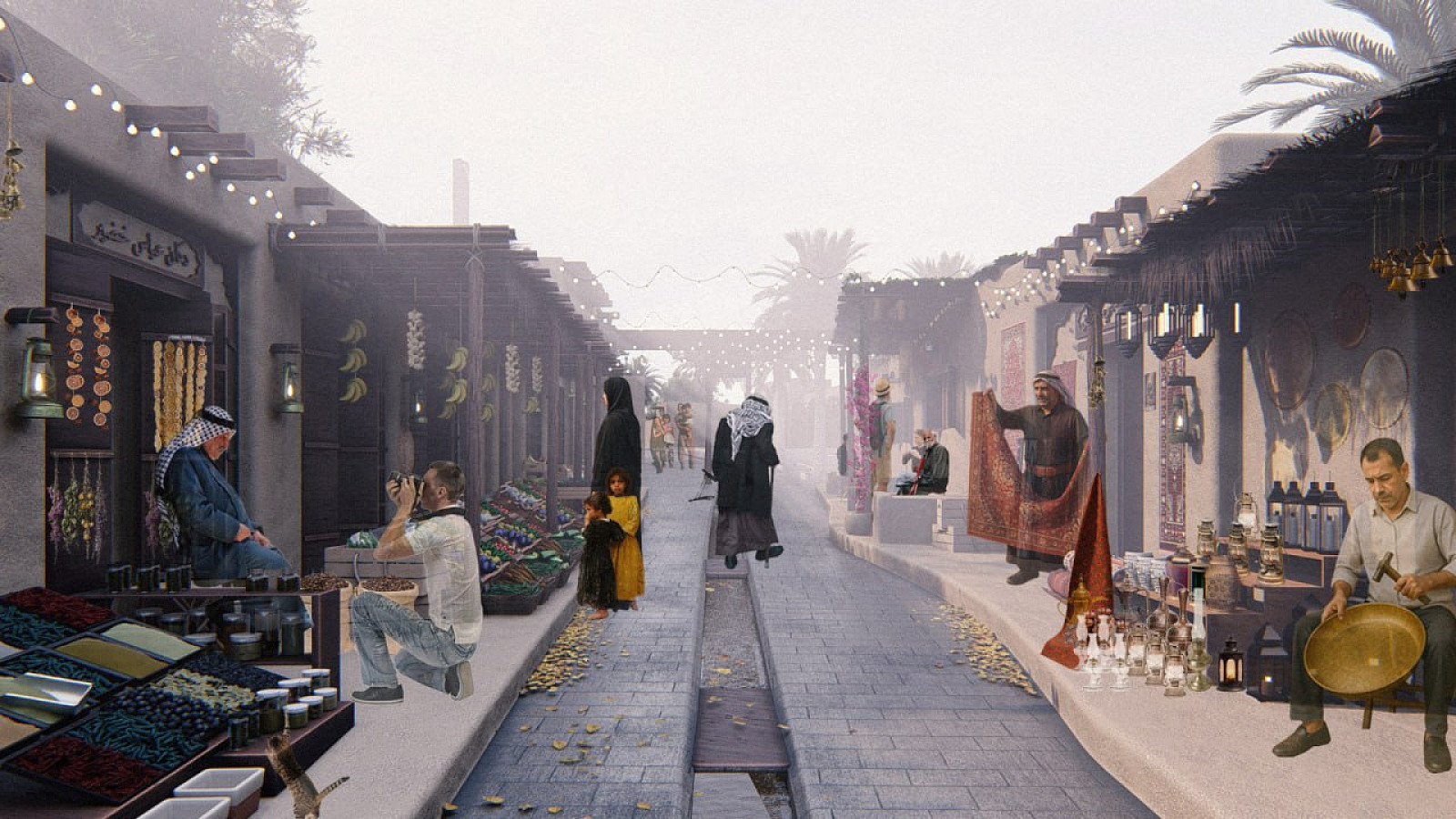
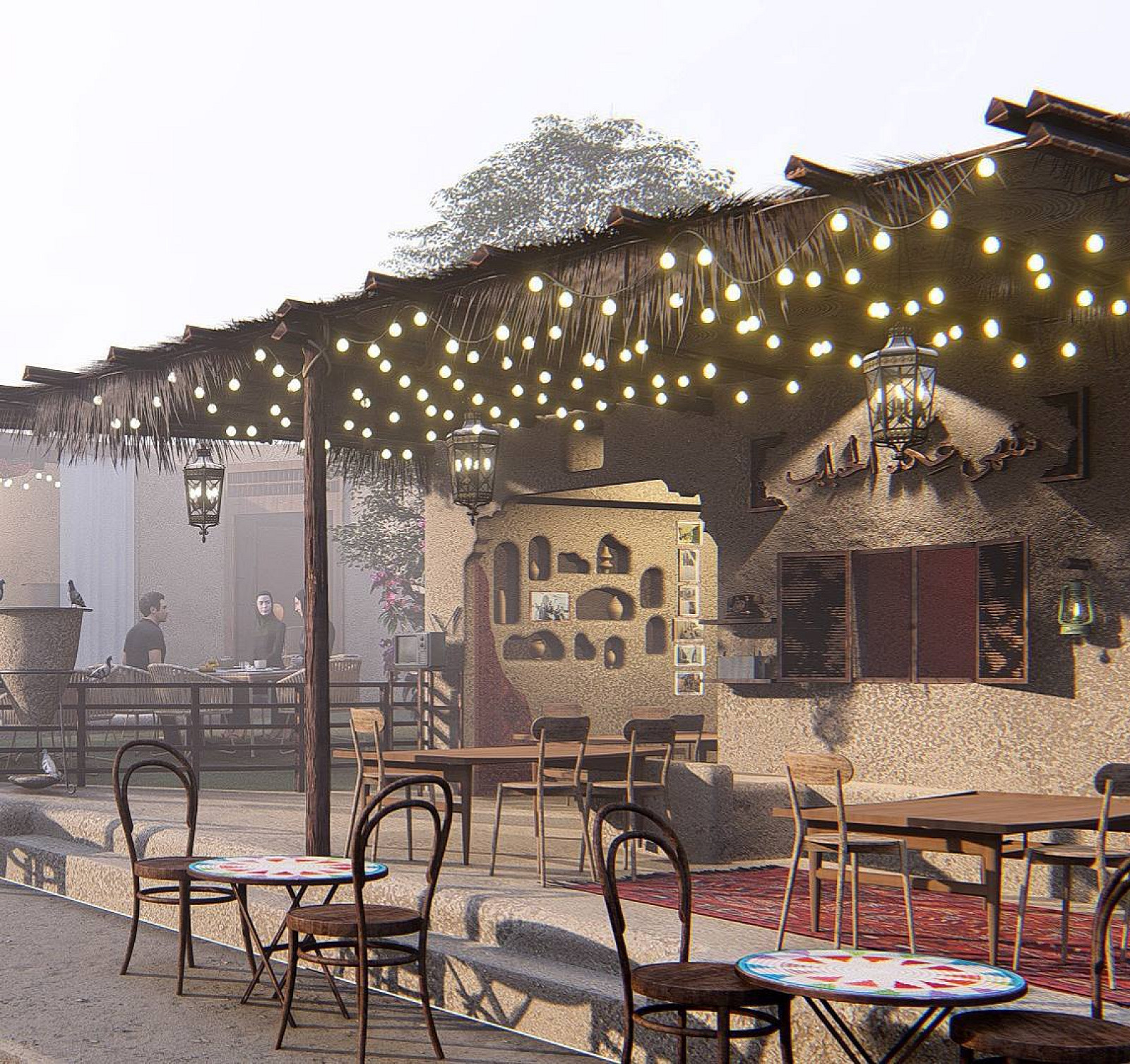
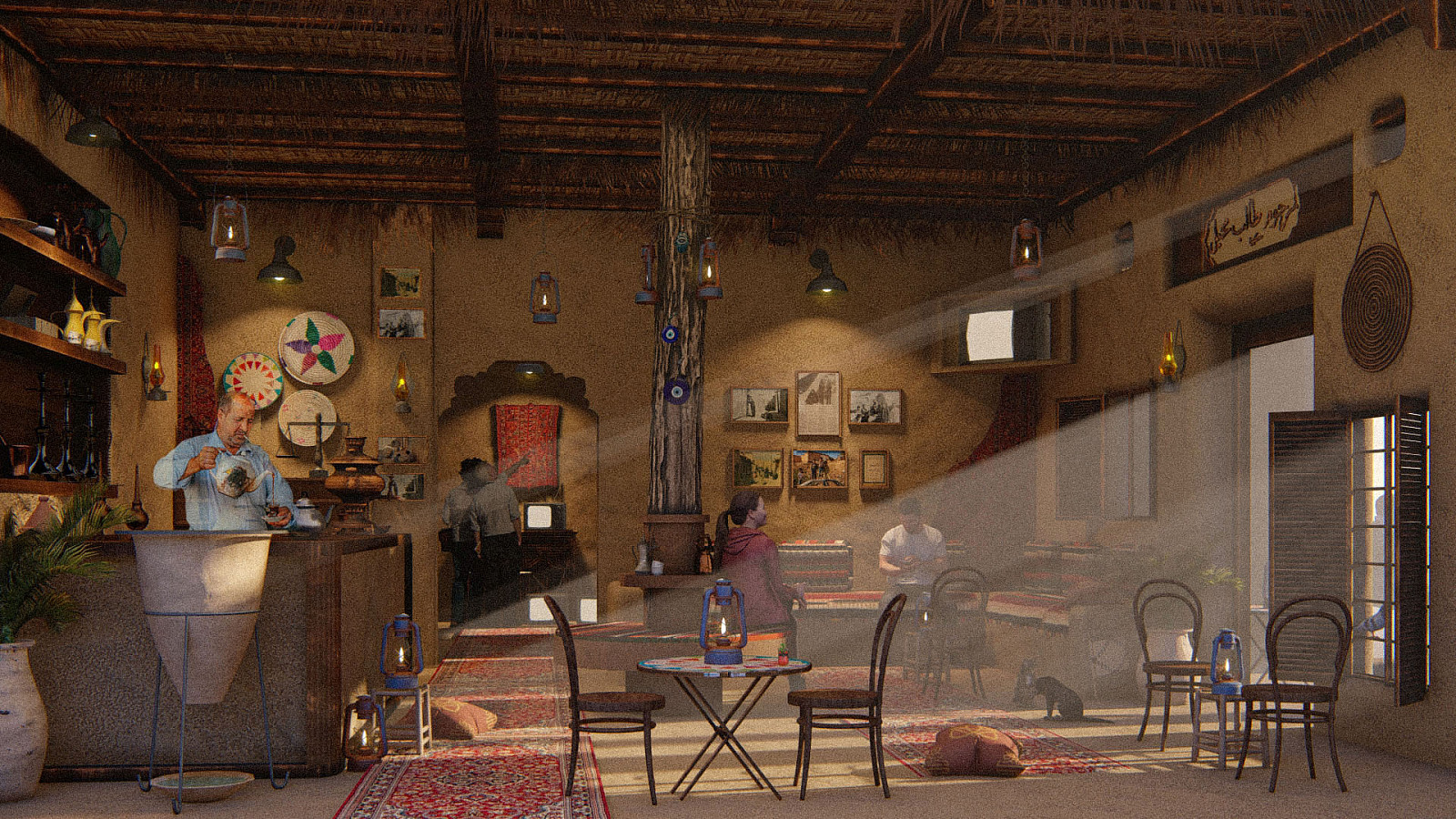
The first axis is a cultural-commercial corridor dedicated to the revival of traditional crafts and local economic activities. This corridor accommodates workshops for pottery production, mud-brick construction, copper craftsmanship, and palm-based handicrafts, allowing visitors to experience the traditional skills that once shaped the identity of Tell Jassan. In addition, the axis incorporates traditional restaurants and popular cafés inspired by the historic cafés that once played a central social role within the mound. Through these activities, the corridor functions as a living heritage environment where cultural preservation and economic development coexist.
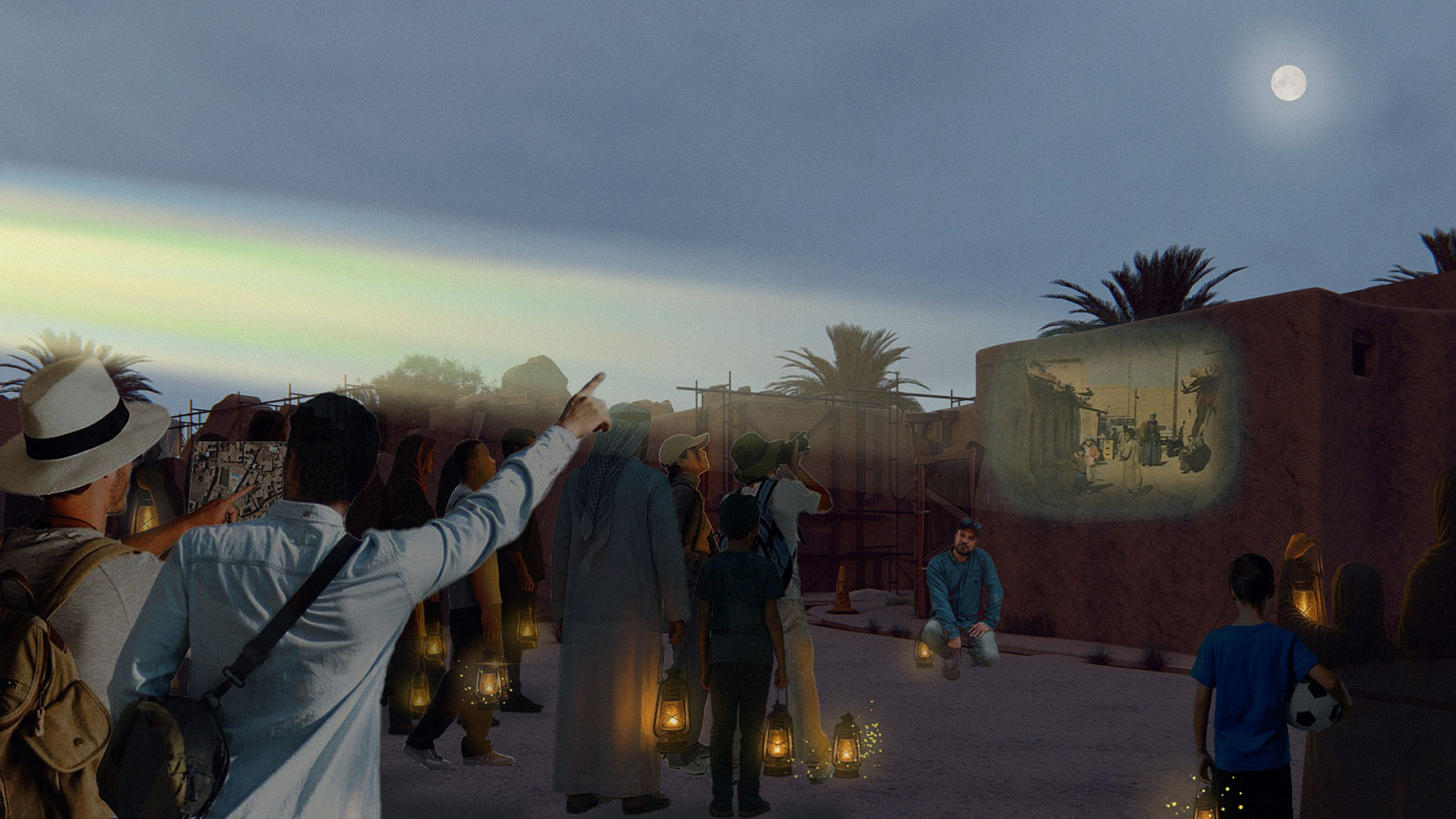
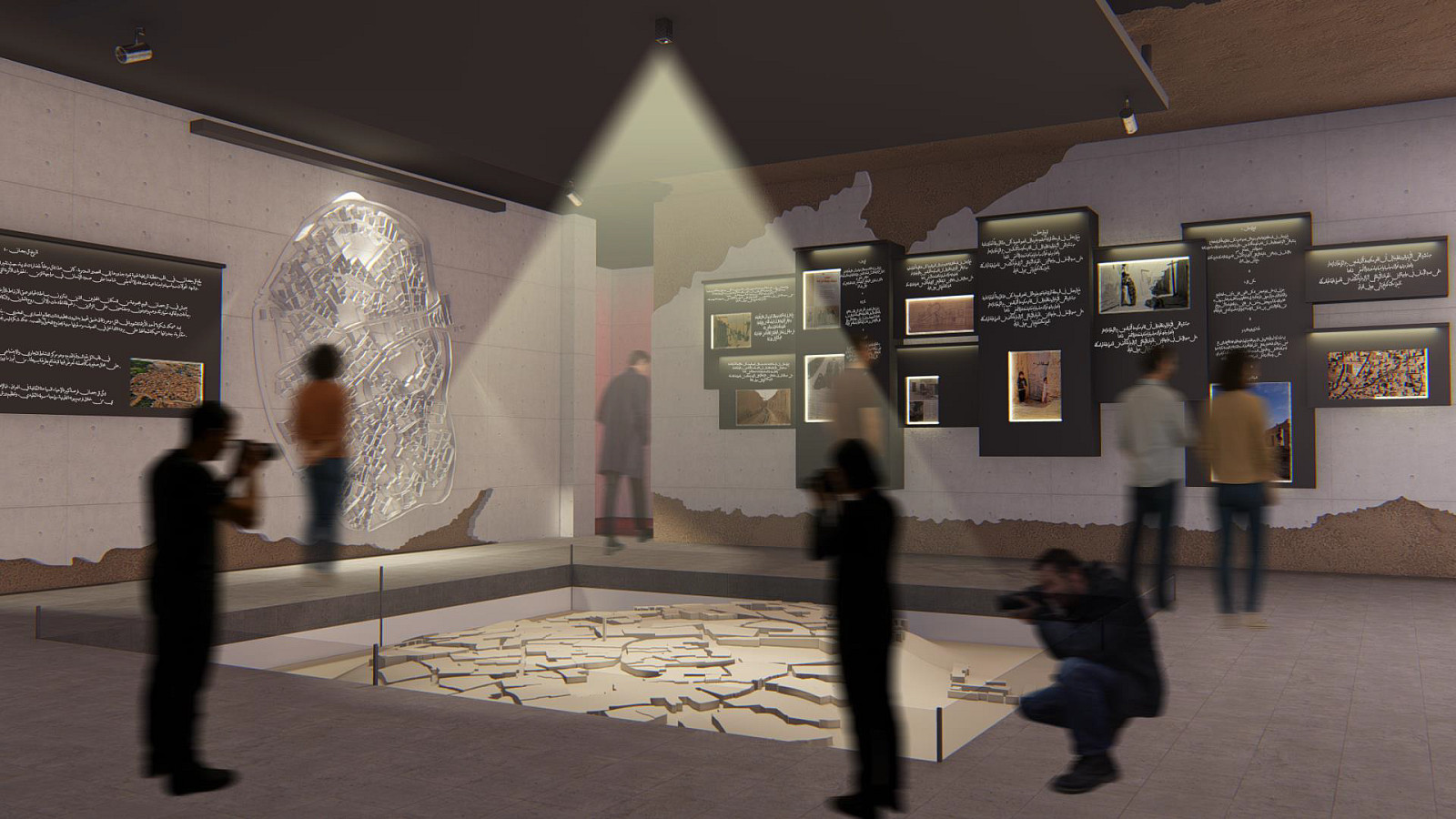
The second axis focuses on the rehabilitation and adaptive reuse of traditional residential buildings. A number of houses that remain inhabited by local families are preserved to maintain the authenticity of the settlement and its living heritage. Other restored houses are transformed into experiential exhibition spaces that introduce visitors to the daily life, customs, and architectural traditions of the mound’s residents, providing an immersive understanding of life within traditional mud-built dwellings. Furthermore, selected buildings are adapted as settings for historical film production, taking advantage of the site’s authentic architectural character and cultural atmosphere.
Both axes converge at the upper section of the mound, where they connect to the Grand Market of Tell Jassan. Historically, this market represented the economic and social heart of the settlement and remained a symbol of hope among residents for the revival of the mound. Consequently, its restoration became a central objective of the project and a key node within the overall urban strategy.
Beyond their functional roles, the two axes serve as catalysts for social and spatial regeneration. By distributing activities throughout the entire length of the mound rather than concentrating them at its edges, the project seeks to break the pattern of peripheral settlement and encourage movement toward the historic core. Simultaneously, the axes create a gradual and inviting visitor experience, removing the psychological and physical barriers that previously limited access to the interior of the mound. As a result, the project transforms Tell Jassan into a continuous sequence of cultural, social, and economic activities that reconnect people with the site and re-establish its role as a vibrant center of heritage and community life.
Technical information
The project adopts a heritage-led urban regeneration strategy that preserves the historical identity of Tell Jassan while introducing new cultural and economic functions. Restoration works rely primarily on traditional materials such as mud brick and palm trunks, supported by modern structural interventions where necessary.
The proposal includes the rehabilitation of existing houses, the revitalization of traditional craft workshops, restaurants, cafés, and the restoration of the historic central market. Two main pedestrian axes organize movement across the mound and distribute activities throughout the site, encouraging the reactivation of its historic core.
Environmental sustainability is achieved through adaptive reuse of existing structures, preservation of surrounding orchards, passive cooling strategies, and the revival of local crafts, ensuring the long-term cultural, social, and economic sustainability of Tell Jassan.
Documentation

Copyright © 2026 INSPIRELI | All rights reserved. Use of this website signifies your agreement to the Terms of Use, Privacy Policy, and use of cookies.
