Arsenal Memory Park (Architectural Design)


Project idea
The idea for the project arose from the need to create a space that tells the story of the Clandestine Detention Center in San Miguel de Tucumán.
The concept behind the design draws on various aspects of the site’s history and that of the dictatorship in Argentina; corruption, resilience, protests, those affected, the scars left behind, and the responsibility to tell the truth.
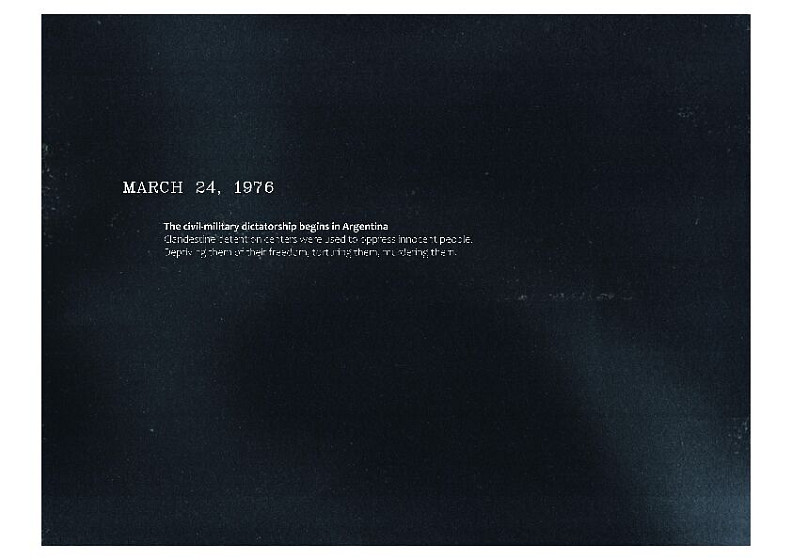
The main idea centers on an axis aligned with the sunset of March 24 (the start of the dictatorship, National Day of Remembrance and Justice) and the sunrise of December 10 (the end of the dictatorship, election of a new government).
It also draws inspiration from elements such as the scarves worn by the Mothers of the Plaza de Mayo, as well as the materiality and context of the existing buildings on the site.
Project description
The architectural project, and the design of Arsenal Memory Park, features a variety of activities and flexible spaces that respond to the site’s internal and external context.
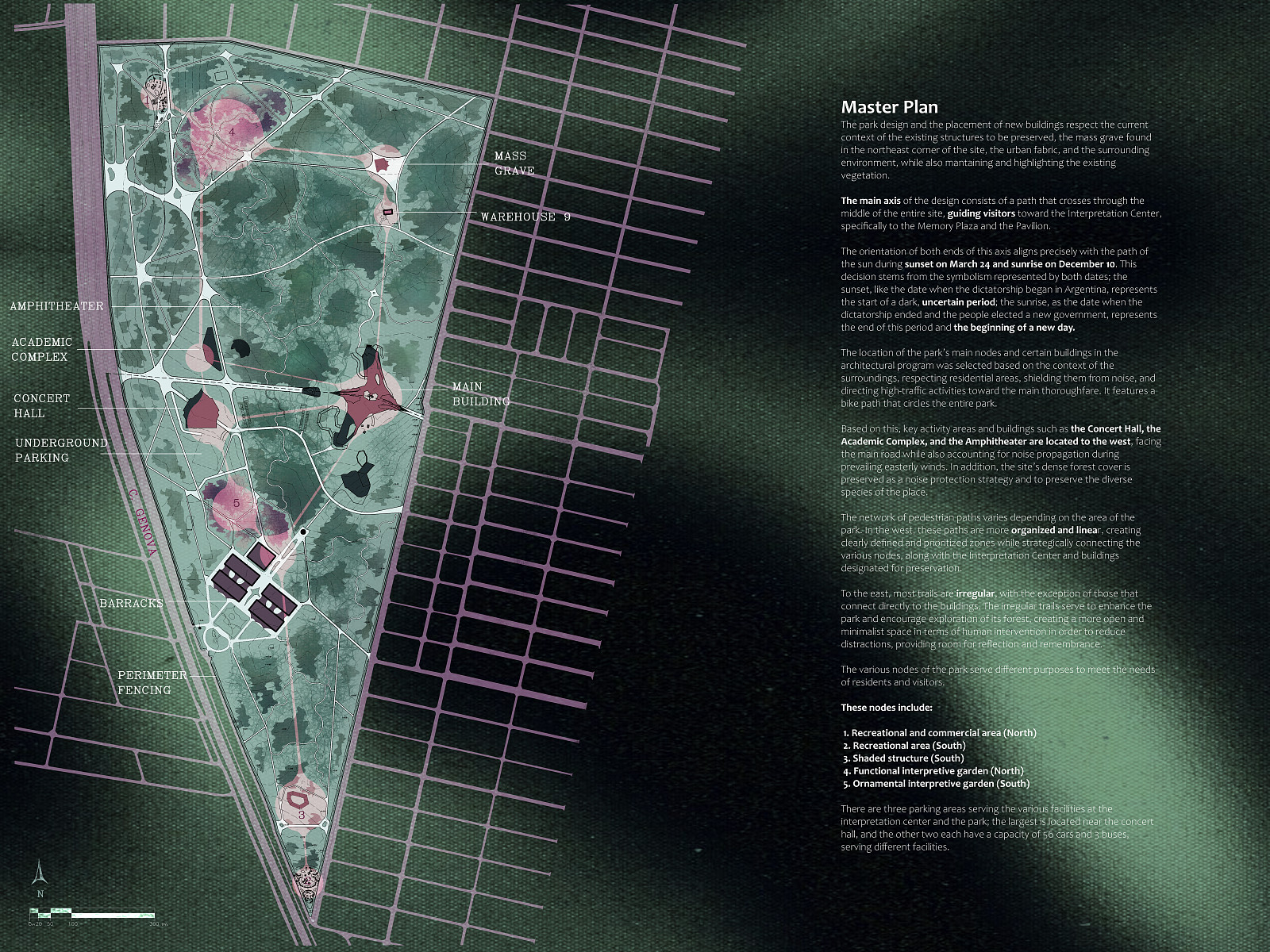
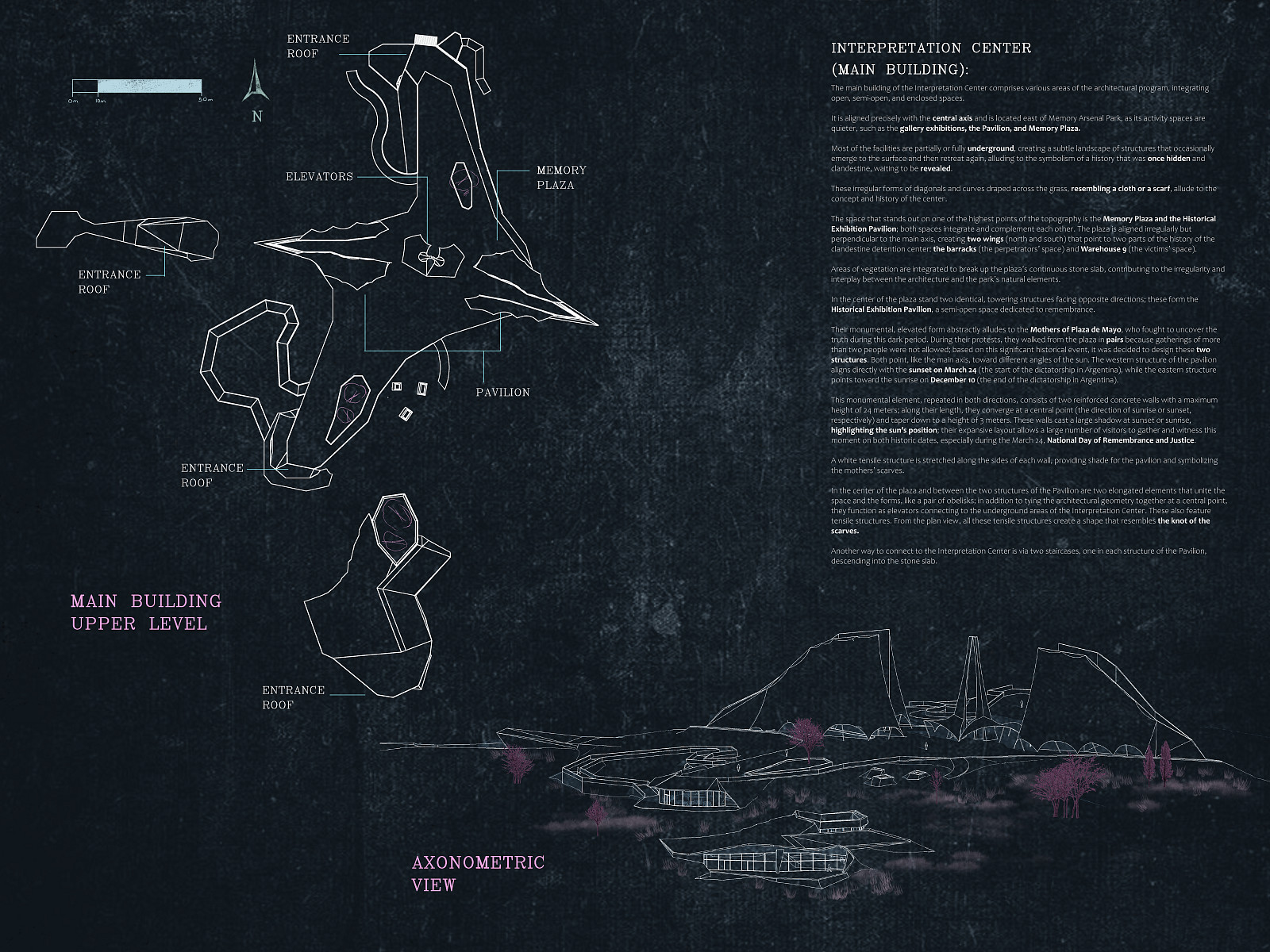
The alignment of most of the new architectural elements follows the concept of a central axis pointing toward sunset on March 24 and sunrise on December 10.
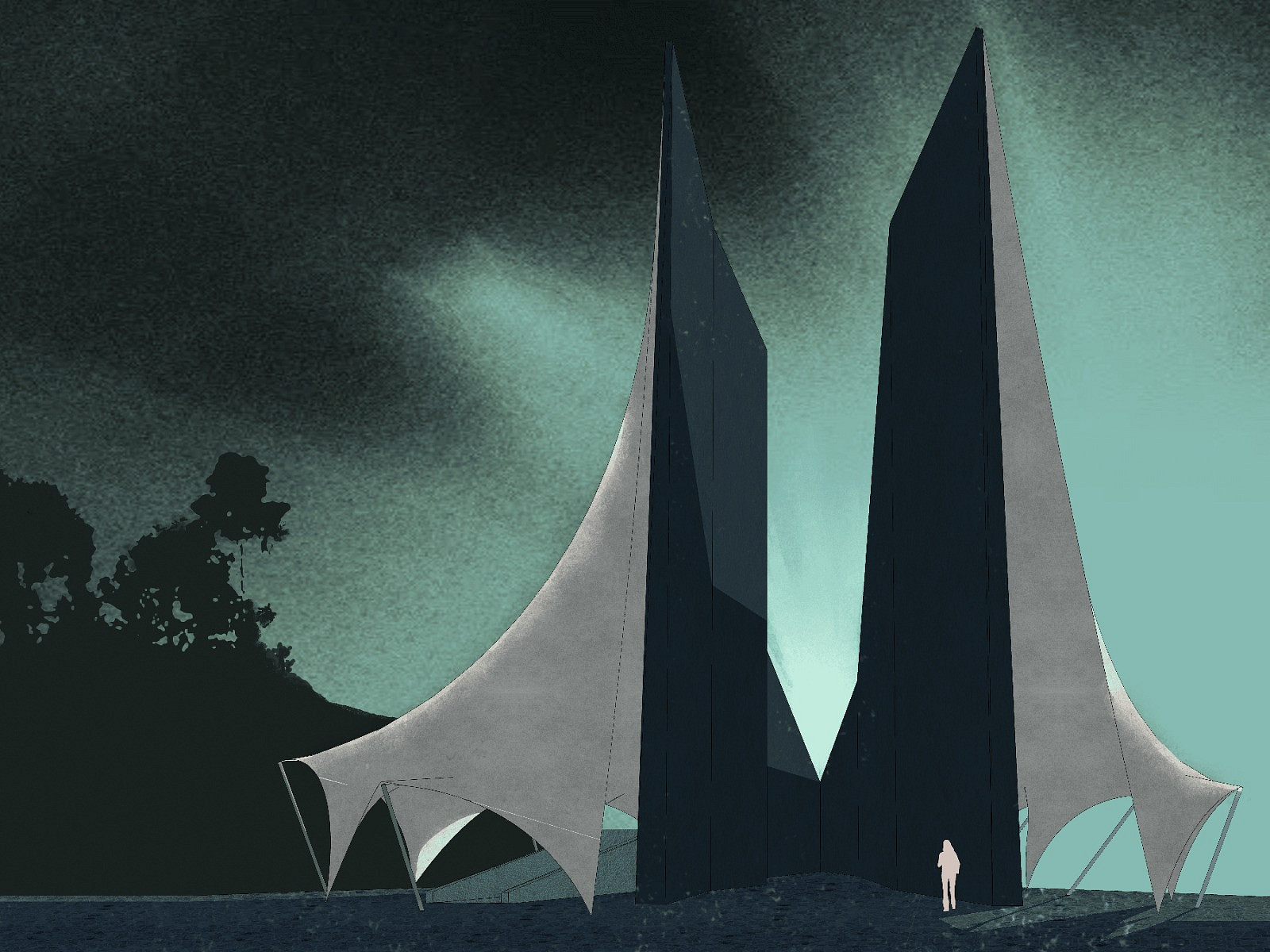
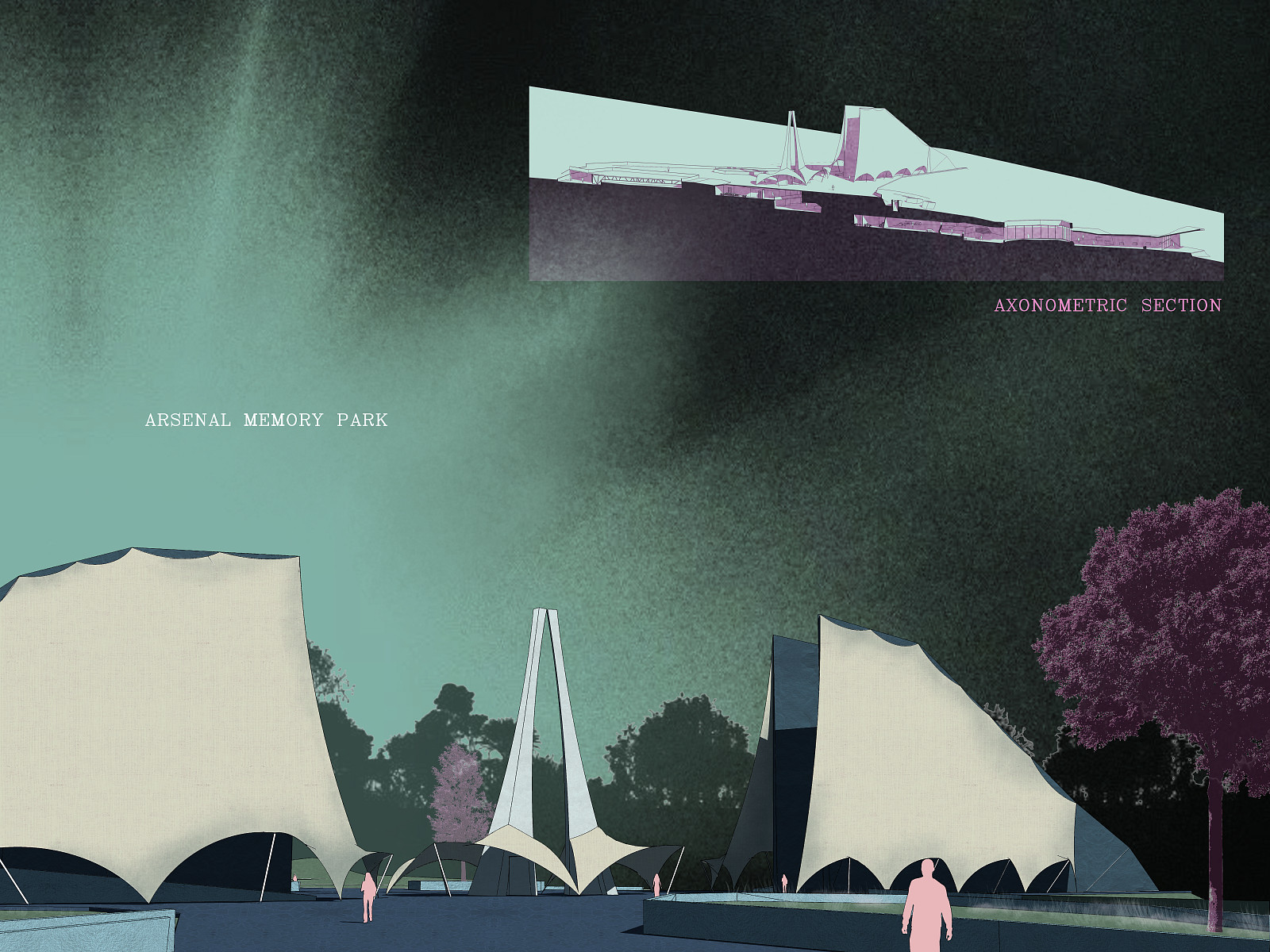
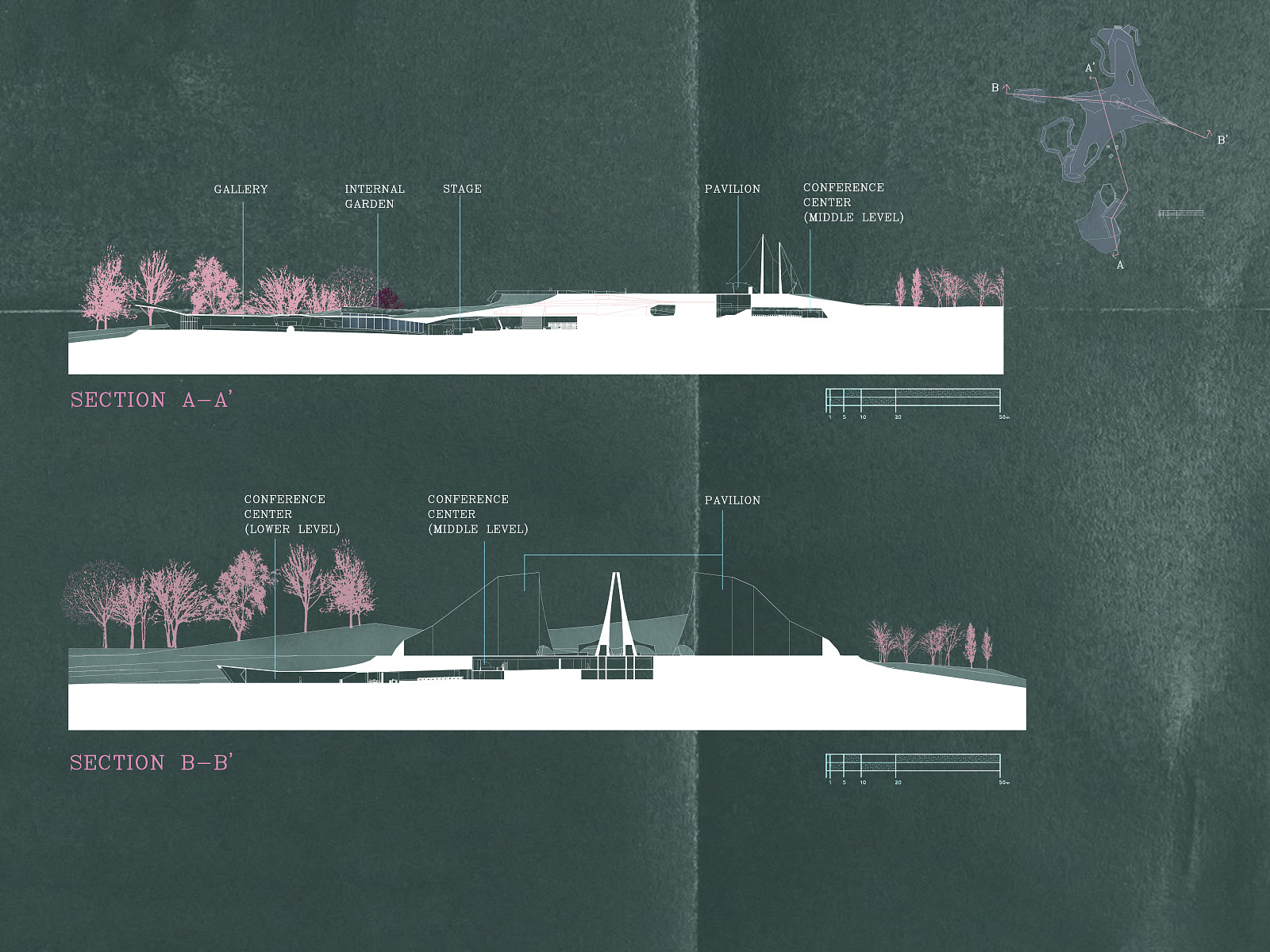
The layout of the main building of the interpretation center follows this axis both parallel and perpendicular to it, highlighting the Memory Plaza and the Pavilion with two large structures that rise high, acting as a beacon visible from a great distance. The rest of the facilities in this building are partially buried in the ground and in other parts beneath the plaza, emerging subtly at certain points, much like a hidden story waiting to be discovered.
The other ancillary facilities are distributed based on their traffic volume and with consideration for noise protection for the residential areas to the east.
The geometry plays diversely with straight lines, diagonals, curves, and organic forms, like a blend of the concepts of fracture, scars, and scarves.
The park diversifies its functions, offering social and multipurpose areas, as well as reflective and serene spaces. It provides a beneficial utility for the resident community and visitors, while maintaining its memorial aspect.
Research, exhibition, and remembrance areas are proposed within the existing buildings to be preserved—such as the barracks and Warehouse 9—in order to maintain their historical value while allowing controlled public access.
Finally, a space is proposed for the mass grave identified north of the park, creating an enclosure that allows for controlled public access to it while also ensuring its preservation in good condition; this space also includes a research area dedicated specifically to the mass grave.
Technical information
For the park, a variety of native Tucumán species were selected, specifically for a functional interpretive garden and an ornamental interpretive garden. Some of the species selection: Annona emarginata, Lithraea molleoides, Cupania vernalis, Celtis iguanaea, Petiveria alliacea L.
The proposed buildings feature a variety of structures and materials selected based on the project concept.
Reinforced concrete shells and load-bearing walls are used for the main building, supporting the entire structure, as well as the earth surrounding the underground sections; this also provides thermal protection for various seasonal climates, creating comfort for the occupants.
In addition to the aforementioned techniques, concrete columns are also used for structural load-bearing, and tensile structures serve as roofs in open areas to create an open floor plan through their lightweight elements.
These techniques are implemented in diverse ways across the buildings, varying to create a spacious and functional space.
The materials consist of exposed concrete, wood finishes and furniture, stone masonry, stone slabs for open spaces, glass windows, and textiles as dividing elements.
Documentation

Copyright © 2026 INSPIRELI | All rights reserved. Use of this website signifies your agreement to the Terms of Use, Privacy Policy, and use of cookies.
