Mehrdad Tower


Project idea
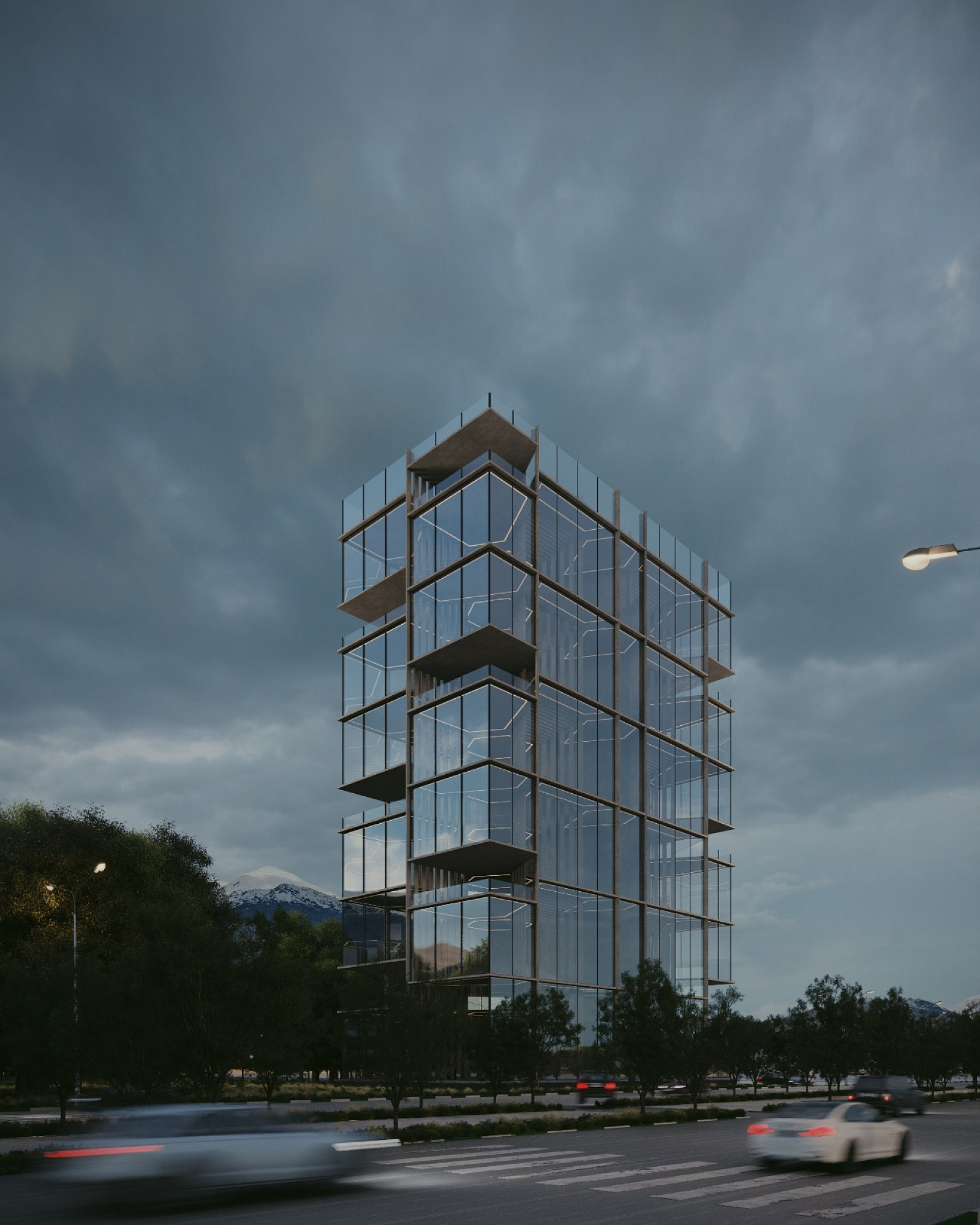
This project explores architecture as a condition of spatial swelling, where spatial hierarchy emerges not through enclosure, but through vertical displacement and fragmentation of the floor plate. By reinterpreting the principles of the open plan and the Raumplan, the project proposes a continuous spatial field in which slabs are no longer neutral horizontal surfaces but active elements that define spatial intensity through their shifting elevations.
Project description
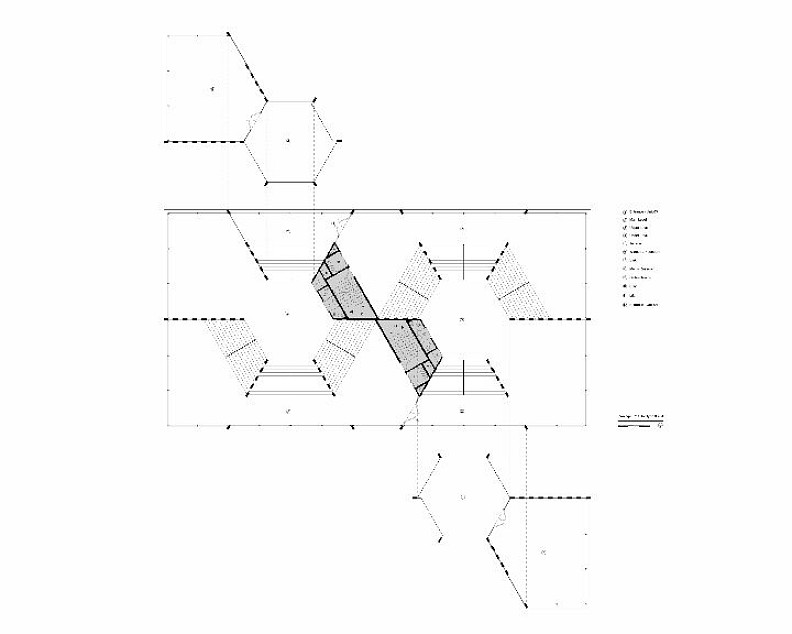
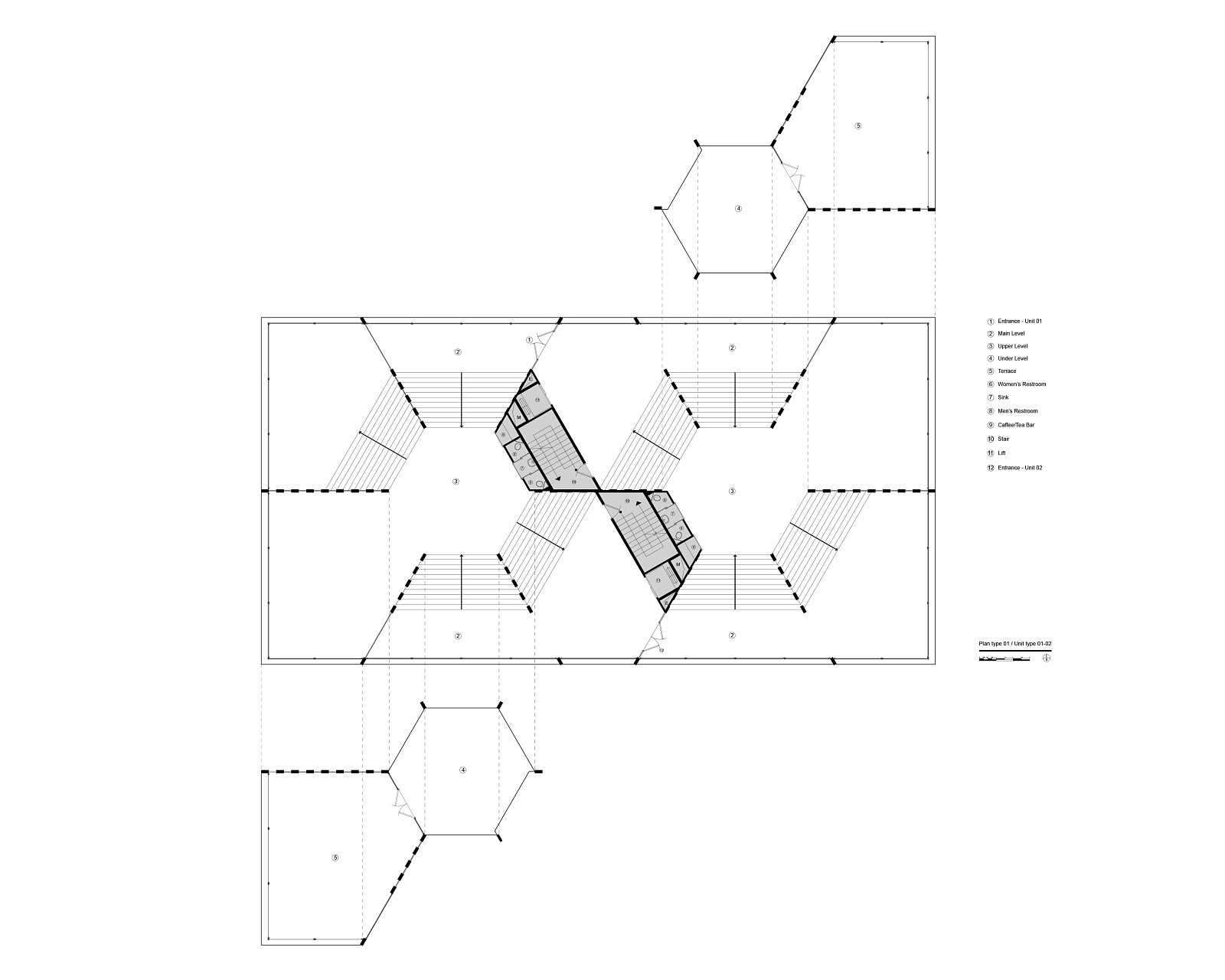
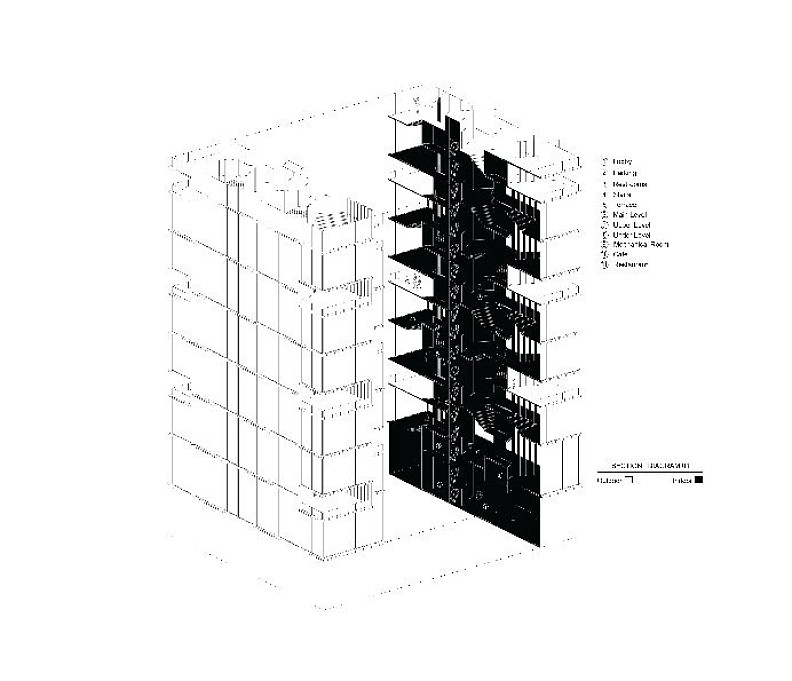
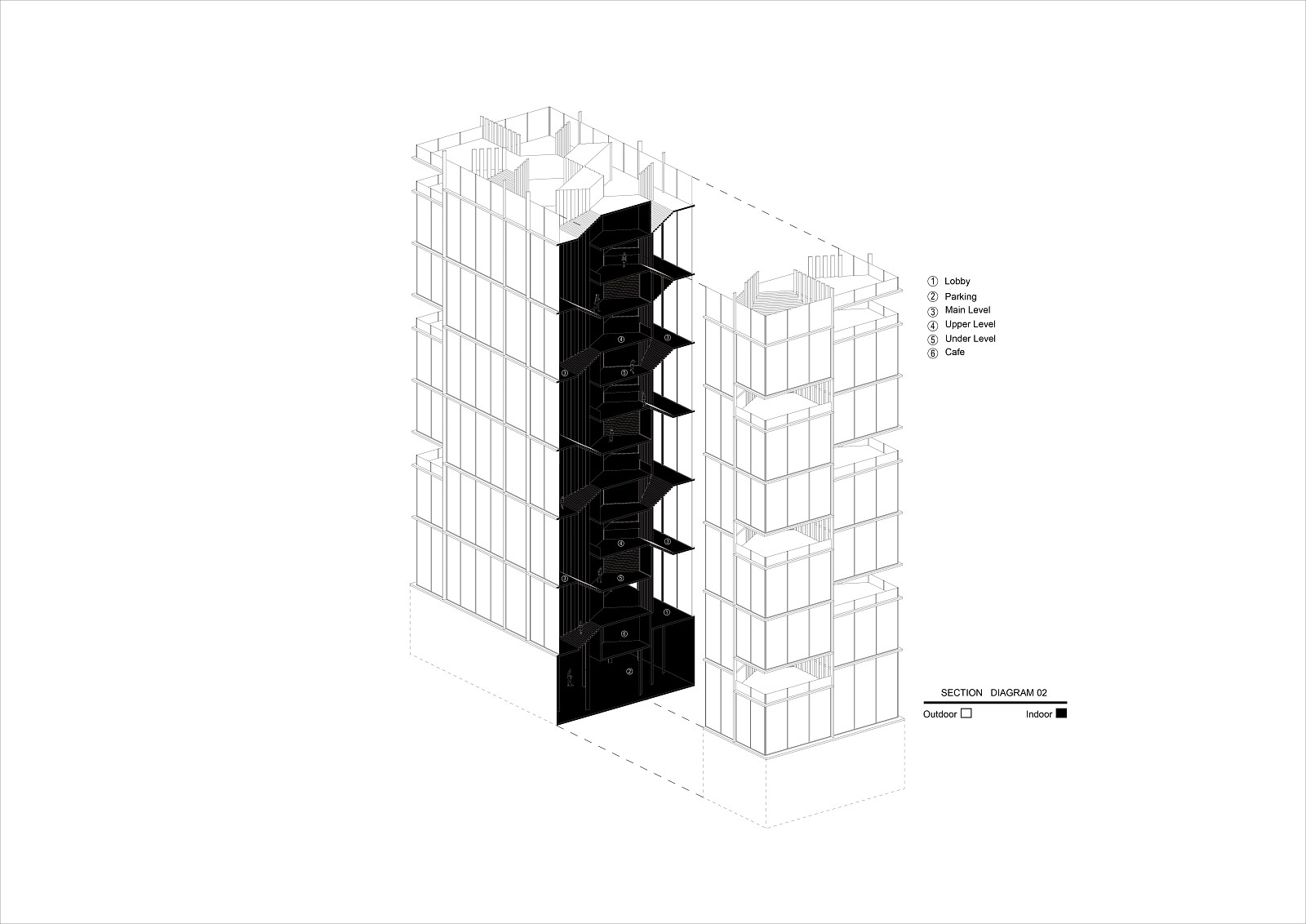
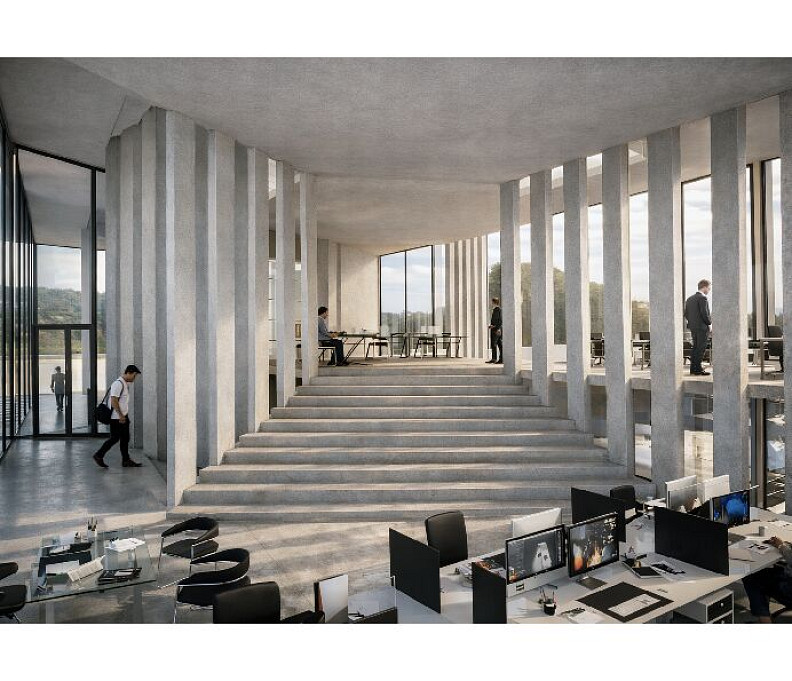
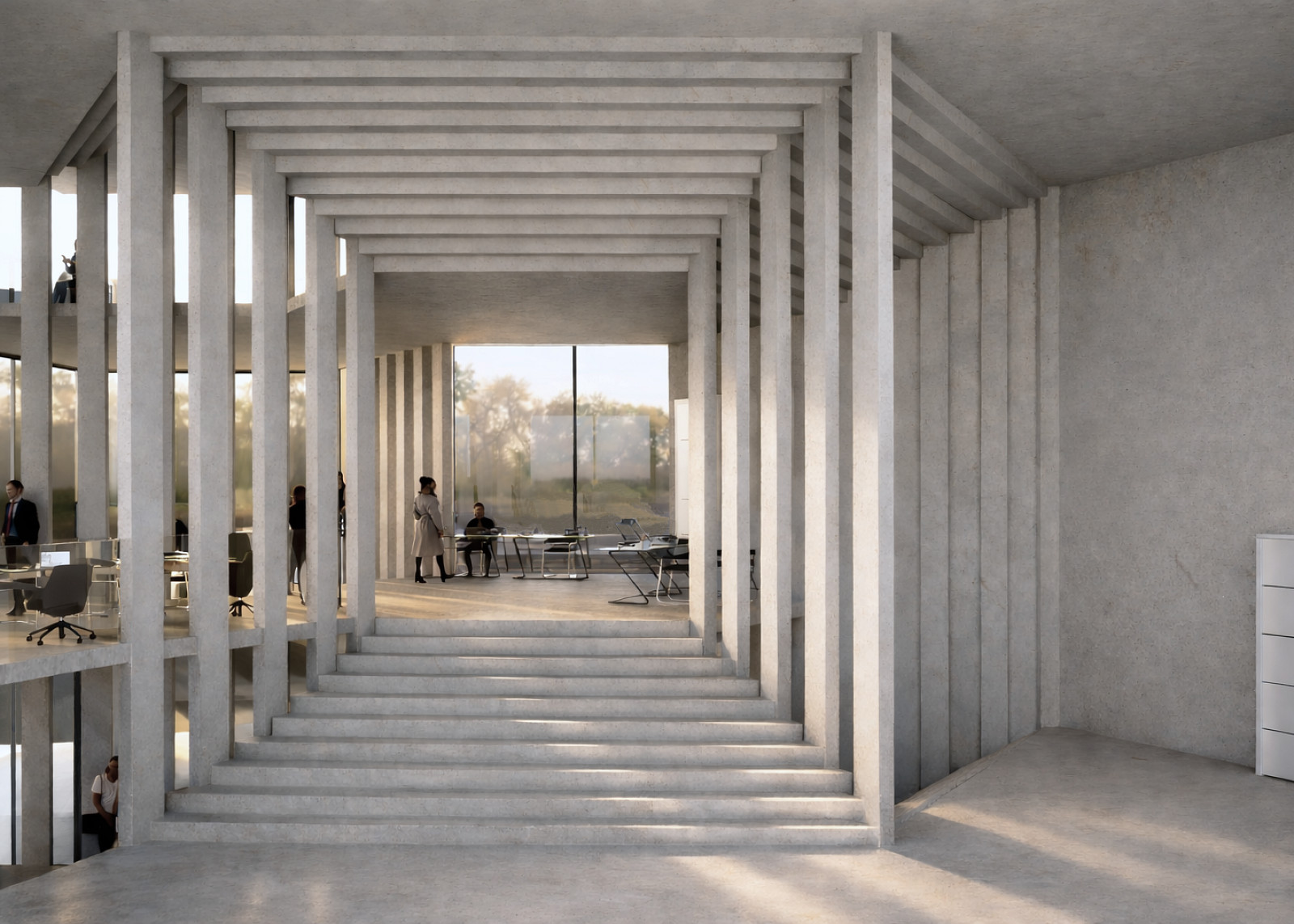
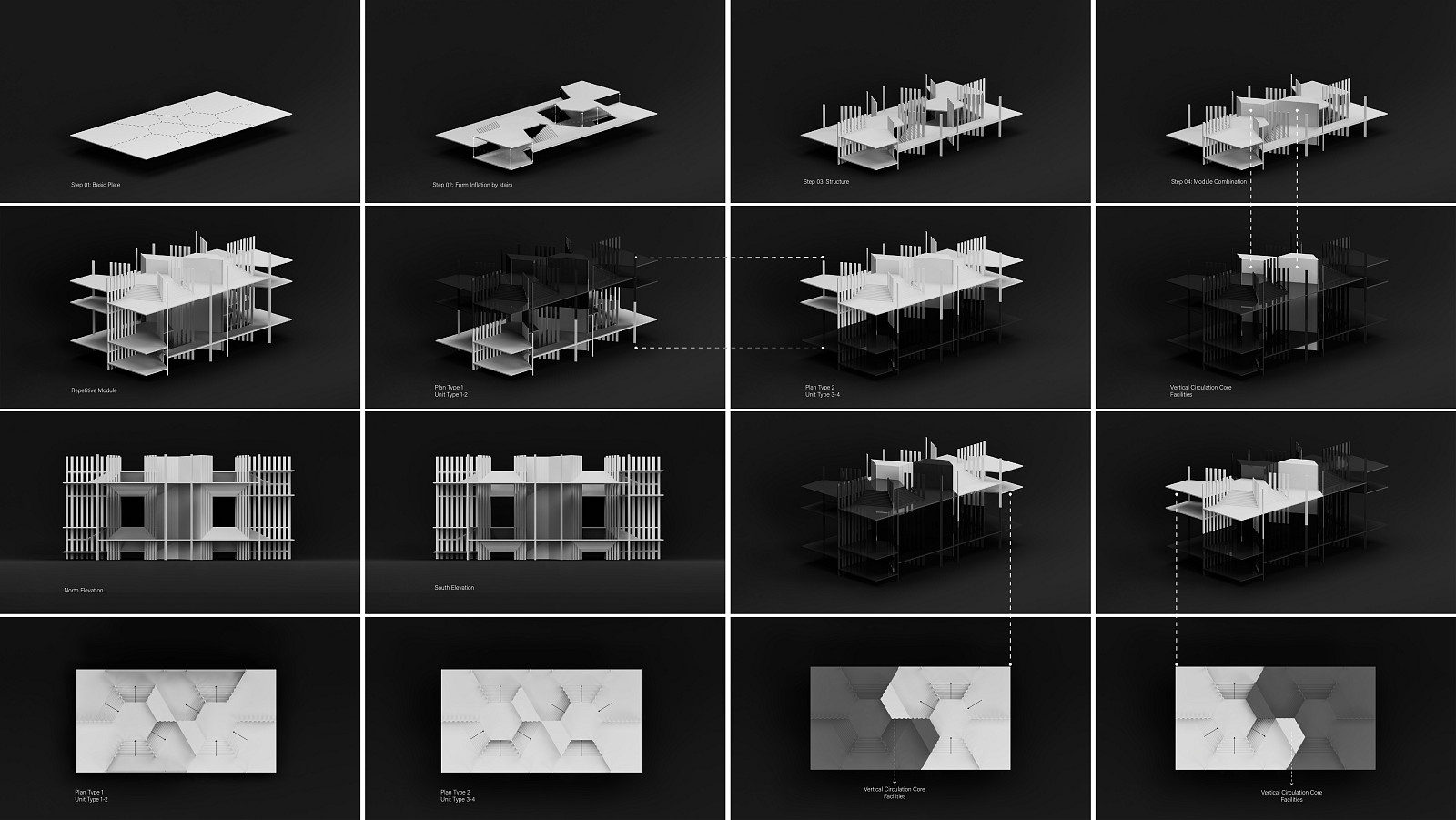
The proposal constructs a three-dimensional spatial system in which differentiation is achieved through stratification rather than partition. Floor slabs are fragmented, shifted, and reassembled at varying heights, generating a sequence of interconnected spatial conditions. Movement is organized through a continuous system of stairs and landings, which replaces traditional corridors and walls.
Referencing Le Corbusier’s Dom-Ino diagram, the project transforms its structural neutrality into a spatially active framework. While circulation remains continuous and legible, the scale and density of vertical connections are intensified to produce a dynamic spatial field.
This “swelling” condition maintains visual continuity across the entire unit while allowing selective physical accessibility. Each module operates as a fragment within a larger system, where repetition and adjacency generate a continuous architectural fabric.
Technical information
The structural system is based on a modified Dom-Ino framework in which floor slabs are intentionally fragmented and repositioned at multiple elevations. Load-bearing elements are minimized to allow spatial flexibility, while vertical circulation cores (stairs) act as the primary organizing system.
The project operates through a modular logic, where each unit is designed as a repeatable spatial fragment. These modules are interconnected through adjacency rules, forming a continuous spatial field. The variation in slab levels creates differentiated spatial zones without the use of enclosing walls, ensuring both openness and hierarchy within a single structural system.
Documentation

Copyright © 2026 INSPIRELI | All rights reserved. Use of this website signifies your agreement to the Terms of Use, Privacy Policy, and use of cookies.