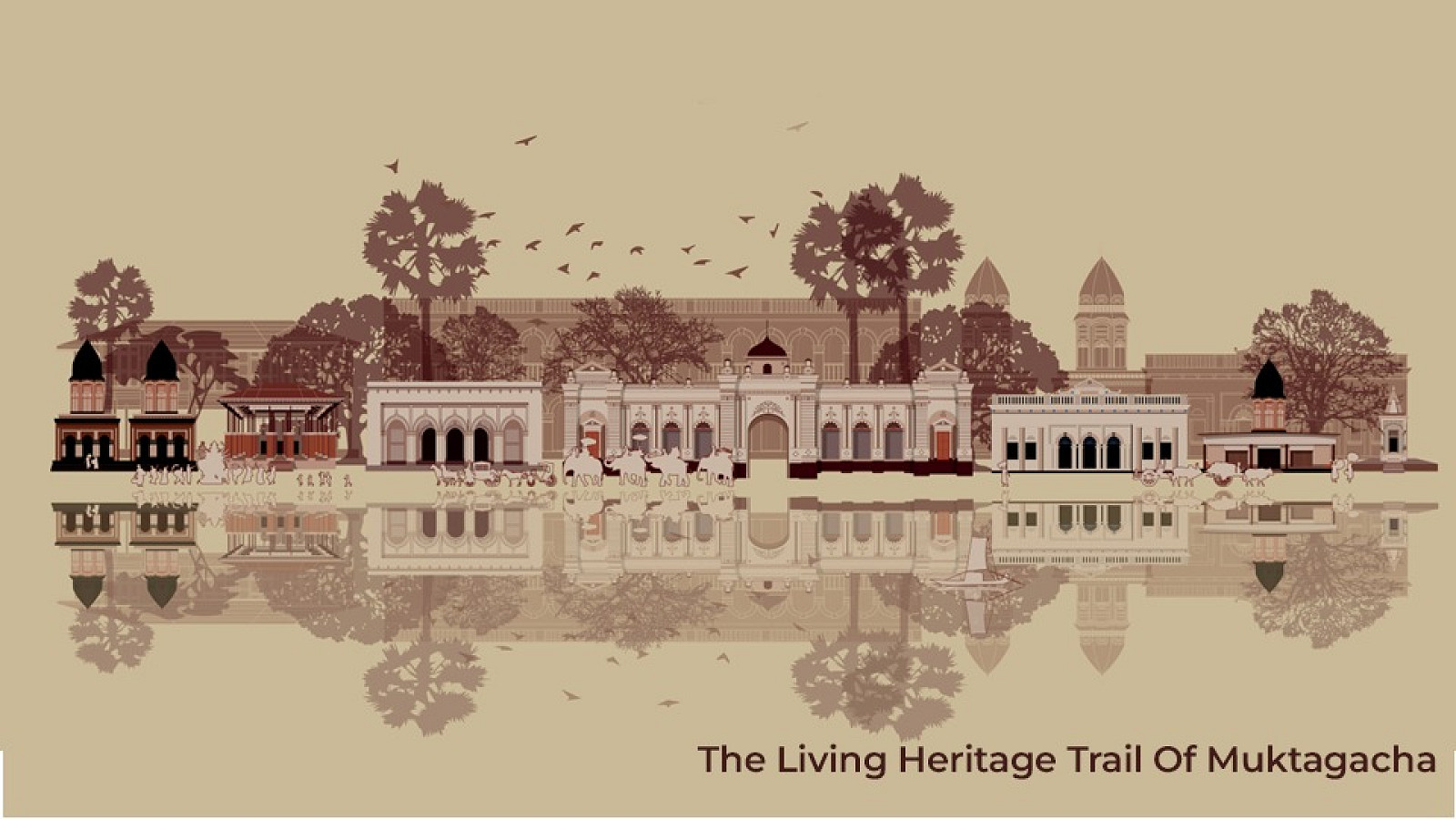
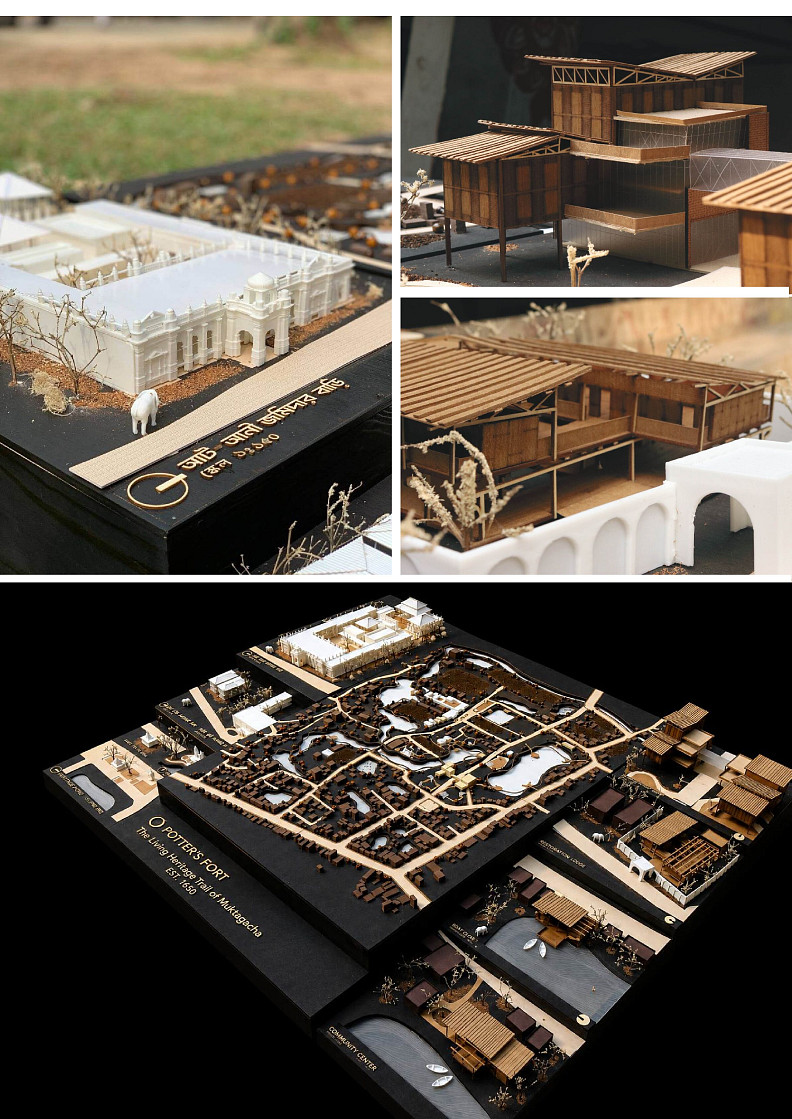
The Living Heritage Trail of Muktagacha


Project idea
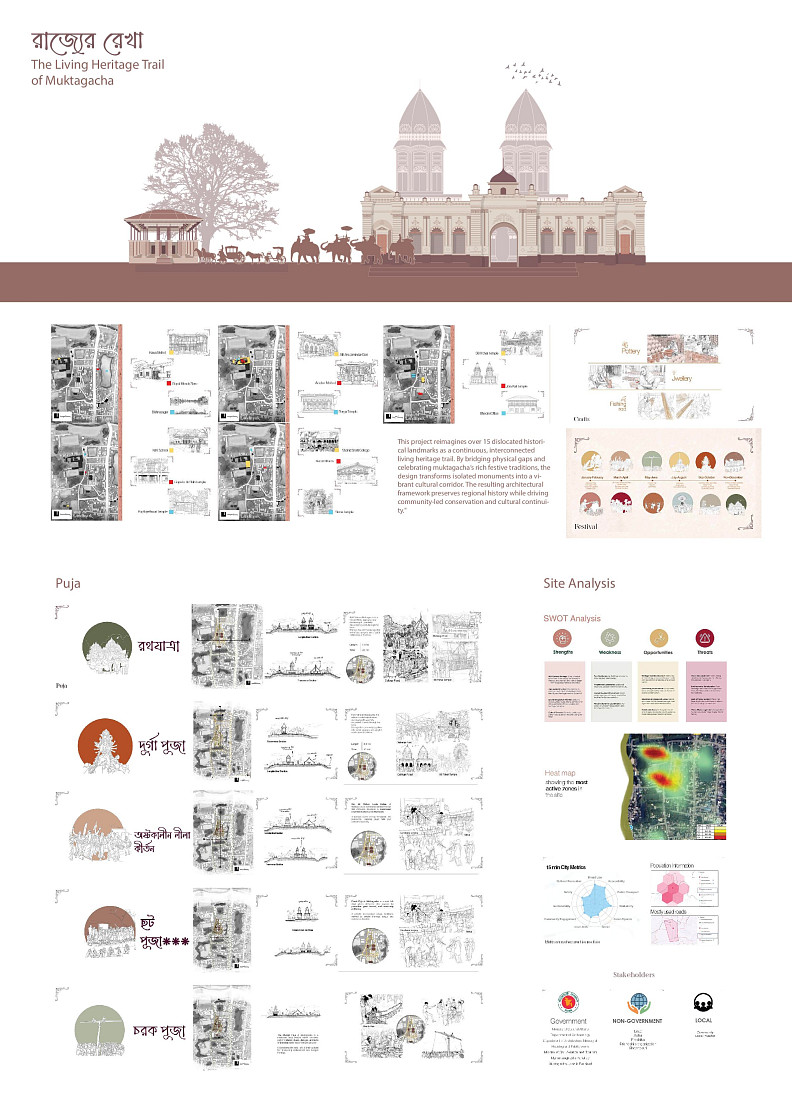
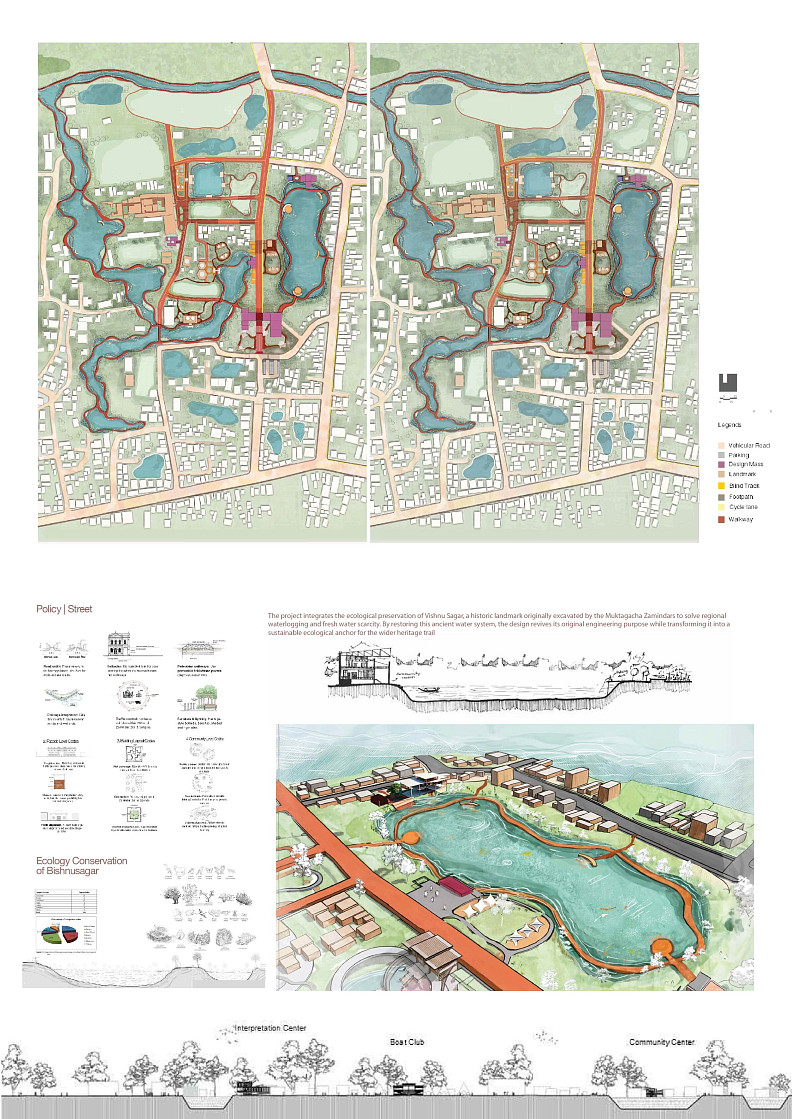
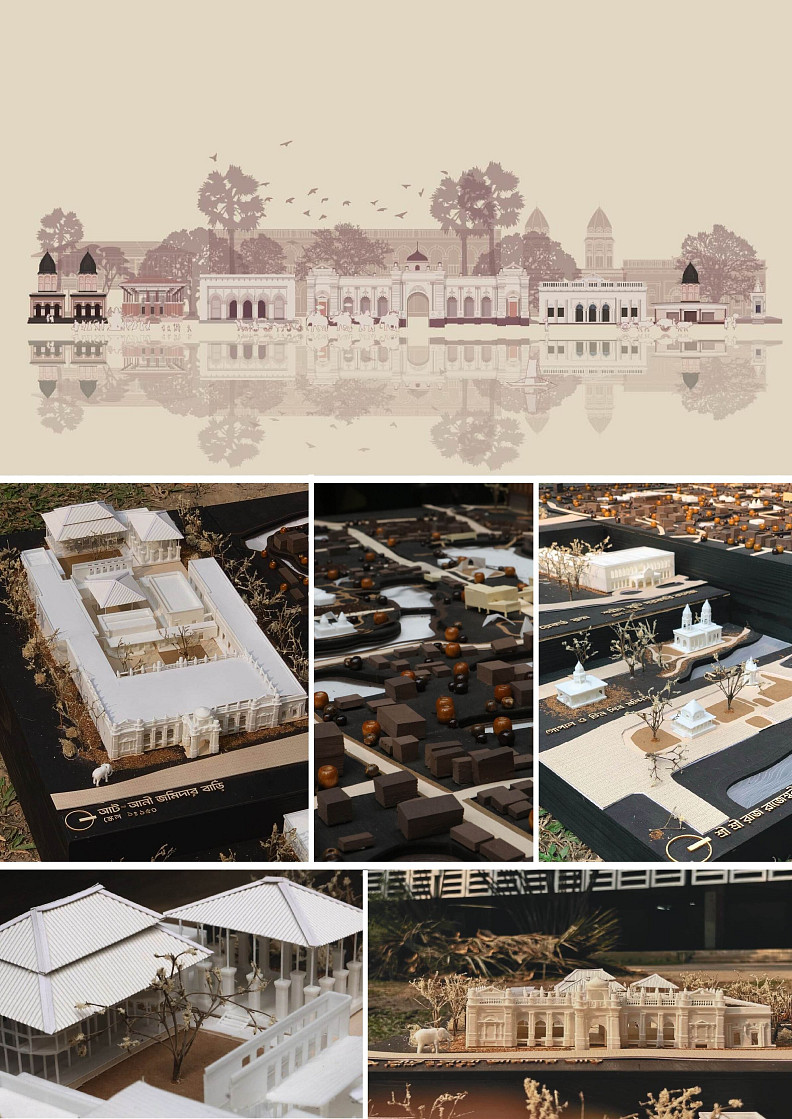
This project explores the regeneration of Muktagacha Zamindar Bari through a heritage trail-based conservation approach that reconnects historic buildings, public spaces, ecological assets, and community activities into a unified cultural landscape. Moving beyond the preservation of individual monuments, the proposal aims to revitalize the precinct through adaptive reuse, ecological restoration, community engagement, and sustainable tourism initiatives. By integrating both tangible and intangible heritage, the project seeks to strengthen local identity, improve accessibility, and transform Muktagacha into a vibrant and resilient heritage destination. The proposal presents a replicable model for heritage-led regeneration in Bangladesh, demonstrating how conservation can contribute to social, cultural, environmental, and economic sustainability.
Project description
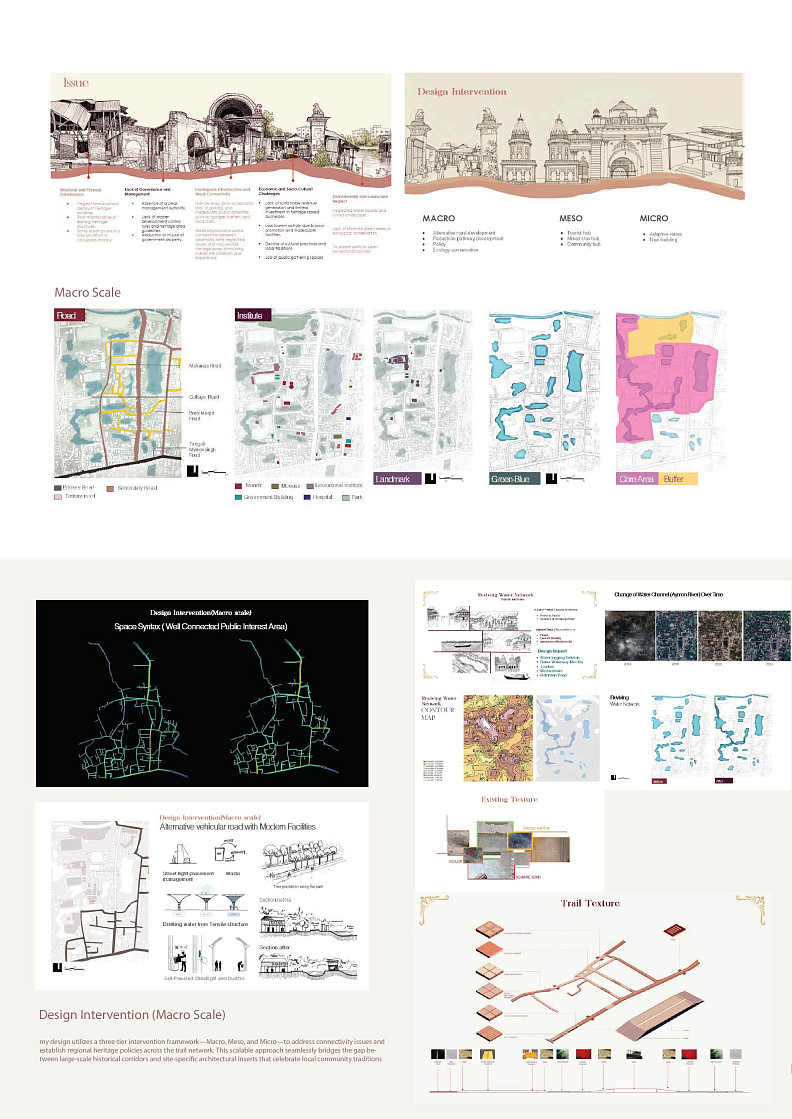
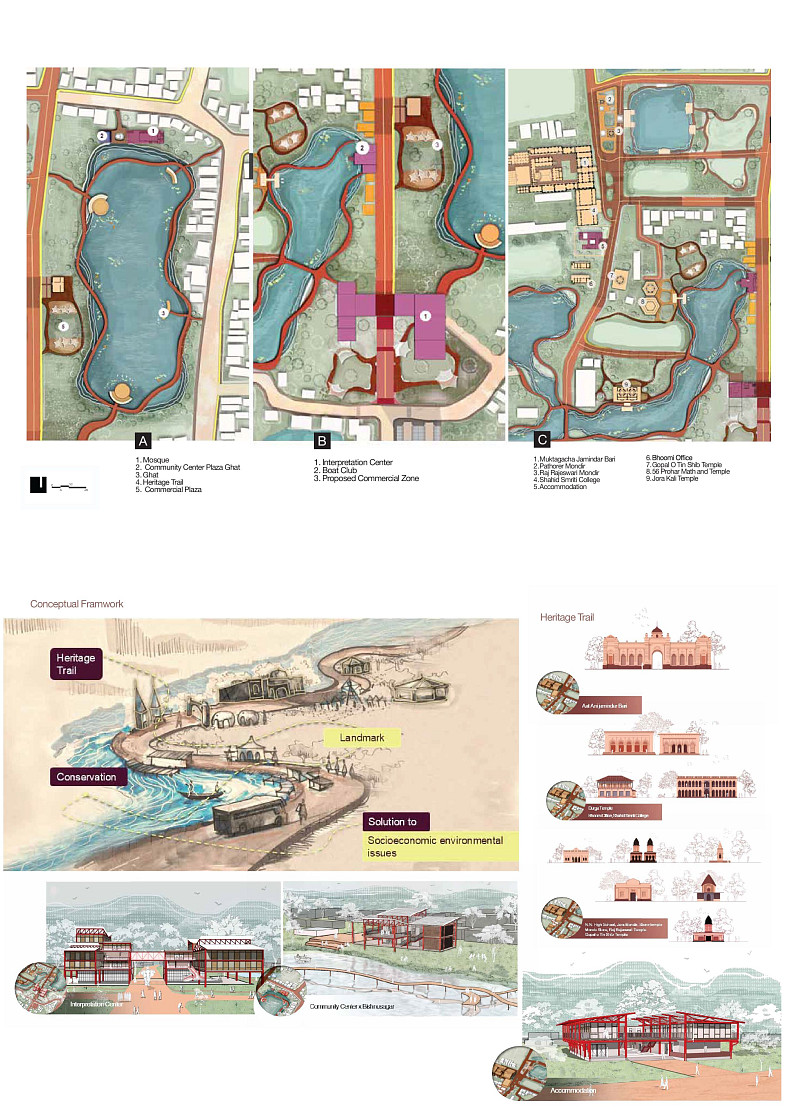
This project proposes a heritage-led regeneration strategy for Muktagacha Zamindar Bari, aiming to revitalize the historic precinct through an integrated heritage trail network. The scope of the project extends beyond the conservation of individual monuments to address the broader cultural landscape, including historic structures, public spaces, ecological systems, and community activities. The proposal focuses on improving physical connectivity through pedestrian-friendly routes that link significant landmarks, water bodies, religious sites, and cultural spaces, creating a cohesive and engaging heritage experience.
The project includes the conservation and adaptive reuse of heritage buildings, ecological restoration of degraded landscape elements, enhancement of public amenities, and the introduction of interpretation centres, gathering spaces, local markets, and tourism-support facilities. It also emphasizes community participation and the preservation of intangible heritage, such as local traditions, festivals, and crafts, to ensure that cultural practices remain active and meaningful. By integrating conservation with sustainable tourism, environmental stewardship, and socio-economic development, the project seeks to transform Muktagacha Zamindar Bari into a vibrant, inclusive, and resilient cultural destination while providing a replicable model for heritage precinct regeneration in Bangladesh.
Technical information
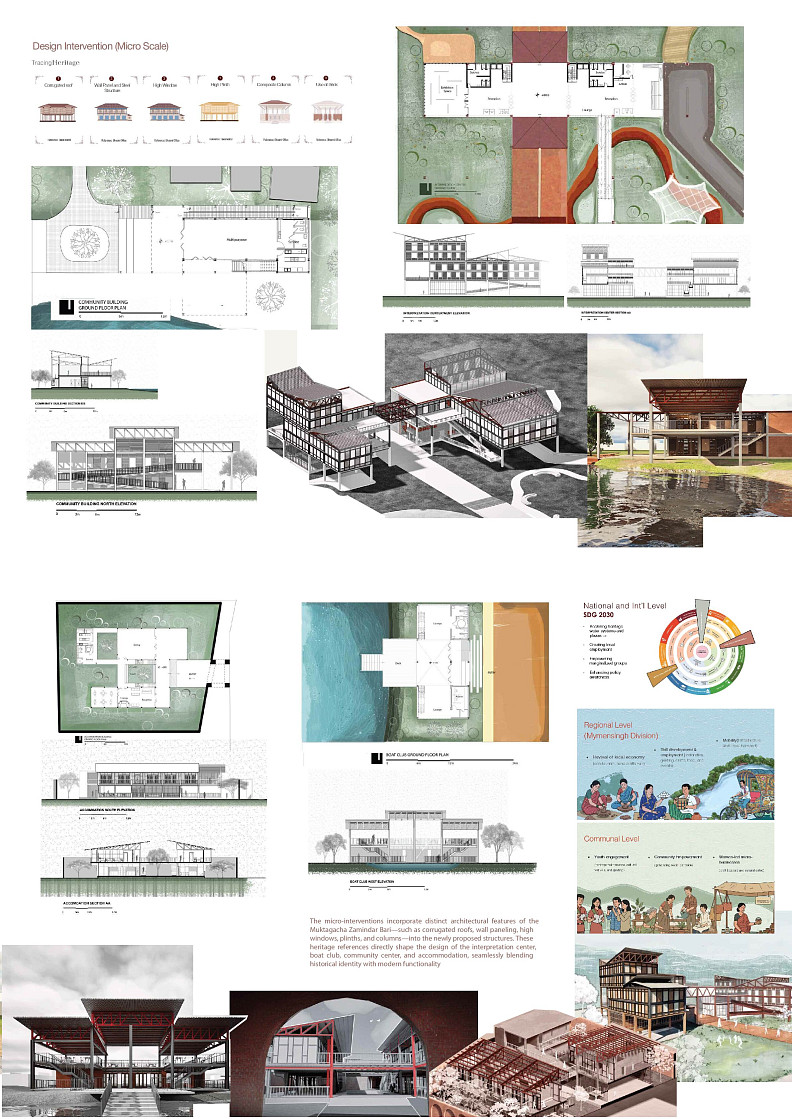
The project utilizes lightweight steel framing, corrugated metal roofing, and exposed brick masonry inspired by the existing architectural character of Muktagacha Zamindar Bari. Design interventions incorporate framed openings, steel column elements, and raised plinths to ensure contextual compatibility and improved drainage performance. Existing heritage structures are proposed to be conserved using compatible restoration materials and techniques, while new additions remain structurally independent and visually distinguishable from the historic fabric. The proposal also includes permeable paving, energy-efficient lighting, wayfinding signage, and universally accessible pedestrian pathways to enhance functionality, durability, and long-term site management.
Documentation
Show PDF 1Show PDF 2Show PDF 3Show PDF 4Show PDF 5Show PDF 6Show PDF 7
Created in:


Copyright © 2026 INSPIRELI | All rights reserved. Use of this website signifies your agreement to the Terms of Use, Privacy Policy, and use of cookies.