The Harmony Haven


Project idea
The Harmony Haven – Adaptive Reuse & Heritage Restoration of Umdah Bagh Palace
Subtitle: Revitalizing the Madrasa-e-Azam as a Neo-Classical Hub for Skill, Strength, and Serenity (Mount Road, Chennai)
1. Project Context & Historical Background
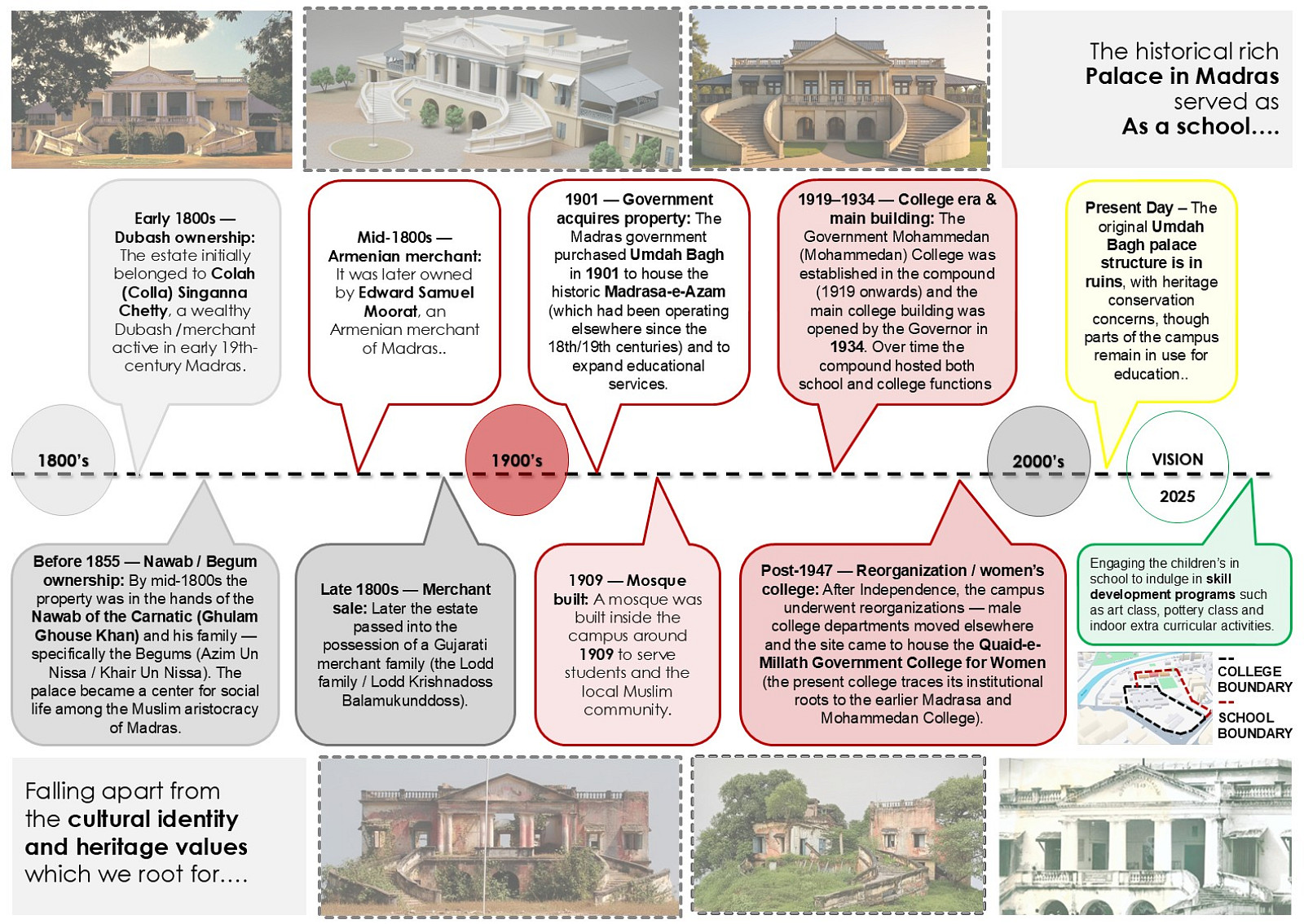
Umdah Bagh Palace, situated on Mount Road (Anna Salai) in Chennai, is an iconic heritage structure that has served as a significant educational and social landmark for over two centuries. Originally built in the early 1800s and later owned by the Nawabs of the Carnatic, the building was acquired by the Madras Government in 1901 to house the Madrasa-e-Azam (a historic Muslim educational institution). Over the decades, it transitioned to the Quaid-e-Millah Government College for Women.
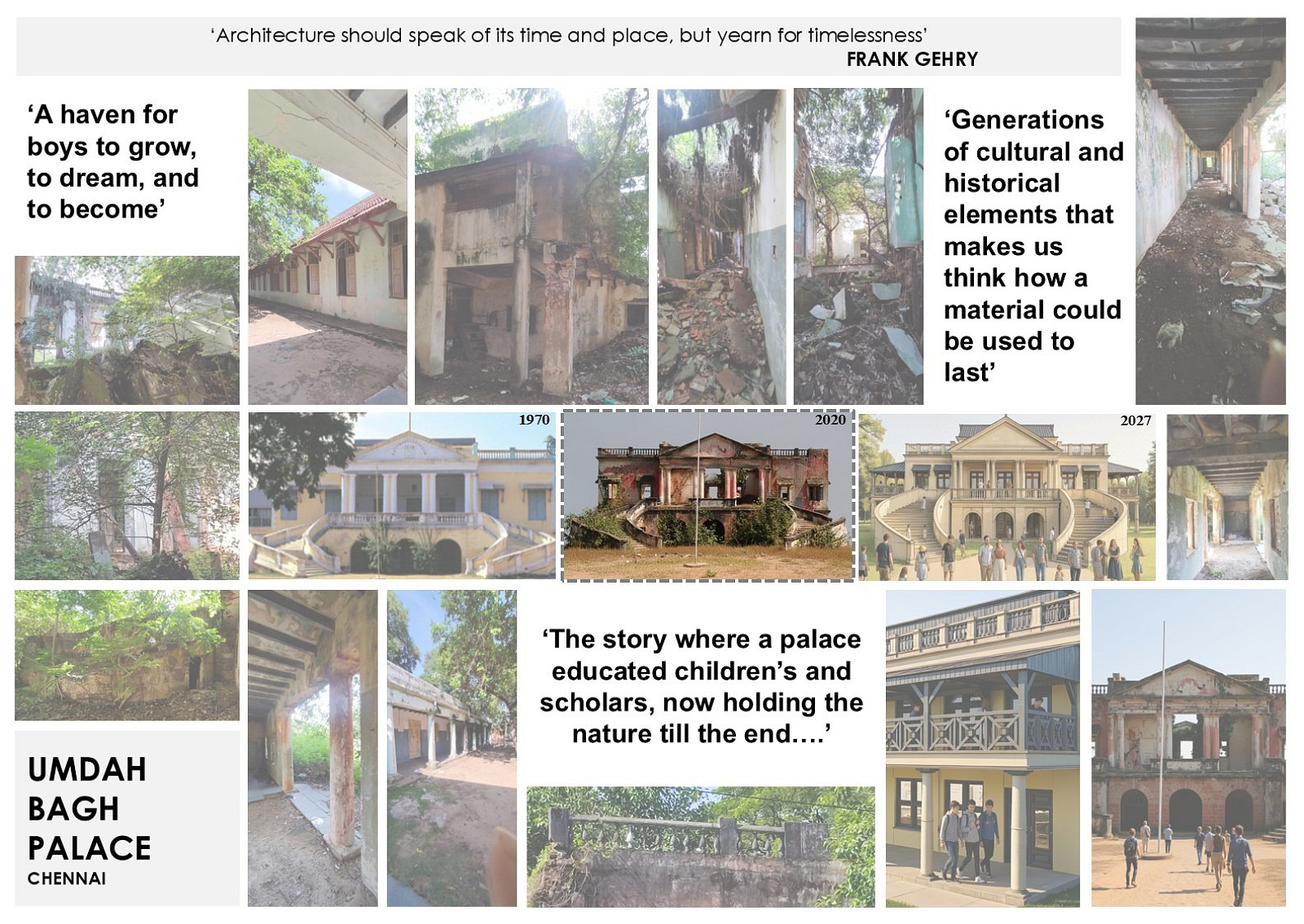
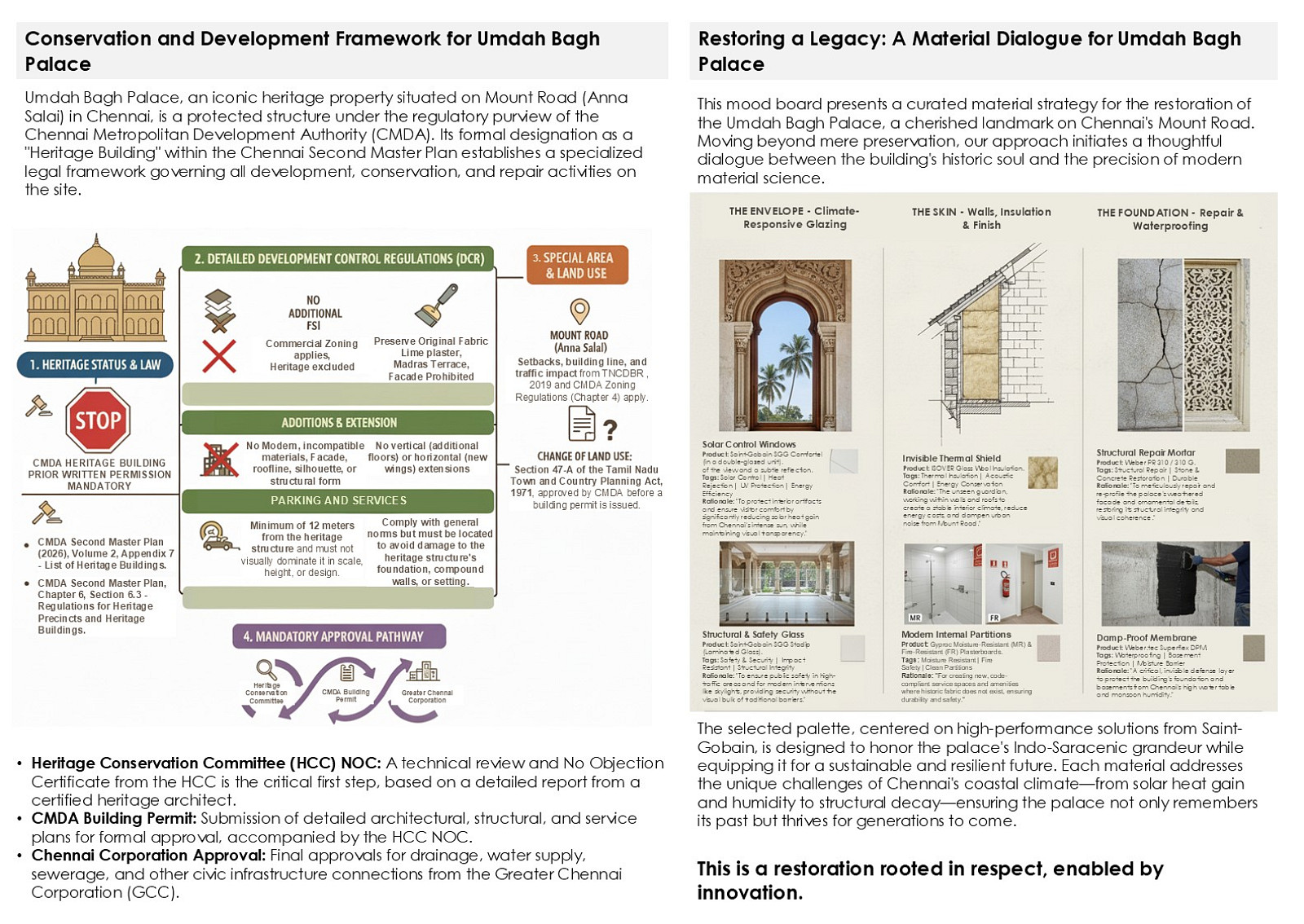
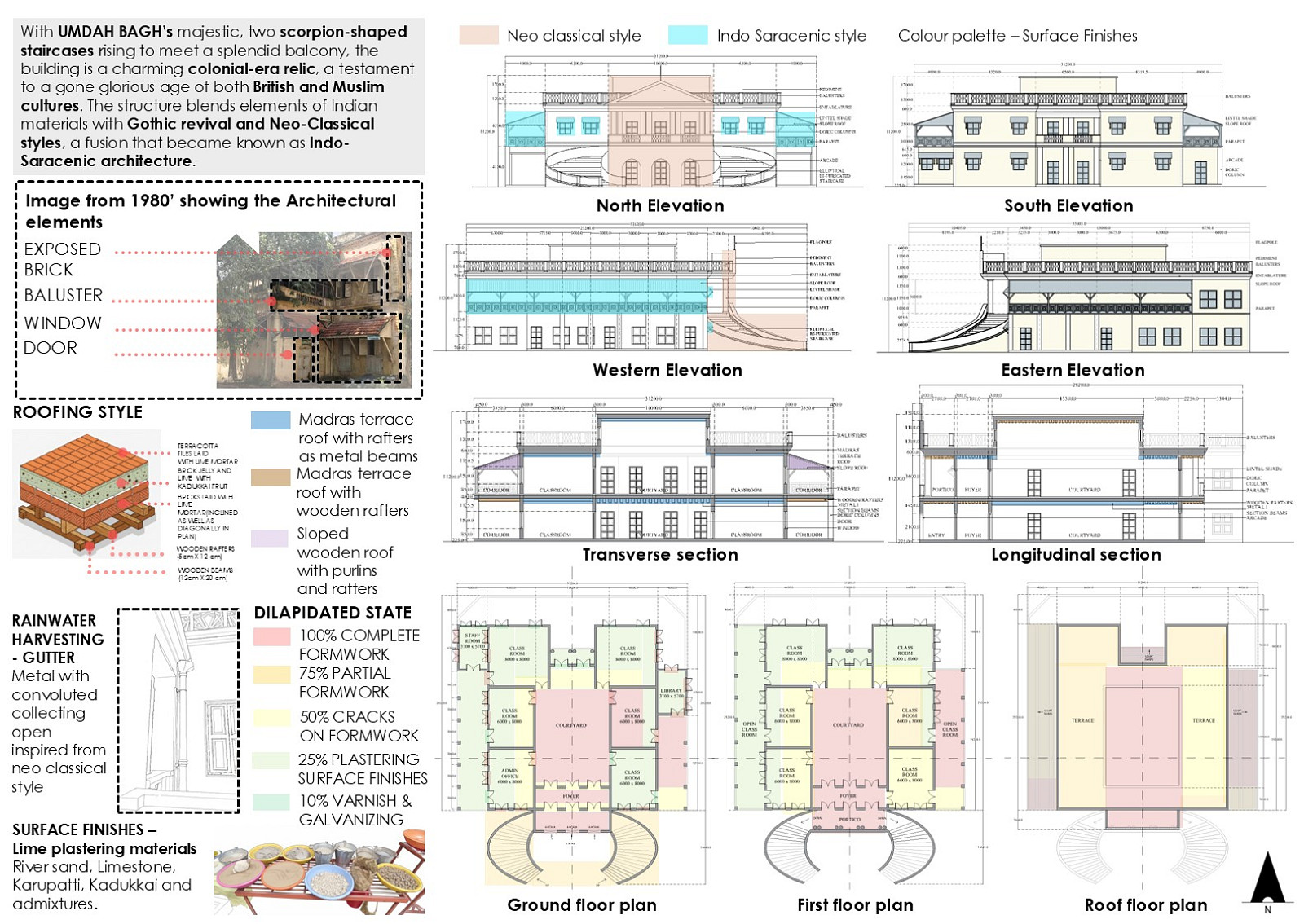
Currently, the original palace structure is in a severe state of dilapidation and ruin. The structure exhibits collapsed roofs, decomposing lime plaster, damaged wooden beams, and invasive overgrowth. Classified as a protected "Heritage Building" by the Chennai Metropolitan Development Authority (CMDA), the site is bound by strict regulatory codes that prevent any additional FSI or the use of incompatible modern materials.
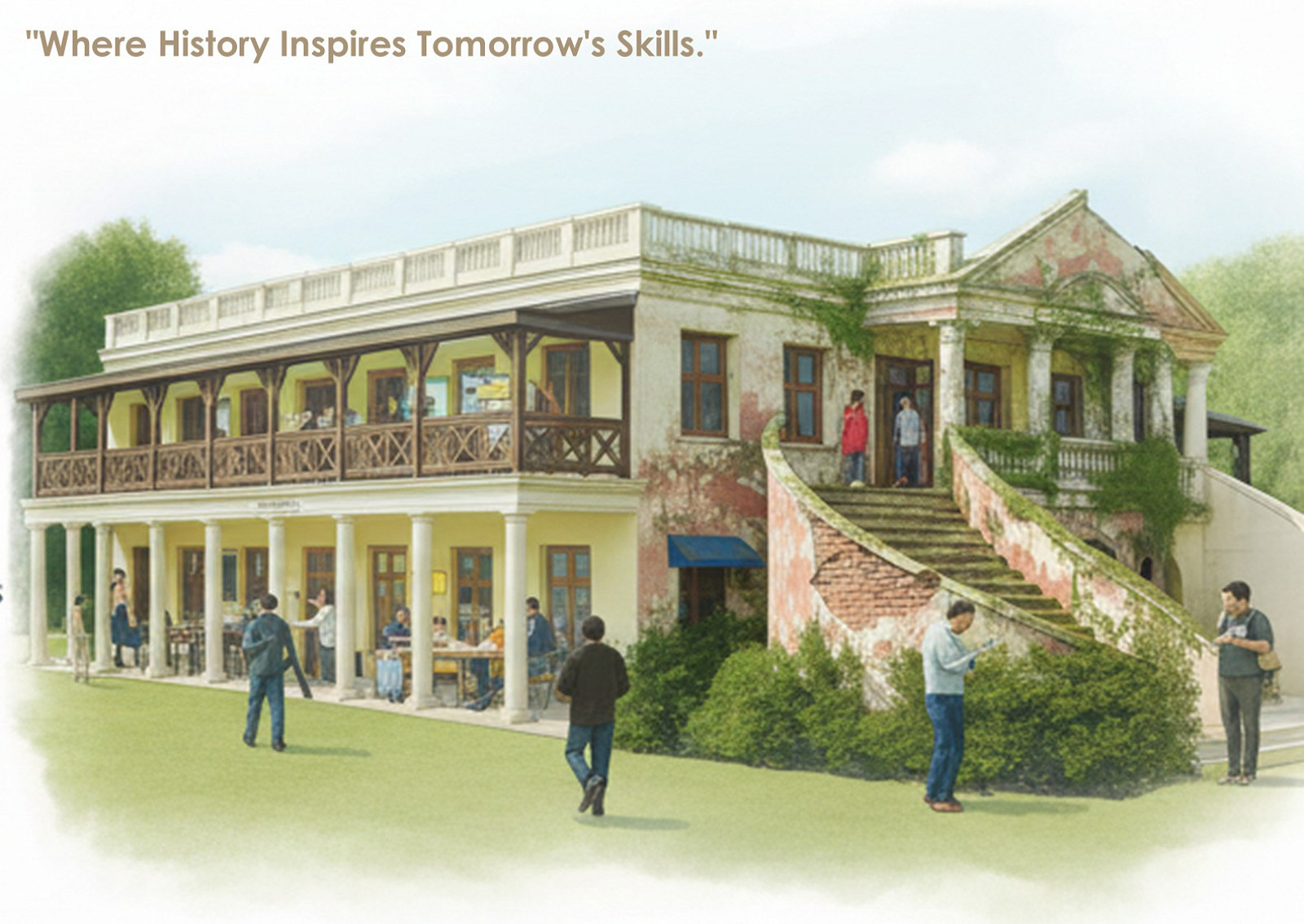
2. The Project Idea: "Where History Inspires Tomorrow's Skills"
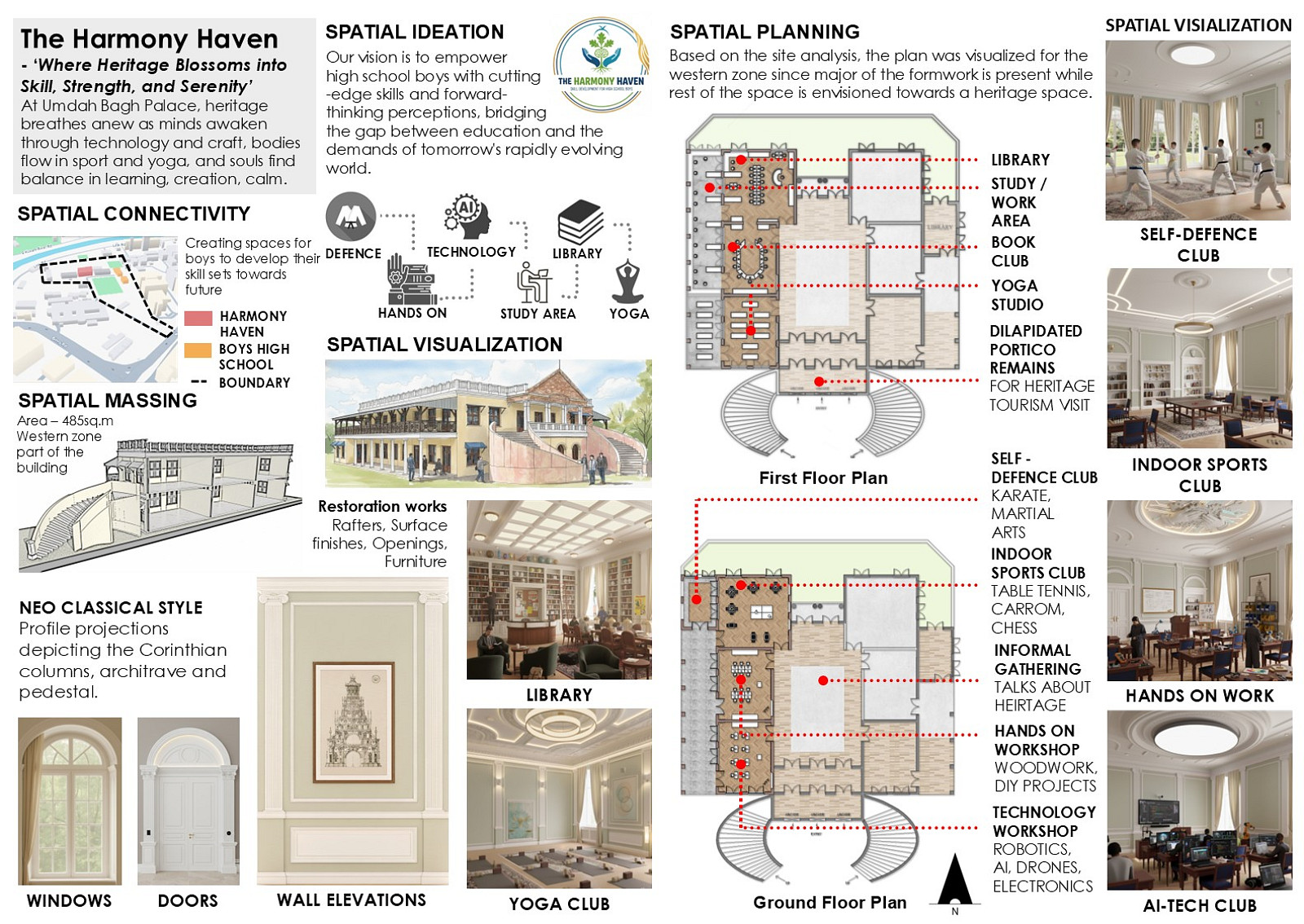
The proposed project, titled "The Harmony Haven," is a comprehensive Adaptive Reuse and Heritage Restoration initiative. It seeks to breathe new life into the Western Zone of the Umdah Bagh Palace (spanning 485 sqm).
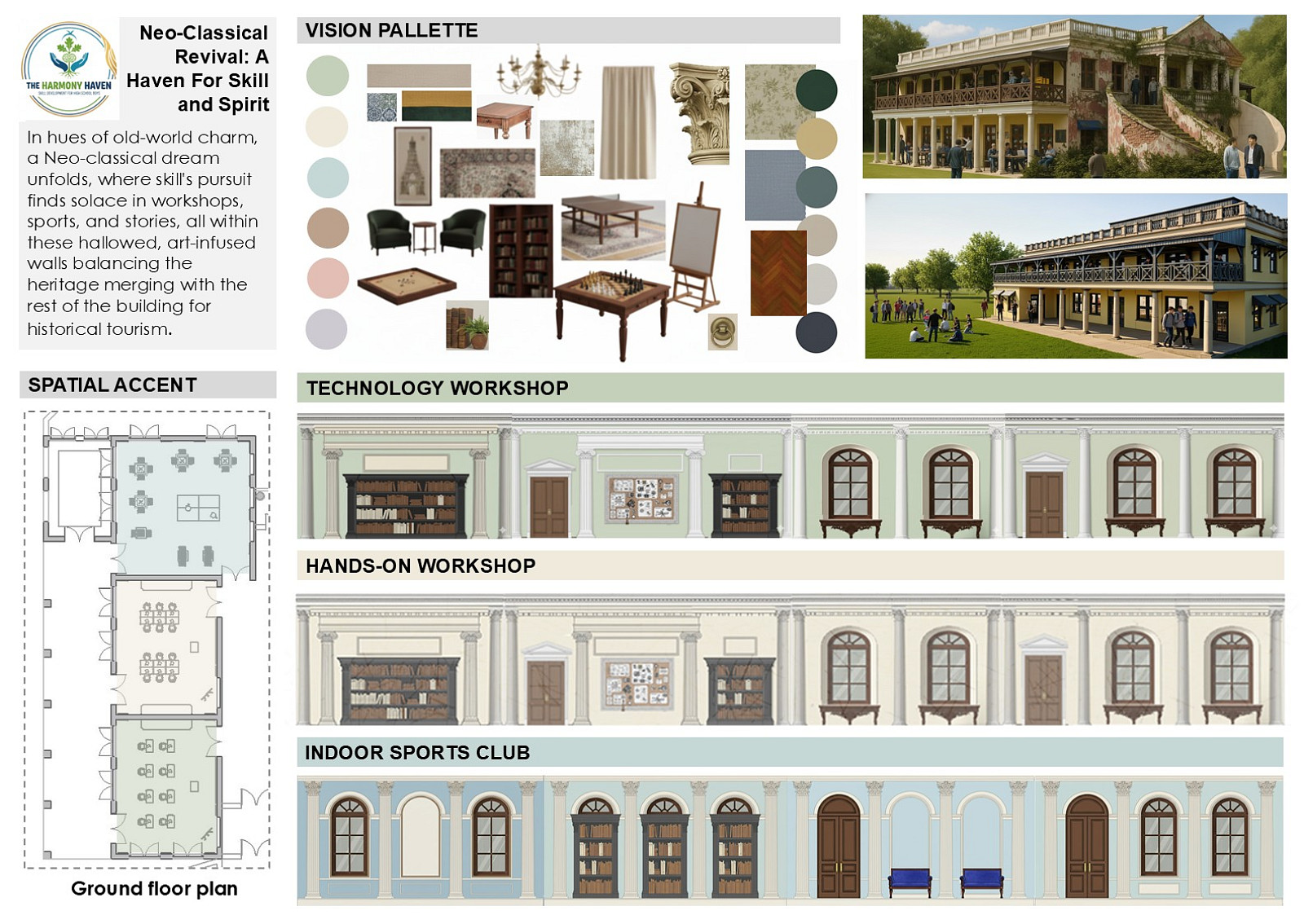
The core idea is to bridge the gap between the building's historical "faded glory" and the contemporary needs of youth. Instead of allowing the structure to collapse further, the project aims to transform it into a functional educational hub. The design philosophy is centered on three pillars: Skill (Technology, AI, Craftsmanship), Strength (Sports, Self-Defense), and Serenity (Yoga, Library, Reading). It serves as a "Harmony Haven" where high school students can learn, create, and grow within a historical embrace.
3. Project Goals & Objectives
The overarching aim of the project is to restore the physical integrity of the building while creating a socially vibrant and functional community space. The specific objectives are as follows:
A. Heritage Preservation & Structural Restoration
Objective: To stabilize and restore the dilapidated structural elements using historically accurate techniques.
Key Actions:
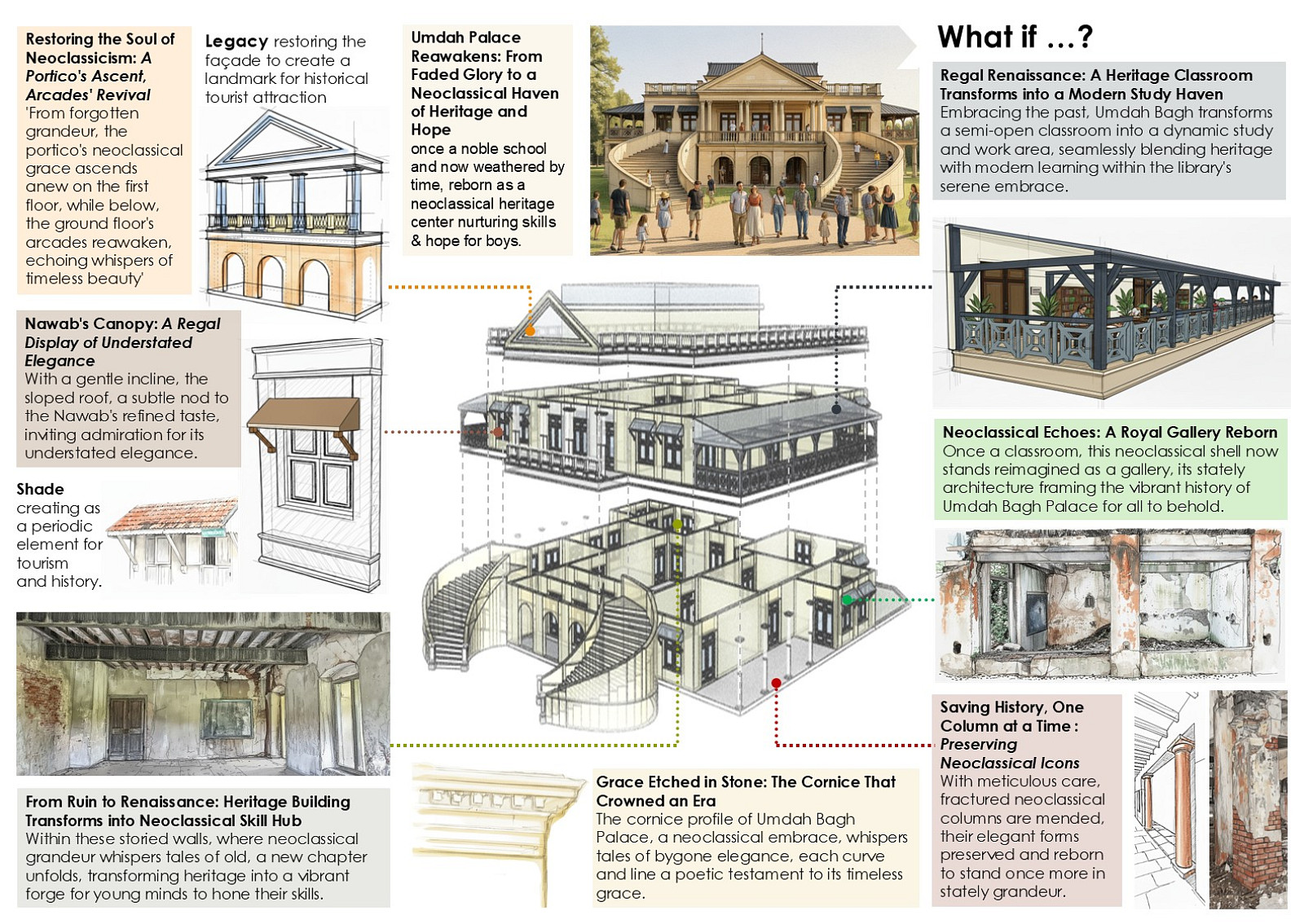
Restoring the iconic "Scorpion-shaped staircases" and the majestic double-height columns.
Rebuilding the original Madras Terrace roofs using traditional timber rafters and local terracotta bricks.
Repairing lime plaster finishes and preserving the Neo-Classical and Indo-Saracenic façade details (architraves, balusters, cornices).
B. Adaptive Reuse for Modern Education
Objective: To introduce state-of-the-art educational facilities that respect the existing architectural envelope.
Key Actions:
Establishing an AI & Technology Workshop for robotics, drones, and electronics.
Creating an Indoor Sports Club (Table Tennis, Carrom, Chess) and a Self-Defence Club (Karate, Martial Arts).
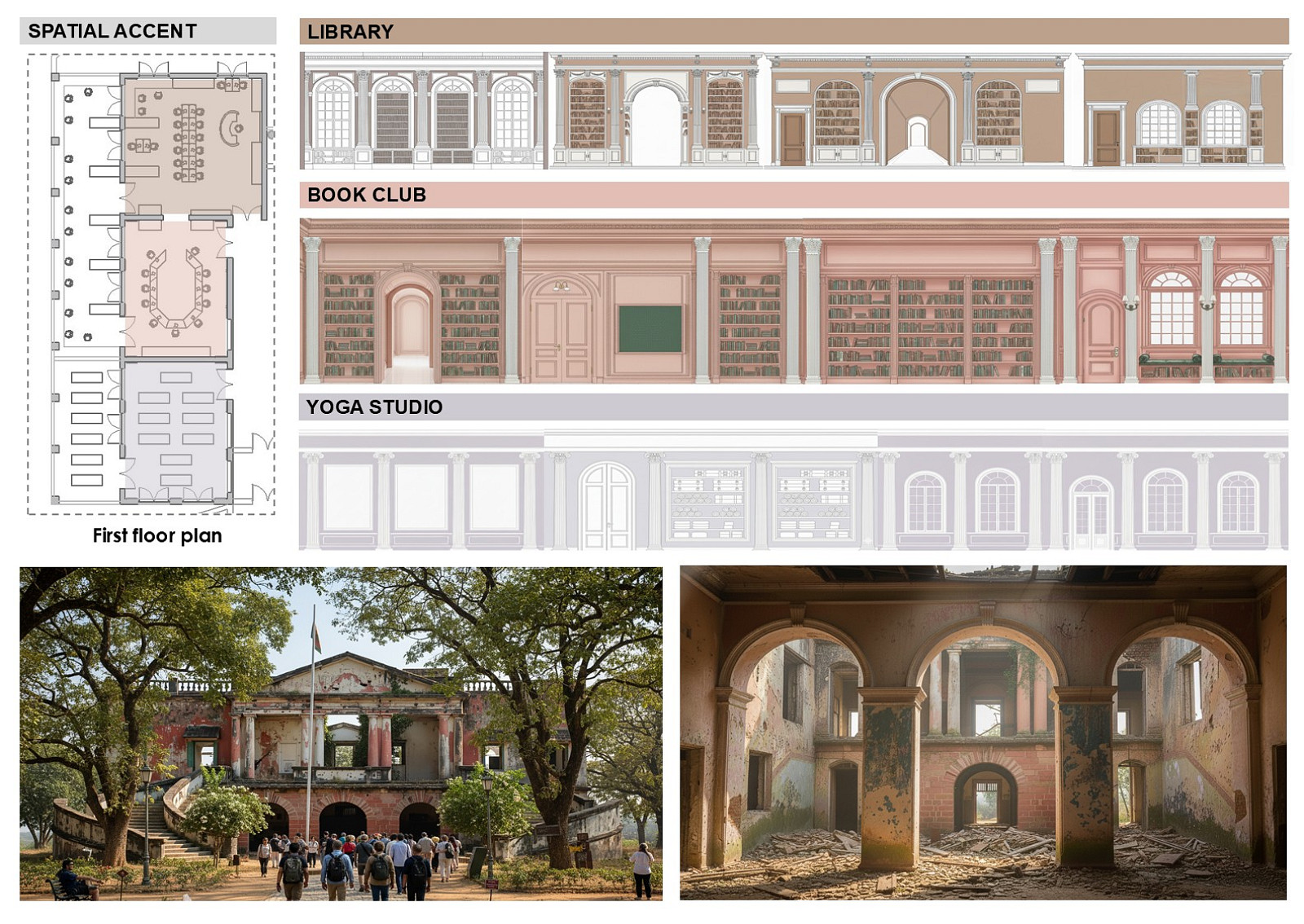
Designing a serene Library & Yoga Studio on the upper floors, balancing physical wellness with mental enrichment.
C. Regulatory & Environmental Compliance
Objective: To execute the project strictly within the legal framework of heritage conservation.
Key Actions:
Adhering to CMDA (Chennai Metropolitan Development Authority) regulations regarding zero additional FSI and maintaining minimum setbacks.
Utilizing modern "Invisible Technologies" (Thermal Shields, Solar Control Windows, Damp-Proof Membranes) to protect the historic fabric against Chennai's tropical heat and humidity without altering the visual identity.
Reviving traditional Rainwater Harvesting systems integrated with the historic gutters.
D. Heritage Tourism & Community Integration
Objective: To transform the site into a destination for heritage appreciation alongside education.
Key Actions:
Preserving specific parts of the "Dilapidated Portico" as visual ruins to educate visitors on the passage of time and materials.
Designing spaces for "Informal Gatherings" and "Talks About Heritage" to foster community pride and historical awareness.
4. Anticipated Outcomes
Upon completion, "The Harmony Haven" will serve as a distinguished landmark in Chennai. It will be a place where the Neo-Classical grace of the 19th century converges with 21st-century innovation. The project guarantees that the educational legacy of the Madrasa-e-Azam continues, not just in history books, but through the vibrancy of youths practicing karate, coding robots, or finding peace in a library that nestles within a restored architectural masterpiece.
Project description
Scope of the Project Solution
1. Project Identity
Project Name: The Harmony Haven – Adaptive Reuse of Umdah Bagh Palace
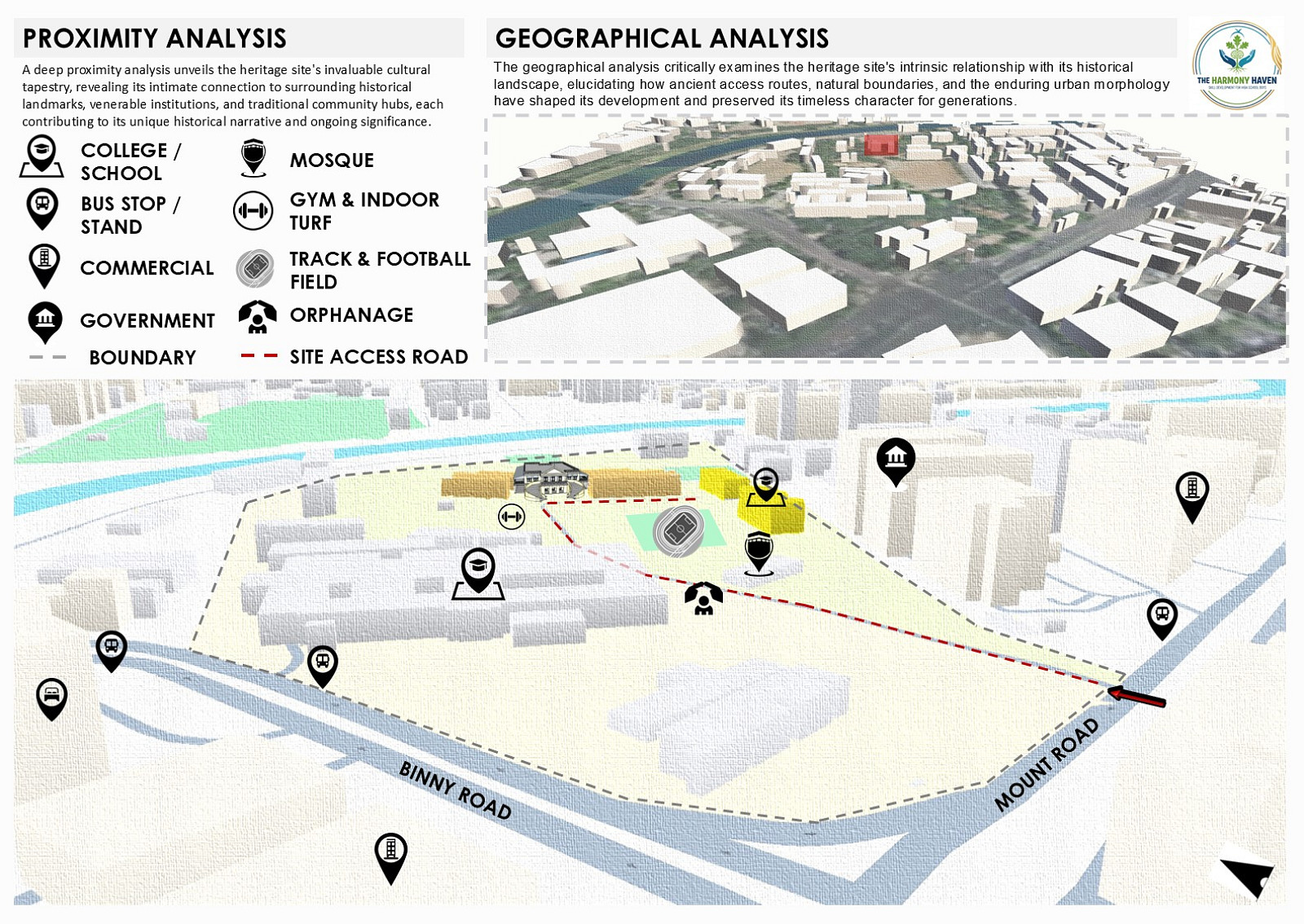
Location: Mount Road (Anna Salai), Chennai, Tamil Nadu, India
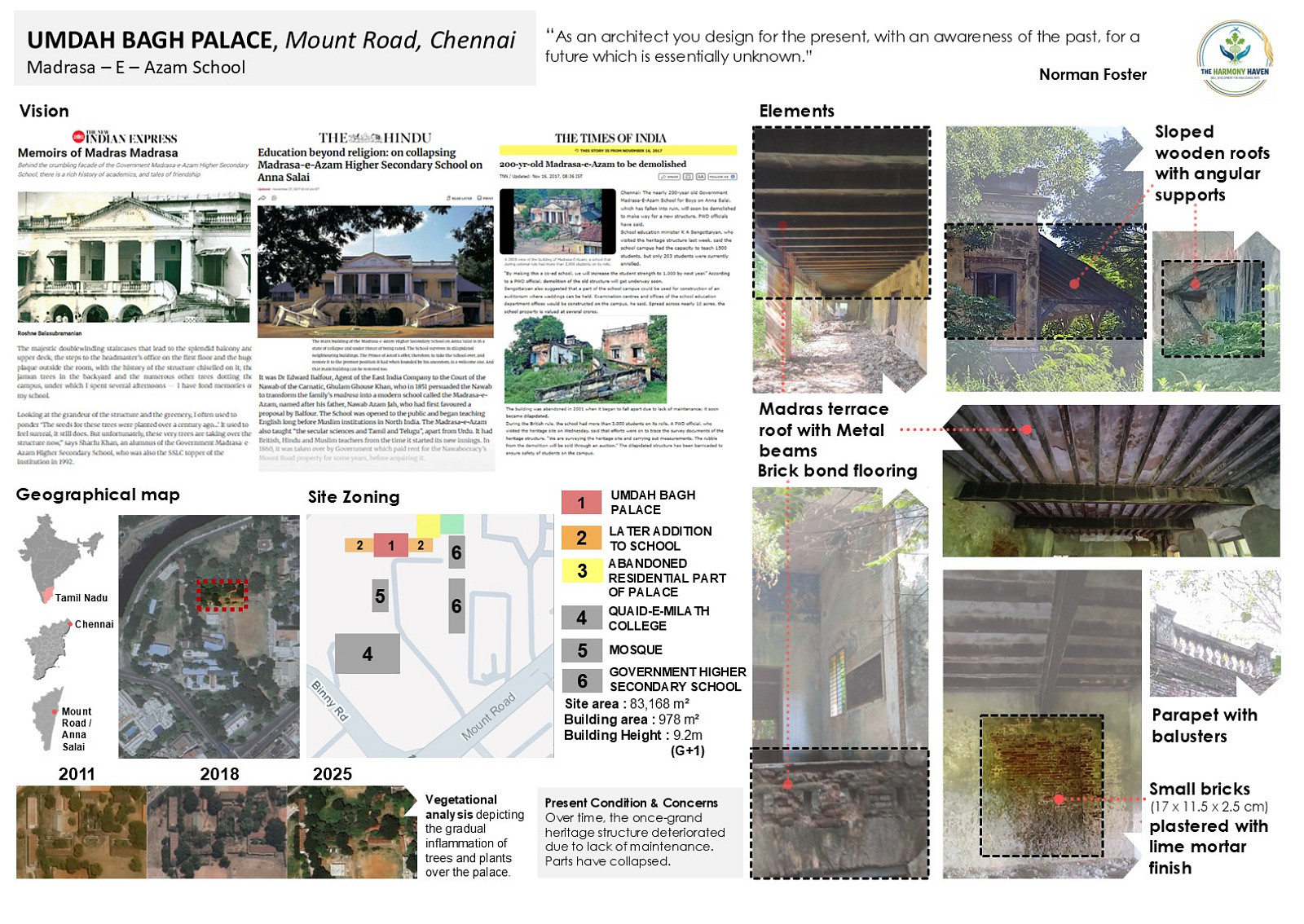
Site Area: 63,166 sqm (Total Campus) | Target Building Area: 978 sqm (Palace Ruins) | Specific Intervention Zone: 485 sqm (Western Wing)
2. Scope of the Architectural Solution
The solution scope for the "Harmony Haven" is limited to the Western Zone of the Umdah Bagh Palace. This decision is based on a thorough condition survey which revealed that this specific section retains approximately 25–75% of its original formwork, making it structurally salvageable without entirely demolishing the Neo-Classical identity.
A. Structural & Material Restoration Scope
Façade Restoration: Removal of invasive vegetation, stabilization of exposed brick, and re-plastering using traditional Lime Mortar (Karupatti/Kadukkai mixes) to match the 19th-century Indo-Saracenic aesthetic.
Roofing Interventions:
Restore the Madras Terrace Roof (brick-on-edge/terracotta) using metal beams paired with traditional timber rafters.
Restore the iconic Sloped Wooden Roof with angular supports and purlins to protect the interior spaces from Chennai’s heavy monsoon rains.
Staircases: Complete structural stabilization of the "Scorpion-shaped double staircases" rising to the majestic balcony.
Columns & Arches: Reinforcement of the grand Corinthian columns and archways using Structural Repair Mortar (cement-free, vapor-permeable).
B. Spatial Programming & Functional Scope
The project reimagines the 485 sqm space as a Neo-Classical Skill Hub. The layout is strictly G+1 (Ground Floor + First Floor), adhering to the architectural height of 9.2m.
Ground Floor (Public & Active Zone – "Strength & Skill"):
Technology Workshop & AI-Tech Club: Dedicated rooms for Robotics, Drones, Electronics, and digital fabrication.
Hands-On Workshop: Woodwork, masonry, and DIY project areas.
Indoor Sports Club: Zones for Table Tennis, Carrom, and Chess.
Self-Defence Club: A dedicated hall for Karate and Martial Arts.
Dilapidated Portico: Preserved in its current ruin state as an Heritage Gallery for historical tourism.
Informal Gatherings: Open corridors where students can discuss heritage and history.
First Floor (Quiet & Wellness Zone – "Serenity & Mind"):
Library & Book Club: Extensive shelving and reading spaces overlooking the grounds.
Study & Work Area: Individual and group study setups.
Yoga Studio: A calm, open-plan space for meditation and flexibility training.
C. Regulatory & Consent Scope
The solution is bound by the Heritage Conservation Committee (HCC) and CMDA regulations. The scope explicitly excludes:
Any vertical or horizontal structural extensions (No additional FSI).
Alteration of the historic façade (No modern cladding, no signage blocking heritage features).
Any work within the 12-meter mandatory setback from the heritage building footprint.
The process requires mandatory HCC NOC, CMDA Building Permit, and Greater Chennai Corporation (GCC) approvals for utilities.
D. Conservation Technology & Materiality Scope
The project introduces modern technology within traditional systems to ensure longevity:
Solar Control Windows: High-performance glazing to reduce heat gain without altering the historic window frame.
Invisible Thermal Shields: Vapor-permeable insulation applied internally to protect against Chennai's tropical heat and humidity.
Damp-Proof Membrane: A modern waterproof layer applied beneath the Madras Terrace roof to prevent moisture damage to the timber rafters.
Rainwater Harvesting: Reactivation of the historical metal gutters and convoys, integrated into the groundwater recharge system.
3. Phasing & Exclusions (Scope Boundaries)
In-Scope: Restoration of the Western Wing; interior fit-out for educational activities; structural stabilization of the major external staircases and roof; integration of new HVAC/Electrical systems within the heritage shell.
Out-of-Scope (Current Phase): Full restoration of the entire Umdah Bagh Palace structure (Eastern/ Southern wings); reconstruction of entirely collapsed porticos (except for stabilization of existing ruin); demolition of any adjacent modern structures (e.g., the "La Ter Addition" noted in site zoning).
4. Desired Outcome
By adhering to this defined scope, the project aims to achieve:
A functional educational facility (Skill, Strength, Serenity) serving approximately 50–80 students at a time.
A preservation model proving that heritage structures can be restored without losing their authenticity.
A heritage tourism anchor on Mount Road, seamlessly integrating the dilapidated past with a vibrant future.
Technical information
Technical Specification: Umdah Bagh Palace Adaptive Reuse
1. General Project Data
Site Location: Mount Road (Anna Salai), Chennai, Tamil Nadu, India.
Total Campus Area: 63,166 sqm
Target Building Area (Palace Structure): 978 sqm
Specific Intervention Zone (Western Wing): 485 sqm
Building Height: 9.2 meters (Ground + First Floor)
Structural Typology: Load-bearing masonry with Neo-Classical and Indo-Saracenic elements.
2. Heritage Compliance & Regulatory Constraints
Heritage Status: CMDA Protected Heritage Building (Chennai Metropolitan Development Authority) under Chapter 6, Section 6.3 of the Second Master Plan.
Floor Space Index (FSI): No Additional FSI Permitted. Rehabilitation must utilize existing footprint only.
Setback Requirement: Minimum 12 meters from the heritage structure to any new development.
Material Restrictions: Prohibition of modern cladding, aluminum, or signage that alters the historic fabric.
Mandatory Approvals: HCC NOC (Heritage Conservation Committee), CMDA Building Permit, and Greater Chennai Corporation (GCC) utility connections.
3. Structural Systems & Components
(Based on Observations from Image 3, 11, 12)
Foundation: Existing stone/brick masonry plinth with new damp-proof membrane application.
Wall Construction:
Original: Solid brick/stone masonry.
Restoration: Utilization of structural repair mortar (vapor-permeable, cement-free) for crack stitching and column repair.
Roofing Systems:
Madras Terrace Roof (Flat Section): Traditional Brick-on-edge layered over timber rafters, supported by metal beams.
Sloped Wooden Roof: System with purlins, rafters, and angular supports; clad with terracotta tiles where appropriate.
Staircases: Reinforced structural stabilization of the "Scorpion-shaped double staircases" (Grand twin curved stairs).
Columns & Arches: Neo-Classical Corinthian columns and vaulted arches; preservation of original geometry using structural repair mortar.
4. Material Specifications
(Based on Image 10, 11)
A. Traditional Materials (Heritage Preservation)
Surface Finishes: Lime plaster (Chunam). Mix composed of River Sand, Limestone, Karupatti (Jaggery), Kadukkai (Terminalia chebula), and local admixtures.
Roofing Materials: Terracotta bricks, traditional timber rafters.
Rainwater Gutters: Metal convoluted open-collection systems (inspired by Neo-Classical style).
B. Modern "Invisible" Technologies (Protective Integration)
To withstand Chennai's tropical climate, the following technologies are integrated without altering the external heritage appearance:
Solar Control Windows: High-performance glazing to reduce solar heat gain and UV radiation damage to interiors.
Invisible Thermal Shield: Vapor-permeable insulation applied internally to regulate temperature and humidity.
Damp-Proof Membrane: Modern waterproofing layer installed beneath the Madras Terrace roof to protect timber elements from monsoon moisture.
Modern Internal Partitions (Glass/Steel): Used to divide workshops and library spaces without damaging original masonry.
5. Conservation & Finishing Standards
Dilapidated State Treatment: Preservation of specific ruined sections (e.g., the Portico) for heritage tourism. 100% complete formwork in some areas, 50% cracks/partial formwork in others as detailed in condition maps.
Plastering: 25% complete surface finishing (fully restored) in the main functional zones.
Varnish & Galvanizing: Protective coating applied to exposed steel/metal components to prevent rust.
6. Mechanical, Electrical & Plumbing (MEP)
Rainwater Harvesting: Reactivation of historical gutters connected to underground recharge pits to conserve water.
Lighting: Low-profile LED track lighting concealed within restored cornices to enhance the heritage gallery spaces.
Ventilation: Hybrid system using restored high ceilings and minimal modern HVAC units hidden within the architectural envelope.
7. Site Works (Specified Zone)
Area Defined: Western Zone (485 sqm).
Demolition Scope: Removal of inappropriate modern additions (where specified) to reveal original masonry.
Landscaping: Preservation and replacement of Ficus and native trees in the grounds surrounding the structure to maintain the "Green Haven" aesthetic.

Copyright © 2026 INSPIRELI | All rights reserved. Use of this website signifies your agreement to the Terms of Use, Privacy Policy, and use of cookies.
