LAPIS RASA- tuorists cultural food hub


Project idea
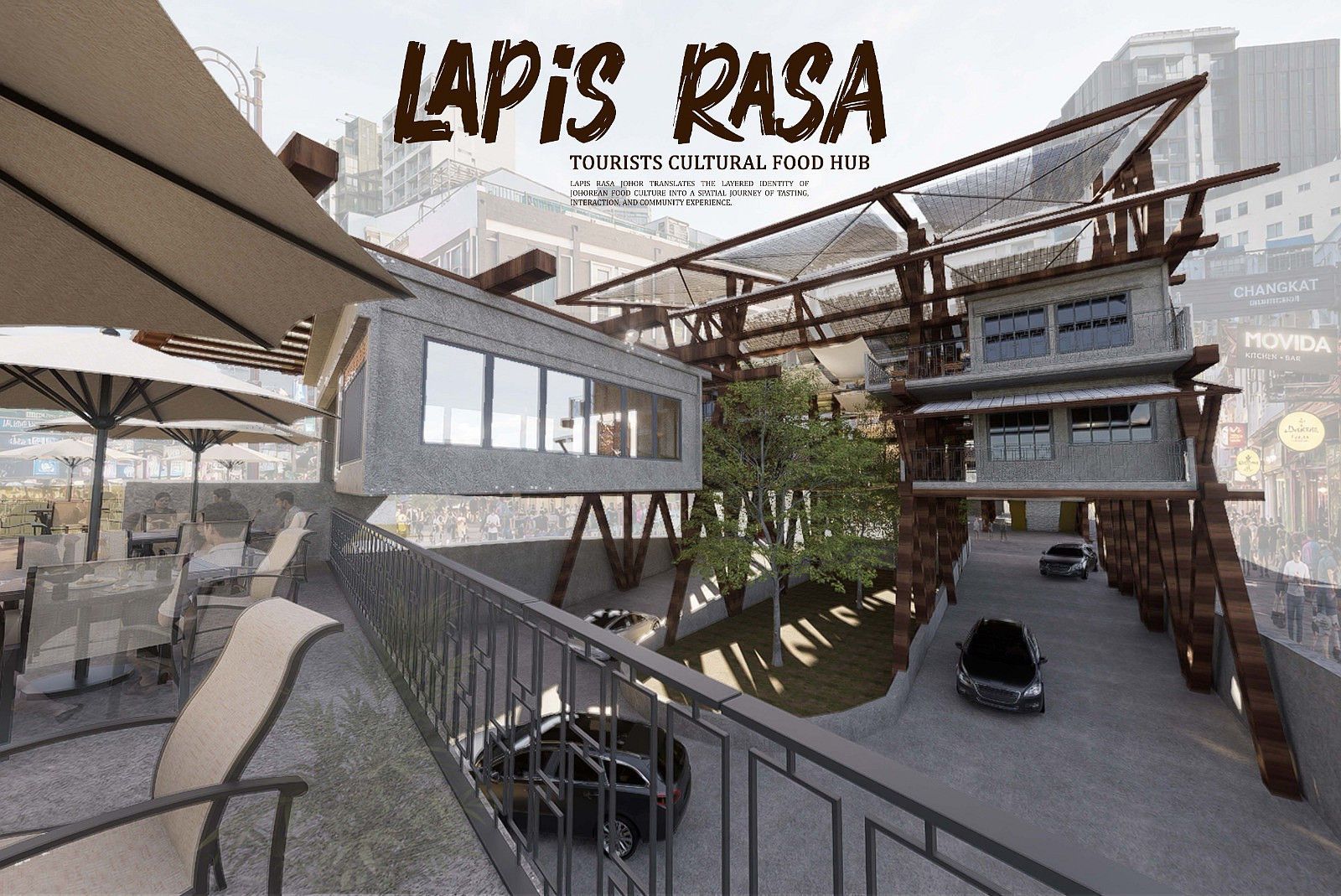
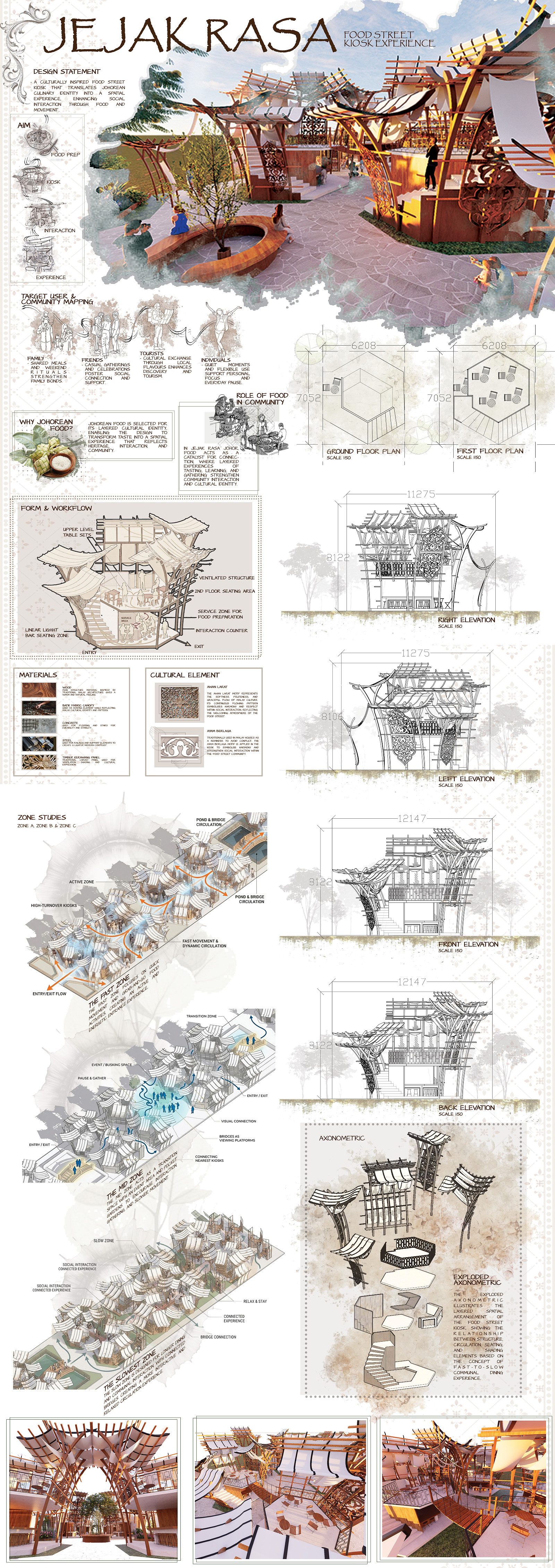
Lapis Rasa is a Food Culture and Community Hub inspired by the layered richness of Johorean food culture, heritage, and communal dining traditions. The project explores how food can become an architectural experience by translating the concepts of taste, gathering, and cultural interaction into a layered spatial journey. Inspired by the diversity and depth of Johor’s cuisine, the design reinterprets the traditional food street into a contemporary environment where architecture, culture, and community are integrated to create meaningful social experiences
Project description
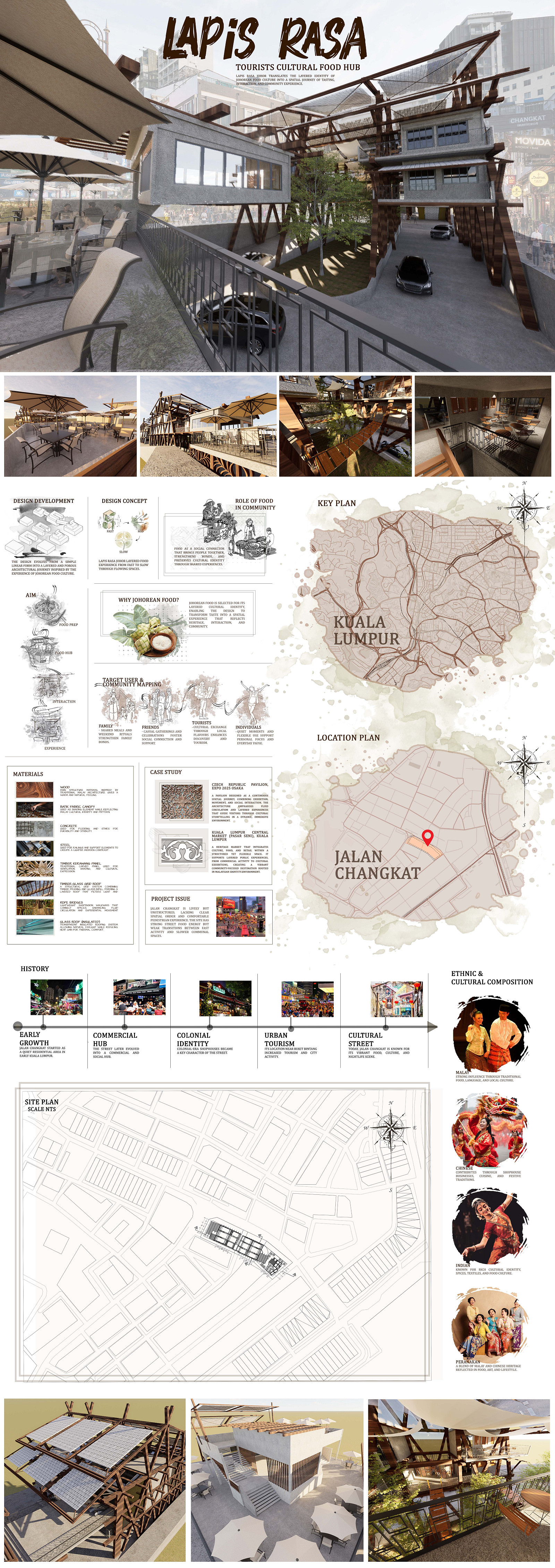
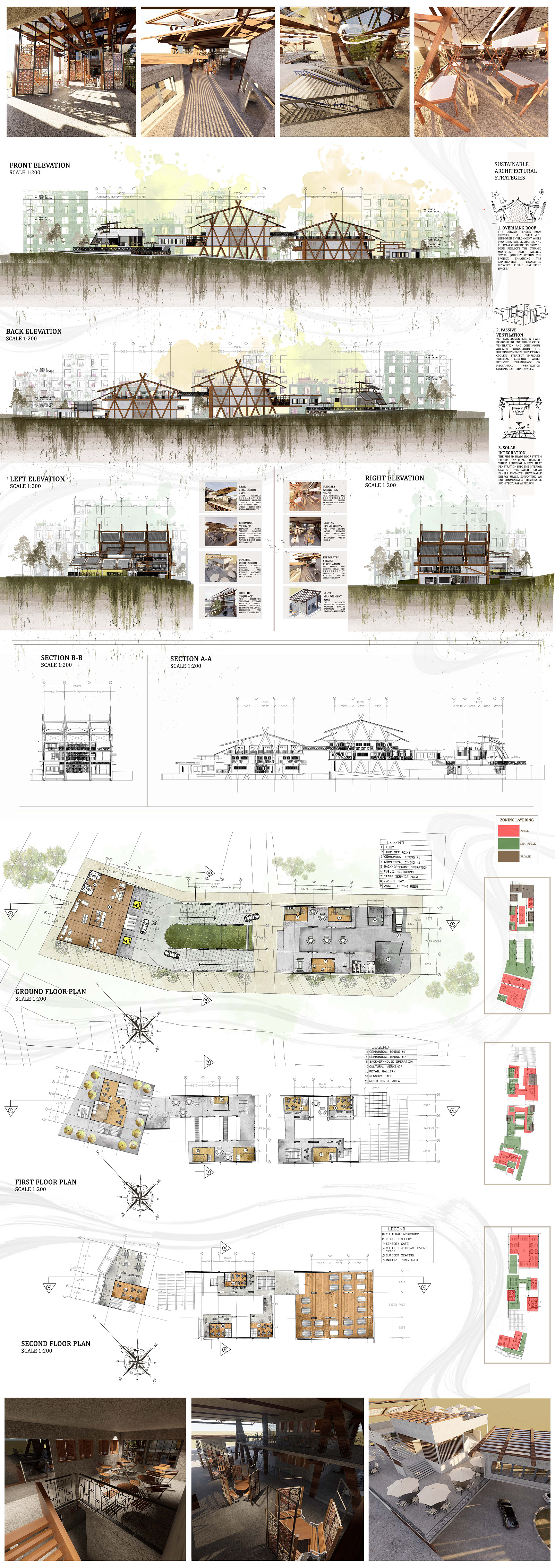
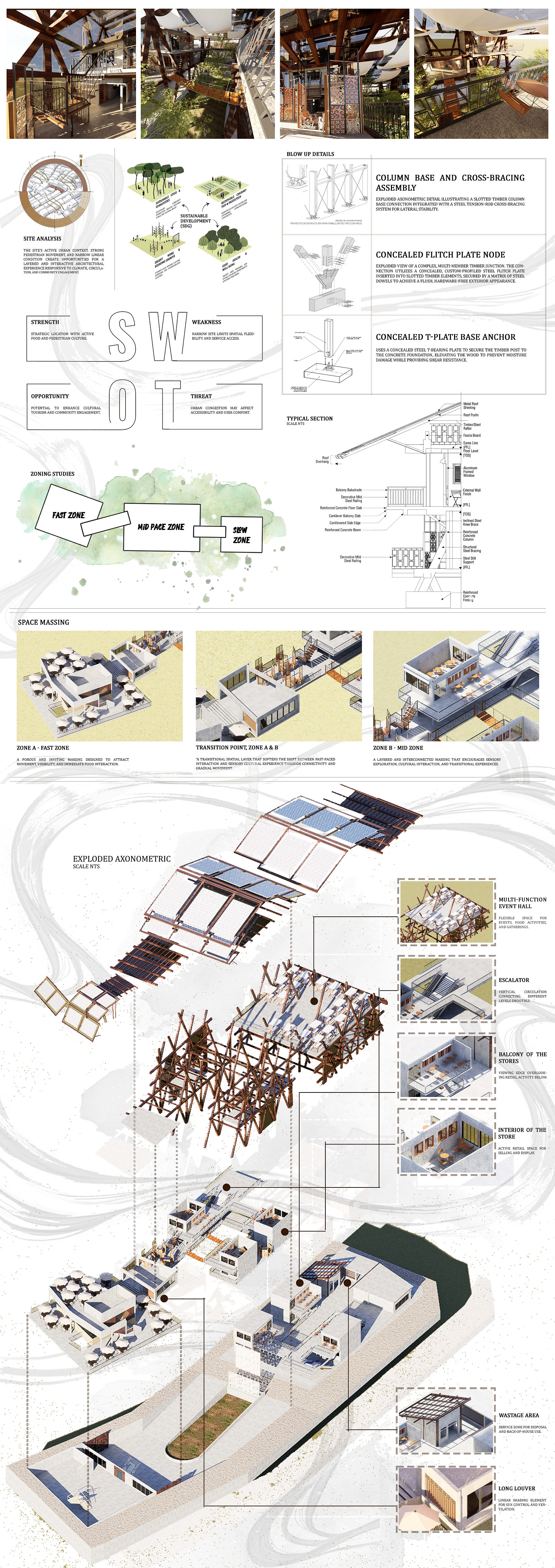
The project is located at Jalan Changkat, Bukit Bintang, Kuala Lumpur, and responds to the lack of cohesive public spaces, pedestrian comfort, and cultural engagement within the existing food street environment. Lapis Rasa introduces a community-oriented food hub that strengthens urban connectivity through a behaviour-based spatial strategy organized into three experiential zones: Fast, Mid, and Slow. Visitors begin their journey in the Fast Zone, where active food preparation and quick dining create a vibrant atmosphere, followed by the Mid Zone that encourages exploration, sensory experiences, and cultural interaction. The journey concludes in the Slow Zone, which provides intimate dining spaces and communal gathering areas for longer social engagement. Through this layered sequence, the project transforms food culture into a continuous architectural experience that promotes community interaction, cultural appreciation, and urban vitality.
Technical information
The architectural design is developed according to the narrow urban site conditions of Jalan Changkat and emphasizes circulation permeability, visual openness, and public interaction. The massing strategy utilizes layered volumes, open voids, and interconnected circulation networks to improve natural ventilation, daylight penetration, and spatial connectivity. The project incorporates passive environmental strategies including cross ventilation, passive shading, natural daylighting, semi-outdoor planning, and porous façade systems to enhance thermal comfort within Kuala Lumpur’s tropical climate. Material selections include timber, steel, concrete, glass roofing systems, batik-inspired fabric canopies, timber louvres, and terracotta elements, creating a contemporary tropical architectural language rooted in Johorean cultural identity. The overall development combines food spaces, communal gathering areas, cultural activity zones, and interconnected public pathways to create a climate-responsive and socially engaging urban destination.

Copyright © 2026 INSPIRELI | All rights reserved. Use of this website signifies your agreement to the Terms of Use, Privacy Policy, and use of cookies.