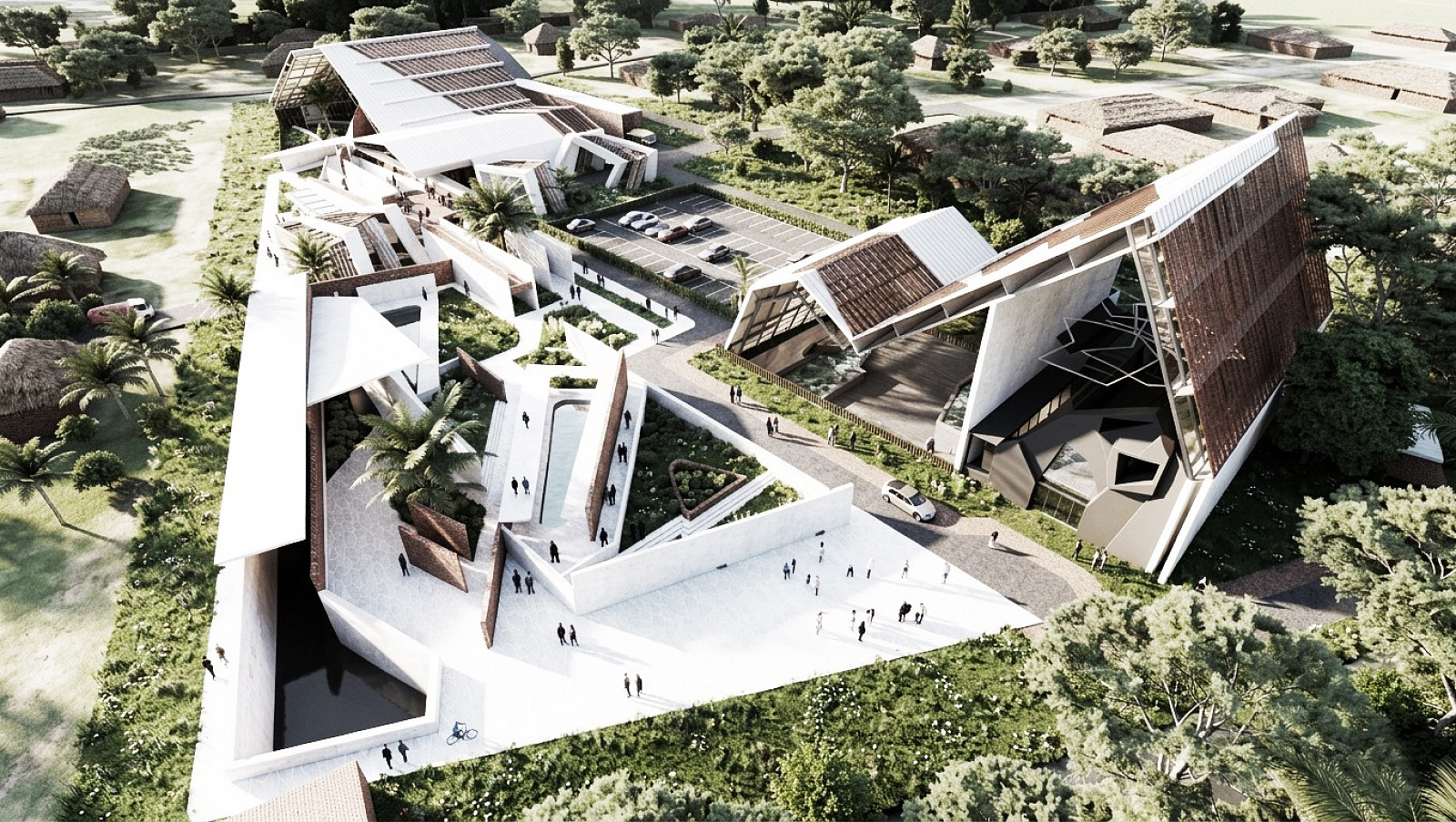
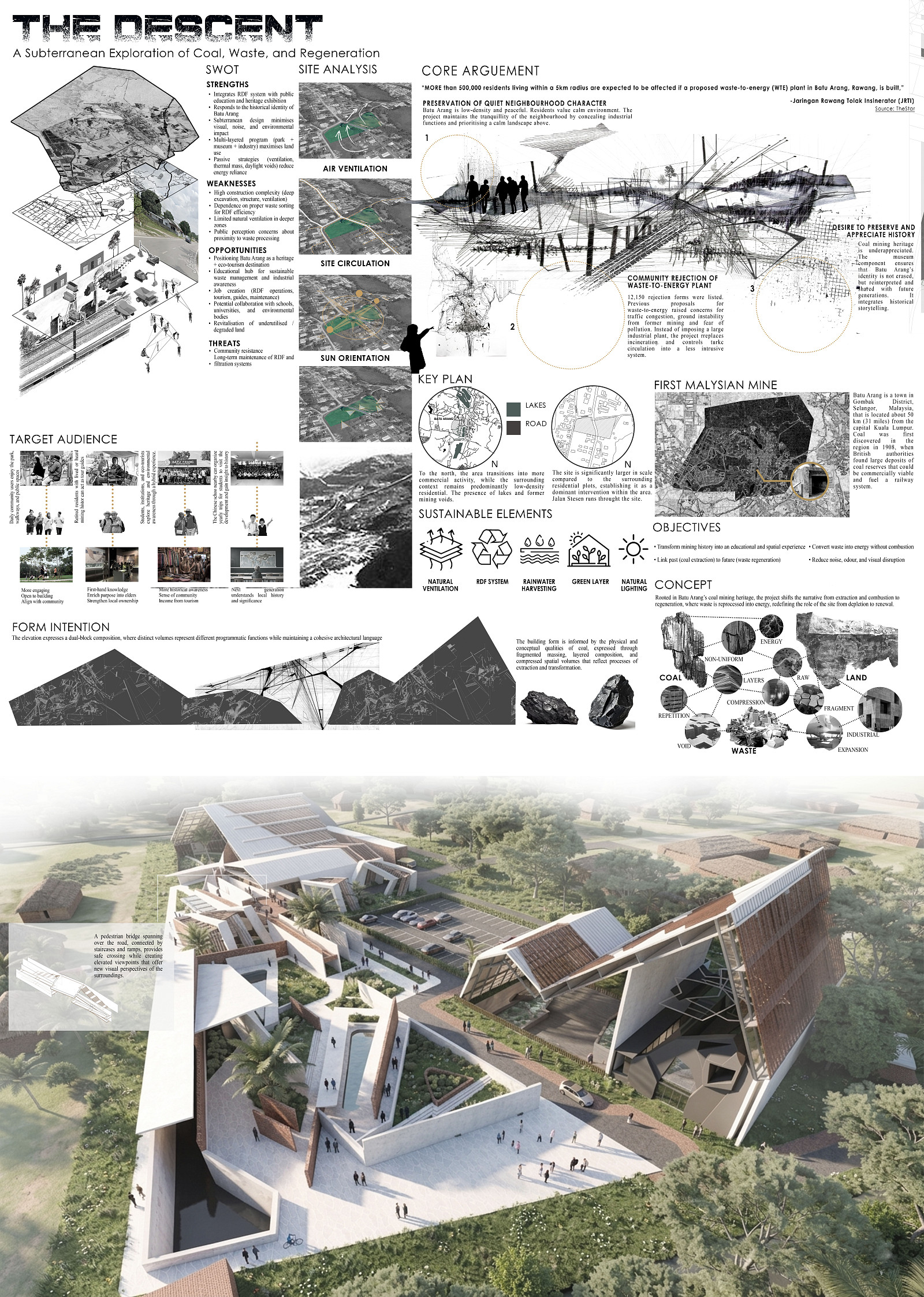
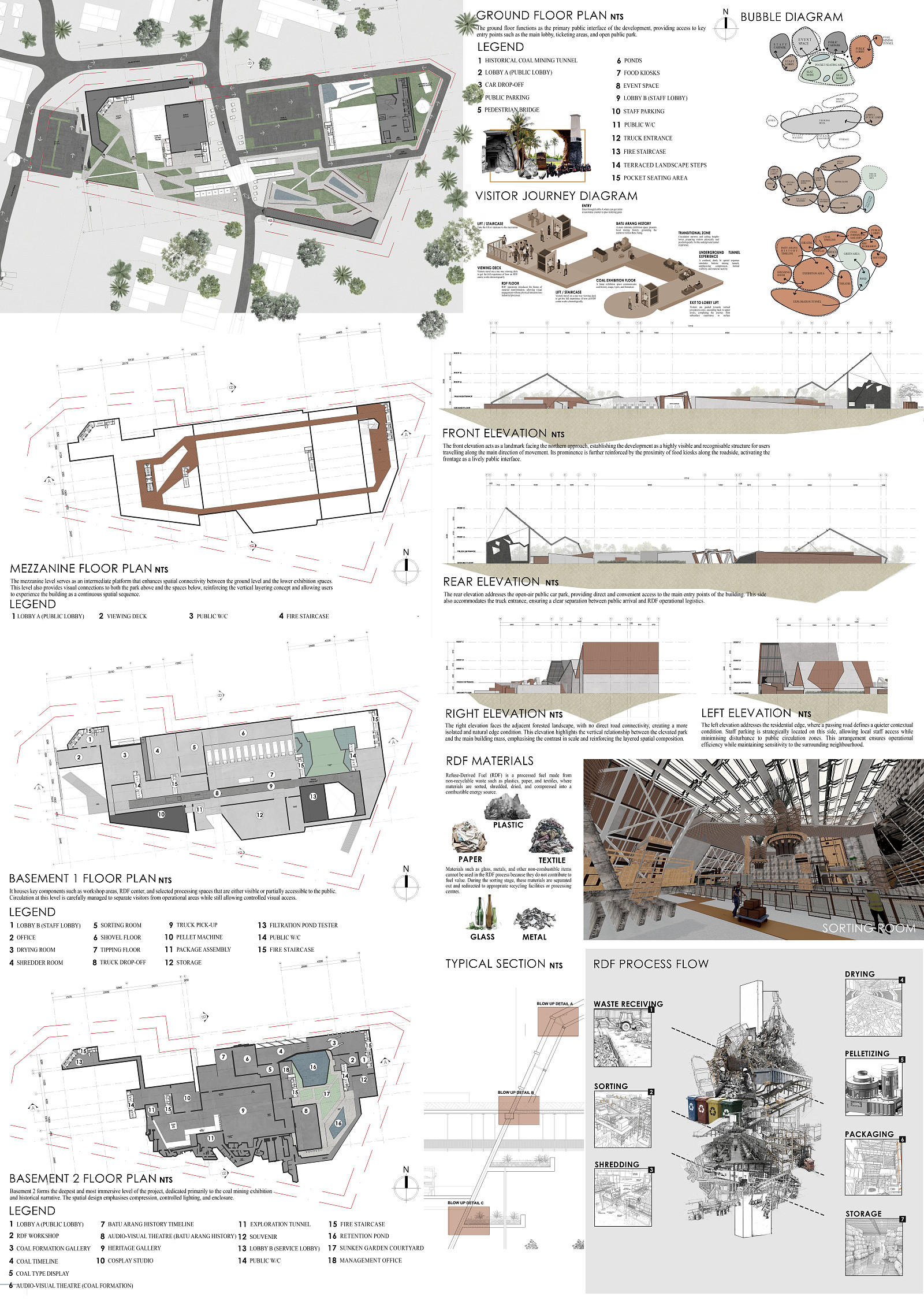
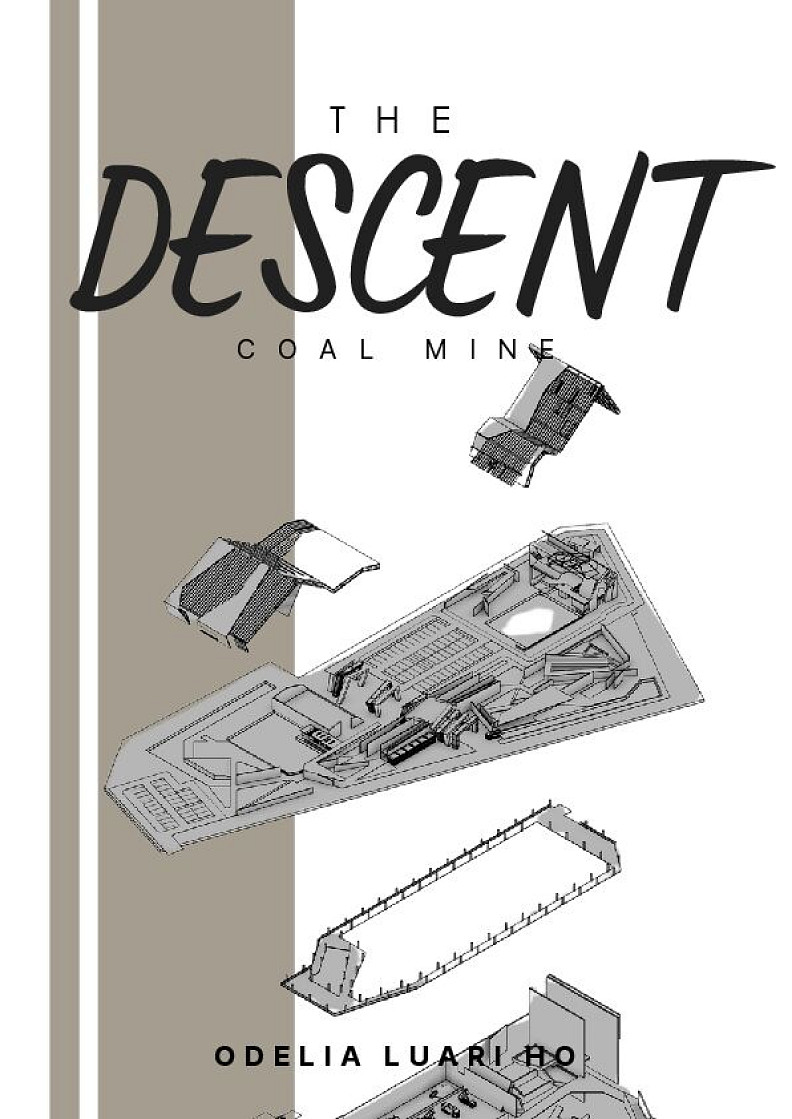
THE DESCENT - A SUBTERRANEAN EXPLORATION OF COAL, WASTE AND REGENERATION CENTRE


 Amir Shah
Project idea
BACKGROUND AND PERSONAL INFORMATION
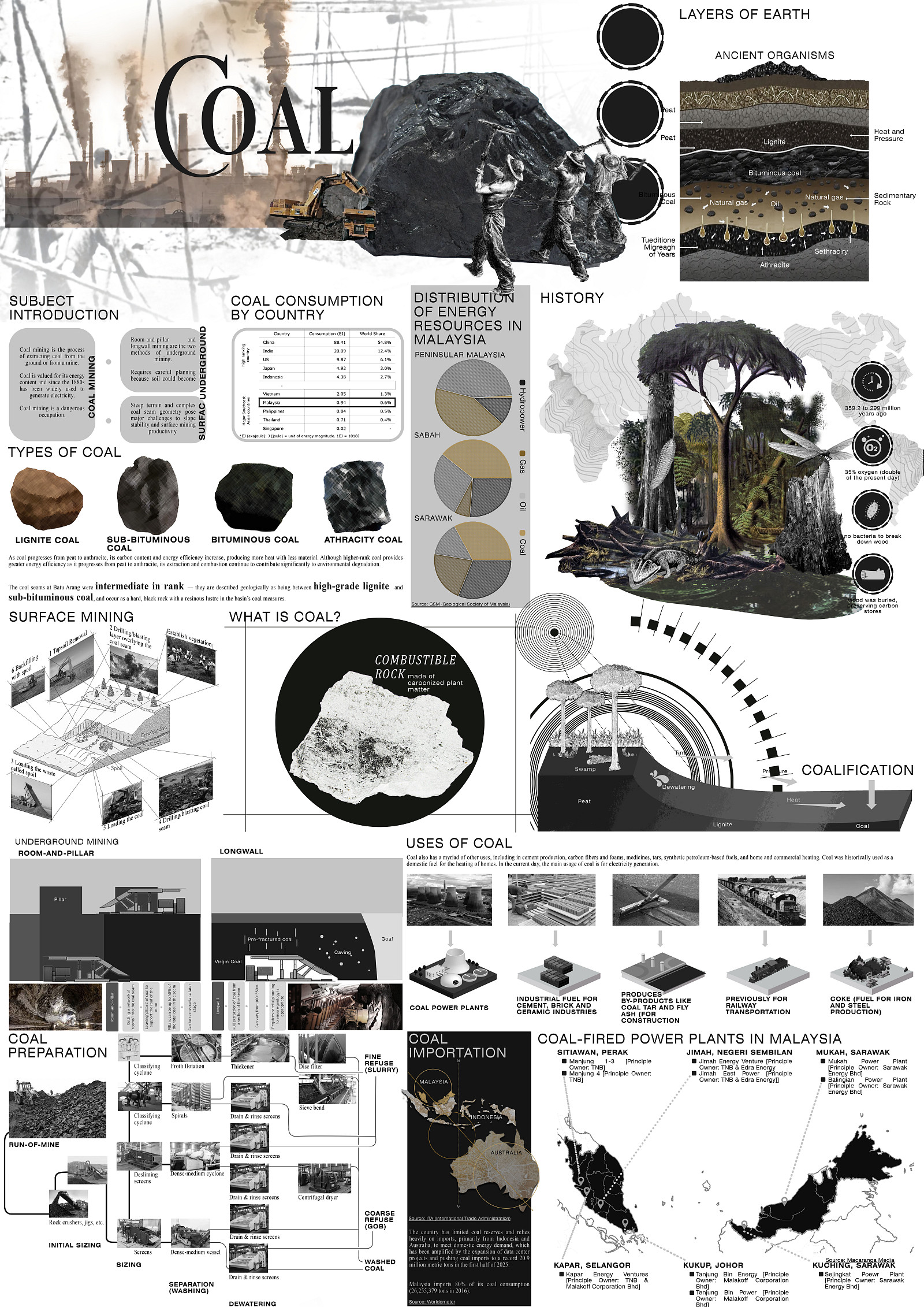
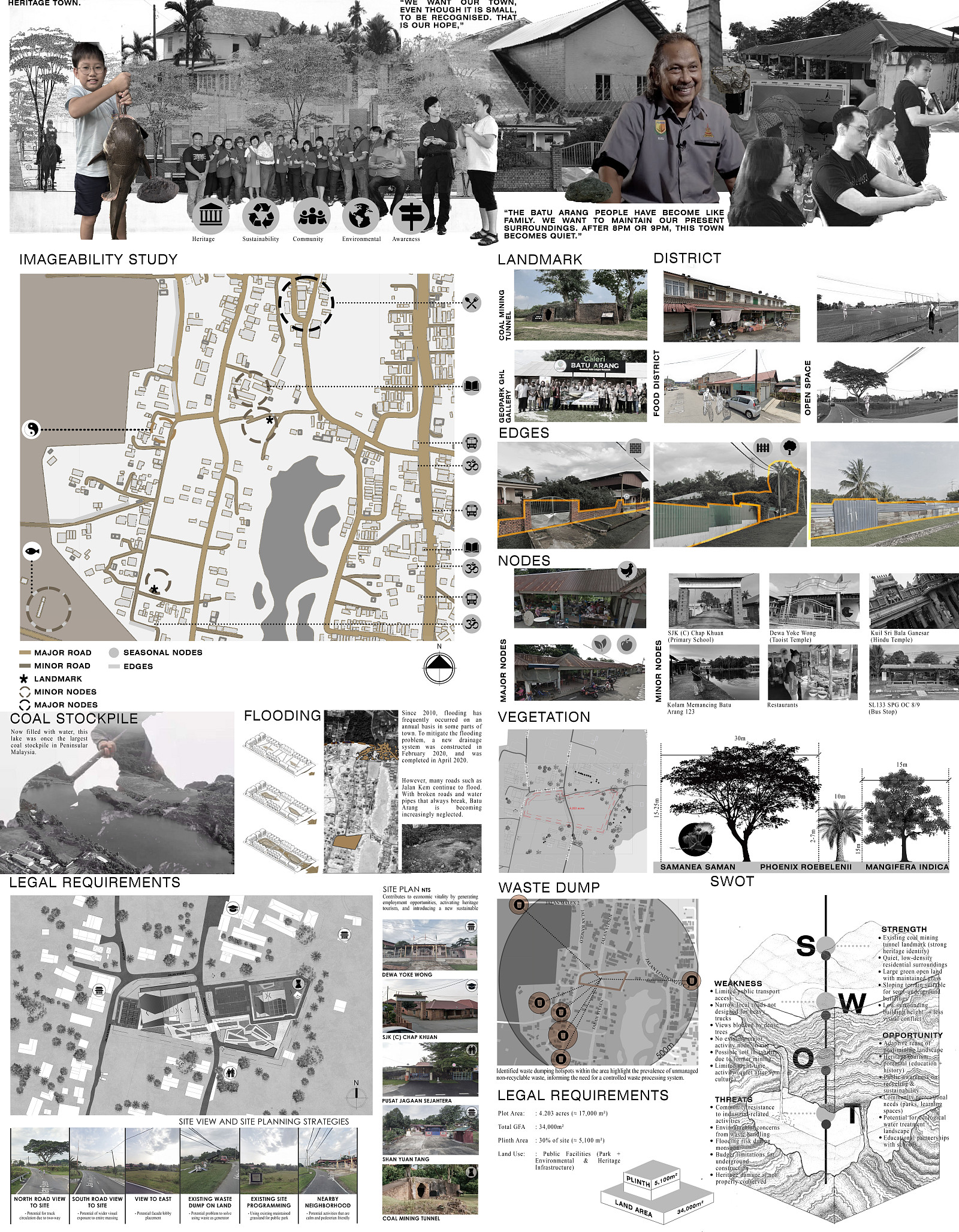
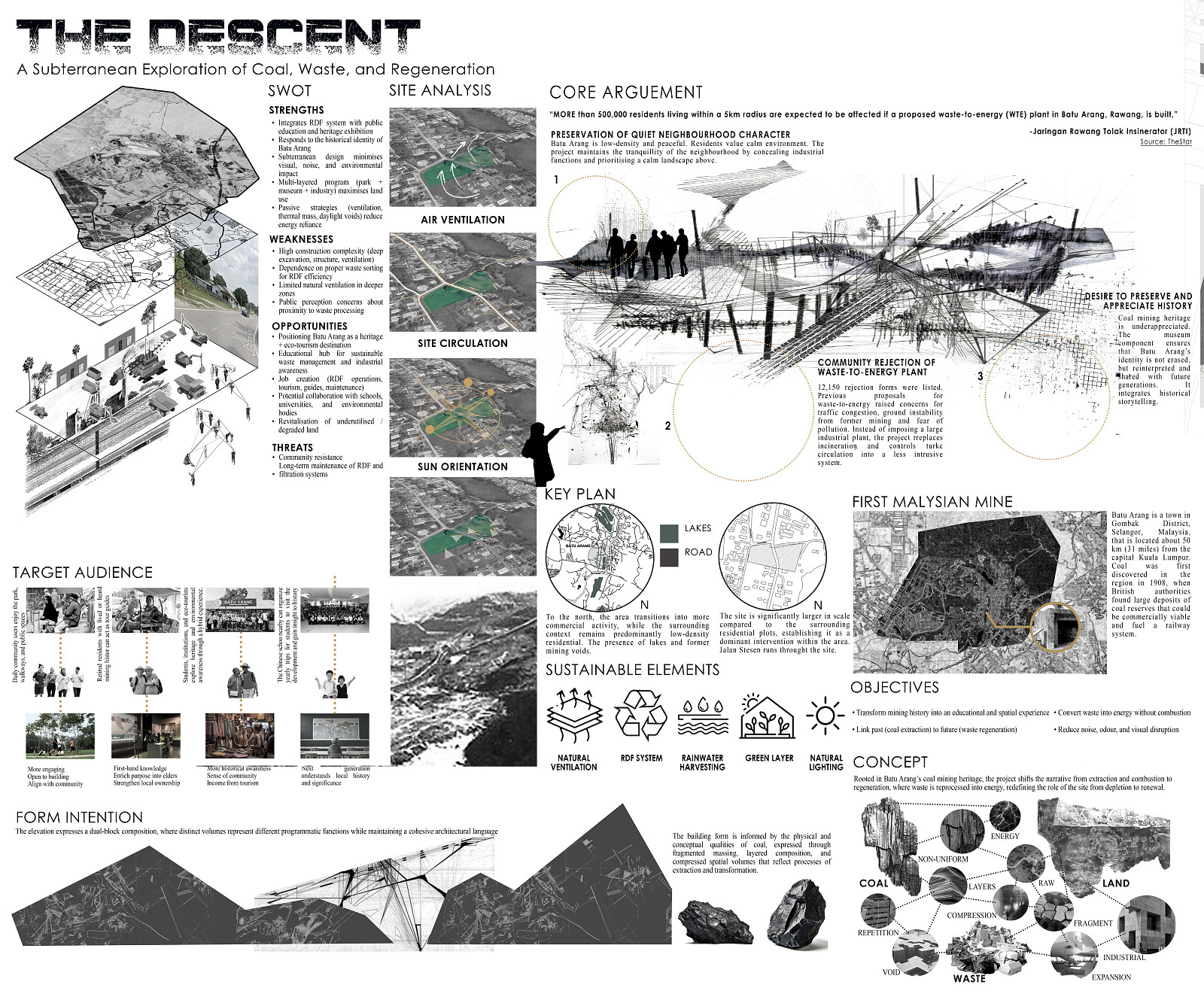
With the many choices of sites and industries, a historical coal mining town called Batu Arang stood out the most. The beginning of the semester started with three industries being presented to the studio: Manufacturing, Agriculture and Mining. Based on the previous projects done circulating around agriculture, I spread my wings into the Mining industry. Each site presented with a different mineral or rock. Compared to the tin and limestone, coal had unfamiliar usages, history and local identity. A material that most people knew on the surface level but I believed I could dig out the rich emotions and spirit of coal specifically related to the Batu Arang region.
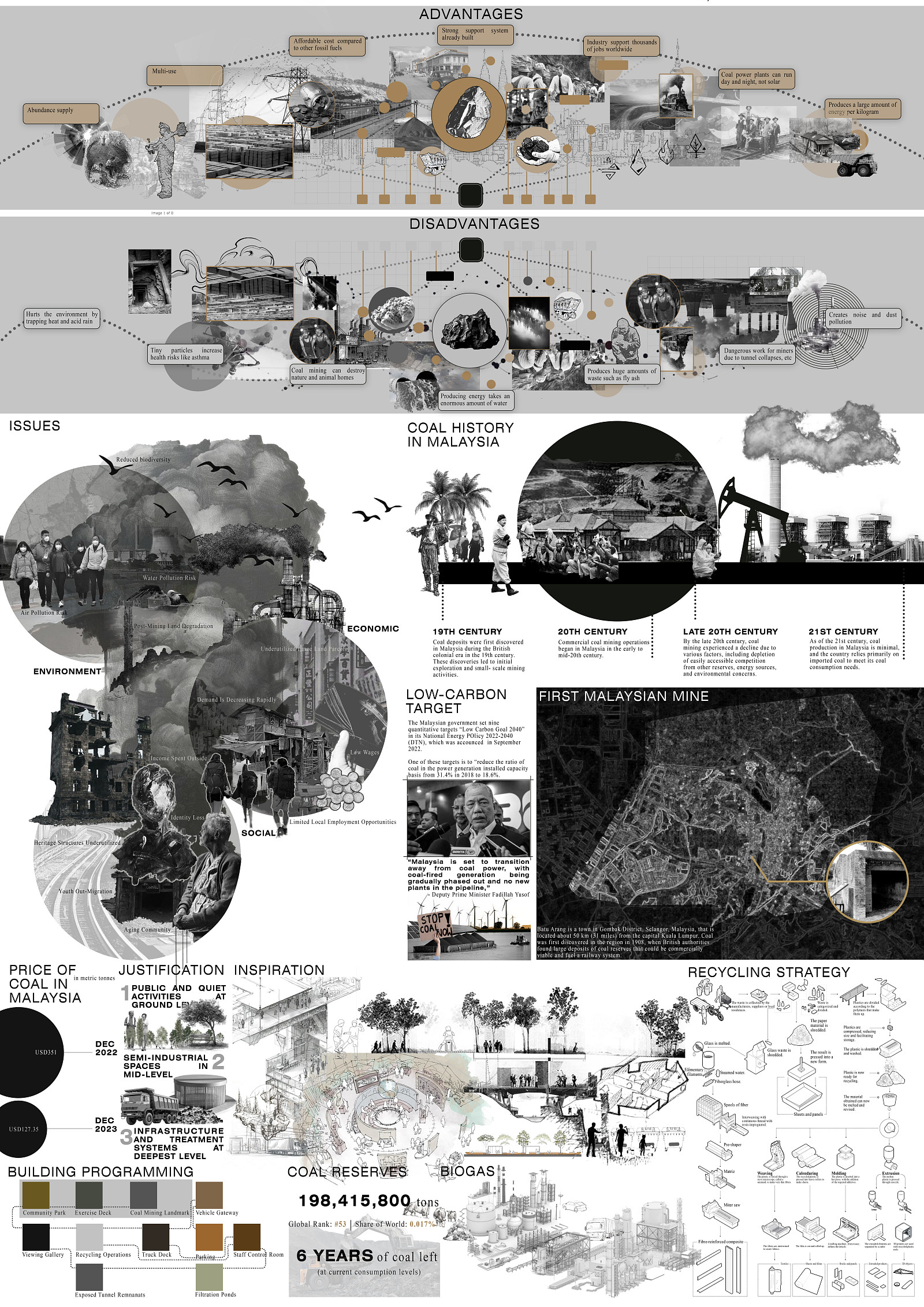
This project presented the opportunity for me to learn more about construction related to brutalist or industrial architecture, deviating from the usual timber structures. It challenges conventional perceptions by turning industrial facilities into community-oriented spaces. It was important to find the balance of preserving the local history yet creating inspiration and awareness for the newer generation. Coal mining is a topic related to the industrial revolution of the entire world. It comes with victorious and hard to swallow memories. I am honored to present this topic through the language of built environment.
PROJECT LOCATION AND ITS CULTURAL SIGNIFICANCE
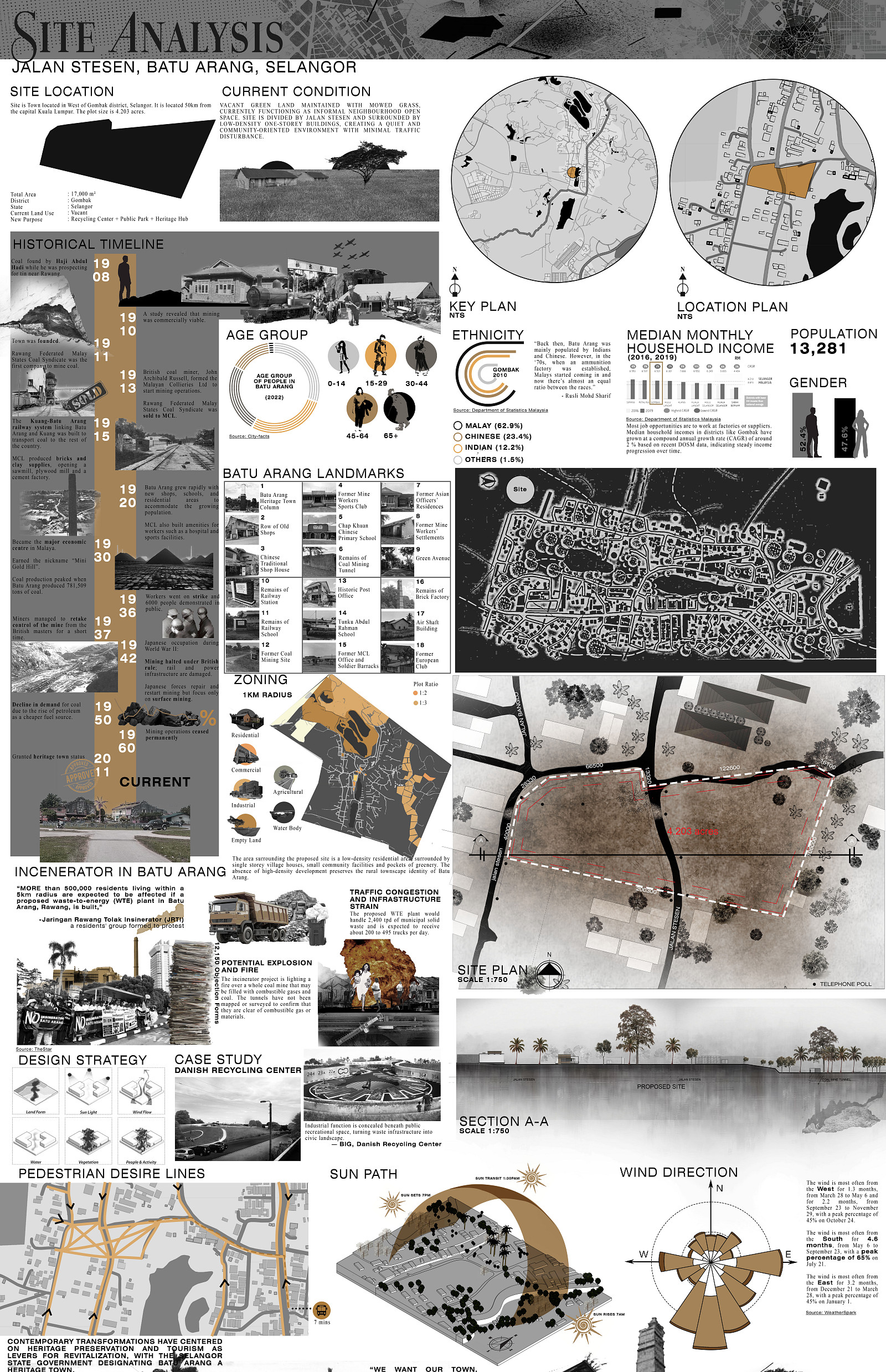
Batu Arang, a heritage town known for its coal mining history, is the focus for the project. During the British Rule, Batu Arang was one of the busiest towns in Selangor, Malaysia. It was once the second largest town in the Gombak district. In the 1900s, Batu Arang rose up in the industrial revolution. The evidence of this history remains in the form of past mining sites, lakes and artifacts. The land itself has been filled with soil to counter past surface mining activities. This industrial heritage provides a strong foundation for a design concept.
The cultural significance of the site lies in its identity as a coal extraction area. It played a huge economic role for the region due to the energy-producing capabilities. This project reinterprets that legacy through a sustainable method with current world problems. This forms a dialogue between the past and present.
Project description
OBJECTIVES OF THE PROJECT
The following are the project’s main goals :
+ Transform mining history into an educational and spatial experience
+ Link past of coal extraction to future innovation of waste regeneration
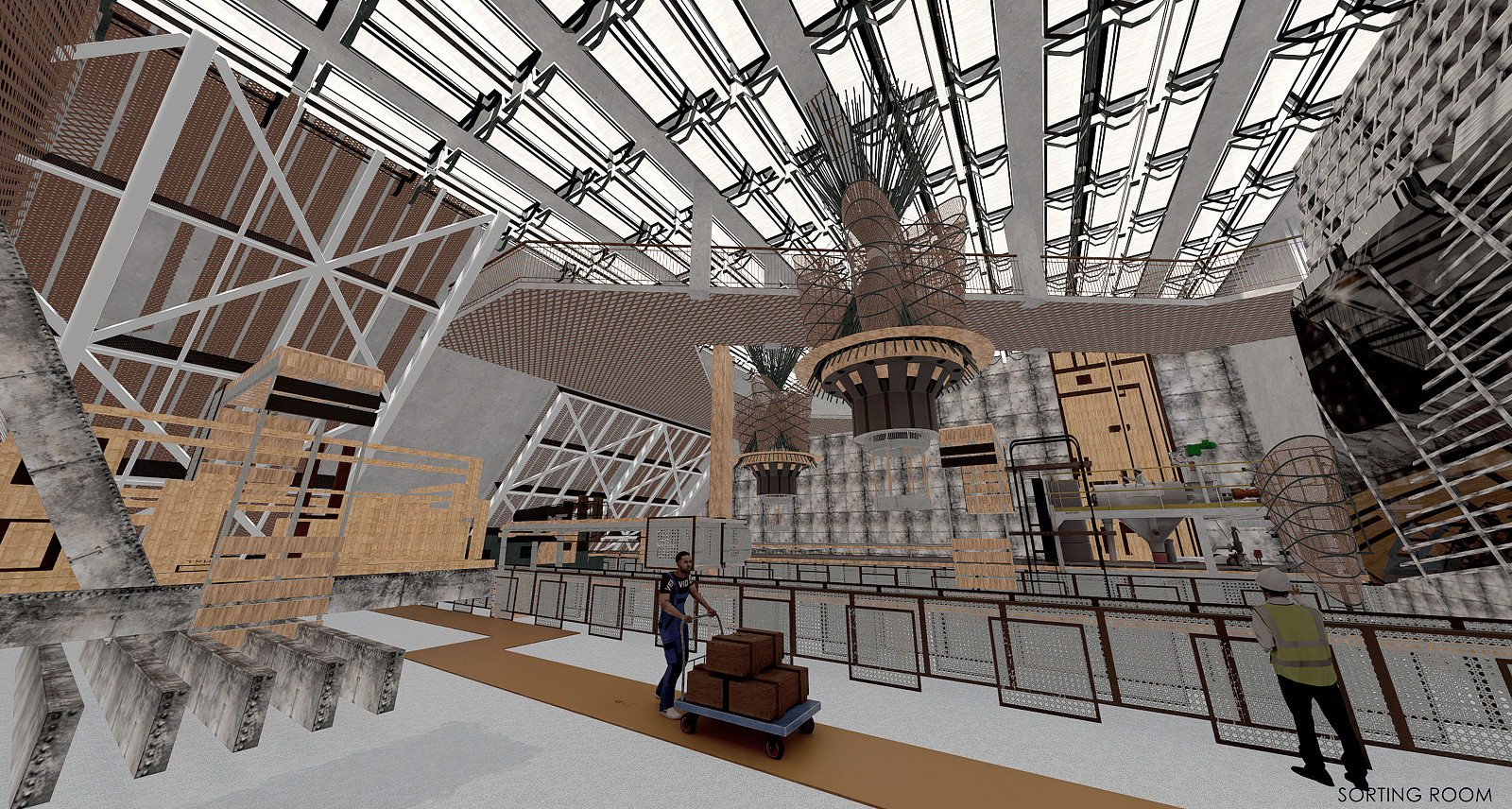
+ Convert waste into energy without combustion for a sustainable approach to waste management
+ Reduce noise, odor and visual disruption
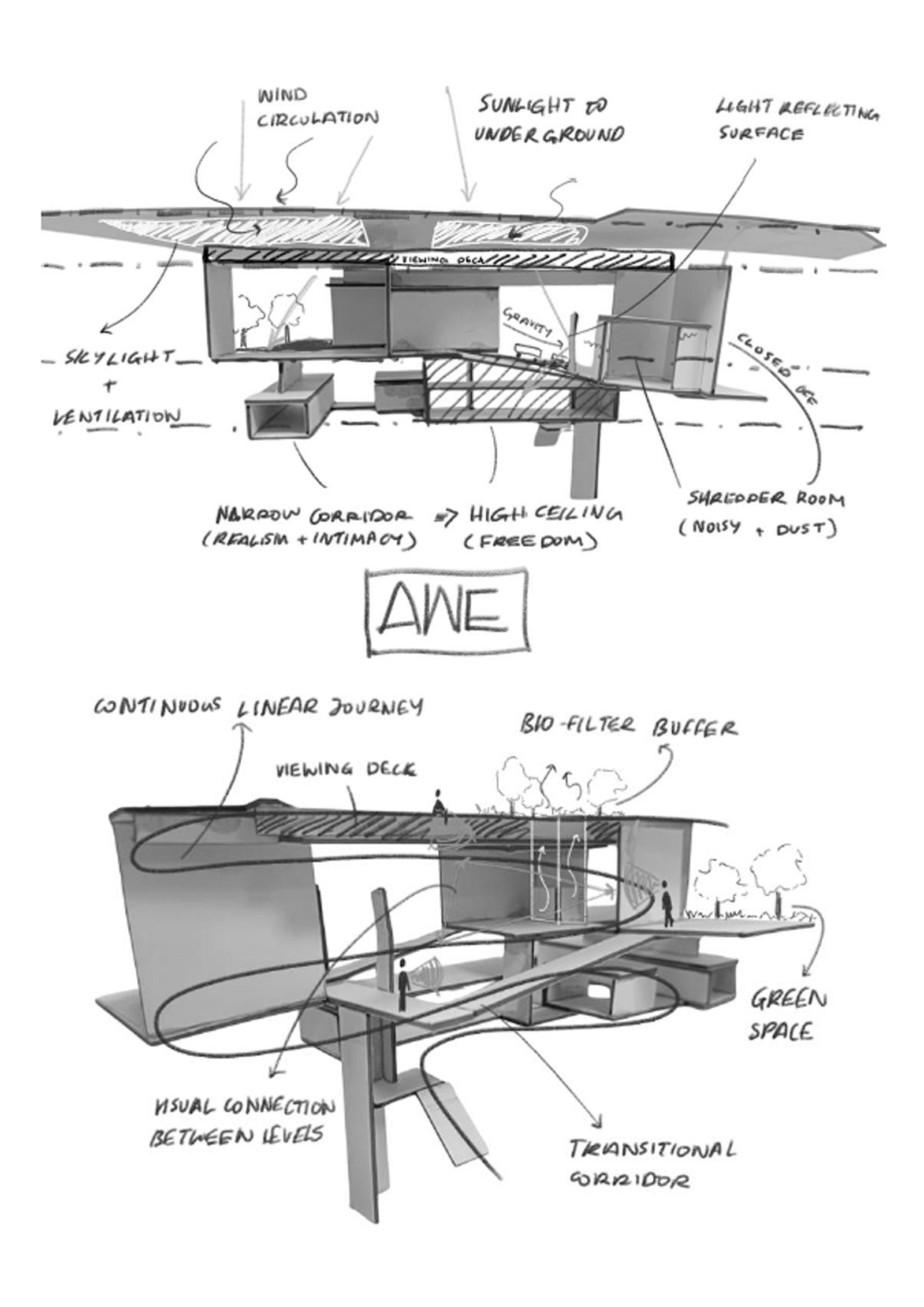
+ Employ passive environmental systems such as natural ventilation and daylighting
+ Incorporate historical sensitive design based on region
+ Guarantee accessibility so everyone regardless of status, age and wellbeing can immerse
Technical information
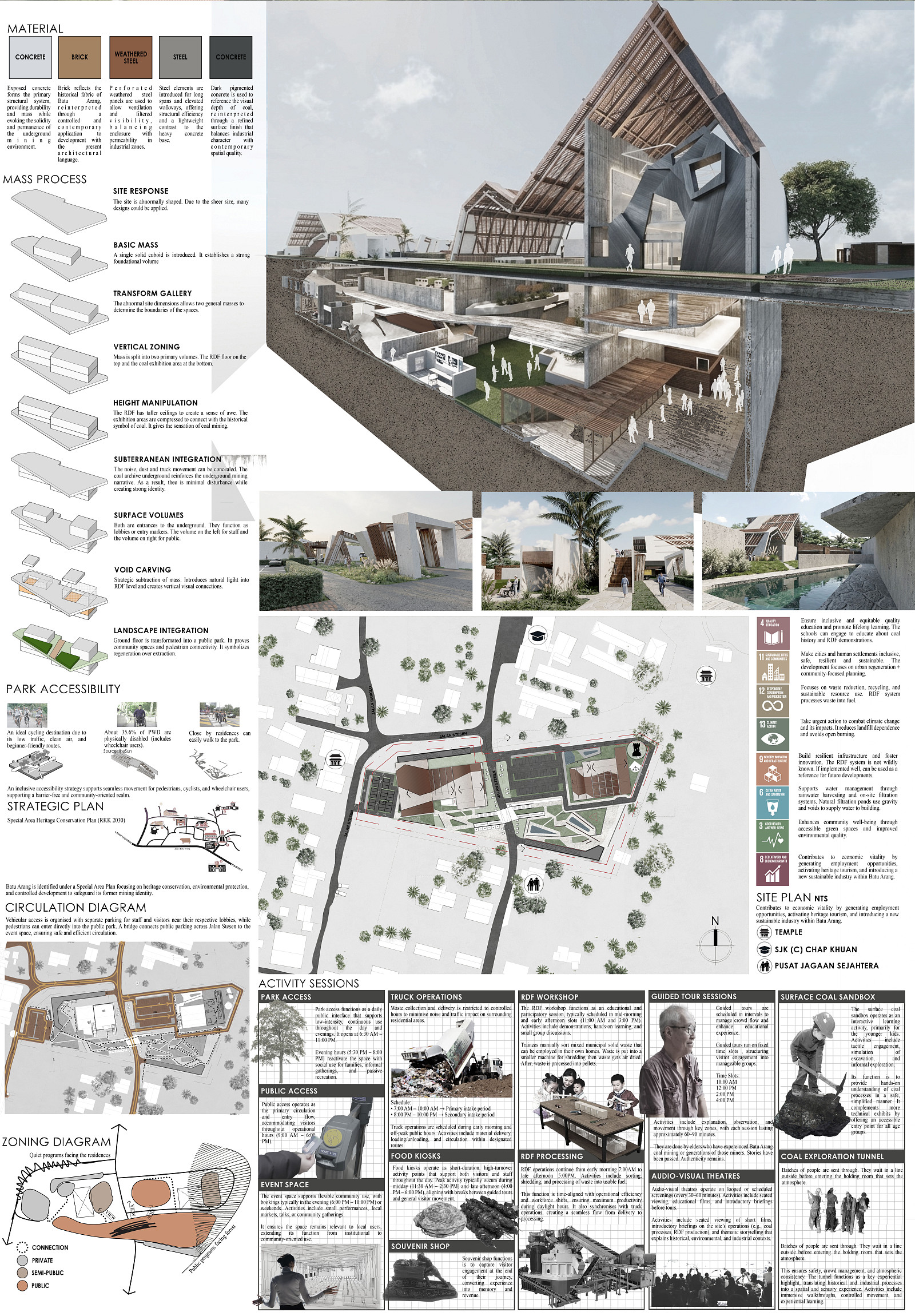
MATERIAL PALETTE AND LOCAL RELEVANCE
The material palette is carefully selected to reflect the industrial heritage and environmental context of Batu Arang.
Material chosen is dependent on :
+ Cultural relevance
+ Environmental sustainability
+ Textural storytelling
Material Selections :
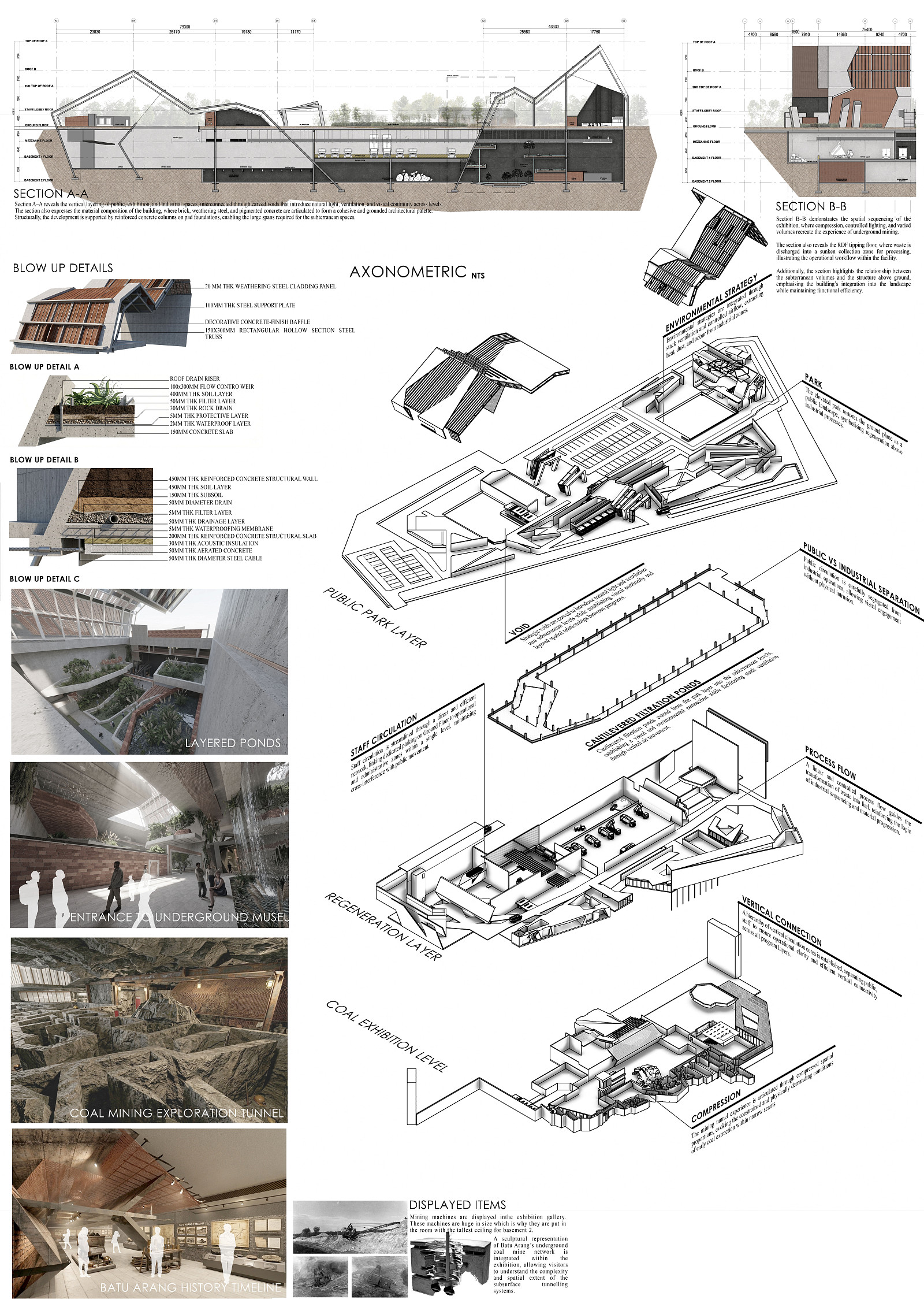
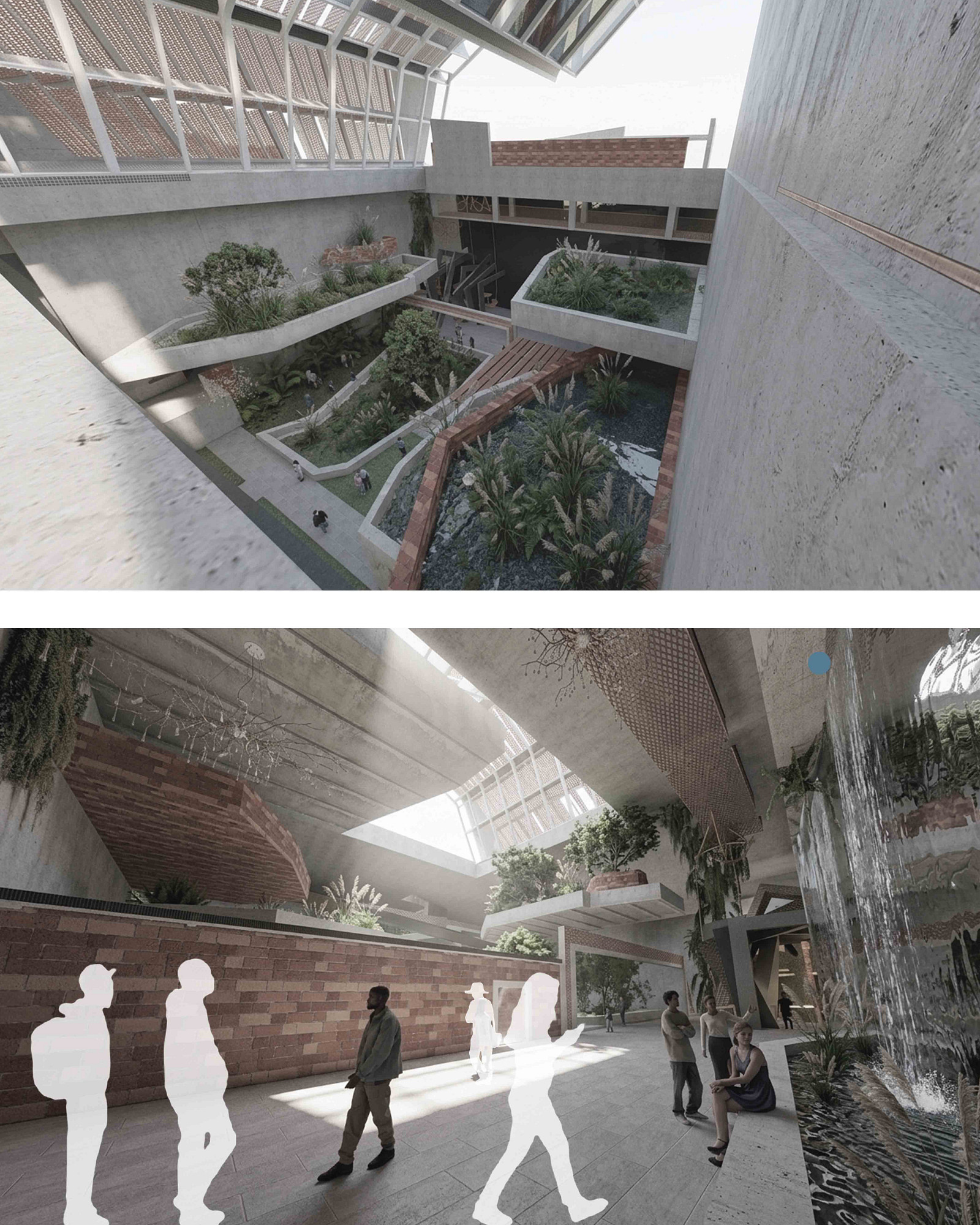
+ Exposed red brick: Relates to Batu Arang historical narrative of producing bricks
+ Pigmented concrete: Introduces tonal variation that enhances spatial depth and differentiates spaces
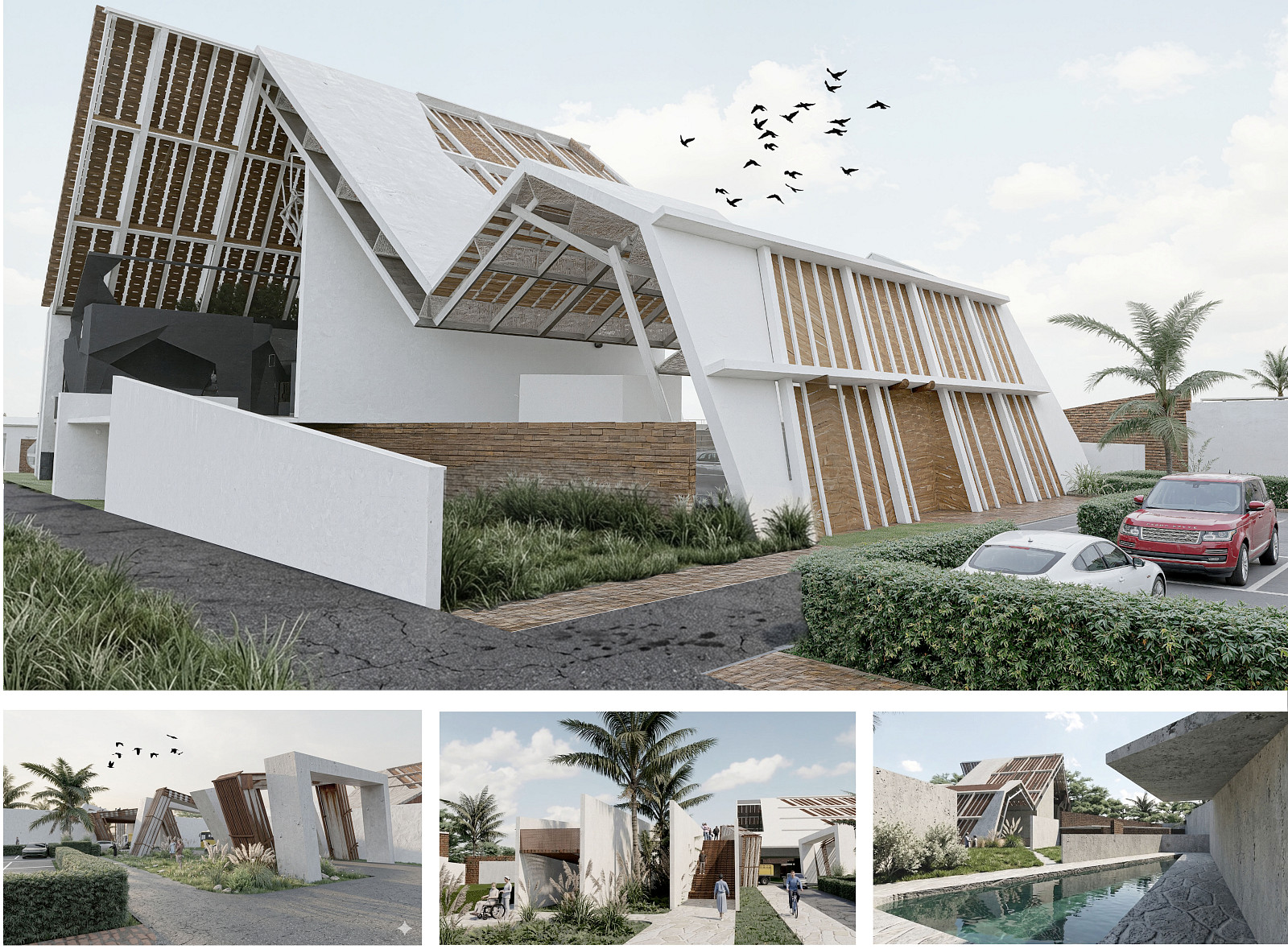
+ Weathering steel: Natural oxidation reinforced narrative of time and industrial revolution while being durable and perforated
+ Structural Steel: Used for long span elements like the roof, allowing angled and dynamic geometries
+ Timber: Introduced in selected interior spaces for warmth and tactility
+ Glass: Selectively used to prevent rain from entering dry spaces while still allowing light and visual connectivity
+ Stone and Aggregates: Used in external landscaping and ground treatment to reinforce raw geology
Local Relevance :
+ Reinforce Batu Arang’s industrial and geological identity
+ Earthy, raw, and textured finishes reflect the concept of coal formation and extraction
+ Construction techniques use excavation and long span construction
+ Sustainability is achieved through natural lighting with windows and thermal massing with concrete
Documentation

Copyright © 2026 INSPIRELI | All rights reserved. Use of this website signifies your agreement to the Terms of Use, Privacy Policy, and use of cookies.
