URBAN FOOD & CULTURAL CENTRE


Project idea
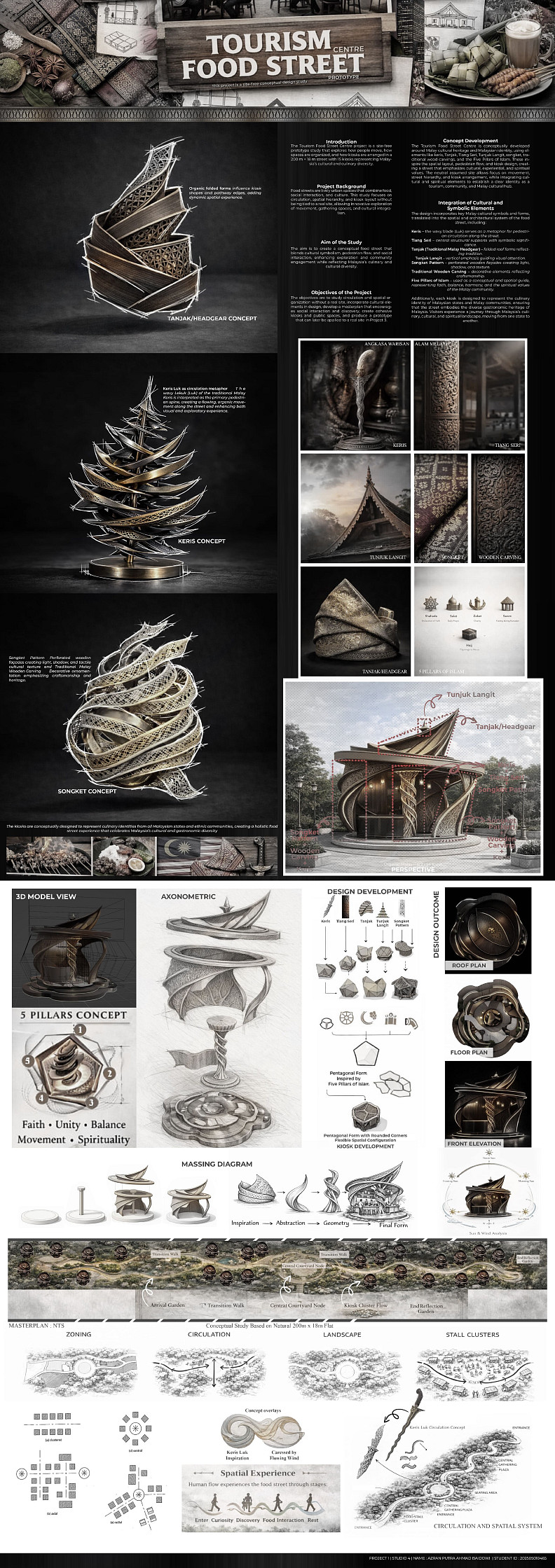
Organic Malay Heritage Kiosk is a tourism food street concept that celebrates Malaysian Malay cultural heritage through architecture, food, and social interaction. Inspired by traditional Malay symbols such as the Keris, Tanjak (traditional headgear), Tunjuk Langit roof form, Songket patterns, and the Five Pillars of Islam, the project transforms cultural identity into an organic architectural language. The proposal aims to create a food street environment where visitors can experience Malaysian culture through movement, exploration, gathering, and culinary activities.
Project description
The project is conceived as a prototype tourism food street that combines food, culture, and community within a pedestrian-friendly environment. Rather than functioning as a conventional food street, the design creates a cultural journey where visitors move through a series of kiosks, gathering spaces, and social nodes inspired by Malay traditions. The masterplan is organized around a 200-meter-long Keris-inspired circulation spine, connecting 15 heritage kiosks and multiple communal gathering spaces. Throughout the journey, visitors encounter elements that represent Malaysian identity, encouraging social interaction, cultural appreciation, and exploration. The project aims to strengthen community engagement, support tourism, and create memorable public experiences while showcasing the richness of Malay heritage.
Technical information
The design is based on an organic circulation system inspired by the flowing form of the Keris, which creates a hierarchy of primary and secondary pathways, gathering nodes, and kiosk clusters. The kiosk design adopts a pentagonal floor plan derived from the Five Pillars of Islam, while the architectural form integrates symbolic elements such as the Tanjak, Tunjuk Langit roof, Songket motifs, and traditional wood carvings. Material selections include timber decking, stone finishes, CNC-cut decorative panels, warm lighting, and textured surfaces that reinforce cultural identity. The spatial organization includes kiosks, resting areas, social plazas, and gathering nodes strategically positioned along the circulation route to encourage interaction and exploration. The project also incorporates passive design strategies, shaded walkways, natural ventilation, and landscape integration to enhance environmental comfort and create a sustainable visitor experience.
Documentation

Copyright © 2026 INSPIRELI | All rights reserved. Use of this website signifies your agreement to the Terms of Use, Privacy Policy, and use of cookies.